<?xml version="1.0" encoding="UTF-8" ?>

<rdf:RDF
 xmlns="http://purl.org/rss/1.0/"
 xmlns:rdf="http://www.w3.org/1999/02/22-rdf-syntax-ns#"
 xmlns:dc="http://purl.org/dc/elements/1.1/"
 xmlns:content="http://purl.org/rss/1.0/modules/content/"
 xml:lang="ja"
>

<channel rdf:about="https://sanyo-chemical-solutions.com/technology/feed/rss10/">
<title>Sanyo Chemical&#039;s Products and Technologies TECHNOLOGY / APPLICATION</title>
<link>https://sanyo-chemical-solutions.com/technology/</link>
<description>TECHNOLOGY / APPLICATION</description>
<dc:language>ja</dc:language>
<dc:date>2026-04-15T02:57:49+09:00</dc:date>
<items>
<rdf:Seq>
<rdf:li rdf:resource="https://sanyo-chemical-solutions.com/technology/2024/08/102502/" />
<rdf:li rdf:resource="https://sanyo-chemical-solutions.com/technology/2024/08/102501/" />
<rdf:li rdf:resource="https://sanyo-chemical-solutions.com/technology/2024/08/102500/" />
<rdf:li rdf:resource="https://sanyo-chemical-solutions.com/technology/2024/04/102498/" />
<rdf:li rdf:resource="https://sanyo-chemical-solutions.com/technology/2024/04/102494/" />
<rdf:li rdf:resource="https://sanyo-chemical-solutions.com/technology/2024/04/102495/" />
<rdf:li rdf:resource="https://sanyo-chemical-solutions.com/technology/2024/04/102493/" />
<rdf:li rdf:resource="https://sanyo-chemical-solutions.com/technology/2024/04/102492/" />
<rdf:li rdf:resource="https://sanyo-chemical-solutions.com/technology/2022/02/102491/" />
<rdf:li rdf:resource="https://sanyo-chemical-solutions.com/technology/2022/02/102490/" />
<rdf:li rdf:resource="https://sanyo-chemical-solutions.com/technology/2022/02/102489/" />
<rdf:li rdf:resource="https://sanyo-chemical-solutions.com/technology/2022/02/102488/" />
</rdf:Seq>
</items>
</channel>

<item rdf:about="https://sanyo-chemical-solutions.com/technology/2024/08/102502/">
<title>Introduction to Amphoteric Surfactant</title>
<link>https://sanyo-chemical-solutions.com/technology/2024/08/102502/</link>
<description>

 What is a surfactant?
 Surfactant functions introduction video
 What is an amphoteric surfactant?
 Amino acid type amphoteric surfactants
 Betaine type amphoteric surfactants
 Summary of amphoteric surfactants
 Related products &#38; topics


What is a surfactant?


First, an interface is a boundary surface that exists between two substances with different properties, and interfaces exist between liquids and solids, liquids and liquids, and liquids and gases.
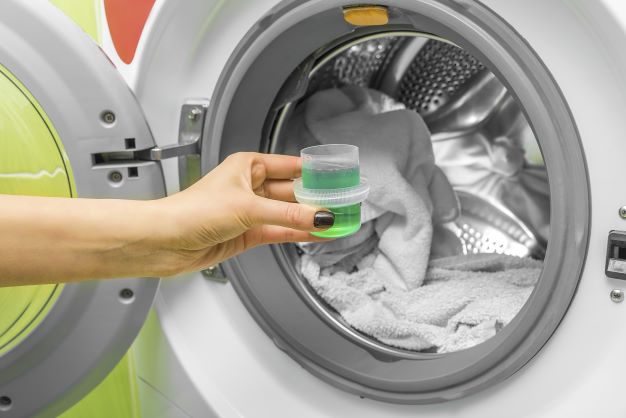
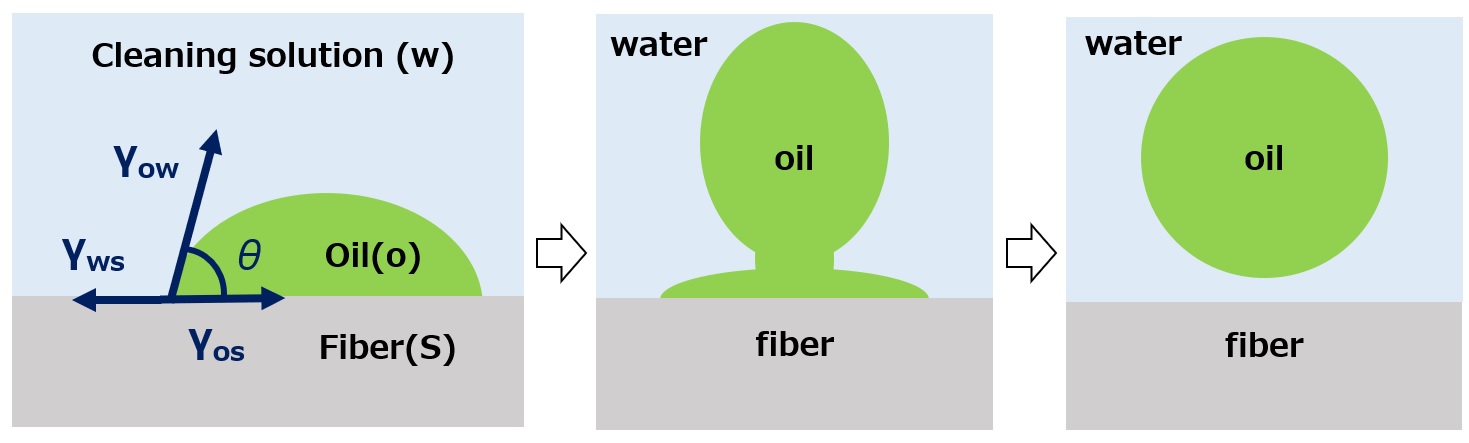
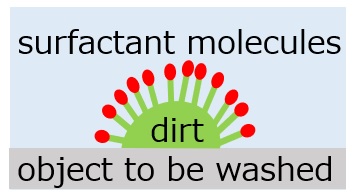
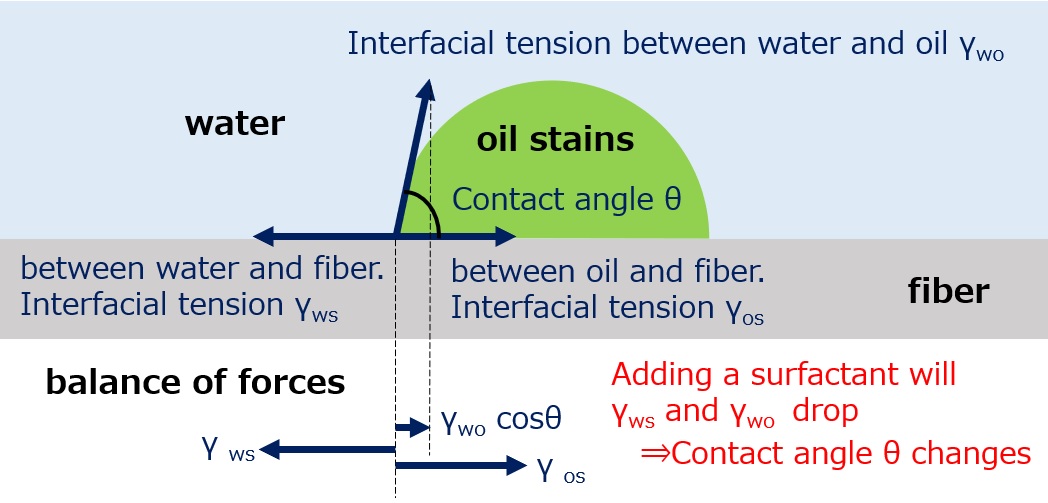
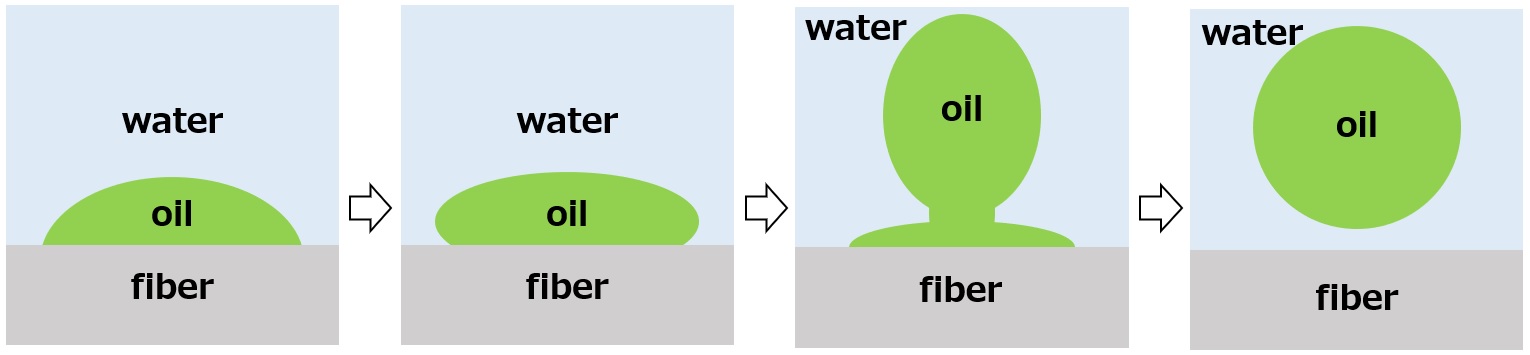
Surfactants enhance performance by performing functions such as washing, emulsifying, dispersing, wetting, and penetrating at this interface.

Interface = a boundary surface that exists between two substances with different properties
Liquid and solid: cup and coffee, machine and lubricant&#160;
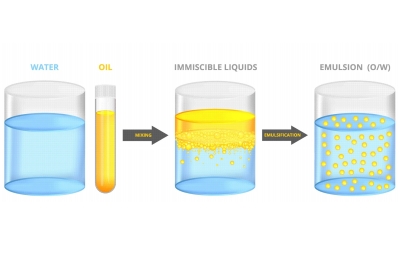
Liquid and liquid: water and oil&#160;
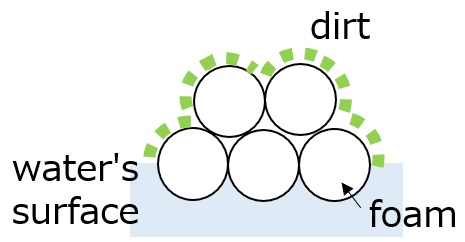
Liquid and gas: seawater and air, soap bubbles

Examples of roles of surfactants
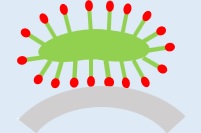
Cleaning ・・・ Removing dirt&#160;
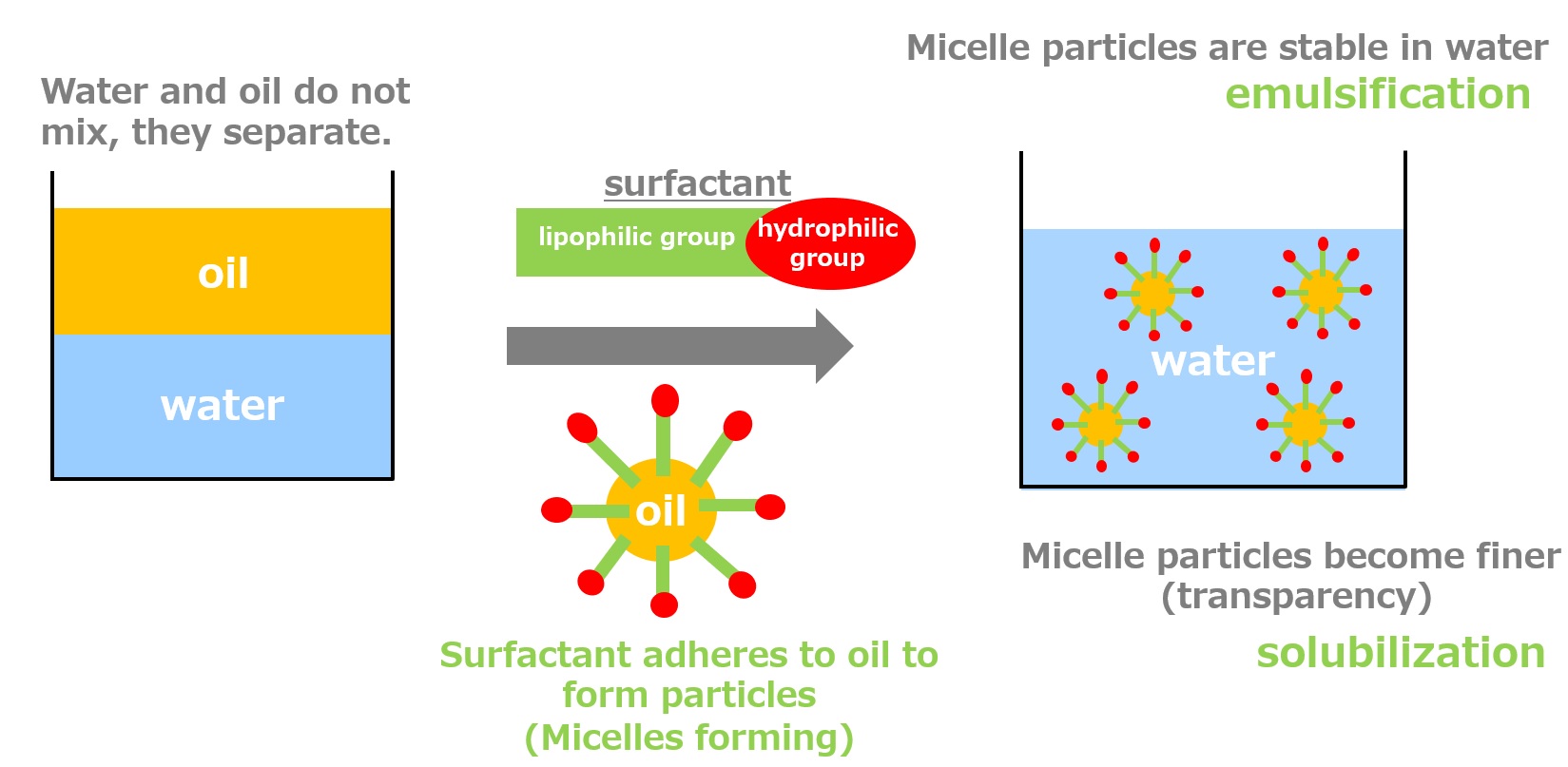
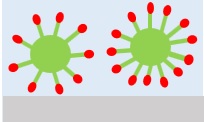
Emulsification ・・・ Dispersion ・・ Making unmixable things easier to mix
Wetting / Penetration ・・・ Makes wetting and soaking easier


Basic structure of a surfactant


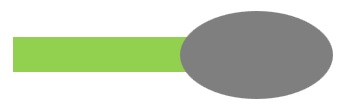
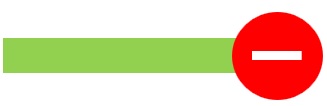
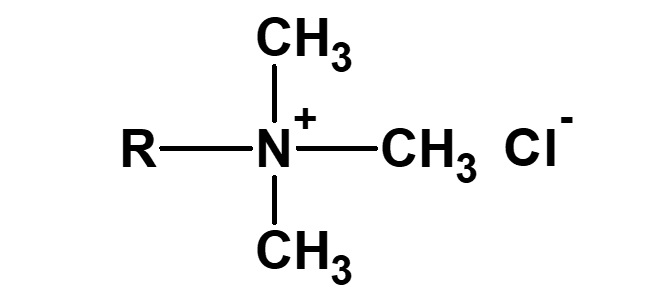
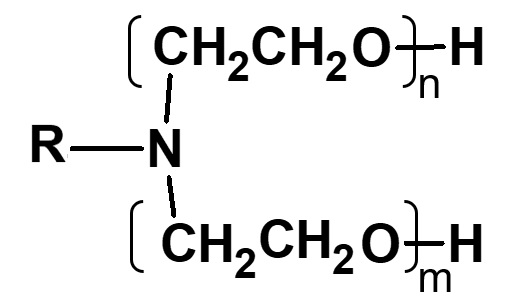
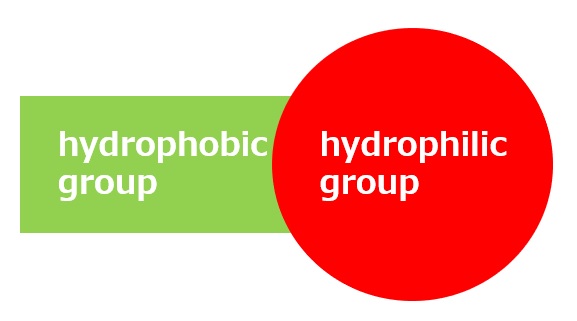
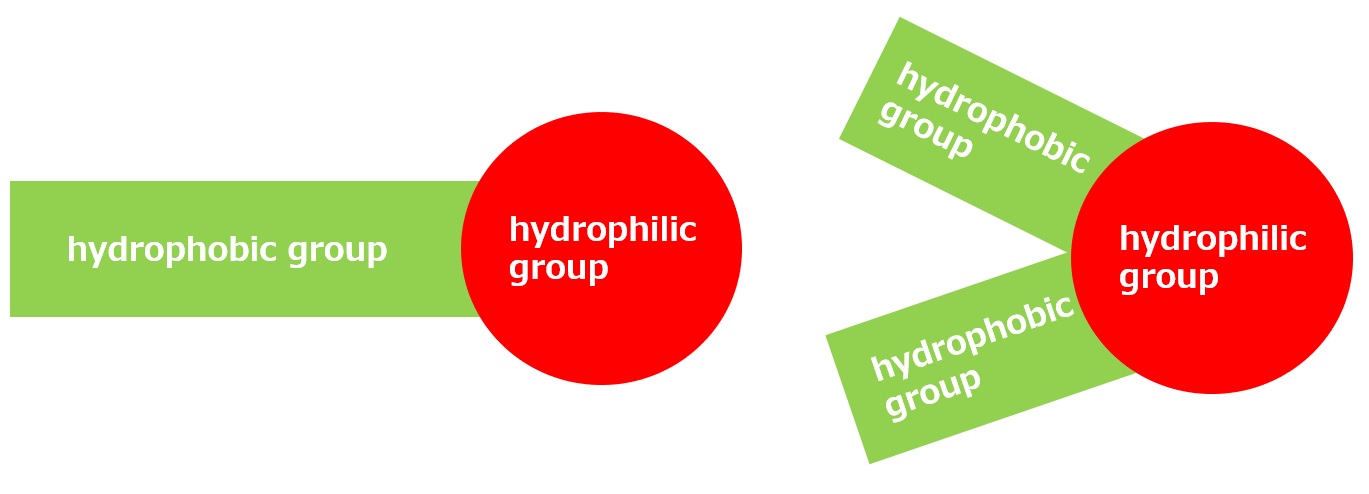
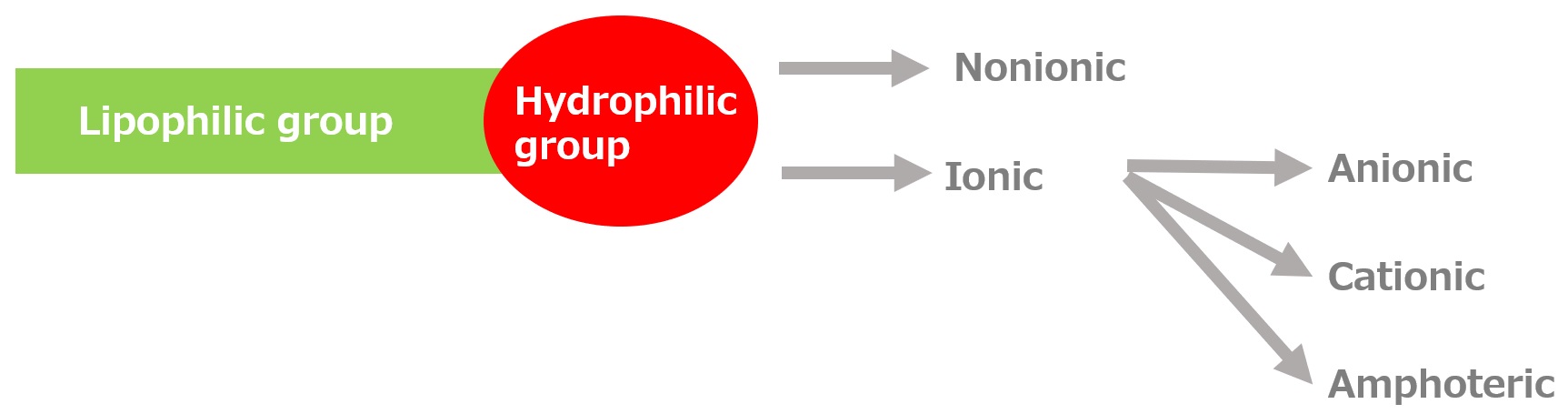
-Surfactants have different structures in their molecules with different properties: lipophilic groups (oil-loving parts) and hydrophilic groups (water-loving&#160;parts).

-Surfactants are broadly classified into four types according to the structure of the hydrophilic group: nonionic, anionic, cationic, and amphoteric (having both anionic and cationic groups).


 &#160; &#160; &#160;
 
 
 Type of surfactant
 Feature
 Main application
 Composition example
 
 
 Nonionic surfactant
 
 -Hydrophilic and hydrophobic balance
 can be easily adjusted
 -Excellent emulsification and solubilization
 -Low lather
 -Susceptible to temperature but not to pH
 -Laundry&#160;detergent
 -Emulsifiers and solubilizers
 -Dispersant
 -Metalworking oil
 -Polyoxyethylene alkyl ether
 etc.
 
 
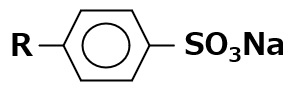
 Anionic surfactant
 
 -Excellent emulsification and dispersibility
 -Good lather
 -Temperature insensitive
 -Laundry&#160;Detergent
 -Shampoo
 -Body soap
 -Alkyl benzene sulfonate
 -Alkyl ether sulfates
 etc.
 
 
 Cationic surfactant
 
 -Adsorption to fibers
 -Antistatic effect
 -Bactericidal
 -Hair rinse
 -Fabric softener for clothes
 -Disinfectant
 -Didecyldimethylammonium methyl sulfate
 
 
 Amphoteric surfactant
 
 -Mild on skin
 -Excellent solubility in water
 -Synergistic with other active components
 -Shampoo
 -Body soap
 -Kitchen detergent
 -Alkyl di-aminoethyl hydrochloride glycine
 -Sodium lauryl aminopropionic acid
 -Dimethylstearyl betaine
 -Coconut oil fatty acid amidopropyl betaine


Surfactant functions introduction video
[[CMSmodule.parts::ad#param=309]]


It consists of seven short movies for each function.&#160;
0:00　Introduction of surfactants functions　
0:16　Part1　Washability
1:00　Part2　Permeability
2:10　Part3　Dispersion
2:55　Part4　Foaming properties
3:25　Part5　Defoaming properties
3:39　Part6　Smoothness
4:20　Part7　Antibacterial properties


What is an amphoteric surfactant?


Strictly defined amphoteric surfactant
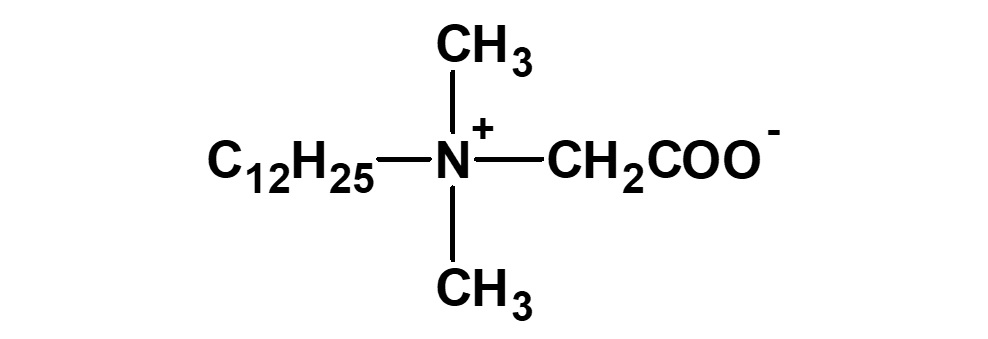
Amphoteric surfactants ordinarily are restricted to compounds with an anion-cation combination. In other words, if a surfactant is referred to simply as an amphoteric surfactant, one would be right in assuming it a surfactant with a hydrophobic group to which both an anion and a cation are attached, as shown in (1) of the figure on the right.
Amphoteric surfactants in the broad sense
Broadly speaking, amphoteric surfactants include all hybrid compounds that possess concurrently structures combining any two properties of anionic, cationic or nonionic natures. As shown in the figure on the right,a total of three kinds of such combinations are conceivable.


(1)Combination of anion and cation 
&#160;(strict definition of amphoteric surfactant)


(2)Combination of anion and nonion



(3)Combination of cation and nonion
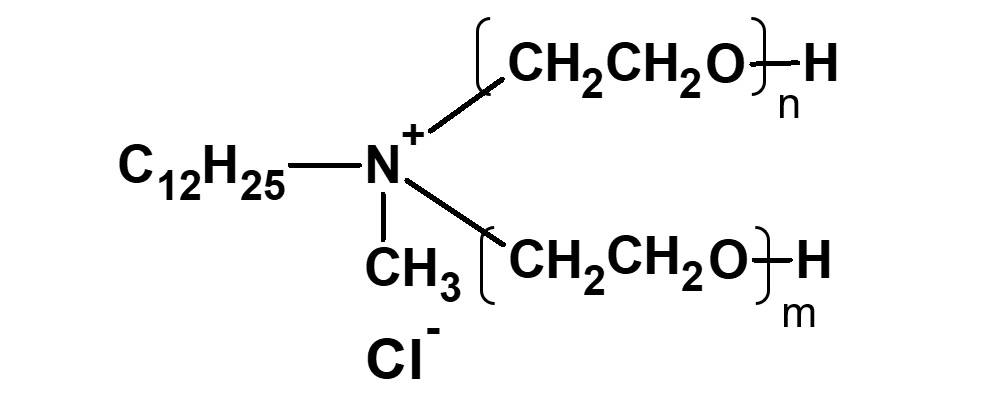

Fig. General structure of amphoteric surfactants


Examples of amphoteric surfactants
Anionic surfactants command a major share of the household detergent market, including soaps, and cationic surfactants are well- known as germicides for disinfection and as finishing agents for synthetic fibers such as nylon. Then, what is a familiar example of an amphoteric surfactant?&#160;

It is an important ingredient in cosmetics, especially shampoo. One of the most popular amphoteric surfactants is cocoamidopropyl betaine, derived from coconut fatty acid and dimethyl aminopropylamine.
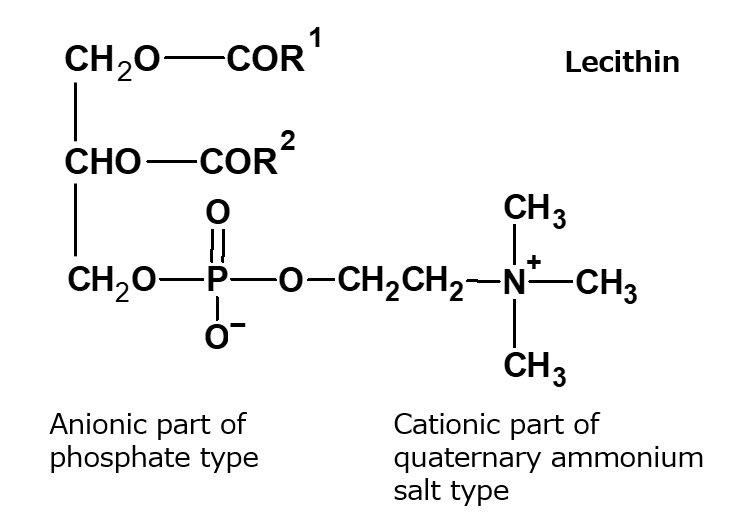


Fig. Structure of Lecithin


Natural amphoteric surfactant: lecithin
The lecithin contained in egg yolk is a natural amphoteric surfactant.
It is indispensable in the preparation of mayonnaise.

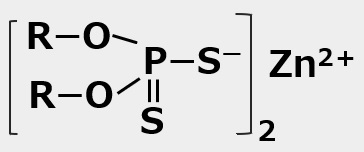
Lecithin is an amphoteric surfactant that possesses a phosphate type for its anionic part and a quaternary ammonium salt type for its cationic part As it has two hydrophobic groups in one molecule, it is almost insoluble in water, but it exhibits high interfacial activity in emulsifying oils.
&#160;


Classification of Amphoteric Surfactants
Although only limited kinds of amphoteric surfactants are used practically, many kinds are conceivable. More concretely, as amphoteric surfactants are composed of anion-cation combinations, the theoretical number of amphoteric surfactants that could be synthesized should be at least as large as the number of kinds of anionics multiplied by that of cationics.
In many practical cases, however, either amine salts or quaternary ammonium salts are used as a hydrophilic group with a cationic property. Therefore, it is convenient to classify an amphoteric surfactant by the type of its anionic part.

The classification of amphoteric surfactants by type of anionic portion is summarized below.


Classification of amphoteric surfactants


 &#160; &#160; &#160;
 
 
 Amphoteric surfactants
 Carboxylate type amphoterics
 Amino acid type amphoterics
 Example：R－NHーCH2CH2COOH
 
 
 Betaine type amphoterics
 Example：


 Sulfate type amphoterics
 
 
 Sulfonate type amphoterics
 
 
 Phosphate type amphoterics


However, this table represents experimentally developed amphoteric surfactants only. In practice, most amphoteric surfactants currently on the market are carboxylate type. In this page, therefore, discussion is focused on carboxylate type amphoteric surfactants.
A carboxylate type amphoteric surfactant is one that possesses a carboxyl group as its anionic part. Those possessing an amine salt type cationic part are called amino acid type amphoteric surfactants, and those possessing a quaternary ammonium salt type cationic part are called betaine type amphoteric surfactants (As shown in table above).
In the following section, we will discuss the preparation method and properties of these amphoteric surfactants.


Amino acid type amphoteric surfactants


A compound with the following composition is produced when one mole of methyl acrylate (CH2 = CHCOOCH3) is added during stirring to one mole of higher alkylamine (C12 to C18) such as lauryl amine that has been melted by heating to 60 to 70 &#176;C.


Fig. Synthesis of methyl lauryl amino propionate (secondary amine)


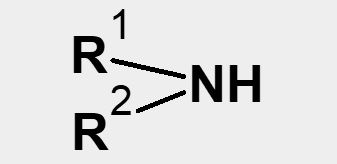
The methyl lauryl amino propionate thus produced is a secondary amine, although it has a slightly complex structure. Therefore, it yields water-soluble cationic surfactants by neutralization with an acid such as hydrochloric acid.



Fig. Neutralization reaction of methyl lauryl amino propionate (cationic surfactant)


However, by focusing on the ester linkage rather than the amine, it becomes apparent that the carboxyl group can be regenerated by saponification with alkali. In this way, an excellent amino acid type surfactant can be obtained.



Fig. Formation reaction of sodium lauryl amino propionate (amino acid type amphoteric surfactant)


The saponification can be carried out easily by adding one mole of aqueous sodium hydroxide solution, slowly, during stirring, to one mole of methyl lauryl amino propionate, in a beaker heated in a boiling water bath. The resultant sodium lauryl amino propionate is easily soluble in water, yielding a transparent solution. Its aqueous solution foams well, and is fairly alkaline because its molecule contains not only sodium carboxylate, as in the case of soap, but also a free secondary amino group.

In an alkaline solution, as shown above, the amino group of an amino acid type amphoteric surfactant performs a relatively minor function as a hydrophilic group because it does not exist as a salt, and the hydrophilic property of the surfactant is attributable mainly to its carboxylate group. Therefore, amphoteric surfactants of this type exhibit properties similar to those of anionic surfactants in alkaline solution.


Behavior of aqueous amino acid-type amphoteric surfactant solutions upon neutralization with hydrochloric acid

Then, what will happen if the alkaline aqueous solution of an amino acid type amphoteric surfactant is gradually neutralized with an acid such as hydrochloric acid ?

When hydrochloric acid is gradually added to the alkaline solution during stirring, nothing happens until the solution is almost neutralized, but precipitation occurs when the solution becomes slightly acid. Regardless, when the solution is fully acidic, and there is excess hydrochloric acid, the precipitation dissolves as if by magic, and a transparent solution is obtained once more.

That is to say, amphoteric surfactants precipitate due to a reduction in hydrophilic property caused by the formation of internal salts, and they dissolve again due to the formation of amine salts with an excess of hydrochloric acid.

In this a manner, amino acid type amphoteric surfactants behave like anionic surfactants under alkaline conditions, and they behave like cationic surfactants under acidic conditions. At the isoelectric point where their anionic and cationic properties are balanced, they precipitate due to the decreased hydrophilic property. The isoelectric point in this case is located on the slightly acidic side.



Fig. Behavior of alkaline aqueous amino acid-type amphoteric surfactant solutions upon neutralization with hydrochloric acid


Applications and Synthesis of Sodium Lauryl Amino Propionate and Other Amino Acid Type Amphoteric Surfactants
Sodium lauryl amino propionate has fairly good detergency and is used as a specialty detergent. There are a variety of products in this category with different lengths of alkyl groups and different positions and numbers of amino groups and carboxyl groups. On the whole, they have similar general properties to those shown in the above example, but their applications are diverse.
In addition to the process mentioned above, amphoteric surfactants of alkyl amino propionate type can be synthesized by an alternative process using acrylonitrile, which is more economical.



Fig. Synthesis of sodium stearyl propionate (method using acrylnitrile)


Surfactants with a similar structure but with one less methylene group (-CH2-) between the amino and carboxyl groups can be synthesized easily by reacting a higher alkylamine with an aqueous sodium mono chloroacetate solution.

Some amino acid type amphoteric surfactants with this structure are used as germicides with the feature of less toxicity than cationic products.
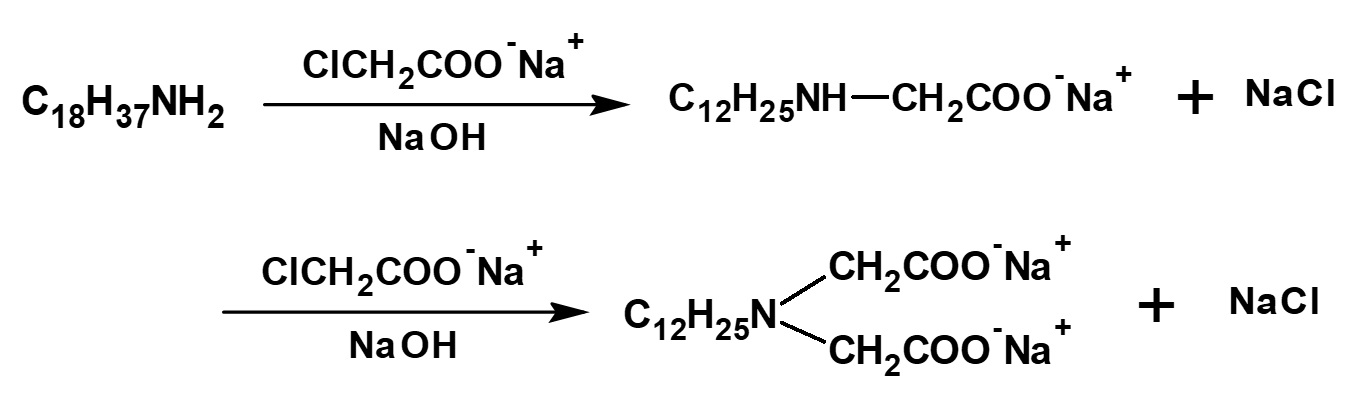


Fig. Reaction of lauryl amine with sodium monochloroacetate


Betaine Type Amphoteric Surfactants


Betaine and betaine surfactants
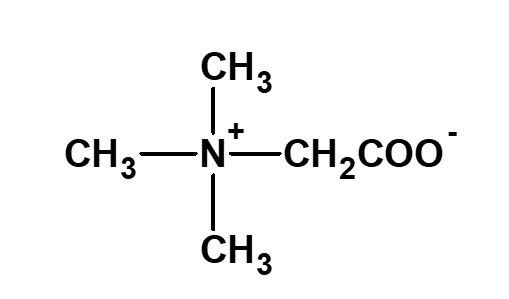


Fig. Structure of betaine


Betaine type amphoteric surfactants are those that have concurrently a quaternary ammonium salt as its cationic part and carboxylate as its anionic part. Betaine is a compound that normally has the structure on the left.
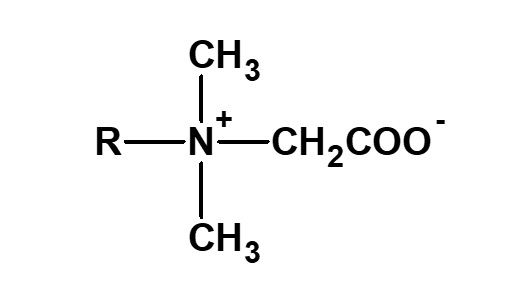


Fig. General structure of betaine


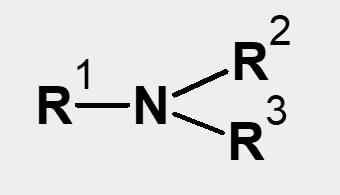
Therefore, betaine type surfactants are generally those compounds with structures similar to betaine, in which one methyl group is replaced by a long chain alkyl group. Of these, the compounds on the left (R: alkyl group of C12 to C18) have the simplest structure while still being of practical use.

For instance, a clear solution of lauryl dimethyl betaine is obtained by mixing aqueous solutions of 1 mole of lauryl dimethyl amine and 1.05 mole of sodium monochloroacetate and having them react during stirring at 60 to 80 &#176;C for a few hours.


Fig. Formation reaction of lauryl dimethyl betaine


Features of lauryl dimethyl betaine

Lauryl dimethyl betaine dissolves in water transparently and foams well. It has excellent detergency and can be considered a representative betaine type amphoteric surfactant.

The largest difference between betaine type and amino acid type amphoteric surfactants is that betaine type surfactants dissolve in water easily, regardless of&#160;whether the betaine type surfactant is acidic, neutral or alkaline in nature. Therefore, in the case of betaine type surfactants, there is almost no danger of precipitation even at the isoelectric point, and there is the added advantage of being usable across the entire pH range.


Dimethyl stearyl betaine, dihydroxyethyl lauryl betaine
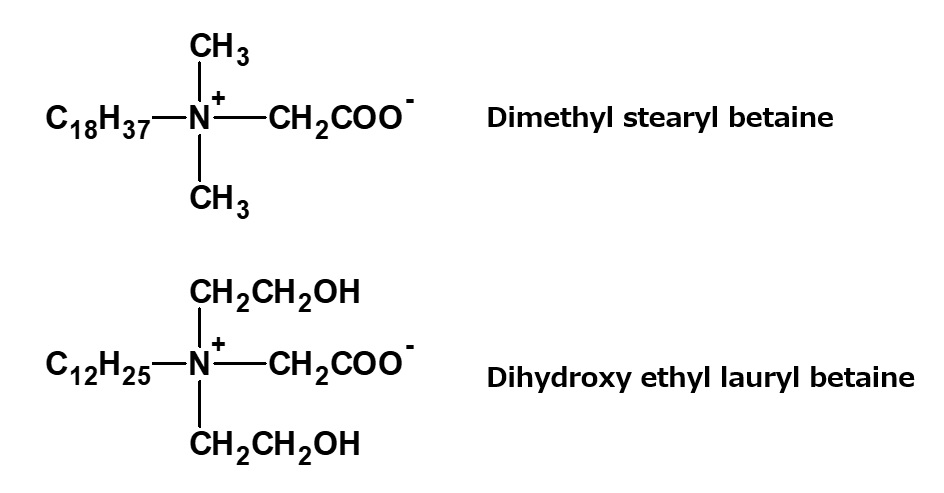


Fig. Dimethyl stearyl betaine, dihydroxyethyl lauryl betaine


Various kinds of betaine type amphoteric surfactants can be synthesized by a process similar to that used for lauryl dimethyl betaine. Important examples of these products are on the left.


Similarly to lauryldimethyl betaine, both of the products on the left are used as dyeing auxiliaries and antistatic agents.


Amphoteric surfactants (cocoacid amidopropyl betaine, lauryl imidazolinium betaine) used as shampoo base
Cocoamidopropyl betaine and laurylimidazolinium betaine are widely used as shampoo bases. These amphoteric surfactants are manufactured from fattyamide amine and alkylimidazoline, respectively, through the reactions indicated in the following reaction formula. However, alkylimidazolinium betaine is actually a complex mixture of products resulting from a cleavage of the imidazoline ring.&#160;


Fig. Synthetic route of coconaut fatty acid amidopropyl betaine



Fig. Synthetic route of lauryl imidazolinium betaine


Summary of Amphoteric Surfactants


A surfactant consisting of an anionic part and a cationic part in its molecule is generally referred to as an amphoteric surfactant. In this class of surfactants, there are various types such as the carboxylate type and the sulfonate type. The most familiar is the carboxylate type, which is subdivided into the amino acid type and the betaine type.
Amino acid type surfactants tend to precipitate at the isoelectric point, but betaine type products dissolve in water relatively easily even at the isoelectric point. In general, the betaine type is better than the amino acid type.


Among these carboxylate-type amphoteric surfactants, the more commonly used forms can be classified based on the raw materials of their hydrophilic and hydrophobic groups, as shown in the table below.


Classification of carboxylate-type amphoteric surfactants


 &#160; &#160; &#160;


 Hydrophobic raw material
 
 
 Primary amine
 R－NH2
 
 Secondary amine
 
 Tertiary amine
 
 Fatty acid
 RCOOH
 
 Higher alkyl chloride
 RCl


 Hydrophilic 
 raw material
 Sodium
 monochloroacetate
 Amino acid type
 Betaine type
 -
 
 
 Methyl acrylate, or
 acrylonitrile with NaOH
 Amino acid type
 -
 -
 
 
 Polyethylenepolyamine
 and sodium
 monochloroacetate
 -
 -
 Amino acid type
 
 
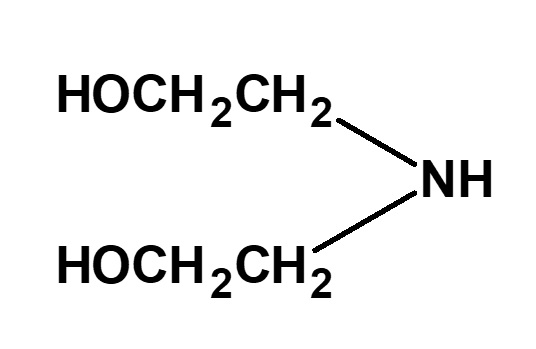
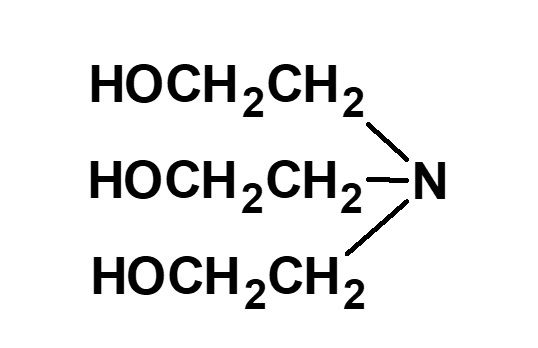
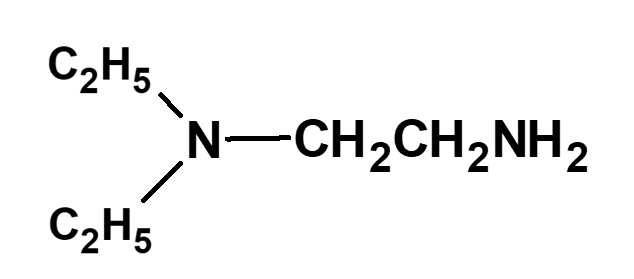
 Hydroxyethylethylenediamine
 and sodium
 monochloroacetate
 -
 -
 Betaine type


Consumption of amphoteric surfactants is small in comparison to other surfactants. However, if you encounter difficulties with regard to surfactant application, it may be more rewarding than expected to consider using amphoteric surfactants.


Related products &#38; topics
Related products


 Cosmetics raw materials


Amino Acid Type Highly Functional Amphoteric Surfactant for Shampoo &#34;PIUSERIA&#174; AMC&#34;

&#34;PIUSERIA&#174; AMC&#34; prevents itching and dandruff by reducing the amount of surfactant residue on the skin during shampooing.
MORE


 Antimicrobial agent


Amphoteric surfactant-type antimicrobial agent &#34;LEBON T-2&#34;

By blending with amphoteric surfactants and non-ionic surfactants, a sanitizing detergent with both antimicrobial and cleaning power can be adjusted.&#160;

MORE


 Nonionic surfactant


Polyoxyalkylene alkylamine-based surfactant &#34;PUREMEEL EP-300S&#34;

Base detergent for clothes with excellent cleaning power against grease and oil stains
MORE


 &#160; &#160; &#160;
 
 
 Links to Sanyo Chemical&#039;s corprate site


 Amino Acid Type Highly Functional Amphoteric Surfactant for Shampoo &#34;PIUSERIA&#174; AMC&#34;
 PIUSERIA AMC:&#160;&#160;Sodium Lauramino Propionate
 Prevention Improvement Agent for Skin Problems
 Amphoteric Surfactants &#34;LEBON&#34;
 LEBON 2000:&#160;Coconut oil fatty acid amidopropyldimethylaminoacetic acid betaine
 &#160;Amidopropyl Betaine-type Amphoteric Detergent Base with Low skin and Eye Irritation and Good Biodegradability
 
 LEBON 2000HG:&#160;&#160;Coconut oil fatty acid amidopropyl betaine
 &#160;Amidopropyl Betaine type Amphoteric Detergent Base with Low Sodium Chloride Content
 
 LEBON 2000L:&#160;&#160;Lauramidopropyl betaine
 &#160;&#160;Amidopropyl Betaine-type Amphoteric Detergent Base with Low Skin and Eye Irritation
 
 LEBON CIB GSS:&#160; Sodium cocoamphoacetate
 &#160; Amphoteric Detergent Base with Low Skin iIritation
 
 LEBON HC-30W:&#160; Coconut oil fatty acid amidopropyl betaine
 &#160; Amidopropyl Betaine-type Amphoteric Detergent Base with Low Skin and Eye Irritation and Good Biodegradability
 
 LEBON LD-36: Lauryldimethylaminoacetic acid betaine
 &#160; Betaine-type Amphoteric Detergent Base with High Foaming Power and Foam Stability
 
 LEBON MY-30W:&#160; Amidopropyl dimethylaminobetaine myristate
 &#160; Amidopropyl Betaine-type Amphoteric Detergent Base with Low skin and Eye Irritation and Good Biodegradability
 
 LEBON T-2:&#160; Alkyl(diaminoethyl)glycine hydrochloride
 &#160; Amphoteric Surfactant-type Antibacterial Agent for Industrial Use


Topics


 Surfactant
 Basics


Surfactant Basics 1 (Detergents)

MORE


 Surfactant
 Basics


Surfactant Basics 2 (Emulsion, Emulsifiers)

MORE


 Surfactant
 Basics


Surfactant Basics 3 (Penetrants, Wetting Agents, Fabric Additives)

MORE


 Surfactant
 Basics


Surfactant Basics 4 (Dispersants)

MORE


 Nonionic surfactant
 Basics


Introduction to Nonionic Surfactant

MORE


 Anionic surfactant
 Basics


Introduction to Anionic Surfactant

MORE


 Cationic surfactant
 Basics


Introduction to Cationic Surfactant

MORE


References
T.Fujimonto,&#160; Introduction to Surfactants, Sanyo Chemical Industries, ltd.


This page has been prepared solely for information purposes.
Sanyo Chemical Industries, Ltd. extends no warranties and makes no representations as to the accuracy or completeness of the information contained herein, and assumes no responsibility regarding the suitability of this information for any intended purposes or for any consequences of using this information.

Any product information in this brochure is without obligation and commitment, and is subject to change at any time without prior notice.

Consequently anyone acting on information contained in this brochure does so entirely at his/her own risk.In particular, final determination of suitability of any material described in this brochure, including patent liability for intended applications, is the sole responsibility of the user. Such materials may present unknown health hazards and should be used with caution. Although certain hazards may be described in this brochure, Sanyo Chemical Industries, Ltd. cannot guarantee that these are the only hazards that exist.


</description>
<dc:creator></dc:creator>
<dc:subject></dc:subject>
<dc:date>2024-08-09T17:50:00+09:00</dc:date>
<content:encoded><![CDATA[
<div class="cms-content-parts-sin171179606762468800 sanyo-pageLink" id="cms-editor-minieditor-sin171179606762471900" data-original="cms-content-parts-sin171179606762473300" data-custom="sanyo-pageLink"><!-- .parts_text_type01 -->
<ul>
    <li><a href="#intro">What is a surfactant?</a></li>
    <li><a href="#video">Surfactant functions introduction video</a></li>
    <li><a href="#amphoteric_surfactant">What is an amphoteric surfactant?</a></li>
    <li><a href="#amino_acid_type">Amino acid type amphoteric surfactants</a></li>
    <li><a href="#betaine_type">Betaine type amphoteric surfactants</a></li>
    <li><a href="#summary">Summary of amphoteric surfactants</a></li>
    <li><a href="#info">Related products &#38; topics</a></li>
</ul>
<!-- // .parts_text_type01 --></div>
<h2 class="cms-content-parts-sin171179608038418400" id="cms-editor-textarea-sin171179608038426200"><a name="intro"></a>What is a surfactant?</h2>
<div class="cms-content-parts-sin171179610700973200 cparts-id119 lay-margin-b--3 box" data-selectable="cparts-animate cparts-animate--slideInUp:上へスライド,cparts-animate cparts-animate--slideInDown:下へスライド,cparts-animate cparts-animate--slideInLeft:左へスライド,cparts-animate cparts-animate--slideInRight:右へスライド">
<div class="lay-row">
<div class="lay-col12-xs-12 lay-col12-md-12 lay-col12-lg-12">
<div id="cms-editor-minieditor-sin171179610700977000" class="cparts-txt-block lay-reset-child">
<p><font face="Noto Sans JP">First, an interface is a boundary surface that exists between two substances with different properties, and interfaces exist between liquids and solids, liquids and liquids, and liquids and gases.</font></p>
<p><font face="Noto Sans JP">Surfactants enhance performance by performing functions such as washing, emulsifying, dispersing, wetting, and penetrating at this interface.<br />
<br />
<span style="font-weight: 700;">Interface = a boundary surface that exists between two substances with different properties</span><br />
</font><font face="Noto Sans JP">Liquid and solid: cup and coffee, machine and lubricant&#160;</font><br />
<font face="Noto Sans JP">Liquid and liquid: water and oil&#160;</font><br />
<font face="Noto Sans JP">Liquid and gas: seawater and air, soap bubbles</font><br />
<span style="font-weight: 700;"><font face="Noto Sans JP"><br />
Examples of roles of surfactants</font></span><br />
<font face="Noto Sans JP">Cleaning ・・・ Removing dirt&#160;</font><br />
<font face="Noto Sans JP">Emulsification ・・・ Dispersion ・・ Making unmixable things easier to mix</font><br />
<font face="Noto Sans JP">Wetting / Penetration ・・・ Makes wetting and soaking easier</font></p>
</div>
</div>
</div>
</div>
<h3 class="cms-content-parts-sin171179612127819800" id="cms-editor-textarea-sin171179612127823500">Basic structure of a surfactant</h3>
<div class="cms-content-parts-sin171179623930333000 cparts-id119 lay-margin-b--3 box" data-selectable="cparts-animate cparts-animate--slideInUp:上へスライド,cparts-animate cparts-animate--slideInDown:下へスライド,cparts-animate cparts-animate--slideInLeft:左へスライド,cparts-animate cparts-animate--slideInRight:右へスライド">
<div class="lay-row">
<div class="lay-col12-xs-12 lay-col12-md-12 lay-col12-lg-12">
<div id="cms-editor-minieditor-sin171179623930308600" class="cparts-txt-block lay-reset-child">
<p>-Surfactants have different structures in their molecules with different properties: lipophilic groups (oil-loving parts) and hydrophilic groups (water-loving&#160;parts).<br />
<br />
-Surfactants are broadly classified into four types according to the structure of the hydrophilic group: nonionic, anionic, cationic, and amphoteric (having both anionic and cationic groups).</p>
<p><img src="https://sanyo-chemical-solutions.com/images/technology/surfactant/img_surfactantbasics_types.jpg" width="800" height="211" alt="" /></p>
</div>
</div>
</div>
</div>
<div class="cms-content-parts-sin172353856361862300 cparts-id96--01 box lay-margin-b--3" data-selectable="cparts-animate cparts-animate--slideInUp:上へスライド,cparts-animate cparts-animate--slideInDown:下へスライド,cparts-animate cparts-animate--slideInLeft:左へスライド,cparts-animate cparts-animate--slideInRight:右へスライド">
<div class="lay-row">
<div class="lay-col12-xs-12 lay-col12-md-12 lay-col12-lg-12">
<div class="cparts-table-block lay-reset-child" id="cms-editor-minieditor-sin172353856361867400">
<table>
    <caption class="lay-margin-t--1">&#160; &#160; &#160;</caption>
    <tbody>
        <tr>
            <th>Type of surfactant</th>
            <th>Feature</th>
            <th>Main application</th>
            <th>Composition example</th>
        </tr>
        <tr>
            <td>Nonionic surfactant<br />
            <img src="https://sanyo-chemical-solutions.com/images/technology/surfactant/img_surfactantbasics_nonion.jpg" width="150" height="47" alt="" /></td>
            <td>-Hydrophilic and hydrophobic balance<br />
            can be easily adjusted<br />
            -Excellent emulsification and solubilization<br />
            -Low lather<br style="margin-bottom: 0px;" />
            -Susceptible to temperature but not to pH</td>
            <td>-Laundry&#160;detergent<br />
            -Emulsifiers and solubilizers<br />
            -Dispersant<br style="margin-bottom: 0px;" />
            -Metalworking oil</td>
            <td>-Polyoxyethylene alkyl ether<br style="margin-bottom: 0px;" />
            etc.</td>
        </tr>
        <tr>
            <td>Anionic surfactant<br />
            <img src="https://sanyo-chemical-solutions.com/images/technology/surfactant/img_surfactantbasics_anion.jpg" width="150" height="49" alt="" /></td>
            <td>-Excellent emulsification and dispersibility<br />
            -Good lather<br style="margin-bottom: 0px;" />
            -Temperature insensitive</td>
            <td>-Laundry&#160;Detergent<br />
            -Shampoo<br style="margin-bottom: 0px;" />
            -Body soap</td>
            <td>-Alkyl benzene sulfonate<br />
            -Alkyl ether sulfates<br style="margin-bottom: 0px;" />
            etc.</td>
        </tr>
        <tr>
            <td>Cationic surfactant<br />
            <img src="https://sanyo-chemical-solutions.com/images/technology/surfactant/img_surfactantbasics_cation.jpg" width="150" height="49" alt="" /></td>
            <td>-Adsorption to fibers<br />
            -Antistatic effect<br style="margin-bottom: 0px;" />
            -Bactericidal</td>
            <td>-Hair rinse<br />
            -Fabric softener for clothes<br style="margin-bottom: 0px;" />
            -Disinfectant</td>
            <td>-Didecyldimethylammonium methyl sulfate</td>
        </tr>
        <tr>
            <td>Amphoteric surfactant<br />
            <img src="https://sanyo-chemical-solutions.com/images/technology/surfactant/img_surfactantbasics_ryosei.jpg" width="150" height="47" alt="" /></td>
            <td>-Mild on skin<br />
            -Excellent solubility in water<br style="margin-bottom: 0px;" />
            -Synergistic with other active components</td>
            <td>-Shampoo<br />
            -Body soap<br style="margin-bottom: 0px;" />
            -Kitchen detergent</td>
            <td>-Alkyl di-aminoethyl hydrochloride glycine<br />
            -Sodium lauryl aminopropionic acid<br />
            -Dimethylstearyl betaine<br style="margin-bottom: 0px;" />
            -Coconut oil fatty acid amidopropyl betaine</td>
        </tr>
    </tbody>
</table>
</div>
</div>
</div>
</div>
<h2 class="cms-content-parts-sin171179614288982300" id="cms-editor-textarea-sin171179614288986900"><a name="video"></a>Surfactant functions introduction video</h2>
<div class="cms-content-parts-sin172353848190869800">[[CMSmodule.parts::ad#param=309]]</div>
<div class="cms-content-parts-sin171179623311713300 cparts-id119 lay-margin-b--3 box" data-selectable="cparts-animate cparts-animate--slideInUp:上へスライド,cparts-animate cparts-animate--slideInDown:下へスライド,cparts-animate cparts-animate--slideInLeft:左へスライド,cparts-animate cparts-animate--slideInRight:右へスライド">
<div class="lay-row">
<div class="lay-col12-xs-12 lay-col12-md-12 lay-col12-lg-12">
<div id="cms-editor-minieditor-sin171179623311720100" class="cparts-txt-block lay-reset-child">
<p>It consists of seven short movies for each function.&#160;<br />
0:00　Introduction of surfactants functions　<br />
0:16　Part1　Washability<br />
1:00　Part2　Permeability<br />
2:10　Part3　Dispersion<br />
2:55　Part4　Foaming properties<br />
3:25　Part5　Defoaming properties<br />
3:39　Part6　Smoothness<br />
4:20　Part7　Antibacterial properties</p>
</div>
</div>
</div>
</div>
<h2 class="cms-content-parts-sin171179625026888800" id="cms-editor-textarea-sin171179625026895900"><a name="amphoteric_surfactant"></a>What is an amphoteric surfactant?</h2>
<div class="cms-content-parts-sin172921777700314400 cparts-id119--02 box lay-margin-b--3" col-flex="1-2" data-selectable="cparts-animate cparts-animate--slideInUp:上へスライド,cparts-animate cparts-animate--slideInDown:下へスライド,cparts-animate cparts-animate--slideInLeft:左へスライド,cparts-animate cparts-animate--slideInRight:右へスライド">
<div class="lay-row">
<div class="lay-col12-xs-12 lay-col12-md-6 lay-col12-lg-6">
<div class="cparts-txt-block lay-reset-child" id="cms-editor-minieditor-sin172921777700320300">
<h6 style="">Strictly defined amphoteric surfactant</h6>
<p><span style="color: rgb(51, 51, 51); font-family: &#34;Helvetica Neue&#34;, Helvetica, Arial, sans-serif; font-size: 16px; letter-spacing: 0.1rem;">Amphoteric surfactants ordinarily are restricted to compounds with an anion-cation combination. In other words, if a surfactant is referred to simply as an amphoteric surfactant, one would be right in assuming it a surfactant with a hydrophobic group to which both an anion and a cation are attached, as shown in (1) of the figure on the right.</span></p>
<h6 style="font-family: &#34;Helvetica Neue&#34;, Helvetica, Arial, sans-serif; color: rgb(51, 51, 51);">Amphoteric surfactants in the broad sense</h6>
<p><span style="font-size: 16px;">Broadly speaking, amphoteric surfactants include all hybrid compounds that possess concurrently structures combining any two properties of anionic, cationic or nonionic natures. As shown in the figure on the right,a total of three kinds of such combinations are conceivable.</span></p>
<p></p>
</div>
</div>
<div class="lay-col12-xs-12 lay-col12-md-6 lay-col12-lg-6">
<div class="cparts-txt-block lay-reset-child" id="cms-editor-minieditor-sin172921777700320700">
<p><b>(1)Combination of anion and cation <br />
&#160;(strict definition of amphoteric surfactant)</b><br />
<b><img src="https://sanyo-chemical-solutions.com/images/technology/amphoteric/img_amphoteric_p131_1.jpg" width="300" height="103" alt="" />　　　</b><br />
<span style="font-weight: 700;"><br />
<br />
(2)</span><b>Combination of anion and nonion</b><br />
<img src="https://sanyo-chemical-solutions.com/images/technology/amphoteric/img_amphoteric_p131_2.jpg" width="300" height="47" alt="" /><br />
<br />
<br />
(<b>3)Combination of cation and nonion</b><br />
<b><img src="https://sanyo-chemical-solutions.com/images/technology/amphoteric/img_amphoteric_p131_3.jpg" width="300" height="123" alt="" /></b></p>
<p style="text-align: center;"><b>Fig. General structure of amphoteric surfactants</b></p>
<p></p>
</div>
</div>
</div>
</div>
<div class="cms-content-parts-sin172947414156307400 cparts-id119 lay-margin-b--3 box" data-selectable="cparts-animate cparts-animate--slideInUp:上へスライド,cparts-animate cparts-animate--slideInDown:下へスライド,cparts-animate cparts-animate--slideInLeft:左へスライド,cparts-animate cparts-animate--slideInRight:右へスライド">
<div class="lay-row">
<div class="lay-col12-xs-12 lay-col12-md-12 lay-col12-lg-12">
<div class="cparts-txt-block lay-reset-child" id="cms-editor-minieditor-sin172947414156311500">
<h6>Examples of amphoteric surfactants</h6>
<p>Anionic surfactants command a major share of the household detergent market, including soaps, and cationic surfactants are well- known as germicides for disinfection and as finishing agents for synthetic fibers such as nylon. Then, what is a familiar example of an amphoteric surfactant?&#160;<br />
<br />
It is an important ingredient in cosmetics, especially shampoo. One of the most popular amphoteric surfactants is cocoamidopropyl betaine, derived from coconut fatty acid and dimethyl aminopropylamine.</p>
<p></p>
</div>
</div>
</div>
</div>
<div class="cms-content-parts-sin172921807547914900 cparts-id119--02 box lay-margin-b--3" col-flex="1-2" data-selectable="cparts-animate cparts-animate--slideInUp:上へスライド,cparts-animate cparts-animate--slideInDown:下へスライド,cparts-animate cparts-animate--slideInLeft:左へスライド,cparts-animate cparts-animate--slideInRight:右へスライド">
<div class="lay-row">
<div class="lay-col12-xs-12 lay-col12-md-6 lay-col12-lg-6">
<div class="cparts-txt-block lay-reset-child" id="cms-editor-minieditor-sin172921807547919400">
<p style="text-align: center;"><span style="font-weight: 700; text-align: center;"><img src="https://sanyo-chemical-solutions.com/images/technology/amphoteric/img_amphoteric_p132_1en.jpg" width="400" height="280" alt="" /><br />
Fig. Structure of Lecithin<br />
</span></p>
</div>
</div>
<div class="lay-col12-xs-12 lay-col12-md-6 lay-col12-lg-6">
<div class="cparts-txt-block lay-reset-child" id="cms-editor-minieditor-sin172921807547919800">
<h6 style="font-family: &#34;Helvetica Neue&#34;, Helvetica, Arial, sans-serif; color: rgb(51, 51, 51);">Natural amphoteric surfactant: lecithin</h6>
<p><span style="font-size: 16px;">The lecithin contained in egg yolk is a natural amphoteric surfactant.</span><br />
<span style="font-size: 16px;">It is indispensable in the preparation of mayonnaise.</span><br style="font-size: 16px;" />
<br />
<span style="font-size: 16px;">Lecithin is an amphoteric surfactant that possesses a phosphate type for its anionic part and a quaternary ammonium salt type for its cationic part As it has two hydrophobic groups in one molecule, it is almost insoluble in water, but it exhibits high interfacial activity in emulsifying oils.</span></p>
<p>&#160;</p>
</div>
</div>
</div>
</div>
<div class="cms-content-parts-sin171179626437234900 cparts-id119 lay-margin-b--3 box" data-selectable="cparts-animate cparts-animate--slideInUp:上へスライド,cparts-animate cparts-animate--slideInDown:下へスライド,cparts-animate cparts-animate--slideInLeft:左へスライド,cparts-animate cparts-animate--slideInRight:右へスライド">
<div class="lay-row">
<div class="lay-col12-xs-12 lay-col12-md-12 lay-col12-lg-12">
<div id="cms-editor-minieditor-sin171179626437210100" class="cparts-txt-block lay-reset-child">
<h6>Classification of Amphoteric Surfactants</h6>
<p>Although only limited kinds of amphoteric surfactants are used practically, many kinds are conceivable. More concretely, as amphoteric surfactants are composed of anion-cation combinations, the theoretical number of amphoteric surfactants that could be synthesized should be at least as large as the number of kinds of anionics multiplied by that of cationics.</p>
<p>In many practical cases, however, either amine salts or quaternary ammonium salts are used as a hydrophilic group with a cationic property. Therefore, it is convenient to classify an amphoteric surfactant by the type of its anionic part.<br />
<br />
The classification of amphoteric surfactants by type of anionic portion is summarized below.</p>
</div>
</div>
</div>
</div>
<h5 class="cms-content-parts-sin172921818300544200" id="cms-editor-textarea-sin172921818300550200">Classification of amphoteric surfactants</h5>
<div class="cms-content-parts-sin172353861148042200 cparts-id96--01 box lay-margin-b--3" data-selectable="cparts-animate cparts-animate--slideInUp:上へスライド,cparts-animate cparts-animate--slideInDown:下へスライド,cparts-animate cparts-animate--slideInLeft:左へスライド,cparts-animate cparts-animate--slideInRight:右へスライド">
<div class="lay-row">
<div class="lay-col12-xs-12 lay-col12-md-12 lay-col12-lg-12">
<div class="cparts-table-block lay-reset-child" id="cms-editor-minieditor-sin172353861148007600">
<table>
    <caption class="lay-margin-t--1">&#160; &#160; &#160;</caption>
    <tbody>
        <tr>
            <td rowspan="5"><span style="text-align: center;">Amphoteric surfactants</span></td>
            <td rowspan="2">Carboxylate type amphoterics</td>
            <td>Amino acid type amphoterics<br />
            Example：<span style="font-weight: 700;">R－NHーCH<span style="font-size: smaller;">2</span>CH<span style="font-size: smaller;">2</span>COOH</span></td>
        </tr>
        <tr>
            <td>Betaine type amphoterics<br />
            Example：<br />
            <img src="https://sanyo-chemical-solutions.com/images/technology/amphoteric/img_amphoteric_p133_1.jpg" width="150" height="92" alt="" /></td>
        </tr>
        <tr>
            <td colspan="2">Sulfate type amphoterics</td>
        </tr>
        <tr>
            <td colspan="2">Sulfonate type amphoterics</td>
        </tr>
        <tr>
            <td colspan="2">Phosphate type amphoterics</td>
        </tr>
    </tbody>
</table>
<p></p>
</div>
</div>
</div>
</div>
<div class="cms-content-parts-sin172921824778099600 cparts-id119 lay-margin-b--3 box" data-selectable="cparts-animate cparts-animate--slideInUp:上へスライド,cparts-animate cparts-animate--slideInDown:下へスライド,cparts-animate cparts-animate--slideInLeft:左へスライド,cparts-animate cparts-animate--slideInRight:右へスライド">
<div class="lay-row">
<div class="lay-col12-xs-12 lay-col12-md-12 lay-col12-lg-12">
<div class="cparts-txt-block lay-reset-child" id="cms-editor-minieditor-sin172921824778105200">
<p>However, this table represents experimentally developed amphoteric surfactants only. In practice, most amphoteric surfactants currently on the market are carboxylate type. In this page, therefore, discussion is focused on carboxylate type amphoteric surfactants.</p>
<p>A carboxylate type amphoteric surfactant is one that possesses a carboxyl group as its anionic part. Those possessing an amine salt type cationic part are called amino acid type amphoteric surfactants, and those possessing a quaternary ammonium salt type cationic part are called betaine type amphoteric surfactants (As shown in table above).</p>
<div>In the following section, we will discuss the preparation method and properties of these amphoteric surfactants.</div>
</div>
</div>
</div>
</div>
<h2 class="cms-content-parts-sin171179630782058300" id="cms-editor-textarea-sin171179630782066900"><a name="amino_acid_type"></a>Amino acid type amphoteric surfactants</h2>
<div class="cms-content-parts-sin171179632365252500 cparts-id119 lay-margin-b--3 box" data-selectable="cparts-animate cparts-animate--slideInUp:上へスライド,cparts-animate cparts-animate--slideInDown:下へスライド,cparts-animate cparts-animate--slideInLeft:左へスライド,cparts-animate cparts-animate--slideInRight:右へスライド">
<div class="lay-row">
<div class="lay-col12-xs-12 lay-col12-md-12 lay-col12-lg-12">
<div id="cms-editor-minieditor-sin171179632365307200" class="cparts-txt-block lay-reset-child">
<p>A compound with the following composition is produced when one mole of methyl acrylate (CH<span style="font-size: smaller;">2</span> = CHCOOCH<span style="font-size: smaller;">3</span>) is added during stirring to one mole of higher alkylamine (C12 to C18) such as lauryl amine that has been melted by heating to 60 to 70 &#176;C.</p>
</div>
</div>
</div>
</div>
<div class="cms-content-parts-sin172921830129366300 cparts-id119 lay-margin-b--3 box" data-selectable="cparts-animate cparts-animate--slideInUp:上へスライド,cparts-animate cparts-animate--slideInDown:下へスライド,cparts-animate cparts-animate--slideInLeft:左へスライド,cparts-animate cparts-animate--slideInRight:右へスライド">
<div class="lay-row">
<div class="lay-col12-xs-12 lay-col12-md-12 lay-col12-lg-12">
<div class="cparts-txt-block lay-reset-child" id="cms-editor-minieditor-sin172921830129373200">
<p style="text-align: center;"><span style="text-align: center;"><b><img src="https://sanyo-chemical-solutions.com/images/technology/amphoteric/img_amphoteric_p133_2en.jpg" width="700" height="75" alt="" /></b><br />
<b>Fig. Synthesis of methyl lauryl amino propionate (secondary amine)</b><br />
</span></p>
</div>
</div>
</div>
</div>
<div class="cms-content-parts-sin172921831828366800 cparts-id119 lay-margin-b--3 box" data-selectable="cparts-animate cparts-animate--slideInUp:上へスライド,cparts-animate cparts-animate--slideInDown:下へスライド,cparts-animate cparts-animate--slideInLeft:左へスライド,cparts-animate cparts-animate--slideInRight:右へスライド">
<div class="lay-row">
<div class="lay-col12-xs-12 lay-col12-md-12 lay-col12-lg-12">
<div class="cparts-txt-block lay-reset-child" id="cms-editor-minieditor-sin172921831828371000">
<p>The methyl lauryl amino propionate thus produced is a secondary amine, although it has a slightly complex structure. Therefore, it yields water-soluble cationic surfactants by neutralization with an acid such as hydrochloric acid.</p>
</div>
</div>
</div>
</div>
<div class="cms-content-parts-sin172921833828386900 cparts-id119 lay-margin-b--3 box" data-selectable="cparts-animate cparts-animate--slideInUp:上へスライド,cparts-animate cparts-animate--slideInDown:下へスライド,cparts-animate cparts-animate--slideInLeft:左へスライド,cparts-animate cparts-animate--slideInRight:右へスライド">
<div class="lay-row">
<div class="lay-col12-xs-12 lay-col12-md-12 lay-col12-lg-12">
<div class="cparts-txt-block lay-reset-child" id="cms-editor-minieditor-sin172921833828394500">
<p style="text-align: center;"><span style="text-align: center;"><b><img src="https://sanyo-chemical-solutions.com/images/technology/amphoteric/img_amphoteric_p134_1.jpg" width="750" height="120" alt="" /></b><br />
<b>Fig. Neutralization reaction of methyl lauryl amino propionate (cationic surfactant)</b><br />
</span></p>
</div>
</div>
</div>
</div>
<div class="cms-content-parts-sin172922733064464000 cparts-id119 lay-margin-b--3 box" data-selectable="cparts-animate cparts-animate--slideInUp:上へスライド,cparts-animate cparts-animate--slideInDown:下へスライド,cparts-animate cparts-animate--slideInLeft:左へスライド,cparts-animate cparts-animate--slideInRight:右へスライド">
<div class="lay-row">
<div class="lay-col12-xs-12 lay-col12-md-12 lay-col12-lg-12">
<div class="cparts-txt-block lay-reset-child" id="cms-editor-minieditor-sin172922733064469900">
<p>However, by focusing on the ester linkage rather than the amine, it becomes apparent that the carboxyl group can be regenerated by saponification with alkali. In this way, an excellent amino acid type surfactant can be obtained.</p>
</div>
</div>
</div>
</div>
<div class="cms-content-parts-sin172922734906493700 cparts-id119 lay-margin-b--3 box" data-selectable="cparts-animate cparts-animate--slideInUp:上へスライド,cparts-animate cparts-animate--slideInDown:下へスライド,cparts-animate cparts-animate--slideInLeft:左へスライド,cparts-animate cparts-animate--slideInRight:右へスライド">
<div class="lay-row">
<div class="lay-col12-xs-12 lay-col12-md-12 lay-col12-lg-12">
<div class="cparts-txt-block lay-reset-child" id="cms-editor-minieditor-sin172922734906499400">
<p style="text-align: center;"><span style="text-align: center;"><b><img src="https://sanyo-chemical-solutions.com/images/technology/amphoteric/img_amphoteric_p134_2en.jpg" width="1000" height="100" alt="" /></b><br />
<b>Fig. Formation reaction of sodium lauryl amino propionate (amino acid type amphoteric surfactant)</b><br />
</span></p>
</div>
</div>
</div>
</div>
<div class="cms-content-parts-sin172921836218216100 cparts-id119 lay-margin-b--3 box" data-selectable="cparts-animate cparts-animate--slideInUp:上へスライド,cparts-animate cparts-animate--slideInDown:下へスライド,cparts-animate cparts-animate--slideInLeft:左へスライド,cparts-animate cparts-animate--slideInRight:右へスライド">
<div class="lay-row">
<div class="lay-col12-xs-12 lay-col12-md-12 lay-col12-lg-12">
<div class="cparts-txt-block lay-reset-child" id="cms-editor-minieditor-sin172921836218221400">
<p>The saponification can be carried out easily by adding one mole of aqueous sodium hydroxide solution, slowly, during stirring, to one mole of methyl lauryl amino propionate, in a beaker heated in a boiling water bath. The resultant sodium lauryl amino propionate is easily soluble in water, yielding a transparent solution. Its aqueous solution foams well, and is fairly alkaline because its molecule contains not only sodium carboxylate, as in the case of soap, but also a free secondary amino group.<br />
<br />
In an alkaline solution, as shown above, the amino group of an amino acid type amphoteric surfactant performs a relatively minor function as a hydrophilic group because it does not exist as a salt, and the hydrophilic property of the surfactant is attributable mainly to its carboxylate group. Therefore, amphoteric surfactants of this type exhibit properties similar to those of anionic surfactants in alkaline solution.</p>
</div>
</div>
</div>
</div>
<div class="cms-content-parts-sin172921839391427100 cparts-id119 lay-margin-b--3 box" data-selectable="cparts-animate cparts-animate--slideInUp:上へスライド,cparts-animate cparts-animate--slideInDown:下へスライド,cparts-animate cparts-animate--slideInLeft:左へスライド,cparts-animate cparts-animate--slideInRight:右へスライド">
<div class="lay-row">
<div class="lay-col12-xs-12 lay-col12-md-12 lay-col12-lg-12">
<div class="cparts-txt-block lay-reset-child" id="cms-editor-minieditor-sin172921839391430900">
<h6>Behavior of aqueous amino acid-type amphoteric surfactant solutions upon neutralization with hydrochloric acid</h6>
<div>
<p>Then, what will happen if the alkaline aqueous solution of an amino acid type amphoteric surfactant is gradually neutralized with an acid such as hydrochloric acid ?<br />
<br />
When hydrochloric acid is gradually added to the alkaline solution during stirring, nothing happens until the solution is almost neutralized, but precipitation occurs when the solution becomes slightly acid. Regardless, when the solution is fully acidic, and there is excess hydrochloric acid, the precipitation dissolves as if by magic, and a transparent solution is obtained once more.<br />
<br />
That is to say, amphoteric surfactants precipitate due to a reduction in hydrophilic property caused by the formation of internal salts, and they dissolve again due to the formation of amine salts with an excess of hydrochloric acid.<br />
<br />
In this a manner, amino acid type amphoteric surfactants behave like anionic surfactants under alkaline conditions, and they behave like cationic surfactants under acidic conditions. At the isoelectric point where their anionic and cationic properties are balanced, they precipitate due to the decreased hydrophilic property. The isoelectric point in this case is located on the slightly acidic side.</p>
</div>
</div>
</div>
</div>
</div>
<div class="cms-content-parts-sin172921843086688600 cparts-id119 lay-margin-b--3 box" data-selectable="cparts-animate cparts-animate--slideInUp:上へスライド,cparts-animate cparts-animate--slideInDown:下へスライド,cparts-animate cparts-animate--slideInLeft:左へスライド,cparts-animate cparts-animate--slideInRight:右へスライド">
<div class="lay-row">
<div class="lay-col12-xs-12 lay-col12-md-12 lay-col12-lg-12">
<div class="cparts-txt-block lay-reset-child" id="cms-editor-minieditor-sin172921843086694800">
<p style="text-align: center;"><span style="font-weight: 700; text-align: center;"><img src="https://sanyo-chemical-solutions.com/images/technology/amphoteric/img_amphoteric_p135_1en.jpg" width="1000" height="142" alt="" /><br />
</span><span style="text-align: center;"><b>Fig. Behavior of alkaline aqueous amino acid-type amphoteric surfactant solutions upon neutralization with hydrochloric acid</b><br />
</span></p>
</div>
</div>
</div>
</div>
<div class="cms-content-parts-sin172921844980512100 cparts-id119 lay-margin-b--3 box" data-selectable="cparts-animate cparts-animate--slideInUp:上へスライド,cparts-animate cparts-animate--slideInDown:下へスライド,cparts-animate cparts-animate--slideInLeft:左へスライド,cparts-animate cparts-animate--slideInRight:右へスライド">
<div class="lay-row">
<div class="lay-col12-xs-12 lay-col12-md-12 lay-col12-lg-12">
<div class="cparts-txt-block lay-reset-child" id="cms-editor-minieditor-sin172921844980515800">
<h6>Applications and Synthesis of Sodium Lauryl Amino Propionate and Other Amino Acid Type Amphoteric Surfactants</h6>
<p>Sodium lauryl amino propionate has fairly good detergency and is used as a specialty detergent. There are a variety of products in this category with different lengths of alkyl groups and different positions and numbers of amino groups and carboxyl groups. On the whole, they have similar general properties to those shown in the above example, but their applications are diverse.</p>
<p>In addition to the process mentioned above, amphoteric surfactants of alkyl amino propionate type can be synthesized by an alternative process using acrylonitrile, which is more economical.</p>
</div>
</div>
</div>
</div>
<div class="cms-content-parts-sin172921849843012800 cparts-id119 lay-margin-b--3 box" data-selectable="cparts-animate cparts-animate--slideInUp:上へスライド,cparts-animate cparts-animate--slideInDown:下へスライド,cparts-animate cparts-animate--slideInLeft:左へスライド,cparts-animate cparts-animate--slideInRight:右へスライド">
<div class="lay-row">
<div class="lay-col12-xs-12 lay-col12-md-12 lay-col12-lg-12">
<div class="cparts-txt-block lay-reset-child" id="cms-editor-minieditor-sin172921849843015400">
<p style="text-align: center;"><span style="text-align: center;"><b><img src="https://sanyo-chemical-solutions.com/images/technology/amphoteric/img_amphoteric_p135_2en.jpg" width="1000" height="111" alt="" /></b><br />
<b>Fig. Synthesis of sodium stearyl propionate (method using acrylnitrile)</b><br />
</span></p>
</div>
</div>
</div>
</div>
<div class="cms-content-parts-sin172921852103560000 cparts-id119 lay-margin-b--3 box" data-selectable="cparts-animate cparts-animate--slideInUp:上へスライド,cparts-animate cparts-animate--slideInDown:下へスライド,cparts-animate cparts-animate--slideInLeft:左へスライド,cparts-animate cparts-animate--slideInRight:右へスライド">
<div class="lay-row">
<div class="lay-col12-xs-12 lay-col12-md-12 lay-col12-lg-12">
<div class="cparts-txt-block lay-reset-child" id="cms-editor-minieditor-sin172921852103565500">
<p>Surfactants with a similar structure but with one less methylene group (-CH<span style="font-size: smaller;">2</span>-) between the amino and carboxyl groups can be synthesized easily by reacting a higher alkylamine with an aqueous sodium mono chloroacetate solution.<br />
<br />
Some amino acid type amphoteric surfactants with this structure are used as germicides with the feature of less toxicity than cationic products.</p>
</div>
</div>
</div>
</div>
<div class="cms-content-parts-sin172921854326103500 cparts-id119 lay-margin-b--3 box" data-selectable="cparts-animate cparts-animate--slideInUp:上へスライド,cparts-animate cparts-animate--slideInDown:下へスライド,cparts-animate cparts-animate--slideInLeft:左へスライド,cparts-animate cparts-animate--slideInRight:右へスライド">
<div class="lay-row">
<div class="lay-col12-xs-12 lay-col12-md-12 lay-col12-lg-12">
<div class="cparts-txt-block lay-reset-child" id="cms-editor-minieditor-sin172921854326107300">
<p style="text-align: center;"><span style="text-align: center;"><b><img src="https://sanyo-chemical-solutions.com/images/technology/amphoteric/img_amphoteric_p136_1.jpg" width="650" height="193" alt="" /></b><br />
<b>Fig. Reaction of lauryl amine with sodium monochloroacetate</b><br />
</span></p>
</div>
</div>
</div>
</div>
<h2 class="cms-content-parts-sin171179633415981400" id="cms-editor-textarea-sin171179633415992300"><a name="betaine_type"></a>Betaine Type Amphoteric Surfactants</h2>
<div class="cms-content-parts-sin171179635307732700 cparts-id119 lay-margin-b--3 box" data-selectable="cparts-animate cparts-animate--slideInUp:上へスライド,cparts-animate cparts-animate--slideInDown:下へスライド,cparts-animate cparts-animate--slideInLeft:左へスライド,cparts-animate cparts-animate--slideInRight:右へスライド">
<div class="lay-row">
<div class="lay-col12-xs-12 lay-col12-md-12 lay-col12-lg-12">
<div id="cms-editor-minieditor-sin171179635307702900" class="cparts-txt-block lay-reset-child">
<h6>Betaine and betaine surfactants</h6>
</div>
</div>
</div>
</div>
<div class="cms-content-parts-sin172921861340271700 box cparts-id416--02 lay-margin-b--3" data-selectable="cparts-animate cparts-animate--slideInUp:上へスライド,cparts-animate cparts-animate--slideInDown:下へスライド,cparts-animate cparts-animate--slideInLeft:左へスライド,cparts-animate cparts-animate--slideInRight:右へスライド">
<div class="lay-row">
<div class="cparts-img-block lay-img-width--max lay-margin-b--3 lay-col12-xs-12 lay-col12-md-3 lay-col12-lg-3"><img src="https://sanyo-chemical-solutions.com/images/technology/amphoteric/img_amphoteric_p136_2.jpg" alt="" width="215" id="cms-editor-image-sin172921861340275500" /><br />
<strong>Fig. Structure of betaine</strong></div>
<div class="lay-margin-b--3 lay-col12-xs-12 lay-col12-md-9 lay-col12-lg-9">
<div class="cparts-table-block lay-reset-child" id="cms-editor-minieditor-sin172921861340275900">
<p>Betaine type amphoteric surfactants are those that have concurrently a quaternary ammonium salt as its cationic part and carboxylate as its anionic part. Betaine is a compound that normally has the structure on the left.</p>
</div>
</div>
</div>
</div>
<div class="cms-content-parts-sin172921863051736500 box cparts-id416--02 lay-margin-b--3" data-selectable="cparts-animate cparts-animate--slideInUp:上へスライド,cparts-animate cparts-animate--slideInDown:下へスライド,cparts-animate cparts-animate--slideInLeft:左へスライド,cparts-animate cparts-animate--slideInRight:右へスライド">
<div class="lay-row">
<div class="cparts-img-block lay-img-width--max lay-margin-b--3 lay-col12-xs-12 lay-col12-md-3 lay-col12-lg-3"><img src="https://sanyo-chemical-solutions.com/images/technology/amphoteric/img_amphoteric_p136_3.jpg" alt="" width="215" id="cms-editor-image-sin172921863051700500" /><br />
<strong>Fig. General structure of betaine</strong></div>
<div class="lay-margin-b--3 lay-col12-xs-12 lay-col12-md-9 lay-col12-lg-9">
<div class="cparts-table-block lay-reset-child" id="cms-editor-minieditor-sin172921863051708500">
<p>Therefore, betaine type surfactants are generally those compounds with structures similar to betaine, in which one methyl group is replaced by a long chain alkyl group. Of these, the compounds on the left (R: alkyl group of C12 to C18) have the simplest structure while still being of practical use.<br />
<br />
For instance, a clear solution of lauryl dimethyl betaine is obtained by mixing aqueous solutions of 1 mole of lauryl dimethyl amine and 1.05 mole of sodium monochloroacetate and having them react during stirring at 60 to 80 &#176;C for a few hours.</p>
</div>
</div>
</div>
</div>
<div class="cms-content-parts-sin172921864845311800 cparts-id119 lay-margin-b--3 box" data-selectable="cparts-animate cparts-animate--slideInUp:上へスライド,cparts-animate cparts-animate--slideInDown:下へスライド,cparts-animate cparts-animate--slideInLeft:左へスライド,cparts-animate cparts-animate--slideInRight:右へスライド">
<div class="lay-row">
<div class="lay-col12-xs-12 lay-col12-md-12 lay-col12-lg-12">
<div class="cparts-txt-block lay-reset-child" id="cms-editor-minieditor-sin172921864845315500">
<p style="text-align: center;"><span style="text-align: center;"><b><img src="https://sanyo-chemical-solutions.com/images/technology/amphoteric/img_amphoteric_p137_1en.jpg" width="1000" height="183" alt="" /></b><br />
<b>Fig. Formation reaction of lauryl dimethyl betaine</b><br />
</span></p>
</div>
</div>
</div>
</div>
<div class="cms-content-parts-sin172921867150847000 cparts-id119 lay-margin-b--3 box" data-selectable="cparts-animate cparts-animate--slideInUp:上へスライド,cparts-animate cparts-animate--slideInDown:下へスライド,cparts-animate cparts-animate--slideInLeft:左へスライド,cparts-animate cparts-animate--slideInRight:右へスライド">
<div class="lay-row">
<div class="lay-col12-xs-12 lay-col12-md-12 lay-col12-lg-12">
<div class="cparts-txt-block lay-reset-child" id="cms-editor-minieditor-sin172921867150850900">
<h6>Features of lauryl dimethyl betaine</h6>
<div></div>
<p>Lauryl dimethyl betaine dissolves in water transparently and foams well. It has excellent detergency and can be considered a representative betaine type amphoteric surfactant.<br />
<br />
The largest difference between betaine type and amino acid type amphoteric surfactants is that betaine type surfactants dissolve in water easily, regardless of&#160;whether the betaine type surfactant is acidic, neutral or alkaline in nature. Therefore, in the case of betaine type surfactants, there is almost no danger of precipitation even at the isoelectric point, and there is the added advantage of being usable across the entire pH range.</p>
</div>
</div>
</div>
</div>
<div class="cms-content-parts-sin172921871498591200 cparts-id119 lay-margin-b--3 box" data-selectable="cparts-animate cparts-animate--slideInUp:上へスライド,cparts-animate cparts-animate--slideInDown:下へスライド,cparts-animate cparts-animate--slideInLeft:左へスライド,cparts-animate cparts-animate--slideInRight:右へスライド">
<div class="lay-row">
<div class="lay-col12-xs-12 lay-col12-md-12 lay-col12-lg-12">
<div class="cparts-txt-block lay-reset-child" id="cms-editor-minieditor-sin172921871498594600">
<h6>Dimethyl stearyl betaine, dihydroxyethyl lauryl betaine</h6>
<div></div>
</div>
</div>
</div>
</div>
<div class="cms-content-parts-sin172921889694853400 cparts-id119--02 box lay-margin-b--3" col-flex="1-2" data-selectable="cparts-animate cparts-animate--slideInUp:上へスライド,cparts-animate cparts-animate--slideInDown:下へスライド,cparts-animate cparts-animate--slideInLeft:左へスライド,cparts-animate cparts-animate--slideInRight:右へスライド">
<div class="lay-row">
<div class="lay-col12-xs-12 lay-col12-md-6 lay-col12-lg-6">
<div class="cparts-txt-block lay-reset-child" id="cms-editor-minieditor-sin172921889694860100">
<p style="text-align: center;"><img src="https://sanyo-chemical-solutions.com/images/technology/amphoteric/img_amphoteric_p137_23en.jpg" width="944" height="493" alt="" /><br />
<strong>Fig. Dimethyl stearyl betaine, dihydroxyethyl lauryl betaine</strong></p>
<div></div>
</div>
</div>
<div class="lay-col12-xs-12 lay-col12-md-6 lay-col12-lg-6">
<div class="cparts-txt-block lay-reset-child" id="cms-editor-minieditor-sin172921889694860600">
<p><span style="font-size: 16px;">Various kinds of betaine type amphoteric surfactants can be synthesized by a process similar to that used for lauryl dimethyl betaine. Important examples of these products are on the left.</span><br />
<br />
<br />
Similarly to lauryldimethyl betaine, both of the products on the left are used as dyeing auxiliaries and antistatic agents.</p>
</div>
</div>
</div>
</div>
<div class="cms-content-parts-sin172921894015544800 cparts-id119 lay-margin-b--3 box" data-selectable="cparts-animate cparts-animate--slideInUp:上へスライド,cparts-animate cparts-animate--slideInDown:下へスライド,cparts-animate cparts-animate--slideInLeft:左へスライド,cparts-animate cparts-animate--slideInRight:右へスライド">
<div class="lay-row">
<div class="lay-col12-xs-12 lay-col12-md-12 lay-col12-lg-12">
<div class="cparts-txt-block lay-reset-child" id="cms-editor-minieditor-sin172921894015550000">
<h6>Amphoteric surfactants (cocoacid amidopropyl betaine, lauryl imidazolinium betaine) used as shampoo base</h6>
<p>Cocoamidopropyl betaine and laurylimidazolinium betaine are widely used as shampoo bases. These amphoteric surfactants are manufactured from fattyamide amine and alkylimidazoline, respectively, through the reactions indicated in the following reaction formula. However, alkylimidazolinium betaine is actually a complex mixture of products resulting from a cleavage of the imidazoline ring.&#160;</p>
<div></div>
</div>
</div>
</div>
</div>
<div class="cms-content-parts-sin172921897913836900 cparts-id119 lay-margin-b--3 box" data-selectable="cparts-animate cparts-animate--slideInUp:上へスライド,cparts-animate cparts-animate--slideInDown:下へスライド,cparts-animate cparts-animate--slideInLeft:左へスライド,cparts-animate cparts-animate--slideInRight:右へスライド">
<div class="lay-row">
<div class="lay-col12-xs-12 lay-col12-md-12 lay-col12-lg-12">
<div class="cparts-txt-block lay-reset-child" id="cms-editor-minieditor-sin172921897913840800">
<p style="text-align: center;"><span style="text-align: center;"><b><img src="https://sanyo-chemical-solutions.com/images/technology/amphoteric/img_amphoteric_p138_1en.jpg" width="1140" height="152" alt="" /></b><br />
<b>Fig. Synthetic route of coconaut fatty acid amidopropyl betaine</b><br />
</span></p>
</div>
</div>
</div>
</div>
<div class="cms-content-parts-sin172921899712903600 cparts-id119 lay-margin-b--3 box" data-selectable="cparts-animate cparts-animate--slideInUp:上へスライド,cparts-animate cparts-animate--slideInDown:下へスライド,cparts-animate cparts-animate--slideInLeft:左へスライド,cparts-animate cparts-animate--slideInRight:右へスライド">
<div class="lay-row">
<div class="lay-col12-xs-12 lay-col12-md-12 lay-col12-lg-12">
<div class="cparts-txt-block lay-reset-child" id="cms-editor-minieditor-sin172921899712905200">
<p style="text-align: center;"><span style="text-align: center;"><b><img src="https://sanyo-chemical-solutions.com/images/technology/amphoteric/img_amphoteric_p138_2en.jpg" width="1144" height="213" alt="" /></b><br />
<b>Fig. Synthetic route of lauryl imidazolinium betaine</b><br />
</span></p>
</div>
</div>
</div>
</div>
<h2 class="cms-content-parts-sin171179634252130500" id="cms-editor-textarea-sin171179634252139200"><a name="summary"></a>Summary of Amphoteric Surfactants</h2>
<div class="cms-content-parts-sin172921903784558000 cparts-id119 lay-margin-b--3 box" data-selectable="cparts-animate cparts-animate--slideInUp:上へスライド,cparts-animate cparts-animate--slideInDown:下へスライド,cparts-animate cparts-animate--slideInLeft:左へスライド,cparts-animate cparts-animate--slideInRight:右へスライド">
<div class="lay-row">
<div class="lay-col12-xs-12 lay-col12-md-12 lay-col12-lg-12">
<div class="cparts-txt-block lay-reset-child" id="cms-editor-minieditor-sin172921903784560600">
<p>A surfactant consisting of an anionic part and a cationic part in its molecule is generally referred to as an amphoteric surfactant. In this class of surfactants, there are various types such as the carboxylate type and the sulfonate type. The most familiar is the carboxylate type, which is subdivided into the amino acid type and the betaine type.</p>
<p>Amino acid type surfactants tend to precipitate at the isoelectric point, but betaine type products dissolve in water relatively easily even at the isoelectric point. In general, the betaine type is better than the amino acid type.<br />
<br />
<br />
Among these carboxylate-type amphoteric surfactants, the more commonly used forms can be classified based on the raw materials of their hydrophilic and hydrophobic groups, as shown in the table below.</p>
</div>
</div>
</div>
</div>
<h5 class="cms-content-parts-sin172921906548655200" id="cms-editor-textarea-sin172921906548695500">Classification of carboxylate-type amphoteric surfactants</h5>
<div class="cms-content-parts-sin172921816714838900 cparts-id96--01 box lay-margin-b--3" data-selectable="cparts-animate cparts-animate--slideInUp:上へスライド,cparts-animate cparts-animate--slideInDown:下へスライド,cparts-animate cparts-animate--slideInLeft:左へスライド,cparts-animate cparts-animate--slideInRight:右へスライド">
<div class="lay-row">
<div class="lay-col12-xs-12 lay-col12-md-12 lay-col12-lg-12">
<div class="cparts-table-block lay-reset-child" id="cms-editor-minieditor-sin172921816714805200">
<table dir="ltr">
    <caption class="lay-margin-t--1">&#160; &#160; &#160;</caption>
    <thead>
        <tr>
            <th scope="row" colspan="2" rowspan="2"></th>
            <th scope="col" style="text-align: center;" colspan="3">Hydrophobic raw material</th>
        </tr>
        <tr>
            <th scope="col" style="text-align: center;">Primary amine<br />
            R－NH<span style="font-size: smaller;">2<br />
            </span><br />
            Secondary amine<br />
            <img src="https://sanyo-chemical-solutions.com/images/technology/amphoteric/img_amphoteric_p139_1.jpg" width="100" height="49" alt="" /></th>
            <th scope="col" style="text-align: center;">Tertiary amine<br />
            <img src="https://sanyo-chemical-solutions.com/images/technology/amphoteric/img_amphoteric_p139_2.jpg" width="100" height="57" alt="" /></th>
            <th scope="col" style="text-align: center;">Fatty acid<br />
            RCOOH<br />
            <br />
            Higher alkyl chloride<br style="margin-bottom: 0px;" />
            RCl</th>
        </tr>
    </thead>
    <tbody>
        <tr>
            <th scope="row" style="text-align: center;" rowspan="4">Hydrophilic <br />
            raw material</th>
            <th scope="row" style="text-align: center;">Sodium<br />
            monochloroacetate</th>
            <td style="text-align: center;">Amino acid type</td>
            <td style="text-align: center;">Betaine type</td>
            <td style="text-align: center;">-</td>
        </tr>
        <tr>
            <th scope="row" style="text-align: center;">Methyl acrylate, or<br />
            acrylonitrile with NaOH</th>
            <td style="text-align: center;">Amino acid type</td>
            <td style="text-align: center;">-</td>
            <td style="text-align: center;">-</td>
        </tr>
        <tr>
            <th scope="row" style="text-align: center;">Polyethylenepolyamine<br />
            and sodium<br />
            monochloroacetate</th>
            <td style="text-align: center;">-</td>
            <td style="text-align: center;">-</td>
            <td style="text-align: center;">Amino acid type</td>
        </tr>
        <tr>
            <th scope="row" style="text-align: center;">Hydroxyethylethylenediamine<br />
            and sodium<br />
            monochloroacetate</th>
            <td style="text-align: center;">-</td>
            <td style="text-align: center;">-</td>
            <td style="text-align: center;">Betaine type</td>
        </tr>
    </tbody>
</table>
</div>
</div>
</div>
</div>
<div class="cms-content-parts-sin171179635647105400 cparts-id119 lay-margin-b--3 box" data-selectable="cparts-animate cparts-animate--slideInUp:上へスライド,cparts-animate cparts-animate--slideInDown:下へスライド,cparts-animate cparts-animate--slideInLeft:左へスライド,cparts-animate cparts-animate--slideInRight:右へスライド">
<div class="lay-row">
<div class="lay-col12-xs-12 lay-col12-md-12 lay-col12-lg-12">
<div id="cms-editor-minieditor-sin171179635647080000" class="cparts-txt-block lay-reset-child">
<p>Consumption of amphoteric surfactants is small in comparison to other surfactants. However, if you encounter difficulties with regard to surfactant application, it may be more rewarding than expected to consider using amphoteric surfactants.</p>
</div>
</div>
</div>
</div>
<h2 class="cms-content-parts-sin171179636935176300" id="cms-editor-textarea-sin171179636935194400"><a name="info"></a>Related products &#38; topics</h2>
<h3 class="cms-content-parts-sin171179641528149500" id="cms-editor-textarea-sin171179641528156400">Related products</h3>
<div class="cms-content-parts-sin172922116160090500 box cparts-var03-type05 cparts-col3-block cparts-inline-block" data-reload="yes" data-selectable="cparts-animate cparts-animate--slideInUp:上へスライド,cparts-animate cparts-animate--slideInDown:下へスライド,cparts-animate cparts-animate--slideInLeft:左へスライド,cparts-animate cparts-animate--slideInRight:右へスライド">
<div class="cparts-img-block"><img alt="" class="cms-easy-edit" id="cms-editor-image-sin172922116160093700" src="https://sanyo-chemical-solutions.com/images/top/img_piuseria_top.jpg" /></div>
<div class="cparts-body-block cparts-col3-height">
<div class="cparts-notes-block cms-easy-edit" id="cms-editor-minieditor-sin172922116160095200">
<ul>
    <li>Cosmetics raw materials</li>
</ul>
</div>
<h4 class="cparts-ttl-block cms-easy-edit" id="cms-editor-textbox-sin172922116160096500">Amino Acid Type Highly Functional Amphoteric Surfactant for Shampoo &#34;PIUSERIA&#174; AMC&#34;</h4>
<div class="cparts-txt-block cms-easy-edit" id="cms-editor-minieditor-sin172922116160098800">
<p style="text-align: center;">&#34;PIUSERIA&#174; AMC&#34; prevents itching and dandruff by reducing the amount of surfactant residue on the skin during shampooing.</p>
<p style="text-align: center;"><a href="/products/piuseriaamc/" class="dec-btn--primary">MORE</a></p>
</div>
</div>
</div>
<div class="cms-content-parts-sin172922117665950500 box cparts-var03-type05 cparts-col3-block cparts-inline-block" data-reload="yes" data-selectable="cparts-animate cparts-animate--slideInUp:上へスライド,cparts-animate cparts-animate--slideInDown:下へスライド,cparts-animate cparts-animate--slideInLeft:左へスライド,cparts-animate cparts-animate--slideInRight:右へスライド">
<div class="cparts-img-block"><img alt="" class="cms-easy-edit" id="cms-editor-image-sin172922117665891900" src="https://sanyo-chemical-solutions.com/images/top/img_lebont2_top.jpg" /></div>
<div class="cparts-body-block cparts-col3-height">
<div class="cparts-notes-block cms-easy-edit" id="cms-editor-minieditor-sin172922117665899900">
<ul>
    <li>Antimicrobial agent</li>
</ul>
</div>
<h4 class="cparts-ttl-block cms-easy-edit" id="cms-editor-textbox-sin172922117665906700">Amphoteric surfactant-type antimicrobial agent &#34;LEBON T-2&#34;</h4>
<div class="cparts-txt-block cms-easy-edit" id="cms-editor-minieditor-sin172922117665913300">
<p style="text-align: center;">By blending with amphoteric surfactants and non-ionic surfactants, a sanitizing detergent with both antimicrobial and cleaning power can be adjusted.&#160;</p>
<p style="text-align: center;"></p>
<p style="text-align: center;"><a href="/products/lebont2/" class="dec-btn--primary">MORE</a></p>
</div>
</div>
</div>
<div class="cms-content-parts-sin172922118739982400 box cparts-var03-type05 cparts-col3-block cparts-inline-block" data-reload="yes" data-selectable="cparts-animate cparts-animate--slideInUp:上へスライド,cparts-animate cparts-animate--slideInDown:下へスライド,cparts-animate cparts-animate--slideInLeft:左へスライド,cparts-animate cparts-animate--slideInRight:右へスライド">
<div class="cparts-img-block"><img alt="" class="cms-easy-edit" id="cms-editor-image-sin172922118739920100" src="https://sanyo-chemical-solutions.com/images/top/img_ep300_top.jpg" /></div>
<div class="cparts-body-block cparts-col3-height">
<div class="cparts-notes-block cms-easy-edit" id="cms-editor-minieditor-sin172922118739929300">
<ul>
    <li>Nonionic surfactant</li>
</ul>
</div>
<h4 class="cparts-ttl-block cms-easy-edit" id="cms-editor-textbox-sin172922118739938200">Polyoxyalkylene alkylamine-based surfactant &#34;PUREMEEL EP-300S&#34;</h4>
<div class="cparts-txt-block cms-easy-edit" id="cms-editor-minieditor-sin172922118739944800">
<p style="text-align: center;">Base detergent for clothes with excellent cleaning power against grease and oil stains</p>
<p style="text-align: center;"><a href="/products/ep300s/" class="dec-btn--primary">MORE</a></p>
</div>
</div>
</div>
<div class="cms-content-parts-sin171179656185152000 cparts-id96--01 box lay-margin-b--3" data-selectable="cparts-animate cparts-animate--slideInUp:上へスライド,cparts-animate cparts-animate--slideInDown:下へスライド,cparts-animate cparts-animate--slideInLeft:左へスライド,cparts-animate cparts-animate--slideInRight:右へスライド">
<div class="lay-row">
<div class="lay-col12-xs-12 lay-col12-md-12 lay-col12-lg-12">
<div class="cparts-table-block lay-reset-child" id="cms-editor-minieditor-sin171179656185155800">
<table>
    <caption class="lay-margin-t--1">&#160; &#160; &#160;</caption>
    <tbody>
        <tr>
            <th>Links to Sanyo Chemical's corprate site</th>
        </tr>
        <tr>
            <td>
            <h6>Amino Acid Type Highly Functional Amphoteric Surfactant for Shampoo &#34;PIUSERIA&#174; AMC&#34;</h6>
            <p><strong><a href="/products/lebont2/" target="_blank">PIUSERIA AMC</a>:&#160;&#160;Sodium Lauramino Propionate</strong><br />
            Prevention Improvement Agent for Skin Problems</p>
            <h6>Amphoteric Surfactants &#34;LEBON&#34;</h6>
            <p><a href="https://www.sanyo-chemical.co.jp/products/en/183/" target="_blank"><strong>LEBON 2000</strong></a><strong>:&#160;Coconut oil fatty acid amidopropyldimethylaminoacetic acid betaine</strong><br />
            &#160;Amidopropyl Betaine-type Amphoteric Detergent Base with Low skin and Eye Irritation and Good Biodegradability<br />
            <br />
            <a href="https://www.sanyo-chemical.co.jp/products/en/395/" target="_blank"><strong>LEBON 2000HG</strong></a><strong>:&#160;&#160;Coconut oil fatty acid amidopropyl betaine</strong><br />
            &#160;Amidopropyl Betaine type Amphoteric Detergent Base with Low Sodium Chloride Content<br />
            <br />
            <a href="https://www.sanyo-chemical.co.jp/products/en/399/" target="_blank"><strong>LEBON 2000L</strong></a><strong>:&#160;&#160;<span style="background-color: transparent;">Lauramidopropyl betaine</span></strong><span style="background-color: transparent;"><br />
            </span>&#160;&#160;Amidopropyl Betaine-type Amphoteric Detergent Base with Low Skin and Eye Irritation<br />
            <span style="background-color: transparent;"><br />
            <a href="https://www.sanyo-chemical.co.jp/products/en/393/" target="_blank"><strong>LEBON CIB GSS</strong></a><strong>:&#160; Sodium cocoamphoacetate</strong><br />
            &#160; Amphoteric Detergent Base with Low Skin iIritation<br />
            <br />
            <strong><a href="https://www.sanyo-chemical.co.jp/products/en/400/" target="_blank">LEBON HC-30W</a>:&#160; Coconut oil fatty acid amidopropyl betaine</strong><br />
            &#160; Amidopropyl Betaine-type Amphoteric Detergent Base with Low Skin and Eye Irritation and Good Biodegradability<br />
            <br />
            <strong><a href="https://www.sanyo-chemical.co.jp/products/en/397/" target="_blank">LEBON LD-36</a>: Lauryldimethylaminoacetic acid betaine</strong><br />
            &#160; Betaine-type Amphoteric Detergent Base with High Foaming Power and Foam Stability<br />
            <br />
            <strong><a href="https://www.sanyo-chemical.co.jp/products/en/388/" target="_blank">LEBON MY-30W</a>:&#160; Amidopropyl dimethylaminobetaine myristate</strong><br />
            &#160; Amidopropyl Betaine-type Amphoteric Detergent Base with Low skin and Eye Irritation and Good Biodegradability<br />
            <br />
            <strong><a href="https://www.sanyo-chemical.co.jp/products/en/398/" target="_blank">LEBON T-2</a>:&#160; Alkyl(diaminoethyl)glycine hydrochloride</strong><br />
            &#160; Amphoteric Surfactant-type Antibacterial Agent for Industrial Use<br type="_moz" />
            </span></p>
            </td>
        </tr>
    </tbody>
</table>
</div>
</div>
</div>
</div>
<h3 class="cms-content-parts-sin171179649998711300" id="cms-editor-textarea-sin171179649998719900">Topics</h3>
<div class="cms-content-parts-sin172922124261075700 box cparts-var03-type05 cparts-col3-block cparts-inline-block" data-reload="yes" data-selectable="cparts-animate cparts-animate--slideInUp:上へスライド,cparts-animate cparts-animate--slideInDown:下へスライド,cparts-animate cparts-animate--slideInLeft:左へスライド,cparts-animate cparts-animate--slideInRight:右へスライド">
<div class="cparts-img-block"><img alt="" class="cms-easy-edit" id="cms-editor-image-sin172922124261078400" src="https://sanyo-chemical-solutions.com/images/top/img_ep300_top.jpg" /></div>
<div class="cparts-body-block cparts-col3-height">
<div class="cparts-notes-block cms-easy-edit" id="cms-editor-minieditor-sin172922124261079000">
<ul>
    <li>Surfactant</li>
    <li>Basics</li>
</ul>
</div>
<h4 class="cparts-ttl-block cms-easy-edit" id="cms-editor-textbox-sin172922124261079400">Surfactant Basics 1 (Detergents)</h4>
<div class="cparts-txt-block cms-easy-edit" id="cms-editor-minieditor-sin172922124261081200">
<p style="text-align: center;"><a href="https://sanyo-chemical-solutions.com/technology/2024/04/102493/" class="dec-btn--primary">MORE</a></p>
</div>
</div>
</div>
<div class="cms-content-parts-sin172922126380015600 box cparts-var03-type05 cparts-col3-block cparts-inline-block" data-reload="yes" data-selectable="cparts-animate cparts-animate--slideInUp:上へスライド,cparts-animate cparts-animate--slideInDown:下へスライド,cparts-animate cparts-animate--slideInLeft:左へスライド,cparts-animate cparts-animate--slideInRight:右へスライド">
<div class="cparts-img-block"><img alt="" class="cms-easy-edit" id="cms-editor-image-sin172922126379958300" src="https://sanyo-chemical-solutions.com/images/top/img_surfactantbasics_emulsions.jpg" /></div>
<div class="cparts-body-block cparts-col3-height">
<div class="cparts-notes-block cms-easy-edit" id="cms-editor-minieditor-sin172922126379966700">
<ul>
    <li>Surfactant</li>
    <li>Basics</li>
</ul>
</div>
<h4 class="cparts-ttl-block cms-easy-edit" id="cms-editor-textbox-sin172922126379973600">Surfactant Basics 2 (Emulsion, Emulsifiers)</h4>
<div class="cparts-txt-block cms-easy-edit" id="cms-editor-minieditor-sin172922126379980200">
<p style="text-align: center;"><a href="https://sanyo-chemical-solutions.com/technology/2024/04/102493/" class="dec-btn--primary">MORE</a></p>
</div>
</div>
</div>
<div class="cms-content-parts-sin172922127455176000 box cparts-var03-type05 cparts-col3-block cparts-inline-block" data-reload="yes" data-selectable="cparts-animate cparts-animate--slideInUp:上へスライド,cparts-animate cparts-animate--slideInDown:下へスライド,cparts-animate cparts-animate--slideInLeft:左へスライド,cparts-animate cparts-animate--slideInRight:右へスライド">
<div class="cparts-img-block"><img alt="" class="cms-easy-edit" id="cms-editor-image-sin172922127455121100" src="https://sanyo-chemical-solutions.com/images/products/peg/img_peg3.jpg" /></div>
<div class="cparts-body-block cparts-col3-height">
<div class="cparts-notes-block cms-easy-edit" id="cms-editor-minieditor-sin172922127455129100">
<ul>
    <li>Surfactant</li>
    <li>Basics</li>
</ul>
</div>
<h4 class="cparts-ttl-block cms-easy-edit" id="cms-editor-textbox-sin172922127455135900">Surfactant Basics 3 (Penetrants, Wetting Agents, Fabric Additives)</h4>
<div class="cparts-txt-block cms-easy-edit" id="cms-editor-minieditor-sin172922127455142600">
<p style="text-align: center;"><a href="https://sanyo-chemical-solutions.com/technology/2024/04/102495/" class="dec-btn--primary">MORE</a></p>
</div>
</div>
</div>
<div class="cms-content-parts-sin172922129211070500 box cparts-var03-type05 cparts-col3-block cparts-inline-block" data-reload="yes" data-selectable="cparts-animate cparts-animate--slideInUp:上へスライド,cparts-animate cparts-animate--slideInDown:下へスライド,cparts-animate cparts-animate--slideInLeft:左へスライド,cparts-animate cparts-animate--slideInRight:右へスライド">
<div class="cparts-img-block"><img alt="" class="cms-easy-edit" id="cms-editor-image-sin172922129211011700" src="https://sanyo-chemical-solutions.com/images/products/peg/img_peg3.jpg" /></div>
<div class="cparts-body-block cparts-col3-height">
<div class="cparts-notes-block cms-easy-edit" id="cms-editor-minieditor-sin172922129211019800">
<ul>
    <li>Surfactant</li>
    <li>Basics</li>
</ul>
</div>
<h4 class="cparts-ttl-block cms-easy-edit" id="cms-editor-textbox-sin172922129211026600">Surfactant Basics 4 (Dispersants)</h4>
<div class="cparts-txt-block cms-easy-edit" id="cms-editor-minieditor-sin172922129211033200">
<p style="text-align: center;"><a href="https://sanyo-chemical-solutions.com/technology/2024/04/102493/" class="dec-btn--primary">MORE</a></p>
</div>
</div>
</div>
<div class="cms-content-parts-sin172923062353066800 box cparts-var03-type05 cparts-col3-block cparts-inline-block" data-reload="yes" data-selectable="cparts-animate cparts-animate--slideInUp:上へスライド,cparts-animate cparts-animate--slideInDown:下へスライド,cparts-animate cparts-animate--slideInLeft:左へスライド,cparts-animate cparts-animate--slideInRight:右へスライド">
<div class="cparts-img-block"><img alt="" class="cms-easy-edit" id="cms-editor-image-sin172923062353004300" src="https://sanyo-chemical-solutions.com/images/top/img_sanycol.jpg" /></div>
<div class="cparts-body-block cparts-col3-height">
<div class="cparts-notes-block cms-easy-edit" id="cms-editor-minieditor-sin172923062353012400">
<ul>
    <li>Nonionic surfactant</li>
    <li>Basics</li>
</ul>
</div>
<h4 class="cparts-ttl-block cms-easy-edit" id="cms-editor-textbox-sin172923062353019300">Introduction to Nonionic Surfactant</h4>
<div class="cparts-txt-block cms-easy-edit" id="cms-editor-minieditor-sin172923062353025900">
<p style="text-align: center;"><a href="https://sanyo-chemical-solutions.com/technology/2024/04/102498/" class="dec-btn--primary">MORE</a></p>
</div>
</div>
</div>
<div class="cms-content-parts-sin172947374437944800 box cparts-var03-type05 cparts-col3-block cparts-inline-block" data-reload="yes" data-selectable="cparts-animate cparts-animate--slideInUp:上へスライド,cparts-animate cparts-animate--slideInDown:下へスライド,cparts-animate cparts-animate--slideInLeft:左へスライド,cparts-animate cparts-animate--slideInRight:右へスライド">
<div class="cparts-img-block"><img alt="" class="cms-easy-edit" id="cms-editor-image-sin172947374437879700" src="https://sanyo-chemical-solutions.com/images/products/sanmorin/img_sanmorin_cleaner.jpg" /></div>
<div class="cparts-body-block cparts-col3-height">
<div class="cparts-notes-block cms-easy-edit" id="cms-editor-minieditor-sin172947374437888900">
<ul>
    <li>Anionic surfactant</li>
    <li>Basics</li>
</ul>
</div>
<h4 class="cparts-ttl-block cms-easy-edit" id="cms-editor-textbox-sin172947374437895800">Introduction to Anionic Surfactant</h4>
<div class="cparts-txt-block cms-easy-edit" id="cms-editor-minieditor-sin172947374437902400">
<p style="text-align: center;"><a href="https://sanyo-chemical-solutions.com/technology/2024/08/102500/" class="dec-btn--primary">MORE</a></p>
</div>
</div>
</div>
<div class="cms-content-parts-sin172947375071499300 box cparts-var03-type05 cparts-col3-block cparts-inline-block" data-reload="yes" data-selectable="cparts-animate cparts-animate--slideInUp:上へスライド,cparts-animate cparts-animate--slideInDown:下へスライド,cparts-animate cparts-animate--slideInLeft:左へスライド,cparts-animate cparts-animate--slideInRight:右へスライド">
<div class="cparts-img-block"><img alt="" class="cms-easy-edit" id="cms-editor-image-sin172947375071442700" src="https://sanyo-chemical-solutions.com/images/top/img_cationsf75pa2_top.jpg" /></div>
<div class="cparts-body-block cparts-col3-height">
<div class="cparts-notes-block cms-easy-edit" id="cms-editor-minieditor-sin172947375071446800">
<ul>
    <li>Cationic surfactant</li>
    <li>Basics</li>
</ul>
</div>
<h4 class="cparts-ttl-block cms-easy-edit" id="cms-editor-textbox-sin172947375071454100">Introduction to Cationic Surfactant</h4>
<div class="cparts-txt-block cms-easy-edit" id="cms-editor-minieditor-sin172947375071460800">
<p style="text-align: center;"><a href="https://sanyo-chemical-solutions.com/technology/2024/08/102501/" class="dec-btn--primary" target="_blank">MORE</a></p>
</div>
</div>
</div>
<div class="cms-content-parts-sin172949261079434000 box parts_text_type02 cparts-id120--01 lay-margin-b--3 lay-padding--2" data-selectable="cparts-animate cparts-animate--slideInUp:上へスライド,cparts-animate cparts-animate--slideInDown:下へスライド,cparts-animate cparts-animate--slideInLeft:左へスライド,cparts-animate cparts-animate--slideInRight:右へスライド">
<div class="lay-row lay-no-gutters">
<div class="lay-col12-12">
<div class="cparts-txt-block lay-reset-child" id="cms-editor-minieditor-sin172949261079437600">
<p><span style="font-weight: 700;">References<br />
</span>T.Fujimonto,&#160; Introduction to Surfactants, Sanyo Chemical Industries, ltd.</p>
</div>
</div>
</div>
</div>
<div class="cms-content-parts-sin172949262854589500 cparts-id119 lay-margin-b--3 box" data-selectable="cparts-animate cparts-animate--slideInUp:上へスライド,cparts-animate cparts-animate--slideInDown:下へスライド,cparts-animate cparts-animate--slideInLeft:左へスライド,cparts-animate cparts-animate--slideInRight:右へスライド">
<div class="lay-row">
<div class="lay-col12-xs-12 lay-col12-md-12 lay-col12-lg-12">
<div class="cparts-txt-block lay-reset-child" id="cms-editor-minieditor-sin172949262854595300">
<p>This page has been prepared solely for information purposes.<br />
Sanyo Chemical Industries, Ltd. extends no warranties and makes no representations as to the accuracy or completeness of the information contained herein, and assumes no responsibility regarding the suitability of this information for any intended purposes or for any consequences of using this information.<br />
<br />
Any product information in this brochure is without obligation and commitment, and is subject to change at any time without prior notice.<br />
<br />
Consequently anyone acting on information contained in this brochure does so entirely at his/her own risk.In particular, final determination of suitability of any material described in this brochure, including patent liability for intended applications, is the sole responsibility of the user. Such materials may present unknown health hazards and should be used with caution. Although certain hazards may be described in this brochure, Sanyo Chemical Industries, Ltd. cannot guarantee that these are the only hazards that exist.</p>
</div>
</div>
</div>
</div>
]]></content:encoded>
</item>

<item rdf:about="https://sanyo-chemical-solutions.com/technology/2024/08/102501/">
<title>Introduction to Cationic Surfactant</title>
<link>https://sanyo-chemical-solutions.com/technology/2024/08/102501/</link>
<description>

 What is a surfactant?
 Surfactant functions introduction video
 What is a cationic surfactant?
 Amine Salt Type Cationic Surfactants
 Quaternary Ammonium Salt Type Cationic Surfactants
 Summary of Cationic Surfactants
 Related Products &#38; Topics


What is a surfactant?


First, an interface is a boundary surface that exists between two substances with different properties, and interfaces exist between liquids and solids, liquids and liquids, and liquids and gases.
Surfactants enhance performance by performing functions such as washing, emulsifying, dispersing, wetting, and penetrating at this interface.

Interface = a boundary surface that exists between two substances with different properties
Liquid and solid: cup and coffee, machine and lubricant&#160;
Liquid and liquid: water and oil&#160;
Liquid and gas: seawater and air, soap bubbles

Examples of roles of surfactants
Cleaning ・・・ Removing dirt&#160;
Emulsification ・・・ Dispersion ・・ Making unmixable things easier to mix
Wetting / Penetration ・・・ Makes wetting and soaking easier


Basic structure of a surfactant


-Surfactants have different structures in their molecules with different properties: lipophilic groups (oil-loving parts) and hydrophilic groups (water-loving parts).

-Surfactants are broadly classified into four types according to the structure of the hydrophilic group: nonionic, anionic, cationic, and amphoteric (having both anionic and cationic groups).


 &#160; &#160; &#160;
 
 
 Type of surfactant
 Feature
 Main application
 Composition example
 
 
 Nonionic surfactant
 
 -Hydrophilic and hydrophobic balance
 can be easily adjusted
 -Excellent emulsification and solubilization
 -Low lather
 -Susceptible to temperature but not to pH
 -Laundry detergent
 -Emulsifiers and solubilizers
 -Dispersant
 -Metalworking oil
 -Polyoxyethylene alkyl ether
 etc.
 
 
 Anionic surfactant
 
 -Excellent emulsification and dispersibility
 -Good lather
 -Temperature insensitive
 -Laundry detergent
 -Shampoo
 -Body soap
 -Alkyl benzene sulfonate
 -Alkyl ether sulfates
 etc.
 
 
 Cationic surfactant
 
 -Adsorption to fibers
 -Antistatic effect
 -Bactericidal
 -Hair conditioner and treatment
 -Fabric softener
 -Disinfectant
 -Didecyldimethylammonium methyl sulfate
 
 
 Amphoteric surfactant
 
 -Mild on skin
 -Excellent solubility in water
 -Synergistic with other active components
 -Shampoo
 -Body soap
 -Kitchen detergent
 -Alkyl di-aminoethyl hydrochloride glycine
 -Sodium lauryl aminopropionic acid
 -Dimethylstearyl betaine
 -Coconut oil fatty acid amidopropyl betaine


Surfactant functions introduction video
[[CMSmodule.parts::ad#param=309]]


It consists of seven short movies for each function.&#160;
0:00　Introduction of surfactants functions　
0:16　Part1　Washability
1:00　Part2　Permeability
2:10　Part3　Dispersion
2:55　Part4　Foaming properties
3:25　Part5　Defoaming properties
3:39　Part6　Smoothness
4:20　Part7　Antibacterial properties


What is a cationic surfactant?


Fig. Model diagram of anionic and cationic surfactants


Basic Structure of Cationic Surfactants
In view of their form, the structure of cationic surfactants is quite the opposite of that of anionic surfactants. As shown in the figure to left, the hydrophilic groups are ionized into cations when the surfactants are dissolved in water. Therefore, they are sometimes called invert soaps or positive soaps.


Then, what kind of hydrophilic groups should be introduced in order to create a positive charge in this way?


Hydrophilic Groups of Cationic Surfactants
A sodium ion (Na+) and a potassium ion (K+) are certainly hydrophilic groups with positive charges, but there is no way to combine them with hydrophobic groups. However, among the same inorganic cations, it seems possible to find a way of combining an ammonium ion (NH4+) with hydrophobic groups. For instance, it might be possible to substitute a hydrogen atom of&#160;ammonium chloride (NH4+Cl-) with a hydrophobic group such as an alkyl group.
In fact, a hydrogen atom can be substituted with an alkyl group, and furthermore, not only one, but also two, three or four hydrogen atoms can be substituted freely. That is, four kinds of substituted ammonium chlorides, each having a specific name, can be prepared, as shown in the table below.


Ammonium chloride with alkyl groups


 &#160; &#160; &#160;
 
 
 Number of alkyl group
 Kind of ammonium salt
 Alternative name, taking into account the neutralization of amine with hydrochloric acid


 0
 
 Ammonium chloride
 NH3・HCl
 Hydrochloric acid salt of ammonia&#160;


 1
 
 Monoalkylammonium chloride
 R－NH2・HCl
 Hydrochloric acid salt of primary amine


 2
 
 Dialkylammonium chloride
 
 Hydrochloric acid salt of secondary amine
 
 
 3
 
 Trialkylammonium chloride
 
 Hydrochloric acid salt of tertiary amine
 
 
 4
 
 Tetraalkylammonium chloride
 (quaternary ammonium chloride)
 This special compound cannot be split into amine and hydrochloric acid. Its nature is also very different from that of others. The following schemes are conceivable if it is forced to split in two:
 a) R4N+OH-&#160;&#160;　＋　　HCl　　&#8594;　R4N+Cl-　＋　　H2O
 b)R3N　　＋　　RCl　　&#8594;　R4N+Cl-


Synthesis of Cationic Surfactants by Neutralization of Amines
In actual practice they are not manufactured by substitution of hydrogen atoms of ammonium chloride with alkyl groups. Instead, just as ammonium chloride is prepared by neutralization of ammonia with hydrochloric acid, alkylated ammonium chlorides (hydrochloric acid salts of amines) with up to three alkyl groups are manufactured easily by neutralization with hydrochloric acid of appropriate primary amines, secondary amines or tertiary amines, respectively, as shown below.
Thus, higher alkylamines can be converted easily to cationic surfactants by simple neutralization with acids. Accordingly, not only strong inorganic acids such as hydrochloric acid, but also relatively weak lower fatty acids such as formic acid and acetic acid may yield amine salt type cationic surfactants by neutralizing amines with them.


Examples of salts formed by the neutralization reaction of amine compounds with acids


 &#160; &#160; &#160;
 
 
 Amine compound
 Acid
 
 Product
 
 
 NH3
 HCl
 &#8594;
 NH3・HCl
 &#160;NH4+Cl-
 
 
 RNH2
 HCl
 &#8594;
 RNH・HCl
 RNH3+Cl-
 
 
 R2NH
 HCl
 &#8594;
 R2NH・HCl
 R2NH2+Cl-
 
 
 R3N
 HCl
 &#8594;
 R3NH・HCl
 R3NH+Cl-


Examples of laurylamine acetate
For example, acetic acid salt of laurylamine is obtained as a result of exothermic neutralization by adding a calculated amount of acetic acid during stirring to laurylamine (C12H25NH2, a white, waxy solid insoluble in water), which has been melted by heating to 60 to 70 &#176;C.

Acetic acid salt of laurylamine thus obtained is an excellent surfactant which is easily soluble in water.&#160;


Fig. Formation reaction of laurylamine acetate


Raw Material Amines for Cationic Surfactants
In this connection, special attention should be paid to the fact that neutralization of higher alkylamines with acids such as higher fatty acids, which are difficult to dissolve in water, results in formation of salts of amines that are insoluble in water.
Then, what kinds of amines can be used as raw materials for the cationic surfactants mentioned above ? To make you familiar with these amines, The table below shows not only higher alkylamines that are convertible into surfactants directly but also lower alkylamines, which are important as intermediates.


Examples of raw material amines for cationic surfactants 1 (alkyl amines, ethanolamines)


 &#160; &#160; &#160;
 
 
 Type
 Primary amine
 Secondary amine
 Tertiary amine


 Alkylamines
 CH3ーNH2
 (Monomethylamine)
 
 
 (Dimethylamine)
 
 (Trimethylamine)
 
 
 C12H25ーNH2
 (Laurylamine)
 
 
 (Dilaurylamine)
 
 (Lauryldimethylamine)
 
 
 C18H37ーNH2
 (Stearylamine)
 
 
 (Distearylamine)
 
 (Stearyldimethylamine)
 
 
 Ethanolamines
 HOCH2CH2NH2
 (Monoethanolamine)
 
 
 (Diethanolamine)
 
 (Triethanolamine)


Examples of raw material amines for cationic surfactants 2 (polyethylene polyamines and other amines)


 &#160; &#160; &#160;
 
 
 Polyethylene-polyamines
 H2NCH2CH2NH2 　&#160;(Ethylenediamine)
 
 H2NCH2CH2NHCH2CH2NH2&#160;(Diethylenetriamine)
 
 
 Other amines
 
 (N,N-Diethylethylenediamine)
 
 H2NCH2CH2NHCH2CH2OH&#160;&#160;
 (Aminoethanolamine)
 
 
 (Pyridine)
 
 
 (Morpholine)
 
 
 (Guanidine)
 
 H2N-NH2
 (Hydrazine)


Synthesis of quaternary ammonium chlorides with alkylating agents
Incidentally, you may note that mono-, di- or trialkylammonium chloride (hydrochloric acid salt of primary, secondary or tertiary alkylamine) can certainly be prepared by the process mentioned above, but tetraalkylammonium chlorides (quaternary ammonium chlorides) cannot be prepared in the same way In other words, it is impossible to prepare alkylammonium chlorides with four alkyl groups that are linked to the central nitrogen atom by neutralizing of any kind of amine with hydrochloric acid.


Fig. Reaction of tertiary amine with alkyl chloride
&#160;(Quaternary ammonium chloride formation reaction)


For the preparation of quaternary ammonium chloride, it is necessary to have tertiary amine react with alkyl chloride.

The reaction does not take place as easily as in the case of neutralization, but it should proceed fairly smoothly as the reaction itself is exothermic.


Fig. Formation reaction of amine and ammonium salts by acids and alkylating agents


In general, quaternization of tertiary higher alkylamines with alkylating agents is necessary for the manufacture of quaternary ammonium salt type surfactants.
Alkylating agents are compounds such as methyl chloride (CH3Cl) and dimethyl sulfate [ (CH3O)2SO2) ] that have the property of passing their alkyl groups easily to other compounds.
Therefore, it can be concluded that tertiary amines yield amine salt type cationic surfactants by neutralization with acids, and yield, quaternary ammonium salt type cationic surfactants by reaction with alkylating agents (quaternarization).&#160;


The table bellow shows typical examples of alkylating agents which are used frequently to manufacture quaternary ammonium salt type cationic surfactants. These alkylating agents yield quaternary ammonium salts through the following reaction examples.


Fig. Formation reaction of quaternary ammonium salts by alkylating agents


Typical alkylating agents used to make quaternary ammonium salts


 Alkylating agent
 Type of quaternary ammonium salt


 CH3Cl
 Methyl chloride　


 CH3Br
 Methyl bromide　


 Benzyl chloride


 RCl
 Higher alkyl chloride


 Epichlorohydrin


 Alkylating agent
 Type of quaternary ammonium salt


 (CH3O)2SO2　
 Dimethyl sulfate


 (C2H5O)2SO2　
 Diethyl sulfate


 Ethylene oxide


 (CH3O)2CO　
 Dimethyl carbonate


Amine Salt Type Cationic Surfactants


In this page, salts of primary, secondary and tertiary amines are called collectively amine salt type cationic surfactants because there are no sharp distinctions among them, as a result of their similar properties. Furthermore, many&#160;commercial products contain primary and secondary amines together.
Since products of this type are classified into surfactants, it is no wonder that each of their hydrophobic groups consists predominantly of alkyl groups with carbon numbers from 12 to 18. However, curiously enough, amine salt type cationic surfactants are rarely used for applications that would require surface activity, in the basic sense of the term.&#160;Examples will be introduced in the following pages.


Amine Salt Type Cationic Surfactants Derived from Higher Alkylamines


Synthetic method for aliphatic higher amines
Higher alkylamines are synthesized by hydrogenating fatty nitriles, which are prepared by heating fatty acids or esters with ammonia.


Fig. Synthetic route of aliphatic amines


Coconut amine containing mainly laurylamine (C12), and hydrogenated tallow amine containing mainly stearylamine (C18), are manufactured commercially by this process from coconut oil and tallow, respectively Low-priced amines such as rosin amine produced from rosin acid are also available.
As previously discussed, these amines are converted to surfactants easily by neutralization with acids such as hydrochloric acid and acetic acid. Relatively speaking, however, only a small amount of salts of higher alkylamines is consumed commercially.


Higher alkylamine ethylene oxide adducts


Synthetic method for higher alkylamine ethylene oxide adducts


Fig. Ethylene oxide addition reaction to higher alkyl amines


A surfactant having intermediate nature, between a cationic surfactant and a nonionic surfactant, is obtained by reacting a higher alkylamine with ethylene oxide.


Water solubility of higher alkylamine ethylene oxide adducts


Fig. Cationization of stearylamine EO adduct in water


This type of product is highly soluble in water, whether neutralized with acid or not.


Examples of applications of higher alkylamine ethylene oxide adducts
The effect of this structure&#039;s nonion-cation combination is directly apparent in its properties, and it is used relatively widely for special applications, for example, as a dyeing auxiliary.


Fig. Formation reaction of dihydroxystearylamine


This kind of surfactant with exactly 2 moles of ethylene oxide can be manufactured by addition of EO to higher alkylamines without a catalyst. Dihydroxyethylstearylamine, a surfactant manufactured by this process, is famous as a polymer-alloy type antistatic agent for plastics.&#160;


Amine Salt Type Cationic Surfactants Derived from Lower Alkylamines


Higher alkylamines are fairly expensive, so there is a demand to manufacture cationic surfactants from raw materials that are cheaper. Whatever the approach, there may be no appropriate way to achieve this other than to use something like fatty acid, which is a cheap source of hydrophobic groups. Then, it will be of great practical value to try to synthesize cationic surfactants by reacting fatty acids such as oleic acid and stearic acid with lower alkylamines. In practice, the reaction proceeds very smoothly, and furthermore, it easily yields products with a variety of structures.
In many cases, this series of products is not only inexpensive, but also excellent in performance. Cationic surfactants used as textile softeners generally belong to this series.


Fattyester-amine salt type cationic surfactants


Fig. Synthesis route of fatty acid ester amine salt type cationic surfactant (Solomin A type)


The cationic textile softener Soromine A, developed by the German company formerly known as I.G., belongs to the category fattyester-amine salt type cationic surfactants. Surfactants of this type are also called Soromine A type cationic surfactants. 

They are cationic surfactants manufactured by condensation between stearic acid and triethanolamine during heating in order to produce a tertiary amine of fattyester type, and by subsequent neutralization with formic acid.&#160;

Soromine A was once so famous that, when many companies became interested in cationic softeners after World War II, manufacture of equivalent products was undertaken. Since then, various improvements have been made, and very complex products in this category are now on the market.


Products in this category in particular are among the less expensive cationic surfactants because they can be manufactured easily with cheap raw materials. They also have high performance, and are still used commercially today. Their disadvantage is the easy hydrolysis of the ester linkage that combines the hydrophobic group with the hydrophilic group. Hydrolysis is prevented to some extent when strong acid is used for neutralization of the amine.


Fattyamide-amine salt type cationic surfactants


Fig. Synthetic route to aliphatic amidoamine salt-type cationic surfactant (Sapamine A type)


Sapamine A, developed by CIBA of Switzerland, belongs to fattyamide-amine category of salt type cationic surfactants. Surfactants of this type are also called Sapamine A type cationic surfactants.
This cationic surfactant is manufactured by condensation between N,N- diethylethylenediamine and stearic acid during heating, and subsequent neutralization with acetic acid.


Products of this type are also used as softeners, and they differ from Soromine A type products in that they possess a strong resistance to hydrolysis due to the amide linkage between the hydrophobic and hydrophilic groups. On the other hand, however, they are more expensive than Soromine A type products due to the fact that the amine source is not a commodity but a specialty chemical.


Urea-amine salt type cationic surfactants


Ahcovel A is a typical product among the Ahcovel series of cationic softeners, first developed by Arnold Hoffman Co. of the USA in the 1940s.

Ahcovel A is manufactured by a series of complicated reactions. An intermediate obtained by condensation between stearic acid and aminoethyl- ethanolamine during heating is reacted with urea, and the resultant amine is neutralized by acetic acid.&#160;
&#160;


Fig. Synthesis route of urea condensed amine salt type cationic surfactant (Ahcobel A)


Close examination of the structural formula of Ahcovel A reveals that it does not contain any amino group. If so, how is neutralization with acetic acid possible? As the above formula appears in a patent owned by that company, this is the formula that has generally been in use.&#160;


Fig. Principal Components of Ahcobel A (Estimated)


As a matter of fact, however, Ahcovel A is not the simple compound shown above but a mixture of products resulting from complex reactions.

According to the results of research conducted by Dr. Fujimoto et al., it seems that the main component is a compound with a structure close to the left.


Urea condensed amine salt type cationic surfactant applications
This Ahcovel series of products shows excellent performance as textile softeners, and many companies supply equivalents. Other amines such as diethylenetriamine are also used in some cases. Cationic surfactants sold as textile softeners of this kind are supplied generally in the form of a white paste of aqueous emulsion with a concentration of 20% to 40%. When warm water is added during stirring, a dilute emulsion with fine and uniform particles is easily obtained.


Imidazoline type cationic surfactants


When amines such as aminoethylethanolamine and polyethylenepolyamine are reacted with fatty acids at 160 to 180 &#176;C, amines in the form of amide are obtained, as discussed above. When they are reacted at higher temperatures between 200 and 250 &#176;C, amines of a new type called imidazoline derivatives are obtained. Imidazoline derived from oleic acid and aminoethylethanolamine is shown in the following formula, but it is actually not as simple as the compound shown in this formula. Rather, it is a mixture of products resulting from cleavage of an imidazoline ring.


Fig. Example of formation reaction of imidazoline derivatives


Imidazoline type cationic surfactants derived from oleic acid can be used as emulsion breakers. They are also used as intermediates for further reactions to manufacture quaternary ammonium salt type cationic surfactants or amphoteric surfactants.
Onyxan HSB (Refined-Onyx Div., Milmaster Onyx Corp.) is a famous textile softener in this category, and its nature is very similar to that of Ahcovel G. Imidazoline type cationic surfactants derived from lauric acid are used as intermediates to manufacture amphoteric surfactants.&#160;


Quaternary Ammonium Salt Type Cationic
Surfactants


Quaternary ammonium salt type cationic surfactants are manufactured by means of the reaction between tertiary amines and alkylating agents. Various combinations of the two reactants yield a great variety of products.


Fig. Behavior of quaternary and tertiary ammonium salts in aqueous sodium hydroxide solutions


Quaternary ammonium salts are generally no longer decomposed to regenerate the original amines, even if strong alkalis such as sodium hydroxide are added to the aqueous solution.&#160;

On the contrary, in the case of salts of amines, original amines that are insoluble in water are regenerated in alkaline solution&#160;because acids combined with amines are easily detached with sodium hydroxide.&#160;This property of quaternary ammonium salts is very important and should be remembered.


Quaternary Ammonium Salt Type Cationic Surfactants Derived from Higher Alkylamines
Alkyltrimethylammonium salts


Fig. Synthetic route of lauryl trimethylammonium chloride


When higher alkylamines are reacted with methyl chloride under pressure in the presence of sodium hydroxide, tertiary amines are produced, and then converted into quaternary ammonium salts.

Products of this series are typical quaternary ammonium salts that dissolve in water transparently and have fairly good surface activity. They are used, for instance, as an additive for viscose coagulation baths.


Alkylbenzyldimethylammonium salts


These quaternary ammonium salts, which have particularly strong germicidal properties, are produced by alkylating alkyldimethylamine (tertiary amine) with benzyl chloride.&#160;Alkyl groups in the vicinity of lauryl (C12) are preferred.
These compounds are also called benzalkonium chlorides, and are produced in fairly large quantities as germicides. They dissolve in water transparently and generate large amounts of foam. They are used widely in hospitals and similar facilities as their germicidal effect is about 500 times stronger than that of phenol. Furthermore, these compounds have no smell and will not irritate the skin.


Fig. Synthesis route of benzylauryl dimethyl ammonium chloride (benzalkonium chloride)


Quaternary ammonium acylate


Fig. Adipate of quaternary ammonium


As halogen ions corrode metal, there is a demand for quaternary ammonium salts that contain no halogen ions. These compounds are now being developed. As the following reaction formula shows, when the quaternary ammonium salt synthesized through the reaction of a tertiary amine and dimethyl carbonate is treated with an organic acid, a quaternary ammonium acylate is obtained.
When adipic acid is used as the organic acid, a quaternary ammonium acylate is obtained. This compound has the property of preventing corrosion of metal (rust preventive effect).


Quaternary Ammonium Salt Type Cationic Surfactants
Derived from Lower Alkylamines


It is possible to manufacture inexpensive quaternary ammonuim salts starting with lower alkylamines and cheap hydrophobic groups. As this result in a wider choice of structures and properties, there has been a lot of development and diversification of this type of surfactant.


Fattyamide-ammonium salt type quaternary ammonium salts


Fig. Example of fatty acid amide type quaternary ammonium salt


Tertiary amines are produced by condensation of N,N-diethylethylenediamine with fatty acids, and quaternary ammonium salt type surfactants are obtained by alkylating the resultant tertiary amines with various alkylating agents. For example, the following surfactants developed by CIBA of Switzerland belong to this category.

Their applications as fixing agents for direct dyes and textile softeners are well known. However, they are no longer used as fixing agents due to recent progress in the development of non-surfactant type products with superior performance.


Fig. Structural Formula of Catanac SN


Catanac SN (American Cyanamid Co.), which has a similar structure to that of Sapamines was once well known as an antistatic agent for synthetic resins.

This product can be synthesized easily by the reaction of ethylene oxide with tertiary amine nitrate, but it is no longer in use.


Pyridinium salts


Fig. Example of reaction to form alkylpyridinium salts


Pyridine is a tertiary amine with the unique structure.

Alkylation of pyridine with higher alkyl chloride or bromide yields alkylpyridinium salts that are equivalent to quaternary ammonium salts.
These products can be used as dyeing auxiliaries or as germicides. Especially, cetylpyridinium chloride is used as a germicide in toothpaste.


Fig. Example of reaction to form alkylpyridinium salts


The largest market for pyridinium salts is the use for water-repellent finishing of textiles. Special pyridinium salts in the form of stearic acid amide and pyridine hydrochloride linked with formaldehyde were used.
They can be dispersed easily in water. When textiles treated with these products are heated, a durable water-repellent effect is imparted, as a result of the amide portion of the molecules being left on the textiles after thermal decomposition of the pyridinium salts. These products can be said to form a particular group of their own among cationic surfactants. At present, however, they are considered favorable for use due to the terrible smell of pyridine.


Summary of Cationic Surfactants


Cationic surfactants are divided broadly into two categories, amine salt type and quaternary ammonium salt type. These two types have different properties and manufacturing processes. It is very important to understand the differences between the two types, as summarized in the table bellow.


Difference between amine salt type and queternary ammonium salt type cationic surfactants


 &#160; &#160; &#160;
 
 
 Process and properties
 Amine salt type
 Quaternary ammonium salt type


 Manufacturing process
 Neutralization of amines with acids
 Quatenarization of tertiary amines with alkylating agents
 
 
 Water solubility
 Relatively low&#160;
 Relatively high
 
 
 Stability of aq solution
 Stable only in acid solutions;
 Unstable in neutral to alkaline solution
 Generally stable in acid to alkaline solution
 
 
 Germicidal effect
 Generally none
 Generally high


On mixing cationic and anionic surfactants


Fig. Examples of products when mixing cationic and anionic surfactants


Cationic surfactants have ionic activity of a completely opposite nature to that of anionic surfactants, and therefore, these two kinds of surfactants cannot be used together. That is to say, if aqueous solutions of these surfactants are mixed together, precipitation will occur and they will cease to function.
The above fact is one of the major causes for failure often experienced in the practical application of surfactants. For example, soaking a fabric that has been washed with anionic detergent in a cationic finishing bath, without rinsing it first, is something that should be avoided.


Properties of cationic surfactant solutions


Aqueous cationic surfactant solutions are generally acidic in contrast to those of&#160;anionic surfactants, which are generally neutral or alkaline. That is, roughly speaking, cationic surfactants ionize into weaker base and stronger acid, and anionic surfactants ionize into weaker acid and stronger base. The table bellow explains the matter to enable better understanding by comparing equivalent inorganic compounds.


Nature of aqueous solutions of anionic and cationic surfactants


 &#160; &#160; &#160;
 
 
 Surfactant
 Example
 Nature of aq solution
 Equivalent simple
 compound


 Anionic surfactant
 
 Soap
 RCOO-Na+
 
 Weakly alkaline
 Na2CO3
 
 
 Salt of higher alcohol sulfate
 ROSO3-Na+
 Neutral
 Na2SO4
 
 
 Cationic surfactant
 Quaternary ammonium salt
 
 Neutral - weakly acidic
 NaCl or
 (CH3)4N+Cl-


 Salt of higher alkylamine
 RNH3+Cl-
 
 Weakly acidic
 NH4+Cl-


The table bellow shows the usual classification of cationic surfactants according to the combination of hydrophobic and hydrophilic raw materials.&#160;


Classification of cationic surfactants


 &#160;The symbol of * indicates the possibility of synthesizing cationic surfactants of the given combination, although examples are not given.&#160; &#160;&#160;


 Hydrophobic raw material
 
 
 Higher alkylamine
 &#160;Primary: RNH2
 &#160;Tertiary: RN(CH3)2
 Higher alkyl halide
 RCl, RBr
 Higher fatty acid
 RCOOH
 Higher fatty
 acid amide
 RCONH2


 Hydrophilic
 raw material
 Inorganic acid
 organic acids
 Salt of higher alkylamine


 Alkylating agents
 Quaternary ammonium salts
 such as benzalkonium chloride


 Ethanolamines
 
 *
 Soromine A type


 Asymmetric diamines 
 such as 
 N,N-diethylethylenediamine
 
 *
 Sapamine type
 &#160;-Sapamine A, CH(tertiary)
 &#160;-Sapamine MS, BCH(quaternary)
 Catanac SN


 Aminoethylethanolamines,
 Polyethylenepolyamines
 
 *
 Ahcovel type
 Imidazoline type
 &#160;-Onyxan HSB


 Pyridine
 
 Alkyl pyridinium salt
 
 Zelan and Velan type water-repellent agents
 
 
 Ethylene oxide


 *


In this page, discussion of cationic surfactants is limited to only nitrogen compounds. In fact, all commercial products of this type are nitrogen compounds. From the scientific point of view, however, some sulfur compounds, such as sulfonium salts, and some phosphorus compounds, such as phosphonium salts, are also regarded as cationic surfactants.


Related Products &#38; Topics
Related products


 帯電防止剤


Cationic surfactant type antimicrobial agent &#34;CATION DMS-75E&#34;


Even at low concentrations, it inhibits the growth of Pseudomonas aeruginosa, Escherichia coli, Staphylococcus aureus, and black mold, etc.

Detail


 帯電防止剤


Low metal corrosive cationic surfactant type antimicrobial agent &#34;OSMORIN DA-50&#34;


A halogen-free antimicrobial agent that does not generate dioxin when incinerated and has low metal corrosiveness.&#160;

Detail


 Nonion surfactant


Polyoxyalkylene alkylamine-based surfactant &#34;PUREMEEL EP-300S&#34;


Base detergent for clothes with excellent cleaning power against grease and oil stains

Detail


 &#160; &#160;
 
 
 Links to Sanyo Chemical&#039;s corporate site


 Imidazoline-Type Base Material for Household Fabric Softeners
 CATION SF-75PA
 CATION SF-10
 Cationic Surfactant Type Antibacterial Agent for Industrial Use
 OSMORIN DA-50
 CATION G-50
 Base Materials for Hair Rinse/Hair Treatment/Hair Conditioner
 ECONOL TM-22
 ECONOL TMS-28
 CATION DSV
 CATION LQ
 Germicides (Pharmaceutical Use)
 GEM
 Product Search


Topics


 Surfactant Basics 
Surfactant Basics 1 (Detergents)

MORE


 Surfactant
 Basics


Surfactant Basics 2 (Emulsion, Emulsifiers)

MORE


 Surfactant
 Basics


Surfactant Basics 3 (Penetrants, Wetting Agents, Fabric Additives)

MORE


 Surfactant
 Basics


Surfactant Basics 4 (Dispersants)

MORE


 Nonionic surfactant
 Basics


Introduction to Nonionic Surfactant

MORE


 Anionic surfactant
 Basics


Introduction to Anionic Surfactant

MORE


References
T.Fujimonto,&#160; Introduction to Surfactants, Sanyo Chemical Industries, ltd.


This page has been prepared solely for information purposes.
Sanyo Chemical Industries, Ltd. extends no warranties and makes no representations as to the accuracy or completeness of the information contained herein, and assumes no responsibility regarding the suitability of this information for any intended purposes or for any consequences of using this information.

Any product information in this brochure is without obligation and commitment, and is subject to change at any time without prior notice.

Consequently anyone acting on information contained in this brochure does so entirely at his/her own risk.In particular, final determination of suitability of any material described in this brochure, including patent liability for intended applications, is the sole responsibility of the user. Such materials may present unknown health hazards and should be used with caution. Although certain hazards may be described in this brochure, Sanyo Chemical Industries, Ltd. cannot guarantee that these are the only hazards that exist.
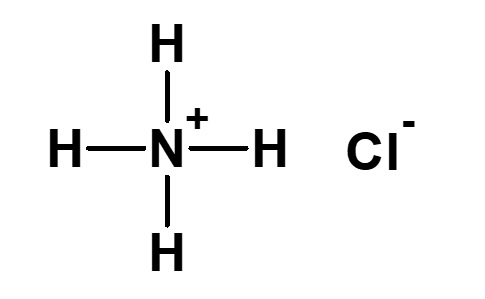


</description>
<dc:creator></dc:creator>
<dc:subject></dc:subject>
<dc:date>2024-08-09T17:45:00+09:00</dc:date>
<content:encoded><![CDATA[
<div class="cms-content-parts-sin171179606762468800 sanyo-pageLink" id="cms-editor-minieditor-sin171179606762471900" data-original="cms-content-parts-sin171179606762473300" data-custom="sanyo-pageLink"><!-- .parts_text_type01 -->
<ul>
    <li><a href="#intro">What is a surfactant?</a></li>
    <li><a href="#video">Surfactant functions introduction video</a></li>
    <li><a href="#cationic">What is a cationic surfactant?</a></li>
    <li><a href="#amine_salt">Amine Salt Type Cationic Surfactants</a></li>
    <li><a href="#quaternary">Quaternary Ammonium Salt Type Cationic Surfactants</a></li>
    <li><a href="#summary">Summary of Cationic Surfactants</a></li>
    <li><a href="#info">Related Products &#38; Topics</a></li>
</ul>
<!-- // .parts_text_type01 --></div>
<h2 class="cms-content-parts-sin171179608038418400" id="cms-editor-textarea-sin171179608038426200"><a name="intro"></a>What is a surfactant?</h2>
<div class="cms-content-parts-sin171179610700973200 cparts-id119 lay-margin-b--3 box" data-selectable="cparts-animate cparts-animate--slideInUp:上へスライド,cparts-animate cparts-animate--slideInDown:下へスライド,cparts-animate cparts-animate--slideInLeft:左へスライド,cparts-animate cparts-animate--slideInRight:右へスライド">
<div class="lay-row">
<div class="lay-col12-xs-12 lay-col12-md-12 lay-col12-lg-12">
<div id="cms-editor-minieditor-sin171179610700977000" class="cparts-txt-block lay-reset-child">
<p><font face="Noto Sans JP">First, an interface is a boundary surface that exists between two substances with different properties, and interfaces exist between liquids and solids, liquids and liquids, and liquids and gases.</font></p>
<p><font face="Noto Sans JP">Surfactants enhance performance by performing functions such as washing, emulsifying, dispersing, wetting, and penetrating at this interface.<br />
<br />
<span style="font-weight: 700;">Interface = a boundary surface that exists between two substances with different properties</span><br />
</font><font face="Noto Sans JP">Liquid and solid: cup and coffee, machine and lubricant&#160;</font><br />
<font face="Noto Sans JP">Liquid and liquid: water and oil&#160;</font><br />
<font face="Noto Sans JP">Liquid and gas: seawater and air, soap bubbles</font><br />
<span style="font-weight: 700;"><font face="Noto Sans JP"><br />
Examples of roles of surfactants</font></span><br />
<font face="Noto Sans JP">Cleaning ・・・ Removing dirt&#160;</font><br />
<font face="Noto Sans JP">Emulsification ・・・ Dispersion ・・ Making unmixable things easier to mix</font><br />
<font face="Noto Sans JP">Wetting / Penetration ・・・ Makes wetting and soaking easier</font></p>
</div>
</div>
</div>
</div>
<h3 class="cms-content-parts-sin171179612127819800" id="cms-editor-textarea-sin171179612127823500">Basic structure of a surfactant</h3>
<div class="cms-content-parts-sin171179623930333000 cparts-id119 lay-margin-b--3 box" data-selectable="cparts-animate cparts-animate--slideInUp:上へスライド,cparts-animate cparts-animate--slideInDown:下へスライド,cparts-animate cparts-animate--slideInLeft:左へスライド,cparts-animate cparts-animate--slideInRight:右へスライド">
<div class="lay-row">
<div class="lay-col12-xs-12 lay-col12-md-12 lay-col12-lg-12">
<div id="cms-editor-minieditor-sin171179623930308600" class="cparts-txt-block lay-reset-child">
<p>-Surfactants have different structures in their molecules with different properties: lipophilic groups (oil-loving parts) and hydrophilic groups (water-loving parts).<br />
<br />
-Surfactants are broadly classified into four types according to the structure of the hydrophilic group: nonionic, anionic, cationic, and amphoteric (having both anionic and cationic groups).</p>
<p><img src="https://sanyo-chemical-solutions.com/images/technology/surfactant/img_surfactantbasics_types.jpg" width="800" height="211" alt="" /></p>
</div>
</div>
</div>
</div>
<div class="cms-content-parts-sin172353856361862300 cparts-id96--01 box lay-margin-b--3" data-selectable="cparts-animate cparts-animate--slideInUp:上へスライド,cparts-animate cparts-animate--slideInDown:下へスライド,cparts-animate cparts-animate--slideInLeft:左へスライド,cparts-animate cparts-animate--slideInRight:右へスライド">
<div class="lay-row">
<div class="lay-col12-xs-12 lay-col12-md-12 lay-col12-lg-12">
<div class="cparts-table-block lay-reset-child" id="cms-editor-minieditor-sin172353856361867400">
<table>
    <caption class="lay-margin-t--1">&#160; &#160; &#160;</caption>
    <tbody>
        <tr>
            <th>Type of surfactant</th>
            <th>Feature</th>
            <th>Main application</th>
            <th>Composition example</th>
        </tr>
        <tr>
            <td>Nonionic surfactant<br />
            <img src="https://sanyo-chemical-solutions.com/images/technology/surfactant/img_surfactantbasics_nonion.jpg" width="150" height="47" alt="" /></td>
            <td>-Hydrophilic and hydrophobic balance<br />
            can be easily adjusted<br />
            -Excellent emulsification and solubilization<br />
            -Low lather<br style="margin-bottom: 0px;" />
            -Susceptible to temperature but not to pH</td>
            <td>-Laundry detergent<br />
            -Emulsifiers and solubilizers<br />
            -Dispersant<br style="margin-bottom: 0px;" />
            -Metalworking oil</td>
            <td>-Polyoxyethylene alkyl ether<br style="margin-bottom: 0px;" />
            etc.</td>
        </tr>
        <tr>
            <td>Anionic surfactant<br />
            <img src="https://sanyo-chemical-solutions.com/images/technology/surfactant/img_surfactantbasics_anion.jpg" width="150" height="49" alt="" /></td>
            <td>-Excellent emulsification and dispersibility<br />
            -Good lather<br style="margin-bottom: 0px;" />
            -Temperature insensitive</td>
            <td>-Laundry detergent<br />
            -Shampoo<br style="margin-bottom: 0px;" />
            -Body soap</td>
            <td>-Alkyl benzene sulfonate<br />
            -Alkyl ether sulfates<br style="margin-bottom: 0px;" />
            etc.</td>
        </tr>
        <tr>
            <td>Cationic surfactant<br />
            <img src="https://sanyo-chemical-solutions.com/images/technology/surfactant/img_surfactantbasics_cation.jpg" width="150" height="49" alt="" /></td>
            <td>-Adsorption to fibers<br />
            -Antistatic effect<br style="margin-bottom: 0px;" />
            -Bactericidal</td>
            <td>-Hair conditioner and treatment<br />
            -Fabric softener<br style="margin-bottom: 0px;" />
            -Disinfectant</td>
            <td>-Didecyldimethylammonium methyl sulfate</td>
        </tr>
        <tr>
            <td>Amphoteric surfactant<br />
            <img src="https://sanyo-chemical-solutions.com/images/technology/surfactant/img_surfactantbasics_ryosei.jpg" width="150" height="47" alt="" /></td>
            <td>-Mild on skin<br />
            -Excellent solubility in water<br style="margin-bottom: 0px;" />
            -Synergistic with other active components</td>
            <td>-Shampoo<br />
            -Body soap<br style="margin-bottom: 0px;" />
            -Kitchen detergent</td>
            <td>-Alkyl di-aminoethyl hydrochloride glycine<br />
            -Sodium lauryl aminopropionic acid<br />
            -Dimethylstearyl betaine<br style="margin-bottom: 0px;" />
            -Coconut oil fatty acid amidopropyl betaine</td>
        </tr>
    </tbody>
</table>
</div>
</div>
</div>
</div>
<h2 class="cms-content-parts-sin171179614288982300" id="cms-editor-textarea-sin171179614288986900"><a name="video"></a>Surfactant functions introduction video</h2>
<div class="cms-content-parts-sin172353848190869800">[[CMSmodule.parts::ad#param=309]]</div>
<div class="cms-content-parts-sin171179623311713300 cparts-id119 lay-margin-b--3 box" data-selectable="cparts-animate cparts-animate--slideInUp:上へスライド,cparts-animate cparts-animate--slideInDown:下へスライド,cparts-animate cparts-animate--slideInLeft:左へスライド,cparts-animate cparts-animate--slideInRight:右へスライド">
<div class="lay-row">
<div class="lay-col12-xs-12 lay-col12-md-12 lay-col12-lg-12">
<div id="cms-editor-minieditor-sin171179623311720100" class="cparts-txt-block lay-reset-child">
<p>It consists of seven short movies for each function.&#160;<br />
0:00　Introduction of surfactants functions　<br />
0:16　Part1　Washability<br />
1:00　Part2　Permeability<br />
2:10　Part3　Dispersion<br />
2:55　Part4　Foaming properties<br />
3:25　Part5　Defoaming properties<br />
3:39　Part6　Smoothness<br />
4:20　Part7　Antibacterial properties</p>
</div>
</div>
</div>
</div>
<h2 class="cms-content-parts-sin171179625026888800" id="cms-editor-textarea-sin171179625026895900"><a name="cationic"></a>What is a cationic surfactant?</h2>
<div class="cms-content-parts-sin172691445455043400 cparts-id119--02 box lay-margin-b--3" col-flex="1-2" data-selectable="cparts-animate cparts-animate--slideInUp:上へスライド,cparts-animate cparts-animate--slideInDown:下へスライド,cparts-animate cparts-animate--slideInLeft:左へスライド,cparts-animate cparts-animate--slideInRight:右へスライド">
<div class="lay-row">
<div class="lay-col12-xs-12 lay-col12-md-6 lay-col12-lg-6">
<div class="cparts-txt-block lay-reset-child" id="cms-editor-minieditor-sin172691445455050900">
<p style="text-align: center;"><span style="text-align: center;"><b><img src="https://sanyo-chemical-solutions.com/images/technology/cationic_surfactant/img_cationic_en1.jpg" width="400" height="357" alt="" /></b><br />
<b>Fig. Model diagram of anionic and cationic surfactants</b><br />
</span></p>
</div>
</div>
<div class="lay-col12-xs-12 lay-col12-md-6 lay-col12-lg-6">
<div class="cparts-txt-block lay-reset-child" id="cms-editor-minieditor-sin172691445455051400">
<h6 style="">Basic Structure of Cationic Surfactants</h6>
<p>In view of their form, the structure of cationic surfactants is quite the opposite of that of anionic surfactants. As shown in the figure to left, the hydrophilic groups are ionized into cations when the surfactants are dissolved in water. Therefore, they are sometimes called invert soaps or positive soaps.<br />
<br />
<br />
Then, what kind of hydrophilic groups should be introduced in order to create a positive charge in this way?</p>
</div>
</div>
</div>
</div>
<div class="cms-content-parts-sin171179626437234900 cparts-id119 lay-margin-b--3 box" data-selectable="cparts-animate cparts-animate--slideInUp:上へスライド,cparts-animate cparts-animate--slideInDown:下へスライド,cparts-animate cparts-animate--slideInLeft:左へスライド,cparts-animate cparts-animate--slideInRight:右へスライド">
<div class="lay-row">
<div class="lay-col12-xs-12 lay-col12-md-12 lay-col12-lg-12">
<div id="cms-editor-minieditor-sin171179626437210100" class="cparts-txt-block lay-reset-child">
<h6 style="">Hydrophilic Groups of Cationic Surfactants</h6>
<p>A sodium ion (Na<span class="sanyoc-super">+</span>) and a potassium ion (K<span class="sanyoc-super">+</span>) are certainly hydrophilic groups with positive charges, but there is no way to combine them with hydrophobic groups. However, among the same inorganic cations, it seems possible to find a way of combining an ammonium ion (NH<span style="font-size: smaller;">4</span><span class="sanyoc-super">+</span>) with hydrophobic groups. For instance, it might be possible to substitute a hydrogen atom of&#160;ammonium chloride (NH<span style="font-size: smaller;">4</span><span class="sanyoc-super">+</span>Cl<span class="sanyoc-super">-</span>) with a hydrophobic group such as an alkyl group.</p>
<p>In fact, a hydrogen atom can be substituted with an alkyl group, and furthermore, not only one, but also two, three or four hydrogen atoms can be substituted freely. That is, four kinds of substituted ammonium chlorides, each having a specific name, can be prepared, as shown in the table below.</p>
</div>
</div>
</div>
</div>
<h5 class="cms-content-parts-sin172690376718384600" id="cms-editor-textarea-sin172690376718387500">Ammonium chloride with alkyl groups</h5>
<div class="cms-content-parts-sin172353861148042200 cparts-id96--01 box lay-margin-b--3" data-selectable="cparts-animate cparts-animate--slideInUp:上へスライド,cparts-animate cparts-animate--slideInDown:下へスライド,cparts-animate cparts-animate--slideInLeft:左へスライド,cparts-animate cparts-animate--slideInRight:右へスライド">
<div class="lay-row">
<div class="lay-col12-xs-12 lay-col12-md-12 lay-col12-lg-12">
<div class="cparts-table-block lay-reset-child" id="cms-editor-minieditor-sin172353861148007600">
<table dir="ltr">
    <caption class="lay-margin-t--1">&#160; &#160; &#160;</caption>
    <thead>
        <tr>
            <th scope="row">Number of alkyl group</th>
            <th scope="col">Kind of ammonium salt</th>
            <th scope="col">Alternative name, taking into account the neutralization of amine with hydrochloric acid</th>
        </tr>
    </thead>
    <tbody>
        <tr>
            <th scope="row" style="text-align: center;">0</th>
            <td style="text-align: center;"><img src="https://sanyo-chemical-solutions.com/images/technology/cationic_surfactant/img_cation_p113_1_annmo.jpg" width="150" height="92" alt="" /><br />
            Ammonium chloride</td>
            <td style="text-align: center;"><span style="font-weight: 700; text-align: center;">NH<span style="font-size: smaller;">3</span>・HCl<br />
            </span>Hydrochloric acid salt of ammonia&#160;<span style="font-weight: 700; text-align: center;"><br type="_moz" />
            </span></td>
        </tr>
        <tr>
            <th scope="row" style="text-align: center;">1</th>
            <td style="text-align: center;"><img src="https://sanyo-chemical-solutions.com/images/technology/cationic_surfactant/img_cation_p113_2_amine.jpg" width="150" height="92" alt="" /><br />
            Monoalkylammonium chloride</td>
            <td style="text-align: center;"><span style="font-weight: 700; text-align: center;">R－NH<span style="font-size: smaller;">2</span>・HCl<br />
            </span>Hydrochloric acid salt of primary amine<span style="font-weight: 700; text-align: center;"><br type="_moz" />
            </span></td>
        </tr>
        <tr>
            <th scope="row" style="text-align: center;">2</th>
            <td style="text-align: center;"><img src="https://sanyo-chemical-solutions.com/images/technology/cationic_surfactant/img_cation_p113_3_amine.jpg" width="150" height="92" alt="" /><br />
            Dialkylammonium chloride</td>
            <td style="text-align: center;"><img src="https://sanyo-chemical-solutions.com/images/technology/cationic_surfactant/img_cation_p113_6_amine.jpg" width="150" height="89" alt="" /><br />
            Hydrochloric acid salt of secondary amine</td>
        </tr>
        <tr>
            <th scope="row" style="text-align: center;">3</th>
            <td style="text-align: center;"><img src="https://sanyo-chemical-solutions.com/images/technology/cationic_surfactant/img_cation_p113_4_amine.jpg" width="150" height="91" alt="" /><br />
            Trialkylammonium chloride</td>
            <td style="text-align: center;"><img src="https://sanyo-chemical-solutions.com/images/technology/cationic_surfactant/img_cation_p113_7_amine.jpg" width="150" height="92" alt="" /><br />
            Hydrochloric acid salt of tertiary amine</td>
        </tr>
        <tr>
            <th scope="row" style="text-align: center;">4</th>
            <td style="text-align: center;"><img src="https://sanyo-chemical-solutions.com/images/technology/cationic_surfactant/img_cation_p113_5_amine.jpg" width="150" height="92" alt="" /><br />
            Tetraalkylammonium chloride<br />
            (quaternary ammonium chloride)</td>
            <td style="text-align: center;">This special compound cannot be split into amine and hydrochloric acid. Its nature is also very different from that of others. The following schemes are conceivable if it is forced to split in two:<span style="font-weight: 700;"><br />
            a) R<span style="font-size: smaller;">4</span>N<span class="sanyoc-super">+</span>OH<span class="sanyoc-super">-&#160;</span>&#160;　＋　　HCl　　&#8594;　R<span style="font-size: smaller;">4</span>N<span class="sanyoc-super">+</span>Cl<span class="sanyoc-super">-</span>　＋　　H<span style="font-size: smaller;">2</span>O<br />
            b)R<span style="font-size: smaller;">3</span>N　　＋　　RCl　　&#8594;　R<span style="font-size: smaller;">4</span>N<span class="sanyoc-super">+</span>Cl<span class="sanyoc-super">-</span></span></td>
        </tr>
    </tbody>
</table>
</div>
</div>
</div>
</div>
<div class="cms-content-parts-sin172897973805249400 cparts-id119 lay-margin-b--3 box" data-selectable="cparts-animate cparts-animate--slideInUp:上へスライド,cparts-animate cparts-animate--slideInDown:下へスライド,cparts-animate cparts-animate--slideInLeft:左へスライド,cparts-animate cparts-animate--slideInRight:右へスライド">
<div class="lay-row">
<div class="lay-col12-xs-12 lay-col12-md-12 lay-col12-lg-12">
<div class="cparts-txt-block lay-reset-child" id="cms-editor-minieditor-sin172897973805253300">
<h6>Synthesis of Cationic Surfactants by Neutralization of Amines</h6>
<p>In actual practice they are not manufactured by substitution of hydrogen atoms of ammonium chloride with alkyl groups. Instead, just as ammonium chloride is prepared by neutralization of ammonia with hydrochloric acid, alkylated ammonium chlorides (hydrochloric acid salts of amines) with up to three alkyl groups are manufactured easily by neutralization with hydrochloric acid of appropriate primary amines, secondary amines or tertiary amines, respectively, as shown below.</p>
<p>Thus, higher alkylamines can be converted easily to cationic surfactants by simple neutralization with acids. Accordingly, not only strong inorganic acids such as hydrochloric acid, but also relatively weak lower fatty acids such as formic acid and acetic acid may yield amine salt type cationic surfactants by neutralizing amines with them.</p>
<div></div>
</div>
</div>
</div>
</div>
<h5 class="cms-content-parts-sin172690379675370100" id="cms-editor-textarea-sin172690379675378000">Examples of salts formed by the neutralization reaction of amine compounds with acids</h5>
<div class="cms-content-parts-sin172690380823161400 cparts-id96--01 box lay-margin-b--3" data-selectable="cparts-animate cparts-animate--slideInUp:上へスライド,cparts-animate cparts-animate--slideInDown:下へスライド,cparts-animate cparts-animate--slideInLeft:左へスライド,cparts-animate cparts-animate--slideInRight:右へスライド">
<div class="lay-row">
<div class="lay-col12-xs-12 lay-col12-md-12 lay-col12-lg-12">
<div class="cparts-table-block lay-reset-child" id="cms-editor-minieditor-sin172690380823117700">
<table>
    <caption class="lay-margin-t--1">&#160; &#160; &#160;</caption>
    <tbody>
        <tr>
            <th style="text-align: center;">Amine compound</th>
            <th style="text-align: center;">Acid</th>
            <th style="text-align: center;"></th>
            <th style="text-align: center;" colspan="2">Product</th>
        </tr>
        <tr>
            <td style="text-align: center;"><span style="font-weight: 700; text-align: center;">NH<span style="font-size: smaller;">3</span></span></td>
            <td style="text-align: center;"><span style="font-weight: 700; text-align: center;">HCl</span></td>
            <td style="text-align: center;"><span style="text-align: center;">&#8594;</span></td>
            <td style="text-align: center;"><span style="font-weight: 700; text-align: center;">NH<span style="font-size: smaller;">3</span>・HCl</span></td>
            <td style="text-align: center;"><span style="font-weight: 700; text-align: center;">&#160;NH<span style="font-size: smaller;">4</span><span class="sanyoc-super">+</span>Cl<span class="sanyoc-super">-</span></span></td>
        </tr>
        <tr>
            <td style="text-align: center;"><span style="font-weight: 700; text-align: center;">RNH<span style="font-size: smaller;">2</span></span></td>
            <td style="text-align: center;"><span style="font-weight: 700; text-align: center;">HCl</span></td>
            <td style="text-align: center;"><span style="text-align: center;">&#8594;</span></td>
            <td style="text-align: center;"><span style="font-weight: 700; text-align: center;">RNH・HCl</span></td>
            <td style="text-align: center;"><span style="font-weight: 700; text-align: center;">RNH<span style="font-size: smaller;">3</span><span class="sanyoc-super">+</span>Cl<span class="sanyoc-super">-</span></span></td>
        </tr>
        <tr>
            <td style="text-align: center;"><span style="font-weight: 700; text-align: center;">R<span style="font-size: smaller;">2</span>NH</span></td>
            <td style="text-align: center;"><span style="font-weight: 700; text-align: center;">HCl</span></td>
            <td style="text-align: center;"><span style="text-align: center;">&#8594;</span></td>
            <td style="text-align: center;"><span style="font-weight: 700; text-align: center;">R<span style="font-size: smaller;">2</span>NH・HCl</span></td>
            <td style="text-align: center;"><span style="font-weight: 700; text-align: center;">R<span style="font-size: smaller;">2</span>NH<span style="font-size: smaller;">2</span><span class="sanyoc-super">+</span>Cl<span class="sanyoc-super">-</span></span></td>
        </tr>
        <tr>
            <td style="text-align: center;"><span style="font-weight: 700; text-align: center;">R<span style="font-size: smaller;">3</span>N</span></td>
            <td style="text-align: center;"><span style="font-weight: 700; text-align: center;">HCl</span></td>
            <td style="text-align: center;"><span style="text-align: center;">&#8594;</span></td>
            <td style="text-align: center;"><span style="font-weight: 700; text-align: center;">R<span style="font-size: smaller;">3</span>NH・HCl</span></td>
            <td style="text-align: center;"><span style="font-weight: 700; text-align: center;">R<span style="font-size: smaller;">3</span>NH<span class="sanyoc-super">+</span>Cl<span class="sanyoc-super">-</span></span></td>
        </tr>
    </tbody>
</table>
</div>
</div>
</div>
</div>
<div class="cms-content-parts-sin172690381738260100 cparts-id119 lay-margin-b--3 box" data-selectable="cparts-animate cparts-animate--slideInUp:上へスライド,cparts-animate cparts-animate--slideInDown:下へスライド,cparts-animate cparts-animate--slideInLeft:左へスライド,cparts-animate cparts-animate--slideInRight:右へスライド">
<div class="lay-row">
<div class="lay-col12-xs-12 lay-col12-md-12 lay-col12-lg-12">
<div id="cms-editor-minieditor-sin172690381738237800" class="cparts-txt-block lay-reset-child">
<h6>Examples of laurylamine acetate</h6>
<p><span style="letter-spacing: 0.1rem;">For example, acetic acid salt of laurylamine is obtained as a result of exothermic neutralization by adding a calculated amount of acetic acid during stirring to laurylamine (C<span style="font-size: smaller;">12</span>H<span style="font-size: smaller;">25</span>NH<span style="font-size: smaller;">2</span>, a white, waxy solid insoluble in water), which has been melted by heating to 60 to 70 &#176;C.</span><br />
<br />
Acetic acid salt of laurylamine thus obtained is an excellent surfactant which is easily soluble in water.&#160;</p>
</div>
</div>
</div>
</div>
<div class="cms-content-parts-sin172690383345041000 cparts-id119 lay-margin-b--3 box" data-selectable="cparts-animate cparts-animate--slideInUp:上へスライド,cparts-animate cparts-animate--slideInDown:下へスライド,cparts-animate cparts-animate--slideInLeft:左へスライド,cparts-animate cparts-animate--slideInRight:右へスライド">
<div class="lay-row">
<div class="lay-col12-xs-12 lay-col12-md-12 lay-col12-lg-12">
<div id="cms-editor-minieditor-sin172690383345017900" class="cparts-txt-block lay-reset-child">
<p style="text-align: center;"><b><img src="https://sanyo-chemical-solutions.com/images/technology/cationic_surfactant/img_cationic_en114_1.jpg" width="800" height="129" alt="" /></b><br />
<b>Fig. Formation reaction of laurylamine acetate</b></p>
</div>
</div>
</div>
</div>
<div class="cms-content-parts-sin172690384018451900 cparts-id119 lay-margin-b--3 box" data-selectable="cparts-animate cparts-animate--slideInUp:上へスライド,cparts-animate cparts-animate--slideInDown:下へスライド,cparts-animate cparts-animate--slideInLeft:左へスライド,cparts-animate cparts-animate--slideInRight:右へスライド">
<div class="lay-row">
<div class="lay-col12-xs-12 lay-col12-md-12 lay-col12-lg-12">
<div id="cms-editor-minieditor-sin172690384018430000" class="cparts-txt-block lay-reset-child">
<h6>Raw Material Amines for Cationic Surfactants</h6>
<p>In this connection, special attention should be paid to the fact that neutralization of higher alkylamines with acids such as higher fatty acids, which are difficult to dissolve in water, results in formation of salts of amines that are insoluble in water.</p>
<p>Then, what kinds of amines can be used as raw materials for the cationic surfactants mentioned above ? To make you familiar with these amines, The table below shows not only higher alkylamines that are convertible into surfactants directly but also lower alkylamines, which are important as intermediates.</p>
</div>
</div>
</div>
</div>
<h5 class="cms-content-parts-sin172690384577777300" id="cms-editor-textarea-sin172690384577788000">Examples of raw material amines for cationic surfactants 1 (alkyl amines, ethanolamines)</h5>
<div class="cms-content-parts-sin172690386032935600 cparts-id96--01 box lay-margin-b--3" data-selectable="cparts-animate cparts-animate--slideInUp:上へスライド,cparts-animate cparts-animate--slideInDown:下へスライド,cparts-animate cparts-animate--slideInLeft:左へスライド,cparts-animate cparts-animate--slideInRight:右へスライド">
<div class="lay-row">
<div class="lay-col12-xs-12 lay-col12-md-12 lay-col12-lg-12">
<div class="cparts-table-block lay-reset-child" id="cms-editor-minieditor-sin172690386032892900">
<table dir="ltr">
    <caption class="lay-margin-t--1">&#160; &#160; &#160;</caption>
    <thead>
        <tr>
            <th scope="row" style="text-align: center;">Type</th>
            <th scope="col" style="text-align: center;">Primary amine</th>
            <th scope="col" style="text-align: center;">Secondary amine</th>
            <th scope="col" style="text-align: center;">Tertiary amine</th>
        </tr>
    </thead>
    <tbody>
        <tr>
            <th scope="row" style="text-align: center;" rowspan="3">Alkylamines</th>
            <td style="text-align: center;"><span style="text-align: center;"><b>CH</b><span style="font-weight: 700; font-size: smaller;">3</span><b>ーN</b></span><strong>H</strong><span style="letter-spacing: 0.1rem; background-color: transparent; font-weight: 700; text-align: center; font-size: smaller;">2</span><span style="text-align: center;"><b><br />
            </b>(Monomethylamine)</span><span style="font-weight: 700; text-align: center;"><br />
            </span></td>
            <td style="text-align: center;"><img src="https://sanyo-chemical-solutions.com/images/technology/cationic_surfactant/img_cation_p115_0.jpg" width="150" height="97" alt="" /><br />
            <span style="text-align: center;">(Dimethylamine)</span></td>
            <td style="text-align: center;"><img src="https://sanyo-chemical-solutions.com/images/technology/cationic_surfactant/img_cation_p115_02.jpg" width="150" height="98" alt="" /><br />
            <span style="text-align: center;">(Trimethylamine)</span></td>
        </tr>
        <tr>
            <td style="text-align: center;"><span style="font-weight: 700; text-align: center;">C<span style="font-size: smaller;">12</span>H<span style="font-size: smaller;">25</span>ーNH<span style="font-size: smaller;">2<br />
            </span></span><span style="text-align: center;">(Laurylamine)</span><span style="font-weight: 700; text-align: center;"><span style="font-size: smaller;"><br type="_moz" />
            </span></span></td>
            <td style="text-align: center;"><img src="https://sanyo-chemical-solutions.com/images/technology/cationic_surfactant/img_cation_p115_1.jpg" width="150" height="99" alt="" /><br />
            <span style="text-align: center;">(Dilaurylamine)</span></td>
            <td style="text-align: center;"><img src="https://sanyo-chemical-solutions.com/images/technology/cationic_surfactant/img_cation_p115_5.jpg" width="150" height="98" alt="" /><br />
            <span style="text-align: center;">(Lauryldimethylamine)</span></td>
        </tr>
        <tr>
            <td style="text-align: center;"><span style="font-weight: 700; text-align: center;">C<span style="font-size: smaller;">18</span>H<span style="font-size: smaller;">37</span>ーNH<span style="font-size: smaller;">2<br />
            </span></span><span style="text-align: center;">(Stearylamine)</span><span style="font-weight: 700; text-align: center;"><span style="font-size: smaller;"><br type="_moz" />
            </span></span></td>
            <td style="text-align: center;"><img src="https://sanyo-chemical-solutions.com/images/technology/cationic_surfactant/img_cation_p115_2.jpg" width="150" height="98" alt="" /><br />
            <span style="text-align: center;">(Distearylamine)</span></td>
            <td style="text-align: center;"><img src="https://sanyo-chemical-solutions.com/images/technology/cationic_surfactant/img_cation_p115_6_2.jpg" width="150" height="98" alt="" /><br />
            <span style="text-align: center;">(Stearyldimethylamine)</span></td>
        </tr>
        <tr>
            <th scope="row" style="text-align: center;">Ethanolamines</th>
            <td style="text-align: center;"><span style="font-weight: 700; text-align: center;">HOCH<span style="font-size: smaller;">2</span>CH<span style="font-size: smaller;">2</span>NH<span style="font-size: smaller;">2<br />
            </span></span><span style="text-align: center;">(Monoethanolamine)</span><span style="font-weight: 700; text-align: center;"><span style="font-size: smaller;"><br type="_moz" />
            </span></span></td>
            <td style="text-align: center;"><img src="https://sanyo-chemical-solutions.com/images/technology/cationic_surfactant/img_cation_p115_3.jpg" width="150" height="98" alt="" /><br />
            <span style="text-align: center;">(Diethanolamine)</span></td>
            <td style="text-align: center;"><img src="https://sanyo-chemical-solutions.com/images/technology/cationic_surfactant/img_cation_p115_7.jpg" width="150" height="97" alt="" /><br />
            <span style="text-align: center;">(Triethanolamine)</span></td>
        </tr>
    </tbody>
</table>
</div>
</div>
</div>
</div>
<h5 class="cms-content-parts-sin172690385548308400" id="cms-editor-textarea-sin172690385548315700">Examples of raw material amines for cationic surfactants 2 (polyethylene polyamines and other amines)</h5>
<div class="cms-content-parts-sin172690386557288100 cparts-id96--01 box lay-margin-b--3" data-selectable="cparts-animate cparts-animate--slideInUp:上へスライド,cparts-animate cparts-animate--slideInDown:下へスライド,cparts-animate cparts-animate--slideInLeft:左へスライド,cparts-animate cparts-animate--slideInRight:右へスライド">
<div class="lay-row">
<div class="lay-col12-xs-12 lay-col12-md-12 lay-col12-lg-12">
<div class="cparts-table-block lay-reset-child" id="cms-editor-minieditor-sin172690386557251400">
<table dir="ltr">
    <caption class="lay-margin-t--1">&#160; &#160; &#160;</caption>
    <tbody>
        <tr>
            <th scope="row">Polyethylene-polyamines</th>
            <td colspan="3"><span style="font-weight: 700;">H<span style="font-size: smaller;">2</span>NCH<span style="font-size: smaller;">2</span>CH<span style="font-size: smaller;">2</span>NH<span style="font-size: smaller;">2 　&#160;</span></span>(Ethylenediamine)<br />
            <br />
            <span style="margin-bottom: 0px; font-weight: 700;">H<span style="font-size: smaller;">2</span>NCH<span style="font-size: smaller;">2</span>CH<span style="font-size: smaller;">2</span>NHCH<span style="font-size: smaller;">2</span>CH<span style="font-size: smaller;">2</span>NH<span style="font-size: smaller;">2&#160;</span></span>(Diethylenetriamine)</td>
        </tr>
        <tr>
            <th scope="row">Other amines</th>
            <td><img src="https://sanyo-chemical-solutions.com/images/technology/cationic_surfactant/img_cation_p115_4_2.jpg" width="200" height="88" alt="" /><br />
            (N,N-Diethylethylenediamine)<br />
            <br />
            <span style="font-weight: 700; margin-bottom: 0px;">H<span style="font-size: smaller;">2</span>NCH<span style="font-size: smaller;">2</span>CH<span style="font-size: smaller;">2</span>NHCH<span style="font-size: smaller;">2</span>CH<span style="font-size: smaller;">2</span>OH&#160;&#160;<br />
            </span>(Aminoethanolamine)</td>
            <td>
            <p><img src="https://sanyo-chemical-solutions.com/images/technology/cationic_surfactant/img_cation_p115_8.jpg" width="150" height="71" alt="" /><br />
            (Pyridine)<br />
            <br />
            <img src="https://sanyo-chemical-solutions.com/images/technology/cationic_surfactant/img_cation_p115_9.jpg" width="150" height="71" alt="" /><br />
            (Morpholine)</p>
            </td>
            <td><img src="https://sanyo-chemical-solutions.com/images/technology/cationic_surfactant/img_cation_p115_10.jpg" width="150" height="97" alt="" /><br />
            (Guanidine)<br />
            <br />
            <strong>H<span style="font-size: smaller;">2</span>N-NH<span style="font-size: smaller;">2</span></strong><br />
            (Hydrazine)</td>
        </tr>
    </tbody>
</table>
</div>
</div>
</div>
</div>
<div class="cms-content-parts-sin172690388382415000 cparts-id119 lay-margin-b--3 box" data-selectable="cparts-animate cparts-animate--slideInUp:上へスライド,cparts-animate cparts-animate--slideInDown:下へスライド,cparts-animate cparts-animate--slideInLeft:左へスライド,cparts-animate cparts-animate--slideInRight:右へスライド">
<div class="lay-row">
<div class="lay-col12-xs-12 lay-col12-md-12 lay-col12-lg-12">
<div id="cms-editor-minieditor-sin172690388382389100" class="cparts-txt-block lay-reset-child">
<h6>Synthesis of quaternary ammonium chlorides with alkylating agents</h6>
<p><span style="font-size: 16px; letter-spacing: 0.1rem;">Incidentally, you may note that mono-, di- or trialkylammonium chloride (hydrochloric acid salt of primary, secondary or tertiary alkylamine) can certainly be prepared by the process mentioned above, but tetraalkylammonium chlorides (quaternary ammonium chlorides) cannot be prepared in the same way In other words, it is impossible to prepare alkylammonium chlorides with four alkyl groups that are linked to the central nitrogen atom by neutralizing of any kind of amine with hydrochloric acid.</span></p>
</div>
</div>
</div>
</div>
<div class="cms-content-parts-sin172690391730154300 cparts-id119--02 box lay-margin-b--3" col-flex="1-2" data-selectable="cparts-animate cparts-animate--slideInUp:上へスライド,cparts-animate cparts-animate--slideInDown:下へスライド,cparts-animate cparts-animate--slideInLeft:左へスライド,cparts-animate cparts-animate--slideInRight:右へスライド">
<div class="lay-row">
<div class="lay-col12-xs-12 lay-col12-md-6 lay-col12-lg-6">
<div class="cparts-txt-block lay-reset-child" id="cms-editor-minieditor-sin172690391730169400">
<p style="text-align: center;"><span style="font-size: 16px; font-weight: 700; text-align: center;"><img src="https://sanyo-chemical-solutions.com/images/technology/cationic_surfactant/img_cationic_en114_2.jpg" width="1045" height="184" alt="" /><br />
</span><span style="font-size: 16px;"><b>Fig. Reaction of tertiary amine with alkyl chloride</b></span><br />
<span style="font-size: 16px;"><b>&#160;(Quaternary ammonium chloride formation reaction)</b></span></p>
<div style="text-align: center;"></div>
</div>
</div>
<div class="lay-col12-xs-12 lay-col12-md-6 lay-col12-lg-6">
<div class="cparts-txt-block lay-reset-child" id="cms-editor-minieditor-sin172690391730170000">
<p><span style="font-size: 16px;">For the preparation of quaternary ammonium chloride, it is necessary to have tertiary amine react with alkyl chloride.</span><br />
<br />
<span style="font-size: 16px;">The reaction does not take place as easily as in the case of neutralization, but it should proceed fairly smoothly as the reaction itself is exothermic.</span></p>
</div>
</div>
</div>
</div>
<div class="cms-content-parts-sin172690392832111600 cparts-id119--02 box lay-margin-b--3" col-flex="1-2" data-selectable="cparts-animate cparts-animate--slideInUp:上へスライド,cparts-animate cparts-animate--slideInDown:下へスライド,cparts-animate cparts-animate--slideInLeft:左へスライド,cparts-animate cparts-animate--slideInRight:右へスライド">
<div class="lay-row">
<div class="lay-col12-xs-12 lay-col12-md-6 lay-col12-lg-6">
<div class="cparts-txt-block lay-reset-child" id="cms-editor-minieditor-sin172690392832034600">
<p><span style="text-align: center;"><img src="https://sanyo-chemical-solutions.com/images/technology/cationic_surfactant/img_cationic_en_241015modi1.jpg" width="1261" height="697" alt="" /><br />
<span style="font-size: 16px;"><b>Fig. Formation reaction of amine and ammonium salts by acids and alkylating agents</b></span><br />
</span></p>
</div>
</div>
<div class="lay-col12-xs-12 lay-col12-md-6 lay-col12-lg-6">
<div class="cparts-txt-block lay-reset-child" id="cms-editor-minieditor-sin172690392832055800">
<p><span style="font-size: 16px;">In general, quaternization of tertiary higher alkylamines with alkylating agents is necessary for the manufacture of quaternary ammonium salt type surfactants.</span></p>
<p><span style="font-size: 16px;">Alkylating agents are compounds such as methyl chloride (CH<span style="font-size: smaller;">3</span>Cl) and dimethyl sulfate [ (CH<span style="font-size: smaller;">3</span>O)<span style="font-size: smaller;">2</span>SO<span style="font-size: smaller;">2</span>) ] that have the property of passing their alkyl groups easily to other compounds.</span></p>
<p><span style="font-size: 16px;">Therefore, it can be concluded that tertiary amines yield amine salt type cationic surfactants by neutralization with acids, and yield, quaternary ammonium salt type cationic surfactants by reaction with alkylating agents (quaternarization).&#160;</span></p>
</div>
</div>
</div>
</div>
<div class="cms-content-parts-sin172690393948297300 cparts-id119 lay-margin-b--3 box" data-selectable="cparts-animate cparts-animate--slideInUp:上へスライド,cparts-animate cparts-animate--slideInDown:下へスライド,cparts-animate cparts-animate--slideInLeft:左へスライド,cparts-animate cparts-animate--slideInRight:右へスライド">
<div class="lay-row">
<div class="lay-col12-xs-12 lay-col12-md-12 lay-col12-lg-12">
<div id="cms-editor-minieditor-sin172690393948269800" class="cparts-txt-block lay-reset-child">
<p>The table bellow shows typical examples of alkylating agents which are used frequently to manufacture quaternary ammonium salt type cationic surfactants. These alkylating agents yield quaternary ammonium salts through the following reaction examples.</p>
</div>
</div>
</div>
</div>
<div class="cms-content-parts-sin172690393222701600 cparts-id119 lay-margin-b--3 box" data-selectable="cparts-animate cparts-animate--slideInUp:上へスライド,cparts-animate cparts-animate--slideInDown:下へスライド,cparts-animate cparts-animate--slideInLeft:左へスライド,cparts-animate cparts-animate--slideInRight:右へスライド">
<div class="lay-row">
<div class="lay-col12-xs-12 lay-col12-md-12 lay-col12-lg-12">
<div id="cms-editor-minieditor-sin172690393222678900" class="cparts-txt-block lay-reset-child">
<p><span style="text-align: center;"><b><img src="https://sanyo-chemical-solutions.com/images/technology/cationic_surfactant/img_cationic_en116_2.jpg" width="800" height="399" alt="" /></b><br />
<b>Fig. Formation reaction of quaternary ammonium salts by alkylating agents</b><br />
</span></p>
</div>
</div>
</div>
</div>
<h5 class="cms-content-parts-sin172690397246469600" id="cms-editor-textarea-sin172690397246477500">Typical alkylating agents used to make quaternary ammonium salts</h5>
<div class="cms-content-parts-sin172690396356281900 cparts-id119--02 box lay-margin-b--3" col-flex="1-2" data-selectable="cparts-animate cparts-animate--slideInUp:上へスライド,cparts-animate cparts-animate--slideInDown:下へスライド,cparts-animate cparts-animate--slideInLeft:左へスライド,cparts-animate cparts-animate--slideInRight:右へスライド">
<div class="lay-row">
<div class="lay-col12-xs-12 lay-col12-md-6 lay-col12-lg-6">
<div class="cparts-txt-block lay-reset-child" id="cms-editor-minieditor-sin172690396356237900">
<p></p>
<table width="200" border="1" cellpadding="1" cellspacing="1" dir="ltr">
    <thead>
        <tr>
            <th scope="col" style="text-align: center;">Alkylating agent</th>
            <th scope="col" style="text-align: center;">Type of quaternary ammonium salt</th>
        </tr>
    </thead>
    <tbody>
        <tr>
            <td style="text-align: center;"><span style="font-size: 16px; font-weight: 700; text-align: center;">CH</span><span style="font-weight: 700; text-align: center; font-size: smaller;">3</span><span style="font-size: 16px; font-weight: 700; text-align: center;">Cl<br />
            </span>Methyl chloride<strong><span style="font-size: 16px; font-weight: 700; text-align: center;">　</span></strong></td>
            <td style="text-align: center;"><img src="https://sanyo-chemical-solutions.com/images/technology/cationic_surfactant/img_cation_p117_4.jpg" width="200" height="79" alt="" /></td>
        </tr>
        <tr>
            <td style="text-align: center;"><span style="font-size: 16px; font-weight: 700; text-align: center;">CH</span><span style="font-weight: 700; text-align: center; font-size: smaller;">3</span><span style="font-size: 16px; font-weight: 700; text-align: center;">Br<br />
            </span>Methyl bromide<span style="font-weight: 700; margin-bottom: 0px;"><span style="font-size: 16px; text-align: center;">　</span></span><span style="font-size: 16px; font-weight: 700; text-align: center;"><br />
            </span></td>
            <td style="text-align: center;"><img src="https://sanyo-chemical-solutions.com/images/technology/cationic_surfactant/img_cation_p117_5.jpg" width="200" height="79" alt="" /></td>
        </tr>
        <tr>
            <td style="text-align: center;"><img src="https://sanyo-chemical-solutions.com/images/technology/cationic_surfactant/img_cation_p117_1.jpg" width="125" height="65" alt="" /><br />
            Benzyl chloride</td>
            <td style="text-align: center;"><img src="https://sanyo-chemical-solutions.com/images/technology/cationic_surfactant/img_cation_p117_6_2.jpg" width="200" height="86" alt="" /></td>
        </tr>
        <tr>
            <td style="text-align: center;"><span style="font-size: 16px; font-weight: 700; text-align: center;">RCl<br />
            </span>Higher alkyl chloride<span style="font-size: 16px; font-weight: 700; text-align: center;"><br type="_moz" />
            </span></td>
            <td style="text-align: center;"><img src="https://sanyo-chemical-solutions.com/images/technology/cationic_surfactant/img_cation_p117_7_2.jpg" width="200" height="86" alt="" /></td>
        </tr>
        <tr>
            <td style="text-align: center;"><img src="https://sanyo-chemical-solutions.com/images/technology/cationic_surfactant/img_cation_p117_2.jpg" width="125" height="58" alt="" /><br />
            Epichlorohydrin</td>
            <td style="text-align: center;"><img src="https://sanyo-chemical-solutions.com/images/technology/cationic_surfactant/img_cation_p117_8_2.jpg" width="200" height="85" alt="" /></td>
        </tr>
    </tbody>
</table>
<p></p>
</div>
</div>
<div class="lay-col12-xs-12 lay-col12-md-6 lay-col12-lg-6">
<div class="cparts-txt-block lay-reset-child" id="cms-editor-minieditor-sin172690396356248100">
<p></p>
<table width="200" border="1" cellpadding="1" cellspacing="1" dir="ltr">
    <thead>
        <tr>
            <th scope="col" style="text-align: center;">Alkylating agent</th>
            <th scope="col" style="text-align: center;">Type of quaternary ammonium salt</th>
        </tr>
    </thead>
    <tbody>
        <tr>
            <td style="text-align: center;"><span style="text-align: center; font-weight: 700; margin-bottom: 0px; font-size: 16px;">(CH<span style="font-size: smaller;">3</span>O)<span style="font-size: smaller;">2</span>SO<span style="font-size: smaller;">2　<br />
            </span></span>Dimethyl sulfate</td>
            <td style="text-align: center;"><img src="https://sanyo-chemical-solutions.com/images/technology/cationic_surfactant/img_cation_p117_9.jpg" width="200" height="85" alt="" /></td>
        </tr>
        <tr>
            <td style="text-align: center;"><span style="text-align: center; font-weight: 700; margin-bottom: 0px; font-size: 16px;">(C<span style="font-size: smaller;">2</span>H<span style="font-size: smaller;">5</span>O)<span style="font-size: smaller;">2</span>SO<span style="font-size: smaller;">2　<br />
            </span></span>Diethyl sulfate</td>
            <td style="text-align: center;"><img src="https://sanyo-chemical-solutions.com/images/technology/cationic_surfactant/img_cation_p117_10.jpg" width="200" height="85" alt="" /></td>
        </tr>
        <tr>
            <td style="text-align: center;"><img src="https://sanyo-chemical-solutions.com/images/technology/cationic_surfactant/img_cation_p117_3.jpg" width="125" height="52" alt="" /><br />
            Ethylene oxide</td>
            <td style="text-align: center;"><img src="https://sanyo-chemical-solutions.com/images/technology/cationic_surfactant/img_cation_p117_11_3.jpg" width="200" height="132" alt="" /></td>
        </tr>
        <tr>
            <td style="text-align: center;"><span style="font-weight: 700; text-align: center;">(CH<span style="font-size: smaller;">3</span>O)<span style="font-size: smaller;">2</span>CO　</span><br style="margin-bottom: 0px; text-align: center;" />
            Dimethyl carbonate</td>
            <td style="text-align: center;"><img src="https://sanyo-chemical-solutions.com/images/technology/cationic_surfactant/img_cation_p117_12.jpg" width="200" height="85" alt="" /></td>
        </tr>
    </tbody>
</table>
<p></p>
</div>
</div>
</div>
</div>
<h2 class="cms-content-parts-sin171179630782058300" id="cms-editor-textarea-sin171179630782066900"><a name="amine_salt"></a>Amine Salt Type Cationic Surfactants</h2>
<div class="cms-content-parts-sin171179632365252500 cparts-id119 lay-margin-b--3 box" data-selectable="cparts-animate cparts-animate--slideInUp:上へスライド,cparts-animate cparts-animate--slideInDown:下へスライド,cparts-animate cparts-animate--slideInLeft:左へスライド,cparts-animate cparts-animate--slideInRight:右へスライド">
<div class="lay-row">
<div class="lay-col12-xs-12 lay-col12-md-12 lay-col12-lg-12">
<div id="cms-editor-minieditor-sin171179632365307200" class="cparts-txt-block lay-reset-child">
<p>In this page, salts of primary, secondary and tertiary amines are called collectively amine salt type cationic surfactants because there are no sharp distinctions among them, as a result of their similar properties. Furthermore, many&#160;commercial products contain primary and secondary amines together.</p>
<p>Since products of this type are classified into surfactants, it is no wonder that each of their hydrophobic groups consists predominantly of alkyl groups with carbon numbers from 12 to 18. However, curiously enough, amine salt type cationic surfactants are rarely used for applications that would require surface activity, in the basic sense of the term.&#160;Examples will be introduced in the following pages.</p>
</div>
</div>
</div>
</div>
<h3 class="cms-content-parts-sin172690400095513800" id="cms-editor-textarea-sin172690400095518000"><br />
Amine Salt Type Cationic Surfactants Derived from Higher Alkylamines</h3>
<div class="cms-content-parts-sin172690400803101100 cparts-id119 lay-margin-b--3 box" data-selectable="cparts-animate cparts-animate--slideInUp:上へスライド,cparts-animate cparts-animate--slideInDown:下へスライド,cparts-animate cparts-animate--slideInLeft:左へスライド,cparts-animate cparts-animate--slideInRight:右へスライド">
<div class="lay-row">
<div class="lay-col12-xs-12 lay-col12-md-12 lay-col12-lg-12">
<div id="cms-editor-minieditor-sin172690400803075700" class="cparts-txt-block lay-reset-child">
<h6>Synthetic method for aliphatic higher amines</h6>
<p><span style="font-size: 16px; letter-spacing: 0.1rem;">Higher alkylamines are synthesized by hydrogenating fatty nitriles, which are prepared by heating fatty acids or esters with ammonia.</span></p>
<div></div>
</div>
</div>
</div>
</div>
<div class="cms-content-parts-sin172690402097755800 cparts-id119 lay-margin-b--3 box" data-selectable="cparts-animate cparts-animate--slideInUp:上へスライド,cparts-animate cparts-animate--slideInDown:下へスライド,cparts-animate cparts-animate--slideInLeft:左へスライド,cparts-animate cparts-animate--slideInRight:右へスライド">
<div class="lay-row">
<div class="lay-col12-xs-12 lay-col12-md-12 lay-col12-lg-12">
<div id="cms-editor-minieditor-sin172690402097725200" class="cparts-txt-block lay-reset-child">
<p style="text-align: center; "><b><img src="https://sanyo-chemical-solutions.com/images/technology/cationic_surfactant/img_cationic_en118_1.jpg" width="1185" height="128" alt="" /><br />
Fig. Synthetic route of aliphatic amines</b></p>
</div>
</div>
</div>
</div>
<div class="cms-content-parts-sin172690402980574300 cparts-id119 lay-margin-b--3 box" data-selectable="cparts-animate cparts-animate--slideInUp:上へスライド,cparts-animate cparts-animate--slideInDown:下へスライド,cparts-animate cparts-animate--slideInLeft:左へスライド,cparts-animate cparts-animate--slideInRight:右へスライド">
<div class="lay-row">
<div class="lay-col12-xs-12 lay-col12-md-12 lay-col12-lg-12">
<div id="cms-editor-minieditor-sin172690402980547600" class="cparts-txt-block lay-reset-child">
<p>Coconut amine containing mainly laurylamine (C12), and hydrogenated tallow amine containing mainly stearylamine (C18), are manufactured commercially by this process from coconut oil and tallow, respectively Low-priced amines such as rosin amine produced from rosin acid are also available.</p>
<p>As previously discussed, these amines are converted to surfactants easily by neutralization with acids such as hydrochloric acid and acetic acid. Relatively speaking, however, only a small amount of salts of higher alkylamines is consumed commercially.</p>
</div>
</div>
</div>
</div>
<h4 class="cms-content-parts-sin172690404249254700" id="cms-editor-textarea-sin172690404249262200">Higher alkylamine ethylene oxide adducts</h4>
<div class="cms-content-parts-sin172690404580266000 cparts-id119 lay-margin-b--3 box" data-selectable="cparts-animate cparts-animate--slideInUp:上へスライド,cparts-animate cparts-animate--slideInDown:下へスライド,cparts-animate cparts-animate--slideInLeft:左へスライド,cparts-animate cparts-animate--slideInRight:右へスライド">
<div class="lay-row">
<div class="lay-col12-xs-12 lay-col12-md-12 lay-col12-lg-12">
<div id="cms-editor-minieditor-sin172690404580236400" class="cparts-txt-block lay-reset-child">
<h6>Synthetic method for higher alkylamine ethylene oxide adducts</h6>
</div>
</div>
</div>
</div>
<div class="cms-content-parts-sin172690406277964700 cparts-id119--02 box lay-margin-b--3" col-flex="1-2" data-selectable="cparts-animate cparts-animate--slideInUp:上へスライド,cparts-animate cparts-animate--slideInDown:下へスライド,cparts-animate cparts-animate--slideInLeft:左へスライド,cparts-animate cparts-animate--slideInRight:右へスライド">
<div class="lay-row">
<div class="lay-col12-xs-12 lay-col12-md-6 lay-col12-lg-6">
<div class="cparts-txt-block lay-reset-child" id="cms-editor-minieditor-sin172690406277918200">
<p style="text-align: center;"><b><img src="https://sanyo-chemical-solutions.com/images/technology/cationic_surfactant/img_cationic_en119_1.jpg" width="999" height="224" alt="" /></b><br />
<b>Fig. Ethylene oxide addition reaction to higher alkyl amines</b></p>
<div></div>
</div>
</div>
<div class="lay-col12-xs-12 lay-col12-md-6 lay-col12-lg-6">
<div class="cparts-txt-block lay-reset-child" id="cms-editor-minieditor-sin172690406277926200">
<p>A surfactant having intermediate nature, between a cationic surfactant and a nonionic surfactant, is obtained by reacting a higher alkylamine with ethylene oxide.</p>
</div>
</div>
</div>
</div>
<div class="cms-content-parts-sin172690407779801500 cparts-id119 lay-margin-b--3 box" data-selectable="cparts-animate cparts-animate--slideInUp:上へスライド,cparts-animate cparts-animate--slideInDown:下へスライド,cparts-animate cparts-animate--slideInLeft:左へスライド,cparts-animate cparts-animate--slideInRight:右へスライド">
<div class="lay-row">
<div class="lay-col12-xs-12 lay-col12-md-12 lay-col12-lg-12">
<div id="cms-editor-minieditor-sin172690407779776600" class="cparts-txt-block lay-reset-child">
<h6>Water solubility of higher alkylamine ethylene oxide adducts</h6>
</div>
</div>
</div>
</div>
<div class="cms-content-parts-sin172690409027792200 cparts-id119--02 box lay-margin-b--3" col-flex="1-2" data-selectable="cparts-animate cparts-animate--slideInUp:上へスライド,cparts-animate cparts-animate--slideInDown:下へスライド,cparts-animate cparts-animate--slideInLeft:左へスライド,cparts-animate cparts-animate--slideInRight:右へスライド">
<div class="lay-row">
<div class="lay-col12-xs-12 lay-col12-md-6 lay-col12-lg-6">
<div class="cparts-txt-block lay-reset-child" id="cms-editor-minieditor-sin172690409027750800">
<p style="text-align: center;"><span style="text-align: center;"><span style="font-size: 16px;"><b><img src="https://sanyo-chemical-solutions.com/images/technology/cationic_surfactant/img_cation_p119_2_3.jpg" width="1367" height="256" alt="" /></b></span><br />
<span style="font-size: 16px;"><b>Fig. Cationization of stearylamine EO adduct in water</b></span><br />
</span></p>
</div>
</div>
<div class="lay-col12-xs-12 lay-col12-md-6 lay-col12-lg-6">
<div class="cparts-txt-block lay-reset-child" id="cms-editor-minieditor-sin172690409027758700">
<p><span style="font-size: 16px;">This type of product is highly soluble in water, whether neutralized with acid or not.</span></p>
</div>
</div>
</div>
</div>
<div class="cms-content-parts-sin172690410216066700 cparts-id119 lay-margin-b--3 box" data-selectable="cparts-animate cparts-animate--slideInUp:上へスライド,cparts-animate cparts-animate--slideInDown:下へスライド,cparts-animate cparts-animate--slideInLeft:左へスライド,cparts-animate cparts-animate--slideInRight:右へスライド">
<div class="lay-row">
<div class="lay-col12-xs-12 lay-col12-md-12 lay-col12-lg-12">
<div id="cms-editor-minieditor-sin172690410216043300" class="cparts-txt-block lay-reset-child">
<h6>Examples of applications of higher alkylamine ethylene oxide adducts</h6>
<p><span style="font-size: 16px; letter-spacing: 0.1rem;">The effect of this structure's nonion-cation combination is directly apparent in its properties, and it is used relatively widely for special applications, for example, as a dyeing auxiliary.</span></p>
</div>
</div>
</div>
</div>
<div class="cms-content-parts-sin172690411058914500 cparts-id119--02 box lay-margin-b--3" col-flex="1-2" data-selectable="cparts-animate cparts-animate--slideInUp:上へスライド,cparts-animate cparts-animate--slideInDown:下へスライド,cparts-animate cparts-animate--slideInLeft:左へスライド,cparts-animate cparts-animate--slideInRight:右へスライド">
<div class="lay-row">
<div class="lay-col12-xs-12 lay-col12-md-6 lay-col12-lg-6">
<div class="cparts-txt-block lay-reset-child" id="cms-editor-minieditor-sin172690411058861600">
<p style="text-align: center;"><span style="text-align: center;"><span style="font-size: 16px;"><b><img src="https://sanyo-chemical-solutions.com/images/technology/cationic_surfactant/img_cation_p119_3_2.jpg" width="1369" height="254" alt="" /></b></span><br />
<span style="font-size: 16px;"><b>Fig. Formation reaction of dihydroxystearylamine</b></span><br />
</span></p>
</div>
</div>
<div class="lay-col12-xs-12 lay-col12-md-6 lay-col12-lg-6">
<div class="cparts-txt-block lay-reset-child" id="cms-editor-minieditor-sin172690411058869800">
<p><span style="font-size: 16px;">This kind of surfactant with exactly 2 moles of ethylene oxide can be manufactured by addition of EO to higher alkylamines without a catalyst. Dihydroxyethylstearylamine, a surfactant manufactured by this process, is famous as a polymer-alloy type antistatic agent for plastics.&#160;</span></p>
</div>
</div>
</div>
</div>
<h3 class="cms-content-parts-sin172690412028067200" id="cms-editor-textarea-sin172690412028079600">Amine Salt Type Cationic Surfactants Derived from Lower Alkylamines</h3>
<div class="cms-content-parts-sin172690413184397800 cparts-id119 lay-margin-b--3 box" data-selectable="cparts-animate cparts-animate--slideInUp:上へスライド,cparts-animate cparts-animate--slideInDown:下へスライド,cparts-animate cparts-animate--slideInLeft:左へスライド,cparts-animate cparts-animate--slideInRight:右へスライド">
<div class="lay-row">
<div class="lay-col12-xs-12 lay-col12-md-12 lay-col12-lg-12">
<div id="cms-editor-minieditor-sin172690413184369700" class="cparts-txt-block lay-reset-child">
<p>Higher alkylamines are fairly expensive, so there is a demand to manufacture cationic surfactants from raw materials that are cheaper. Whatever the approach, there may be no appropriate way to achieve this other than to use something like fatty acid, which is a cheap source of hydrophobic groups. Then, it will be of great practical value to try to synthesize cationic surfactants by reacting fatty acids such as oleic acid and stearic acid with lower alkylamines. In practice, the reaction proceeds very smoothly, and furthermore, it easily yields products with a variety of structures.</p>
<p>In many cases, this series of products is not only inexpensive, but also excellent in performance. Cationic surfactants used as textile softeners generally belong to this series.</p>
</div>
</div>
</div>
</div>
<h4 class="cms-content-parts-sin172690415117903000" id="cms-editor-textarea-sin172690415117907000">Fattyester-amine salt type cationic surfactants</h4>
<div class="cms-content-parts-sin172690415608851100 cparts-id119--02 box lay-margin-b--3" col-flex="1-2" data-selectable="cparts-animate cparts-animate--slideInUp:上へスライド,cparts-animate cparts-animate--slideInDown:下へスライド,cparts-animate cparts-animate--slideInLeft:左へスライド,cparts-animate cparts-animate--slideInRight:右へスライド">
<div class="lay-row">
<div class="lay-col12-xs-12 lay-col12-md-6 lay-col12-lg-6">
<div class="cparts-txt-block lay-reset-child" id="cms-editor-minieditor-sin172690415608793100">
<p><span style="font-size: 16px; font-weight: 700; text-align: center;"><img src="https://sanyo-chemical-solutions.com/images/technology/cationic_surfactant/img_cationic_en120_1.jpg" width="648" height="540" alt="" /><br />
</span></p>
<div style="text-align: center;"><b style="letter-spacing: 0.1rem;">Fig. Synthesis route of fatty acid ester amine salt type cationic surfactant (Solomin A type)</b></div>
<p></p>
</div>
</div>
<div class="lay-col12-xs-12 lay-col12-md-6 lay-col12-lg-6">
<div class="cparts-txt-block lay-reset-child" id="cms-editor-minieditor-sin172690415608805800">
<p><span style="font-size: 16px;">The cationic textile softener Soromine A, developed by the German company formerly known as I.G., belongs to the category fattyester-amine salt type cationic surfactants. Surfactants of this type are also called Soromine A type cationic surfactants. <br />
<br />
They are cationic surfactants manufactured by condensation between stearic acid and triethanolamine during heating in order to produce a tertiary amine of fattyester type, and by subsequent neutralization with formic acid.&#160;</span><br />
<br />
<span style="font-size: 16px;">Soromine A was once so famous that, when many companies became interested in cationic softeners after World War II, manufacture of equivalent products was undertaken. Since then, various improvements have been made, and very complex products in this category are now on the market.</span></p>
<p></p>
<div></div>
</div>
</div>
</div>
</div>
<div class="cms-content-parts-sin172776025337374000 cparts-id119 lay-margin-b--3 box" data-selectable="cparts-animate cparts-animate--slideInUp:上へスライド,cparts-animate cparts-animate--slideInDown:下へスライド,cparts-animate cparts-animate--slideInLeft:左へスライド,cparts-animate cparts-animate--slideInRight:右へスライド">
<div class="lay-row">
<div class="lay-col12-xs-12 lay-col12-md-12 lay-col12-lg-12">
<div class="cparts-txt-block lay-reset-child" id="cms-editor-minieditor-sin172776025337377800">
<p>Products in this category in particular are among the less expensive cationic surfactants because they can be manufactured easily with cheap raw materials. They also have high performance, and are still used commercially today. Their disadvantage is the easy hydrolysis of the ester linkage that combines the hydrophobic group with the hydrophilic group. Hydrolysis is prevented to some extent when strong acid is used for neutralization of the amine.</p>
</div>
</div>
</div>
</div>
<h4 class="cms-content-parts-sin172690417251875400" id="cms-editor-textarea-sin172690417251883600">Fattyamide-amine salt type cationic surfactants</h4>
<div class="cms-content-parts-sin172690563078189900 cparts-id119--02 box lay-margin-b--3" col-flex="1-2" data-selectable="cparts-animate cparts-animate--slideInUp:上へスライド,cparts-animate cparts-animate--slideInDown:下へスライド,cparts-animate cparts-animate--slideInLeft:左へスライド,cparts-animate cparts-animate--slideInRight:右へスライド">
<div class="lay-row">
<div class="lay-col12-xs-12 lay-col12-md-6 lay-col12-lg-6">
<div class="cparts-txt-block lay-reset-child" id="cms-editor-minieditor-sin172690563078193800">
<p><span style="font-size: 16px; font-weight: 700; text-align: center;"><img src="https://sanyo-chemical-solutions.com/images/technology/cationic_surfactant/img_cationic_en121_1.jpg" width="648" height="538" alt="" /><br />
</span></p>
<div style="text-align: center;"><b style="letter-spacing: 0.1rem;">Fig. Synthetic route to aliphatic amidoamine salt-type cationic surfactant (Sapamine A type)</b></div>
<p></p>
</div>
</div>
<div class="lay-col12-xs-12 lay-col12-md-6 lay-col12-lg-6">
<div class="cparts-txt-block lay-reset-child" id="cms-editor-minieditor-sin172690563078194100">
<p><span style="font-size: 16px;">Sapamine A, developed by CIBA of Switzerland, belongs to fattyamide-amine category of salt type cationic surfactants. Surfactants of this type are also called Sapamine A type cationic surfactants.</span></p>
<p><span style="font-size: 16px;">This cationic surfactant is manufactured by condensation between N,N- diethylethylenediamine and stearic acid during heating, and subsequent neutralization with acetic acid.</span></p>
<div></div>
<p><br />
<span style="font-size: 16px;">Products of this type are also used as softeners, and they differ from Soromine A type products in that they possess a strong resistance to hydrolysis due to the amide linkage between the hydrophobic and hydrophilic groups. On the other hand, however, they are more expensive than Soromine A type products due to the fact that the amine source is not a commodity but a specialty chemical.</span></p>
</div>
</div>
</div>
</div>
<h4 class="cms-content-parts-sin172690469431188600" id="cms-editor-textarea-sin172690469431197000">Urea-amine salt type cationic surfactants</h4>
<div class="cms-content-parts-sin172690567458861100 cparts-id119 lay-margin-b--3 box" data-selectable="cparts-animate cparts-animate--slideInUp:上へスライド,cparts-animate cparts-animate--slideInDown:下へスライド,cparts-animate cparts-animate--slideInLeft:左へスライド,cparts-animate cparts-animate--slideInRight:右へスライド">
<div class="lay-row">
<div class="lay-col12-xs-12 lay-col12-md-12 lay-col12-lg-12">
<div class="cparts-txt-block lay-reset-child" id="cms-editor-minieditor-sin172690567458907700">
<p>Ahcovel A is a typical product among the Ahcovel series of cationic softeners, first developed by Arnold Hoffman Co. of the USA in the 1940s.<br />
<br />
Ahcovel A is manufactured by a series of complicated reactions. An intermediate obtained by condensation between stearic acid and aminoethyl- ethanolamine during heating is reacted with urea, and the resultant amine is neutralized by acetic acid.&#160;</p>
<p>&#160;</p>
</div>
</div>
</div>
</div>
<div class="cms-content-parts-sin172690567933373800 cparts-id119 lay-margin-b--3 box" data-selectable="cparts-animate cparts-animate--slideInUp:上へスライド,cparts-animate cparts-animate--slideInDown:下へスライド,cparts-animate cparts-animate--slideInLeft:左へスライド,cparts-animate cparts-animate--slideInRight:右へスライド">
<div class="lay-row">
<div class="lay-col12-xs-12 lay-col12-md-12 lay-col12-lg-12">
<div class="cparts-txt-block lay-reset-child" id="cms-editor-minieditor-sin172690567933323000">
<p style="text-align: center;"><span style="text-align: center;"><b><img src="https://sanyo-chemical-solutions.com/images/technology/cationic_surfactant/img_cationic_en122_1.jpg" width="1189" height="329" alt="" /></b><br />
<b>Fig. Synthesis route of urea condensed amine salt type cationic surfactant (Ahcobel A)</b><br />
</span></p>
</div>
</div>
</div>
</div>
<div class="cms-content-parts-sin172776053065639300 cparts-id119 lay-margin-b--3 box" data-selectable="cparts-animate cparts-animate--slideInUp:上へスライド,cparts-animate cparts-animate--slideInDown:下へスライド,cparts-animate cparts-animate--slideInLeft:左へスライド,cparts-animate cparts-animate--slideInRight:右へスライド">
<div class="lay-row">
<div class="lay-col12-xs-12 lay-col12-md-12 lay-col12-lg-12">
<div class="cparts-txt-block lay-reset-child" id="cms-editor-minieditor-sin172776053065643000">
<p>Close examination of the structural formula of Ahcovel A reveals that it does not contain any amino group. If so, how is neutralization with acetic acid possible? As the above formula appears in a patent owned by that company, this is the formula that has generally been in use.&#160;</p>
</div>
</div>
</div>
</div>
<div class="cms-content-parts-sin172690571544560900 cparts-id119--02 box lay-margin-b--3" col-flex="1-2" data-selectable="cparts-animate cparts-animate--slideInUp:上へスライド,cparts-animate cparts-animate--slideInDown:下へスライド,cparts-animate cparts-animate--slideInLeft:左へスライド,cparts-animate cparts-animate--slideInRight:右へスライド">
<div class="lay-row">
<div class="lay-col12-xs-12 lay-col12-md-6 lay-col12-lg-6">
<div class="cparts-txt-block lay-reset-child" id="cms-editor-minieditor-sin172690571544563800">
<p style="text-align: center;"><span style="text-align: center;"><b><img src="https://sanyo-chemical-solutions.com/images/technology/cationic_surfactant/img_cationic_ahcovela_modi.jpg" width="400" height="134" alt="" /></b><br />
<b>Fig. Principal Components of Ahcobel A (Estimated)</b><br />
</span></p>
</div>
</div>
<div class="lay-col12-xs-12 lay-col12-md-6 lay-col12-lg-6">
<div class="cparts-txt-block lay-reset-child" id="cms-editor-minieditor-sin172690571544564100">
<p>As a matter of fact, however, Ahcovel A is not the simple compound shown above but a mixture of products resulting from complex reactions.<br />
<br />
According to the results of research conducted by Dr. Fujimoto et al., it seems that the main component is a compound with a structure close to the left.</p>
</div>
</div>
</div>
</div>
<div class="cms-content-parts-sin172690575020215200 cparts-id119 lay-margin-b--3 box" data-selectable="cparts-animate cparts-animate--slideInUp:上へスライド,cparts-animate cparts-animate--slideInDown:下へスライド,cparts-animate cparts-animate--slideInLeft:左へスライド,cparts-animate cparts-animate--slideInRight:右へスライド">
<div class="lay-row">
<div class="lay-col12-xs-12 lay-col12-md-12 lay-col12-lg-12">
<div class="cparts-txt-block lay-reset-child" id="cms-editor-minieditor-sin172690575020221600">
<h6>Urea condensed amine salt type cationic surfactant applications</h6>
<p><span style="font-size: 16px; letter-spacing: 0.1rem;">This Ahcovel series of products shows excellent performance as textile softeners, and many companies supply equivalents. Other amines such as diethylenetriamine are also used in some cases. Cationic surfactants sold as textile softeners of this kind are supplied generally in the form of a white paste of aqueous emulsion with a concentration of 20% to 40%. When warm water is added during stirring, a dilute emulsion with fine and uniform particles is easily obtained.</span></p>
</div>
</div>
</div>
</div>
<h4 class="cms-content-parts-sin172690469962470300" id="cms-editor-textarea-sin172690469962478300">Imidazoline type cationic surfactants</h4>
<div class="cms-content-parts-sin172690580518398500 cparts-id119 lay-margin-b--3 box" data-selectable="cparts-animate cparts-animate--slideInUp:上へスライド,cparts-animate cparts-animate--slideInDown:下へスライド,cparts-animate cparts-animate--slideInLeft:左へスライド,cparts-animate cparts-animate--slideInRight:右へスライド">
<div class="lay-row">
<div class="lay-col12-xs-12 lay-col12-md-12 lay-col12-lg-12">
<div class="cparts-txt-block lay-reset-child" id="cms-editor-minieditor-sin172690580518402400">
<p>When amines such as aminoethylethanolamine and polyethylenepolyamine are reacted with fatty acids at 160 to 180 &#176;C, amines in the form of amide are obtained, as discussed above. When they are reacted at higher temperatures between 200 and 250 &#176;C, amines of a new type called imidazoline derivatives are obtained. Imidazoline derived from oleic acid and aminoethylethanolamine is shown in the following formula, but it is actually not as simple as the compound shown in this formula. Rather, it is a mixture of products resulting from cleavage of an imidazoline ring.</p>
</div>
</div>
</div>
</div>
<div class="cms-content-parts-sin172690580868033400 cparts-id119 lay-margin-b--3 box" data-selectable="cparts-animate cparts-animate--slideInUp:上へスライド,cparts-animate cparts-animate--slideInDown:下へスライド,cparts-animate cparts-animate--slideInLeft:左へスライド,cparts-animate cparts-animate--slideInRight:右へスライド">
<div class="lay-row">
<div class="lay-col12-xs-12 lay-col12-md-12 lay-col12-lg-12">
<div class="cparts-txt-block lay-reset-child" id="cms-editor-minieditor-sin172690580867997500">
<p style="text-align: center;"><span style="text-align: center;"><b><img src="https://sanyo-chemical-solutions.com/images/technology/cationic_surfactant/img_cationic_en123_1.jpg" width="1000" height="190" alt="" /></b><br />
<b>Fig. Example of formation reaction of imidazoline derivatives</b><br />
</span></p>
</div>
</div>
</div>
</div>
<div class="cms-content-parts-sin172690581192669800 cparts-id119 lay-margin-b--3 box" data-selectable="cparts-animate cparts-animate--slideInUp:上へスライド,cparts-animate cparts-animate--slideInDown:下へスライド,cparts-animate cparts-animate--slideInLeft:左へスライド,cparts-animate cparts-animate--slideInRight:右へスライド">
<div class="lay-row">
<div class="lay-col12-xs-12 lay-col12-md-12 lay-col12-lg-12">
<div class="cparts-txt-block lay-reset-child" id="cms-editor-minieditor-sin172690581192624200">
<p>Imidazoline type cationic surfactants derived from oleic acid can be used as emulsion breakers. They are also used as intermediates for further reactions to manufacture quaternary ammonium salt type cationic surfactants or amphoteric surfactants.</p>
<p>Onyxan HSB (Refined-Onyx Div., Milmaster Onyx Corp.) is a famous textile softener in this category, and its nature is very similar to that of Ahcovel G. Imidazoline type cationic surfactants derived from lauric acid are used as intermediates to manufacture amphoteric surfactants.&#160;</p>
</div>
</div>
</div>
</div>
<h2 class="cms-content-parts-sin171179633415981400" id="cms-editor-textarea-sin171179633415992300"><a name="quaternary"></a>Quaternary Ammonium Salt Type Cationic<br />
Surfactants</h2>
<div class="cms-content-parts-sin171179635307732700 cparts-id119 lay-margin-b--3 box" data-selectable="cparts-animate cparts-animate--slideInUp:上へスライド,cparts-animate cparts-animate--slideInDown:下へスライド,cparts-animate cparts-animate--slideInLeft:左へスライド,cparts-animate cparts-animate--slideInRight:右へスライド">
<div class="lay-row">
<div class="lay-col12-xs-12 lay-col12-md-12 lay-col12-lg-12">
<div id="cms-editor-minieditor-sin171179635307702900" class="cparts-txt-block lay-reset-child">
<p>Quaternary ammonium salt type cationic surfactants are manufactured by means of the reaction between tertiary amines and alkylating agents. Various combinations of the two reactants yield a great variety of products.</p>
</div>
</div>
</div>
</div>
<div class="cms-content-parts-sin172690420422695100 cparts-id119--02 box lay-margin-b--3" col-flex="1-2" data-selectable="cparts-animate cparts-animate--slideInUp:上へスライド,cparts-animate cparts-animate--slideInDown:下へスライド,cparts-animate cparts-animate--slideInLeft:左へスライド,cparts-animate cparts-animate--slideInRight:右へスライド">
<div class="lay-row">
<div class="lay-col12-xs-12 lay-col12-md-6 lay-col12-lg-6">
<div class="cparts-txt-block lay-reset-child" id="cms-editor-minieditor-sin172690420422650900">
<p><span style="font-size: 16px; font-weight: 700; text-align: center;"><img src="https://sanyo-chemical-solutions.com/images/technology/cationic_surfactant/img_cationic_en124_1.jpg" width="891" height="217" alt="" /><br />
</span></p>
<div style="text-align: center;"><b style="letter-spacing: 0.1rem;">Fig. Behavior of quaternary and tertiary ammonium salts in aqueous sodium hydroxide solutions</b></div>
<p></p>
</div>
</div>
<div class="lay-col12-xs-12 lay-col12-md-6 lay-col12-lg-6">
<div class="cparts-txt-block lay-reset-child" id="cms-editor-minieditor-sin172690420422658800">
<p>Quaternary ammonium salts are generally no longer decomposed to regenerate the original amines, even if strong alkalis such as sodium hydroxide are added to the aqueous solution.&#160;<br />
<br />
On the contrary, in the case of salts of amines, original amines that are insoluble in water are regenerated in alkaline solution&#160;because acids combined with amines are easily detached with sodium hydroxide.&#160;This property of quaternary ammonium salts is very important and should be remembered.</p>
</div>
</div>
</div>
</div>
<h3 class="cms-content-parts-sin172690422369206100" id="cms-editor-textarea-sin172690422369210500">Quaternary Ammonium Salt Type Cationic Surfactants Derived from Higher Alkylamines</h3>
<h4 class="cms-content-parts-sin172690424198005000" id="cms-editor-textarea-sin172690424198009100">Alkyltrimethylammonium salts</h4>
<div class="cms-content-parts-sin172690424955557100 cparts-id119--02 box lay-margin-b--3" col-flex="1-2" data-selectable="cparts-animate cparts-animate--slideInUp:上へスライド,cparts-animate cparts-animate--slideInDown:下へスライド,cparts-animate cparts-animate--slideInLeft:左へスライド,cparts-animate cparts-animate--slideInRight:右へスライド">
<div class="lay-row">
<div class="lay-col12-xs-12 lay-col12-md-6 lay-col12-lg-6">
<div class="cparts-txt-block lay-reset-child" id="cms-editor-minieditor-sin172690424955514000">
<p style="text-align: center;"><span style="text-align: center;"><span style="font-size: 16px;"><b><img src="https://sanyo-chemical-solutions.com/images/technology/cationic_surfactant/img_cationic_en124_2.jpg" width="690" height="498" alt="" /></b></span><br />
<span style="font-size: 16px;"><b>Fig. Synthetic route of lauryl trimethylammonium chloride</b></span><br />
</span></p>
</div>
</div>
<div class="lay-col12-xs-12 lay-col12-md-6 lay-col12-lg-6">
<div class="cparts-txt-block lay-reset-child" id="cms-editor-minieditor-sin172690424955522200">
<p><span style="font-size: 16px;">When higher alkylamines are reacted with methyl chloride under pressure in the presence of sodium hydroxide, tertiary amines are produced, and then converted into quaternary ammonium salts.</span><br style="font-size: 16px;" />
<br style="font-size: 16px;" />
<span style="font-size: 16px;">Products of this series are typical quaternary ammonium salts that dissolve in water transparently and have fairly good surface activity. They are used, for instance, as an additive for viscose coagulation baths.</span></p>
</div>
</div>
</div>
</div>
<h4 class="cms-content-parts-sin172690428516348300" id="cms-editor-textarea-sin172690428516358600">Alkylbenzyldimethylammonium salts</h4>
<div class="cms-content-parts-sin172690593152903500 cparts-id119 lay-margin-b--3 box" data-selectable="cparts-animate cparts-animate--slideInUp:上へスライド,cparts-animate cparts-animate--slideInDown:下へスライド,cparts-animate cparts-animate--slideInLeft:左へスライド,cparts-animate cparts-animate--slideInRight:右へスライド">
<div class="lay-row">
<div class="lay-col12-xs-12 lay-col12-md-12 lay-col12-lg-12">
<div class="cparts-txt-block lay-reset-child" id="cms-editor-minieditor-sin172690593152907300">
<p>These quaternary ammonium salts, which have particularly strong germicidal properties, are produced by alkylating alkyldimethylamine (tertiary amine) with benzyl chloride.&#160;Alkyl groups in the vicinity of lauryl (C12) are preferred.</p>
<p>These compounds are also called benzalkonium chlorides, and are produced in fairly large quantities as germicides. They dissolve in water transparently and generate large amounts of foam. They are used widely in hospitals and similar facilities as their germicidal effect is about 500 times stronger than that of phenol. Furthermore, these compounds have no smell and will not irritate the skin.</p>
</div>
</div>
</div>
</div>
<div class="cms-content-parts-sin172690594813595400 cparts-id119 lay-margin-b--3 box" data-selectable="cparts-animate cparts-animate--slideInUp:上へスライド,cparts-animate cparts-animate--slideInDown:下へスライド,cparts-animate cparts-animate--slideInLeft:左へスライド,cparts-animate cparts-animate--slideInRight:右へスライド">
<div class="lay-row">
<div class="lay-col12-xs-12 lay-col12-md-12 lay-col12-lg-12">
<div class="cparts-txt-block lay-reset-child" id="cms-editor-minieditor-sin172690594813598600">
<p style="text-align: center;"><span style="text-align: center;"><b><img src="https://sanyo-chemical-solutions.com/images/technology/cationic_surfactant/img_cationic_en125_1.jpg" width="800" height="165" alt="" /></b><br />
<b>Fig. Synthesis route of benzylauryl dimethyl ammonium chloride (benzalkonium chloride)</b><br />
</span></p>
</div>
</div>
</div>
</div>
<h4 class="cms-content-parts-sin172690430931031400" id="cms-editor-textarea-sin172690430931041800">Quaternary ammonium acylate</h4>
<div class="cms-content-parts-sin172690598811837700 cparts-id119--02 box lay-margin-b--3" col-flex="1-2" data-selectable="cparts-animate cparts-animate--slideInUp:上へスライド,cparts-animate cparts-animate--slideInDown:下へスライド,cparts-animate cparts-animate--slideInLeft:左へスライド,cparts-animate cparts-animate--slideInRight:右へスライド">
<div class="lay-row">
<div class="lay-col12-xs-12 lay-col12-md-6 lay-col12-lg-6">
<div class="cparts-txt-block lay-reset-child" id="cms-editor-minieditor-sin172690598811841400">
<p style="text-align: center;"><span style="text-align: center;"><span style="font-size: 16px;"><b><img src="https://sanyo-chemical-solutions.com/images/technology/cationic_surfactant/img_cationic_en125_2.jpg" width="691" height="568" alt="" /></b></span><br />
<span style="font-size: 16px;"><b>Fig. Adipate of quaternary ammonium</b></span><br />
</span></p>
</div>
</div>
<div class="lay-col12-xs-12 lay-col12-md-6 lay-col12-lg-6">
<div class="cparts-txt-block lay-reset-child" id="cms-editor-minieditor-sin172690598811841700">
<p style="margin-bottom: 45px;"><span style="font-size: 16px;">As halogen ions corrode metal, there is a demand for quaternary ammonium salts that contain no halogen ions. These compounds are now being developed. As the following reaction formula shows, when the quaternary ammonium salt synthesized through the reaction of a tertiary amine and dimethyl carbonate is treated with an organic acid, a quaternary ammonium acylate is obtained.</span></p>
<p style="margin-bottom: 45px;"><span style="font-size: 16px;">When adipic acid is used as the organic acid, a quaternary ammonium acylate is obtained. This compound has the property of preventing corrosion of metal (rust preventive effect).</span></p>
</div>
</div>
</div>
</div>
<h3 class="cms-content-parts-sin172690434294938900" id="cms-editor-textarea-sin172690434294947800">Quaternary Ammonium Salt Type Cationic Surfactants<br />
Derived from Lower Alkylamines</h3>
<div class="cms-content-parts-sin172690603639829300 cparts-id119 lay-margin-b--3 box" data-selectable="cparts-animate cparts-animate--slideInUp:上へスライド,cparts-animate cparts-animate--slideInDown:下へスライド,cparts-animate cparts-animate--slideInLeft:左へスライド,cparts-animate cparts-animate--slideInRight:右へスライド">
<div class="lay-row">
<div class="lay-col12-xs-12 lay-col12-md-12 lay-col12-lg-12">
<div class="cparts-txt-block lay-reset-child" id="cms-editor-minieditor-sin172690603639833200">
<p>It is possible to manufacture inexpensive quaternary ammonuim salts starting with lower alkylamines and cheap hydrophobic groups. As this result in a wider choice of structures and properties, there has been a lot of development and diversification of this type of surfactant.</p>
</div>
</div>
</div>
</div>
<h4 class="cms-content-parts-sin172690430609618400" id="cms-editor-textarea-sin172690430609626500">Fattyamide-ammonium salt type quaternary ammonium salts</h4>
<div class="cms-content-parts-sin172690606466531900 cparts-id119--02 box lay-margin-b--3" col-flex="1-2" data-selectable="cparts-animate cparts-animate--slideInUp:上へスライド,cparts-animate cparts-animate--slideInDown:下へスライド,cparts-animate cparts-animate--slideInLeft:左へスライド,cparts-animate cparts-animate--slideInRight:右へスライド">
<div class="lay-row">
<div class="lay-col12-xs-12 lay-col12-md-6 lay-col12-lg-6">
<div class="cparts-txt-block lay-reset-child" id="cms-editor-minieditor-sin172690606466535700">
<p><span style="text-align: center; font-weight: 700; font-size: 16px;"><img src="https://sanyo-chemical-solutions.com/images/technology/cationic_surfactant/img_cationic_en126_1.jpg" width="1025" height="220" alt="" /><br />
</span></p>
<p><span style="text-align: center;"><span style="font-size: 16px;"><b><img src="https://sanyo-chemical-solutions.com/images/technology/cationic_surfactant/img_cationic_en126_2.jpg" width="1026" height="224" alt="" /></b></span><br />
<br />
<br />
<span style="font-size: 16px;"><b>Fig. Example of fatty acid amide type quaternary ammonium salt</b></span><br />
</span></p>
</div>
</div>
<div class="lay-col12-xs-12 lay-col12-md-6 lay-col12-lg-6">
<div class="cparts-txt-block lay-reset-child" id="cms-editor-minieditor-sin172690606466536000">
<p><span style="font-size: 16px;">Tertiary amines are produced by condensation of N,N-diethylethylenediamine with fatty acids, and quaternary ammonium salt type surfactants are obtained by alkylating the resultant tertiary amines with various alkylating agents. For example, the following surfactants developed by CIBA of Switzerland belong to this category.</span><br style="font-size: 16px;" />
<br style="font-size: 16px;" />
<span style="font-size: 16px;">Their applications as fixing agents for direct dyes and textile softeners are well known. However, they are no longer used as fixing agents due to recent progress in the development of non-surfactant type products with superior performance.</span></p>
</div>
</div>
</div>
</div>
<div class="cms-content-parts-sin172690609392536800 cparts-id119--02 box lay-margin-b--3" col-flex="1-2" data-selectable="cparts-animate cparts-animate--slideInUp:上へスライド,cparts-animate cparts-animate--slideInDown:下へスライド,cparts-animate cparts-animate--slideInLeft:左へスライド,cparts-animate cparts-animate--slideInRight:右へスライド">
<div class="lay-row">
<div class="lay-col12-xs-12 lay-col12-md-6 lay-col12-lg-6">
<div class="cparts-txt-block lay-reset-child" id="cms-editor-minieditor-sin172690609392482300">
<p style="text-align: center;"><span style="text-align: center;"><span style="font-size: 16px;"><b><img src="https://sanyo-chemical-solutions.com/images/technology/cationic_surfactant/img_cationic_en126_3.jpg" width="1024" height="223" alt="" /></b></span><br />
<span style="font-size: 16px;"><b>Fig. Structural Formula of Catanac SN</b></span><br />
</span></p>
</div>
</div>
<div class="lay-col12-xs-12 lay-col12-md-6 lay-col12-lg-6">
<div class="cparts-txt-block lay-reset-child" id="cms-editor-minieditor-sin172690609392493300">
<p><span style="font-size: 16px;">Catanac SN (American Cyanamid Co.), which has a similar structure to that of Sapamines was once well known as an antistatic agent for synthetic resins.</span><br />
<br />
This product can be synthesized easily by the reaction of ethylene oxide with tertiary amine nitrate, but it is no longer in use.</p>
</div>
</div>
</div>
</div>
<h4 class="cms-content-parts-sin172690437516435900" id="cms-editor-textarea-sin172690437516444000">Pyridinium salts</h4>
<div class="cms-content-parts-sin172690612484522100 cparts-id119--02 box lay-margin-b--3" col-flex="1-2" data-selectable="cparts-animate cparts-animate--slideInUp:上へスライド,cparts-animate cparts-animate--slideInDown:下へスライド,cparts-animate cparts-animate--slideInLeft:左へスライド,cparts-animate cparts-animate--slideInRight:右へスライド">
<div class="lay-row">
<div class="lay-col12-xs-12 lay-col12-md-6 lay-col12-lg-6">
<div class="cparts-txt-block lay-reset-child" id="cms-editor-minieditor-sin172690612484469100">
<p style="text-align: center;"><span style="text-align: center;"><span style="font-size: 16px;"><b><img src="https://sanyo-chemical-solutions.com/images/technology/cationic_surfactant/img_cationic_en127_1.jpg" width="1162" height="517" alt="" /></b></span><br />
<span style="font-size: 16px;"><b>Fig. Example of reaction to form alkylpyridinium salts</b></span><br />
</span></p>
</div>
</div>
<div class="lay-col12-xs-12 lay-col12-md-6 lay-col12-lg-6">
<div class="cparts-txt-block lay-reset-child" id="cms-editor-minieditor-sin172690612484477000">
<p><span style="font-size: 16px;">Pyridine is a tertiary amine with the unique structure.<br />
<br />
</span>Alkylation of pyridine with higher alkyl chloride or bromide yields alkylpyridinium salts that are equivalent to quaternary ammonium salts.</p>
<p>These products can be used as dyeing auxiliaries or as germicides. Especially, cetylpyridinium chloride is used as a germicide in toothpaste.</p>
<p></p>
</div>
</div>
</div>
</div>
<div class="cms-content-parts-sin172690613042850300 cparts-id119--02 box lay-margin-b--3" col-flex="1-2" data-selectable="cparts-animate cparts-animate--slideInUp:上へスライド,cparts-animate cparts-animate--slideInDown:下へスライド,cparts-animate cparts-animate--slideInLeft:左へスライド,cparts-animate cparts-animate--slideInRight:右へスライド">
<div class="lay-row">
<div class="lay-col12-xs-12 lay-col12-md-6 lay-col12-lg-6">
<div class="cparts-txt-block lay-reset-child" id="cms-editor-minieditor-sin172690613042794100">
<p style="text-align: center;"><span style="text-align: center;"><span style="font-size: 16px;"><b><img src="https://sanyo-chemical-solutions.com/images/technology/cationic_surfactant/img_cationic_en127_2.jpg" width="1162" height="516" alt="" /></b></span><br />
<span style="font-size: 16px;"><b>Fig. Example of reaction to form alkylpyridinium salts</b></span><br />
</span></p>
</div>
</div>
<div class="lay-col12-xs-12 lay-col12-md-6 lay-col12-lg-6">
<div class="cparts-txt-block lay-reset-child" id="cms-editor-minieditor-sin172690613042802100">
<p style="margin-bottom: 45px; font-size: 16px;">The largest market for pyridinium salts is the use for water-repellent finishing of textiles. Special pyridinium salts in the form of stearic acid amide and pyridine hydrochloride linked with formaldehyde were used.</p>
<p style="margin-bottom: 45px; font-size: 16px;">They can be dispersed easily in water. When textiles treated with these products are heated, a durable water-repellent effect is imparted, as a result of the amide portion of the molecules being left on the textiles after thermal decomposition of the pyridinium salts. These products can be said to form a particular group of their own among cationic surfactants. At present, however, they are considered favorable for use due to the terrible smell of pyridine.</p>
</div>
</div>
</div>
</div>
<h2 class="cms-content-parts-sin171179634252130500" id="cms-editor-textarea-sin171179634252139200"><a name="summary"></a>Summary of Cationic Surfactants</h2>
<div class="cms-content-parts-sin171179635647105400 cparts-id119 lay-margin-b--3 box" data-selectable="cparts-animate cparts-animate--slideInUp:上へスライド,cparts-animate cparts-animate--slideInDown:下へスライド,cparts-animate cparts-animate--slideInLeft:左へスライド,cparts-animate cparts-animate--slideInRight:右へスライド">
<div class="lay-row">
<div class="lay-col12-xs-12 lay-col12-md-12 lay-col12-lg-12">
<div id="cms-editor-minieditor-sin171179635647080000" class="cparts-txt-block lay-reset-child">
<p>Cationic surfactants are divided broadly into two categories, amine salt type and quaternary ammonium salt type. These two types have different properties and manufacturing processes. It is very important to understand the differences between the two types, as summarized in the table bellow.</p>
</div>
</div>
</div>
</div>
<h5 class="cms-content-parts-sin172690444534211600" id="cms-editor-textarea-sin172690444534215500">Difference between amine salt type and queternary ammonium salt type cationic surfactants</h5>
<div class="cms-content-parts-sin172690453580989900 cparts-id96--01 box lay-margin-b--3" data-selectable="cparts-animate cparts-animate--slideInUp:上へスライド,cparts-animate cparts-animate--slideInDown:下へスライド,cparts-animate cparts-animate--slideInLeft:左へスライド,cparts-animate cparts-animate--slideInRight:右へスライド">
<div class="lay-row">
<div class="lay-col12-xs-12 lay-col12-md-12 lay-col12-lg-12">
<div class="cparts-table-block lay-reset-child" id="cms-editor-minieditor-sin172690453580947600">
<table dir="ltr">
    <caption class="lay-margin-t--1">&#160; &#160; &#160;</caption>
    <thead>
        <tr>
            <th scope="row" style="text-align: center;">Process and properties</th>
            <th scope="col" style="text-align: center;">Amine salt type</th>
            <th scope="col" style="text-align: center;">Quaternary ammonium salt type</th>
        </tr>
    </thead>
    <tbody>
        <tr>
            <th scope="row">Manufacturing process</th>
            <td>Neutralization of amines with acids</td>
            <td>Quatenarization of tertiary amines with alkylating agents</td>
        </tr>
        <tr>
            <th scope="row">Water solubility</th>
            <td>Relatively low&#160;</td>
            <td>Relatively high</td>
        </tr>
        <tr>
            <th scope="row">Stability of aq solution</th>
            <td>Stable only in acid solutions;<br />
            Unstable in neutral to alkaline solution</td>
            <td>Generally stable in acid to alkaline solution</td>
        </tr>
        <tr>
            <th scope="row">Germicidal effect</th>
            <td>Generally none</td>
            <td>Generally high</td>
        </tr>
    </tbody>
</table>
</div>
</div>
</div>
</div>
<div class="cms-content-parts-sin172690619720699000 cparts-id119 lay-margin-b--3 box" data-selectable="cparts-animate cparts-animate--slideInUp:上へスライド,cparts-animate cparts-animate--slideInDown:下へスライド,cparts-animate cparts-animate--slideInLeft:左へスライド,cparts-animate cparts-animate--slideInRight:右へスライド">
<div class="lay-row">
<div class="lay-col12-xs-12 lay-col12-md-12 lay-col12-lg-12">
<div class="cparts-txt-block lay-reset-child" id="cms-editor-minieditor-sin172690619720735600">
<h6>On mixing cationic and anionic surfactants</h6>
</div>
</div>
</div>
</div>
<div class="cms-content-parts-sin172690622550407700 cparts-id119--02 box lay-margin-b--3" col-flex="1-2" data-selectable="cparts-animate cparts-animate--slideInUp:上へスライド,cparts-animate cparts-animate--slideInDown:下へスライド,cparts-animate cparts-animate--slideInLeft:左へスライド,cparts-animate cparts-animate--slideInRight:右へスライド">
<div class="lay-row">
<div class="lay-col12-xs-12 lay-col12-md-6 lay-col12-lg-6">
<div class="cparts-txt-block lay-reset-child" id="cms-editor-minieditor-sin172690622550411700">
<p><span style="text-align: center;"><span style="font-size: 16px;"><b><img src="https://sanyo-chemical-solutions.com/images/technology/cationic_surfactant/img_cation_p128_1_2.jpg" width="1369" height="578" alt="" /></b></span><br />
<span style="font-size: 16px;"><b>Fig. Examples of products when mixing cationic and anionic surfactants</b></span><br />
</span></p>
</div>
</div>
<div class="lay-col12-xs-12 lay-col12-md-6 lay-col12-lg-6">
<div class="cparts-txt-block lay-reset-child" id="cms-editor-minieditor-sin172690622550412000">
<p style="margin-bottom: 45px; font-size: 16px;">Cationic surfactants have ionic activity of a completely opposite nature to that of anionic surfactants, and therefore, these two kinds of surfactants cannot be used together. That is to say, if aqueous solutions of these surfactants are mixed together, precipitation will occur and they will cease to function.</p>
<p style="margin-bottom: 45px; font-size: 16px;">The above fact is one of the major causes for failure often experienced in the practical application of surfactants. For example, soaking a fabric that has been washed with anionic detergent in a cationic finishing bath, without rinsing it first, is something that should be avoided.</p>
</div>
</div>
</div>
</div>
<h6 class="cms-content-parts-sin172690639986243000" id="cms-editor-textarea-sin172690639986251500"><br />
Properties of cationic surfactant solutions</h6>
<div class="cms-content-parts-sin172690620038320700 cparts-id119 lay-margin-b--3 box" data-selectable="cparts-animate cparts-animate--slideInUp:上へスライド,cparts-animate cparts-animate--slideInDown:下へスライド,cparts-animate cparts-animate--slideInLeft:左へスライド,cparts-animate cparts-animate--slideInRight:右へスライド">
<div class="lay-row">
<div class="lay-col12-xs-12 lay-col12-md-12 lay-col12-lg-12">
<div class="cparts-txt-block lay-reset-child" id="cms-editor-minieditor-sin172690620038290200">
<p>Aqueous cationic surfactant solutions are generally acidic in contrast to those of&#160;anionic surfactants, which are generally neutral or alkaline. That is, roughly speaking, cationic surfactants ionize into weaker base and stronger acid, and anionic surfactants ionize into weaker acid and stronger base. The table bellow explains the matter to enable better understanding by comparing equivalent inorganic compounds.</p>
<p></p>
</div>
</div>
</div>
</div>
<h5 class="cms-content-parts-sin172690445227211700" id="cms-editor-textarea-sin172690445227219800">Nature of aqueous solutions of anionic and cationic surfactants</h5>
<div class="cms-content-parts-sin172690450954802600 cparts-id96--01 box lay-margin-b--3" data-selectable="cparts-animate cparts-animate--slideInUp:上へスライド,cparts-animate cparts-animate--slideInDown:下へスライド,cparts-animate cparts-animate--slideInLeft:左へスライド,cparts-animate cparts-animate--slideInRight:右へスライド">
<div class="lay-row">
<div class="lay-col12-xs-12 lay-col12-md-12 lay-col12-lg-12">
<div class="cparts-table-block lay-reset-child" id="cms-editor-minieditor-sin172690450954770600">
<table dir="ltr">
    <caption class="lay-margin-t--1">&#160; &#160; &#160;</caption>
    <thead>
        <tr>
            <th scope="row" style="text-align: center;">Surfactant</th>
            <th scope="col" style="text-align: center;">Example</th>
            <th scope="col" style="text-align: center;">Nature of aq solution</th>
            <th scope="col" style="text-align: center;">Equivalent simple<br />
            compound</th>
        </tr>
    </thead>
    <tbody>
        <tr>
            <th scope="row" rowspan="2" style="text-align: center;">Anionic surfactant</th>
            <td>
            <div style="text-align: center;"><span style="background-color: transparent; letter-spacing: 0.1rem;">Soap</span></div>
            <p style="text-align: center;"><span style="font-weight: 700; text-align: center;">RCOO<span class="sanyoc-super">-</span>Na<span class="sanyoc-super">+</span></span></p>
            </td>
            <td style="text-align: center;">Weakly alkaline</td>
            <td style="text-align: center;"><span style="font-weight: 700; text-align: center;">Na<span style="font-size: smaller;">2</span>CO<span style="font-size: smaller;">3</span></span></td>
        </tr>
        <tr>
            <td style="text-align: center;"><span style="text-align: center;">Salt of higher alcohol sulfate</span><br style="text-align: center;" />
            <span style="font-weight: 700; text-align: center;">ROSO<span style="font-size: smaller;">3</span><span class="sanyoc-super">-</span>Na<span class="sanyoc-super">+</span></span></td>
            <td style="text-align: center;">Neutral</td>
            <td style="text-align: center;"><span style="font-weight: 700; text-align: center;">Na<span style="font-size: smaller;">2</span>SO<span style="font-size: smaller;">4</span></span></td>
        </tr>
        <tr>
            <th scope="row" rowspan="2" style="text-align: center;">Cationic surfactant</th>
            <td style="text-align: center;">Quaternary ammonium salt<br />
            <img src="https://sanyo-chemical-solutions.com/images/technology/cationic_surfactant/img_cation_p129_1_2.jpg" width="200" height="90" alt="" /></td>
            <td style="text-align: center;">Neutral - weakly acidic</td>
            <td style="text-align: center;"><span style="font-weight: 700; text-align: center;">NaCl </span><strong><span style="font-weight: 700; text-align: center;">or</span></strong><br style="text-align: center;" />
            <span style="font-weight: 700; text-align: center;">(CH<span style="font-size: smaller;">3</span>)<span style="font-size: smaller;">4</span>N<span class="sanyoc-super">+</span>Cl<span class="sanyoc-super">-</span></span></td>
        </tr>
        <tr>
            <td>
            <div style="text-align: center;"><span style="background-color: transparent; letter-spacing: 0.1rem;">Salt of higher alkylamine</span></div>
            <p style="text-align: center;"><span style="font-weight: 700; text-align: center;">RNH<span style="font-size: smaller;">3</span><span class="sanyoc-super">+</span>Cl<span class="sanyoc-super">-</span></span></p>
            </td>
            <td style="text-align: center;">Weakly acidic</td>
            <td style="text-align: center;"><span style="font-weight: 700; text-align: center;">NH<span style="font-size: smaller;">4</span><span class="sanyoc-super">+</span>Cl<span class="sanyoc-super">-</span></span></td>
        </tr>
    </tbody>
</table>
</div>
</div>
</div>
</div>
<div class="cms-content-parts-sin172690632286339700 cparts-id119 lay-margin-b--3 box" data-selectable="cparts-animate cparts-animate--slideInUp:上へスライド,cparts-animate cparts-animate--slideInDown:下へスライド,cparts-animate cparts-animate--slideInLeft:左へスライド,cparts-animate cparts-animate--slideInRight:右へスライド">
<div class="lay-row">
<div class="lay-col12-xs-12 lay-col12-md-12 lay-col12-lg-12">
<div class="cparts-txt-block lay-reset-child" id="cms-editor-minieditor-sin172690632286342000">
<p>The table bellow shows the usual classification of cationic surfactants according to the combination of hydrophobic and hydrophilic raw materials.&#160;</p>
</div>
</div>
</div>
</div>
<h5 class="cms-content-parts-sin172690445885512000" id="cms-editor-textarea-sin172690445885520100">Classification of cationic surfactants</h5>
<div class="cms-content-parts-sin172690454508888800 cparts-id96--01 box lay-margin-b--3" data-selectable="cparts-animate cparts-animate--slideInUp:上へスライド,cparts-animate cparts-animate--slideInDown:下へスライド,cparts-animate cparts-animate--slideInLeft:左へスライド,cparts-animate cparts-animate--slideInRight:右へスライド">
<div class="lay-row">
<div class="lay-col12-xs-12 lay-col12-md-12 lay-col12-lg-12">
<div class="cparts-table-block lay-reset-child" id="cms-editor-minieditor-sin172690454508848100">
<table dir="ltr">
    <caption class="lay-margin-t--1">&#160;The symbol of * indicates the possibility of synthesizing cationic surfactants of the given combination, although examples are not given.&#160; &#160;&#160;</caption>
    <thead>
        <tr>
            <th scope="row" colspan="2" rowspan="2"></th>
            <th scope="col" colspan="4" style="text-align: center;">Hydrophobic raw material</th>
        </tr>
        <tr>
            <th scope="col">Higher alkylamine<br />
            &#160;Primary: RNH<span style="font-size: smaller;">2</span><br />
            &#160;Tertiary: RN(CH<span style="font-size: smaller;">3</span>)<span style="font-size: smaller;">2</span></th>
            <th scope="col">Higher alkyl halide<br />
            RCl, RBr</th>
            <th scope="col">Higher fatty acid<br />
            RCOOH</th>
            <th scope="col">Higher fatty<br />
            acid amide<br />
            RCONH<span style="font-size: smaller;">2</span></th>
        </tr>
    </thead>
    <tbody>
        <tr>
            <th scope="row" rowspan="7">Hydrophilic<br />
            raw material</th>
            <th scope="row">Inorganic acid<br />
            organic acids</th>
            <td>Salt of higher alkylamine</td>
            <td></td>
            <td></td>
            <td></td>
        </tr>
        <tr>
            <th scope="row">Alkylating agents</th>
            <td>Quaternary ammonium salts<br />
            such as benzalkonium chloride</td>
            <td></td>
            <td></td>
            <td></td>
        </tr>
        <tr>
            <th scope="row">Ethanolamines</th>
            <td></td>
            <td>*</td>
            <td>Soromine A type</td>
            <td></td>
        </tr>
        <tr>
            <th scope="row">Asymmetric diamines <br />
            such as <br />
            N,N-diethylethylenediamine</th>
            <td></td>
            <td>*</td>
            <td>Sapamine type<br />
            &#160;-Sapamine A, CH(tertiary)<br />
            &#160;-Sapamine MS, BCH(quaternary)<br style="margin-bottom: 0px;" />
            Catanac SN</td>
            <td></td>
        </tr>
        <tr>
            <th scope="row">Aminoethylethanolamines,<br />
            Polyethylenepolyamines</th>
            <td></td>
            <td>*</td>
            <td>Ahcovel type<br />
            Imidazoline type<br style="margin-bottom: 0px;" />
            &#160;-Onyxan HSB</td>
            <td></td>
        </tr>
        <tr>
            <th scope="row">Pyridine</th>
            <td></td>
            <td>Alkyl pyridinium salt</td>
            <td></td>
            <td>Zelan and Velan type water-repellent agents</td>
        </tr>
        <tr>
            <th scope="row">Ethylene oxide</th>
            <td><img src="https://sanyo-chemical-solutions.com/images/technology/cationic_surfactant/img_cation_p130_1.jpg" width="150" height="87" alt="" /></td>
            <td></td>
            <td></td>
            <td>*</td>
        </tr>
    </tbody>
</table>
</div>
</div>
</div>
</div>
<div class="cms-content-parts-sin172690634682603900 cparts-id119 lay-margin-b--3 box" data-selectable="cparts-animate cparts-animate--slideInUp:上へスライド,cparts-animate cparts-animate--slideInDown:下へスライド,cparts-animate cparts-animate--slideInLeft:左へスライド,cparts-animate cparts-animate--slideInRight:右へスライド">
<div class="lay-row">
<div class="lay-col12-xs-12 lay-col12-md-12 lay-col12-lg-12">
<div class="cparts-txt-block lay-reset-child" id="cms-editor-minieditor-sin172690634682607600">
<p>In this page, discussion of cationic surfactants is limited to only nitrogen compounds. In fact, all commercial products of this type are nitrogen compounds. From the scientific point of view, however, some sulfur compounds, such as sulfonium salts, and some phosphorus compounds, such as phosphonium salts, are also regarded as cationic surfactants.</p>
</div>
</div>
</div>
</div>
<h2 class="cms-content-parts-sin171179638216465900" id="cms-editor-textarea-sin171179638216474000"><a name="info"></a>Related Products &#38; Topics</h2>
<h3 class="cms-content-parts-sin171179641528149500" id="cms-editor-textarea-sin171179641528156400">Related products</h3>
<div class="cms-content-parts-sin172792937862639000 box cparts-var03-type05 cparts-col3-block cparts-inline-block" data-reload="yes" data-selectable="cparts-animate cparts-animate--slideInUp:上へスライド,cparts-animate cparts-animate--slideInDown:下へスライド,cparts-animate cparts-animate--slideInLeft:左へスライド,cparts-animate cparts-animate--slideInRight:右へスライド">
<div class="cparts-img-block"><img alt="" class="cms-easy-edit" id="cms-editor-image-sin172792937862575700" src="https://sanyo-chemical-solutions.com/images/top/img_cation_dms_top.jpg" /></div>
<div class="cparts-body-block cparts-col3-height">
<div class="cparts-notes-block cms-easy-edit" id="cms-editor-minieditor-sin172792937862584500">
<ul>
    <li>帯電防止剤</li>
</ul>
</div>
<h4 class="cparts-ttl-block cms-easy-edit" id="cms-editor-textbox-sin172792937862591300">Cationic surfactant type antimicrobial agent &#34;CATION DMS-75E&#34;</h4>
<div class="cparts-txt-block cms-easy-edit" id="cms-editor-minieditor-sin172792937862598100">
<h4 style="font-family: &#34;Helvetica Neue&#34;, Helvetica, Arial, sans-serif;">
<p><font color="#333333"><span style="font-size: 14px; font-weight: 400;">Even at low concentrations, it inhibits the growth of Pseudomonas aeruginosa, Escherichia coli, Staphylococcus aureus, and black mold, etc.</span></font></p>
<div></div>
<p style="color: rgb(51, 51, 51); font-size: 14px; font-weight: 400; text-align: center;"><a href="/products/cationdms/" style="background-color: rgb(241, 248, 255);"><span style="font-size: medium;">Detail</span></a></p>
</h4>
</div>
</div>
</div>
<div class="cms-content-parts-sin172792938222266200 box cparts-var03-type05 cparts-col3-block cparts-inline-block" data-reload="yes" data-selectable="cparts-animate cparts-animate--slideInUp:上へスライド,cparts-animate cparts-animate--slideInDown:下へスライド,cparts-animate cparts-animate--slideInLeft:左へスライド,cparts-animate cparts-animate--slideInRight:右へスライド">
<div class="cparts-img-block"><img alt="" class="cms-easy-edit" id="cms-editor-image-sin172792938222205500" src="https://sanyo-chemical-solutions.com/images/products/osmorin/img_osmorin_wood.jpg" /></div>
<div class="cparts-body-block cparts-col3-height">
<div class="cparts-notes-block cms-easy-edit" id="cms-editor-minieditor-sin172792938222213700">
<ul>
    <li>帯電防止剤</li>
</ul>
</div>
<h4 class="cparts-ttl-block cms-easy-edit" id="cms-editor-textbox-sin172792938222220600">Low metal corrosive cationic surfactant type antimicrobial agent &#34;OSMORIN DA-50&#34;</h4>
<div class="cparts-txt-block cms-easy-edit" id="cms-editor-minieditor-sin172792938222227200">
<h4 style="font-family: &#34;Helvetica Neue&#34;, Helvetica, Arial, sans-serif;">
<p><font color="#333333"><span style="font-size: 14px; font-weight: 400;">A halogen-free antimicrobial agent that does not generate dioxin when incinerated and has low metal corrosiveness.&#160;</span></font></p>
<div></div>
<p style="color: rgb(51, 51, 51); font-size: 14px; font-weight: 400; text-align: center;"><a href="/products/osmorin/"><span style="font-size: medium;">Detail</span></a></p>
</h4>
</div>
</div>
</div>
<div class="cms-content-parts-sin172792938566299000 box cparts-var03-type05 cparts-col3-block cparts-inline-block" data-reload="yes" data-selectable="cparts-animate cparts-animate--slideInUp:上へスライド,cparts-animate cparts-animate--slideInDown:下へスライド,cparts-animate cparts-animate--slideInLeft:左へスライド,cparts-animate cparts-animate--slideInRight:右へスライド">
<div class="cparts-img-block"><img alt="" class="cms-easy-edit" id="cms-editor-image-sin172792938566239300" src="https://sanyo-chemical-solutions.com/images/top/img_ep300_top.jpg" /></div>
<div class="cparts-body-block cparts-col3-height">
<div class="cparts-notes-block cms-easy-edit" id="cms-editor-minieditor-sin172792938566247400">
<ul>
    <li>Nonion surfactant</li>
</ul>
</div>
<h4 class="cparts-ttl-block cms-easy-edit" id="cms-editor-textbox-sin172792938566254300">Polyoxyalkylene alkylamine-based surfactant &#34;PUREMEEL EP-300S&#34;</h4>
<div class="cparts-txt-block cms-easy-edit" id="cms-editor-minieditor-sin172792938566261000">
<h4 style="font-family: &#34;Helvetica Neue&#34;, Helvetica, Arial, sans-serif;">
<p><font color="#333333"><span style="font-size: 14px; font-weight: 400;">Base detergent for clothes with excellent cleaning power against grease and oil stains</span></font></p>
<div></div>
<p style="color: rgb(51, 51, 51); font-size: 14px; font-weight: 400; text-align: center;"><a href="/products/ep300s/"><span style="font-size: medium;">Detail</span></a></p>
</h4>
</div>
</div>
</div>
<div class="cms-content-parts-sin172792978296610900 cparts-id96--01 box lay-margin-b--3" data-selectable="cparts-animate cparts-animate--slideInUp:上へスライド,cparts-animate cparts-animate--slideInDown:下へスライド,cparts-animate cparts-animate--slideInLeft:左へスライド,cparts-animate cparts-animate--slideInRight:右へスライド">
<div class="lay-row">
<div class="lay-col12-xs-12 lay-col12-md-12 lay-col12-lg-12">
<div class="cparts-table-block lay-reset-child" id="cms-editor-minieditor-sin172792978296613700">
<table>
    <caption class="lay-margin-t--1">&#160; &#160;</caption>
    <tbody>
        <tr>
            <th>Links to Sanyo Chemical's corporate site</th>
        </tr>
        <tr>
            <td>
            <h6>Imidazoline-Type Base Material for Household Fabric Softeners</h6>
            <p><a href="https://www.sanyo-chemical.co.jp/products/en/70/" target="_blank">CATION SF-75PA</a><br />
            <a href="https://www.sanyo-chemical.co.jp/products/en/68/" target="_blank">CATION SF-10</a></p>
            <h6><span style="background-color: transparent;">Cationic Surfactant Type Antibacterial Agent for Industrial Use</span></h6>
            <p><a href="https://www.sanyo-chemical.co.jp/products/en/65/" target="_blank">OSMORIN DA-50</a><br />
            <a href="https://www.sanyo-chemical.co.jp/products/en/67/" target="_blank">CATION G-50</a></p>
            <h6>Base Materials for Hair Rinse/Hair Treatment/Hair Conditioner</h6>
            <p><a href="https://www.sanyo-chemical.co.jp/products/en/62/" target="_blank">ECONOL TM-22</a><br />
            <a href="https://www.sanyo-chemical.co.jp/products/en/40/" target="_blank">ECONOL TMS-28</a><br />
            <a href="https://www.sanyo-chemical.co.jp/products/en/71/" target="_blank">CATION DSV</a><br />
            <a href="https://www.sanyo-chemical.co.jp/products/en/69/" target="_blank">CATION LQ</a></p>
            <h6>Germicides (Pharmaceutical Use)</h6>
            <p><a href="https://www.sanyo-chemical.co.jp/products/en/184/" target="_blank">GEM</a></p>
            <p><a href="https://www.sanyo-chemical.co.jp/products/en/" target="_blank">Product Search</a></p>
            <p></p>
            </td>
        </tr>
    </tbody>
</table>
</div>
</div>
</div>
</div>
<h3 class="cms-content-parts-sin171179649998711300" id="cms-editor-textarea-sin171179649998719900">Topics</h3>
<div class="cms-content-parts-sin172692222322867100 box cparts-var03-type05 cparts-col3-block cparts-inline-block" data-reload="yes" data-selectable="cparts-animate cparts-animate--slideInUp:上へスライド,cparts-animate cparts-animate--slideInDown:下へスライド,cparts-animate cparts-animate--slideInLeft:左へスライド,cparts-animate cparts-animate--slideInRight:右へスライド">
<div class="cparts-img-block"><img alt="" class="cms-easy-edit" id="cms-editor-image-sin172692222322870200" src="https://sanyo-chemical-solutions.com/images/top/img_ep300_top.jpg" /></div>
<div class="cparts-body-block cparts-col3-height">
<div class="cparts-notes-block cms-easy-edit" id="cms-editor-minieditor-sin172692222322875000"><ul>     <li>Surfactant</li>     <li>Basics</li> </ul></div>
<h4 class="cparts-ttl-block cms-easy-edit" id="cms-editor-textbox-sin172692222322876600">Surfactant Basics 1 (Detergents)</h4>
<div class="cparts-txt-block cms-easy-edit" id="cms-editor-minieditor-sin172692222322877900">
<p style="text-align: center;"><a href="https://sanyo-chemical-solutions.com/technology/2024/04/102493/" class="dec-btn--primary">MORE</a></p>
</div>
</div>
</div>
<div class="cms-content-parts-sin172692232443226900 box cparts-var03-type05 cparts-col3-block cparts-inline-block" data-reload="yes" data-selectable="cparts-animate cparts-animate--slideInUp:上へスライド,cparts-animate cparts-animate--slideInDown:下へスライド,cparts-animate cparts-animate--slideInLeft:左へスライド,cparts-animate cparts-animate--slideInRight:右へスライド">
<div class="cparts-img-block"><img alt="" class="cms-easy-edit" id="cms-editor-image-sin172692232443163900" src="https://sanyo-chemical-solutions.com/images/top/img_surfactantbasics_emulsions.jpg" /></div>
<div class="cparts-body-block cparts-col3-height">
<div class="cparts-notes-block cms-easy-edit" id="cms-editor-minieditor-sin172692232443172100">
<ul>
    <li>Surfactant</li>
    <li>Basics</li>
</ul>
</div>
<h4 class="cparts-ttl-block cms-easy-edit" id="cms-editor-textbox-sin172692232443179000">Surfactant Basics 2 (Emulsion, Emulsifiers)</h4>
<div class="cparts-txt-block cms-easy-edit" id="cms-editor-minieditor-sin172692232443185600">
<p style="text-align: center;"><a href="https://sanyo-chemical-solutions.com/technology/2024/04/102493/" class="dec-btn--primary">MORE</a></p>
</div>
</div>
</div>
<div class="cms-content-parts-sin172692233131346600 box cparts-var03-type05 cparts-col3-block cparts-inline-block" data-reload="yes" data-selectable="cparts-animate cparts-animate--slideInUp:上へスライド,cparts-animate cparts-animate--slideInDown:下へスライド,cparts-animate cparts-animate--slideInLeft:左へスライド,cparts-animate cparts-animate--slideInRight:右へスライド">
<div class="cparts-img-block"><img alt="" class="cms-easy-edit" id="cms-editor-image-sin172692233131283800" src="https://sanyo-chemical-solutions.com/images/products/peg/img_peg3.jpg" /></div>
<div class="cparts-body-block cparts-col3-height">
<div class="cparts-notes-block cms-easy-edit" id="cms-editor-minieditor-sin172692233131291800">
<ul>
    <li>Surfactant</li>
    <li>Basics</li>
</ul>
</div>
<h4 class="cparts-ttl-block cms-easy-edit" id="cms-editor-textbox-sin172692233131298600">Surfactant Basics 3 (Penetrants, Wetting Agents, Fabric Additives)</h4>
<div class="cparts-txt-block cms-easy-edit" id="cms-editor-minieditor-sin172692233131305300">
<p style="text-align: center;"><a href="https://sanyo-chemical-solutions.com/technology/2024/04/102495/" class="dec-btn--primary">MORE</a></p>
</div>
</div>
</div>
<div class="cms-content-parts-sin172692234915710500 box cparts-var03-type05 cparts-col3-block cparts-inline-block" data-reload="yes" data-selectable="cparts-animate cparts-animate--slideInUp:上へスライド,cparts-animate cparts-animate--slideInDown:下へスライド,cparts-animate cparts-animate--slideInLeft:左へスライド,cparts-animate cparts-animate--slideInRight:右へスライド">
<div class="cparts-img-block"><img alt="" class="cms-easy-edit" id="cms-editor-image-sin172692234915651200" src="https://sanyo-chemical-solutions.com/images/top/img_carrybon_painting.jpg" /></div>
<div class="cparts-body-block cparts-col3-height">
<div class="cparts-notes-block cms-easy-edit" id="cms-editor-minieditor-sin172692234915659800">
<ul>
    <li>Surfactant</li>
    <li>Basics</li>
</ul>
</div>
<h4 class="cparts-ttl-block cms-easy-edit" id="cms-editor-textbox-sin172692234915666700">Surfactant Basics 4 (Dispersants)</h4>
<div class="cparts-txt-block cms-easy-edit" id="cms-editor-minieditor-sin172692234915673300">
<p style="text-align: center;"><a href="https://sanyo-chemical-solutions.com/technology/2024/04/102493/" class="dec-btn--primary">MORE</a></p>
</div>
</div>
</div>
<div class="cms-content-parts-sin172692236017243500 box cparts-var03-type05 cparts-col3-block cparts-inline-block" data-reload="yes" data-selectable="cparts-animate cparts-animate--slideInUp:上へスライド,cparts-animate cparts-animate--slideInDown:下へスライド,cparts-animate cparts-animate--slideInLeft:左へスライド,cparts-animate cparts-animate--slideInRight:右へスライド">
<div class="cparts-img-block"><img alt="" class="cms-easy-edit" id="cms-editor-image-sin172692236017183400" src="https://sanyo-chemical-solutions.com/images/top/img_sanycol.jpg" /></div>
<div class="cparts-body-block cparts-col3-height">
<div class="cparts-notes-block cms-easy-edit" id="cms-editor-minieditor-sin172692236017191400">
<ul>
    <li>Nonionic surfactant</li>
    <li>Basics</li>
</ul>
</div>
<h4 class="cparts-ttl-block cms-easy-edit" id="cms-editor-textbox-sin172692236017198300">Introduction to Nonionic Surfactant</h4>
<div class="cparts-txt-block cms-easy-edit" id="cms-editor-minieditor-sin172692236017204900">
<p style="text-align: center;"><a href="https://sanyo-chemical-solutions.com/technology/2024/04/102498/" class="dec-btn--primary">MORE</a></p>
</div>
</div>
</div>
<div class="cms-content-parts-sin172692259751261900 box cparts-var03-type05 cparts-col3-block cparts-inline-block" data-reload="yes" data-selectable="cparts-animate cparts-animate--slideInUp:上へスライド,cparts-animate cparts-animate--slideInDown:下へスライド,cparts-animate cparts-animate--slideInLeft:左へスライド,cparts-animate cparts-animate--slideInRight:右へスライド">
<div class="cparts-img-block"><img alt="" class="cms-easy-edit" id="cms-editor-image-sin172692259751194500" src="https://sanyo-chemical-solutions.com/images/products/sanmorin/img_sanmorin_cleaner.jpg" /></div>
<div class="cparts-body-block cparts-col3-height">
<div class="cparts-notes-block cms-easy-edit" id="cms-editor-minieditor-sin172692259751203100">
<ul>
    <li>Anionic surfactant</li>
    <li>Basics</li>
</ul>
</div>
<h4 class="cparts-ttl-block cms-easy-edit" id="cms-editor-textbox-sin172692259751212600">Introduction to Anionic Surfactant</h4>
<div class="cparts-txt-block cms-easy-edit" id="cms-editor-minieditor-sin172692259751220100">
<p style="text-align: center;"><a href="https://sanyo-chemical-solutions.com/technology/2024/08/102500/" class="dec-btn--primary">MORE</a></p>
</div>
</div>
</div>
<div class="cms-content-parts-sin172898038748303400 box parts_text_type02 cparts-id120--01 lay-margin-b--3 lay-padding--2" data-selectable="cparts-animate cparts-animate--slideInUp:上へスライド,cparts-animate cparts-animate--slideInDown:下へスライド,cparts-animate cparts-animate--slideInLeft:左へスライド,cparts-animate cparts-animate--slideInRight:右へスライド">
<div class="lay-row lay-no-gutters">
<div class="lay-col12-12">
<div class="cparts-txt-block lay-reset-child" id="cms-editor-minieditor-sin172898038748307100">
<p><strong>References<br />
</strong>T.Fujimonto,&#160; Introduction to Surfactants, Sanyo Chemical Industries, ltd.</p>
</div>
</div>
</div>
</div>
<div class="cms-content-parts-sin172692202722616500 cparts-id119 lay-margin-b--3 box" data-selectable="cparts-animate cparts-animate--slideInUp:上へスライド,cparts-animate cparts-animate--slideInDown:下へスライド,cparts-animate cparts-animate--slideInLeft:左へスライド,cparts-animate cparts-animate--slideInRight:右へスライド">
<div class="lay-row">
<div class="lay-col12-xs-12 lay-col12-md-12 lay-col12-lg-12">
<div class="cparts-txt-block lay-reset-child" id="cms-editor-minieditor-sin172692202722620100">
<p>This page has been prepared solely for information purposes.<br />
Sanyo Chemical Industries, Ltd. extends no warranties and makes no representations as to the accuracy or completeness of the information contained herein, and assumes no responsibility regarding the suitability of this information for any intended purposes or for any consequences of using this information.<br />
<br />
Any product information in this brochure is without obligation and commitment, and is subject to change at any time without prior notice.<br />
<br />
Consequently anyone acting on information contained in this brochure does so entirely at his/her own risk.In particular, final determination of suitability of any material described in this brochure, including patent liability for intended applications, is the sole responsibility of the user. Such materials may present unknown health hazards and should be used with caution. Although certain hazards may be described in this brochure, Sanyo Chemical Industries, Ltd. cannot guarantee that these are the only hazards that exist.</p>
</div>
</div>
</div>
</div>
]]></content:encoded>
</item>

<item rdf:about="https://sanyo-chemical-solutions.com/technology/2024/08/102500/">
<title>Introduction to Anionic Surfactant</title>
<link>https://sanyo-chemical-solutions.com/technology/2024/08/102500/</link>
<description>

 What is a surfactant?
 Surfactant functions introduction video
 What is anionic surfactant?
 Carboxylate
 Sulfonate
 Carboxylic acid/sulfonate
 Sulfate
 Phosphates
 Anionic Surfactant Summary
 Related Products &#38; Topics


What is a surfactant?


First, an interface is a boundary surface that exists between two substances with different properties, and interfaces exist between liquids and solids, liquids and liquids, and liquids and gases.
Surfactants enhance performance by performing functions such as washing, emulsifying, dispersing, wetting, and penetrating at this interface.

Interface = a boundary surface that exists between two substances with different properties
Liquid and solid: cup and coffee, machine and lubricant&#160;
Liquid and liquid: water and oil&#160;
Liquid and gas: seawater and air, soap bubbles

Examples of roles of surfactants
Cleaning ・・・ Removing dirt&#160;
Emulsification ・・・ Dispersion ・・ Making unmixable things easier to mix
Wetting / Penetration ・・・ Makes wetting and soaking easier


Basic structure of a surfactant


-Surfactants have different structures in their molecules with different properties: lipophilic groups (oil-loving parts) and hydrophilic groups (water-loving parts).

-Surfactants are broadly classified into four types according to the structure of the hydrophilic group: nonionic, anionic, cationic, and amphoteric (having both anionic and cationic groups).


 &#160; &#160; &#160;
 
 
 Type of surfactant
 Feature
 Main application
 Composition example
 
 
 Nonionic surfactant
 
 -Hydrophilic and hydrophobic balance
 can be easily adjusted
 -Excellent emulsification and solubilization
 -Low lather
 -Susceptible to temperature but not to pH
 -Laundry detergent
 -Emulsifiers and solubilizers
 -Dispersant
 -Metalworking oil
 -Polyoxyethylene alkyl ether
 etc.
 
 
 Anionic surfactant
 
 -Excellent emulsification and dispersibility
 -Good lather
 -Temperature insensitive
 -Laundry detergent
 -Shampoo
 -Body soap
 -Alkyl benzene sulfonate
 -Alkyl ether sulfates
 etc.
 
 
 Cationic surfactant
 
 -Adsorption to fibers
 -Antistatic effect
 -Bactericidal
 -Hair conditioner and treatment
 -Fabric softener
 -Disinfectant
 -Didecyldimethylammonium methyl sulfate
 
 
 Amphoteric surfactant
 
 -Mild on skin
 -Excellent solubility in water
 -Synergistic with other active components
 -Shampoo
 -Body soap
 -Kitchen detergent
 -Alkyl di-aminoethyl hydrochloride glycine
 -Sodium lauryl aminopropionic acid
 -Dimethylstearyl betaine
 -Coconut oil fatty acid amidopropyl betaine


Surfactant functions introduction video
[[CMSmodule.parts::ad#param=309]]


It consists of seven short movies for each function.&#160;
0:00　Introduction of surfactants functions　
0:16　Part1　Washability
1:00　Part2　Permeability
2:10　Part3　Dispersion
2:55　Part4　Foaming properties
3:25　Part5　Defoaming properties
3:39　Part6　Smoothness
4:20　Part7　Antibacterial properties


What is anionic surfactant?


Anionic surfactants have been used for a long time and are still the second most commonly used surfactants after nonionic surfactants.
The history of surfactants begins with the widespread use of soap, which replaced traditional methods of washing clothes with lye and similar substances.&#160;Turkey red oil (sulfated castor oil) followed as a pioneer of synthetic surfactants, and its efficacy was praised for a long time in the dyeing and finishing of textiles industry. Over time, the surfactant industry evolved, with the introduction of salts higher alcohol sulfates, alkanoyl methyl tauride, and alkyl benzene sulfonates, laying the foundation for the modern range of anionic surfactants.
First, anionic surfactants are classified as shown in the table below.


Classification of anionic surfactants


 &#160; &#160; &#160;
 
 
 Carboxylate
 Soap
 
 
 Polyoxyethylene alkyl ether carboxylate
 
 
 Alkyl hydroxy ether carboxylate
 
 
 Other
 
 
 Sulfonate
 Alkyl benzene sulfonate
 
 
 Alkylnaphthalene sulfonate
 
 
 Paraffin sulfonate
 
 
 Alkanoylmethyltauride
 
 
 Dialkyl sulfoammonate
 
 
 Other
 
 
 Carboxylates/sulfonates
 Alkyl sulfoammonate disodium salt
 
 
 Polyoxyethylene alkyl ether sulfoammonate disodium salt
 
 
 Sulfate
 Higher alkyl sulfates (higher alcohol sulfates)
 
 
 Polyoxyethylene alkyl ether sulfates
 &#160;(Higher alcohol EO adduct sulfates, higher alkyl ether sulfates)
 
 
 Sulphated oil
 
 
 Sulfated fatty acid esters
 
 
 Sulfated olefin
 
 
 Other
 
 
 Phosphate ester
 Higher alkyl phosphates (higher alcohol phosphates)
 
 
 Polyoxyethylene alkyl ether phosphate salts
 (Higher alcohol EO adduct phosphates, higher alkyl ether phosphates)
 
 
 Dithiophosphate
 
 
 Other


Carboxylate
Soap


When natural oils and fats are stirred together with an aqueous solution of sodium hydroxide (generally an alkaline solution) while heating, they react (saponification) to form soap (i.e., alkali metal salts of higher fatty acids) and glycerin.


Fig.&#160;Saponification reaction of fats and oils


When a concentrated solution of salt is added, the soap precipitates (salting out) and floats to the top, where it is extracted, refined, and marketed. Since sodium hydroxide is the most commonly used alkali, the word &#34;soap&#34; usually refers to sodium soap, but potassium hydroxide is sometimes used specially for cosmetics, etc. In this case, potassium soap is used in a soft state containing glycerin without salting out. Potassium hydroxide is also used for cosmetic purposes.
The raw material oils and fats used include beef tallow, coconut oil, palm oil, rice bran oil, soybean oil, peanut oil, and hydrogenated oil, with coconut oil and palm oil being the most common in terms of volume. Different types of raw material oils and fats contain different types of fatty acids and their ratios, so the performance of the resulting soaps will vary. The following is a comparison of the properties of typical fatty acid soaps.


Sodium laurate: C11H23COO-Na+


It is the main ingredient in soap made from coconut oil, and has a relatively short hydrophobic group with a total of 12 carbons. This makes it easily soluble in water and has excellent detergency (when the carbon number is less than 12, water solubility becomes better, but detergency becomes worse).


Sodium stearate: C17H35COO-Na+


It is an 18-carbon saturated fatty acid soap that is commonly found in soaps from solid fats and oils such as hydrogenated oil. The long hydrophobic groups and significant hydrophobicity make it difficult to dissolve in water. Even with the hydrophilic carboxyl group (COO- Na+), the sodium salt is not sufficiently hydrophilic for good water solubility.


Sodium Oleate: C17H33COO-Na+


Sodium oleate is the main ingredient in soap made from olive oil, etc. Most beef tallow soap is also made from sodium oleate.

&#160;Like stearic acid, it has a total of 18 carbons, but its properties are different because of the double bond in the middle of the molecule. Although, the double bond is weak, it has an affinity with hydrophilic groups. For this reason, sodium oleate dissolves well in water and also has excellent detergent properties.

&#160;(Having too strong a hydrophilic group in the middle of the molecule reduces detergency. Castor oil soap, for example, has a hydroxyl group in the middle of the molecule in addition to the double bond, making it soluble in water but not suitable for cleaning.)
Soap solubility/acid effects
Soap is generally less water soluble, so even a slightly higher concentrated solution, it will become viscous and forms gel when left standing. Soap solution is alkaline in nature and loses detergency under neutral conditions, and fatty acids are formed under neutral or acidic environments.


Fig. Reaction of soap and acid


Effect of hard water on soap
In addition, when hard water (water containing high levels of calcium and other salts) is used, water will produce insoluble calcium soap and other substances that will precipitate out, rendering it ineffective.
&#160;Therefore, it is difficult to use soap with hard water (those who have experience using soap in hot springs will immediately understand this). In Europe and the U.S., in particular, there are many areas with hard water, making it difficult to use soap, which is why synthetic detergents, which are stable in hard water, were developed early on.


Fig.&#160;Reaction of soap and Ca ion


Polyoxyethylene alkyl ether carboxylate


Polyoxyethylene alkyl ether carboxylate is an anionic surfactant that has a nonionic hydrophilic polyethylene glycol chain in addition to the carboxylate, which is a hydrophilic group in soap.
While polyoxyethylene alkyl ether carboxylate is biodegradable and environmentally friendly, it is also more hydrophilic than soap due to its nonionic polyethylene glycol chain. This makes it less irritating to the skin, which is a disadvantage of soap, and it does not produce soap scum, which causes stains on wash basins and other surfaces. Taking advantage of these features, products with a low number of moles of ethylene oxide added (n&#8804;3 in the formula below) are often used in body shampoos, facial cleansers, and hypoallergenic shampoos. They can also be used as detergent base under acidic conditions where soap cannot be used.


Fig.&#160;Synthesis route of sodium polyoxyethylene alkyl ether carboxylate


Alkyl hydroxy ether carboxylate


It is a new anionic surfactant that has a hydroxyl group in addition to the carboxylate, the hydrophilic group of soap.
It is mildly acidic to neutral, which is within the pH range of the skin, and produces fine, high-quality foam. It also has moderate detergency, so it does not excessively remove oil from the skin or hair, is hypoallergenic, and is highly biodegradable, making it suitable as a base for body shampoo and hair shampoo.


Fig.&#160;Synthetic route to sodium alkyl hydroxy ether carboxylate


Sulfonate


Sulfonates are generally represented by R-SO3- Na+ . A similar compound is the sulfate ester salt R-O-SO3- Na+ . Both are obtained by reacting with sulfuric acid, but the reaction to obtain sulfonic acid is sulfonation, while the reaction to obtain sulfate esters is sulfation. Both reactions are important for surfactants in that they introduce hydrophilic groups.

Sulfonates and sulfates are very similar compounds, but they differ in some of their properties, which we know is due to the -O- bond between R (i.e., carbon atom) and S (sulfur atom).

The most important difference is that sulfonates are not hydrolyzed, whereas sulfates are hydrolyzed to their original alcohol and sulfuric acid form when acidified.


Fig.&#160;Reaction of sulfates and sulfonates with acids


Therefore, sulfonates can be used in acidic solutions without problems. In addition, sulfonates are often advantageous because they are less susceptible to decomposition than sulfates when heated.

Sulfonate surfactants include alkylbenzenesulfonates, alkanoylmethyltaurides, and dialkylsulfoammonates.


Alkyl benzene sulfonate


Sulfonation reaction
Sulfonation of aromatic hydrocarbons such as benzene by sulfuric acid or fuming sulfuric acid immediately comes to mind.


Fig.&#160;Sulfonation reaction of benzene


Using this reaction, a surfactant can be made by attaching a long alkyl group, such as a dodecyl group (CI2H25-), to benzene and sulfonating it.
In fact, this reaction proceeds smoothly to produce a variety of surfactants, which are collectively called alkylbenzene sulfonates.


Fig.&#160;Synthetic route of sodium alkylbenzenesulfonate


In industrial sulfonation, fuming sulfuric acid or anhydrous sulfuric acid, which has a much higher concentration than concentrated sulfuric acid, is used as a sulfonating agent to make the reaction smooth and eliminate the use of extra sulfuric acid. Mass production is carried out in large plants with fully automated controls that use liquid anhydrous sulfuric acid.


Fig.&#160;Synthetic route of sodium dodecylbenzenesulfonate


Sodium alkylbenzenesulfonate Applications and Features
Sodium alkylbenzenesulfonate is easily synthesized, so it is industrially manufactured to a high degree of purity. Commercial products for industrial use are supplied as a light yellow paste with an active ingredient of about 60%, as well as a powdered product that is added sodium sulfate and dried in small granules using a spray dryer.
However, it is household synthetic detergents that are consumed in large quantities, and many synthetic powdered detergents for electric washing machines used in your homes have sodium alkyl benzene sulfonate as their main ingredient.
Sodium alkylbenzenesulfonate is much more soluble in water than soap. Its aqueous solution foams well, producing many more fine bubbles than soap, but its low viscosity makes it easier to dissipate. It has excellent penetrating and cleaning power, and often performs better than sulfates, but it is not necessarily superior in every respect, and has its advantages and disadvantages.


Alkylbenzene Classification and Production Methods


There are various methods for producing alkylbenzene, the raw material for sodium alkylbenzenesulfonate. Through many years of research, it is known that the best alkyl group for alkylbenzene is about a dodecyl group (C12H25-). Therefore, as in the aforementioned example, dodecylbenzene is widely used as a raw material for household detergents. However, even a single bite of dodecyl group can make a big difference depending on the presence or absence of branching.
Among surfactants, the following is a brief introduction to the differences among them, since they are produced in large quantities as the main ingredients in household detergents.
&#160;Alkylbenzenes can be divided into two major groups according to the presence or absence of alkyl group branching as follows.


Branched alkyl benzene


Fig. Branched alkylbenzene


It is synthesized by polymerizing propylene to form propylene tetramer (tetramer) and reacting it with benzene. Branched dodecylbenzene is a typical product.


Fig.&#160;Synthetic route to branched dodecylbenzene


With the development of petrochemistry, branched alkylbenzenes came to be produced in large quantities at low cost worldwide and became popular as the main ingredient in household washing machine detergents, but their poor biodegradability became a problem and they were replaced by linear alkylbenzenes.
Branched sodium dodecylbenzenesulfonate is abbreviated as ABS (alkylbenzenesulfonate), branched ABS, or hard ABS.
&#160;ABS is originally an abbreviation for alkylbenzenesulfonate, but since branched ABS was in its infancy, it is often used to refer only to branched ABS. As for the type of salt, it is sometimes used to refer to sodium salts, since sodium salts are produced in large quantities.


Linear alkyl benzene


Fig. Linear alkylbenzene


This variety has emerged as an alternative to branched dodecylbenzene as a detergent raw material with better biodegradability. Linear-chain sodium alkylbenzenesulfonate is often abbreviated as LAS (linearalkylbenzenesulfonate), linear chain ABS, or soft ABS.
Linear alkylbenzenes are synthesized by reacting chlorinated paraffins or olefins with benzene.


Fig.Synthetic route to linear alkylbenzenes


Chlorinated paraffins and olefins are mixtures of different chain lengths, so they are not pure dodecylbenzenes but mixtures of alkylbenzenes with carbon numbers around 12.

&#160;These two types of alkylbenzenes, branched and linear, are equally useful as raw materials for sodium alkylbenzenesulfonate. They are almost equally useful in terms of performance, with one major difference. That is biodegradability.
Biodegradability of alkylbenzenesulfonates
Biodegradability refers to whether the soap is easily or easily degraded by microorganisms in sewage or rivers.
&#160;Since soap is made from animal- and plant-derived materials, there is no problem with its biodegradation, since it is quickly decomposed by microorganisms even if it flows into sewage or rivers. However, sodium branched alkylbenzenesulfonate, which was used in large quantities from the 1950s to the 1970s as the main ingredient in electric washing machine detergents, is also resistant to decomposition and foams well even at low concentrations, causing foaming in rivers and sewage treatment plants, which has become a major problem. This has caused foaming in rivers and sewage treatment plants, resulting in a major problem.
&#160;The use of branched sodium alkylbenzenesulfonate was thus considered problematic, and linear sodium alkylbenzenesulfonate, which is more biodegradable, came to dominate the mainstream. Sodium higher alcohol sulfates and higher alcohol EO adducts, which are also biodegradable, have also become important to the problem.


Oil-soluble alkylbenzenesulfonates


Sodium alkylbenzenesulfonate, introduced in the previous section, is a water-soluble type of alkylbenzenesulfonate that is consumed in large quantities, especially as a cleaning agent. In this section, another type of alkylbenzenesulfonate, the oil-soluble one, is presented.
&#160;Oil-soluble alkylbenzenesulfonates are literally soluble in petroleum and organic solvents.
To make an oil-soluble type, the hydrophobic (lipophilic) alkyl group must be specially enlarged, or a less water-soluble calcium salt must be used instead of a sodium salt.


ABS (Na salt) with large hydrophobic group


Fig. An example of ABS with a large hydrophobic group portion


Alkylbenzenes with alkyl groups of about 20 carbons are obtained from natural petroleum fractions or by synthesis to produce oil-soluble sodium alkylbenzenesulfonate.


This type of oil-soluble ABS is widely used as a raw material for dry cleaning detergents (charge soap) and as an emulsifier component for mineral oils such as cutting oils. It is characterized by its oil solubility and strong hydrophilic properties.


Alkaline earth metal salts of ABS


Even ordinary ABS, i.e., alkylbenzenesulfonates with alkyl groups of about C12 for detergents, are oil-soluble if they are made less water-soluble, such as calcium salts, instead of sodium salts, and are used as pesticide emulsifier ingredients, for example.


Fig.&#160;Synthetic route of calcium dodecylbenzenesulfonate


Alkaline earth metal salts of ABS with a large hydrophobic group portion


Fig. Alkali earth metal salts of ABS


Calcium alkylbenzenesulfonate or barium alkylbenzenesulfonate, which have alkyl groups of about 20 carbons, are useful as rust inhibitors or heavy oil sludge dispersants.
&#160;In addition, sulfonates containing extra Ca(OH)2 or Mg(OH)2 (over-based) are also produced by using a special device when synthesizing these alkali earth metal salts.
&#160;These are called over-based calcium alkylbenzene or magnesium alkylbenzene, and are important oil-soluble surfactants as clean dispersants, one of the lubricant additives.


&#945;-olefin sulfonate


When &#945;-olefin is reacted with anhydrous sulfuric acid (SO3), &#945;-olefin sulfonate is obtained as a result of a complex reaction. &#945;-olefin sulfonate is used as a raw material for household detergents. &#945;-olefin sulfonate is also abbreviated as AOS (&#945;-olefinsulfonate).


Fig.&#160;Synthetic route of &#945;-olefin sulfonate


Alkanoylmethyltauride


Among alkanoyl methyltaurides, the most famous product is &#34;IGEPON T,&#34; developed by IG in Germany. This is a special type of surfactant made by reacting oleic acid chloride with N-methyl taurine, and is also produced in Japan.


Fig.&#160;Synthetic route of oleoylmethyltauride


The amide bond between the hydrophobic and hydrophilic groups is a unique feature of this product. The methyl group attached to the amide group is not an accidental inclusion, but the result of a great deal of research. This product occupies a unique position as a dyeing aid and scouring agent, and is highly valued for its excellent washing texture.
Those in which oleic acid is replaced with palm oil fatty acid are hypoallergenic and are used as detergent ingredients in shampoos. Other known products include those using beef tallow fatty acids, and those in which the methyl group at the amide bond is replaced with a phenyl group.


Dialkyl sulfoammonate


Among the dialkylsulfoammonates, the most famous is Aerosol OT, which was invented in the United States.


Fig. Dialkyl sulfoammonate (aerosol OT)


Aerosol OT is a sulfonic acid type surfactant of an unusual shape with two branched hydrophobic groups, as shown in the left figure.
The chemical name for this compound is sodium di-2-ethylhexyl sulfoammonate. Please take a close look at the shape of the molecule in the figure on the left. At the base of the branching is -SO3Na+ . In other words, a hydrophilic group is attached to the center of a hydrophobic group.
This compound is such a high performance penetrant that it is hard to imagine a better anionic surfactant. However, its molecular shape means that little detergency can be expected from it, and its main use is as a penetrating agent, with some other uses as an emulsifier, so the amount used itself is not very large.

&#160;Also, this type of product has ester bonds in the molecule, which are easily hydrolyzed by strong acids or alkalis, and this is another reason for its limited use.


There are many manufacturers in Japan producing products identical to this one. The synthetic method is completely different from the sulfonates described so far. That is, a diester is made from 2-ethylhexanol and maleic anhydride (or fumaric acid), which is heated while stirred with an acidic sodium sulfite solution to insert a sulfonic group into the double bond of the maleic acid (or fumaric acid).


Fig.&#160;Sodium di-2-ethylhexyl sulfoammonate


Double bonds such as oleic acid cannot be easily added to acidic sodium sulfite in this way. I won&#039;t go into the chemistry, but such reactions are more likely to occur with the double bonds of special compounds such as maleic acid esters.
Sodium alkyl arylsulfoammonate
This sulfation method is used to produce sodium alkyl allyl sulfosulfamate.
&#160;This compound is an asymmetric diester with an alkyl group on one side of the diester and an allyl group with a double bond on the other. This structure makes it a reactive surfactant with copolymerizability with radical polymerizable monomers, etc., and it is used as an emulsifier for soap-free emulsion polymerization.


Fig.&#160;Synthetic route to sodium alkyl arylsulfosuccinate


Carboxylic acid/sulfonate


The dialkylsulfoammonate ester salts mentioned earlier are obtained by sulfonation of maleic acid diesters and have one sulfonate in the molecule as a hydrophilic group.


Fig.&#160;Dialkyl sulfoammonates


Maleic acid monoesters can be easily obtained from maleic acid by selecting the esterification conditions. Sulfonation of the maleic acid monoester, as in the above reaction, yields alkyl sulfosulfamate disulfonates, each having one sulfonate and one carboxylate. This type of surfactant is hypoallergenic and is used in hair and body shampoos.


Fig.&#160;Alkyl sulfoammonate disodium salt


Fig. Polyoxyethylene alkyl ether sulfoammonate disodium salt


In addition, by monoesterification of maleic anhydride with a higher alcohol EO adduct instead of higher alcohol and sulfonation in the same manner, surfactants with carboxylate, sulfonate, and polyethylene glycol chains in the molecule as hydrophilic groups can be obtained. This type of surfactant has excellent foaming properties.


All of these surfactants, like the dialkyl sulfosulphonate ester salts mentioned earlier, have intramolecular ester bonds and are easily hydrolyzed, so they must be used in the neutral to slightly acidic pH range.


Sulfate


Sulfation includes sulfonation and sulfate esterification, and here we discuss sulfate salts obtained by sulfate esterification. Two molecules of sodium hydroxide are required to neutralize one molecule of sulfuric acid, a dibasic acid.


Fig.&#160;Neutralization reaction of sulfuric acid (2 equivalents of sodium hydroxide)


If there is only one molecule of sodium hydroxide, the sulfuric acid is only half neutralized to sodium hydrogen sulfate (acidic sodium sulfate). This is also a stable compound.


Fig.&#160;Neutralization reaction of sulfuric acid (1 equivalent of sodium hydroxide)


Similarly, when making esters from sulfuric acid and alcohol, monoesters and diesters can be made. Taking methanol as an example, we see the following.


Fig.&#160;Esterification reaction of methanol and sulfuric acid


Diesters are insoluble in water, but monoesters are soluble in water. However, if the monoester is dissolved in water, it will gradually hydrolyze to the original methanol and sulfuric acid. To prevent this, neutralize the monoesters with sodium hydroxide to make them stable and neutral in aqueous solution.


Fig.&#160;Neutralization reaction of sulfate monoester of methanol


By utilizing the properties of sulfuric acid, a higher alcohol can be used in place of methanol to produce anionic surfactants.
&#160;Furthermore, by using this reaction, most alcohol-like compounds with hydroxyl groups can be converted to sulfates, making it possible to produce a variety of surfactants.


Fig.&#160;Synthetic route to higher alcohol sulfates


Sulfation of carbon-carbon double bonds
In addition to alcoholic hydroxyl groups, carbon-carbon double bonds (&#62;C=C&#60;) also react with sulfuric acid to form sulfate monoesters. Therefore, this reaction can also be used to make sulfate ester type surfactants.


Fig. Sulfate esterification and neutralization of carbon-carbon double bonds


Higher alcohol sulfates (higher alkyl sulfates)


Fig, Sulfation reaction of higher alcohols


An anionic surfactant made by sulfating higher alcohols with long-chain alkyl groups. As in the case of soap, the most suitable carbon number of higher alcohol is 12-18.
Sulfating agents used include sulfuric acid, fuming sulfuric acid, chlorosulfonic acid, and anhydrous sulfuric acid. Sulfamic acid is sometimes used to directly produce ammonium salts.

&#160;As already mentioned, there are various types of higher alcohols, each with its own advantages and disadvantages. The most significant difference is the difference in the feel of the detergent made from them. For example, the feel of shampooed hair is smoothest when shampoo made from linear primary alcohols is used.


Sodium sulfate of higher alcohols


 &#160; &#160; &#160;
 
 
 Alcohol
 
 Sulfate
 
 
 Lauryl alcohol: C12H25OH
 
 &#8594;
 C12H25O-SO3- Na+
 Sodium lauryl alcohol sulfate
 
 
 Cetyl alcohol: C16H33OH
 
 &#8594;
 C16H33O-SO3- Na+
 Sodium cetyl alcohol sulfate
 
 
 Stearyl alcohol: C18H37OH
 
 &#8594;
 C18H37O-SO3- Na+
 Sodium stearyl alcohol sulfate
 
 
 Oleyl alcohol: C18H35OH
 
 &#8594;
 C18H35O-SO3- Na+
 Sodium oleyl alcohol sulfate


The relationship between the number of carbons (chain length) of the alkyl group of the raw material alcohol and the water solubility or detergency of its sulfate ester salt is similar to that of soap. Sodium lauryl alcohol sulfate, which has a short chain length (C12), is relatively hydrophobic and soluble in water even at low temperatures and has good detergency. Sodium stearyl alcohol sulfate, which has a long chain length (C18), is not soluble in water, and its water solubility and detergency are not high unless the water is hot, making it difficult to use alone.
Sodium cetyl alcohol sulfate, which has a medium chain length (C16), is between lauryl and stearyl and is somewhat similar to stearyl. Sodium oleyl alcohol sulfate, however, has a weakly hydrophilic double bond in the middle of its molecule, which gives it superior water solubility and detergency, even though the carbon number is 18. This double bond action is exactly the same as in the case of soap, and it is present throughout the entire surfactant.


Bound Sulfate Content and Total Fat Content


Here, we discuss the amount of bound sulfate and total fat content, which are necessary to understand sulfates as surfactants.
To make the story more concrete, let us take sodium lauryl alcohol sulfate in the following product form as an example.


 Main ingredient
 C12H25OSO3-Na+
 90.0%
 
 
 Unreacted product
 C12H25OH
 4.0%
 
 
 By-product
 Na2SO4
 1.0%
 
 
 Water
 H2O
 5.0%


Calculation of bound sulfuric acid content
The amount of bound sulfate is a numerical value that indicates how much sulfate is bound to the higher alcohol (in this case, lauryl alcohol) as SO3 in the product. We have often mentioned that water solubility changes depending on whether the hydrophobic group per hydrophilic group is long or short. Therefore, the expression of the amount of bound sulfuric acid is the opposite of the hydrophobic group lengths described so far, but the concept is the same.
Thus, for this product,
Molecular weight of C12H25OSO3-Na+ = 288.4
Molecular weight of SO3 = 80.1, and content of main component = 90.0%, then

The amount of bound sulfuric acid (%, per product) = 80.1/288.4 &#215; 100 &#215; 0.900 = 25.0.

&#160;In practice, the amount of combined sulfuric acid (%) is measured and the main component content (%) is obtained by inverse calculation of the above formula. The measurement method is omitted.
Total Fat Calculation
Total fat content is a number that indicates what percentage of oil is contained in the product.
Thus, for this product, if the molecular weight of C12H25OH = 186.3,

&#160;Fatty derived from main ingredients (%) = 186.3/288.4 &#215; 100 &#215; 0.900 = 58.1
&#160;Fat derived from unreacted material (%) = 4.0
&#160;Total fat (%, per product) = 58.1 + 4.0 = 62.1


Fig. Reaction during measurement of total fat and bound sulfuric acid content


To measure the actual total fat content (%), the product is heated with hydrochloric acid to remove the sulfate groups that are bound to it, and then it is converted to the form of higher alcohol before sulfation, and the amount is extracted with diethyl ether or the like.


Calculation of main and unreacted content using bound sulfate and total fat content


In the previous section, we discussed total fat and bound sulfate content.

So what would you know if you saw the following label for sodium cetyl alcohol sulfate?


 Total fat
 40.0%
 
 
 Bound Sulfate/Total Fat
 28.0%


i) Sodium cetyl alcohol sulfate content (% of main ingredient)
Substituting 40.0% total fat content into the formula Bound Sulfate Content/Total Fat Content &#215; 100 = 28.0 (%), we obtain Bound Sulfate Content = 11.2%.

&#160;Substituting the molecular weight (344.5) of sodium cetyl alcohol sulfate (C16H33OSO3- Na+ , hereafter referred to as &#34;main ingredient&#34;) into the formula below, the content of main ingredient is calculated to be 48.2%.
Amount of bound sulfate (%) = Molecular weight of SO3 (80.1) / Molecular weight of sulfate ester salt x Sulfate ester salt content (%)


ii) Reaction rate of cetyl alcohol
Substituting the molecular weight of cetyl alcohol (242.4), the content of the main ingredient (48.2%) and the molecular weight of the main ingredient (344.5) into the formula below, the fat content derived from the main ingredient is calculated to be 33.9%.

Fatty matter derived from main ingredient (%) 
= molecular weight of cetyl alcohol/molecular weight of main ingredient &#215; content of main ingredient (%) 
= 242.4/344.5 &#215; 48.2 = 33.9

&#160;From these values, the reaction rate of cetyl alcohol and also the unreacted fatty (unreacted cetyl alcohol) content can be calculated.

Reaction rate (%) 
= fat derived from main ingredient (%) / total fat (%) &#215; 100 
= 33.9/40.0 &#215; 100 = 84.8
&#160;Fat derived from unreacted material (unreacted cetyl alcohol, %) = total fat (%) - fat derived from main ingredient (%) = 40.0-33.9 = 6.1

&#160;This means that 6.1% of unreacted cetyl alcohol remains.
As described above, the content of main ingredients and unreacted materials can be determined from the total fat content and the amount of bound sulfate/total fat content, so it is important to handle surfactants with these values in mind. Now, the bound sulfate content/total fat content of pure sulfate is as shown in the table below.
As can be seen in the table, the longer the hydrophobic group, the less hydrophilic the theoretical value of bound sulfate/total fat (%) becomes. However, the theoretical values for stearyl alcohol and oleyl alcohol are almost the same, but the actual water solubility is significantly different. This is because the weak hydrophilicity due to the double bond has nothing to do with the theoretical value, and even if the theoretical value is almost the same, oleyl is more soluble in water because of the double bond.

&#160;Therefore, hydrophilicity and hydrophobicity, such as double bonds and ester bonds, which have little to do with the amount of bound sulfuric acid, hardly appear as numbers in this method. In general, the hydrophilicity of the sulfate ester salt can be quickly estimated by knowing the amount of bound sulfate as well as the type of alcohol or fat used as the raw material.


Theoretical value of higher alcohol sulfate


 &#160;*It is supposed that only the -OH group is completely sulfated and the &#62;C=C&#60; group is kept intact.&#160; &#160;&#160;
 
 
 Base alcohol
 Sulfate
 Bound Sulfate Content/
 Total fat (%)
 
 
 Lauryl alcohol
 C12H25OSO3-Na+
 43.0
 
 
 Myristyl alcohol
 C14H29OSO3-Na+
 37.4
 
 
 Cetyl alcohol
 C16H33OSO3-Na+
 33.0
 
 
 Stearyl alcohol
 C18H37OSO3-Na+
 29.6
 
 
 Oleyl alcohol
 C18H35OSO3-Na+
 29.8*


The values shown in this table are those when all the higher alcohols in the raw material are sulfated. In industrial terms, it is difficult to achieve 100% reaction, and the product is not manufactured except in special cases. As calculated earlier, usually 80% or 90% of the theoretical value is produced. However, since not all reacted products have better performance, the reaction rate is researched and manufactured according to the purpose of each product. For this reason, even if the same sodium sulfate ester of higher alcohols is used, each company&#039;s product has various characteristics, and they are by no means identical.
In the table above, the theoretical value of the amount of bound sulfate/total fat (%) of oleyl alcohol is stated as 29.8%, but this is when only its hydroxyl group reacts, and in reality the true theoretical value is about 29.8 x 2 = 59.6%, since the double bond in the molecule also becomes sulfate. In reality, however, products with such high levels of combined sulfates are not manufactured. In many products, only the hydroxyl group is sulfated, only the double bond is sulfated, and in some cases, both groups are sulfated.
Therefore, for oleyl alcohol sulfated products, the theoretical value of bound sulfate/total fat (%) can be 29.8% or higher, which can be interpreted as a high ratio of both double bonds and hydroxyl groups being sulfated. However, those that react with both have good water solubility, but not much detergency.

&#160;These higher alcohol sulfates are superior to soap in both solubility and detergency, and have various advantages, such as being neutral in aqueous solution and not damaging wool, etc. Moreover, they do not precipitate like soap when used in hard water, so they are widely used in both industrial and household applications. However, this type of soap also has its drawbacks: when the aqueous solution becomes highly acidic, it is hydrolyzed back to its original form of higher alcohol, and it also decomposes easily when exposed to high temperatures.


Higher alcohol ethylene oxide adduct sulfates (higher alkyl ether sulfates)


Higher alcohol EO adduct sulfates are similar to the higher alcohol sulfates described in the previous section.
In other words, ethylene oxide is added to higher alcohols, which are then converted to sulfates.


Fig.&#160;Sodium Lauryl Alcohol EO Adduct Sulfate


Higher alcohol EO adducts are called higher alkyl polyethylene glycol ethers, or higher alkyl ethers for short, so higher alcohol EO adduct sulfates are sometimes called higher alkyl ether sulfates.
The above formula describes the most commonly used sodium lauryl alcohol EO adduct sulfate. The number of moles of ethylene oxide added (n) is usually between 2 and 4.


Properties and Applications of Lauryl Alcohol EO Adduct Sulfates
What is the difference between lauryl alcohol sulfate and lauryl alcohol EO adduct sulfate? When polyethylene glycol chains are added, water solubility is improved and foaming characteristics in hard water are enhanced.
&#160;Therefore, higher alcohol EO adduct sulfates are widely used as base agents for shampoos.

&#160;Higher alcohol sulfates are known to cause skin irritation. Higher alcohol EO adduct sulfates have a distribution in the number of moles of EO adduct, and include a small amount of higher alcohol sulfates to which ethylene oxide is not added. In recent years, it has become possible to synthesize higher alcohol EO adducts with fewer unreacted alcohols by adding ethylene oxide to alcohols using a special catalyst, and commercially available low-irritant higher alcohol EO adduct sulfates with reduced higher alcohol sulfate content. In this field, too, the advancement of synthetic alcohols has been promoted.

&#160;In this field as well, synthetic alcohols have made great inroads, and oxo alcohol and Zieger alcohol are widely used in shampoos and other products, as are natural lauryl alcohols.


EO adduct sulfates of secondary alcohols
Secondary alcohols (secondary alcohols), which are synthetic alcohols obtained by air oxidation of paraffin, are also used in liquid detergents as higher alcohol EO adduct sulfates. Due to the convenience of synthesis, these secondary alcohols are commercially available as 3-mole ethylene oxide adducts with C11~C15 alkyl group carbons under trade names such as Tergitol and Softanol.


Sulfated oils, sulfated fatty acid esters and sulfated fatty acids


In the previous section, we explained that the hydroxyl groups and double bonds of higher alcohols react with sulfuric acid to form sulfate esters, which are surfactants. Now, what about fatty acids that also have hydroxyl groups and double bonds, or esters of such fatty acids?
As expected, sulfation produces sulfate ester type anionic surfactants. Typical fatty acids and their esters used in sulfation are listed in the table below.


Raw materials containing typical fatty acid esters with hydroxyl groups or double bonds


 &#160; &#160; &#160;


 Type of fatty acid ester
 
 
 Fats and oils
 (glycerin triester)
 Low alcohol esters
 (synthetic)


 Unsaturated fatty acid
 Oleic acid
 Olive oil,&#160;
 Peanut oil,&#160;
 Beef oil
 Methyl Oleate
 C17H33COOCH3
 
 Butyl oleate
 C17H33COOC4H9
 
 
 Ricinoleic acid
 Castor oil
 Methyl ricinoleate
 Butyl ricinoleate


In addition, since the names of many fats and oils will appear in the future, a composition table of each fat and oil is included in the table below to help you understand what fatty acid glycerides each oil is.
When the esters of unsaturated fatty acids shown in the table above are actually sulfated, they have properties very different from those of higher alcohol sulfates. This is because the sulfate groups, which are hydrophilic groups, are attached near the center of the molecule. In this case, it is unlikely that the sulfated products will have the strong detergent power of the higher alcohol sulfates. In fact, most of these sulfated products are used for special textile industry applications other than detergents.

&#160;The following is a brief introduction to the different types of hydrophobic group materials.


Fatty acid composition of major fats and oils*.


 *: Referenced from &#34;The State of the World&#039;s Oils and Fats Raw Materials&#34; edited by Japan Oilseeds Industry Association, and &#34;Handbook of Oils, Fats and Oilseeds&#34; by Saiwai Shobo.&#160; &#160;
 **: The number after C means the number of carbons in a fatty acid, and the number after F means the number of double bonds in a fatty acid.
 ***: Sometimes called &#34;rice oil&#34; or &#34;bran oil&#34;.
 ****: also contains C18F4 and C20F0 fatty acids
 *****: Also contains ricinoleic acid (with one hydroxyl group besides the double bond): 87.2~89.9, and dihydroxy acid: 0.3~1.0


 Carbon number
 Fatty Acids
 Coconut oil
 Palm
 kernel oil
 Palm oil
 Olive oil
 Soybeans
 oil
 Peanut
 oil
 Rice
 bran
 oil
 Rapesed
 oil
 Caster
 oil
 Beef
 fat


 8
 C8F0 **
 (Caprylic acid)
 
 5.8
 2.2


 10
 C8F0
 (Capric acid)
 
 6.5
 2.8


 trace
 
 
 12
 C12F0
 &#160;(Lauric acid)
 
 51.2
 49.1
 trace


 trace
 
 
 14
 C14F0
 (Mystilic acid)
 
 17.6
 15.1
 1.0~1.1
 
 
 trace
 0.2
 
 
 3.3
 ~3.5
 
 
 C14F1


 15
 C15F0


 C15F1


 trace
 
 
 16
 C16F0
 (Palmitic acid)
 
 8.5
 8.0
 45.3
 10.6~
 11.8
 10.8
 ~12.2
 9.9~
 12.0
 17.6
 3.4
 1.0
 ~1.1
 26.6
 ~27.4
 
 
 C16F1
 
 trace
 trace
 
 
 trace


 17
 C17F0


 C17F1


 18
 C18F0
 (Stearic acid)
 
 2.7
 2.4
 4.3
 ~4.4
 2.2
 ~3.6
 3.4
 ~4.2
 2.1
 ~4.2
 1.3
 1.2
 0.7
 ~1.0
 18.2
 ~25.8
 
 
 C18F1
 (Oleic acid)
 
 6.5
 18.4
 38.8
 ~40.3
 71.0
 ~77.2
 20.4
 ~23.1
 37.3
 ~49.3
 39.5
 16.5
 *****
 3.1
 ~4.1
 35.7
 ~41.2
 
 
 C18F2
 (linoleic acid)
 
 1.2
 2.0
 8.8
 ~9.8
 7.2
 ~13.0
 53.7
 ~55.8
 31.6
 ~41.7
 38.2
 16.2
 4.4
 ~5.2
 trace
 ~3.3
 
 
 C18F3
 (linolenic acid)


 trace
 ~0.1
 0.9
 6.4
 ~10.1
 1.0
 ~1.8
 1.5
 ****
 9.5
 0.9
 trace
 ~1.1
 
 
 20
 C20F0
 
 
 0.1
 ~0.7
 
 
 1.1
 ~1.7
 0.5


 C20F1


 0.5


 22
 
 C22F0


 1.9
 ~3.5
 0.2
 0.7


 C22F1


 41.4


 C24F0


 0.3


 Other


 0.0~2.0


Sulphated oil


Fig.&#160;Sulfated oil


Sulfated oil is a generic term for natural unsaturated fats and oils or unsaturated wax oils that have been directly sulfated and neutralized.
Turkey-red oil&#160;is a representative of sulfated oils that have been manufactured for a long time and are now rarely used because of the production of various new surfactants with characteristics that make castor oil suitable for sulfuric acid.
In addition to Turkey-red oil, sulfated beef tallow and sulfated peanut oil are industrially produced as sulfated oils. Since the amount of sulfuric acid bound in these oils is relatively small, they are hydrophilic to the extent that they are barely soluble in water or form emulsions.

&#160;Therefore, they are not used as detergents at all. They used to be widely used as base agents for spinning oils, weaving oils, and textile finishing agents, but recently the demand for these products has been decreasing.


Sulfated fatty acid esters


Fig. Sulfated Fatty Acid Esters


Apart from natural oils and fats, sulfate-type anionic surfactants can also be made by sulfating lower alcohol esters of unsaturated fatty acids, such as butyl oleate or butyl ricinoleate.
They all have the performance of roto oil, which can be considered as an improvement of roto oil. They have higher binding sulfate/total fat content (15-20%) than roto oil, better penetrating power, and relatively low foaming, which is why they are used as dye auxiliaries.


Sulfated fatty acids
It is a sulfated product of unsaturated fatty acid as it is, and its properties are similar to those of fatty acid ester sulfides.


Olefin sulfate


We have already mentioned in the previous section that higher alcohols and fats are compounds with hydroxyl groups and double bonds that can be sulfated. These are all obtained from plants and animals. So, can anything like that be obtained from petroleum itself? If we select double-bonded hydrocarbons (olefins) with chain lengths from C12 to C18, we should be able to synthesize good sulfate surfactants. These are collectively called sulfated olefins.
This type of detergent has long been produced mainly in Europe, with Shell&#039;s &#34;Teepol&#34; being the most famous. This detergent is made by sulfating C12~C18 alpha-olefins (olefins with a double bond at the end of the molecule) made by breaking down paraffin wax at high temperatures.
As seen in the following equation, sulfuric acid is not attached to the end of the olefin molecule, but to the carbon next to it. &#945;-olefin is not easily sulfated in its entirety at once, so unreacted material is recovered to produce a product with high bound sulfate content.


Fig.&#160;Synthetic route to sulfated olefins


Teepol dissolves well in water and can be made into a thick solution, and is used as a raw material for liquid detergents. Sulfonation of &#945;-olefin with anhydrous sulfuric acid also produces &#945;-olefin sulfonates in the sulfonate form rather than the sulfate ester form.


Phosphates


Phosphate-type anionic surfactants are mainly used as antistatic agents or emulsifiers for synthetic fibers. Phosphate ester salts of higher alcohols are widely used.


Higher alcohol phosphates (higher alkyl phosphates)


Fig. Sulfated Fatty Acid Esters


The two typical chemical structures are shown in the figure on the left.
The monoester type dissolves well in water, while the diester type is difficult to dissolve and only emulsifies. Many of the products actually used are mixtures of these two types.
Phosphorylation with anhydrous phosphoric acid is often used in the synthesis of phosphate esters. This reaction produces a mixture of monoesters and diesters, the ratio of which can be controlled quite freely by the synthetic conditions eo.


Fig.&#160;Synthesis of phosphate salts (phosphorylation with anhydrous phosphoric acid)


Higher alcohol ethylene oxide adduct phosphates (higher alkyl ether phosphates)


The most widely used phosphate ester type surfactants are the phosphate ester salts of higher alcohol EO adducts. This type has good water solubility due to its polyethylene glycol chain, and its antistatic performance is generally superior to that of higher alcohol phosphate salts.
Sodium salt or amine salt forms are used, each with its own unique twist. The triester type in particular is not an anionic surfactant but a nonionic surfactant. They are used for special applications where anionic surfactants are not allowed.


Fig.&#160;Phosphate


Synthesis of triesters is often done by reaction with phosphorus oxychloride.


Fig. Synthetic route of phosphate triester


Generally speaking, phosphate surfactants are rarely used alone, but are more often used as ingredients in formulations.


Dithiophosphate


Fig. Zinc dialkyl dithiophosphate


There is a group of oil-soluble anionic surfactants, called zinc dialkyl dithiophosphates, whose chemical structure is similar to that of phosphate salts.
&#160;They are well known as a lubricant additive and are widely used as antioxidants and anti-wear agents (extreme pressure additives).


Anionic Surfactant Summary


The above is a rough description of the important anionic surfactants. These are classified by the combination of hydrophobic and hydrophilic groups as shown in the table below.
All but soap have good hard water resistance. Sulfates are relatively stable in alkaline water, but are easily decomposed in acidic water. In addition, those with ester bonds such as -COOCH2- in the molecule are easily decomposed by alkali or acid. We hope you fully understand these points, and we hope this table will help you organize your knowledge so far.


Classification of Anionic Surfactants*


 * This classification is based on the method of consolidation by glid system devised by the late Ryohei Oda (former professor emeritus at Kyoto University).
 ** Detergent manufactured in Germany during World War II under the trade name of Merzolato, etc.&#160; &#160; &#160;


 Calboxylate
 (salts of fatty acid)
 -COONa
 Sulfates
 -OSO3- Na+
 Sulfonate
 -SO3- Na+
 Phosphate
 
 
 Dithiophosphate


 Paraffin
 ー
 ー
 **
 ー
 ー
 
 
 &#945;-olefin
 ー
 Detergents such as Teepol
 &#945;-olefin&#160;
 sulfonates
 ー
 ー
 
 
 Higher alcohol
 ー
 Higher alcohol sulfates
 (detergents, emulsifiers)
 ー
 (Antistatic 
 agents for&#160;textiles, etc.)
 Zinc dialkyl dithiophosphates
 (lubricant additives)
 
 
 Fatty acid
 Soaps
 (detergents,
 emulsifiers)
 Sulfated fatty acids
 (dyeing aid)
 &#945;-Sulfonated fatty acids
 ー
 ー
 
 
 Fatty acid ester
 ー
 Sulfated fatty acids
 Ester
 (dyeing auxiliaries)
 &#945;-Sulfonated fatty acid esters
 ー
 ー
 
 
 Oils and fats
 ー
 Sulfated oil
 (dyeing auxiliaries and&#160;textiles lubricants such as turkey-red oil)
 ー
 ー
 ー
 
 
 Alkyl benzene
 ー
 ー
 Sodium or alkalin earth metal 
 salts of alkyl benzenesulfonate
 (detergents, emulsifiers, 
 penetrating agents,&#160;
 lubricant additives)
 ー
 ー


 ー
 ー
 Detergents such as Igepon T&#160;
 ー
 ー


 ー
 ー
 Penetrating agents such as Aerosol OT
 ー
 ー


Related Products &#38; Topics
Related products


 Anionic surfactant


Sulfosuccinate-type anionic surfactant &#34;SANMORIN OT-70&#34;


Approximately a 70 mass% solution of a sodium dioctyl sulfosuccinate that has particularly excellent penetrating power and surface tension lowering ability among surfactants.&#160;

Detail


 Cosmetics raw materials


Anionic Surfactant for Cosmetics with Excellent Foaming Properties&#34;BEAULIGHT&#174; SHAA&#34;

&#34;BEAULIGHT&#174; SHAA&#34; has a high foaming speed and forms a fine lather. As a hypoallergenic ingredient, it is suitable as a base material for shampoos, body soaps, etc.
Detail


 Cosmetics raw materials


Biodegradable Ether Carboxylic Acid-based Hypoallergenic Detergent Base&#34;BEAULIGHT&#174; LCA-25N&#34;

As a hypoallergenic detergent, &#34;BEAULIGHT&#174; LCA-25N&#34; is suitable for sulfate-free shampoos, body soaps, etc.
Detail


 Dispersant


Polycarboxylic acid type pigment dispersant &#34;CARRYBON L-400&#34;


&#34;CARRYBON L-400&#34; has excellent dispersibility in water of various inorganic pigments such as calcium carbonate, clay, satin white, and aluminum hydroxide.

Detail


 Antistatic agent


Low Molecular Weight Antistatic Agents &#34;CHEMISTAT&#34;

&#34;CHEMISTAT&#34; can be used for various applications such as kneading into inks, paints, and resins
Detail


 Lubricant
 Rust inhibitor


Surfactant-based rust inhibitors (corrosion inhibitors)&#34;SANHIBITOR&#34;


We have a lineup of both water-soluble and oil-soluble rust inhibitors.&#160;
Detail


 &#160; &#160; &#160;
 
 
 Link to Sanyo Chemical&#039;s corporate website


 Anionic Surfactant with Excellent Wetting and Permeability
 SANMORIN OT-70
 Anionic Surfactant for cosmetic raw materials
 BEAULIGHT ESS
 BEAULIGHT LCA,&#160;&#160;BEAULIGHT LCA-25F,&#160;&#160;BEAULIGHT LCA-25N,&#160;
 BEAULIGHT LCA-25NH,&#160;&#160;BEAULIGHT LCA-30D,&#160;&#160;BEAULIGHT LCA-H
 BEAULIGHT NA-25S,&#160;&#160;BEAULIGHT SHAA,&#160;&#160;BEAULIGHT SSS
 
 Polycarboxylate-Type Dispersant for Inorganic Pigments, Having an Excellent Dispersion Stability
 CARRYBON L-400
 Low molecular weight type antistatic agetns&#160;
 CHEMISTAT 1100,&#160;&#160;CHEMISTAT 3033,&#160;&#160;CHEMISTAT 3500,&#160;&#160;CHEMISTAT Y-400
 
 Surfactant type rust inhibitors
 SANHIBITOR 102,&#160;&#160;SANHIBITOR 150,&#160;&#160;SANHIBITOR No.2-1,&#160;&#160;SANHIBITOR No.50,&#160;&#160;SANHIBITOR OMA-10
 
 Product search


Topics


 Surfactant
 Basics


Surfactant Basics 1 (Detergents)

MORE


 Surfactant
 Basics


Surfactant Basics 2 (Emulsion, Emulsifiers)

MORE


 Surfactant
 Basics


Surfactant Basics 3 (Penetrants, Wetting Agents, Fabric Additives)

MORE


 Surfactant
 Basics


Surfactant Basics 4 (Dispersants)

MORE


 Nonionic surfactant
 Basics


Introduction to Nonionic Surfactant

MORE


This page has been prepared solely for information purposes.
Sanyo Chemical Industries, Ltd. extends no warranties and makes no representations as to the accuracy or completeness of the information contained herein, and assumes no responsibility regarding the suitability of this information for any intended purposes or for any consequences of using this information.

Any product information in this brochure is without obligation and commitment, and is subject to change at any time without prior notice.

Consequently anyone acting on information contained in this brochure does so entirely at his/her own risk.In particular, final determination of suitability of any material described in this brochure, including patent liability for intended applications, is the sole responsibility of the user. Such materials may present unknown health hazards and should be used with caution. Although certain hazards may be described in this brochure, Sanyo Chemical Industries, Ltd. cannot guarantee that these are the only hazards that exist.
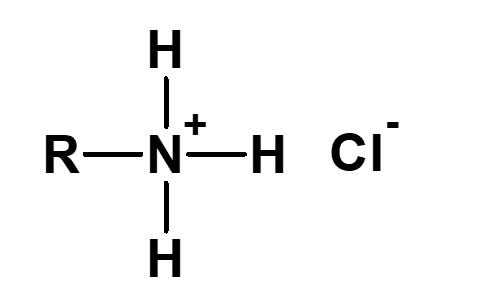


</description>
<dc:creator></dc:creator>
<dc:subject></dc:subject>
<dc:date>2024-08-09T17:20:00+09:00</dc:date>
<content:encoded><![CDATA[
<div class="cms-content-parts-sin171179606762468800 sanyo-pageLink" id="cms-editor-minieditor-sin171179606762471900" data-original="cms-content-parts-sin171179606762473300" data-custom="sanyo-pageLink"><!-- .parts_text_type01 -->
<ul>
    <li><a href="#intro">What is a surfactant?</a></li>
    <li><a href="#video">Surfactant functions introduction video</a></li>
    <li><a href="#anionic">What is anionic surfactant?</a></li>
    <li><a href="#carboxylate">Carboxylate</a></li>
    <li><a href="#sulfonate">Sulfonate</a></li>
    <li><a href="#carboxylic_acid_sulfonate">Carboxylic acid/sulfonate</a></li>
    <li><a href="#sulfate">Sulfate</a></li>
    <li><a href="#phosphates">Phosphates</a></li>
    <li><a href="#summary">Anionic Surfactant Summary</a></li>
    <li><a href="#info">Related Products &#38; Topics</a></li>
</ul>
<!-- // .parts_text_type01 --></div>
<h2 class="cms-content-parts-sin171179608038418400" id="cms-editor-textarea-sin171179608038426200"><a name="intro"></a>What is a surfactant?</h2>
<div class="cms-content-parts-sin171179610700973200 cparts-id119 lay-margin-b--3 box" data-selectable="cparts-animate cparts-animate--slideInUp:上へスライド,cparts-animate cparts-animate--slideInDown:下へスライド,cparts-animate cparts-animate--slideInLeft:左へスライド,cparts-animate cparts-animate--slideInRight:右へスライド">
<div class="lay-row">
<div class="lay-col12-xs-12 lay-col12-md-12 lay-col12-lg-12">
<div id="cms-editor-minieditor-sin171179610700977000" class="cparts-txt-block lay-reset-child">
<p><font face="Noto Sans JP">First, an interface is a boundary surface that exists between two substances with different properties, and interfaces exist between liquids and solids, liquids and liquids, and liquids and gases.</font></p>
<p><font face="Noto Sans JP">Surfactants enhance performance by performing functions such as washing, emulsifying, dispersing, wetting, and penetrating at this interface.<br />
<br />
<span style="font-weight: 700;">Interface = a boundary surface that exists between two substances with different properties</span><br />
</font><font face="Noto Sans JP">Liquid and solid: cup and coffee, machine and lubricant&#160;</font><br />
<font face="Noto Sans JP">Liquid and liquid: water and oil&#160;</font><br />
<font face="Noto Sans JP">Liquid and gas: seawater and air, soap bubbles</font><br />
<span style="font-weight: 700;"><font face="Noto Sans JP"><br />
Examples of roles of surfactants</font></span><br />
<font face="Noto Sans JP">Cleaning ・・・ Removing dirt&#160;</font><br />
<font face="Noto Sans JP">Emulsification ・・・ Dispersion ・・ Making unmixable things easier to mix</font><br />
<font face="Noto Sans JP">Wetting / Penetration ・・・ Makes wetting and soaking easier</font></p>
</div>
</div>
</div>
</div>
<h3 class="cms-content-parts-sin171179612127819800" id="cms-editor-textarea-sin171179612127823500">Basic structure of a surfactant</h3>
<div class="cms-content-parts-sin171179623930333000 cparts-id119 lay-margin-b--3 box" data-selectable="cparts-animate cparts-animate--slideInUp:上へスライド,cparts-animate cparts-animate--slideInDown:下へスライド,cparts-animate cparts-animate--slideInLeft:左へスライド,cparts-animate cparts-animate--slideInRight:右へスライド">
<div class="lay-row">
<div class="lay-col12-xs-12 lay-col12-md-12 lay-col12-lg-12">
<div id="cms-editor-minieditor-sin171179623930308600" class="cparts-txt-block lay-reset-child">
<p>-Surfactants have different structures in their molecules with different properties: lipophilic groups (oil-loving parts) and hydrophilic groups (water-loving parts).<br />
<br />
-Surfactants are broadly classified into four types according to the structure of the hydrophilic group: nonionic, anionic, cationic, and amphoteric (having both anionic and cationic groups).</p>
<p><img src="https://sanyo-chemical-solutions.com/images/technology/surfactant/img_surfactantbasics_types.jpg" width="800" height="211" alt="" /></p>
</div>
</div>
</div>
</div>
<div class="cms-content-parts-sin172353856361862300 cparts-id96--01 box lay-margin-b--3" data-selectable="cparts-animate cparts-animate--slideInUp:上へスライド,cparts-animate cparts-animate--slideInDown:下へスライド,cparts-animate cparts-animate--slideInLeft:左へスライド,cparts-animate cparts-animate--slideInRight:右へスライド">
<div class="lay-row">
<div class="lay-col12-xs-12 lay-col12-md-12 lay-col12-lg-12">
<div class="cparts-table-block lay-reset-child" id="cms-editor-minieditor-sin172353856361867400">
<table>
    <caption class="lay-margin-t--1">&#160; &#160; &#160;</caption>
    <tbody>
        <tr>
            <th>Type of surfactant</th>
            <th>Feature</th>
            <th>Main application</th>
            <th>Composition example</th>
        </tr>
        <tr>
            <td>Nonionic surfactant<br />
            <img src="https://sanyo-chemical-solutions.com/images/technology/surfactant/img_surfactantbasics_nonion.jpg" width="150" height="47" alt="" /></td>
            <td>-Hydrophilic and hydrophobic balance<br />
            can be easily adjusted<br />
            -Excellent emulsification and solubilization<br />
            -Low lather<br style="margin-bottom: 0px;" />
            -Susceptible to temperature but not to pH</td>
            <td>-Laundry detergent<br />
            -Emulsifiers and solubilizers<br />
            -Dispersant<br style="margin-bottom: 0px;" />
            -Metalworking oil</td>
            <td>-Polyoxyethylene alkyl ether<br style="margin-bottom: 0px;" />
            etc.</td>
        </tr>
        <tr>
            <td>Anionic surfactant<br />
            <img src="https://sanyo-chemical-solutions.com/images/technology/surfactant/img_surfactantbasics_anion.jpg" width="150" height="49" alt="" /></td>
            <td>-Excellent emulsification and dispersibility<br />
            -Good lather<br style="margin-bottom: 0px;" />
            -Temperature insensitive</td>
            <td>-Laundry detergent<br />
            -Shampoo<br style="margin-bottom: 0px;" />
            -Body soap</td>
            <td>-Alkyl benzene sulfonate<br />
            -Alkyl ether sulfates<br style="margin-bottom: 0px;" />
            etc.</td>
        </tr>
        <tr>
            <td>Cationic surfactant<br />
            <img src="https://sanyo-chemical-solutions.com/images/technology/surfactant/img_surfactantbasics_cation.jpg" width="150" height="49" alt="" /></td>
            <td>-Adsorption to fibers<br />
            -Antistatic effect<br style="margin-bottom: 0px;" />
            -Bactericidal</td>
            <td>-Hair conditioner and treatment<br />
            -Fabric softener<br style="margin-bottom: 0px;" />
            -Disinfectant</td>
            <td>-Didecyldimethylammonium methyl sulfate</td>
        </tr>
        <tr>
            <td>Amphoteric surfactant<br />
            <img src="https://sanyo-chemical-solutions.com/images/technology/surfactant/img_surfactantbasics_ryosei.jpg" width="150" height="47" alt="" /></td>
            <td>-Mild on skin<br />
            -Excellent solubility in water<br style="margin-bottom: 0px;" />
            -Synergistic with other active components</td>
            <td>-Shampoo<br />
            -Body soap<br style="margin-bottom: 0px;" />
            -Kitchen detergent</td>
            <td>-Alkyl di-aminoethyl hydrochloride glycine<br />
            -Sodium lauryl aminopropionic acid<br />
            -Dimethylstearyl betaine<br style="margin-bottom: 0px;" />
            -Coconut oil fatty acid amidopropyl betaine</td>
        </tr>
    </tbody>
</table>
</div>
</div>
</div>
</div>
<h2 class="cms-content-parts-sin171179614288982300" id="cms-editor-textarea-sin171179614288986900"><a name="video"></a>Surfactant functions introduction video</h2>
<div class="cms-content-parts-sin172353848190869800">[[CMSmodule.parts::ad#param=309]]</div>
<div class="cms-content-parts-sin171179623311713300 cparts-id119 lay-margin-b--3 box" data-selectable="cparts-animate cparts-animate--slideInUp:上へスライド,cparts-animate cparts-animate--slideInDown:下へスライド,cparts-animate cparts-animate--slideInLeft:左へスライド,cparts-animate cparts-animate--slideInRight:右へスライド">
<div class="lay-row">
<div class="lay-col12-xs-12 lay-col12-md-12 lay-col12-lg-12">
<div id="cms-editor-minieditor-sin171179623311720100" class="cparts-txt-block lay-reset-child">
<p>It consists of seven short movies for each function.&#160;<br />
0:00　Introduction of surfactants functions　<br />
0:16　Part1　Washability<br />
1:00　Part2　Permeability<br />
2:10　Part3　Dispersion<br />
2:55　Part4　Foaming properties<br />
3:25　Part5　Defoaming properties<br />
3:39　Part6　Smoothness<br />
4:20　Part7　Antibacterial properties</p>
</div>
</div>
</div>
</div>
<h2 class="cms-content-parts-sin171179625026888800" id="cms-editor-textarea-sin171179625026895900"><a name="anionic"></a>What is anionic surfactant?</h2>
<div class="cms-content-parts-sin171179626437234900 cparts-id119 lay-margin-b--3 box" data-selectable="cparts-animate cparts-animate--slideInUp:上へスライド,cparts-animate cparts-animate--slideInDown:下へスライド,cparts-animate cparts-animate--slideInLeft:左へスライド,cparts-animate cparts-animate--slideInRight:右へスライド">
<div class="lay-row">
<div class="lay-col12-xs-12 lay-col12-md-12 lay-col12-lg-12">
<div id="cms-editor-minieditor-sin171179626437210100" class="cparts-txt-block lay-reset-child">
<p>Anionic surfactants have been used for a long time and are still the second most commonly used surfactants after nonionic surfactants.</p>
<p>The history of surfactants begins with the widespread use of soap, which replaced traditional methods of washing clothes with lye and similar substances.&#160;Turkey red oil (sulfated castor oil) followed as a pioneer of synthetic surfactants, and its efficacy was praised for a long time in the dyeing and finishing of textiles industry. Over time, the surfactant industry evolved, with the introduction of salts higher alcohol sulfates, alkanoyl methyl tauride, and alkyl benzene sulfonates, laying the foundation for the modern range of anionic surfactants.</p>
<p>First, anionic surfactants are classified as shown in the table below.</p>
</div>
</div>
</div>
</div>
<h5 class="cms-content-parts-sin172353916934286400" id="cms-editor-textarea-sin172353916934320300">Classification of anionic surfactants</h5>
<div class="cms-content-parts-sin172353861148042200 cparts-id96--01 box lay-margin-b--3" data-selectable="cparts-animate cparts-animate--slideInUp:上へスライド,cparts-animate cparts-animate--slideInDown:下へスライド,cparts-animate cparts-animate--slideInLeft:左へスライド,cparts-animate cparts-animate--slideInRight:右へスライド">
<div class="lay-row">
<div class="lay-col12-xs-12 lay-col12-md-12 lay-col12-lg-12">
<div class="cparts-table-block lay-reset-child" id="cms-editor-minieditor-sin172353861148007600">
<table>
    <caption class="lay-margin-t--1">&#160; &#160; &#160;</caption>
    <tbody>
        <tr>
            <td rowspan="4">Carboxylate</td>
            <td>Soap</td>
        </tr>
        <tr>
            <td>Polyoxyethylene alkyl ether carboxylate</td>
        </tr>
        <tr>
            <td>Alkyl hydroxy ether carboxylate</td>
        </tr>
        <tr>
            <td>Other</td>
        </tr>
        <tr>
            <td rowspan="6">Sulfonate</td>
            <td>Alkyl benzene sulfonate</td>
        </tr>
        <tr>
            <td>Alkylnaphthalene sulfonate</td>
        </tr>
        <tr>
            <td>Paraffin sulfonate</td>
        </tr>
        <tr>
            <td>Alkanoylmethyltauride</td>
        </tr>
        <tr>
            <td>Dialkyl sulfoammonate</td>
        </tr>
        <tr>
            <td>Other</td>
        </tr>
        <tr>
            <td rowspan="2">Carboxylates/sulfonates</td>
            <td>Alkyl sulfoammonate disodium salt</td>
        </tr>
        <tr>
            <td>Polyoxyethylene alkyl ether sulfoammonate disodium salt</td>
        </tr>
        <tr>
            <td rowspan="6">Sulfate</td>
            <td>Higher alkyl sulfates (higher alcohol sulfates)</td>
        </tr>
        <tr>
            <td>Polyoxyethylene alkyl ether sulfates<br />
            &#160;(Higher alcohol EO adduct sulfates, higher alkyl ether sulfates)</td>
        </tr>
        <tr>
            <td>Sulphated oil</td>
        </tr>
        <tr>
            <td>Sulfated fatty acid esters</td>
        </tr>
        <tr>
            <td>Sulfated olefin</td>
        </tr>
        <tr>
            <td>Other</td>
        </tr>
        <tr>
            <td rowspan="4">Phosphate ester</td>
            <td>Higher alkyl phosphates (higher alcohol phosphates)</td>
        </tr>
        <tr>
            <td>Polyoxyethylene alkyl ether phosphate salts<br />
            (Higher alcohol EO adduct phosphates, higher alkyl ether phosphates)</td>
        </tr>
        <tr>
            <td>Dithiophosphate</td>
        </tr>
        <tr>
            <td>Other</td>
        </tr>
    </tbody>
</table>
</div>
</div>
</div>
</div>
<h2 class="cms-content-parts-sin171179633415981400" id="cms-editor-textarea-sin171179633415992300"><a name="carboxylate"></a>Carboxylate</h2>
<h3 class="cms-content-parts-sin172353920473713400" id="cms-editor-textarea-sin172353920473718100">Soap</h3>
<div class="cms-content-parts-sin171179632365252500 cparts-id119 lay-margin-b--3 box" data-selectable="cparts-animate cparts-animate--slideInUp:上へスライド,cparts-animate cparts-animate--slideInDown:下へスライド,cparts-animate cparts-animate--slideInLeft:左へスライド,cparts-animate cparts-animate--slideInRight:右へスライド">
<div class="lay-row">
<div class="lay-col12-xs-12 lay-col12-md-12 lay-col12-lg-12">
<div id="cms-editor-minieditor-sin171179632365307200" class="cparts-txt-block lay-reset-child">
<p>When natural oils and fats are stirred together with an aqueous solution of sodium hydroxide (generally an alkaline solution) while heating, they react (saponification) to form soap (i.e., alkali metal salts of higher fatty acids) and glycerin.</p>
</div>
</div>
</div>
</div>
<div class="cms-content-parts-sin172353946294602500 cparts-id119 lay-margin-b--3 box" data-selectable="cparts-animate cparts-animate--slideInUp:上へスライド,cparts-animate cparts-animate--slideInDown:下へスライド,cparts-animate cparts-animate--slideInLeft:左へスライド,cparts-animate cparts-animate--slideInRight:右へスライド">
<div class="lay-row">
<div class="lay-col12-xs-12 lay-col12-md-12 lay-col12-lg-12">
<div id="cms-editor-minieditor-sin172353946294579600" class="cparts-txt-block lay-reset-child">
<p style="text-align: center;"><strong><img src="https://sanyo-chemical-solutions.com/images/technology/anionic/img_anion_en_1.jpg" width="800" height="196" alt="" /><br />
Fig.&#160;</strong><b>Saponification reaction of fats and oils</b></p>
</div>
</div>
</div>
</div>
<div class="cms-content-parts-sin172353945789814700 cparts-id119 lay-margin-b--3 box" data-selectable="cparts-animate cparts-animate--slideInUp:上へスライド,cparts-animate cparts-animate--slideInDown:下へスライド,cparts-animate cparts-animate--slideInLeft:左へスライド,cparts-animate cparts-animate--slideInRight:右へスライド">
<div class="lay-row">
<div class="lay-col12-xs-12 lay-col12-md-12 lay-col12-lg-12">
<div id="cms-editor-minieditor-sin172353945789790200" class="cparts-txt-block lay-reset-child">
<p>When a concentrated solution of salt is added, the soap precipitates (salting out) and floats to the top, where it is extracted, refined, and marketed. Since sodium hydroxide is the most commonly used alkali, the word &#34;soap&#34; usually refers to sodium soap, but potassium hydroxide is sometimes used specially for cosmetics, etc. In this case, potassium soap is used in a soft state containing glycerin without salting out. Potassium hydroxide is also used for cosmetic purposes.</p>
<p>The raw material oils and fats used include beef tallow, coconut oil, palm oil, rice bran oil, soybean oil, peanut oil, and hydrogenated oil, with coconut oil and palm oil being the most common in terms of volume. Different types of raw material oils and fats contain different types of fatty acids and their ratios, so the performance of the resulting soaps will vary. The following is a comparison of the properties of typical fatty acid soaps.</p>
<div></div>
</div>
</div>
</div>
</div>
<h5 class="cms-content-parts-sin172353947988132100" id="cms-editor-textarea-sin172353947988140000">Sodium laurate: C<span style="font-size: smaller;">11</span>H<span style="font-size: smaller;">23</span>COO<span class="sanyoc-super">-</span>Na<span class="sanyoc-super">+</span></h5>
<div class="cms-content-parts-sin172353949821563500 cparts-id119 lay-margin-b--3 box" data-selectable="cparts-animate cparts-animate--slideInUp:上へスライド,cparts-animate cparts-animate--slideInDown:下へスライド,cparts-animate cparts-animate--slideInLeft:左へスライド,cparts-animate cparts-animate--slideInRight:右へスライド">
<div class="lay-row">
<div class="lay-col12-xs-12 lay-col12-md-12 lay-col12-lg-12">
<div id="cms-editor-minieditor-sin172353949821540600" class="cparts-txt-block lay-reset-child">
<p><img src="https://sanyo-chemical-solutions.com/images/technology/anionic/img_anion_78.1_sodiumlaurylate.jpg" width="600" height="156" alt="" /></p>
</div>
</div>
</div>
</div>
<div class="cms-content-parts-sin172353950206396600 cparts-id119 lay-margin-b--3 box" data-selectable="cparts-animate cparts-animate--slideInUp:上へスライド,cparts-animate cparts-animate--slideInDown:下へスライド,cparts-animate cparts-animate--slideInLeft:左へスライド,cparts-animate cparts-animate--slideInRight:右へスライド">
<div class="lay-row">
<div class="lay-col12-xs-12 lay-col12-md-12 lay-col12-lg-12">
<div id="cms-editor-minieditor-sin172353950206374400" class="cparts-txt-block lay-reset-child">
<p>It is the main ingredient in soap made from coconut oil, and has a relatively short hydrophobic group with a total of 12 carbons. This makes it easily soluble in water and has excellent detergency (when the carbon number is less than 12, water solubility becomes better, but detergency becomes worse).</p>
</div>
</div>
</div>
</div>
<h5 class="cms-content-parts-sin172353949007872600" id="cms-editor-textarea-sin172353949007880500">Sodium stearate: C<span style="font-size: smaller;">17</span>H<span style="font-size: smaller;">35</span>COO<span class="sanyoc-super">-</span>Na<span class="sanyoc-super"><span style="font-size: smaller;">+</span></span></h5>
<div class="cms-content-parts-sin172353960766960400 cparts-id119 lay-margin-b--3 box" data-selectable="cparts-animate cparts-animate--slideInUp:上へスライド,cparts-animate cparts-animate--slideInDown:下へスライド,cparts-animate cparts-animate--slideInLeft:左へスライド,cparts-animate cparts-animate--slideInRight:右へスライド">
<div class="lay-row">
<div class="lay-col12-xs-12 lay-col12-md-12 lay-col12-lg-12">
<div id="cms-editor-minieditor-sin172353960766937400" class="cparts-txt-block lay-reset-child">
<p><img src="https://sanyo-chemical-solutions.com/images/technology/anionic/img_anion_stealicacidna.jpg" width="800" height="89" alt="" /></p>
</div>
</div>
</div>
</div>
<div class="cms-content-parts-sin172353961191453300 cparts-id119 lay-margin-b--3 box" data-selectable="cparts-animate cparts-animate--slideInUp:上へスライド,cparts-animate cparts-animate--slideInDown:下へスライド,cparts-animate cparts-animate--slideInLeft:左へスライド,cparts-animate cparts-animate--slideInRight:右へスライド">
<div class="lay-row">
<div class="lay-col12-xs-12 lay-col12-md-12 lay-col12-lg-12">
<div id="cms-editor-minieditor-sin172353961191427700" class="cparts-txt-block lay-reset-child">
<p>It is an 18-carbon saturated fatty acid soap that is commonly found in soaps from solid fats and oils such as hydrogenated oil. The long hydrophobic groups and significant hydrophobicity make it difficult to dissolve in water. Even with the hydrophilic carboxyl group (COO- Na+), the sodium salt is not sufficiently hydrophilic for good water solubility.</p>
</div>
</div>
</div>
</div>
<h5 class="cms-content-parts-sin172353951438955100" id="cms-editor-textarea-sin172353951438963900">Sodium Oleate: C<span style="font-size: smaller;">17</span>H<span style="font-size: smaller;">33</span>COO<span class="sanyoc-super">-</span>Na<span class="sanyoc-super">+</span></h5>
<div class="cms-content-parts-sin172353961498523300 cparts-id119 lay-margin-b--3 box" data-selectable="cparts-animate cparts-animate--slideInUp:上へスライド,cparts-animate cparts-animate--slideInDown:下へスライド,cparts-animate cparts-animate--slideInLeft:左へスライド,cparts-animate cparts-animate--slideInRight:右へスライド">
<div class="lay-row">
<div class="lay-col12-xs-12 lay-col12-md-12 lay-col12-lg-12">
<div id="cms-editor-minieditor-sin172353961498501400" class="cparts-txt-block lay-reset-child">
<p><img src="https://sanyo-chemical-solutions.com/images/technology/anionic/img_anion_oleicacidna.jpg" width="800" height="89" alt="" /></p>
</div>
</div>
</div>
</div>
<div class="cms-content-parts-sin172353961961388200 cparts-id119 lay-margin-b--3 box" data-selectable="cparts-animate cparts-animate--slideInUp:上へスライド,cparts-animate cparts-animate--slideInDown:下へスライド,cparts-animate cparts-animate--slideInLeft:左へスライド,cparts-animate cparts-animate--slideInRight:右へスライド">
<div class="lay-row">
<div class="lay-col12-xs-12 lay-col12-md-12 lay-col12-lg-12">
<div id="cms-editor-minieditor-sin172353961961362300" class="cparts-txt-block lay-reset-child">
<p>Sodium oleate is the main ingredient in soap made from olive oil, etc. Most beef tallow soap is also made from sodium oleate.<br />
<br />
&#160;Like stearic acid, it has a total of 18 carbons, but its properties are different because of the double bond in the middle of the molecule. Although, the double bond is weak, it has an affinity with hydrophilic groups. For this reason, sodium oleate dissolves well in water and also has excellent detergent properties.<br />
<br />
&#160;(Having too strong a hydrophilic group in the middle of the molecule reduces detergency. Castor oil soap, for example, has a hydroxyl group in the middle of the molecule in addition to the double bond, making it soluble in water but not suitable for cleaning.)</p>
<h6>Soap solubility/acid effects</h6>
<p>Soap is generally less water soluble, so even a slightly higher concentrated solution, it will become viscous and forms gel when left standing. Soap solution is alkaline in nature and loses detergency under neutral conditions, and fatty acids are formed under neutral or acidic environments.</p>
<div></div>
</div>
</div>
</div>
</div>
<div class="cms-content-parts-sin172353962807064800 cparts-id119 lay-margin-b--3 box" data-selectable="cparts-animate cparts-animate--slideInUp:上へスライド,cparts-animate cparts-animate--slideInDown:下へスライド,cparts-animate cparts-animate--slideInLeft:左へスライド,cparts-animate cparts-animate--slideInRight:右へスライド">
<div class="lay-row">
<div class="lay-col12-xs-12 lay-col12-md-12 lay-col12-lg-12">
<div id="cms-editor-minieditor-sin172353962807041400" class="cparts-txt-block lay-reset-child">
<p style="text-align: center;"><img src="https://sanyo-chemical-solutions.com/images/technology/anionic/img_anion_79.1_sekken_acid.jpg" width="800" height="69" alt="" /><br />
<b>Fig. Reaction of soap and acid</b></p>
</div>
</div>
</div>
</div>
<div class="cms-content-parts-sin172353962300472600 cparts-id119 lay-margin-b--3 box" data-selectable="cparts-animate cparts-animate--slideInUp:上へスライド,cparts-animate cparts-animate--slideInDown:下へスライド,cparts-animate cparts-animate--slideInLeft:左へスライド,cparts-animate cparts-animate--slideInRight:右へスライド">
<div class="lay-row">
<div class="lay-col12-xs-12 lay-col12-md-12 lay-col12-lg-12">
<div id="cms-editor-minieditor-sin172353962300448700" class="cparts-txt-block lay-reset-child">
<h6>Effect of hard water on soap</h6>
<p>In addition, when hard water (water containing high levels of calcium and other salts) is used, water will produce insoluble calcium soap and other substances that will precipitate out, rendering it ineffective.</p>
<p>&#160;Therefore, it is difficult to use soap with hard water (those who have experience using soap in hot springs will immediately understand this). In Europe and the U.S., in particular, there are many areas with hard water, making it difficult to use soap, which is why synthetic detergents, which are stable in hard water, were developed early on.</p>
<div></div>
</div>
</div>
</div>
</div>
<div class="cms-content-parts-sin172353965863979700 cparts-id119 lay-margin-b--3 box" data-selectable="cparts-animate cparts-animate--slideInUp:上へスライド,cparts-animate cparts-animate--slideInDown:下へスライド,cparts-animate cparts-animate--slideInLeft:左へスライド,cparts-animate cparts-animate--slideInRight:右へスライド">
<div class="lay-row">
<div class="lay-col12-xs-12 lay-col12-md-12 lay-col12-lg-12">
<div id="cms-editor-minieditor-sin172353965863955900" class="cparts-txt-block lay-reset-child">
<p style="text-align: center;"><img src="https://sanyo-chemical-solutions.com/images/technology/anionic/img_anion_79.2_sekken_ca.jpg" width="800" height="68" alt="" /><br />
<strong>Fig.&#160;</strong><b>Reaction of soap and Ca ion</b></p>
</div>
</div>
</div>
</div>
<h3 class="cms-content-parts-sin172353967720981900" id="cms-editor-textarea-sin172353967720986000">Polyoxyethylene alkyl ether carboxylate</h3>
<div class="cms-content-parts-sin172353969566866000 cparts-id119 lay-margin-b--3 box" data-selectable="cparts-animate cparts-animate--slideInUp:上へスライド,cparts-animate cparts-animate--slideInDown:下へスライド,cparts-animate cparts-animate--slideInLeft:左へスライド,cparts-animate cparts-animate--slideInRight:右へスライド">
<div class="lay-row">
<div class="lay-col12-xs-12 lay-col12-md-12 lay-col12-lg-12">
<div id="cms-editor-minieditor-sin172353969566844800" class="cparts-txt-block lay-reset-child">
<p>Polyoxyethylene alkyl ether carboxylate is an anionic surfactant that has a nonionic hydrophilic polyethylene glycol chain in addition to the carboxylate, which is a hydrophilic group in soap.</p>
<p>While polyoxyethylene alkyl ether carboxylate is biodegradable and environmentally friendly, it is also more hydrophilic than soap due to its nonionic polyethylene glycol chain. This makes it less irritating to the skin, which is a disadvantage of soap, and it does not produce soap scum, which causes stains on wash basins and other surfaces. Taking advantage of these features, products with a low number of moles of ethylene oxide added (n&#8804;3 in the formula below) are often used in body shampoos, facial cleansers, and hypoallergenic shampoos. They can also be used as detergent base under acidic conditions where soap cannot be used.</p>
<div></div>
</div>
</div>
</div>
</div>
<div class="cms-content-parts-sin172353970339972200 cparts-id119 lay-margin-b--3 box" data-selectable="cparts-animate cparts-animate--slideInUp:上へスライド,cparts-animate cparts-animate--slideInDown:下へスライド,cparts-animate cparts-animate--slideInLeft:左へスライド,cparts-animate cparts-animate--slideInRight:右へスライド">
<div class="lay-row">
<div class="lay-col12-xs-12 lay-col12-md-12 lay-col12-lg-12">
<div id="cms-editor-minieditor-sin172353970339949500" class="cparts-txt-block lay-reset-child">
<p style="text-align: center;"><span style="font-weight: 700; text-align: center;"><img src="https://sanyo-chemical-solutions.com/images/technology/anionic/img_anion_en_3.jpg" width="1619" height="212" alt="" /><br />
Fig.&#160;</span><b>Synthesis route of sodium polyoxyethylene alkyl ether carboxylate</b></p>
</div>
</div>
</div>
</div>
<h3 class="cms-content-parts-sin172353970737474300" id="cms-editor-textarea-sin172353970737482300">Alkyl hydroxy ether carboxylate</h3>
<div class="cms-content-parts-sin172353972336540000 cparts-id119 lay-margin-b--3 box" data-selectable="cparts-animate cparts-animate--slideInUp:上へスライド,cparts-animate cparts-animate--slideInDown:下へスライド,cparts-animate cparts-animate--slideInLeft:左へスライド,cparts-animate cparts-animate--slideInRight:右へスライド">
<div class="lay-row">
<div class="lay-col12-xs-12 lay-col12-md-12 lay-col12-lg-12">
<div id="cms-editor-minieditor-sin172353972336511200" class="cparts-txt-block lay-reset-child">
<p>It is a new anionic surfactant that has a hydroxyl group in addition to the carboxylate, the hydrophilic group of soap.</p>
<p>It is mildly acidic to neutral, which is within the pH range of the skin, and produces fine, high-quality foam. It also has moderate detergency, so it does not excessively remove oil from the skin or hair, is hypoallergenic, and is highly biodegradable, making it suitable as a base for body shampoo and hair shampoo.</p>
<div></div>
</div>
</div>
</div>
</div>
<div class="cms-content-parts-sin172353974008751700 cparts-id119 lay-margin-b--3 box" data-selectable="cparts-animate cparts-animate--slideInUp:上へスライド,cparts-animate cparts-animate--slideInDown:下へスライド,cparts-animate cparts-animate--slideInLeft:左へスライド,cparts-animate cparts-animate--slideInRight:右へスライド">
<div class="lay-row">
<div class="lay-col12-xs-12 lay-col12-md-12 lay-col12-lg-12">
<div id="cms-editor-minieditor-sin172353974008726100" class="cparts-txt-block lay-reset-child">
<p style="text-align: center;"><span style="font-weight: 700; text-align: center;"><img src="https://sanyo-chemical-solutions.com/images/technology/anionic/img_anion_en_modi1.jpg" width="1745" height="240" alt="" /><br />
Fig.&#160;</span><b>Synthetic route to sodium alkyl hydroxy ether carboxylate</b></p>
</div>
</div>
</div>
</div>
<h2 class="cms-content-parts-sin171179630782058300" id="cms-editor-textarea-sin171179630782066900"><a name="sulfonate"></a><a name="carboxylic_acid_sulfonate"></a>Sulfonate</h2>
<div class="cms-content-parts-sin172353977842876300 cparts-id119 lay-margin-b--3 box" data-selectable="cparts-animate cparts-animate--slideInUp:上へスライド,cparts-animate cparts-animate--slideInDown:下へスライド,cparts-animate cparts-animate--slideInLeft:左へスライド,cparts-animate cparts-animate--slideInRight:右へスライド">
<div class="lay-row">
<div class="lay-col12-xs-12 lay-col12-md-12 lay-col12-lg-12">
<div id="cms-editor-minieditor-sin172353977842852600" class="cparts-txt-block lay-reset-child">
<p>Sulfonates are generally represented by R-SO<span style="font-size: smaller;">3</span><span class="sanyoc-super">- </span>Na<span class="sanyoc-super">+</span> . A similar compound is the sulfate ester salt R-O-SO<span style="font-size: smaller;">3</span><span class="sanyoc-super">-</span> Na<span class="sanyoc-super">+</span> . Both are obtained by reacting with sulfuric acid, but the reaction to obtain sulfonic acid is sulfonation, while the reaction to obtain sulfate esters is sulfation. Both reactions are important for surfactants in that they introduce hydrophilic groups.<br />
<br />
Sulfonates and sulfates are very similar compounds, but they differ in some of their properties, which we know is due to the -O- bond between R (i.e., carbon atom) and S (sulfur atom).<br />
<br />
The most important difference is that sulfonates are not hydrolyzed, whereas sulfates are hydrolyzed to their original alcohol and sulfuric acid form when acidified.</p>
</div>
</div>
</div>
</div>
<div class="cms-content-parts-sin172353978407112000 cparts-id119 lay-margin-b--3 box" data-selectable="cparts-animate cparts-animate--slideInUp:上へスライド,cparts-animate cparts-animate--slideInDown:下へスライド,cparts-animate cparts-animate--slideInLeft:左へスライド,cparts-animate cparts-animate--slideInRight:右へスライド">
<div class="lay-row">
<div class="lay-col12-xs-12 lay-col12-md-12 lay-col12-lg-12">
<div id="cms-editor-minieditor-sin172353978407089300" class="cparts-txt-block lay-reset-child">
<p style="text-align: center;"><span style="font-weight: 700; text-align: center;"><img src="https://sanyo-chemical-solutions.com/images/technology/anionic/img_anion_82.1-2_ryusanester_acid.jpg" width="1000" height="137" alt="" /><br />
Fig.&#160;</span><b>Reaction of sulfates and sulfonates with acids</b></p>
</div>
</div>
</div>
</div>
<div class="cms-content-parts-sin172353978838564000 cparts-id119 lay-margin-b--3 box" data-selectable="cparts-animate cparts-animate--slideInUp:上へスライド,cparts-animate cparts-animate--slideInDown:下へスライド,cparts-animate cparts-animate--slideInLeft:左へスライド,cparts-animate cparts-animate--slideInRight:右へスライド">
<div class="lay-row">
<div class="lay-col12-xs-12 lay-col12-md-12 lay-col12-lg-12">
<div id="cms-editor-minieditor-sin172353978838541900" class="cparts-txt-block lay-reset-child">
<p>Therefore, sulfonates can be used in acidic solutions without problems. In addition, sulfonates are often advantageous because they are less susceptible to decomposition than sulfates when heated.<br />
<br />
Sulfonate surfactants include alkylbenzenesulfonates, alkanoylmethyltaurides, and dialkylsulfoammonates.</p>
</div>
</div>
</div>
</div>
<h3 class="cms-content-parts-sin172353980989330600" id="cms-editor-textarea-sin172353980989334600"><br />
Alkyl benzene sulfonate</h3>
<div class="cms-content-parts-sin172353990286797500 cparts-id119 lay-margin-b--3 box" data-selectable="cparts-animate cparts-animate--slideInUp:上へスライド,cparts-animate cparts-animate--slideInDown:下へスライド,cparts-animate cparts-animate--slideInLeft:左へスライド,cparts-animate cparts-animate--slideInRight:右へスライド">
<div class="lay-row">
<div class="lay-col12-xs-12 lay-col12-md-12 lay-col12-lg-12">
<div id="cms-editor-minieditor-sin172353990286766700" class="cparts-txt-block lay-reset-child">
<h6>Sulfonation reaction</h6>
<p>Sulfonation of aromatic hydrocarbons such as benzene by sulfuric acid or fuming sulfuric acid immediately comes to mind.</p>
</div>
</div>
</div>
</div>
<div class="cms-content-parts-sin172353991362231100 cparts-id119 lay-margin-b--3 box" data-selectable="cparts-animate cparts-animate--slideInUp:上へスライド,cparts-animate cparts-animate--slideInDown:下へスライド,cparts-animate cparts-animate--slideInLeft:左へスライド,cparts-animate cparts-animate--slideInRight:右へスライド">
<div class="lay-row">
<div class="lay-col12-xs-12 lay-col12-md-12 lay-col12-lg-12">
<div id="cms-editor-minieditor-sin172353991362208400" class="cparts-txt-block lay-reset-child">
<p style="text-align: center;"><span style="font-weight: 700; text-align: center;"><img src="https://sanyo-chemical-solutions.com/images/technology/anionic/img_anion_en_7.jpg" width="1000" height="136" alt="" /><br />
Fig.&#160;</span><b>Sulfonation reaction of benzene</b></p>
</div>
</div>
</div>
</div>
<div class="cms-content-parts-sin172353991613820200 cparts-id119 lay-margin-b--3 box" data-selectable="cparts-animate cparts-animate--slideInUp:上へスライド,cparts-animate cparts-animate--slideInDown:下へスライド,cparts-animate cparts-animate--slideInLeft:左へスライド,cparts-animate cparts-animate--slideInRight:右へスライド">
<div class="lay-row">
<div class="lay-col12-xs-12 lay-col12-md-12 lay-col12-lg-12">
<div id="cms-editor-minieditor-sin172353991613797400" class="cparts-txt-block lay-reset-child">
<p>Using this reaction, a surfactant can be made by attaching a long alkyl group, such as a dodecyl group (C<span style="font-size: smaller;">I2</span>H<span style="font-size: smaller;">25</span>-), to benzene and sulfonating it.<br />
In fact, this reaction proceeds smoothly to produce a variety of surfactants, which are collectively called alkylbenzene sulfonates.</p>
<div></div>
</div>
</div>
</div>
</div>
<div class="cms-content-parts-sin172353991951594200 cparts-id119 lay-margin-b--3 box" data-selectable="cparts-animate cparts-animate--slideInUp:上へスライド,cparts-animate cparts-animate--slideInDown:下へスライド,cparts-animate cparts-animate--slideInLeft:左へスライド,cparts-animate cparts-animate--slideInRight:右へスライド">
<div class="lay-row">
<div class="lay-col12-xs-12 lay-col12-md-12 lay-col12-lg-12">
<div id="cms-editor-minieditor-sin172353991951572200" class="cparts-txt-block lay-reset-child">
<p style="text-align: center;"><img src="https://sanyo-chemical-solutions.com/images/technology/anionic/img_anion_en_modi2.jpg" width="1616" height="200" style="font-weight: 700;" alt="" /><span style="font-weight: 700; text-align: center;"><br />
Fig.&#160;</span><b>Synthetic route of sodium alkylbenzenesulfonate</b></p>
</div>
</div>
</div>
</div>
<div class="cms-content-parts-sin172354257267870200 cparts-id119 lay-margin-b--3 box" data-selectable="cparts-animate cparts-animate--slideInUp:上へスライド,cparts-animate cparts-animate--slideInDown:下へスライド,cparts-animate cparts-animate--slideInLeft:左へスライド,cparts-animate cparts-animate--slideInRight:右へスライド">
<div class="lay-row">
<div class="lay-col12-xs-12 lay-col12-md-12 lay-col12-lg-12">
<div id="cms-editor-minieditor-sin172354257267841500" class="cparts-txt-block lay-reset-child">
<p>In industrial sulfonation, fuming sulfuric acid or anhydrous sulfuric acid, which has a much higher concentration than concentrated sulfuric acid, is used as a sulfonating agent to make the reaction smooth and eliminate the use of extra sulfuric acid. Mass production is carried out in large plants with fully automated controls that use liquid anhydrous sulfuric acid.</p>
</div>
</div>
</div>
</div>
<div class="cms-content-parts-sin172354257997833600 cparts-id119 lay-margin-b--3 box" data-selectable="cparts-animate cparts-animate--slideInUp:上へスライド,cparts-animate cparts-animate--slideInDown:下へスライド,cparts-animate cparts-animate--slideInLeft:左へスライド,cparts-animate cparts-animate--slideInRight:右へスライド">
<div class="lay-row">
<div class="lay-col12-xs-12 lay-col12-md-12 lay-col12-lg-12">
<div id="cms-editor-minieditor-sin172354257997798900" class="cparts-txt-block lay-reset-child">
<p style="text-align: center;"><span style="font-weight: 700; text-align: center;"><img src="https://sanyo-chemical-solutions.com/images/technology/anionic/img_anion_en_9.jpg" width="1457" height="171" alt="" /><br />
Fig.&#160;</span><b>Synthetic route of sodium dodecylbenzenesulfonate</b></p>
</div>
</div>
</div>
</div>
<div class="cms-content-parts-sin172354258822938200 cparts-id119 lay-margin-b--3 box" data-selectable="cparts-animate cparts-animate--slideInUp:上へスライド,cparts-animate cparts-animate--slideInDown:下へスライド,cparts-animate cparts-animate--slideInLeft:左へスライド,cparts-animate cparts-animate--slideInRight:右へスライド">
<div class="lay-row">
<div class="lay-col12-xs-12 lay-col12-md-12 lay-col12-lg-12">
<div id="cms-editor-minieditor-sin172354258822904000" class="cparts-txt-block lay-reset-child">
<h6>Sodium alkylbenzenesulfonate Applications and Features</h6>
<p>Sodium alkylbenzenesulfonate is easily synthesized, so it is industrially manufactured to a high degree of purity. Commercial products for industrial use are supplied as a light yellow paste with an active ingredient of about 60%, as well as a powdered product that is added sodium sulfate and dried in small granules using a spray dryer.</p>
<p>However, it is household synthetic detergents that are consumed in large quantities, and many synthetic powdered detergents for electric washing machines used in your homes have sodium alkyl benzene sulfonate as their main ingredient.</p>
<p>Sodium alkylbenzenesulfonate is much more soluble in water than soap. Its aqueous solution foams well, producing many more fine bubbles than soap, but its low viscosity makes it easier to dissipate. It has excellent penetrating and cleaning power, and often performs better than sulfates, but it is not necessarily superior in every respect, and has its advantages and disadvantages.</p>
<div></div>
</div>
</div>
</div>
</div>
<h4 class="cms-content-parts-sin172353993739408200" id="cms-editor-textarea-sin172353993739412400">Alkylbenzene Classification and Production Methods</h4>
<div class="cms-content-parts-sin172353994036034800 cparts-id119 lay-margin-b--3 box" data-selectable="cparts-animate cparts-animate--slideInUp:上へスライド,cparts-animate cparts-animate--slideInDown:下へスライド,cparts-animate cparts-animate--slideInLeft:左へスライド,cparts-animate cparts-animate--slideInRight:右へスライド">
<div class="lay-row">
<div class="lay-col12-xs-12 lay-col12-md-12 lay-col12-lg-12">
<div id="cms-editor-minieditor-sin172353994036011000" class="cparts-txt-block lay-reset-child">
<p>There are various methods for producing alkylbenzene, the raw material for sodium alkylbenzenesulfonate. Through many years of research, it is known that the best alkyl group for alkylbenzene is about a dodecyl group (C12H25-). Therefore, as in the aforementioned example, dodecylbenzene is widely used as a raw material for household detergents. However, even a single bite of dodecyl group can make a big difference depending on the presence or absence of branching.</p>
<p>Among surfactants, the following is a brief introduction to the differences among them, since they are produced in large quantities as the main ingredients in household detergents.</p>
<p>&#160;Alkylbenzenes can be divided into two major groups according to the presence or absence of alkyl group branching as follows.</p>
<div></div>
</div>
</div>
</div>
</div>
<h5 class="cms-content-parts-sin172353998877677900" id="cms-editor-textarea-sin172353998877679300">Branched alkyl benzene</h5>
<div class="cms-content-parts-sin172354020975281400 box cparts-id409--01 lay-margin-b--3" col-flex="1-2" data-selectable="cparts-animate cparts-animate--slideInUp:上へスライド,cparts-animate cparts-animate--slideInDown:下へスライド,cparts-animate cparts-animate--slideInLeft:左へスライド,cparts-animate cparts-animate--slideInRight:右へスライド">
<div class="lay-row">
<div class="lay-col12-xs-12 lay-col12-md-6 lay-col12-lg-6">
<div class="cparts-img-block lay-img-width--max lay-margin-b--1"><img alt="" class="cms-easy-edit" id="cms-editor-image-sin172354020975285200" src="https://sanyo-chemical-solutions.com/images/technology/anionic/img_anion_84_branchedalkylbenzene2.jpg" width="330" /></div>
<div class="cparts-caption-block lay-reset-child lay-font-size--s cms-easy-edit" id="cms-editor-minieditor-sin172354020975285600">
<p style="text-align: center;"><strong>Fig. Branched alkylbenzene</strong></p>
</div>
</div>
<div class="lay-col12-xs-12 lay-col12-md-6 lay-col12-lg-6">
<div class="cparts-txt-block lay-reset-child" id="cms-editor-minieditor-sin172354020975285900">
<p>It is synthesized by polymerizing propylene to form propylene tetramer (tetramer) and reacting it with benzene. Branched dodecylbenzene is a typical product.</p>
</div>
</div>
</div>
</div>
<div class="cms-content-parts-sin172354003677912500 cparts-id119 lay-margin-b--3 box" data-selectable="cparts-animate cparts-animate--slideInUp:上へスライド,cparts-animate cparts-animate--slideInDown:下へスライド,cparts-animate cparts-animate--slideInLeft:左へスライド,cparts-animate cparts-animate--slideInRight:右へスライド">
<div class="lay-row">
<div class="lay-col12-xs-12 lay-col12-md-12 lay-col12-lg-12">
<div id="cms-editor-minieditor-sin172354003677887700" class="cparts-txt-block lay-reset-child">
<p style="text-align: center;"><span style="font-weight: 700; text-align: center;"><img src="https://sanyo-chemical-solutions.com/images/technology/anionic/img_anion_en_10.jpg" width="800" height="209" alt="" /><br />
Fig.&#160;</span><b>Synthetic route to branched dodecylbenzene</b></p>
</div>
</div>
</div>
</div>
<div class="cms-content-parts-sin172354003342008700 cparts-id119 lay-margin-b--3 box" data-selectable="cparts-animate cparts-animate--slideInUp:上へスライド,cparts-animate cparts-animate--slideInDown:下へスライド,cparts-animate cparts-animate--slideInLeft:左へスライド,cparts-animate cparts-animate--slideInRight:右へスライド">
<div class="lay-row">
<div class="lay-col12-xs-12 lay-col12-md-12 lay-col12-lg-12">
<div id="cms-editor-minieditor-sin172354003341978600" class="cparts-txt-block lay-reset-child">
<p>With the development of petrochemistry, branched alkylbenzenes came to be produced in large quantities at low cost worldwide and became popular as the main ingredient in household washing machine detergents, but their poor biodegradability became a problem and they were replaced by linear alkylbenzenes.</p>
<p>Branched sodium dodecylbenzenesulfonate is abbreviated as ABS (alkylbenzenesulfonate), branched ABS, or hard ABS.</p>
<p>&#160;ABS is originally an abbreviation for alkylbenzenesulfonate, but since branched ABS was in its infancy, it is often used to refer only to branched ABS. As for the type of salt, it is sometimes used to refer to sodium salts, since sodium salts are produced in large quantities.</p>
</div>
</div>
</div>
</div>
<h5 class="cms-content-parts-sin172354004109527700" id="cms-editor-textarea-sin172354004109534900">Linear alkyl benzene</h5>
<div class="cms-content-parts-sin172354053670004900 box cparts-id409--01 lay-margin-b--3" col-flex="1-2" data-selectable="cparts-animate cparts-animate--slideInUp:上へスライド,cparts-animate cparts-animate--slideInDown:下へスライド,cparts-animate cparts-animate--slideInLeft:左へスライド,cparts-animate cparts-animate--slideInRight:右へスライド">
<div class="lay-row">
<div class="lay-col12-xs-12 lay-col12-md-6 lay-col12-lg-6">
<div class="cparts-img-block lay-img-width--max lay-margin-b--1"><img alt="" class="cms-easy-edit" id="cms-editor-image-sin172354053669937400" src="https://sanyo-chemical-solutions.com/images/technology/anionic/img_anion_85_linearalkylbenzene2.jpg" width="330" /></div>
<div class="cparts-caption-block lay-reset-child lay-font-size--s cms-easy-edit" id="cms-editor-minieditor-sin172354053669946400">
<p style="text-align: center;"><strong>Fig. Linear alkylbenzene</strong></p>
</div>
</div>
<div class="lay-col12-xs-12 lay-col12-md-6 lay-col12-lg-6">
<div class="cparts-txt-block lay-reset-child" id="cms-editor-minieditor-sin172354053669953300">
<p>This variety has emerged as an alternative to branched dodecylbenzene as a detergent raw material with better biodegradability. Linear-chain sodium alkylbenzenesulfonate is often abbreviated as LAS (linearalkylbenzenesulfonate), linear chain ABS, or soft ABS.</p>
<p>Linear alkylbenzenes are synthesized by reacting chlorinated paraffins or olefins with benzene.</p>
<div></div>
</div>
</div>
</div>
</div>
<div class="cms-content-parts-sin172354006882605600 cparts-id119 lay-margin-b--3 box" data-selectable="cparts-animate cparts-animate--slideInUp:上へスライド,cparts-animate cparts-animate--slideInDown:下へスライド,cparts-animate cparts-animate--slideInLeft:左へスライド,cparts-animate cparts-animate--slideInRight:右へスライド">
<div class="lay-row">
<div class="lay-col12-xs-12 lay-col12-md-12 lay-col12-lg-12">
<div id="cms-editor-minieditor-sin172354006882580700" class="cparts-txt-block lay-reset-child">
<p style="text-align: center;"><span style="font-weight: 700; text-align: center;"><img src="https://sanyo-chemical-solutions.com/images/technology/anionic/img_anion_85.2_lineardodecylbenzene.jpg" width="800" height="119" alt="" /><br />
Fig.</span><b>Synthetic route to linear alkylbenzenes</b></p>
</div>
</div>
</div>
</div>
<div class="cms-content-parts-sin172354008844076100 cparts-id119 lay-margin-b--3 box" data-selectable="cparts-animate cparts-animate--slideInUp:上へスライド,cparts-animate cparts-animate--slideInDown:下へスライド,cparts-animate cparts-animate--slideInLeft:左へスライド,cparts-animate cparts-animate--slideInRight:右へスライド">
<div class="lay-row">
<div class="lay-col12-xs-12 lay-col12-md-12 lay-col12-lg-12">
<div id="cms-editor-minieditor-sin172354008844046100" class="cparts-txt-block lay-reset-child">
<p>Chlorinated paraffins and olefins are mixtures of different chain lengths, so they are not pure dodecylbenzenes but mixtures of alkylbenzenes with carbon numbers around 12.<br />
<br />
&#160;These two types of alkylbenzenes, branched and linear, are equally useful as raw materials for sodium alkylbenzenesulfonate. They are almost equally useful in terms of performance, with one major difference. That is biodegradability.</p>
<h6>Biodegradability of alkylbenzenesulfonates</h6>
<p>Biodegradability refers to whether the soap is easily or easily degraded by microorganisms in sewage or rivers.</p>
<p>&#160;Since soap is made from animal- and plant-derived materials, there is no problem with its biodegradation, since it is quickly decomposed by microorganisms even if it flows into sewage or rivers. However, sodium branched alkylbenzenesulfonate, which was used in large quantities from the 1950s to the 1970s as the main ingredient in electric washing machine detergents, is also resistant to decomposition and foams well even at low concentrations, causing foaming in rivers and sewage treatment plants, which has become a major problem. This has caused foaming in rivers and sewage treatment plants, resulting in a major problem.</p>
<p>&#160;The use of branched sodium alkylbenzenesulfonate was thus considered problematic, and linear sodium alkylbenzenesulfonate, which is more biodegradable, came to dominate the mainstream. Sodium higher alcohol sulfates and higher alcohol EO adducts, which are also biodegradable, have also become important to the problem.</p>
<p></p>
</div>
</div>
</div>
</div>
<h3 class="cms-content-parts-sin172353982108566800" id="cms-editor-textarea-sin172353982108575000">Oil-soluble alkylbenzenesulfonates</h3>
<div class="cms-content-parts-sin172354009298233300 cparts-id119 lay-margin-b--3 box" data-selectable="cparts-animate cparts-animate--slideInUp:上へスライド,cparts-animate cparts-animate--slideInDown:下へスライド,cparts-animate cparts-animate--slideInLeft:左へスライド,cparts-animate cparts-animate--slideInRight:右へスライド">
<div class="lay-row">
<div class="lay-col12-xs-12 lay-col12-md-12 lay-col12-lg-12">
<div id="cms-editor-minieditor-sin172354009298208100" class="cparts-txt-block lay-reset-child">
<p>Sodium alkylbenzenesulfonate, introduced in the previous section, is a water-soluble type of alkylbenzenesulfonate that is consumed in large quantities, especially as a cleaning agent. In this section, another type of alkylbenzenesulfonate, the oil-soluble one, is presented.</p>
<p>&#160;Oil-soluble alkylbenzenesulfonates are literally soluble in petroleum and organic solvents.</p>
<p>To make an oil-soluble type, the hydrophobic (lipophilic) alkyl group must be specially enlarged, or a less water-soluble calcium salt must be used instead of a sodium salt.</p>
<div></div>
</div>
</div>
</div>
</div>
<h5 class="cms-content-parts-sin172354010813827800" id="cms-editor-textarea-sin172354010813835100">ABS (Na salt) with large hydrophobic group</h5>
<div class="cms-content-parts-sin172354050651012300 box cparts-id409--01 lay-margin-b--3" col-flex="1-2" data-selectable="cparts-animate cparts-animate--slideInUp:上へスライド,cparts-animate cparts-animate--slideInDown:下へスライド,cparts-animate cparts-animate--slideInLeft:左へスライド,cparts-animate cparts-animate--slideInRight:右へスライド">
<div class="lay-row">
<div class="lay-col12-xs-12 lay-col12-md-6 lay-col12-lg-6">
<div class="cparts-img-block lay-img-width--max lay-margin-b--1"><img alt="" class="cms-easy-edit" id="cms-editor-image-sin172354050650936900" src="https://sanyo-chemical-solutions.com/images/technology/anionic/img_anion_86_c20_2.jpg" width="330" /></div>
<div class="cparts-caption-block lay-reset-child lay-font-size--s cms-easy-edit" id="cms-editor-minieditor-sin172354050650947700">
<p style="text-align: center;"><strong>Fig. An example of ABS with a large hydrophobic group portion</strong></p>
</div>
</div>
<div class="lay-col12-xs-12 lay-col12-md-6 lay-col12-lg-6">
<div class="cparts-txt-block lay-reset-child" id="cms-editor-minieditor-sin172354050650955400">
<p>Alkylbenzenes with alkyl groups of about 20 carbons are obtained from natural petroleum fractions or by synthesis to produce oil-soluble sodium alkylbenzenesulfonate.</p>
<p></p>
<div></div>
</div>
</div>
</div>
</div>
<div class="cms-content-parts-sin172354013653794800 cparts-id119 lay-margin-b--3 box" data-selectable="cparts-animate cparts-animate--slideInUp:上へスライド,cparts-animate cparts-animate--slideInDown:下へスライド,cparts-animate cparts-animate--slideInLeft:左へスライド,cparts-animate cparts-animate--slideInRight:右へスライド">
<div class="lay-row">
<div class="lay-col12-xs-12 lay-col12-md-12 lay-col12-lg-12">
<div id="cms-editor-minieditor-sin172354013653771300" class="cparts-txt-block lay-reset-child">
<p>This type of oil-soluble ABS is widely used as a raw material for dry cleaning detergents (charge soap) and as an emulsifier component for mineral oils such as cutting oils. It is characterized by its oil solubility and strong hydrophilic properties.</p>
</div>
</div>
</div>
</div>
<h5 class="cms-content-parts-sin172354015045556500" id="cms-editor-textarea-sin172354015045564700">Alkaline earth metal salts of ABS</h5>
<div class="cms-content-parts-sin172354015938679700 cparts-id119 lay-margin-b--3 box" data-selectable="cparts-animate cparts-animate--slideInUp:上へスライド,cparts-animate cparts-animate--slideInDown:下へスライド,cparts-animate cparts-animate--slideInLeft:左へスライド,cparts-animate cparts-animate--slideInRight:右へスライド">
<div class="lay-row">
<div class="lay-col12-xs-12 lay-col12-md-12 lay-col12-lg-12">
<div id="cms-editor-minieditor-sin172354015938647600" class="cparts-txt-block lay-reset-child">
<p>Even ordinary ABS, i.e., alkylbenzenesulfonates with alkyl groups of about C12 for detergents, are oil-soluble if they are made less water-soluble, such as calcium salts, instead of sodium salts, and are used as pesticide emulsifier ingredients, for example.</p>
</div>
</div>
</div>
</div>
<div class="cms-content-parts-sin172354016532219800 cparts-id119 lay-margin-b--3 box" data-selectable="cparts-animate cparts-animate--slideInUp:上へスライド,cparts-animate cparts-animate--slideInDown:下へスライド,cparts-animate cparts-animate--slideInLeft:左へスライド,cparts-animate cparts-animate--slideInRight:右へスライド">
<div class="lay-row">
<div class="lay-col12-xs-12 lay-col12-md-12 lay-col12-lg-12">
<div id="cms-editor-minieditor-sin172354016532170600" class="cparts-txt-block lay-reset-child">
<p style="text-align: center;"><img src="https://sanyo-chemical-solutions.com/images/technology/anionic/img_anion_en_11.jpg" width="1000" height="135" alt="" style="font-weight: 700;" /><span style="font-weight: 700; text-align: center;"><br />
Fig.&#160;</span><b>Synthetic route of calcium dodecylbenzenesulfonate</b></p>
</div>
</div>
</div>
</div>
<h5 class="cms-content-parts-sin172354017214796100" id="cms-editor-textarea-sin172354017214803900">Alkaline earth metal salts of ABS with a large hydrophobic group portion</h5>
<div class="cms-content-parts-sin172354047112156500 box cparts-id409--01 lay-margin-b--3" col-flex="1-2" data-selectable="cparts-animate cparts-animate--slideInUp:上へスライド,cparts-animate cparts-animate--slideInDown:下へスライド,cparts-animate cparts-animate--slideInLeft:左へスライド,cparts-animate cparts-animate--slideInRight:右へスライド">
<div class="lay-row">
<div class="lay-col12-xs-12 lay-col12-md-6 lay-col12-lg-6">
<div class="cparts-img-block lay-img-width--max lay-margin-b--1"><img alt="" class="cms-easy-edit" id="cms-editor-image-sin172354047112097200" src="https://sanyo-chemical-solutions.com/images/technology/anionic/img_anion_87_CaBa_2.jpg" width="330" /></div>
<div class="cparts-caption-block lay-reset-child lay-font-size--s cms-easy-edit" id="cms-editor-minieditor-sin172354047112106300">
<p style="text-align: center;"><strong>Fig. Alkali earth metal salts of ABS</strong></p>
</div>
</div>
<div class="lay-col12-xs-12 lay-col12-md-6 lay-col12-lg-6">
<div class="cparts-txt-block lay-reset-child" id="cms-editor-minieditor-sin172354047112113200">
<p>Calcium alkylbenzenesulfonate or barium alkylbenzenesulfonate, which have alkyl groups of about 20 carbons, are useful as rust inhibitors or heavy oil sludge dispersants.</p>
<p>&#160;In addition, sulfonates containing extra Ca(OH)<span style="font-size: smaller;">2</span> or Mg(OH)<span style="font-size: smaller;">2</span> (over-based) are also produced by using a special device when synthesizing these alkali earth metal salts.</p>
<p>&#160;These are called over-based calcium alkylbenzene or magnesium alkylbenzene, and are important oil-soluble surfactants as clean dispersants, one of the lubricant additives.</p>
</div>
</div>
</div>
</div>
<h3 class="cms-content-parts-sin172353983339891900" id="cms-editor-textarea-sin172353983339900300"><br />
&#945;-olefin sulfonate</h3>
<div class="cms-content-parts-sin172354068828449200 cparts-id119 lay-margin-b--3 box" data-selectable="cparts-animate cparts-animate--slideInUp:上へスライド,cparts-animate cparts-animate--slideInDown:下へスライド,cparts-animate cparts-animate--slideInLeft:左へスライド,cparts-animate cparts-animate--slideInRight:右へスライド">
<div class="lay-row">
<div class="lay-col12-xs-12 lay-col12-md-12 lay-col12-lg-12">
<div id="cms-editor-minieditor-sin172354068828422200" class="cparts-txt-block lay-reset-child">
<p>When &#945;-olefin is reacted with anhydrous sulfuric acid (SO3), &#945;-olefin sulfonate is obtained as a result of a complex reaction. &#945;-olefin sulfonate is used as a raw material for household detergents. &#945;-olefin sulfonate is also abbreviated as AOS (&#945;-olefinsulfonate).</p>
</div>
</div>
</div>
</div>
<div class="cms-content-parts-sin172354069684776100 cparts-id119 lay-margin-b--3 box" data-selectable="cparts-animate cparts-animate--slideInUp:上へスライド,cparts-animate cparts-animate--slideInDown:下へスライド,cparts-animate cparts-animate--slideInLeft:左へスライド,cparts-animate cparts-animate--slideInRight:右へスライド">
<div class="lay-row">
<div class="lay-col12-xs-12 lay-col12-md-12 lay-col12-lg-12">
<div id="cms-editor-minieditor-sin172354069684748600" class="cparts-txt-block lay-reset-child">
<p style="text-align: center;"><span style="font-weight: 700; text-align: center;"><img src="https://sanyo-chemical-solutions.com/images/technology/anionic/img_anion_en_modi4.jpg" width="1631" height="265" alt="" /><br />
Fig.&#160;</span><b>Synthetic route of &#945;-olefin sulfonate</b></p>
</div>
</div>
</div>
</div>
<h3 class="cms-content-parts-sin172353983763255100" id="cms-editor-textarea-sin172353983763263300">Alkanoylmethyltauride</h3>
<div class="cms-content-parts-sin172354070214568600 cparts-id119 lay-margin-b--3 box" data-selectable="cparts-animate cparts-animate--slideInUp:上へスライド,cparts-animate cparts-animate--slideInDown:下へスライド,cparts-animate cparts-animate--slideInLeft:左へスライド,cparts-animate cparts-animate--slideInRight:右へスライド">
<div class="lay-row">
<div class="lay-col12-xs-12 lay-col12-md-12 lay-col12-lg-12">
<div id="cms-editor-minieditor-sin172354070214538800" class="cparts-txt-block lay-reset-child">
<p>Among alkanoyl methyltaurides, the most famous product is &#34;IGEPON T,&#34; developed by IG in Germany. This is a special type of surfactant made by reacting oleic acid chloride with N-methyl taurine, and is also produced in Japan.</p>
</div>
</div>
</div>
</div>
<div class="cms-content-parts-sin172354070825872000 cparts-id119 lay-margin-b--3 box" data-selectable="cparts-animate cparts-animate--slideInUp:上へスライド,cparts-animate cparts-animate--slideInDown:下へスライド,cparts-animate cparts-animate--slideInLeft:左へスライド,cparts-animate cparts-animate--slideInRight:右へスライド">
<div class="lay-row">
<div class="lay-col12-xs-12 lay-col12-md-12 lay-col12-lg-12">
<div id="cms-editor-minieditor-sin172354070825837400" class="cparts-txt-block lay-reset-child">
<p style="text-align: center;"><span style="font-weight: 700; text-align: center;"><img src="https://sanyo-chemical-solutions.com/images/technology/anionic/img_anion_en_13.jpg" width="1000" height="131" alt="" /><br />
Fig.&#160;</span><b>Synthetic route of oleoylmethyltauride</b></p>
</div>
</div>
</div>
</div>
<div class="cms-content-parts-sin172354070620676200 cparts-id119 lay-margin-b--3 box" data-selectable="cparts-animate cparts-animate--slideInUp:上へスライド,cparts-animate cparts-animate--slideInDown:下へスライド,cparts-animate cparts-animate--slideInLeft:左へスライド,cparts-animate cparts-animate--slideInRight:右へスライド">
<div class="lay-row">
<div class="lay-col12-xs-12 lay-col12-md-12 lay-col12-lg-12">
<div id="cms-editor-minieditor-sin172354070620649300" class="cparts-txt-block lay-reset-child">
<p>The amide bond between the hydrophobic and hydrophilic groups is a unique feature of this product. The methyl group attached to the amide group is not an accidental inclusion, but the result of a great deal of research. This product occupies a unique position as a dyeing aid and scouring agent, and is highly valued for its excellent washing texture.</p>
<p>Those in which oleic acid is replaced with palm oil fatty acid are hypoallergenic and are used as detergent ingredients in shampoos. Other known products include those using beef tallow fatty acids, and those in which the methyl group at the amide bond is replaced with a phenyl group.</p>
<div></div>
</div>
</div>
</div>
</div>
<h3 class="cms-content-parts-sin172353984096778500" id="cms-editor-textarea-sin172353984096786800">Dialkyl sulfoammonate</h3>
<div class="cms-content-parts-sin172354073343297100 cparts-id119 lay-margin-b--3 box" data-selectable="cparts-animate cparts-animate--slideInUp:上へスライド,cparts-animate cparts-animate--slideInDown:下へスライド,cparts-animate cparts-animate--slideInLeft:左へスライド,cparts-animate cparts-animate--slideInRight:右へスライド">
<div class="lay-row">
<div class="lay-col12-xs-12 lay-col12-md-12 lay-col12-lg-12">
<div id="cms-editor-minieditor-sin172354073343264100" class="cparts-txt-block lay-reset-child">
<p>Among the dialkylsulfoammonates, the most famous is Aerosol OT, which was invented in the United States.</p>
</div>
</div>
</div>
</div>
<div class="cms-content-parts-sin172354071808180200 box cparts-id409--01 lay-margin-b--3" col-flex="1-2" data-selectable="cparts-animate cparts-animate--slideInUp:上へスライド,cparts-animate cparts-animate--slideInDown:下へスライド,cparts-animate cparts-animate--slideInLeft:左へスライド,cparts-animate cparts-animate--slideInRight:右へスライド">
<div class="lay-row">
<div class="lay-col12-xs-12 lay-col12-md-6 lay-col12-lg-6">
<div class="cparts-img-block lay-img-width--max lay-margin-b--1"><img alt="" class="cms-easy-edit" id="cms-editor-image-sin172354071808108200" src="https://sanyo-chemical-solutions.com/images/technology/anionic/img_anion_90.1aerosolot.jpg" width="330" /></div>
<div class="cparts-caption-block lay-reset-child lay-font-size--s cms-easy-edit" id="cms-editor-minieditor-sin172354071808116400">
<p style="text-align: center;"><strong>Fig. Dialkyl sulfoammonate (aerosol OT)</strong></p>
</div>
</div>
<div class="lay-col12-xs-12 lay-col12-md-6 lay-col12-lg-6">
<div class="cparts-txt-block lay-reset-child" id="cms-editor-minieditor-sin172354071808123300">
<p>Aerosol OT is a sulfonic acid type surfactant of an unusual shape with two branched hydrophobic groups, as shown in the left figure.</p>
<p>The chemical name for this compound is sodium di-2-ethylhexyl sulfoammonate. Please take a close look at the shape of the molecule in the figure on the left. At the base of the branching is -SO3Na+ . In other words, a hydrophilic group is attached to the center of a hydrophobic group.</p>
<p>This compound is such a high performance penetrant that it is hard to imagine a better anionic surfactant. However, its molecular shape means that little detergency can be expected from it, and its main use is as a penetrating agent, with some other uses as an emulsifier, so the amount used itself is not very large.</p>
<p></p>
<p>&#160;Also, this type of product has ester bonds in the molecule, which are easily hydrolyzed by strong acids or alkalis, and this is another reason for its limited use.</p>
<div></div>
</div>
</div>
</div>
</div>
<div class="cms-content-parts-sin172354075037964100 cparts-id119 lay-margin-b--3 box" data-selectable="cparts-animate cparts-animate--slideInUp:上へスライド,cparts-animate cparts-animate--slideInDown:下へスライド,cparts-animate cparts-animate--slideInLeft:左へスライド,cparts-animate cparts-animate--slideInRight:右へスライド">
<div class="lay-row">
<div class="lay-col12-xs-12 lay-col12-md-12 lay-col12-lg-12">
<div id="cms-editor-minieditor-sin172354075037929500" class="cparts-txt-block lay-reset-child">
<p>There are many manufacturers in Japan producing products identical to this one. The synthetic method is completely different from the sulfonates described so far. That is, a diester is made from 2-ethylhexanol and maleic anhydride (or fumaric acid), which is heated while stirred with an acidic sodium sulfite solution to insert a sulfonic group into the double bond of the maleic acid (or fumaric acid).</p>
</div>
</div>
</div>
</div>
<div class="cms-content-parts-sin172354075770342500 cparts-id119 lay-margin-b--3 box" data-selectable="cparts-animate cparts-animate--slideInUp:上へスライド,cparts-animate cparts-animate--slideInDown:下へスライド,cparts-animate cparts-animate--slideInLeft:左へスライド,cparts-animate cparts-animate--slideInRight:右へスライド">
<div class="lay-row">
<div class="lay-col12-xs-12 lay-col12-md-12 lay-col12-lg-12">
<div id="cms-editor-minieditor-sin172354075770313600" class="cparts-txt-block lay-reset-child">
<p style="text-align: center;"><span style="font-weight: 700; text-align: center;"><img src="https://sanyo-chemical-solutions.com/images/technology/anionic/img_anion_en_14.jpg" width="1000" height="347" alt="" /><br />
Fig.&#160;</span><b>Sodium di-2-ethylhexyl sulfoammonate</b></p>
</div>
</div>
</div>
</div>
<div class="cms-content-parts-sin172354076119241700 cparts-id119 lay-margin-b--3 box" data-selectable="cparts-animate cparts-animate--slideInUp:上へスライド,cparts-animate cparts-animate--slideInDown:下へスライド,cparts-animate cparts-animate--slideInLeft:左へスライド,cparts-animate cparts-animate--slideInRight:右へスライド">
<div class="lay-row">
<div class="lay-col12-xs-12 lay-col12-md-12 lay-col12-lg-12">
<div id="cms-editor-minieditor-sin172354076119214400" class="cparts-txt-block lay-reset-child">
<p>Double bonds such as oleic acid cannot be easily added to acidic sodium sulfite in this way. I won't go into the chemistry, but such reactions are more likely to occur with the double bonds of special compounds such as maleic acid esters.</p>
<h6>Sodium alkyl arylsulfoammonate</h6>
<p>This sulfation method is used to produce sodium alkyl allyl sulfosulfamate.</p>
<p>&#160;This compound is an asymmetric diester with an alkyl group on one side of the diester and an allyl group with a double bond on the other. This structure makes it a reactive surfactant with copolymerizability with radical polymerizable monomers, etc., and it is used as an emulsifier for soap-free emulsion polymerization.</p>
<div></div>
</div>
</div>
</div>
</div>
<div class="cms-content-parts-sin172354077189988100 cparts-id119 lay-margin-b--3 box" data-selectable="cparts-animate cparts-animate--slideInUp:上へスライド,cparts-animate cparts-animate--slideInDown:下へスライド,cparts-animate cparts-animate--slideInLeft:左へスライド,cparts-animate cparts-animate--slideInRight:右へスライド">
<div class="lay-row">
<div class="lay-col12-xs-12 lay-col12-md-12 lay-col12-lg-12">
<div id="cms-editor-minieditor-sin172354077189958300" class="cparts-txt-block lay-reset-child">
<p style="text-align: center;"><span style="font-weight: 700; text-align: center;"><img src="https://sanyo-chemical-solutions.com/images/technology/anionic/img_anion_en_15.jpg" width="1452" height="187" alt="" /><br />
Fig.&#160;</span><b>Synthetic route to sodium alkyl arylsulfosuccinate</b></p>
</div>
</div>
</div>
</div>
<h2 class="cms-content-parts-sin171179634252130500" id="cms-editor-textarea-sin171179634252139200"><a name="carboxylic_acid_sulfonate"></a>Carboxylic acid/sulfonate</h2>
<div class="cms-content-parts-sin172354078913081100 cparts-id119 lay-margin-b--3 box" data-selectable="cparts-animate cparts-animate--slideInUp:上へスライド,cparts-animate cparts-animate--slideInDown:下へスライド,cparts-animate cparts-animate--slideInLeft:左へスライド,cparts-animate cparts-animate--slideInRight:右へスライド">
<div class="lay-row">
<div class="lay-col12-xs-12 lay-col12-md-12 lay-col12-lg-12">
<div id="cms-editor-minieditor-sin172354078913047800" class="cparts-txt-block lay-reset-child">
<p>The dialkylsulfoammonate ester salts mentioned earlier are obtained by sulfonation of maleic acid diesters and have one sulfonate in the molecule as a hydrophilic group.</p>
</div>
</div>
</div>
</div>
<div class="cms-content-parts-sin172354079823089500 cparts-id119 lay-margin-b--3 box" data-selectable="cparts-animate cparts-animate--slideInUp:上へスライド,cparts-animate cparts-animate--slideInDown:下へスライド,cparts-animate cparts-animate--slideInLeft:左へスライド,cparts-animate cparts-animate--slideInRight:右へスライド">
<div class="lay-row">
<div class="lay-col12-xs-12 lay-col12-md-12 lay-col12-lg-12">
<div id="cms-editor-minieditor-sin172354079823060100" class="cparts-txt-block lay-reset-child">
<p style="text-align: center;"><span style="font-weight: 700; text-align: center;"><img src="https://sanyo-chemical-solutions.com/images/technology/anionic/img_anion_en_16.jpg" width="800" height="150" alt="" /><br />
Fig.&#160;</span><b>Dialkyl sulfoammonates</b></p>
</div>
</div>
</div>
</div>
<div class="cms-content-parts-sin172354079592316600 cparts-id119 lay-margin-b--3 box" data-selectable="cparts-animate cparts-animate--slideInUp:上へスライド,cparts-animate cparts-animate--slideInDown:下へスライド,cparts-animate cparts-animate--slideInLeft:左へスライド,cparts-animate cparts-animate--slideInRight:右へスライド">
<div class="lay-row">
<div class="lay-col12-xs-12 lay-col12-md-12 lay-col12-lg-12">
<div id="cms-editor-minieditor-sin172354079592272900" class="cparts-txt-block lay-reset-child">
<p>Maleic acid monoesters can be easily obtained from maleic acid by selecting the esterification conditions. Sulfonation of the maleic acid monoester, as in the above reaction, yields alkyl sulfosulfamate disulfonates, each having one sulfonate and one carboxylate. This type of surfactant is hypoallergenic and is used in hair and body shampoos.</p>
</div>
</div>
</div>
</div>
<div class="cms-content-parts-sin172354079344897200 cparts-id119 lay-margin-b--3 box" data-selectable="cparts-animate cparts-animate--slideInUp:上へスライド,cparts-animate cparts-animate--slideInDown:下へスライド,cparts-animate cparts-animate--slideInLeft:左へスライド,cparts-animate cparts-animate--slideInRight:右へスライド">
<div class="lay-row">
<div class="lay-col12-xs-12 lay-col12-md-12 lay-col12-lg-12">
<div id="cms-editor-minieditor-sin172354079344866100" class="cparts-txt-block lay-reset-child">
<p style="text-align: center;"><span style="font-weight: 700; text-align: center;"><img src="https://sanyo-chemical-solutions.com/images/technology/anionic/img_anion_en_17.jpg" width="800" height="150" alt="" /><br />
Fig.&#160;</span><b>Alkyl sulfoammonate disodium salt</b></p>
</div>
</div>
</div>
</div>
<div class="cms-content-parts-sin172354083459931200 box cparts-id409--01 lay-margin-b--3" col-flex="1-2" data-selectable="cparts-animate cparts-animate--slideInUp:上へスライド,cparts-animate cparts-animate--slideInDown:下へスライド,cparts-animate cparts-animate--slideInLeft:左へスライド,cparts-animate cparts-animate--slideInRight:右へスライド">
<div class="lay-row">
<div class="lay-col12-xs-12 lay-col12-md-6 lay-col12-lg-6">
<div class="cparts-img-block lay-img-width--max lay-margin-b--1"><img alt="" class="cms-easy-edit" id="cms-editor-image-sin172354083459876000" src="https://sanyo-chemical-solutions.com/images/technology/anionic/img_anion_en_18.jpg" width="330" /></div>
<div class="cparts-caption-block lay-reset-child lay-font-size--s cms-easy-edit" id="cms-editor-minieditor-sin172354083459884100">
<p style="text-align: center;"><strong>Fig. Polyoxyethylene alkyl ether sulfoammonate disodium salt</strong></p>
</div>
</div>
<div class="lay-col12-xs-12 lay-col12-md-6 lay-col12-lg-6">
<div class="cparts-txt-block lay-reset-child" id="cms-editor-minieditor-sin172354083459891000">
<p>In addition, by monoesterification of maleic anhydride with a higher alcohol EO adduct instead of higher alcohol and sulfonation in the same manner, surfactants with carboxylate, sulfonate, and polyethylene glycol chains in the molecule as hydrophilic groups can be obtained. This type of surfactant has excellent foaming properties.</p>
<p></p>
<div></div>
</div>
</div>
</div>
</div>
<div class="cms-content-parts-sin172354082784295100 cparts-id119 lay-margin-b--3 box" data-selectable="cparts-animate cparts-animate--slideInUp:上へスライド,cparts-animate cparts-animate--slideInDown:下へスライド,cparts-animate cparts-animate--slideInLeft:左へスライド,cparts-animate cparts-animate--slideInRight:右へスライド">
<div class="lay-row">
<div class="lay-col12-xs-12 lay-col12-md-12 lay-col12-lg-12">
<div id="cms-editor-minieditor-sin172354082784264400" class="cparts-txt-block lay-reset-child">
<p>All of these surfactants, like the dialkyl sulfosulphonate ester salts mentioned earlier, have intramolecular ester bonds and are easily hydrolyzed, so they must be used in the neutral to slightly acidic pH range.</p>
</div>
</div>
</div>
</div>
<h2 class="cms-content-parts-sin171179636935176300" id="cms-editor-textarea-sin171179636935194400"><a name="sulfate"></a>Sulfate</h2>
<div class="cms-content-parts-sin172354088544957200 cparts-id119 lay-margin-b--3 box" data-selectable="cparts-animate cparts-animate--slideInUp:上へスライド,cparts-animate cparts-animate--slideInDown:下へスライド,cparts-animate cparts-animate--slideInLeft:左へスライド,cparts-animate cparts-animate--slideInRight:右へスライド">
<div class="lay-row">
<div class="lay-col12-xs-12 lay-col12-md-12 lay-col12-lg-12">
<div id="cms-editor-minieditor-sin172354088544928100" class="cparts-txt-block lay-reset-child">
<p>Sulfation includes sulfonation and sulfate esterification, and here we discuss sulfate salts obtained by sulfate esterification. Two molecules of sodium hydroxide are required to neutralize one molecule of sulfuric acid, a dibasic acid.</p>
</div>
</div>
</div>
</div>
<div class="cms-content-parts-sin172354090554753900 cparts-id119 lay-margin-b--3 box" data-selectable="cparts-animate cparts-animate--slideInUp:上へスライド,cparts-animate cparts-animate--slideInDown:下へスライド,cparts-animate cparts-animate--slideInLeft:左へスライド,cparts-animate cparts-animate--slideInRight:右へスライド">
<div class="lay-row">
<div class="lay-col12-xs-12 lay-col12-md-12 lay-col12-lg-12">
<div id="cms-editor-minieditor-sin172354090554720300" class="cparts-txt-block lay-reset-child">
<p style="text-align: center;"><span style="font-weight: 700; text-align: center;"><img src="https://sanyo-chemical-solutions.com/images/technology/anionic/img_anion_en_20.jpg" width="800" height="155" alt="" /><br />
Fig.&#160;</span><b>Neutralization reaction of sulfuric acid (2 equivalents of sodium hydroxide)</b></p>
</div>
</div>
</div>
</div>
<div class="cms-content-parts-sin172354091819910200 cparts-id119 lay-margin-b--3 box" data-selectable="cparts-animate cparts-animate--slideInUp:上へスライド,cparts-animate cparts-animate--slideInDown:下へスライド,cparts-animate cparts-animate--slideInLeft:左へスライド,cparts-animate cparts-animate--slideInRight:右へスライド">
<div class="lay-row">
<div class="lay-col12-xs-12 lay-col12-md-12 lay-col12-lg-12">
<div id="cms-editor-minieditor-sin172354091819878800" class="cparts-txt-block lay-reset-child">
<p>If there is only one molecule of sodium hydroxide, the sulfuric acid is only half neutralized to sodium hydrogen sulfate (acidic sodium sulfate). This is also a stable compound.</p>
</div>
</div>
</div>
</div>
<div class="cms-content-parts-sin172354092118006300 cparts-id119 lay-margin-b--3 box" data-selectable="cparts-animate cparts-animate--slideInUp:上へスライド,cparts-animate cparts-animate--slideInDown:下へスライド,cparts-animate cparts-animate--slideInLeft:左へスライド,cparts-animate cparts-animate--slideInRight:右へスライド">
<div class="lay-row">
<div class="lay-col12-xs-12 lay-col12-md-12 lay-col12-lg-12">
<div id="cms-editor-minieditor-sin172354092117967700" class="cparts-txt-block lay-reset-child">
<p style="text-align: center;"><span style="font-weight: 700; text-align: center;"><img src="https://sanyo-chemical-solutions.com/images/technology/anionic/img_anion_93_sanseiryusanna.jpg" width="800" height="154" alt="" /><br />
Fig.&#160;</span><b>Neutralization reaction of sulfuric acid (1 equivalent of sodium hydroxide)</b></p>
</div>
</div>
</div>
</div>
<div class="cms-content-parts-sin172354092740029700 cparts-id119 lay-margin-b--3 box" data-selectable="cparts-animate cparts-animate--slideInUp:上へスライド,cparts-animate cparts-animate--slideInDown:下へスライド,cparts-animate cparts-animate--slideInLeft:左へスライド,cparts-animate cparts-animate--slideInRight:右へスライド">
<div class="lay-row">
<div class="lay-col12-xs-12 lay-col12-md-12 lay-col12-lg-12">
<div id="cms-editor-minieditor-sin172354092739979500" class="cparts-txt-block lay-reset-child">
<p>Similarly, when making esters from sulfuric acid and alcohol, monoesters and diesters can be made. Taking methanol as an example, we see the following.</p>
</div>
</div>
</div>
</div>
<div class="cms-content-parts-sin172354092557358300 cparts-id119 lay-margin-b--3 box" data-selectable="cparts-animate cparts-animate--slideInUp:上へスライド,cparts-animate cparts-animate--slideInDown:下へスライド,cparts-animate cparts-animate--slideInLeft:左へスライド,cparts-animate cparts-animate--slideInRight:右へスライド">
<div class="lay-row">
<div class="lay-col12-xs-12 lay-col12-md-12 lay-col12-lg-12">
<div id="cms-editor-minieditor-sin172354092557326800" class="cparts-txt-block lay-reset-child">
<p style="text-align: center;"><span style="font-weight: 700; text-align: center;"><img src="https://sanyo-chemical-solutions.com/images/technology/anionic/img_anion_en_21.jpg" width="800" height="361" alt="" /><br />
Fig.&#160;</span><b>Esterification reaction of methanol and sulfuric acid</b></p>
</div>
</div>
</div>
</div>
<div class="cms-content-parts-sin172354091576325500 cparts-id119 lay-margin-b--3 box" data-selectable="cparts-animate cparts-animate--slideInUp:上へスライド,cparts-animate cparts-animate--slideInDown:下へスライド,cparts-animate cparts-animate--slideInLeft:左へスライド,cparts-animate cparts-animate--slideInRight:右へスライド">
<div class="lay-row">
<div class="lay-col12-xs-12 lay-col12-md-12 lay-col12-lg-12">
<div id="cms-editor-minieditor-sin172354091576292300" class="cparts-txt-block lay-reset-child">
<p>Diesters are insoluble in water, but monoesters are soluble in water. However, if the monoester is dissolved in water, it will gradually hydrolyze to the original methanol and sulfuric acid. To prevent this, neutralize the monoesters with sodium hydroxide to make them stable and neutral in aqueous solution.</p>
</div>
</div>
</div>
</div>
<div class="cms-content-parts-sin172354091367996200 cparts-id119 lay-margin-b--3 box" data-selectable="cparts-animate cparts-animate--slideInUp:上へスライド,cparts-animate cparts-animate--slideInDown:下へスライド,cparts-animate cparts-animate--slideInLeft:左へスライド,cparts-animate cparts-animate--slideInRight:右へスライド">
<div class="lay-row">
<div class="lay-col12-xs-12 lay-col12-md-12 lay-col12-lg-12">
<div id="cms-editor-minieditor-sin172354091367959300" class="cparts-txt-block lay-reset-child">
<p style="text-align: center;"><span style="font-weight: 700; text-align: center;"><img src="https://sanyo-chemical-solutions.com/images/technology/anionic/img_anion_en_22.jpg" width="800" height="172" alt="" /><br />
Fig.&#160;</span><b>Neutralization reaction of sulfate monoester of methanol</b></p>
</div>
</div>
</div>
</div>
<div class="cms-content-parts-sin172354091124565600 cparts-id119 lay-margin-b--3 box" data-selectable="cparts-animate cparts-animate--slideInUp:上へスライド,cparts-animate cparts-animate--slideInDown:下へスライド,cparts-animate cparts-animate--slideInLeft:左へスライド,cparts-animate cparts-animate--slideInRight:右へスライド">
<div class="lay-row">
<div class="lay-col12-xs-12 lay-col12-md-12 lay-col12-lg-12">
<div id="cms-editor-minieditor-sin172354091124536100" class="cparts-txt-block lay-reset-child">
<p>By utilizing the properties of sulfuric acid, a higher alcohol can be used in place of methanol to produce anionic surfactants.</p>
<p>&#160;Furthermore, by using this reaction, most alcohol-like compounds with hydroxyl groups can be converted to sulfates, making it possible to produce a variety of surfactants.</p>
</div>
</div>
</div>
</div>
<div class="cms-content-parts-sin172354090898050300 cparts-id119 lay-margin-b--3 box" data-selectable="cparts-animate cparts-animate--slideInUp:上へスライド,cparts-animate cparts-animate--slideInDown:下へスライド,cparts-animate cparts-animate--slideInLeft:左へスライド,cparts-animate cparts-animate--slideInRight:右へスライド">
<div class="lay-row">
<div class="lay-col12-xs-12 lay-col12-md-12 lay-col12-lg-12">
<div id="cms-editor-minieditor-sin172354090898018100" class="cparts-txt-block lay-reset-child">
<p style="text-align: center;"><span style="font-weight: 700; text-align: center;"><img src="https://sanyo-chemical-solutions.com/images/technology/anionic/img_anion_en_23.jpg" width="800" height="169" alt="" /><br />
Fig.&#160;</span><b>Synthetic route to higher alcohol sulfates</b></p>
</div>
</div>
</div>
</div>
<div class="cms-content-parts-sin172354093663082900 cparts-id119 lay-margin-b--3 box" data-selectable="cparts-animate cparts-animate--slideInUp:上へスライド,cparts-animate cparts-animate--slideInDown:下へスライド,cparts-animate cparts-animate--slideInLeft:左へスライド,cparts-animate cparts-animate--slideInRight:右へスライド">
<div class="lay-row">
<div class="lay-col12-xs-12 lay-col12-md-12 lay-col12-lg-12">
<div id="cms-editor-minieditor-sin172354093663053300" class="cparts-txt-block lay-reset-child">
<h6>Sulfation of carbon-carbon double bonds</h6>
<p>In addition to alcoholic hydroxyl groups, carbon-carbon double bonds (&#62;C=C&#60;) also react with sulfuric acid to form sulfate monoesters. Therefore, this reaction can also be used to make sulfate ester type surfactants.</p>
<p></p>
</div>
</div>
</div>
</div>
<div class="cms-content-parts-sin172354094075463000 cparts-id119 lay-margin-b--3 box" data-selectable="cparts-animate cparts-animate--slideInUp:上へスライド,cparts-animate cparts-animate--slideInDown:下へスライド,cparts-animate cparts-animate--slideInLeft:左へスライド,cparts-animate cparts-animate--slideInRight:右へスライド">
<div class="lay-row">
<div class="lay-col12-xs-12 lay-col12-md-12 lay-col12-lg-12">
<div id="cms-editor-minieditor-sin172354094075427300" class="cparts-txt-block lay-reset-child">
<p style="text-align: center;"><img src="https://sanyo-chemical-solutions.com/images/technology/anionic/img_anion_94_doublebondsulfonation.jpg" width="1000" height="227" alt="" style="font-weight: 700;" /><strong><br />
Fig. Sulfate esterification and neutralization of carbon-carbon double bonds</strong></p>
</div>
</div>
</div>
</div>
<h3 class="cms-content-parts-sin172354095642256800" id="cms-editor-textarea-sin172354095642259800">Higher alcohol sulfates (higher alkyl sulfates)</h3>
<div class="cms-content-parts-sin172354096243533800 box cparts-id409--01 lay-margin-b--3" col-flex="1-2" data-selectable="cparts-animate cparts-animate--slideInUp:上へスライド,cparts-animate cparts-animate--slideInDown:下へスライド,cparts-animate cparts-animate--slideInLeft:左へスライド,cparts-animate cparts-animate--slideInRight:右へスライド">
<div class="lay-row">
<div class="lay-col12-xs-12 lay-col12-md-6 lay-col12-lg-6">
<div class="cparts-img-block lay-img-width--max lay-margin-b--1"><img alt="" class="cms-easy-edit" id="cms-editor-image-sin172354096243476300" src="https://sanyo-chemical-solutions.com/images/technology/anionic/img_anion_en_24.jpg" width="330" /></div>
<div class="cparts-caption-block lay-reset-child lay-font-size--s cms-easy-edit" id="cms-editor-minieditor-sin172354096243484300">
<p style="text-align: center;"><strong>Fig, Sulfation reaction of higher alcohols</strong></p>
</div>
</div>
<div class="lay-col12-xs-12 lay-col12-md-6 lay-col12-lg-6">
<div class="cparts-txt-block lay-reset-child" id="cms-editor-minieditor-sin172354096243491400">
<p>An anionic surfactant made by sulfating higher alcohols with long-chain alkyl groups. As in the case of soap, the most suitable carbon number of higher alcohol is 12-18.</p>
<p>Sulfating agents used include sulfuric acid, fuming sulfuric acid, chlorosulfonic acid, and anhydrous sulfuric acid. Sulfamic acid is sometimes used to directly produce ammonium salts.</p>
<p></p>
<p>&#160;As already mentioned, there are various types of higher alcohols, each with its own advantages and disadvantages. The most significant difference is the difference in the feel of the detergent made from them. For example, the feel of shampooed hair is smoothest when shampoo made from linear primary alcohols is used.</p>
<div></div>
</div>
</div>
</div>
</div>
<h5 class="cms-content-parts-sin172354100370995200" id="cms-editor-textarea-sin172354100371000100">Sodium sulfate of higher alcohols</h5>
<div class="cms-content-parts-sin172354101273559900 cparts-id96--01 box lay-margin-b--3" data-selectable="cparts-animate cparts-animate--slideInUp:上へスライド,cparts-animate cparts-animate--slideInDown:下へスライド,cparts-animate cparts-animate--slideInLeft:左へスライド,cparts-animate cparts-animate--slideInRight:右へスライド">
<div class="lay-row">
<div class="lay-col12-xs-12 lay-col12-md-12 lay-col12-lg-12">
<div class="cparts-table-block lay-reset-child" id="cms-editor-minieditor-sin172354101273524800">
<table>
    <caption class="lay-margin-t--1">&#160; &#160; &#160;</caption>
    <tbody>
        <tr>
            <th style="text-align: center;">Alcohol</th>
            <th></th>
            <th style="text-align: center;">Sulfate</th>
        </tr>
        <tr>
            <td>Lauryl alcohol: C<span style="font-size: smaller;">12</span>H<span style="font-size: smaller;">25</span>OH<br />
            <img src="https://sanyo-chemical-solutions.com/images/technology/anionic/img_anion_en_25.jpg" width="300" height="94" alt="" /></td>
            <td style="text-align: center;">&#8594;</td>
            <td>C<span style="font-size: smaller;">12</span>H<span style="font-size: smaller;">25</span>O-SO<span style="font-size: smaller;">3</span><span class="sanyoc-super">-</span> Na<span class="sanyoc-super">+</span><br />
            Sodium lauryl alcohol sulfate</td>
        </tr>
        <tr>
            <td>Cetyl alcohol: C<span style="font-size: smaller;">16</span>H<span style="font-size: smaller;">33</span>OH<br />
            <img src="https://sanyo-chemical-solutions.com/images/technology/anionic/img_anion_en_26.jpg" width="300" height="95" alt="" /></td>
            <td style="text-align: center;">&#8594;</td>
            <td>C<span style="font-size: smaller;">16</span>H<span style="font-size: smaller;">33</span>O-SO<span style="font-size: smaller;">3</span><span class="sanyoc-super">-</span> Na<span class="sanyoc-super">+</span><br />
            Sodium cetyl alcohol sulfate</td>
        </tr>
        <tr>
            <td>Stearyl alcohol: C<span style="font-size: smaller;">18</span>H<span style="font-size: smaller;">37</span>OH<br />
            <img src="https://sanyo-chemical-solutions.com/images/technology/anionic/img_anion_en_27.jpg" width="300" height="95" alt="" /></td>
            <td style="text-align: center;">&#8594;</td>
            <td>C<span style="font-size: smaller;">18</span>H<span style="font-size: smaller;">37</span>O-SO<span style="font-size: smaller;">3</span><span class="sanyoc-super">-</span> Na<span class="sanyoc-super">+</span><br />
            Sodium stearyl alcohol sulfate</td>
        </tr>
        <tr>
            <td>Oleyl alcohol: C18H35OH<br />
            <img src="https://sanyo-chemical-solutions.com/images/technology/anionic/img_anion_en_28.jpg" width="400" height="123" alt="" /></td>
            <td style="text-align: center;">&#8594;</td>
            <td>C<span style="font-size: smaller;">18</span>H<span style="font-size: smaller;">35</span>O-SO<span style="font-size: smaller;">3</span><span class="sanyoc-super">-</span> Na<span class="sanyoc-super">+</span><br />
            Sodium oleyl alcohol sulfate</td>
        </tr>
    </tbody>
</table>
</div>
</div>
</div>
</div>
<div class="cms-content-parts-sin172354104133867200 cparts-id119 lay-margin-b--3 box" data-selectable="cparts-animate cparts-animate--slideInUp:上へスライド,cparts-animate cparts-animate--slideInDown:下へスライド,cparts-animate cparts-animate--slideInLeft:左へスライド,cparts-animate cparts-animate--slideInRight:右へスライド">
<div class="lay-row">
<div class="lay-col12-xs-12 lay-col12-md-12 lay-col12-lg-12">
<div id="cms-editor-minieditor-sin172354104133834300" class="cparts-txt-block lay-reset-child">
<p>The relationship between the number of carbons (chain length) of the alkyl group of the raw material alcohol and the water solubility or detergency of its sulfate ester salt is similar to that of soap. Sodium lauryl alcohol sulfate, which has a short chain length (C12), is relatively hydrophobic and soluble in water even at low temperatures and has good detergency. Sodium stearyl alcohol sulfate, which has a long chain length (C18), is not soluble in water, and its water solubility and detergency are not high unless the water is hot, making it difficult to use alone.</p>
<p>Sodium cetyl alcohol sulfate, which has a medium chain length (C16), is between lauryl and stearyl and is somewhat similar to stearyl. Sodium oleyl alcohol sulfate, however, has a weakly hydrophilic double bond in the middle of its molecule, which gives it superior water solubility and detergency, even though the carbon number is 18. This double bond action is exactly the same as in the case of soap, and it is present throughout the entire surfactant.</p>
</div>
</div>
</div>
</div>
<h4 class="cms-content-parts-sin172354106924242500" id="cms-editor-textarea-sin172354106924249200">Bound Sulfate Content and Total Fat Content</h4>
<div class="cms-content-parts-sin172354108729692400 cparts-id119--02 box lay-margin-b--3" col-flex="1-2" data-selectable="cparts-animate cparts-animate--slideInUp:上へスライド,cparts-animate cparts-animate--slideInDown:下へスライド,cparts-animate cparts-animate--slideInLeft:左へスライド,cparts-animate cparts-animate--slideInRight:右へスライド">
<div class="lay-row">
<div class="lay-col12-xs-12 lay-col12-md-6 lay-col12-lg-6">
<div class="cparts-txt-block lay-reset-child" id="cms-editor-minieditor-sin172354108729744200">
<p>Here, we discuss the amount of bound sulfate and total fat content, which are necessary to understand sulfates as surfactants.</p>
<p>To make the story more concrete, let us take sodium lauryl alcohol sulfate in the following product form as an example.</p>
<div></div>
</div>
</div>
<div class="lay-col12-xs-12 lay-col12-md-6 lay-col12-lg-6">
<div class="cparts-txt-block lay-reset-child" id="cms-editor-minieditor-sin172354108729744700">
<table width="200" border="1" cellpadding="1" cellspacing="1" dir="ltr">
    <tbody>
        <tr>
            <td>Main ingredient</td>
            <td><span style="font-size: 16px;">C<span style="font-size: smaller;">12</span>H<span style="font-size: smaller;">25</span>OSO</span><span style="font-size: smaller;">3</span><span class="sanyoc-super">-</span><span style="letter-spacing: 0.1rem; background-color: transparent;">Na</span><span class="sanyoc-super"><span style="background-color: transparent; letter-spacing: 0.1rem;">+</span></span></td>
            <td>90.0%</td>
        </tr>
        <tr>
            <td>Unreacted product</td>
            <td>C<span style="font-size: smaller;">12</span>H<span style="margin-bottom: 0px; font-size: smaller;">25</span>OH</td>
            <td>4.0%</td>
        </tr>
        <tr>
            <td>By-product</td>
            <td>Na<span style="font-size: smaller;">2</span>SO<span style="font-size: smaller;">4</span></td>
            <td>1.0%</td>
        </tr>
        <tr>
            <td>Water</td>
            <td>H<span style="margin-bottom: 0px; font-size: smaller;">2</span>O</td>
            <td>5.0%</td>
        </tr>
    </tbody>
</table>
<p></p>
</div>
</div>
</div>
</div>
<div class="cms-content-parts-sin172354105064524200 cparts-id119 lay-margin-b--3 box" data-selectable="cparts-animate cparts-animate--slideInUp:上へスライド,cparts-animate cparts-animate--slideInDown:下へスライド,cparts-animate cparts-animate--slideInLeft:左へスライド,cparts-animate cparts-animate--slideInRight:右へスライド">
<div class="lay-row">
<div class="lay-col12-xs-12 lay-col12-md-12 lay-col12-lg-12">
<div id="cms-editor-minieditor-sin172354105064490300" class="cparts-txt-block lay-reset-child">
<h6>Calculation of bound sulfuric acid content</h6>
<p>The amount of bound sulfate is a numerical value that indicates how much sulfate is bound to the higher alcohol (in this case, lauryl alcohol) as SO<span style="font-size: smaller;">3</span> in the product. We have often mentioned that water solubility changes depending on whether the hydrophobic group per hydrophilic group is long or short. Therefore, the expression of the amount of bound sulfuric acid is the opposite of the hydrophobic group lengths described so far, but the concept is the same.</p>
<p>Thus, for this product,<br />
Molecular weight of C<span style="font-size: smaller;">12</span>H<span style="font-size: smaller;">25</span>OSO<span style="font-size: smaller;">3</span><span class="sanyoc-super">-</span>Na<span class="sanyoc-super">+</span> = 288.4<br />
Molecular weight of SO<span style="font-size: smaller;">3</span> = 80.1, and content of main component = 90.0%, then<br />
<strong><br />
The amount of bound sulfuric acid (%, per product) = 80.1/288.4 &#215; 100 &#215; 0.900 = 25.0.</strong><br />
<br />
&#160;In practice, the amount of combined sulfuric acid (%) is measured and the main component content (%) is obtained by inverse calculation of the above formula. The measurement method is omitted.</p>
<h6>Total Fat Calculation</h6>
<p>Total fat content is a number that indicates what percentage of oil is contained in the product.<br />
Thus, for this product, if the molecular weight of C<span style="font-size: smaller;">12</span>H<span style="font-size: smaller;">25</span>OH = 186.3,<br />
<br />
&#160;<strong>Fatty derived from main ingredients (%) = 186.3/288.4 &#215; 100 &#215; 0.900 = 58.1</strong><br />
<strong>&#160;Fat derived from unreacted material (%) = 4.0<br />
&#160;Total fat (%, per product) = 58.1 + 4.0 = 62.1</strong></p>
<div></div>
<div></div>
<div></div>
</div>
</div>
</div>
</div>
<div class="cms-content-parts-sin172354109549370500 box cparts-id409--01 lay-margin-b--3" col-flex="1-2" data-selectable="cparts-animate cparts-animate--slideInUp:上へスライド,cparts-animate cparts-animate--slideInDown:下へスライド,cparts-animate cparts-animate--slideInLeft:左へスライド,cparts-animate cparts-animate--slideInRight:右へスライド">
<div class="lay-row">
<div class="lay-col12-xs-12 lay-col12-md-6 lay-col12-lg-6">
<div class="cparts-img-block lay-img-width--max lay-margin-b--1"><img alt="" class="cms-easy-edit" id="cms-editor-image-sin172354109549298200" src="https://sanyo-chemical-solutions.com/images/technology/anionic/img_anion_en_29.jpg" width="330" /></div>
<div class="cparts-caption-block lay-reset-child lay-font-size--s cms-easy-edit" id="cms-editor-minieditor-sin172354109549307300">
<p><strong>Fig. Reaction during measurement of total fat and bound sulfuric acid content</strong></p>
</div>
</div>
<div class="lay-col12-xs-12 lay-col12-md-6 lay-col12-lg-6">
<div class="cparts-txt-block lay-reset-child" id="cms-editor-minieditor-sin172354109549314800">
<p>To measure the actual total fat content (%), the product is heated with hydrochloric acid to remove the sulfate groups that are bound to it, and then it is converted to the form of higher alcohol before sulfation, and the amount is extracted with diethyl ether or the like.</p>
</div>
</div>
</div>
</div>
<h5 class="cms-content-parts-sin172354114875254100" id="cms-editor-textarea-sin172354114875261900">Calculation of main and unreacted content using bound sulfate and total fat content</h5>
<div class="cms-content-parts-sin172354115773220800 cparts-id119--02 box lay-margin-b--3" col-flex="1-2" data-selectable="cparts-animate cparts-animate--slideInUp:上へスライド,cparts-animate cparts-animate--slideInDown:下へスライド,cparts-animate cparts-animate--slideInLeft:左へスライド,cparts-animate cparts-animate--slideInRight:右へスライド">
<div class="lay-row">
<div class="lay-col12-xs-12 lay-col12-md-6 lay-col12-lg-6">
<div class="cparts-txt-block lay-reset-child" id="cms-editor-minieditor-sin172354115773158400">
<p>In the previous section, we discussed total fat and bound sulfate content.<br />
<br />
So what would you know if you saw the following label for sodium cetyl alcohol sulfate?</p>
<div></div>
</div>
</div>
<div class="lay-col12-xs-12 lay-col12-md-6 lay-col12-lg-6">
<div class="cparts-txt-block lay-reset-child" id="cms-editor-minieditor-sin172354115773168200">
<p></p>
<table width="200" border="1" cellpadding="1" cellspacing="1" dir="ltr">
    <tbody>
        <tr>
            <td style="text-align: center;">Total fat</td>
            <td style="text-align: center;"><span style="text-align: center;">40.0%</span></td>
        </tr>
        <tr>
            <td style="text-align: center;">Bound Sulfate/Total Fat</td>
            <td style="text-align: center;"><span style="text-align: center;">28.0%</span></td>
        </tr>
    </tbody>
</table>
<p></p>
</div>
</div>
</div>
</div>
<div class="cms-content-parts-sin172354117185667300 cparts-id119 lay-margin-b--3 box" data-selectable="cparts-animate cparts-animate--slideInUp:上へスライド,cparts-animate cparts-animate--slideInDown:下へスライド,cparts-animate cparts-animate--slideInLeft:左へスライド,cparts-animate cparts-animate--slideInRight:右へスライド">
<div class="lay-row">
<div class="lay-col12-xs-12 lay-col12-md-12 lay-col12-lg-12">
<div id="cms-editor-minieditor-sin172354117185632200" class="cparts-txt-block lay-reset-child">
<h6>i) Sodium cetyl alcohol sulfate content (% of main ingredient)</h6>
<p>Substituting 40.0% total fat content into the formula Bound Sulfate Content/Total Fat Content &#215; 100 = 28.0 (%), we obtain Bound Sulfate Content = 11.2%.</p>
<p></p>
<p>&#160;Substituting the molecular weight (344.5) of sodium cetyl alcohol sulfate (C<span style="font-size: smaller;">16</span>H<span style="font-size: smaller;">33</span>OSO<span style="font-size: smaller;">3</span><span class="sanyoc-super">- </span>Na<span class="sanyoc-super">+</span> , hereafter referred to as &#34;main ingredient&#34;) into the formula below, the content of main ingredient is calculated to be 48.2%.</p>
<p><strong>Amount of bound sulfate (%) = Molecular weight of SO<span style="font-size: smaller;">3</span> (80.1) / Molecular weight of sulfate ester salt x Sulfate ester salt content (%)</strong></p>
<div></div>
</div>
</div>
</div>
</div>
<div class="cms-content-parts-sin172354118426380500 cparts-id119 lay-margin-b--3 box" data-selectable="cparts-animate cparts-animate--slideInUp:上へスライド,cparts-animate cparts-animate--slideInDown:下へスライド,cparts-animate cparts-animate--slideInLeft:左へスライド,cparts-animate cparts-animate--slideInRight:右へスライド">
<div class="lay-row">
<div class="lay-col12-xs-12 lay-col12-md-12 lay-col12-lg-12">
<div id="cms-editor-minieditor-sin172354118426344300" class="cparts-txt-block lay-reset-child">
<h6>ii) Reaction rate of cetyl alcohol</h6>
<p>Substituting the molecular weight of cetyl alcohol (242.4), the content of the main ingredient (48.2%) and the molecular weight of the main ingredient (344.5) into the formula below, the fat content derived from the main ingredient is calculated to be 33.9%.</p>
<p></p>
<p><strong>Fatty matter derived from main ingredient (%) <br />
= molecular weight of cetyl alcohol/molecular weight of main ingredient &#215; content of main ingredient (%) <br />
= 242.4/344.5 &#215; 48.2 = 33.9</strong></p>
<p></p>
<p>&#160;From these values, the reaction rate of cetyl alcohol and also the unreacted fatty (unreacted cetyl alcohol) content can be calculated.</p>
<p></p>
<p><strong>Reaction rate (%) <br />
= fat derived from main ingredient (%) / total fat (%) &#215; 100 <br />
= 33.9/40.0 &#215; 100 = 84.8</strong></p>
<p>&#160;Fat derived from unreacted material (unreacted cetyl alcohol, %) = total fat (%) - fat derived from main ingredient (%) = 40.0-33.9 = 6.1</p>
<p></p>
<p>&#160;This means that 6.1% of unreacted cetyl alcohol remains.</p>
<p>As described above, the content of main ingredients and unreacted materials can be determined from the total fat content and the amount of bound sulfate/total fat content, so it is important to handle surfactants with these values in mind. Now, the bound sulfate content/total fat content of pure sulfate is as shown in the table below.</p>
<p>As can be seen in the table, the longer the hydrophobic group, the less hydrophilic the theoretical value of bound sulfate/total fat (%) becomes. However, the theoretical values for stearyl alcohol and oleyl alcohol are almost the same, but the actual water solubility is significantly different. This is because the weak hydrophilicity due to the double bond has nothing to do with the theoretical value, and even if the theoretical value is almost the same, oleyl is more soluble in water because of the double bond.</p>
<p></p>
<p>&#160;Therefore, hydrophilicity and hydrophobicity, such as double bonds and ester bonds, which have little to do with the amount of bound sulfuric acid, hardly appear as numbers in this method. In general, the hydrophilicity of the sulfate ester salt can be quickly estimated by knowing the amount of bound sulfate as well as the type of alcohol or fat used as the raw material.</p>
<div></div>
</div>
</div>
</div>
</div>
<h5 class="cms-content-parts-sin172354120053096600" id="cms-editor-textarea-sin172354120053107800">Theoretical value of higher alcohol sulfate</h5>
<div class="cms-content-parts-sin172354121547195100 cparts-id96--01 box lay-margin-b--3" data-selectable="cparts-animate cparts-animate--slideInUp:上へスライド,cparts-animate cparts-animate--slideInDown:下へスライド,cparts-animate cparts-animate--slideInLeft:左へスライド,cparts-animate cparts-animate--slideInRight:右へスライド">
<div class="lay-row">
<div class="lay-col12-xs-12 lay-col12-md-12 lay-col12-lg-12">
<div class="cparts-table-block lay-reset-child" id="cms-editor-minieditor-sin172354121547148800">
<table>
    <caption class="lay-margin-t--1">&#160;*It is supposed that only the -OH group is completely sulfated and the &#62;C=C&#60; group is kept intact.&#160; &#160;&#160;</caption>
    <tbody>
        <tr>
            <th style="text-align: center;">Base alcohol</th>
            <th style="text-align: center;">Sulfate</th>
            <th style="text-align: center;">Bound Sulfate Content/<br />
            Total fat (%)</th>
        </tr>
        <tr>
            <td style="text-align: center;">Lauryl alcohol</td>
            <td style="text-align: center;"><span style="text-align: center;">C</span><span style="text-align: center; font-size: smaller;">12</span><span style="text-align: center;">H</span><span style="text-align: center; font-size: smaller;">25</span><span style="text-align: center;">OSO</span><span style="text-align: center; font-size: smaller;">3</span><span class="sanyoc-super" style="text-align: center;">-</span><span style="text-align: center;">Na</span><span class="sanyoc-super" style="text-align: center;">+</span></td>
            <td style="text-align: center;">43.0</td>
        </tr>
        <tr>
            <td style="text-align: center;">Myristyl alcohol</td>
            <td style="text-align: center;"><span style="text-align: center;">C</span><span style="text-align: center; font-size: smaller;">14</span><span style="text-align: center;">H</span><span style="text-align: center; font-size: smaller;">29</span><span style="text-align: center;">OSO</span><span style="text-align: center; font-size: smaller;">3</span><span class="sanyoc-super" style="text-align: center;">-</span><span style="text-align: center;">Na</span><span class="sanyoc-super" style="text-align: center;">+</span></td>
            <td style="text-align: center;">37.4</td>
        </tr>
        <tr>
            <td style="text-align: center;">Cetyl alcohol</td>
            <td style="text-align: center;"><span style="text-align: center;">C</span><span style="text-align: center; font-size: smaller;">16</span><span style="text-align: center;">H</span><span style="text-align: center; font-size: smaller;">33</span><span style="text-align: center;">OSO</span><span style="text-align: center; font-size: smaller;">3</span><span class="sanyoc-super" style="text-align: center;">-</span><span style="text-align: center;">Na</span><span class="sanyoc-super" style="text-align: center;">+</span></td>
            <td style="text-align: center;">33.0</td>
        </tr>
        <tr>
            <td style="text-align: center;">Stearyl alcohol</td>
            <td style="text-align: center;"><span style="text-align: center;">C</span><span style="text-align: center; font-size: smaller;">18</span><span style="text-align: center;">H</span><span style="text-align: center; font-size: smaller;">37</span><span style="text-align: center;">OSO</span><span style="text-align: center; font-size: smaller;">3</span><span class="sanyoc-super" style="text-align: center;">-</span><span style="text-align: center;">Na</span><span class="sanyoc-super" style="text-align: center;">+</span></td>
            <td style="text-align: center;">29.6</td>
        </tr>
        <tr>
            <td style="text-align: center;">Oleyl alcohol</td>
            <td style="text-align: center;"><span style="text-align: center;">C</span><span style="text-align: center; font-size: smaller;">18</span><span style="text-align: center;">H</span><span style="text-align: center; font-size: smaller;">35</span><span style="text-align: center;">OSO</span><span style="text-align: center; font-size: smaller;">3</span><span class="sanyoc-super" style="text-align: center;">-</span><span style="text-align: center;">Na</span><span class="sanyoc-super" style="text-align: center;">+</span></td>
            <td style="text-align: center;">29.8*</td>
        </tr>
    </tbody>
</table>
</div>
</div>
</div>
</div>
<div class="cms-content-parts-sin172354119630422600 cparts-id119 lay-margin-b--3 box" data-selectable="cparts-animate cparts-animate--slideInUp:上へスライド,cparts-animate cparts-animate--slideInDown:下へスライド,cparts-animate cparts-animate--slideInLeft:左へスライド,cparts-animate cparts-animate--slideInRight:右へスライド">
<div class="lay-row">
<div class="lay-col12-xs-12 lay-col12-md-12 lay-col12-lg-12">
<div id="cms-editor-minieditor-sin172354119630390600" class="cparts-txt-block lay-reset-child">
<p>The values shown in this table are those when all the higher alcohols in the raw material are sulfated. In industrial terms, it is difficult to achieve 100% reaction, and the product is not manufactured except in special cases. As calculated earlier, usually 80% or 90% of the theoretical value is produced. However, since not all reacted products have better performance, the reaction rate is researched and manufactured according to the purpose of each product. For this reason, even if the same sodium sulfate ester of higher alcohols is used, each company's product has various characteristics, and they are by no means identical.</p>
<p>In the table above, the theoretical value of the amount of bound sulfate/total fat (%) of oleyl alcohol is stated as 29.8%, but this is when only its hydroxyl group reacts, and in reality the true theoretical value is about 29.8 x 2 = 59.6%, since the double bond in the molecule also becomes sulfate. In reality, however, products with such high levels of combined sulfates are not manufactured. In many products, only the hydroxyl group is sulfated, only the double bond is sulfated, and in some cases, both groups are sulfated.</p>
<p>Therefore, for oleyl alcohol sulfated products, the theoretical value of bound sulfate/total fat (%) can be 29.8% or higher, which can be interpreted as a high ratio of both double bonds and hydroxyl groups being sulfated. However, those that react with both have good water solubility, but not much detergency.</p>
<p></p>
<p>&#160;These higher alcohol sulfates are superior to soap in both solubility and detergency, and have various advantages, such as being neutral in aqueous solution and not damaging wool, etc. Moreover, they do not precipitate like soap when used in hard water, so they are widely used in both industrial and household applications. However, this type of soap also has its drawbacks: when the aqueous solution becomes highly acidic, it is hydrolyzed back to its original form of higher alcohol, and it also decomposes easily when exposed to high temperatures.</p>
<div></div>
</div>
</div>
</div>
</div>
<h3 class="cms-content-parts-sin172354123951425500" id="cms-editor-textarea-sin172354123951429500">Higher alcohol ethylene oxide adduct sulfates (higher alkyl ether sulfates)</h3>
<div class="cms-content-parts-sin172354126894118000 cparts-id119 lay-margin-b--3 box" data-selectable="cparts-animate cparts-animate--slideInUp:上へスライド,cparts-animate cparts-animate--slideInDown:下へスライド,cparts-animate cparts-animate--slideInLeft:左へスライド,cparts-animate cparts-animate--slideInRight:右へスライド">
<div class="lay-row">
<div class="lay-col12-xs-12 lay-col12-md-12 lay-col12-lg-12">
<div id="cms-editor-minieditor-sin172354126894083900" class="cparts-txt-block lay-reset-child">
<p>Higher alcohol EO adduct sulfates are similar to the higher alcohol sulfates described in the previous section.<br />
In other words, ethylene oxide is added to higher alcohols, which are then converted to sulfates.</p>
</div>
</div>
</div>
</div>
<div class="cms-content-parts-sin172354129029700600 cparts-id119 lay-margin-b--3 box" data-selectable="cparts-animate cparts-animate--slideInUp:上へスライド,cparts-animate cparts-animate--slideInDown:下へスライド,cparts-animate cparts-animate--slideInLeft:左へスライド,cparts-animate cparts-animate--slideInRight:右へスライド">
<div class="lay-row">
<div class="lay-col12-xs-12 lay-col12-md-12 lay-col12-lg-12">
<div id="cms-editor-minieditor-sin172354129029666100" class="cparts-txt-block lay-reset-child">
<p style="text-align: center;"><strong><img src="https://sanyo-chemical-solutions.com/images/technology/anionic/img_anion_en_30.jpg" width="1588" height="149" alt="" /><br />
Fig.&#160;</strong><b>Sodium Lauryl Alcohol EO Adduct Sulfate</b></p>
</div>
</div>
</div>
</div>
<div class="cms-content-parts-sin172354128779689200 cparts-id119 lay-margin-b--3 box" data-selectable="cparts-animate cparts-animate--slideInUp:上へスライド,cparts-animate cparts-animate--slideInDown:下へスライド,cparts-animate cparts-animate--slideInLeft:左へスライド,cparts-animate cparts-animate--slideInRight:右へスライド">
<div class="lay-row">
<div class="lay-col12-xs-12 lay-col12-md-12 lay-col12-lg-12">
<div id="cms-editor-minieditor-sin172354128779656700" class="cparts-txt-block lay-reset-child">
<p>Higher alcohol EO adducts are called higher alkyl polyethylene glycol ethers, or higher alkyl ethers for short, so higher alcohol EO adduct sulfates are sometimes called higher alkyl ether sulfates.</p>
<p>The above formula describes the most commonly used sodium lauryl alcohol EO adduct sulfate. The number of moles of ethylene oxide added (n) is usually between 2 and 4.</p>
<div></div>
</div>
</div>
</div>
</div>
<div class="cms-content-parts-sin172354129358853300 cparts-id119 lay-margin-b--3 box" data-selectable="cparts-animate cparts-animate--slideInUp:上へスライド,cparts-animate cparts-animate--slideInDown:下へスライド,cparts-animate cparts-animate--slideInLeft:左へスライド,cparts-animate cparts-animate--slideInRight:右へスライド">
<div class="lay-row">
<div class="lay-col12-xs-12 lay-col12-md-12 lay-col12-lg-12">
<div id="cms-editor-minieditor-sin172354129358819100" class="cparts-txt-block lay-reset-child">
<h6>Properties and Applications of Lauryl Alcohol EO Adduct Sulfates</h6>
<p>What is the difference between lauryl alcohol sulfate and lauryl alcohol EO adduct sulfate? When polyethylene glycol chains are added, water solubility is improved and foaming characteristics in hard water are enhanced.</p>
<p>&#160;Therefore, higher alcohol EO adduct sulfates are widely used as base agents for shampoos.</p>
<p></p>
<p>&#160;Higher alcohol sulfates are known to cause skin irritation. Higher alcohol EO adduct sulfates have a distribution in the number of moles of EO adduct, and include a small amount of higher alcohol sulfates to which ethylene oxide is not added. In recent years, it has become possible to synthesize higher alcohol EO adducts with fewer unreacted alcohols by adding ethylene oxide to alcohols using a special catalyst, and commercially available low-irritant higher alcohol EO adduct sulfates with reduced higher alcohol sulfate content. In this field, too, the advancement of synthetic alcohols has been promoted.</p>
<p></p>
<p>&#160;In this field as well, synthetic alcohols have made great inroads, and oxo alcohol and Zieger alcohol are widely used in shampoos and other products, as are natural lauryl alcohols.</p>
<div></div>
</div>
</div>
</div>
</div>
<div class="cms-content-parts-sin172354128521362700 cparts-id119 lay-margin-b--3 box" data-selectable="cparts-animate cparts-animate--slideInUp:上へスライド,cparts-animate cparts-animate--slideInDown:下へスライド,cparts-animate cparts-animate--slideInLeft:左へスライド,cparts-animate cparts-animate--slideInRight:右へスライド">
<div class="lay-row">
<div class="lay-col12-xs-12 lay-col12-md-12 lay-col12-lg-12">
<div id="cms-editor-minieditor-sin172354128521324000" class="cparts-txt-block lay-reset-child">
<h6>EO adduct sulfates of secondary alcohols</h6>
<p>Secondary alcohols (secondary alcohols), which are synthetic alcohols obtained by air oxidation of paraffin, are also used in liquid detergents as higher alcohol EO adduct sulfates. Due to the convenience of synthesis, these secondary alcohols are commercially available as 3-mole ethylene oxide adducts with C11~C15 alkyl group carbons under trade names such as Tergitol and Softanol.</p>
</div>
</div>
</div>
</div>
<h3 class="cms-content-parts-sin172354130628624700" id="cms-editor-textarea-sin172354130628630400">Sulfated oils, sulfated fatty acid esters and sulfated fatty acids</h3>
<div class="cms-content-parts-sin172354132286501300 cparts-id119 lay-margin-b--3 box" data-selectable="cparts-animate cparts-animate--slideInUp:上へスライド,cparts-animate cparts-animate--slideInDown:下へスライド,cparts-animate cparts-animate--slideInLeft:左へスライド,cparts-animate cparts-animate--slideInRight:右へスライド">
<div class="lay-row">
<div class="lay-col12-xs-12 lay-col12-md-12 lay-col12-lg-12">
<div id="cms-editor-minieditor-sin172354132286465600" class="cparts-txt-block lay-reset-child">
<p>In the previous section, we explained that the hydroxyl groups and double bonds of higher alcohols react with sulfuric acid to form sulfate esters, which are surfactants. Now, what about fatty acids that also have hydroxyl groups and double bonds, or esters of such fatty acids?</p>
<p>As expected, sulfation produces sulfate ester type anionic surfactants. Typical fatty acids and their esters used in sulfation are listed in the table below.</p>
<div></div>
</div>
</div>
</div>
</div>
<h5 class="cms-content-parts-sin172354133385117800" id="cms-editor-textarea-sin172354133385125700">Raw materials containing typical fatty acid esters with hydroxyl groups or double bonds</h5>
<div class="cms-content-parts-sin172354134431818000 cparts-id96--01 box lay-margin-b--3" data-selectable="cparts-animate cparts-animate--slideInUp:上へスライド,cparts-animate cparts-animate--slideInDown:下へスライド,cparts-animate cparts-animate--slideInLeft:左へスライド,cparts-animate cparts-animate--slideInRight:右へスライド">
<div class="lay-row">
<div class="lay-col12-xs-12 lay-col12-md-12 lay-col12-lg-12">
<div class="cparts-table-block lay-reset-child" id="cms-editor-minieditor-sin172354134431760400">
<table dir="ltr">
    <caption class="lay-margin-t--1">&#160; &#160; &#160;</caption>
    <thead>
        <tr>
            <th scope="row" rowspan="2" colspan="2"></th>
            <th scope="col" colspan="2" style="text-align: center;">Type of fatty acid ester</th>
        </tr>
        <tr>
            <th scope="col" style="text-align: center;">Fats and oils<br />
            (glycerin triester)</th>
            <th scope="col" style="text-align: center;">Low alcohol esters<br />
            (synthetic)</th>
        </tr>
    </thead>
    <tbody>
        <tr>
            <th scope="row" style="text-align: center;" rowspan="2">Unsaturated fatty acid</th>
            <th scope="row" style="text-align: center;">Oleic acid</th>
            <td style="text-align: center;">Olive oil,&#160;<br />
            Peanut oil,&#160;<br />
            Beef oil</td>
            <td style="text-align: center;">Methyl Oleate<br />
            <span style="text-align: start;">C</span><span style="text-align: start; font-size: smaller;">17</span><span style="text-align: start;">H</span><span style="text-align: start; font-size: smaller;">33</span><span style="text-align: start;">COOCH</span><span style="text-align: start; font-size: smaller;">3<br />
            </span><br />
            Butyl oleate<br />
            C<span style="font-size: smaller;">17</span>H<span style="font-size: smaller;">33</span>COOC<span style="font-size: smaller;">4</span>H<span style="font-size: smaller;">9</span></td>
        </tr>
        <tr>
            <th scope="row" style="text-align: center;">Ricinoleic acid</th>
            <td style="text-align: center;">Castor oil</td>
            <td style="text-align: center;">Methyl ricinoleate<br />
            Butyl ricinoleate</td>
        </tr>
    </tbody>
</table>
<p></p>
</div>
</div>
</div>
</div>
<div class="cms-content-parts-sin172354135763623200 cparts-id119 lay-margin-b--3 box" data-selectable="cparts-animate cparts-animate--slideInUp:上へスライド,cparts-animate cparts-animate--slideInDown:下へスライド,cparts-animate cparts-animate--slideInLeft:左へスライド,cparts-animate cparts-animate--slideInRight:右へスライド">
<div class="lay-row">
<div class="lay-col12-xs-12 lay-col12-md-12 lay-col12-lg-12">
<div id="cms-editor-minieditor-sin172354135763564900" class="cparts-txt-block lay-reset-child">
<p>In addition, since the names of many fats and oils will appear in the future, a composition table of each fat and oil is included in the table below to help you understand what fatty acid glycerides each oil is.</p>
<p>When the esters of unsaturated fatty acids shown in the table above are actually sulfated, they have properties very different from those of higher alcohol sulfates. This is because the sulfate groups, which are hydrophilic groups, are attached near the center of the molecule. In this case, it is unlikely that the sulfated products will have the strong detergent power of the higher alcohol sulfates. In fact, most of these sulfated products are used for special textile industry applications other than detergents.</p>
<p></p>
<p>&#160;The following is a brief introduction to the different types of hydrophobic group materials.</p>
<div></div>
</div>
</div>
</div>
</div>
<h5 class="cms-content-parts-sin172354138006450900" id="cms-editor-textarea-sin172354138006459000">Fatty acid composition of major fats and oils*.</h5>
<div class="cms-content-parts-sin172354138830170700 cparts-id96--01 box lay-margin-b--3" data-selectable="cparts-animate cparts-animate--slideInUp:上へスライド,cparts-animate cparts-animate--slideInDown:下へスライド,cparts-animate cparts-animate--slideInLeft:左へスライド,cparts-animate cparts-animate--slideInRight:右へスライド">
<div class="lay-row">
<div class="lay-col12-xs-12 lay-col12-md-12 lay-col12-lg-12">
<div class="cparts-table-block lay-reset-child" id="cms-editor-minieditor-sin172354138830128800">
<table dir="ltr">
    <caption class="lay-margin-t--1">*: Referenced from &#34;The State of the World's Oils and Fats Raw Materials&#34; edited by Japan Oilseeds Industry Association, and &#34;Handbook of Oils, Fats and Oilseeds&#34; by Saiwai Shobo.&#160; &#160;<br />
    **: The number after C means the number of carbons in a fatty acid, and the number after F means the number of double bonds in a fatty acid.<br />
    ***: Sometimes called &#34;rice oil&#34; or &#34;bran oil&#34;.<br />
    ****: also contains C18F4 and C20F0 fatty acids<br />
    *****: Also contains ricinoleic acid (with one hydroxyl group besides the double bond): 87.2~89.9, and dihydroxy acid: 0.3~1.0<br type="_moz" />
    </caption>
    <thead>
        <tr>
            <th scope="row" style="text-align: center;"><span style="font-size: smaller;">Carbon number</span></th>
            <th scope="row" style="text-align: center;"><span style="font-size: smaller;">Fatty Acids</span></th>
            <th scope="col" style="text-align: center;"><span style="font-size: smaller;">Coconut oil</span></th>
            <th scope="col" style="text-align: center;"><span style="font-size: smaller;">Palm<br />
            kernel oil</span></th>
            <th scope="col" style="text-align: center;"><span style="font-size: smaller;">Palm oil</span></th>
            <th scope="col" style="text-align: center;"><span style="font-size: smaller;">Olive oil</span></th>
            <th scope="col" style="text-align: center;"><span style="font-size: smaller;">Soybeans<br />
            oil</span></th>
            <th scope="col" style="text-align: center;"><span style="font-size: smaller;">Peanut<br />
            oil</span></th>
            <th scope="col" style="text-align: center;"><span style="font-size: smaller;">Rice<br />
            bran<br />
            oil</span></th>
            <th scope="col" style="text-align: center;"><span style="font-size: smaller;">Rapesed<br />
            oil</span></th>
            <th scope="col" style="text-align: center;"><span style="font-size: smaller;">Caster<br />
            oil</span></th>
            <th scope="col" style="text-align: center;"><span style="font-size: smaller;">Beef<br />
            fat</span></th>
        </tr>
    </thead>
    <tbody>
        <tr>
            <th scope="row" style="text-align: center;"><span style="font-size: smaller;"><span style="text-align: center;">8</span></span></th>
            <th scope="row" style="text-align: center;"><span style="font-size: medium;"><span style="text-align: center;">C</span></span><span style="text-align: center;"><span style="font-size: smaller;">8<span style="font-size: medium;">F</span>0 **</span><br />
            <span style="font-size: 13.3333px;">(Caprylic acid)</span><br type="_moz" />
            </span></th>
            <td style="text-align: center;"><span style="font-size: 13.3333px; text-align: center;">5.8</span></td>
            <td style="text-align: center;"><span style="font-size: 13.3333px; text-align: center;">2.2</span></td>
            <td style="text-align: center;"></td>
            <td style="text-align: center;"></td>
            <td style="text-align: center;"></td>
            <td style="text-align: center;"></td>
            <td style="text-align: center;"></td>
            <td style="text-align: center;"></td>
            <td style="text-align: center;"></td>
            <td style="text-align: center;"></td>
        </tr>
        <tr>
            <th scope="row" style="text-align: center;"><span style="font-size: smaller;"><span style="text-align: center;">10</span></span></th>
            <th scope="row" style="text-align: center;"><span style="font-size: medium;">C</span><span style="text-align: center;"><span style="font-size: smaller;">8</span></span><span style="font-size: medium;">F</span><span style="text-align: center;"><span style="font-size: smaller;">0</span><br />
            <span style="font-size: 13.3333px;">(Capric acid)</span><br type="_moz" />
            </span></th>
            <td style="text-align: center;"><span style="font-size: 13.3333px; text-align: center;">6.5</span></td>
            <td style="text-align: center;"><span style="font-size: 13.3333px; text-align: center;">2.8</span></td>
            <td style="text-align: center;"></td>
            <td style="text-align: center;"></td>
            <td style="text-align: center;"></td>
            <td style="text-align: center;"></td>
            <td style="text-align: center;"></td>
            <td style="text-align: center;"></td>
            <td style="text-align: center;"></td>
            <td style="text-align: center;"><span style="font-size: 13.3333px;">trace</span></td>
        </tr>
        <tr>
            <th scope="row" style="text-align: center;"><span style="font-size: smaller;"><span style="text-align: center;">12</span></span></th>
            <th scope="row" style="text-align: center;"><span style="font-size: medium;">C</span><span style="text-align: center;"><span style="font-size: smaller;">12</span></span><span style="font-size: medium;">F</span><span style="text-align: center;"><span style="font-size: smaller;">0</span><br />
            <span style="font-size: 13.3333px;">&#160;(Lauric acid)</span><br type="_moz" />
            </span></th>
            <td style="text-align: center;"><span style="font-size: 13.3333px; text-align: center;">51.2</span></td>
            <td style="text-align: center;"><span style="font-size: 13.3333px; text-align: center;">49.1</span></td>
            <td style="text-align: center;"><span style="font-size: smaller;">trace</span></td>
            <td style="text-align: center;"></td>
            <td style="text-align: center;"></td>
            <td style="text-align: center;"></td>
            <td style="text-align: center;"></td>
            <td style="text-align: center;"></td>
            <td style="text-align: center;"></td>
            <td style="text-align: center;"><span style="font-size: 13.3333px;">trace</span></td>
        </tr>
        <tr>
            <th scope="row" style="text-align: center;" rowspan="2"><span style="font-size: smaller;"><span style="text-align: center;">14</span></span></th>
            <th scope="row" style="text-align: center;"><span style="font-size: medium;">C</span><span style="text-align: center;"><span style="font-size: smaller;">14</span></span><span style="font-size: medium;">F</span><span style="text-align: center;"><span style="font-size: smaller;">0</span><br />
            <span style="font-size: 13.3333px;">(Mystilic acid)</span><br type="_moz" />
            </span></th>
            <td style="text-align: center;"><span style="font-size: 13.3333px; text-align: center;">17.6</span></td>
            <td style="text-align: center;"><span style="font-size: 13.3333px; text-align: center;">15.1</span></td>
            <td style="text-align: center;"><span style="font-size: 13.3333px; text-align: center;">1.0~1.1</span></td>
            <td style="text-align: center;"></td>
            <td style="text-align: center;"></td>
            <td style="text-align: center;"><span style="font-size: 13.3333px;">trace</span></td>
            <td style="text-align: center;"><span style="font-size: 13.3333px; text-align: center;">0.2</span></td>
            <td style="text-align: center;"></td>
            <td style="text-align: center;"></td>
            <td style="text-align: center;"><span style="font-size: 13.3333px; text-align: center;">3.3</span><br style="font-size: 13.3333px; text-align: center;" />
            <span style="font-size: 13.3333px; text-align: center;">~3.5</span></td>
        </tr>
        <tr>
            <th scope="row" style="text-align: center;"><span style="font-size: medium;">C</span><span style="font-size: smaller;"><span style="text-align: center;">14</span></span><span style="font-size: medium;">F</span><span style="font-size: smaller;"><span style="text-align: center;">1</span></span></th>
            <td style="text-align: center;"></td>
            <td style="text-align: center;"></td>
            <td style="text-align: center;"></td>
            <td style="text-align: center;"></td>
            <td style="text-align: center;"></td>
            <td style="text-align: center;"></td>
            <td style="text-align: center;"></td>
            <td style="text-align: center;"></td>
            <td style="text-align: center;"></td>
            <td style="text-align: center;"></td>
        </tr>
        <tr>
            <th scope="row" style="text-align: center;" rowspan="2"><span style="font-size: smaller;"><span style="text-align: center;">15</span></span></th>
            <th scope="row" style="text-align: center;"><span style="font-size: medium;">C</span><span style="font-size: smaller;"><span style="text-align: center;">15</span></span><span style="font-size: medium;">F</span><span style="font-size: smaller;"><span style="text-align: center;">0</span></span></th>
            <td style="text-align: center;"></td>
            <td style="text-align: center;"></td>
            <td style="text-align: center;"></td>
            <td style="text-align: center;"></td>
            <td style="text-align: center;"></td>
            <td style="text-align: center;"></td>
            <td style="text-align: center;"></td>
            <td style="text-align: center;"></td>
            <td style="text-align: center;"></td>
            <td style="text-align: center;"></td>
        </tr>
        <tr>
            <th scope="row" style="text-align: center;"><span style="font-size: medium;">C</span><span style="font-size: smaller;"><span style="text-align: center;">15</span></span><span style="font-size: medium;">F</span><span style="font-size: smaller;"><span style="text-align: center;">1</span></span></th>
            <td style="text-align: center;"></td>
            <td style="text-align: center;"></td>
            <td style="text-align: center;"></td>
            <td style="text-align: center;"></td>
            <td style="text-align: center;"></td>
            <td style="text-align: center;"></td>
            <td style="text-align: center;"></td>
            <td style="text-align: center;"></td>
            <td style="text-align: center;"></td>
            <td style="text-align: center;"><span style="font-size: 13.3333px;">trace</span></td>
        </tr>
        <tr>
            <th scope="row" style="text-align: center;" rowspan="2"><span style="font-size: smaller;"><span style="text-align: center;">16</span></span></th>
            <th scope="row" style="text-align: center;"><span style="font-size: medium;">C</span><span style="text-align: center;"><span style="font-size: smaller;">16</span></span><span style="font-size: medium;">F</span><span style="text-align: center;"><span style="font-size: smaller;">0</span><br />
            <span style="font-size: 13.3333px;">(Palmitic acid)</span><br type="_moz" />
            </span></th>
            <td style="text-align: center;"><span style="font-size: 13.3333px; text-align: center;">8.5</span></td>
            <td style="text-align: center;"><span style="font-size: 13.3333px; text-align: center;">8.0</span></td>
            <td style="text-align: center;"><span style="font-size: 13.3333px; text-align: center;">45.3</span></td>
            <td style="text-align: center;"><span style="font-size: 13.3333px; text-align: center;">10.6~</span><br style="font-size: 13.3333px; text-align: center;" />
            <span style="font-size: 13.3333px; text-align: center;">11.8</span></td>
            <td style="text-align: center;"><span style="font-size: 13.3333px; text-align: center;">10.8</span><br style="font-size: 13.3333px; text-align: center;" />
            <span style="font-size: 13.3333px; text-align: center;">~12.2</span></td>
            <td style="text-align: center;"><span style="font-size: 13.3333px; text-align: center;">9.9~</span><br style="font-size: 13.3333px; text-align: center;" />
            <span style="font-size: 13.3333px; text-align: center;">12.0</span></td>
            <td style="text-align: center;"><span style="font-size: 13.3333px; text-align: center;">17.6</span></td>
            <td style="text-align: center;"><span style="font-size: 13.3333px; text-align: center;">3.4</span></td>
            <td style="text-align: center;"><span style="font-size: 13.3333px; text-align: center;">1.0</span><br style="font-size: 13.3333px; text-align: center;" />
            <span style="font-size: 13.3333px; text-align: center;">~1.1</span></td>
            <td style="text-align: center;"><span style="font-size: 13.3333px; text-align: center;">26.6</span><br style="font-size: 13.3333px; text-align: center;" />
            <span style="font-size: 13.3333px; text-align: center;">~27.4</span></td>
        </tr>
        <tr>
            <th scope="row" style="text-align: center;"><span style="font-size: medium;">C</span><span style="font-size: smaller;"><span style="text-align: center;">16</span></span><span style="font-size: medium;">F</span><span style="font-size: smaller;"><span style="text-align: center;">1</span></span></th>
            <td style="text-align: center;"></td>
            <td style="text-align: center;"><span style="font-size: 13.3333px;">trace</span></td>
            <td style="text-align: center;"><span style="font-size: 13.3333px;">trace</span></td>
            <td style="text-align: center;"></td>
            <td style="text-align: center;"></td>
            <td style="text-align: center;"><span style="font-size: 13.3333px;">trace</span></td>
            <td style="text-align: center;"></td>
            <td style="text-align: center;"></td>
            <td style="text-align: center;"></td>
            <td style="text-align: center;"></td>
        </tr>
        <tr>
            <th scope="row" style="text-align: center;" rowspan="2"><span style="font-size: smaller;"><span style="text-align: center;">17</span></span></th>
            <th scope="row" style="text-align: center;"><span style="font-size: medium;">C</span><span style="font-size: smaller;"><span style="text-align: center;">17</span></span><span style="font-size: medium;">F</span><span style="font-size: smaller;"><span style="text-align: center;">0</span></span></th>
            <td style="text-align: center;"></td>
            <td style="text-align: center;"></td>
            <td style="text-align: center;"></td>
            <td style="text-align: center;"></td>
            <td style="text-align: center;"></td>
            <td style="text-align: center;"></td>
            <td style="text-align: center;"></td>
            <td style="text-align: center;"></td>
            <td style="text-align: center;"></td>
            <td style="text-align: center;"></td>
        </tr>
        <tr>
            <th scope="row" style="text-align: center;"><span style="font-size: medium;">C</span><span style="font-size: smaller;"><span style="text-align: center;">17</span></span><span style="font-size: medium;">F</span><span style="font-size: smaller;"><span style="text-align: center;">1</span></span></th>
            <td style="text-align: center;"></td>
            <td style="text-align: center;"></td>
            <td style="text-align: center;"></td>
            <td style="text-align: center;"></td>
            <td style="text-align: center;"></td>
            <td style="text-align: center;"></td>
            <td style="text-align: center;"></td>
            <td style="text-align: center;"></td>
            <td style="text-align: center;"></td>
            <td style="text-align: center;"></td>
        </tr>
        <tr>
            <th scope="row" style="text-align: center;" rowspan="4"><span style="font-size: smaller;"><span style="text-align: center;">18</span></span></th>
            <th scope="row" style="text-align: center;"><span style="font-size: medium;">C</span><span style="text-align: center;"><span style="font-size: smaller;">18</span></span><span style="font-size: medium;">F</span><span style="text-align: center;"><span style="font-size: smaller;">0</span><br />
            <span style="font-size: 13.3333px;">(Stearic acid)</span><br type="_moz" />
            </span></th>
            <td style="text-align: center;"><span style="font-size: 13.3333px; text-align: center;">2.7</span></td>
            <td style="text-align: center;"><span style="font-size: 13.3333px; text-align: center;">2.4</span></td>
            <td style="text-align: center;"><span style="font-size: 13.3333px; text-align: center;">4.3</span><br style="font-size: 13.3333px; text-align: center;" />
            <span style="font-size: 13.3333px; text-align: center;">~4.4</span></td>
            <td style="text-align: center;"><span style="font-size: 13.3333px; text-align: center;">2.2</span><br style="font-size: 13.3333px; text-align: center;" />
            <span style="font-size: 13.3333px; text-align: center;">~3.6</span></td>
            <td style="text-align: center;"><span style="font-size: 13.3333px; text-align: center;">3.4</span><br style="font-size: 13.3333px; text-align: center;" />
            <span style="font-size: 13.3333px; text-align: center;">~4.2</span></td>
            <td style="text-align: center;"><span style="font-size: 13.3333px; text-align: center;">2.1</span><br style="font-size: 13.3333px; text-align: center;" />
            <span style="font-size: 13.3333px; text-align: center;">~4.2</span></td>
            <td style="text-align: center;"><span style="font-size: 13.3333px; text-align: center;">1.3</span></td>
            <td style="text-align: center;"><span style="font-size: 13.3333px; text-align: center;">1.2</span></td>
            <td style="text-align: center;"><span style="font-size: 13.3333px; text-align: center;">0.7</span><br style="font-size: 13.3333px; text-align: center;" />
            <span style="font-size: 13.3333px; text-align: center;">~1.0</span></td>
            <td style="text-align: center;"><span style="font-size: 13.3333px; text-align: center;">18.2</span><br style="font-size: 13.3333px; text-align: center;" />
            <span style="font-size: 13.3333px; text-align: center;">~25.8</span></td>
        </tr>
        <tr>
            <th scope="row" style="text-align: center;"><span style="font-size: medium;">C</span><span style="text-align: center;"><span style="font-size: smaller;">18</span></span><span style="font-size: medium;">F</span><span style="text-align: center;"><span style="font-size: smaller;">1</span><br />
            <span style="font-size: 13.3333px;">(Oleic acid)</span><br type="_moz" />
            </span></th>
            <td style="text-align: center;"><span style="font-size: 13.3333px; text-align: center;">6.5</span></td>
            <td style="text-align: center;"><span style="font-size: 13.3333px; text-align: center;">18.4</span></td>
            <td style="text-align: center;"><span style="font-size: 13.3333px; text-align: center;">38.8</span><br style="font-size: 13.3333px; text-align: center;" />
            <span style="font-size: 13.3333px; text-align: center;">~40.3</span></td>
            <td style="text-align: center;"><span style="font-size: 13.3333px; text-align: center;">71.0</span><br style="font-size: 13.3333px; text-align: center;" />
            <span style="font-size: 13.3333px; text-align: center;">~77.2</span></td>
            <td style="text-align: center;"><span style="font-size: 13.3333px; text-align: center;">20.4</span><br style="font-size: 13.3333px; text-align: center;" />
            <span style="font-size: 13.3333px; text-align: center;">~23.1</span></td>
            <td style="text-align: center;"><span style="font-size: 13.3333px; text-align: center;">37.3</span><br style="font-size: 13.3333px; text-align: center;" />
            <span style="font-size: 13.3333px; text-align: center;">~49.3</span></td>
            <td style="text-align: center;"><span style="font-size: 13.3333px; text-align: center;">39.5</span></td>
            <td style="text-align: center;"><span style="font-size: 13.3333px; text-align: center;">16.5</span></td>
            <td style="text-align: center;"><span style="font-size: 13.3333px; text-align: center;">*****</span><br style="font-size: 13.3333px; text-align: center;" />
            <span style="font-size: 13.3333px; text-align: center;">3.1</span><br style="font-size: 13.3333px; text-align: center;" />
            <span style="font-size: 13.3333px; text-align: center;">~4.1</span></td>
            <td style="text-align: center;"><span style="font-size: 13.3333px; text-align: center;">35.7</span><br style="font-size: 13.3333px; text-align: center;" />
            <span style="font-size: 13.3333px; text-align: center;">~41.2</span></td>
        </tr>
        <tr>
            <th scope="row" style="text-align: center;"><span style="font-size: medium;">C</span><span style="text-align: center;"><span style="font-size: smaller;">18</span></span><span style="font-size: medium;">F</span><span style="text-align: center;"><span style="font-size: smaller;">2</span><br />
            <span style="font-size: 13.3333px;">(linoleic acid)</span><br type="_moz" />
            </span></th>
            <td style="text-align: center;"><span style="font-size: 13.3333px; text-align: center;">1.2</span></td>
            <td style="text-align: center;"><span style="font-size: 13.3333px; text-align: center;">2.0</span></td>
            <td style="text-align: center;"><span style="font-size: 13.3333px; text-align: center;">8.8</span><br style="font-size: 13.3333px; text-align: center;" />
            <span style="font-size: 13.3333px; text-align: center;">~9.8</span></td>
            <td style="text-align: center;"><span style="font-size: 13.3333px; text-align: center;">7.2</span><br style="font-size: 13.3333px; text-align: center;" />
            <span style="font-size: 13.3333px; text-align: center;">~13.0</span></td>
            <td style="text-align: center;"><span style="font-size: 13.3333px; text-align: center;">53.7</span><br style="font-size: 13.3333px; text-align: center;" />
            <span style="font-size: 13.3333px; text-align: center;">~55.8</span></td>
            <td style="text-align: center;"><span style="font-size: 13.3333px; text-align: center;">31.6</span><br style="font-size: 13.3333px; text-align: center;" />
            <span style="font-size: 13.3333px; text-align: center;">~41.7</span></td>
            <td style="text-align: center;"><span style="font-size: 13.3333px; text-align: center;">38.2</span></td>
            <td style="text-align: center;"><span style="font-size: 13.3333px; text-align: center;">16.2</span></td>
            <td style="text-align: center;"><span style="font-size: 13.3333px; text-align: center;">4.4</span><br style="font-size: 13.3333px; text-align: center;" />
            <span style="font-size: 13.3333px; text-align: center;">~5.2</span></td>
            <td style="text-align: center;"><span style="font-size: 13.3333px;">trace</span><span style="font-size: 13.3333px; text-align: center;"><br />
            ~3.3</span></td>
        </tr>
        <tr>
            <th scope="row" style="text-align: center;"><span style="font-size: medium;">C</span><span style="text-align: center;"><span style="font-size: smaller;">18</span></span><span style="font-size: medium;">F</span><span style="text-align: center;"><span style="font-size: smaller;">3</span><br />
            <span style="font-size: 13.3333px;">(linolenic acid)</span><br type="_moz" />
            </span></th>
            <td style="text-align: center;"></td>
            <td style="text-align: center;"></td>
            <td style="text-align: center;"><span style="font-size: 13.3333px; text-align: center;">trace<br />
            ~0.1</span></td>
            <td style="text-align: center;"><span style="font-size: 13.3333px; text-align: center;">0.9</span></td>
            <td style="text-align: center;"><span style="font-size: 13.3333px; text-align: center;">6.4</span><br style="font-size: 13.3333px; text-align: center;" />
            <span style="font-size: 13.3333px; text-align: center;">~10.1</span></td>
            <td style="text-align: center;"><span style="font-size: 13.3333px; text-align: center;">1.0</span><br style="font-size: 13.3333px; text-align: center;" />
            <span style="font-size: 13.3333px; text-align: center;">~1.8</span></td>
            <td style="text-align: center;"><span style="font-size: 13.3333px; text-align: center;">1.5</span></td>
            <td style="text-align: center;"><span style="font-size: 13.3333px; text-align: center;">****</span><br style="font-size: 13.3333px; text-align: center;" />
            <span style="font-size: 13.3333px; text-align: center;">9.5</span></td>
            <td style="text-align: center;"><span style="font-size: 13.3333px; text-align: center;">0.9</span></td>
            <td style="text-align: center;"><span style="font-size: 13.3333px;">trace</span><br style="font-size: 13.3333px; text-align: center;" />
            <span style="font-size: 13.3333px; text-align: center;">~1.1</span></td>
        </tr>
        <tr>
            <th scope="row" style="text-align: center;" rowspan="2"><span style="font-size: smaller;">20</span></th>
            <th scope="row" style="text-align: center;"><span style="font-size: medium;">C</span><span style="font-size: smaller;"><span style="text-align: center;">20</span></span><span style="font-size: medium;">F</span><span style="font-size: smaller;"><span style="text-align: center;">0</span></span></th>
            <td style="text-align: center;"></td>
            <td style="text-align: center;"></td>
            <td style="text-align: center;"><span style="font-size: 13.3333px; text-align: center;">0.1</span><br style="font-size: 13.3333px; text-align: center;" />
            <span style="font-size: 13.3333px; text-align: center;">~0.7</span></td>
            <td style="text-align: center;"></td>
            <td style="text-align: center;"></td>
            <td style="text-align: center;"><span style="font-size: 13.3333px; text-align: center;">1.1</span><br style="font-size: 13.3333px; text-align: center;" />
            <span style="font-size: 13.3333px; text-align: center;">~1.7</span></td>
            <td style="text-align: center;"><span style="font-size: 13.3333px; text-align: center;">0.5</span></td>
            <td style="text-align: center;"></td>
            <td style="text-align: center;"></td>
            <td style="text-align: center;"></td>
        </tr>
        <tr>
            <th scope="row" style="text-align: center;"><span style="font-size: medium;">C</span><span style="font-size: smaller;"><span style="text-align: center;">20</span></span><span style="font-size: medium;">F</span><span style="font-size: smaller;"><span style="text-align: center;">1</span></span></th>
            <td style="text-align: center;"></td>
            <td style="text-align: center;"></td>
            <td style="text-align: center;"></td>
            <td style="text-align: center;"></td>
            <td style="text-align: center;"></td>
            <td style="text-align: center;"></td>
            <td style="text-align: center;"><span style="font-size: 13.3333px; text-align: center;">0.5</span></td>
            <td style="text-align: center;"></td>
            <td style="text-align: center;"></td>
            <td style="text-align: center;"></td>
        </tr>
        <tr>
            <th scope="row" style="text-align: center;" rowspan="3"><span style="font-size: smaller;">22</span><span style="font-size: smaller;"><br type="_moz" />
            </span></th>
            <th scope="row" style="text-align: center;"><span style="font-size: medium;">C</span><span style="font-size: smaller;"><span style="text-align: center;">22</span></span><span style="font-size: medium;">F</span><span style="font-size: smaller;"><span style="text-align: center;">0</span></span></th>
            <td style="text-align: center;"></td>
            <td style="text-align: center;"></td>
            <td style="text-align: center;"></td>
            <td style="text-align: center;"></td>
            <td style="text-align: center;"></td>
            <td style="text-align: center;"><span style="font-size: 13.3333px; text-align: center;">1.9</span><br style="font-size: 13.3333px; text-align: center;" />
            <span style="font-size: 13.3333px; text-align: center;">~3.5</span></td>
            <td style="text-align: center;"><span style="font-size: 13.3333px; text-align: center;">0.2</span></td>
            <td style="text-align: center;"><span style="font-size: 13.3333px; text-align: center;">0.7</span></td>
            <td style="text-align: center;"></td>
            <td style="text-align: center;"></td>
        </tr>
        <tr>
            <th scope="row" style="text-align: center;"><span style="font-size: medium;">C</span><span style="font-size: smaller;"><span style="text-align: center;">22</span></span><span style="font-size: medium;">F</span><span style="font-size: smaller;"><span style="text-align: center;">1</span><br type="_moz" />
            </span></th>
            <td style="text-align: center;"><span style="font-size: smaller;"><br type="_moz" />
            </span></td>
            <td style="text-align: center;"><span style="font-size: smaller;"><br type="_moz" />
            </span></td>
            <td style="text-align: center;"><span style="font-size: smaller;"><br type="_moz" />
            </span></td>
            <td style="text-align: center;"><span style="font-size: smaller;"><br type="_moz" />
            </span></td>
            <td style="text-align: center;"><span style="font-size: smaller;"><br type="_moz" />
            </span></td>
            <td style="text-align: center;"><span style="font-size: smaller;"><br type="_moz" />
            </span></td>
            <td style="text-align: center;"><span style="font-size: smaller;"><br type="_moz" />
            </span></td>
            <td style="text-align: center;"><span style="font-size: 13.3333px; text-align: center;">41.4</span><span style="font-size: smaller;"><br type="_moz" />
            </span></td>
            <td style="text-align: center;"><span style="font-size: smaller;"><br type="_moz" />
            </span></td>
            <td style="text-align: center;"><span style="font-size: smaller;"><br type="_moz" />
            </span></td>
        </tr>
        <tr>
            <th scope="row" style="text-align: center;"><span style="font-size: medium;">C</span><span style="font-size: smaller;"><span style="text-align: center;">24</span></span><span style="font-size: medium;">F</span><span style="font-size: smaller;"><span style="text-align: center;">0</span><br type="_moz" />
            </span></th>
            <td style="text-align: center;"><span style="font-size: smaller;"><br type="_moz" />
            </span></td>
            <td style="text-align: center;"><span style="font-size: smaller;"><br type="_moz" />
            </span></td>
            <td style="text-align: center;"><span style="font-size: smaller;"><br type="_moz" />
            </span></td>
            <td style="text-align: center;"><span style="font-size: smaller;"><br type="_moz" />
            </span></td>
            <td style="text-align: center;"><span style="font-size: smaller;"><br type="_moz" />
            </span></td>
            <td style="text-align: center;"><span style="font-size: smaller;"><br type="_moz" />
            </span></td>
            <td style="text-align: center;"><span style="font-size: 13.3333px; text-align: center;">0.3</span><span style="font-size: smaller;"><br type="_moz" />
            </span></td>
            <td style="text-align: center;"><span style="font-size: smaller;"><br type="_moz" />
            </span></td>
            <td style="text-align: center;"><span style="font-size: smaller;"><br type="_moz" />
            </span></td>
            <td style="text-align: center;"><span style="font-size: smaller;"><br type="_moz" />
            </span></td>
        </tr>
        <tr>
            <th scope="row" style="text-align: center;"><span style="font-size: smaller;">Other</span></th>
            <th scope="row" style="text-align: center;"></th>
            <td style="text-align: center;"></td>
            <td style="text-align: center;"></td>
            <td style="text-align: center;"></td>
            <td style="text-align: center;"></td>
            <td style="text-align: center;"></td>
            <td style="text-align: center;"></td>
            <td style="text-align: center;"></td>
            <td style="text-align: center;"><span style="font-size: 13.3333px; text-align: center;">0.0~2.0</span></td>
            <td></td>
            <td></td>
        </tr>
    </tbody>
</table>
</div>
</div>
</div>
</div>
<h5 class="cms-content-parts-sin172354141719670700" id="cms-editor-textarea-sin172354141719678700">Sulphated oil</h5>
<div class="cms-content-parts-sin172354142900457100 box cparts-id409--01 lay-margin-b--3" col-flex="1-2" data-selectable="cparts-animate cparts-animate--slideInUp:上へスライド,cparts-animate cparts-animate--slideInDown:下へスライド,cparts-animate cparts-animate--slideInLeft:左へスライド,cparts-animate cparts-animate--slideInRight:右へスライド">
<div class="lay-row">
<div class="lay-col12-xs-12 lay-col12-md-6 lay-col12-lg-6">
<div class="cparts-img-block lay-img-width--max lay-margin-b--1"><img alt="" class="cms-easy-edit" id="cms-editor-image-sin172354142900385500" src="https://sanyo-chemical-solutions.com/images/technology/anionic/img_anion_en_31.jpg" width="330" /></div>
<div class="cparts-caption-block lay-reset-child lay-font-size--s cms-easy-edit" id="cms-editor-minieditor-sin172354142900394100">
<p style="text-align: center;"><strong>Fig.&#160;</strong><b>Sulfated oil</b></p>
</div>
</div>
<div class="lay-col12-xs-12 lay-col12-md-6 lay-col12-lg-6">
<div class="cparts-txt-block lay-reset-child" id="cms-editor-minieditor-sin172354142900405000">
<p>Sulfated oil is a generic term for natural unsaturated fats and oils or unsaturated wax oils that have been directly sulfated and neutralized.</p>
<p>Turkey-red oil&#160;is a representative of sulfated oils that have been manufactured for a long time and are now rarely used because of the production of various new surfactants with characteristics that make castor oil suitable for sulfuric acid.</p>
<p>In addition to Turkey-red oil, sulfated beef tallow and sulfated peanut oil are industrially produced as sulfated oils. Since the amount of sulfuric acid bound in these oils is relatively small, they are hydrophilic to the extent that they are barely soluble in water or form emulsions.</p>
<p></p>
<p>&#160;Therefore, they are not used as detergents at all. They used to be widely used as base agents for spinning oils, weaving oils, and textile finishing agents, but recently the demand for these products has been decreasing.</p>
<div></div>
<div></div>
</div>
</div>
</div>
</div>
<h5 class="cms-content-parts-sin172354146904515200" id="cms-editor-textarea-sin172354146904525100">Sulfated fatty acid esters</h5>
<div class="cms-content-parts-sin172354147403763900 box cparts-id409--01 lay-margin-b--3" col-flex="1-2" data-selectable="cparts-animate cparts-animate--slideInUp:上へスライド,cparts-animate cparts-animate--slideInDown:下へスライド,cparts-animate cparts-animate--slideInLeft:左へスライド,cparts-animate cparts-animate--slideInRight:右へスライド">
<div class="lay-row">
<div class="lay-col12-xs-12 lay-col12-md-6 lay-col12-lg-6">
<div class="cparts-img-block lay-img-width--max lay-margin-b--1"><img alt="" class="cms-easy-edit" id="cms-editor-image-sin172354147403676100" src="https://sanyo-chemical-solutions.com/images/technology/anionic/img_anion_106_ryusankashibosanester.jpg" width="330" /></div>
<div class="cparts-caption-block lay-reset-child lay-font-size--s cms-easy-edit" id="cms-editor-minieditor-sin172354147403684400">
<p style="text-align: center;"><span style="font-weight: 700; text-align: center;">Fig. Sulfated Fatty Acid Esters</span></p>
</div>
</div>
<div class="lay-col12-xs-12 lay-col12-md-6 lay-col12-lg-6">
<div class="cparts-txt-block lay-reset-child" id="cms-editor-minieditor-sin172354147403691300">
<p>Apart from natural oils and fats, sulfate-type anionic surfactants can also be made by sulfating lower alcohol esters of unsaturated fatty acids, such as butyl oleate or butyl ricinoleate.</p>
<p>They all have the performance of roto oil, which can be considered as an improvement of roto oil. They have higher binding sulfate/total fat content (15-20%) than roto oil, better penetrating power, and relatively low foaming, which is why they are used as dye auxiliaries.</p>
<div></div>
</div>
</div>
</div>
</div>
<div class="cms-content-parts-sin172354150181913400 cparts-id119 lay-margin-b--3 box" data-selectable="cparts-animate cparts-animate--slideInUp:上へスライド,cparts-animate cparts-animate--slideInDown:下へスライド,cparts-animate cparts-animate--slideInLeft:左へスライド,cparts-animate cparts-animate--slideInRight:右へスライド">
<div class="lay-row">
<div class="lay-col12-xs-12 lay-col12-md-12 lay-col12-lg-12">
<div id="cms-editor-minieditor-sin172354150181873900" class="cparts-txt-block lay-reset-child">
<h6>Sulfated fatty acids</h6>
<p>It is a sulfated product of unsaturated fatty acid as it is, and its properties are similar to those of fatty acid ester sulfides.</p>
</div>
</div>
</div>
</div>
<h3 class="cms-content-parts-sin172354151269953600" id="cms-editor-textarea-sin172354151269961700"><br />
Olefin sulfate</h3>
<div class="cms-content-parts-sin172354152370549600 cparts-id119 lay-margin-b--3 box" data-selectable="cparts-animate cparts-animate--slideInUp:上へスライド,cparts-animate cparts-animate--slideInDown:下へスライド,cparts-animate cparts-animate--slideInLeft:左へスライド,cparts-animate cparts-animate--slideInRight:右へスライド">
<div class="lay-row">
<div class="lay-col12-xs-12 lay-col12-md-12 lay-col12-lg-12">
<div id="cms-editor-minieditor-sin172354152370510200" class="cparts-txt-block lay-reset-child">
<p>We have already mentioned in the previous section that higher alcohols and fats are compounds with hydroxyl groups and double bonds that can be sulfated. These are all obtained from plants and animals. So, can anything like that be obtained from petroleum itself? If we select double-bonded hydrocarbons (olefins) with chain lengths from C12 to C18, we should be able to synthesize good sulfate surfactants. These are collectively called sulfated olefins.</p>
<p>This type of detergent has long been produced mainly in Europe, with Shell's &#34;Teepol&#34; being the most famous. This detergent is made by sulfating C12~C18 alpha-olefins (olefins with a double bond at the end of the molecule) made by breaking down paraffin wax at high temperatures.</p>
<p>As seen in the following equation, sulfuric acid is not attached to the end of the olefin molecule, but to the carbon next to it. &#945;-olefin is not easily sulfated in its entirety at once, so unreacted material is recovered to produce a product with high bound sulfate content.</p>
<div></div>
</div>
</div>
</div>
</div>
<div class="cms-content-parts-sin172354153472492400 cparts-id119 lay-margin-b--3 box" data-selectable="cparts-animate cparts-animate--slideInUp:上へスライド,cparts-animate cparts-animate--slideInDown:下へスライド,cparts-animate cparts-animate--slideInLeft:左へスライド,cparts-animate cparts-animate--slideInRight:右へスライド">
<div class="lay-row">
<div class="lay-col12-xs-12 lay-col12-md-12 lay-col12-lg-12">
<div id="cms-editor-minieditor-sin172354153472455000" class="cparts-txt-block lay-reset-child">
<p style="text-align: center;"><strong><img src="https://sanyo-chemical-solutions.com/images/technology/anionic/img_anion_en_32.jpg" width="1000" height="184" alt="" /><br />
Fig.&#160;</strong><b>Synthetic route to sulfated olefins</b></p>
</div>
</div>
</div>
</div>
<div class="cms-content-parts-sin172354153221465800 cparts-id119 lay-margin-b--3 box" data-selectable="cparts-animate cparts-animate--slideInUp:上へスライド,cparts-animate cparts-animate--slideInDown:下へスライド,cparts-animate cparts-animate--slideInLeft:左へスライド,cparts-animate cparts-animate--slideInRight:右へスライド">
<div class="lay-row">
<div class="lay-col12-xs-12 lay-col12-md-12 lay-col12-lg-12">
<div id="cms-editor-minieditor-sin172354153221430900" class="cparts-txt-block lay-reset-child">
<p>Teepol dissolves well in water and can be made into a thick solution, and is used as a raw material for liquid detergents. Sulfonation of &#945;-olefin with anhydrous sulfuric acid also produces &#945;-olefin sulfonates in the sulfonate form rather than the sulfate ester form.</p>
</div>
</div>
</div>
</div>
<h2 class="cms-content-parts-sin171179638216465900" id="cms-editor-textarea-sin171179638216474000"><a name="phosphates"></a>Phosphates</h2>
<div class="cms-content-parts-sin172354154220423300 cparts-id119 lay-margin-b--3 box" data-selectable="cparts-animate cparts-animate--slideInUp:上へスライド,cparts-animate cparts-animate--slideInDown:下へスライド,cparts-animate cparts-animate--slideInLeft:左へスライド,cparts-animate cparts-animate--slideInRight:右へスライド">
<div class="lay-row">
<div class="lay-col12-xs-12 lay-col12-md-12 lay-col12-lg-12">
<div id="cms-editor-minieditor-sin172354154220388200" class="cparts-txt-block lay-reset-child">
<p>Phosphate-type anionic surfactants are mainly used as antistatic agents or emulsifiers for synthetic fibers. Phosphate ester salts of higher alcohols are widely used.</p>
</div>
</div>
</div>
</div>
<h3 class="cms-content-parts-sin172525501938799700" id="cms-editor-textarea-sin172525501938803300">Higher alcohol phosphates (higher alkyl phosphates)</h3>
<div class="cms-content-parts-sin172354156436337300 box cparts-id409--01 lay-margin-b--3" col-flex="1-2" data-selectable="cparts-animate cparts-animate--slideInUp:上へスライド,cparts-animate cparts-animate--slideInDown:下へスライド,cparts-animate cparts-animate--slideInLeft:左へスライド,cparts-animate cparts-animate--slideInRight:右へスライド">
<div class="lay-row">
<div class="lay-col12-xs-12 lay-col12-md-6 lay-col12-lg-6">
<div class="cparts-img-block lay-img-width--max lay-margin-b--1"><img alt="" class="cms-easy-edit" id="cms-editor-image-sin172354156436271300" src="https://sanyo-chemical-solutions.com/images/technology/anionic/img_anion_en_33.jpg" width="330" /></div>
<div class="cparts-caption-block lay-reset-child lay-font-size--s cms-easy-edit" id="cms-editor-minieditor-sin172354156436279500">
<p style="text-align: center;"><strong>Fig. Sulfated Fatty Acid Esters</strong></p>
</div>
</div>
<div class="lay-col12-xs-12 lay-col12-md-6 lay-col12-lg-6">
<div class="cparts-txt-block lay-reset-child" id="cms-editor-minieditor-sin172354156436286400">
<p>The two typical chemical structures are shown in the figure on the left.</p>
<p>The monoester type dissolves well in water, while the diester type is difficult to dissolve and only emulsifies. Many of the products actually used are mixtures of these two types.</p>
<p>Phosphorylation with anhydrous phosphoric acid is often used in the synthesis of phosphate esters. This reaction produces a mixture of monoesters and diesters, the ratio of which can be controlled quite freely by the synthetic conditions eo.</p>
<div></div>
</div>
</div>
</div>
</div>
<div class="cms-content-parts-sin172354166345771400 cparts-id119 lay-margin-b--3 box" data-selectable="cparts-animate cparts-animate--slideInUp:上へスライド,cparts-animate cparts-animate--slideInDown:下へスライド,cparts-animate cparts-animate--slideInLeft:左へスライド,cparts-animate cparts-animate--slideInRight:右へスライド">
<div class="lay-row">
<div class="lay-col12-xs-12 lay-col12-md-12 lay-col12-lg-12">
<div id="cms-editor-minieditor-sin172354166345731700" class="cparts-txt-block lay-reset-child">
<p style="text-align: center;"><span style="font-weight: 700;"><img src="https://sanyo-chemical-solutions.com/images/technology/anionic/img_anion_en_34.jpg" width="1000" height="313" alt="" /></span><strong><br />
Fig.&#160;</strong><b>Synthesis of phosphate salts (phosphorylation with anhydrous phosphoric acid)</b></p>
</div>
</div>
</div>
</div>
<h3 class="cms-content-parts-sin172354174977604300" id="cms-editor-textarea-sin172354174977608000">Higher alcohol ethylene oxide adduct phosphates (higher alkyl ether phosphates)</h3>
<div class="cms-content-parts-sin172354175461444200 cparts-id119 lay-margin-b--3 box" data-selectable="cparts-animate cparts-animate--slideInUp:上へスライド,cparts-animate cparts-animate--slideInDown:下へスライド,cparts-animate cparts-animate--slideInLeft:左へスライド,cparts-animate cparts-animate--slideInRight:右へスライド">
<div class="lay-row">
<div class="lay-col12-xs-12 lay-col12-md-12 lay-col12-lg-12">
<div id="cms-editor-minieditor-sin172354175461395100" class="cparts-txt-block lay-reset-child">
<p>The most widely used phosphate ester type surfactants are the phosphate ester salts of higher alcohol EO adducts. This type has good water solubility due to its polyethylene glycol chain, and its antistatic performance is generally superior to that of higher alcohol phosphate salts.</p>
<p>Sodium salt or amine salt forms are used, each with its own unique twist. The triester type in particular is not an anionic surfactant but a nonionic surfactant. They are used for special applications where anionic surfactants are not allowed.</p>
<div></div>
</div>
</div>
</div>
</div>
<div class="cms-content-parts-sin172354177412844200 cparts-id119 lay-margin-b--3 box" data-selectable="cparts-animate cparts-animate--slideInUp:上へスライド,cparts-animate cparts-animate--slideInDown:下へスライド,cparts-animate cparts-animate--slideInLeft:左へスライド,cparts-animate cparts-animate--slideInRight:右へスライド">
<div class="lay-row">
<div class="lay-col12-xs-12 lay-col12-md-12 lay-col12-lg-12">
<div id="cms-editor-minieditor-sin172354177412801300" class="cparts-txt-block lay-reset-child">
<p style="text-align: center;"><span style="font-weight: 700; text-align: center;"><img src="https://sanyo-chemical-solutions.com/images/technology/anionic/img_anion_108_rinsanesterna_examples3.jpg" width="1744" height="276" alt="" /><br />
Fig.&#160;</span><b>Phosphate</b></p>
</div>
</div>
</div>
</div>
<div class="cms-content-parts-sin172354177883290700 cparts-id119 lay-margin-b--3 box" data-selectable="cparts-animate cparts-animate--slideInUp:上へスライド,cparts-animate cparts-animate--slideInDown:下へスライド,cparts-animate cparts-animate--slideInLeft:左へスライド,cparts-animate cparts-animate--slideInRight:右へスライド">
<div class="lay-row">
<div class="lay-col12-xs-12 lay-col12-md-12 lay-col12-lg-12">
<div id="cms-editor-minieditor-sin172354177883253600" class="cparts-txt-block lay-reset-child">
<p>Synthesis of triesters is often done by reaction with phosphorus oxychloride.</p>
</div>
</div>
</div>
</div>
<div class="cms-content-parts-sin172354178466127900 cparts-id119 lay-margin-b--3 box" data-selectable="cparts-animate cparts-animate--slideInUp:上へスライド,cparts-animate cparts-animate--slideInDown:下へスライド,cparts-animate cparts-animate--slideInLeft:左へスライド,cparts-animate cparts-animate--slideInRight:右へスライド">
<div class="lay-row">
<div class="lay-col12-xs-12 lay-col12-md-12 lay-col12-lg-12">
<div id="cms-editor-minieditor-sin172354178466089100" class="cparts-txt-block lay-reset-child">
<p style="text-align: center;"><strong><img src="https://sanyo-chemical-solutions.com/images/technology/anionic/img_anion_en_35.jpg" width="1000" height="206" alt="" /><br />
Fig. Synthetic route of phosphate triester</strong></p>
</div>
</div>
</div>
</div>
<div class="cms-content-parts-sin172354178195081500 cparts-id119 lay-margin-b--3 box" data-selectable="cparts-animate cparts-animate--slideInUp:上へスライド,cparts-animate cparts-animate--slideInDown:下へスライド,cparts-animate cparts-animate--slideInLeft:左へスライド,cparts-animate cparts-animate--slideInRight:右へスライド">
<div class="lay-row">
<div class="lay-col12-xs-12 lay-col12-md-12 lay-col12-lg-12">
<div id="cms-editor-minieditor-sin172354178195046300" class="cparts-txt-block lay-reset-child">
<p>Generally speaking, phosphate surfactants are rarely used alone, but are more often used as ingredients in formulations.</p>
</div>
</div>
</div>
</div>
<h3 class="cms-content-parts-sin172354179702707400" id="cms-editor-textarea-sin172354179702717200">Dithiophosphate</h3>
<div class="cms-content-parts-sin172354181235909200 box cparts-id409--01 lay-margin-b--3" col-flex="1-2" data-selectable="cparts-animate cparts-animate--slideInUp:上へスライド,cparts-animate cparts-animate--slideInDown:下へスライド,cparts-animate cparts-animate--slideInLeft:左へスライド,cparts-animate cparts-animate--slideInRight:右へスライド">
<div class="lay-row">
<div class="lay-col12-xs-12 lay-col12-md-6 lay-col12-lg-6">
<div class="cparts-img-block lay-img-width--max lay-margin-b--1"><img alt="" class="cms-easy-edit" id="cms-editor-image-sin172354181235844200" src="https://sanyo-chemical-solutions.com/images/technology/anionic/img_anion_en_36.jpg" width="330" /></div>
<div class="cparts-caption-block lay-reset-child lay-font-size--s cms-easy-edit" id="cms-editor-minieditor-sin172354181235853800">
<p style="text-align: center;"><strong>Fig. Zinc dialkyl dithiophosphate</strong></p>
</div>
</div>
<div class="lay-col12-xs-12 lay-col12-md-6 lay-col12-lg-6">
<div class="cparts-txt-block lay-reset-child" id="cms-editor-minieditor-sin172354181235860700">
<p>There is a group of oil-soluble anionic surfactants, called zinc dialkyl dithiophosphates, whose chemical structure is similar to that of phosphate salts.</p>
<p>&#160;They are well known as a lubricant additive and are widely used as antioxidants and anti-wear agents (extreme pressure additives).</p>
</div>
</div>
</div>
</div>
<h2 class="cms-content-parts-sin172354167282471300" id="cms-editor-textarea-sin172354167282479700"><a name="summary"></a>Anionic Surfactant Summary</h2>
<div class="cms-content-parts-sin172354186086903800 cparts-id119 lay-margin-b--3 box" data-selectable="cparts-animate cparts-animate--slideInUp:上へスライド,cparts-animate cparts-animate--slideInDown:下へスライド,cparts-animate cparts-animate--slideInLeft:左へスライド,cparts-animate cparts-animate--slideInRight:右へスライド">
<div class="lay-row">
<div class="lay-col12-xs-12 lay-col12-md-12 lay-col12-lg-12">
<div id="cms-editor-minieditor-sin172354186086864400" class="cparts-txt-block lay-reset-child">
<p>The above is a rough description of the important anionic surfactants. These are classified by the combination of hydrophobic and hydrophilic groups as shown in the table below.</p>
<p>All but soap have good hard water resistance. Sulfates are relatively stable in alkaline water, but are easily decomposed in acidic water. In addition, those with ester bonds such as -COOCH<span style="font-size: smaller;">2</span>- in the molecule are easily decomposed by alkali or acid. We hope you fully understand these points, and we hope this table will help you organize your knowledge so far.</p>
<div></div>
</div>
</div>
</div>
</div>
<h5 class="cms-content-parts-sin172354188073830800" id="cms-editor-textarea-sin172354188073866100">Classification of Anionic Surfactants*</h5>
<div class="cms-content-parts-sin172354188952731500 cparts-id96--01 box lay-margin-b--3" data-selectable="cparts-animate cparts-animate--slideInUp:上へスライド,cparts-animate cparts-animate--slideInDown:下へスライド,cparts-animate cparts-animate--slideInLeft:左へスライド,cparts-animate cparts-animate--slideInRight:右へスライド">
<div class="lay-row">
<div class="lay-col12-xs-12 lay-col12-md-12 lay-col12-lg-12">
<div class="cparts-table-block lay-reset-child" id="cms-editor-minieditor-sin172354188952650800">
<table dir="ltr">
    <caption class="lay-margin-t--1">* This classification is based on the method of consolidation by glid system devised by the late Ryohei Oda (former professor emeritus at Kyoto University).<br />
    ** Detergent manufactured in Germany during World War II under the trade name of Merzolato, etc.&#160; &#160; &#160;</caption>
    <thead>
        <tr>
            <th scope="row" width="200"></th>
            <th scope="col">Calboxylate<br />
            (salts of fatty acid)<br />
            -COONa</th>
            <th scope="col">Sulfates<br />
            -OSO<span style="font-size: smaller;">3</span><span class="sanyoc-super">-</span> Na<span class="sanyoc-super">+</span></th>
            <th scope="col">Sulfonate<br />
            -SO<span style="font-size: smaller;">3</span><span class="sanyoc-super">-</span> Na<span class="sanyoc-super">+</span></th>
            <th scope="col">Phosphate<br />
            <br />
            <img src="https://sanyo-chemical-solutions.com/images/technology/anionic/img_anion_110_phosphate.jpg" width="200" height="101" alt="" /></th>
            <th scope="col">Dithiophosphate<br />
            <img src="https://sanyo-chemical-solutions.com/images/technology/anionic/img_anion_110_dithiophosphate.jpg" width="150" height="63" alt="" /></th>
        </tr>
    </thead>
    <tbody>
        <tr>
            <th scope="row">Paraffin</th>
            <td style="text-align: center;">ー</td>
            <td style="text-align: center;"><span style="text-align: center;">ー</span></td>
            <td>**</td>
            <td style="text-align: center;"><span style="text-align: center;">ー</span></td>
            <td style="text-align: center;"><span style="text-align: center;">ー</span></td>
        </tr>
        <tr>
            <th scope="row">&#945;-olefin</th>
            <td style="text-align: center;"><span style="text-align: center;">ー</span></td>
            <td>Detergents such as Teepol</td>
            <td>&#945;-olefin&#160;<br />
            sulfonates</td>
            <td style="text-align: center;"><span style="text-align: center;">ー</span></td>
            <td style="text-align: center;"><span style="text-align: center;">ー</span></td>
        </tr>
        <tr>
            <th scope="row">Higher alcohol</th>
            <td style="text-align: center;"><span style="text-align: center;">ー</span></td>
            <td>Higher alcohol sulfates<br />
            (detergents, emulsifiers)</td>
            <td style="text-align: center;"><span style="text-align: center;">ー</span></td>
            <td>(Antistatic <br />
            agents for&#160;textiles, etc.)</td>
            <td>Zinc dialkyl dithiophosphates<br />
            (lubricant additives)</td>
        </tr>
        <tr>
            <th scope="row">Fatty acid</th>
            <td>Soaps<br />
            (detergents,<br />
            emulsifiers)</td>
            <td>Sulfated fatty acids<br />
            (dyeing aid)</td>
            <td>&#945;-Sulfonated fatty acids</td>
            <td style="text-align: center;"><span style="text-align: center;">ー</span></td>
            <td style="text-align: center;"><span style="text-align: center;">ー</span></td>
        </tr>
        <tr>
            <th scope="row">Fatty acid ester</th>
            <td style="text-align: center;"><span style="text-align: center;">ー</span></td>
            <td>Sulfated fatty acids<br />
            Ester<br />
            (dyeing auxiliaries)</td>
            <td>&#945;-Sulfonated fatty acid esters</td>
            <td style="text-align: center;"><span style="text-align: center;">ー</span></td>
            <td style="text-align: center;"><span style="text-align: center;">ー</span></td>
        </tr>
        <tr>
            <th scope="row">Oils and fats</th>
            <td style="text-align: center;"><span style="text-align: center;">ー</span></td>
            <td>Sulfated oil<br />
            (dyeing auxiliaries and&#160;textiles lubricants such as turkey-red oil)</td>
            <td style="text-align: center;"><span style="text-align: center;">ー</span></td>
            <td style="text-align: center;"><span style="text-align: center;">ー</span></td>
            <td style="text-align: center;"><span style="text-align: center;">ー</span></td>
        </tr>
        <tr>
            <th scope="row">Alkyl benzene</th>
            <td style="text-align: center;"><span style="text-align: center;">ー</span></td>
            <td style="text-align: center;"><span style="text-align: center;">ー</span></td>
            <td>Sodium or alkalin earth metal <br />
            salts of alkyl benzenesulfonate<br />
            (detergents, emulsifiers, <br />
            penetrating agents,&#160;<br />
            lubricant additives)</td>
            <td style="text-align: center;"><span style="text-align: center;">ー</span></td>
            <td style="text-align: center;"><span style="text-align: center;">ー</span></td>
        </tr>
        <tr>
            <th scope="row"><img src="https://sanyo-chemical-solutions.com/images/technology/anionic/img_anion_110_tauroide.jpg" width="125" height="51" alt="" /></th>
            <td style="text-align: center;"><span style="text-align: center;">ー</span></td>
            <td style="text-align: center;"><span style="text-align: center;">ー</span></td>
            <td>Detergents such as Igepon T&#160;</td>
            <td style="text-align: center;"><span style="text-align: center;">ー</span></td>
            <td style="text-align: center;"><span style="text-align: center;">ー</span></td>
        </tr>
        <tr>
            <th scope="row"><img src="https://sanyo-chemical-solutions.com/images/technology/anionic/img_anion_modi_1.jpg" width="125" height="50" style="margin-bottom: 0px; font-weight: 400; background-color: rgb(241, 248, 255);" alt="" /></th>
            <td style="text-align: center;"><span style="text-align: center;">ー</span></td>
            <td style="text-align: center;"><span style="text-align: center;">ー</span></td>
            <td>Penetrating agents such as Aerosol OT</td>
            <td style="text-align: center;"><span style="text-align: center;">ー</span></td>
            <td style="text-align: center;"><span style="text-align: center;">ー</span></td>
        </tr>
    </tbody>
</table>
</div>
</div>
</div>
</div>
<h2 class="cms-content-parts-sin172354184227296300" id="cms-editor-textarea-sin172354184227304200"><a name="info"></a>Related Products &#38; Topics</h2>
<h3 class="cms-content-parts-sin172354155859361000" id="cms-editor-textarea-sin172354155859364700">Related products</h3>
<div class="cms-content-parts-sin172552612042176900 box cparts-var03-type05 cparts-col3-block cparts-inline-block" data-reload="yes" data-selectable="cparts-animate cparts-animate--slideInUp:上へスライド,cparts-animate cparts-animate--slideInDown:下へスライド,cparts-animate cparts-animate--slideInLeft:左へスライド,cparts-animate cparts-animate--slideInRight:右へスライド">
<div class="cparts-img-block"><img alt="" class="cms-easy-edit" id="cms-editor-image-sin172552612042181000" src="https://sanyo-chemical-solutions.com/images/products/sanmorin/img_sanmorin_cleaner.jpg" /></div>
<div class="cparts-body-block cparts-col3-height">
<div class="cparts-notes-block cms-easy-edit" id="cms-editor-minieditor-sin172552612042182600">
<ul>
    <li>Anionic surfactant</li>
</ul>
</div>
<h4 class="cparts-ttl-block cms-easy-edit" id="cms-editor-textbox-sin172552612042183900">Sulfosuccinate-type anionic surfactant &#34;SANMORIN OT-70&#34;</h4>
<div class="cparts-txt-block cms-easy-edit" id="cms-editor-minieditor-sin172552612042185000">
<h4 style="font-family: &#34;Helvetica Neue&#34;, Helvetica, Arial, sans-serif;">
<p><font color="#333333"><span style="font-size: 14px; font-weight: 400;">Approximately a 70 mass% solution of a sodium dioctyl sulfosuccinate that has particularly excellent penetrating power and surface tension lowering ability among surfactants.&#160;</span></font></p>
<div></div>
<p style="color: rgb(51, 51, 51); font-size: 14px; font-weight: 400; text-align: center;"><a href="/products/sanmorin/" style="background-color: rgb(241, 248, 255);"><span style="font-size: medium;">Detail</span></a></p>
</h4>
</div>
</div>
</div>
<div class="cms-content-parts-sin172552637423896000 box cparts-var03-type05 cparts-col3-block cparts-inline-block" data-reload="yes" data-selectable="cparts-animate cparts-animate--slideInUp:上へスライド,cparts-animate cparts-animate--slideInDown:下へスライド,cparts-animate cparts-animate--slideInLeft:左へスライド,cparts-animate cparts-animate--slideInRight:右へスライド">
<div class="cparts-img-block"><img alt="" class="cms-easy-edit" id="cms-editor-image-sin172552637423816200" src="https://sanyo-chemical-solutions.com/images/top/img_beaulightshaa_top.jpg" /></div>
<div class="cparts-body-block cparts-col3-height">
<div class="cparts-notes-block cms-easy-edit" id="cms-editor-minieditor-sin172552637423824000">
<ul>
    <li>Cosmetics raw materials</li>
</ul>
</div>
<h4 class="cparts-ttl-block cms-easy-edit" id="cms-editor-textbox-sin172552637423837200">Anionic Surfactant for Cosmetics with Excellent Foaming Properties&#34;BEAULIGHT&#174; SHAA&#34;</h4>
<div class="cparts-txt-block cms-easy-edit" id="cms-editor-minieditor-sin172552637423844500">
<p style="text-align: center;">&#34;BEAULIGHT&#174; SHAA&#34; has a high foaming speed and forms a fine lather. As a hypoallergenic ingredient, it is suitable as a base material for shampoos, body soaps, etc.</p>
<p style="text-align: center;"><a href="https://sanyo-chemical-solutions.com/products/beaulightshaa/" class="dec-btn--primary">Detail</a></p>
</div>
</div>
</div>
<div class="cms-content-parts-sin172552638630483900 box cparts-var03-type05 cparts-col3-block cparts-inline-block" data-reload="yes" data-selectable="cparts-animate cparts-animate--slideInUp:上へスライド,cparts-animate cparts-animate--slideInDown:下へスライド,cparts-animate cparts-animate--slideInLeft:左へスライド,cparts-animate cparts-animate--slideInRight:右へスライド">
<div class="cparts-img-block"><img alt="img_beaulightlca-25n (1)" class="cms-easy-edit" id="cms-editor-image-sin172552638630412900" src="https://sanyo-chemical-solutions.com/images/top/images2023042621534935.jpg" /></div>
<div class="cparts-body-block cparts-col3-height">
<div class="cparts-notes-block cms-easy-edit" id="cms-editor-minieditor-sin172552638630421200">
<ul>
    <li>Cosmetics raw materials</li>
</ul>
</div>
<h4 class="cparts-ttl-block cms-easy-edit" id="cms-editor-textbox-sin172552638630428300">Biodegradable Ether Carboxylic Acid-based Hypoallergenic Detergent Base&#34;BEAULIGHT&#174; LCA-25N&#34;</h4>
<div class="cparts-txt-block cms-easy-edit" id="cms-editor-minieditor-sin172552638630435100">
<p style="text-align: center;">As a hypoallergenic detergent, &#34;BEAULIGHT&#174; LCA-25N&#34; is suitable for sulfate-free shampoos, body soaps, etc.</p>
<p style="text-align: center;"><a href="/products/beaulightlca-25n/" class="dec-btn--primary">Detail</a></p>
</div>
</div>
</div>
<div class="cms-content-parts-sin172552639244082200 box cparts-var03-type05 cparts-col3-block cparts-inline-block" data-reload="yes" data-selectable="cparts-animate cparts-animate--slideInUp:上へスライド,cparts-animate cparts-animate--slideInDown:下へスライド,cparts-animate cparts-animate--slideInLeft:左へスライド,cparts-animate cparts-animate--slideInRight:右へスライド">
<div class="cparts-img-block"><img alt="" class="cms-easy-edit" id="cms-editor-image-sin172552639244000300" src="https://sanyo-chemical-solutions.com/images/top/img_carrybon_painting.jpg" /></div>
<div class="cparts-body-block cparts-col3-height">
<div class="cparts-notes-block cms-easy-edit" id="cms-editor-minieditor-sin172552639244010400">
<ul>
    <li>Dispersant</li>
</ul>
</div>
<h4 class="cparts-ttl-block cms-easy-edit" id="cms-editor-textbox-sin172552639244018000">Polycarboxylic acid type pigment dispersant &#34;CARRYBON L-400&#34;</h4>
<div class="cparts-txt-block cms-easy-edit" id="cms-editor-minieditor-sin172552639244027700">
<h4 style="font-family: &#34;Helvetica Neue&#34;, Helvetica, Arial, sans-serif;">
<p><font color="#333333"><span style="font-size: 14px; font-weight: 400;">&#34;CARRYBON L-400&#34; has excellent dispersibility in water of various inorganic pigments such as calcium carbonate, clay, satin white, and aluminum hydroxide.</span></font></p>
<div></div>
<p style="color: rgb(51, 51, 51); font-size: 14px; font-weight: 400; text-align: center;"><span style="font-size: medium;"><a href="https://sanyo-chemical-solutions.com/products/carrybon/">Detail</a></span></p>
</h4>
<p></p>
</div>
</div>
</div>
<div class="cms-content-parts-sin172552640870749200 box cparts-var03-type05 cparts-col3-block cparts-inline-block" data-reload="yes" data-selectable="cparts-animate cparts-animate--slideInUp:上へスライド,cparts-animate cparts-animate--slideInDown:下へスライド,cparts-animate cparts-animate--slideInLeft:左へスライド,cparts-animate cparts-animate--slideInRight:右へスライド">
<div class="cparts-img-block"><img alt="" class="cms-easy-edit" id="cms-editor-image-sin172552640870680400" src="https://sanyo-chemical-solutions.com/images/top/img_chemistat.jpg" /></div>
<div class="cparts-body-block cparts-col3-height">
<div class="cparts-notes-block cms-easy-edit" id="cms-editor-minieditor-sin172552640870688500">
<ul>
    <li>Antistatic agent</li>
</ul>
</div>
<h4 class="cparts-ttl-block cms-easy-edit" id="cms-editor-textbox-sin172552640870695900">Low Molecular Weight Antistatic Agents &#34;CHEMISTAT&#34;</h4>
<div class="cparts-txt-block cms-easy-edit" id="cms-editor-minieditor-sin172552640870702600">
<p style="text-align: center;">&#34;CHEMISTAT&#34; can be used for various applications such as kneading into inks, paints, and resins</p>
<p style="text-align: center;"><a href="/products/chemistat/" class="dec-btn--primary">Detail</a></p>
</div>
</div>
</div>
<div class="cms-content-parts-sin172552644881486400 box cparts-var03-type05 cparts-col3-block cparts-inline-block" data-reload="yes" data-selectable="cparts-animate cparts-animate--slideInUp:上へスライド,cparts-animate cparts-animate--slideInDown:下へスライド,cparts-animate cparts-animate--slideInLeft:左へスライド,cparts-animate cparts-animate--slideInRight:右へスライド">
<div class="cparts-img-block"><img alt="" class="cms-easy-edit" id="cms-editor-image-sin172552644881420700" src="https://sanyo-chemical-solutions.com/images/top/img_sanhibitor_top.jpg" /></div>
<div class="cparts-body-block cparts-col3-height">
<div class="cparts-notes-block cms-easy-edit" id="cms-editor-minieditor-sin172552644881428900">
<ul>
    <li>Lubricant</li>
    <li>Rust inhibitor</li>
</ul>
</div>
<h4 class="cparts-ttl-block cms-easy-edit" id="cms-editor-textbox-sin172552644881435800">Surfactant-based rust inhibitors (corrosion inhibitors)&#34;SANHIBITOR&#34;</h4>
<div class="cparts-txt-block cms-easy-edit" id="cms-editor-minieditor-sin172552644881442400">
<h4 style="font-family: &#34;Helvetica Neue&#34;, Helvetica, Arial, sans-serif;">
<p style="color: rgb(51, 51, 51); font-size: 14px; font-weight: 400;">We have a lineup of both water-soluble and oil-soluble rust inhibitors.&#160;</p>
<p style="color: rgb(51, 51, 51); font-size: 14px; font-weight: 400; text-align: center;"><a href="/products/sanhibitor/"><span style="font-size: medium;">Detail</span></a></p>
</h4>
</div>
</div>
</div>
<div class="cms-content-parts-sin171179656185152000 cparts-id96--01 box lay-margin-b--3" data-selectable="cparts-animate cparts-animate--slideInUp:上へスライド,cparts-animate cparts-animate--slideInDown:下へスライド,cparts-animate cparts-animate--slideInLeft:左へスライド,cparts-animate cparts-animate--slideInRight:右へスライド">
<div class="lay-row">
<div class="lay-col12-xs-12 lay-col12-md-12 lay-col12-lg-12">
<div class="cparts-table-block lay-reset-child" id="cms-editor-minieditor-sin171179656185155800">
<table>
    <caption class="lay-margin-t--1">&#160; &#160; &#160;</caption>
    <tbody>
        <tr>
            <th>Link to Sanyo Chemical's corporate website</th>
        </tr>
        <tr>
            <td>
            <h6>Anionic Surfactant with Excellent Wetting and Permeability</h6>
            <p><a href="https://www.sanyo-chemical.co.jp/products/en/145/" target="_blank">SANMORIN OT-70</a></p>
            <h6>Anionic Surfactant for cosmetic raw materials</h6>
            <p><a href="https://www.sanyo-chemical.co.jp/products/en/337/" target="_blank">BEAULIGHT ESS</a><br />
            <a href="https://www.sanyo-chemical.co.jp/products/en/338/" target="_blank">BEAULIGHT LCA</a>,&#160;&#160;<a href="https://www.sanyo-chemical.co.jp/products/en/379/" target="_blank">BEAULIGHT LCA-25F</a>,&#160;&#160;<a href="https://www.sanyo-chemical.co.jp/products/en/336/" target="_blank">BEAULIGHT LCA-25N</a>,&#160;<br />
            <a href="https://www.sanyo-chemical.co.jp/products/en/330/" target="_blank">BEAULIGHT LCA-25NH</a>,&#160;&#160;<a href="https://www.sanyo-chemical.co.jp/products/en/339/" target="_blank">BEAULIGHT LCA-30D</a>,&#160;&#160;<a href="https://www.sanyo-chemical.co.jp/products/en/328/" target="_blank">BEAULIGHT LCA-H</a><br />
            <a href="https://www.sanyo-chemical.co.jp/products/en/331/" target="_blank">BEAULIGHT NA-25S</a>,&#160;&#160;<a href="https://www.sanyo-chemical.co.jp/products/en/394/" target="_blank">BEAULIGHT SHAA</a>,&#160;&#160;<a href="https://www.sanyo-chemical.co.jp/products/en/335/" target="_blank">BEAULIGHT SSS</a></p>
            <p></p>
            <h6>Polycarboxylate-Type Dispersant for Inorganic Pigments, Having an Excellent Dispersion Stability</h6>
            <p><a href="https://www.sanyo-chemical.co.jp/products/en/81/" target="_blank">CARRYBON L-400</a></p>
            <h6>Low molecular weight type antistatic agetns&#160;</h6>
            <p><a href="https://www.sanyo-chemical.co.jp/products/en/86/" target="_blank">CHEMISTAT 1100</a>,&#160;&#160;<a href="https://www.sanyo-chemical.co.jp/products/en/85/" target="_blank">CHEMISTAT 3033</a>,&#160;&#160;<a href="https://www.sanyo-chemical.co.jp/products/en/84/" target="_blank">CHEMISTAT 3500</a>,&#160;&#160;<a href="https://www.sanyo-chemical.co.jp/products/en/91/" target="_blank">CHEMISTAT Y-400<br />
            </a></p>
            <h6>Surfactant type rust inhibitors</h6>
            <p><a href="https://www.sanyo-chemical.co.jp/products/en/146/" target="_blank" style="letter-spacing: 0.1rem;">SANHIBITOR 102</a><span style="background-color: transparent; letter-spacing: 0.1rem;">,&#160;&#160;</span><a href="https://www.sanyo-chemical.co.jp/products/en/147/" target="_blank" style="letter-spacing: 0.1rem;">SANHIBITOR 150</a><span style="background-color: transparent; letter-spacing: 0.1rem;">,&#160;&#160;</span><a href="https://www.sanyo-chemical.co.jp/products/en/148/" target="_blank" style="letter-spacing: 0.1rem;">SANHIBITOR No.2-1</a><span style="background-color: transparent; letter-spacing: 0.1rem;">,&#160;&#160;</span><a href="https://www.sanyo-chemical.co.jp/products/en/149/" target="_blank" style="letter-spacing: 0.1rem;">SANHIBITOR No.50</a><span style="background-color: transparent; letter-spacing: 0.1rem;">,&#160;&#160;</span><a href="https://www.sanyo-chemical.co.jp/products/en/150/" target="_blank" style="letter-spacing: 0.1rem;">SANHIBITOR OMA-10</a></p>
            <p><a href="https://www.sanyo-chemical.co.jp/products/en/" target="_blank"><br />
            Product search</a></p>
            </td>
        </tr>
    </tbody>
</table>
<p></p>
</div>
</div>
</div>
</div>
<h3 class="cms-content-parts-sin171179641528149500" id="cms-editor-textarea-sin171179641528156400">Topics</h3>
<div class="cms-content-parts-sin172552621940877400 box cparts-var03-type05 cparts-col3-block cparts-inline-block" data-reload="yes" data-selectable="cparts-animate cparts-animate--slideInUp:上へスライド,cparts-animate cparts-animate--slideInDown:下へスライド,cparts-animate cparts-animate--slideInLeft:左へスライド,cparts-animate cparts-animate--slideInRight:右へスライド">
<div class="cparts-img-block"><img alt="" class="cms-easy-edit" id="cms-editor-image-sin172552621940881500" src="https://sanyo-chemical-solutions.com/images/top/shutterstock_606272000s.jpg" /></div>
<div class="cparts-body-block cparts-col3-height">
<div class="cparts-notes-block cms-easy-edit" id="cms-editor-minieditor-sin172552621940882900">
<ul>
    <li>Surfactant</li>
    <li>Basics</li>
</ul>
</div>
<h4 class="cparts-ttl-block cms-easy-edit" id="cms-editor-textbox-sin172552621940884100">Surfactant Basics 1 (Detergents)</h4>
<div class="cparts-txt-block cms-easy-edit" id="cms-editor-minieditor-sin172552621940885300">
<p style="text-align: center;"><a href="https://sanyo-chemical-solutions.com/technology/2024/04/102493/" class="dec-btn--primary">MORE</a></p>
</div>
</div>
</div>
<div class="cms-content-parts-sin172552624682613000 box cparts-var03-type05 cparts-col3-block cparts-inline-block" data-reload="yes" data-selectable="cparts-animate cparts-animate--slideInUp:上へスライド,cparts-animate cparts-animate--slideInDown:下へスライド,cparts-animate cparts-animate--slideInLeft:左へスライド,cparts-animate cparts-animate--slideInRight:右へスライド">
<div class="cparts-img-block"><img alt="" class="cms-easy-edit" id="cms-editor-image-sin172552624682539300" src="https://sanyo-chemical-solutions.com/images/top/img_surfactantbasics_emulsions.jpg" /></div>
<div class="cparts-body-block cparts-col3-height">
<div class="cparts-notes-block cms-easy-edit" id="cms-editor-minieditor-sin172552624682550700">
<ul>
    <li>Surfactant</li>
    <li>Basics</li>
</ul>
</div>
<h4 class="cparts-ttl-block cms-easy-edit" id="cms-editor-textbox-sin172552624682558200">Surfactant Basics 2 (Emulsion, Emulsifiers)</h4>
<div class="cparts-txt-block cms-easy-edit" id="cms-editor-minieditor-sin172552624682565000">
<p style="text-align: center;"><a href="https://sanyo-chemical-solutions.com/technology/2024/04/102493/" class="dec-btn--primary">MORE</a></p>
</div>
</div>
</div>
<div class="cms-content-parts-sin172552625827795500 box cparts-var03-type05 cparts-col3-block cparts-inline-block" data-reload="yes" data-selectable="cparts-animate cparts-animate--slideInUp:上へスライド,cparts-animate cparts-animate--slideInDown:下へスライド,cparts-animate cparts-animate--slideInLeft:左へスライド,cparts-animate cparts-animate--slideInRight:右へスライド">
<div class="cparts-img-block"><img alt="" class="cms-easy-edit" id="cms-editor-image-sin172552625827721700" src="https://sanyo-chemical-solutions.com/images/products/peg/img_peg3.jpg" /></div>
<div class="cparts-body-block cparts-col3-height">
<div class="cparts-notes-block cms-easy-edit" id="cms-editor-minieditor-sin172552625827732500">
<ul>
    <li>Surfactant</li>
    <li>Basics</li>
</ul>
</div>
<h4 class="cparts-ttl-block cms-easy-edit" id="cms-editor-textbox-sin172552625827739900">Surfactant Basics 3 (Penetrants, Wetting Agents, Fabric Additives)</h4>
<div class="cparts-txt-block cms-easy-edit" id="cms-editor-minieditor-sin172552625827746900">
<p style="text-align: center;"><a href="https://sanyo-chemical-solutions.com/technology/2024/04/102495/" class="dec-btn--primary">MORE</a></p>
</div>
</div>
</div>
<div class="cms-content-parts-sin172552628564400000 box cparts-var03-type05 cparts-col3-block cparts-inline-block" data-reload="yes" data-selectable="cparts-animate cparts-animate--slideInUp:上へスライド,cparts-animate cparts-animate--slideInDown:下へスライド,cparts-animate cparts-animate--slideInLeft:左へスライド,cparts-animate cparts-animate--slideInRight:右へスライド">
<div class="cparts-img-block"><img alt="" class="cms-easy-edit" id="cms-editor-image-sin172552628564331200" src="https://sanyo-chemical-solutions.com/images/top/img_carrybon_painting.jpg" /></div>
<div class="cparts-body-block cparts-col3-height">
<div class="cparts-notes-block cms-easy-edit" id="cms-editor-minieditor-sin172552628564339200">
<ul>
    <li>Surfactant</li>
    <li>Basics</li>
</ul>
</div>
<h4 class="cparts-ttl-block cms-easy-edit" id="cms-editor-textbox-sin172552628564346400">Surfactant Basics 4 (Dispersants)</h4>
<div class="cparts-txt-block cms-easy-edit" id="cms-editor-minieditor-sin172552628564353100">
<p style="text-align: center;"><a href="https://sanyo-chemical-solutions.com/technology/2024/04/102494/" class="dec-btn--primary">MORE</a></p>
</div>
</div>
</div>
<div class="cms-content-parts-sin172552630689388500 box cparts-var03-type05 cparts-col3-block cparts-inline-block" data-reload="yes" data-selectable="cparts-animate cparts-animate--slideInUp:上へスライド,cparts-animate cparts-animate--slideInDown:下へスライド,cparts-animate cparts-animate--slideInLeft:左へスライド,cparts-animate cparts-animate--slideInRight:右へスライド">
<div class="cparts-img-block"><img alt="" class="cms-easy-edit" id="cms-editor-image-sin172552630689312100" src="https://sanyo-chemical-solutions.com/images/top/img_sanycol.jpg" /></div>
<div class="cparts-body-block cparts-col3-height">
<div class="cparts-notes-block cms-easy-edit" id="cms-editor-minieditor-sin172552630689321100">
<ul>
    <li>Nonionic surfactant</li>
    <li>Basics</li>
</ul>
</div>
<h4 class="cparts-ttl-block cms-easy-edit" id="cms-editor-textbox-sin172552630689328400">Introduction to Nonionic Surfactant</h4>
<div class="cparts-txt-block cms-easy-edit" id="cms-editor-minieditor-sin172552630689341000">
<p style="text-align: center;"><a href="https://sanyo-chemical-solutions.com/technology/2024/04/102498/" class="dec-btn--primary">MORE</a></p>
</div>
</div>
</div>
<div class="cms-content-parts-sin172354191181881000 cparts-id119 lay-margin-b--3 box" data-selectable="cparts-animate cparts-animate--slideInUp:上へスライド,cparts-animate cparts-animate--slideInDown:下へスライド,cparts-animate cparts-animate--slideInLeft:左へスライド,cparts-animate cparts-animate--slideInRight:右へスライド">
<div class="lay-row">
<div class="lay-col12-xs-12 lay-col12-md-12 lay-col12-lg-12">
<div id="cms-editor-minieditor-sin172354191181841600" class="cparts-txt-block lay-reset-child">
<p>This page has been prepared solely for information purposes.<br />
Sanyo Chemical Industries, Ltd. extends no warranties and makes no representations as to the accuracy or completeness of the information contained herein, and assumes no responsibility regarding the suitability of this information for any intended purposes or for any consequences of using this information.<br />
<br />
Any product information in this brochure is without obligation and commitment, and is subject to change at any time without prior notice.<br />
<br />
Consequently anyone acting on information contained in this brochure does so entirely at his/her own risk.In particular, final determination of suitability of any material described in this brochure, including patent liability for intended applications, is the sole responsibility of the user. Such materials may present unknown health hazards and should be used with caution. Although certain hazards may be described in this brochure, Sanyo Chemical Industries, Ltd. cannot guarantee that these are the only hazards that exist.</p>
</div>
</div>
</div>
</div>
<p></p>
]]></content:encoded>
</item>

<item rdf:about="https://sanyo-chemical-solutions.com/technology/2024/04/102498/">
<title>Introduction to Nonionic Surfactant</title>
<link>https://sanyo-chemical-solutions.com/technology/2024/04/102498/</link>
<description>

 What is a surfactant?
 Surfactant functions introduction video
 What is a nonionic surfactant?
 Classification of Nonionic Surfactants
 Polyethylene glycol type nonionic surfactant
 Polyhydric alcohol-type nonionic surfactant
 Summary of Nonionic Surfactants
 Related products(surfactants)


What is a surfactant?


First, an interface is a boundary surface that exists between two substances with different properties, and interfaces exist between liquids and solids, liquids and liquids, and liquids and gases.
Surfactants enhance performance by performing functions such as washing, emulsifying, dispersing, wetting, and penetrating at this interface.

Interface = a boundary surface that exists between two substances with different properties
Liquid and solid: cup and coffee, machine and lubricant&#160;
Liquid and liquid: water and oil&#160;
Liquid and gas: seawater and air, soap bubbles

Examples of roles of surfactants
Cleaning ・・・ Removing dirt&#160;
Emulsification ・・・ Dispersion ・・ Making unmixable things easier to mix
Wetting / Penetration ・・・ Makes wetting and soaking easier


Basic structure of a surfactant


-Surfactants have different structures in their molecules with different properties: lipophilic groups (oil-loving parts) and hydrophilic groups (water-loving parts).

-Surfactants are broadly classified into four types according to the structure of the hydrophilic group: nonionic, anionic, cationic, and amphoteric (having both anionic and cationic groups).


 &#160; &#160;
 
 
 Type of surfactant
 Feature
 Main application
 Composition example
 
 
 Nonionic surfactant
 
 -Hydrophilic and hydrophobic balance
 can be easily adjusted
 -Excellent emulsification and solubilization
 -Low lather
 -Susceptible to temperature but not to pH
 -Laundry detergent
 -Emulsifiers and solubilizers
 -Dispersant
 -Metalworking oil
 -Polyoxyethylene alkyl ether
 etc.
 
 
 Anionic surfactant
 
 -Excellent emulsification and dispersibility
 -Good lather
 -Temperature insensitive
 -Laundry&#160;Detergent
 -Shampoo
 -Body soap
 -Alkyl benzene sulfonate
 -Alkyl ether sulfates
 etc.
 
 
 Cationic surfactant
 
 -Adsorption to fibers
 -Antistatic effect
 -Bactericidal
 -Hair rinse
 -Fabric softener for laundry
 -Disinfectant
 -Didecyldimethylammonium methyl sulfate
 
 
 Amphoteric surfactant
 
 -Mild on skin
 -Excellent solubility in water
 -Synergistic with other active components
 -Shampoo
 -Body soap
 -Kitchen detergent
 -Alkyl di-aminoethyl hydrochloride glycine
 -Sodium lauryl aminopropionic acid
 -Dimethylstearyl betaine
 -Coconut oil fatty acid amidopropyl betaine


Surfactant functions introduction video
[[CMSmodule.parts::ad#param=309]]


It consists of seven short movies for each function.&#160;
0:00　Introduction of surfactants functions　
0:16　Part1　Washability
1:00　Part2　Permeability
2:10　Part3　Dispersion
2:55　Part4　Foaming properties
3:25　Part5　Defoaming properties
3:39　Part6　Smoothness
4:20　Part7　Antibacterial properties


What is a nonionic surfactant?


Nonionic surfactants are used in the largest quantities among surfactants, and their raw materials, such as ethylene oxide, are stably supplied in large quantities.
Nonionic surfactants are surfactants that have hydroxyl groups (-OH) or ether bonds (-O-) as hydrophilic groups that do not dissociate into ions in water.
&#160;However, since hydroxyl groups and ether bonds do not dissociate into ions in water, their hydrophilicity is quite weak, so they alone do not have the power to dissolve large hydrophobic groups in water. Therefore, several of these groups come together in one molecule to exhibit good hydrophilicity. This is very different from anionic and cationic surfactants, where only one hydrophilic group is sufficient to exhibit hydrophilicity.


Classification of Nonionic Surfactants


Nonionic surfactants can be classified by the type of hydrophilic group into polyethylene glycol type and polyhydric alcohol type.
Polyethylene glycol-type nonionic surfactants are nonionic surfactants made by adding ethylene oxide as a hydrophilic group to a hydrophobic raw material.


Fig.&#160;Example of polyethylene glycol-type nonionic surfactant


Polyhydric alcohol-type nonionic surfactants are nonionic surfactants in which a hydrophobic group such as a higher fatty acid is bonded to a polyhydric alcohol such as glycerol, pentaerythritol, sorbitol, etc. The hydrophobic group has multiple hydroxyl groups bonded to it, which gives it hydrophilic properties.


Fig. Example of polyhydric alcohol-type nonionic surfactant


A more detailed classification of polyethylene glycol-type nonionic surfactants is made according to the type of hydrophobic group, whereas in the case of polyhydric alcohol-type nonionic surfactants, it is made according to the type of polyhydric alcohol, the hydrophilic group. This classification is shown in the table below.


Classification of Nonionic Surfactants


 EO: Abbreviation for ethylene oxide
 
 
 Polyethylene glycol type
 Polyoxyethylene alkyl ether (Higher alcohol EO adduct)
 
 
 Polyoxyethylene alkyl phenyl ether (alkyl phenol EO adduct)
 
 
 Polyoxyethylene fatty acid esters
 (Fatty acid EO adducts, polyethylene glycol fatty acid esters)
 
 
 Polyoxyethylene polyhydric alcohol fatty acid esters
 &#160;(Polyhydric alcohol fatty acid ester EO adduct)
 
 
 Polyoxyethylene alkylamine (Higher alkylamine EO adduct)
 
 
 Polyoxyethylene fatty acid amide (fatty acid amide EO adduct)
 
 
 Polyoxyethylene polyoxypropylene glycol
 (Polypropylene glycol EO adduct)
 
 
 Other
 
 
 Polyalcoholic
 glycerol fatty acid ester
 
 
 Pentaerythritol fatty acid esters
 
 
 Sorbitol and sorbitan fatty acid esters
 
 
 Disaccharide fatty acid ester
 
 
 alkyl polyglycoside
 
 
 Fatty acid alkanolamide
 
 
 Other


Polyethylene glycol type nonionic surfactant


Polyethylene glycol-type nonionic surfactants are surfactants made by adding ethylene oxide (EO: ethylene oxide) to hydrophobic raw materials containing reactive hydrogen atoms.
&#160;Reactive hydrogen atoms are specifically hydrogen atoms such as hydroxyl group (-OH), carboxyl group (-COOH), amino group (-NH2), or amide group (-CONH2). Hydrophobic groups bonded to the above atomic groups can react with ethylene oxide to form polyethylene glycol-type nonionic surfactants. For example, a higher alcohol with a hydroxyl group reacts to an EO adduct as follows


Fig. Reaction of higher alcohols with ethylene oxide


The following hydrophobic raw materials with reactive hydrogen atoms are currently used in relatively large quantities. Among these, higher alcohols are particularly important. However, alkylphenols are no longer used since it was found that they have endocrine disrupting effects.


Hydrophobic raw materials with easily reactive hydrogen atoms


 &#160; &#160; &#160;
 
 
 Classification of hydrophobic raw materials
 Compound Examples


 Higher alcohol: R-OH
 Lauryl alcohol: C12H25-OH
 
 
 Alkyl phenols:
 
 Nonylphenol


 Higher fatty acids: R-COOH
 Oleic acid: C17H33-COOH
 
 
 Higher alkylamine: R-NH2
 Stearylamine: C18H37-NH2
 
 
 Higher fatty acid amide: R-CONH2
 Oleic acid amide: C17H33-CONH2


Hydrophilicity and Cloud Point of Polyethylene Glycol Type Nonionic Surfactants
Hydrogen bonding and hydrophilicity of polyethylene glycol-type nonionic surfactants


Fig.&#160; Hydrogen bond between polyethylene glycol chain and water molecule (conceptual diagram)&#160;


Polyethylene glycol chains are hydrophilic because water bonds loosely to the oxygen atoms of the ether bonds in the chain.
&#160;When an ether bond is hydrogen bonded to a water molecule, the surrounding water molecules see it as a peer, making it easier to dissolve in water. This is why they are hydrophilic.
&#160;In aqueous solutions of polyethylene glycol-type nonionic surfactants, water molecules are loosely attached to the ether bond sites by hydrogen bonds. Therefore, as the temperature rises or salts dissolve into the solution, the hydrogen bonds with the water molecules tend to gradually break off.


What is a cloud point?


Fig. Method of measuring cloud point


When an aqueous solution of a polyethylene glycol-type nonionic surfactant is heated and the temperature is gradually increased, the bound water molecules are gradually dislodged accordingly, resulting in a gradual decrease in hydrophilicity, and finally the surfactant is no longer soluble in water and precipitates, turning the initially clear solution into a cloudy emulsion.
&#160;Thus, when a clear aqueous solution of polyethylene glycol-type nonionic surfactant is gradually heated, the temperature at which the entire solution suddenly becomes cloudy and the surfactant precipitates as fine droplets is called the cloud point.


Relationship between hydrophilicity and cloud point of surfactants


Fig.&#160;Relationship between the number of moles of ethylene oxide added and the cloud point (image)


If the hydrophobic group materials are the same, the cloud point will also increase as the hydrophilicity increases with an increase in the number of moles of ethylene oxide added, and this cloud point can be used as a value representing the hydrophilicity of the nonionic surfactant.
&#160;The cloud point can be understood as an indication of how strong the hydrophilicity of the polyethylene glycol moiety attached to the hydrophobic group is compared to the strength of the hydrophobic group.


The effect of a surfactant is originally derived from the balance between the opposing properties of the hydrophobic and hydrophilic groups, and the cloud point, which indicates the degree of this balance, is the most important value that determines the properties of polyethylene glycol-type nonionic surfactants.

In fact, quality control of this type of surfactant and guidelines for its use are based on the measurement of the cloud point. For example, it is generally accepted that a surfactant with a cloud point near the operating temperature has excellent permeability. However, the presence of salts or alkalis such as sodium hydroxide causes the cloud point to drop dramatically, so in such cases, it is necessary to measure the cloud point under operating conditions to make a judgment.


Alkylphenol ethylene oxide adducts and higher alcohol ethylene oxide adducts


Nonionic surfactants are obtained by adding ethylene oxide to the phenolic hydroxyl group of alkyl phenols or the alcoholic hydroxyl group of higher alcohols. These are also called polyethylene glycol ether type nonionic surfactants because the hydrophobic and hydrophilic groups are linked by an ether bond (-O-). This type of surfactant is rarely degraded by acids or alkalis.


a. Alkylphenol ethylene oxide adduct (polyoxyethylene alkyl phenyl ether)


Fig. Typical examples of alkyl phenols


Among alkylphenol EO adducts, nonylphenol, dodecylphenol, octylphenol, octylcresol, and other EO adducts are known.
&#160;Among them, nonylphenol EO adducts have been the mainstay of polyethylene glycol ether-type nonionic surfactants because of their superior detergency, penetration, and emulsifying power.
&#160;However, alkylphenols have been found to have endocrine disrupting effects, and the use of alkylphenol EO adducts has been declining as they are being replaced by alternative surfactants.


b. Higher alcohol ethylene oxide adduct (polyoxyethylene alkyl ether)


The majority of polyethylene glycol-type nonionic surfactants currently on the market are made by adding ethylene oxide to higher alcohols. Higher alcohols, which are used as raw materials for hydrophobic groups, can be broadly classified into two types: natural alcohols obtained from animal and vegetable oils and waxes, and synthetic alcohols made from petroleum.
Higher alcohols are often used as mixtures of various carbon numbers.


Natural alcohol


Natural alcohols have been replaced by synthetic alcohols for some time due to their generally high price volatility, but their use is now increasing due to environmental concerns and other factors. Generally speaking, C12~C14 alcohols are more suitable as surfactant raw materials than C16~C18.
Typical example of saturated natural alcohol: Coconut oil-reduced alcohol
The most typical saturated natural alcohol is palm oil-reduced alcohol (C12~C14), which is obtained by esterifying palm oil with methanol and reducing the resulting methyl palm oil fatty acid.
Typical examples of unsaturated natural alcohols: palm oil alcohol, olive oil alcohol
Unsaturated alcohols include palm oil alcohol and olive oil alcohol, which are obtained in a similar fashion from palm oil and olive oil, respectively. Both are mixtures of oleyl alcohol (CI8 double bond 1) and cetyl alcohol (C16), among others.
About Natural Alcohols of Animal Origin
Beef fat reducing alcohol (C16~C18) obtained by hydrogenating methyl bovine fatty acid and macko alcohol (C16-C18 double bond 1) obtained by hydrogenating macko whale oil were also used, but are rarely used anymore due to the avoidance of using animal materials and the protection of whale resources. However, it is rarely used anymore due to the avoidance of using animal materials and the protection of whale resources.


Synthetic alcohol


Synthetic alcohols include Ziegler alcohol, which has the same composition as natural alcohols, oxo alcohol, which contains a methyl-branched component, and secondary alcohol, which has a hydroxyl group in the middle of the molecule. All are widely used because they are inexpensive and in stable supply.


Fig.&#160;Comparison of Synthetic Alcohol Structures


Ziegler alcohol
It is made through the process of ethylene polymerization by the&#160;Ziegler&#160;process. It has a chemical structure (linear primary alcohol) identical to that of saturated natural alcohols.
Oxo alcohol
The reaction of olefin with carbon monoxide and hydrogen yields a primary alcohol with one more carbon atom (oxo method). Although there are some special olefins that use branched-chain olefins such as the trimer and tetramer of propylene as the raw material olefin, the most common method uses linear-chain &#945;-olefins, which are mainly linear primary alcohols like natural alcohols, with some branched primary alcohols mixed in.


Secondary alcohol
It is made by air oxidation of paraffin. It has hydroxyl groups randomly attached to the ends of the carbon chain (linear secondary alcohol). It is usually sold as a 3-mol ethylene oxide adduct. This is because ethylene oxide does not uniformly add under normal reaction conditions without the addition of ethylene oxide.


Higher alcohol ethylene oxide adducts and alkylphenol&#160;ethylene oxide adducts


A comparison of polyethylene glycol ether type nonionic surfactants (higher alcohol EO adducts and alkylphenol EO adducts) with anionic surfactants is shown in the table below.


Comparison of polyethylene glycol ether type nonionic surfactants with anionic surfactants


 * Items clearly favoring nonionic surfactants
 
 
 Properties
 anionic surfactant
 Polyethylene glycol ether type nonionic surfactant


 Foaming*
 Generally good
 Generally weak (industrially advantageous)
 
 
 Permeability*
 Excellent as dioctyl sulfosuccinated sodium salt
 Can be made equal to or better than dioctyl sulfosuccinate sodium salt
 
 
 Detergency*
 Generally medium level
 Available with high detergency level
 
 
 Emulsification and dispersibility*
 Some are quite good.
 Freedom to change the number of moles of EO to make it suitable for all areas.
 
 
 Performance as a dyeing aid
 Levelling agent for acid dyes, etc.
 Levelling agent such as Indanthrene dyes and complex acid dyes
 
 
 Efficacy at low concentrations*
 High cmc, so performance drops sharply at low concentrations.
 Low cmc, so it performs well even at fairly low concentrations
 
 
 Product form*
 Mostly in paste form, some in powder form
 Easily made into liquid products (convenient to use)


Basic Performance of Polyethylene Glycol Ether Type&#160;Nonionic Surfactants


 Surface tension: By Du Nouy&#8217;s method, at 20℃, 0.1%
 Penetrating power: By canvas method (spontaneous sinking), a 30℃, 0.1%
 Detergency: By tentative method of the Japan Oil Chemists&#8217; Society at 50℃,&#160;0.1%
 Foaming degree: By Ross-Miles method, at 40℃, 0.1%


 Cloud point
 [&#176;C]
 Surface Tension
 [mN/m]
 Penetrating power
 [sec]
 Detergency
 [%]
 Foaming degree 
 [mm]
 
 
 Immidiately&#160;
 After
 5min


 Synthetic alcohol
 Secondary alcohol
 EO9 mol adduct
 61
 30
 2.0
 28
 127
 70
 
 
 Zeaglar alcohol
 EO7 mol adduct
 60
 30
 3.9
 32
 103
 101
 
 
 Oxo Alcohol
 EO8.5 mol adduct
 63
 30
 2.0
 29
 115
 101
 
 
 Natural alcohol
 Coconut oil reduced alcohol
 61
 32
 4.2
 28
 114
 109
 
 
 Nonylphenol
 61
 34
 13.5
 26
 72
 71
 
 
 Alkyl phenol
 Nonylphenol
 EO10 mol adduct
 64
 31
 2.0
 30
 99
 92


Polyoxyethylene fatty acid esters (fatty acid ethylene oxide adducts and polyethylene glycol fatty acid esters)


Ethylene oxide can also be added to fatty acids with an alkali catalyst. This type of product is sometimes called a polyethylene glycol ester-type nonionic surfactant because, as the reaction formula shows, the hydrophobic and hydrophilic groups are linked by an ester bond (-COO-).


Fig.&#160;EO adducts of fatty acids


Since ester bonds are susceptible to hydrolysis, this type of product may decompose into soap when used in strongly alkaline baths. This type of soap is also produced by addition of ethylene oxide as described above, but can also be easily produced by direct esterification of fatty acids with polyethylene glycol.
Polyoxyethylene fatty acid esters are generally inferior to higher alcohols or alkylphenol EO adducts in terms of penetration and detergency. Therefore, they are mainly used as emulsion dispersants, textile oils (for spinning and finishing), or dyeing auxiliaries.


Fig.&#160;Polyethylene glycol laurate


Synthesis by Ester Exchange of Fats and Oils with Polyethylene Glycol


Fig.&#160;Glycerol monooleate


To strengthen its characteristics as an oil-soluble emulsifier, polyethylene glycol is added to fats and oils such as olive oil and an alkali-catalyzed ester exchange reaction is performed to make a mixture of polyethylene glycol monooleate and glycerin monooleate, which is also widely used.
&#160;However, most are used as raw materials for blending and are not commercially available.


Polyethylene glycol di fatty acid ester


Fig. Diethyl ester type


In addition to polyethylene glycol monofatty acid esters, polyethylene glycol di-fatty acid esters are available as polyethylene glycol ester-type nonionic surfactants.
&#160;These diester-type products have extremely low foaming properties and are often used as defoaming agents or low-foaming emulsifiers.


Higher alkyl amine ethylene oxide adducts and fatty acid amide ethylene oxide adducts (polyoxyethylene alkylamine and polyoxyethylene fatty acid amide)


Ethylene oxide can be added also to higher alkylamines or fatty acid amides in the presence of alkaline catalyst.
Higher alkyl amine ethylene oxide adduct
Higher alkyl amines react particularly easily with ethylene oxide, so the reaction can be carried out without a catalyst. In such cases, the polyethylene glycol chain grows after the complete addition of two moles of ethylene oxide to the nitrogen atom first. This type of product has properties intermediate between those of nonionic and cationic surfactants and is used as a dyeing aid.


Fig. Higher alkyl amine ethylene oxide adduct


Fatty acid amide ethylene oxide adduct
Fatty acid amides are relatively unreactive with ethylene oxide and usually react as in the following equation, but in reality they are a complex mixture of reactants. In the usual synthesis process, exchange reactions occur during the reaction and the ester and amide bonds are interchanged, resulting in the formation of some of the following compounds, which are nonionic surfactants with somewhat cationic properties. This type of surfactant is used for special applications and is used in relatively small quantities.


Fig. Fatty acid amide ethylene oxide adduct


Polypropylene glycol ethylene oxide adduct (pluronic nonionic surfactant, polyoxyethylene polyoxypropylene glycol)


Fig.&#160;Structural Formula of Ethylene Oxide, Propylene Oxide&#160;and polypropylene glycol structural formula


A compound similar to ethylene oxide is propylene oxide.
&#160;Propylene oxide reacts by addition in the same way as ethylene oxide. However, its polymerization product, polypropylene glycol, has a limited water solubility; it is soluble in water up to a molecular weight of several hundred, but insoluble with molecular weight beyond that range. Therefore, polypropylene glycol with a molecular weight of about 1,000 to 2,500 is suitable as a hydrophobic group raw material.


Pluronic type nonionic surfactant
Nonionic surfactants made by adding ethylene oxide to polypropylene glycol were first marketed by the Wyandotte Company in the United States under the trade name &#34;Pluronic&#34; and are therefore called Pluronic-type nonionic surfactants. and are therefore referred to as pluronic nonionic surfactants.
Pluronic-type nonionic surfactants have an unusual shape with hydrophilic groups at both ends with hydrophobic groups in between, as shown in the following formula. Since this type of surfactant has a molecular weight of several thousand, it is much higher in molecular weight than ordinary surfactants (molecular weight of several hundred), so it is sometimes classified as a polymer type surfactant.
Pluronic-type nonionic surfactants are not very promising as penetrating agents due to their molecular weight or molecular shape, but they are used in special applications due to their recognized characteristics as special low-foaming detergents, emulsifying dispersants, viscose additives, and the like.


Fig. Structure of Pluronic Nonionic Surfactant


Polyhydric alcohol-type nonionic surfactant


What is a polyhydric alcohol?
Polyhydric alcohols are organic compounds with many alcoholic hydroxyl groups per molecule, such as glycerin, pentaerythritol, and sorbitol.


Fig.&#160;Example of polyhydric alcohol


Fig. Polyhydric Alcohol Type Nonionic Surfactants&#160;


Polyhydric alcohol-type nonionic surfactants are important surfactants as base agents for textile oils and emulsifiers, and are included in many applied products.
&#160;Since polyhydric alcohols have many hydroxyl groups and dissolve well in water, they can be combined with hydrophobic groups such as fatty acids to produce polyhydric alcohol-type nonionic surfactants.


Nonionic surfactants with hydrophobic groups attached to amino alcohols (e.g., diethanolamine) having -NH2 or &#62;NH groups in addition to -OH groups or to saccharides (e.g., glucose) having 1CHO groups are similar to the polyhydric alcohol type. Therefore, they are collectively referred to as polyhydric alcohol-type nonionic surfactants in this section.
The main hydrophilic group materials of polyhydric alcohol-type nonionic surfactants are listed in the table below. Of these, glycerin, pentaerythritol, sorbitan, and diethanolamine are particularly important. Fatty acids are the most commonly used hydrophobic raw materials.
&#160;As shown in the table below, many polyhydric alcohol-type nonionic surfactants are not soluble in water, and most are only hydrophilic enough to be emulsified and dispersed in water. Therefore, they are rarely used as detergents or penetrating agents.


Hydrophilic group raw materials for polyhydric alcohol-type nonionic surfactants


 &#160; &#160;
 
 
 Name
 
 Chemical formula
 Solubility of fatty acid esters of amides in water
 
 
 polyalcohols
 Glycerol
 OH group&#160;number 
 = 3
 
 Insoluble
 Self-emulsifying
 
 
 Pentaerythritol
 Number of OH groups 
 = 4
 
 Insoluble
 Self-emulsifying
 
 
 Sorbitol
 Number of OH groups
 = 6
 
 Insoluble - scarcely soluble
 Self-emulsifying
 
 
 Sorbitan
 Number of OH groups 
 = 4
 
 Insoluble
 Self-emulsifying
 
 
 Aminoalcohols
 monoethanolamine
 
 insoluble
 
 
 diethanolamine
 
 1:2 soluble
 1:1 is insoluble
 
 
 Sugar group
 lactose
 OH group number 
 = 8
 
 Soluble to scarcely soluble


Fatty acid esters of glycerin and pentaerythritol


The appearance of polyhydric alcohol esters is similar to that of fats, oils, or fatty acids, and they are light yellow solids. Both glycerol esters and pentaerythritol esters are widely used as emulsifiers or raw materials for textile oils (spinning oil or softener), but there are differences in their detailed properties.
Fatty acid esters of glycerin
Glycerol monolaurate or glycerol monostearate is widely used as an emulsifier in food and cosmetics because of its high safety, and especially the technology to produce high-purity products has been developed. They are also used as oils for textiles, but their characteristics as fabric softeners are limited to relatively specialized applications.


Fig. Glycerol monolaurate


Fatty acid esters of pentaerythritol
Pentaerythritol stearate, for example, is also used as an emulsifier, and is widely used as a base for textile oil formulations due to its excellent softening properties for human silk, staple fibers, and cotton.


Fig. Example of Pentaerythritol Fatty Acid Esters


Fatty acid esters of sorbitol and sorbitan


Fatty acid esters of sorbitol
Sorbitol is a sweet-tasting polyhydric alcohol produced by reducing glucose with hydrogen and has six hydroxyl groups.
Since sorbitol has no aldehyde groups in its molecule, it is more stable to heat and oxygen than glucose, and there is no risk of decomposition or coloration when reacting with fatty acids.
Sorbitol esters are suitable for textile softeners, but do not work well as general W/O emulsifiers.


Fig.&#160;Example of fatty acid esters of sorbitol


Dehydration-condensation reaction of sorbitol
Sorbitol, when treated under appropriate conditions (e.g., acidic and heated), becomes sorbitan, which is dehydrated one molecule of water, followed by sorbide, through further dehydration of another one molecule of water.


Fig.&#160;Dehydration-condensation reaction of sorbitol


Sorbitan is a polyhydric alcohol with four hydroxyl groups, but various isomers are formed depending on the position of the hydroxyl group that reacts when sorbitol is dehydrated. Therefore, what is commonly called sorbitan is a mixture of various sorbitans, not a compound with a single composition. Sorbitan is further dehydrated and has only two hydroxyl groups. In fact, when sorbitol is dehydrated, the reactions shown above occur in a complex manner to produce a mixture of many compounds. Therefore, these sorbitol dehydration products are sometimes collectively called anhydrosorbitols.
Synthesis of sorbitan esters
When the esterification reaction of sorbitol is carried out at 230-250&#176;C, intramolecular dehydration (sorbitanation) of sorbitol also occurs at the same time. If the reaction is stopped after an appropriate time, monopalmitate esters of sorbitan can be obtained in one step.
&#160;If the reaction is further continued to proceed with intramolecular dehydration, a product consisting mainly of the sorbitan ester can be obtained.


Fig. Example of synthesis of sorbitan ester


Sorbitan Ester Performance and Applications
Sorbitan esters have excellent performance as emulsifiers and textile oils.
Sorbitan ester-type nonionic surfactants are so well known that they are called &#34;spun-type nonionic surfactants&#34; since they were first marketed by Atlas Corporation in the United States under the trade name &#34;Span&#34; (Span) in various varieties.
These sorbitan esters are mainly used as emulsifiers, but since they themselves are almost insoluble in water, they are rarely used alone.


Ethylene oxide adduct of fatty acid esters of sorbitan
A variety of water-soluble emulsifiers are used in sorbitan esters, including a nonionic surfactant with the trade name Tween, which is made by adding ethylene oxide to sorbitan esters.


Fig.&#160;Ethylene oxide adducts of fatty acid esters of sorbitan


Fatty acid esters of sucrose


Fig. Monostearic acid esters of sucrose


Among polyhydric alcohol-type nonionic surfactants, fatty acid esters made from hydrophilic materials with three, four, or six hydroxyl groups are almost insoluble in water, but if hydrophilic materials with many hydroxyl groups are used, water soluble products can be made.
As is well known, brown sugar (commonly known as sugar) is a highly hydrophilic raw material with eight hydroxyl groups.
Mono fatty acid esters of sucrose dissolve transparently in water and are useful as low-foaming detergents and emulsifiers. The most important feature of sucrose esters is that they are tasteless, odorless, and safe substances that can be used as food additives and in the pharmaceutical field.


Surface tension of aqueous solutions of various fatty acid monoesters of sucrose


 &#160; &#160; &#160;&#160;
 
 
 Fatty acid monoesters of sucrose
 Surface tension [mN/m]
 
 
 0.1% solution
 1.0% solution
 
 
 monolaurate
 33.7
 33.4
 
 
 monomyristate
 34.8
 33.1
 
 
 monopalmitate
 33.7
 33.7
 
 
 monooleate
 31.5
 31.8
 
 
 monostearate
 34.0
 33.5
 
 
 sodium dodecyl benzene sulfonate
 29.4
 31.0


Alkyl polyglycoside


Fig.&#160;Alkyl polyglycosides


Alkyl polyglycosides consist of a monosaccharide or an oligosaccharide composed of two or three moles of monosaccharides bonded to an alkyl group.
This type of surfactant is characterized by excellent biodegradability and biocompatibility, as well as high detergency, emulsifying power, and foaming power.


Fatty acid alkanolamide


Fatty acid esters of polyhydric alcohols and sugars are susceptible to hydrolysis. Instead of these esters, those linked by amide bonds are surfactants that are also resistant to hydrolysis. Many polyhydric alcohol-type nonionic surfactants with amide bonds have been synthesized by combining fatty acids with compounds that have amino and hydroxyl groups.


Fig.&#160;Fatty acid alkanolamides


Fatty acid esters of polyhydric alcohols and sugars are susceptible to hydrolysis. Instead of these esters, those linked by amide bonds are surfactants that are also resistant to hydrolysis. Many polyhydric alcohol-type nonionic surfactants with amide bonds have been synthesized by combining fatty acids with compounds that have amino and hydroxyl groups.
The most prominent of these polyhydric nonionic surfactants with amide bonds is fatty acid alkanolamide, which is synthesized by the condensation of alkanolamine and fatty acids.
1:2 type fatty acid alkanolamide
Fatty acid alkanolamides were first marketed by the U.S.-based Ninol Corporation and were therefore also called &#34;Ninol-type detergents. This is the product of dehydration-condensation of 1 mole of lauric acid or palm oil fatty acid with 2 moles of diethanolamine.

Although this formula may seem to leave an extra mole of diethanolamine, the extra diethanolamine is actually loosely bound to the produced lauric acid diethanolamide, making the resulting fatty acid alkanolamide very water soluble.

&#160;It is also called 1:2 fatty acid diethanolamide because it is produced at a ratio of 2 moles of diethanolamine to 1 mole of fatty acid.


Fig.&#160;1:2 fatty acid alkanolamide (Ninol detergent)


1:1 type fatty acid alkanolamide
The detergency-enhancing and foam-stabilizing effects of 1:2 fatty acid alkanolamides described above are caused by their main component, the fatty acid alkanolamide, and have little to do with the second mole of diethanolamine. Therefore, when added as a foam stabilizer to a highly water-soluble detergent, such as sodium dodecylbenzenesulfonate, the extra diethanolamine is unnecessary, as it is added simply to provide water solubility.
From this perspective, 1:1 type fatty acid diethanolamides without the second mole of diethanolamine were produced for compounding. Lauric acid or coconut oil fatty acid is still used as the fatty acid, but it is usually made into a methyl ester to facilitate the reaction.
This one is widely used as a base for detergent formulations because of its high purity and economic efficiency. A 1:1 type alkanolamide is also made from monoethanolamine and monoisopropanolamine and used for similar purposes.


Fig.&#160;1:1 Fatty Acid Diethanolamide


Summary of Nonionic Surfactants


Two very different types of nonionic surfactants with very different properties
Many polyethylene glycol-type nonionic surfactants are well soluble in water and are mainly used as detergents, dyeing aids, and emulsifiers,

Many polyhydric alcohol-type nonionic surfactants are insoluble in water and are mainly used as fabric softeners and emulsifiers. Nonionic surfactants are classified by hydrophobic and hydrophilic group materials as shown in the table below.


Classification of polyethylene glycol-type nonionic surfactants by raw material


 &#160; &#160;


 Hydrophilic group raw material
 
 
 ethylene oxide
 polyethylene glycol


 Hydrophobic group 
 raw material
 higher alcohol
 Polyethylene glycol ether
 &#160;(detergent, emulsifier)
 -
 
 
 alkyl phenol
 Polyethylene glycol ether
 &#160;(detergent, emulsifier)
 -
 
 
 fatty acid
 Polyethylene glycol ester
 (emulsifier, oil)
 Same as on the left.
 
 
 higher alkyl amine
 (Dyeing aids, etc.)
 -
 
 
 fatty acid amide
 (Special use)
 -
 
 
 fats and oils
 (Emulsifiers, special applications)
 (Emulsifier)
 
 
 fatty acid esters of sorbitan
 Tweens
 (Emulsifier)
 -


Classification of Polyhydric Alcoholic Nonionic Surfactants by Raw Material


 &#160; &#160;


 Hydrophilic raw materials
 
 
 glycerin
 pentaerythritol
 (artificial sweetener)
 sorbitol,
 sorbitan, etc.
 dehiscent fruit
 alkanolamine


 Hydrophobic raw material
 fatty acid
 Glycerol
 Mono fatty acid esters
 Polyhydric alcohols
 Ester
 (Oils)
 Polyhydric alcohols
 Ester
 (emulsifiers, oils)
 lactose
 esters
 (detergent, emulsifier)
 Alkanolamide
 (Detergent, foam stabilizer)
 
 
 fats and oils
 Glycerol
 Mono fatty acid esters
 (emulsifier, oil)
 Mixed polyhydric alcohols
 Ester
 (Oils)
 -
 -
 (Special use)


Of the raw materials shown in this table, ethylene oxide is produced inexpensively due to the development of petrochemistry. In addition to those derived from natural products, a wide variety of synthetic higher alcohols have also appeared on the market.
Furthermore, considering the excellent performance and versatility of polyethylene glycol-type nonionic surfactants, this type of product is likely to become increasingly important in the future.
In addition to those listed in the table above, there are also higher alkyl mercaptans (R-SH) as hydrophobic group materials and dipentaerythritol and polyglycene as hydrophilic group materials, but these are omitted in this section.
Reference: &#34;Introduction to Surfactants&#34; by Takehiko Fujimoto, Sanyo Kasei Kogyo (2014)


Related products(surfactants)
Surfactants for laundry detergents and kitchen detergents


 Nonionic surfactant


Nonionic Surfactants Catalog

A list of properties of Sanyo Chemical&#039;s representative nonionic surfactants.

MORE


 Nonionic surfactant


Surfactant, antimicrobial agent, dispersant: categoly page

A list of properties of Sanyo Chemical&#039;s representative nonionic surfactants.

MORE


 Nonionic surfactant


Low-foaming nonionic surfactant for machine and metal cleaning &#34;SEDORAN FF&#34;

Low foaming and good foam breakability make it suitable for machine and metal cleaning by spraying or jet washing.
MORE


 Nonionic surfactant


Polyoxyethylene - Polyoxypropylene Block Copolymer &#8221;NEWPOL PE&#8221;

Lineup of products with distinctive features and a wide variety of functions can be added
MORE


 Nonionic surfactant


Polyoxyalkylene alkylamine-based surfactant &#34;PUREMEEL EP-300S&#34;

Base detergent for clothes with excellent cleaning power against grease and oil stains
MORE


 &#160; &#160; &#160;
 
 
 Links to Sanyo Chemical&#039;s corporate site


 Synthetic alcohol-based nonionic surfactant (low foaming)
 SEDORAN FF-180,&#160;&#160;SEDORAN FF-200,&#160;&#160;SEDORAN FF-210,&#160;&#160;SEDORAN FF-220,&#160;&#160;SEDORAN SF-506,&#160;&#160;SEDORAN SNP-112
 Synthetic alcohol-based nonionic surfactant (primary alcohol)
 NAROACTY CL-20,&#160;NAROACTY CL-40,&#160;&#160;NAROACTY CL-50,&#160;&#160;NAROACTY CL-70,&#160;&#160;NAROACTY CL-85,&#160;&#160;NAROACTY CL-95,
 NAROACTY CL-100,&#160;&#160;NAROACTY CL-120,&#160;&#160;NAROACTY CL-140,&#160;&#160;NAROACTY CL-160,&#160;&#160;NAROACTY CL-200,&#160;&#160;NAROACTY CL-400
 NAROACTY ID-40,&#160;&#160;NAROACTY ID-60,&#160;&#160;NAROACTY ID-70
 
 SANNONIC FN-80,&#160;&#160;SANNONIC FN-100,&#160;&#160;SANNONIC FN-140
 Synthetic alcohol-based nonionic surfactant (secondary alcohol)
 SANNONIC SS-30,&#160; &#160;SANNONIC SS-50,&#160;&#160;SANNONIC SS-70,&#160;&#160;SANNONIC SS-90,&#160;&#160;SANNONIC SS-120
 Natural alcohol-based nonionic surfactants (C12-C14)
 EMULMIN LS-80,&#160;&#160;EMULMIN LS-90
 EMULMIN HL-100,&#160;EMULMIN FL-80&#160;,&#160;EMULMIN FL-100
 EMULMIN NL-70,&#160;EMULMIN NL-80,&#160;EMULMIN NL-90,&#160;EMULMIN NL-100,&#160;EMULMIN NL-110
 EMULMIN CS-100W,&#160;EMULMIN AF-101&#160;
 
 Natural alcohol-based nonionic surfactants (C16-C18)
 EMULMIN 40,&#160;&#160;&#160;EMULMIN 70,&#160;&#160;&#160;&#160;EMULMIN 180,&#160;&#160;EMULMIN 240
 Natural alkylamine nonionic surfactant
 PUREMEEL EP-300S,&#160;&#160;PUREMEEL EP-360,&#160;&#160;&#160;PUREMEEL&#160;CCS-80,&#160;&#160;PUREMEEL CF-60,&#160;&#160;PUREMEEL PPE-103&#160;
 Fatty acid ester nonionic surfactant (PEG ester type)
 IONET MO-200,&#160;&#160;IONET MO-400,&#160;&#160;IONET MO-600,&#160;&#160;IONET DO-400,&#160;&#160;IONET DO-600,&#160;&#160;IONET DO-1000
 IONET MS-400,&#160;&#160;IONET MS-1000
 IONET DL-200,&#160;IONET DS-400
 Fatty acid ester nonionic surfactant (sorbitan-based)
 IONET S-20,&#160;IONET S-60V,&#160;IONET S-80,&#160;IONET S-80S,&#160;IONET S-85&#160; &#160;
 IONET T-20C,&#160;IONET T-60V,&#160;&#160;IONET T-80V
 Pluronic type nonionic surfactant
 NEWPOL PE-34,&#160;&#160;NEWPOL PE-61,&#160;&#160;NEWPOL PE-62,&#160;&#160;NEWPOL PE-64,&#160;&#160;NEWPOL PE-68,&#160;&#160;NEWPOL PE-71,&#160;&#160;NEWPOL PE-74,&#160;&#160;
 NEWPOL PE-75,&#160;&#160;NEWPOL PE-78,&#160;&#160;NEWPOL PE-108,&#160;&#160;NEWPOL PE-108P,&#160;&#160;NEWPOL PE-128


Related topics


 Surfactant
 Basics


Surfactant Basics 1 (Detergents)

MORE


 Surfactant
 Basics


Surfactant Basics 2 (Emulsion, Emulsifiers)

MORE


 Surfactant
 Basics


Surfactant Basics 3 (Penetrants, Wetting Agents, Fabric Additives)

MORE


This page has been prepared solely for information purposes.
Sanyo Chemical Industries, Ltd. extends no warranties and makes no representations as to the accuracy or completeness of the information contained herein, and assumes no responsibility regarding the suitability of this information for any intended purposes or for any consequences of using this information.

Any product information in this brochure is without obligation and commitment, and is subject to change at any time without prior notice.

Consequently anyone acting on information contained in this brochure does so entirely at his/her own risk.In particular, final determination of suitability of any material described in this brochure, including patent liability for intended applications, is the sole responsibility of the user. Such materials may present unknown health hazards and should be used with caution. Although certain hazards may be described in this brochure, Sanyo Chemical Industries, Ltd. cannot guarantee that these are the only hazards that exist.
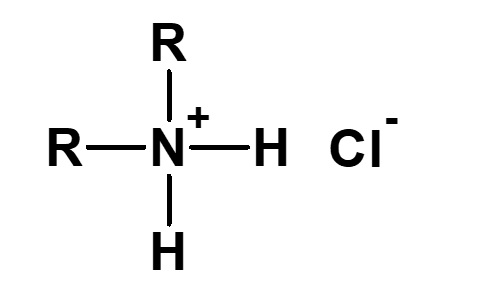


</description>
<dc:creator></dc:creator>
<dc:subject></dc:subject>
<dc:date>2024-04-09T21:00:00+09:00</dc:date>
<content:encoded><![CDATA[
<div class="cms-content-parts-sin171179606762468800 sanyo-pageLink" id="cms-editor-minieditor-sin171179606762471900" data-original="cms-content-parts-sin171179606762473300" data-custom="sanyo-pageLink"><!-- .parts_text_type01 -->
<ul>
    <li><a href="#intro">What is a surfactant?</a></li>
    <li><a href="#video">Surfactant functions introduction video</a></li>
    <li><a href="#non-ionic">What is a nonionic surfactant?</a></li>
    <li><a href="#classification">Classification of Nonionic Surfactants</a></li>
    <li><a href="#peg_type">Polyethylene glycol type nonionic surfactant</a></li>
    <li><a href="#multivalent">Polyhydric alcohol-type nonionic surfactant</a></li>
    <li><a href="#summary">Summary of Nonionic Surfactants</a></li>
    <li><a href="#info">Related products(surfactants)</a></li>
</ul>
<!-- // .parts_text_type01 --></div>
<h2 class="cms-content-parts-sin171179608038418400" id="cms-editor-textarea-sin171179608038426200"><a name="intro"></a>What is a surfactant?</h2>
<div class="cms-content-parts-sin171179610700973200 cparts-id119 lay-margin-b--3 box" data-selectable="cparts-animate cparts-animate--slideInUp:上へスライド,cparts-animate cparts-animate--slideInDown:下へスライド,cparts-animate cparts-animate--slideInLeft:左へスライド,cparts-animate cparts-animate--slideInRight:右へスライド">
<div class="lay-row">
<div class="lay-col12-xs-12 lay-col12-md-12 lay-col12-lg-12">
<div id="cms-editor-minieditor-sin171179610700977000" class="cparts-txt-block lay-reset-child">
<p><font face="Noto Sans JP">First, an interface is a boundary surface that exists between two substances with different properties, and interfaces exist between liquids and solids, liquids and liquids, and liquids and gases.</font></p>
<p><font face="Noto Sans JP">Surfactants enhance performance by performing functions such as washing, emulsifying, dispersing, wetting, and penetrating at this interface.<br />
<br />
<span style="font-weight: 700;">Interface = a boundary surface that exists between two substances with different properties</span><br />
</font><font face="Noto Sans JP">Liquid and solid: cup and coffee, machine and lubricant&#160;</font><br />
<font face="Noto Sans JP">Liquid and liquid: water and oil&#160;</font><br />
<font face="Noto Sans JP">Liquid and gas: seawater and air, soap bubbles</font><br />
<span style="font-weight: 700;"><font face="Noto Sans JP"><br />
Examples of roles of surfactants</font></span><br />
<font face="Noto Sans JP">Cleaning ・・・ Removing dirt&#160;</font><br />
<font face="Noto Sans JP">Emulsification ・・・ Dispersion ・・ Making unmixable things easier to mix</font><br />
<font face="Noto Sans JP">Wetting / Penetration ・・・ Makes wetting and soaking easier</font></p>
</div>
</div>
</div>
</div>
<h3 class="cms-content-parts-sin171179612127819800" id="cms-editor-textarea-sin171179612127823500">Basic structure of a surfactant</h3>
<div class="cms-content-parts-sin171179623930333000 cparts-id119 lay-margin-b--3 box" data-selectable="cparts-animate cparts-animate--slideInUp:上へスライド,cparts-animate cparts-animate--slideInDown:下へスライド,cparts-animate cparts-animate--slideInLeft:左へスライド,cparts-animate cparts-animate--slideInRight:右へスライド">
<div class="lay-row">
<div class="lay-col12-xs-12 lay-col12-md-12 lay-col12-lg-12">
<div id="cms-editor-minieditor-sin171179623930308600" class="cparts-txt-block lay-reset-child">
<p>-Surfactants have different structures in their molecules with different properties: lipophilic groups (oil-loving parts) and hydrophilic groups (water-loving parts).<br />
<br />
-Surfactants are broadly classified into four types according to the structure of the hydrophilic group: nonionic, anionic, cationic, and amphoteric (having both anionic and cationic groups).</p>
<p><img src="https://sanyo-chemical-solutions.com/images/technology/surfactant/img_surfactantbasics_types.jpg" width="800" height="211" alt="" /></p>
</div>
</div>
</div>
</div>
<div class="cms-content-parts-sin172315874190012000 cparts-id96--01 box lay-margin-b--3" data-selectable="cparts-animate cparts-animate--slideInUp:上へスライド,cparts-animate cparts-animate--slideInDown:下へスライド,cparts-animate cparts-animate--slideInLeft:左へスライド,cparts-animate cparts-animate--slideInRight:右へスライド">
<div class="lay-row">
<div class="lay-col12-xs-12 lay-col12-md-12 lay-col12-lg-12">
<div class="cparts-table-block lay-reset-child" id="cms-editor-minieditor-sin172315874190016400">
<table>
    <caption class="lay-margin-t--1">&#160; &#160;</caption>
    <tbody>
        <tr>
            <th>Type of surfactant</th>
            <th><span style="text-align: center;">Feature</span></th>
            <th><span style="text-align: center;">Main application</span></th>
            <th><span style="text-align: center;">Composition example</span></th>
        </tr>
        <tr>
            <td>Nonionic surfactant<br />
            <img src="https://sanyo-chemical-solutions.com/images/technology/surfactant/img_surfactantbasics_nonion.jpg" width="150" height="47" alt="" /></td>
            <td>-Hydrophilic and hydrophobic balance<br />
            can be easily adjusted<br />
            -Excellent emulsification and solubilization<br />
            -Low lather<br style="margin-bottom: 0px;" />
            -Susceptible to temperature but not to pH</td>
            <td>-Laundry detergent<br />
            -Emulsifiers and solubilizers<br />
            -Dispersant<br style="margin-bottom: 0px;" />
            -Metalworking oil</td>
            <td>-Polyoxyethylene alkyl ether<br style="margin-bottom: 0px;" />
            etc.</td>
        </tr>
        <tr>
            <td>Anionic surfactant<br />
            <img src="https://sanyo-chemical-solutions.com/images/technology/surfactant/img_surfactantbasics_anion.jpg" width="150" height="49" alt="" /></td>
            <td>-Excellent emulsification and dispersibility<br />
            -Good lather<br style="margin-bottom: 0px;" />
            -Temperature insensitive</td>
            <td>-Laundry&#160;Detergent<br />
            -Shampoo<br style="margin-bottom: 0px;" />
            -Body soap</td>
            <td>-Alkyl benzene sulfonate<br />
            -Alkyl ether sulfates<br style="margin-bottom: 0px;" />
            etc.</td>
        </tr>
        <tr>
            <td>Cationic surfactant<br />
            <img src="https://sanyo-chemical-solutions.com/images/technology/surfactant/img_surfactantbasics_cation.jpg" width="150" height="49" alt="" /></td>
            <td>-Adsorption to fibers<br />
            -Antistatic effect<br style="margin-bottom: 0px;" />
            -Bactericidal</td>
            <td>-Hair rinse<br />
            -Fabric softener for laundry<br style="margin-bottom: 0px;" />
            -Disinfectant</td>
            <td>-Didecyldimethylammonium methyl sulfate</td>
        </tr>
        <tr>
            <td>Amphoteric surfactant<br />
            <img src="https://sanyo-chemical-solutions.com/images/technology/surfactant/img_surfactantbasics_ryosei.jpg" width="150" height="47" alt="" /></td>
            <td>-Mild on skin<br />
            -Excellent solubility in water<br style="margin-bottom: 0px;" />
            -Synergistic with other active components</td>
            <td>-Shampoo<br />
            -Body soap<br style="margin-bottom: 0px;" />
            -Kitchen detergent</td>
            <td>-Alkyl di-aminoethyl hydrochloride glycine<br />
            -Sodium lauryl aminopropionic acid<br />
            -Dimethylstearyl betaine<br style="margin-bottom: 0px;" />
            -Coconut oil fatty acid amidopropyl betaine</td>
        </tr>
    </tbody>
</table>
</div>
</div>
</div>
</div>
<h2 class="cms-content-parts-sin171179614288982300" id="cms-editor-textarea-sin171179614288986900"><a name="video"></a>Surfactant functions introduction video</h2>
<div class="cms-content-parts-sin172308396707379200">[[CMSmodule.parts::ad#param=309]]</div>
<div class="cms-content-parts-sin171179623311713300 cparts-id119 lay-margin-b--3 box" data-selectable="cparts-animate cparts-animate--slideInUp:上へスライド,cparts-animate cparts-animate--slideInDown:下へスライド,cparts-animate cparts-animate--slideInLeft:左へスライド,cparts-animate cparts-animate--slideInRight:右へスライド">
<div class="lay-row">
<div class="lay-col12-xs-12 lay-col12-md-12 lay-col12-lg-12">
<div id="cms-editor-minieditor-sin171179623311720100" class="cparts-txt-block lay-reset-child">
<p>It consists of seven short movies for each function.&#160;<br />
0:00　Introduction of surfactants functions　<br />
0:16　Part1　Washability<br />
1:00　Part2　Permeability<br />
2:10　Part3　Dispersion<br />
2:55　Part4　Foaming properties<br />
3:25　Part5　Defoaming properties<br />
3:39　Part6　Smoothness<br />
4:20　Part7　Antibacterial properties</p>
</div>
</div>
</div>
</div>
<h2 class="cms-content-parts-sin171179625026888800" id="cms-editor-textarea-sin171179625026895900"><a name="non-ionic"></a>What is a nonionic surfactant?</h2>
<div class="cms-content-parts-sin171179626437234900 cparts-id119 lay-margin-b--3 box" data-selectable="cparts-animate cparts-animate--slideInUp:上へスライド,cparts-animate cparts-animate--slideInDown:下へスライド,cparts-animate cparts-animate--slideInLeft:左へスライド,cparts-animate cparts-animate--slideInRight:右へスライド">
<div class="lay-row">
<div class="lay-col12-xs-12 lay-col12-md-12 lay-col12-lg-12">
<div id="cms-editor-minieditor-sin171179626437210100" class="cparts-txt-block lay-reset-child">
<p>Nonionic surfactants are used in the largest quantities among surfactants, and their raw materials, such as ethylene oxide, are stably supplied in large quantities.</p>
<p>Nonionic surfactants are surfactants that have hydroxyl groups (-OH) or ether bonds (-O-) as hydrophilic groups that do not dissociate into ions in water.</p>
<p>&#160;However, since hydroxyl groups and ether bonds do not dissociate into ions in water, their hydrophilicity is quite weak, so they alone do not have the power to dissolve large hydrophobic groups in water. Therefore, several of these groups come together in one molecule to exhibit good hydrophilicity. This is very different from anionic and cationic surfactants, where only one hydrophilic group is sufficient to exhibit hydrophilicity.</p>
<div></div>
</div>
</div>
</div>
</div>
<h2 class="cms-content-parts-sin171179630782058300" id="cms-editor-textarea-sin171179630782066900"><a name="classification"></a>Classification of Nonionic Surfactants</h2>
<div class="cms-content-parts-sin171179632365252500 cparts-id119 lay-margin-b--3 box" data-selectable="cparts-animate cparts-animate--slideInUp:上へスライド,cparts-animate cparts-animate--slideInDown:下へスライド,cparts-animate cparts-animate--slideInLeft:左へスライド,cparts-animate cparts-animate--slideInRight:右へスライド">
<div class="lay-row">
<div class="lay-col12-xs-12 lay-col12-md-12 lay-col12-lg-12">
<div id="cms-editor-minieditor-sin171179632365307200" class="cparts-txt-block lay-reset-child">
<p>Nonionic surfactants can be classified by the type of hydrophilic group into polyethylene glycol type and polyhydric alcohol type.<br />
Polyethylene glycol-type nonionic surfactants are nonionic surfactants made by adding ethylene oxide as a hydrophilic group to a hydrophobic raw material.</p>
<div></div>
</div>
</div>
</div>
</div>
<div class="cms-content-parts-sin172308413401630500 cparts-id119 lay-margin-b--3 box" data-selectable="cparts-animate cparts-animate--slideInUp:上へスライド,cparts-animate cparts-animate--slideInDown:下へスライド,cparts-animate cparts-animate--slideInLeft:左へスライド,cparts-animate cparts-animate--slideInRight:右へスライド">
<div class="lay-row">
<div class="lay-col12-xs-12 lay-col12-md-12 lay-col12-lg-12">
<div id="cms-editor-minieditor-sin172308413401604300" class="cparts-txt-block lay-reset-child">
<p style="text-align: center; "><b><img src="https://sanyo-chemical-solutions.com/images/technology/nonionic/img_nonion_pegether2_en.jpg" width="800" height="193" alt="" /><br />
Fig.&#160;Example of polyethylene glycol-type nonionic surfactant</b></p>
</div>
</div>
</div>
</div>
<div class="cms-content-parts-sin172308418578511900 cparts-id119 lay-margin-b--3 box" data-selectable="cparts-animate cparts-animate--slideInUp:上へスライド,cparts-animate cparts-animate--slideInDown:下へスライド,cparts-animate cparts-animate--slideInLeft:左へスライド,cparts-animate cparts-animate--slideInRight:右へスライド">
<div class="lay-row">
<div class="lay-col12-xs-12 lay-col12-md-12 lay-col12-lg-12">
<div class="cparts-txt-block lay-reset-child" id="cms-editor-minieditor-sin172308418578515100">
<p>Polyhydric alcohol-type nonionic surfactants are nonionic surfactants in which a hydrophobic group such as a higher fatty acid is bonded to a polyhydric alcohol such as glycerol, pentaerythritol, sorbitol, etc. The hydrophobic group has multiple hydroxyl groups bonded to it, which gives it hydrophilic properties.</p>
</div>
</div>
</div>
</div>
<div class="cms-content-parts-sin172308418920529700 cparts-id119 lay-margin-b--3 box" data-selectable="cparts-animate cparts-animate--slideInUp:上へスライド,cparts-animate cparts-animate--slideInDown:下へスライド,cparts-animate cparts-animate--slideInLeft:左へスライド,cparts-animate cparts-animate--slideInRight:右へスライド">
<div class="lay-row">
<div class="lay-col12-xs-12 lay-col12-md-12 lay-col12-lg-12">
<div class="cparts-txt-block lay-reset-child" id="cms-editor-minieditor-sin172308418920501200">
<p style="text-align: center; "><b><img src="https://sanyo-chemical-solutions.com/images/technology/nonionic/img_nonion_pegether2_en.jpg" width="800" height="193" alt="" /><br />
Fig. Example of polyhydric alcohol-type nonionic surfactant</b></p>
</div>
</div>
</div>
</div>
<div class="cms-content-parts-sin172308419276961900 cparts-id119 lay-margin-b--3 box" data-selectable="cparts-animate cparts-animate--slideInUp:上へスライド,cparts-animate cparts-animate--slideInDown:下へスライド,cparts-animate cparts-animate--slideInLeft:左へスライド,cparts-animate cparts-animate--slideInRight:右へスライド">
<div class="lay-row">
<div class="lay-col12-xs-12 lay-col12-md-12 lay-col12-lg-12">
<div class="cparts-txt-block lay-reset-child" id="cms-editor-minieditor-sin172308419276937700">
<p>A more detailed classification of polyethylene glycol-type nonionic surfactants is made according to the type of hydrophobic group, whereas in the case of polyhydric alcohol-type nonionic surfactants, it is made according to the type of polyhydric alcohol, the hydrophilic group. This classification is shown in the table below.</p>
</div>
</div>
</div>
</div>
<h5 class="cms-content-parts-sin172308423423991400" id="cms-editor-textarea-sin172308423423998600">Classification of Nonionic Surfactants</h5>
<div class="cms-content-parts-sin172308427373111100 cparts-id96--01 box lay-margin-b--3" data-selectable="cparts-animate cparts-animate--slideInUp:上へスライド,cparts-animate cparts-animate--slideInDown:下へスライド,cparts-animate cparts-animate--slideInLeft:左へスライド,cparts-animate cparts-animate--slideInRight:右へスライド">
<div class="lay-row">
<div class="lay-col12-xs-12 lay-col12-md-12 lay-col12-lg-12">
<div class="cparts-table-block lay-reset-child" id="cms-editor-minieditor-sin172308427373115200">
<table>
    <caption class="lay-margin-t--1">EO: Abbreviation for ethylene oxide</caption>
    <tbody>
        <tr>
            <td rowspan="8">Polyethylene glycol type</td>
            <td>Polyoxyethylene alkyl ether (Higher alcohol EO adduct)</td>
        </tr>
        <tr>
            <td>Polyoxyethylene alkyl phenyl ether (alkyl phenol EO adduct)</td>
        </tr>
        <tr>
            <td>Polyoxyethylene fatty acid esters<br />
            (Fatty acid EO adducts, polyethylene glycol fatty acid esters)</td>
        </tr>
        <tr>
            <td>Polyoxyethylene polyhydric alcohol fatty acid esters<br />
            &#160;(Polyhydric alcohol fatty acid ester EO adduct)</td>
        </tr>
        <tr>
            <td>Polyoxyethylene alkylamine (Higher alkylamine EO adduct)</td>
        </tr>
        <tr>
            <td>Polyoxyethylene fatty acid amide (fatty acid amide EO adduct)</td>
        </tr>
        <tr>
            <td>Polyoxyethylene polyoxypropylene glycol<br />
            (Polypropylene glycol EO adduct)</td>
        </tr>
        <tr>
            <td>Other</td>
        </tr>
        <tr>
            <td rowspan="7">Polyalcoholic</td>
            <td>glycerol fatty acid ester</td>
        </tr>
        <tr>
            <td>Pentaerythritol fatty acid esters</td>
        </tr>
        <tr>
            <td>Sorbitol and sorbitan fatty acid esters</td>
        </tr>
        <tr>
            <td>Disaccharide fatty acid ester</td>
        </tr>
        <tr>
            <td>alkyl polyglycoside</td>
        </tr>
        <tr>
            <td>Fatty acid alkanolamide</td>
        </tr>
        <tr>
            <td>Other</td>
        </tr>
    </tbody>
</table>
</div>
</div>
</div>
</div>
<h2 class="cms-content-parts-sin171179633415981400" id="cms-editor-textarea-sin171179633415992300"><a name="peg_type"></a>Polyethylene glycol type nonionic surfactant</h2>
<div class="cms-content-parts-sin172308436044682700 cparts-id119 lay-margin-b--3 box" data-selectable="cparts-animate cparts-animate--slideInUp:上へスライド,cparts-animate cparts-animate--slideInDown:下へスライド,cparts-animate cparts-animate--slideInLeft:左へスライド,cparts-animate cparts-animate--slideInRight:右へスライド">
<div class="lay-row">
<div class="lay-col12-xs-12 lay-col12-md-12 lay-col12-lg-12">
<div class="cparts-txt-block lay-reset-child" id="cms-editor-minieditor-sin172308436044686800">
<p>Polyethylene glycol-type nonionic surfactants are surfactants made by adding ethylene oxide (EO: ethylene oxide) to hydrophobic raw materials containing reactive hydrogen atoms.</p>
<p>&#160;Reactive hydrogen atoms are specifically hydrogen atoms such as hydroxyl group (-OH), carboxyl group (-COOH), amino group (-NH<span style="font-size: smaller;">2</span>), or amide group (-CONH<span style="font-size: smaller;">2</span>). Hydrophobic groups bonded to the above atomic groups can react with ethylene oxide to form polyethylene glycol-type nonionic surfactants. For example, a higher alcohol with a hydroxyl group reacts to an EO adduct as follows</p>
<div></div>
<p></p>
<p style="text-align: center; "><b><img src="https://sanyo-chemical-solutions.com/images/technology/nonionic/img_nonion_eonmol2_en.jpg" width="800" height="193" alt="" /><br />
Fig. Reaction of higher alcohols with ethylene oxide</b></p>
</div>
</div>
</div>
</div>
<div class="cms-content-parts-sin172308439282156000 cparts-id119 lay-margin-b--3 box" data-selectable="cparts-animate cparts-animate--slideInUp:上へスライド,cparts-animate cparts-animate--slideInDown:下へスライド,cparts-animate cparts-animate--slideInLeft:左へスライド,cparts-animate cparts-animate--slideInRight:右へスライド">
<div class="lay-row">
<div class="lay-col12-xs-12 lay-col12-md-12 lay-col12-lg-12">
<div class="cparts-txt-block lay-reset-child" id="cms-editor-minieditor-sin172308439282161200">
<p>The following hydrophobic raw materials with reactive hydrogen atoms are currently used in relatively large quantities. Among these, higher alcohols are particularly important. However, alkylphenols are no longer used since it was found that they have endocrine disrupting effects.</p>
</div>
</div>
</div>
</div>
<h5 class="cms-content-parts-sin172308441992977300" id="cms-editor-textarea-sin172308441992991400">Hydrophobic raw materials with easily reactive hydrogen atoms</h5>
<div class="cms-content-parts-sin172308432372079400 cparts-id96--01 box lay-margin-b--3" data-selectable="cparts-animate cparts-animate--slideInUp:上へスライド,cparts-animate cparts-animate--slideInDown:下へスライド,cparts-animate cparts-animate--slideInLeft:左へスライド,cparts-animate cparts-animate--slideInRight:右へスライド">
<div class="lay-row">
<div class="lay-col12-xs-12 lay-col12-md-12 lay-col12-lg-12">
<div class="cparts-table-block lay-reset-child" id="cms-editor-minieditor-sin172308432372049200">
<table dir="ltr">
    <caption class="lay-margin-t--1">&#160; &#160; &#160;</caption>
    <thead>
        <tr>
            <th scope="col" style="text-align: center;">Classification of hydrophobic raw materials</th>
            <th scope="col" style="text-align: center;">Compound Examples</th>
        </tr>
    </thead>
    <tbody>
        <tr>
            <td style="text-align: center;">Higher alcohol: R-OH</td>
            <td style="text-align: center;">Lauryl alcohol: C<span style="font-size: smaller;">12</span>H<span style="font-size: smaller;">25</span>-OH</td>
        </tr>
        <tr>
            <td style="text-align: center;">Alkyl phenols:<br />
            <img src="https://sanyo-chemical-solutions.com/images/technology/nonionic/img_nonion_alkylphenol_en2.jpg" width="150" height="55" alt="" /></td>
            <td style="text-align: center;">Nonylphenol<br />
            <img src="https://sanyo-chemical-solutions.com/images/technology/nonionic/img_nonion_nonylphenol_en.jpg" width="200" height="60" alt="" /></td>
        </tr>
        <tr>
            <td style="text-align: center;">Higher fatty acids: R-COOH</td>
            <td style="text-align: center;">Oleic acid: C<span style="font-size: smaller;">17</span>H<span style="font-size: smaller;">33</span>-COOH</td>
        </tr>
        <tr>
            <td style="text-align: center;">Higher alkylamine: R-NH<span style="font-size: smaller;">2</span></td>
            <td style="text-align: center;">Stearylamine: C<span style="font-size: smaller;">18</span>H<span style="font-size: smaller;">37</span>-NH<span style="font-size: smaller;">2</span></td>
        </tr>
        <tr>
            <td style="text-align: center;">Higher fatty acid amide: R-CONH<span style="font-size: smaller;">2</span></td>
            <td style="text-align: center;">Oleic acid amide: C<span style="font-size: smaller;">17</span>H<span style="font-size: smaller;">33</span>-CONH<span style="font-size: smaller;">2</span></td>
        </tr>
    </tbody>
</table>
</div>
</div>
</div>
</div>
<h3 class="cms-content-parts-sin172308444882566900" id="cms-editor-textarea-sin172308444882570800"><br />
Hydrophilicity and Cloud Point of Polyethylene Glycol Type Nonionic Surfactants</h3>
<h4 class="cms-content-parts-sin172308446255797800" id="cms-editor-textarea-sin172308446255838900">Hydrogen bonding and hydrophilicity of polyethylene glycol-type nonionic surfactants</h4>
<div class="cms-content-parts-sin172308448266618200 box cparts-id409--01 lay-margin-b--3" col-flex="1-2" data-selectable="cparts-animate cparts-animate--slideInUp:上へスライド,cparts-animate cparts-animate--slideInDown:下へスライド,cparts-animate cparts-animate--slideInLeft:左へスライド,cparts-animate cparts-animate--slideInRight:右へスライド">
<div class="lay-row">
<div class="lay-col12-xs-12 lay-col12-md-6 lay-col12-lg-6">
<div class="cparts-img-block lay-img-width--max lay-margin-b--1"><img alt="" class="cms-easy-edit" id="cms-editor-image-sin172308448266677000" src="https://sanyo-chemical-solutions.com/images/technology/nonionic/img_nonion_hydrogenbond_en.jpg" width="330" /></div>
<div class="cparts-caption-block lay-reset-child lay-font-size--s cms-easy-edit" id="cms-editor-minieditor-sin172308448266677700">
<p><strong>Fig.&#160; Hydrogen bond between polyethylene glycol chain and water molecule (conceptual diagram)&#160;</strong></p>
</div>
</div>
<div class="lay-col12-xs-12 lay-col12-md-6 lay-col12-lg-6">
<div class="cparts-txt-block lay-reset-child" id="cms-editor-minieditor-sin172308448266678000">
<p>Polyethylene glycol chains are hydrophilic because water bonds loosely to the oxygen atoms of the ether bonds in the chain.</p>
<p>&#160;When an ether bond is hydrogen bonded to a water molecule, the surrounding water molecules see it as a peer, making it easier to dissolve in water. This is why they are hydrophilic.</p>
<p>&#160;In aqueous solutions of polyethylene glycol-type nonionic surfactants, water molecules are loosely attached to the ether bond sites by hydrogen bonds. Therefore, as the temperature rises or salts dissolve into the solution, the hydrogen bonds with the water molecules tend to gradually break off.</p>
<div></div>
</div>
</div>
</div>
</div>
<h4 class="cms-content-parts-sin172308448753853900" id="cms-editor-textarea-sin172308448753862000">What is a cloud point?</h4>
<div class="cms-content-parts-sin172308449539199900 box cparts-id409--01 lay-margin-b--3" col-flex="1-2" data-selectable="cparts-animate cparts-animate--slideInUp:上へスライド,cparts-animate cparts-animate--slideInDown:下へスライド,cparts-animate cparts-animate--slideInLeft:左へスライド,cparts-animate cparts-animate--slideInRight:右へスライド">
<div class="lay-row">
<div class="lay-col12-xs-12 lay-col12-md-6 lay-col12-lg-6">
<div class="cparts-img-block lay-img-width--max lay-margin-b--1"><img alt="" class="cms-easy-edit" id="cms-editor-image-sin172308449539140400" src="https://sanyo-chemical-solutions.com/images/technology/nonionic/img_nonion_cloudpoint2_en.jpg" width="330" /></div>
<div class="cparts-caption-block lay-reset-child lay-font-size--s cms-easy-edit" id="cms-editor-minieditor-sin172308449539147700">
<p style="text-align: center;"><strong>Fig. Method of measuring cloud point</strong></p>
</div>
</div>
<div class="lay-col12-xs-12 lay-col12-md-6 lay-col12-lg-6">
<div class="cparts-txt-block lay-reset-child" id="cms-editor-minieditor-sin172308449539154800">
<p>When an aqueous solution of a polyethylene glycol-type nonionic surfactant is heated and the temperature is gradually increased, the bound water molecules are gradually dislodged accordingly, resulting in a gradual decrease in hydrophilicity, and finally the surfactant is no longer soluble in water and precipitates, turning the initially clear solution into a cloudy emulsion.</p>
<p>&#160;Thus, when a clear aqueous solution of polyethylene glycol-type nonionic surfactant is gradually heated, the temperature at which the entire solution suddenly becomes cloudy and the surfactant precipitates as fine droplets is called the cloud point.</p>
<div></div>
</div>
</div>
</div>
</div>
<h4 class="cms-content-parts-sin172308451040669700" id="cms-editor-textarea-sin172308451040679800">Relationship between hydrophilicity and cloud point of surfactants</h4>
<div class="cms-content-parts-sin172308451597900900 box cparts-id409--01 lay-margin-b--3" col-flex="1-2" data-selectable="cparts-animate cparts-animate--slideInUp:上へスライド,cparts-animate cparts-animate--slideInDown:下へスライド,cparts-animate cparts-animate--slideInLeft:左へスライド,cparts-animate cparts-animate--slideInRight:右へスライド">
<div class="lay-row">
<div class="lay-col12-xs-12 lay-col12-md-6 lay-col12-lg-6">
<div class="cparts-img-block lay-img-width--max lay-margin-b--1"><img alt="" class="cms-easy-edit" id="cms-editor-image-sin172308451597836700" src="https://sanyo-chemical-solutions.com/images/technology/nonionic/img_nonion_cloudpointgraph2_en.jpg" width="330" /></div>
<div class="cparts-caption-block lay-reset-child lay-font-size--s cms-easy-edit" id="cms-editor-minieditor-sin172308451597844600">
<p><b>Fig.&#160;</b><strong>Relationship between the number of moles of ethylene oxide added and the cloud point (image)</strong></p>
</div>
</div>
<div class="lay-col12-xs-12 lay-col12-md-6 lay-col12-lg-6">
<div class="cparts-txt-block lay-reset-child" id="cms-editor-minieditor-sin172308451597852400">
<p>If the hydrophobic group materials are the same, the cloud point will also increase as the hydrophilicity increases with an increase in the number of moles of ethylene oxide added, and this cloud point can be used as a value representing the hydrophilicity of the nonionic surfactant.</p>
<p>&#160;The cloud point can be understood as an indication of how strong the hydrophilicity of the polyethylene glycol moiety attached to the hydrophobic group is compared to the strength of the hydrophobic group.</p>
<p></p>
</div>
</div>
</div>
</div>
<div class="cms-content-parts-sin171179635307732700 cparts-id119 lay-margin-b--3 box" data-selectable="cparts-animate cparts-animate--slideInUp:上へスライド,cparts-animate cparts-animate--slideInDown:下へスライド,cparts-animate cparts-animate--slideInLeft:左へスライド,cparts-animate cparts-animate--slideInRight:右へスライド">
<div class="lay-row">
<div class="lay-col12-xs-12 lay-col12-md-12 lay-col12-lg-12">
<div id="cms-editor-minieditor-sin171179635307702900" class="cparts-txt-block lay-reset-child">
<p>The effect of a surfactant is originally derived from the balance between the opposing properties of the hydrophobic and hydrophilic groups, and the cloud point, which indicates the degree of this balance, is the most important value that determines the properties of polyethylene glycol-type nonionic surfactants.<br />
<br />
In fact, quality control of this type of surfactant and guidelines for its use are based on the measurement of the cloud point. For example, it is generally accepted that a surfactant with a cloud point near the operating temperature has excellent permeability. However, the presence of salts or alkalis such as sodium hydroxide causes the cloud point to drop dramatically, so in such cases, it is necessary to measure the cloud point under operating conditions to make a judgment.</p>
</div>
</div>
</div>
</div>
<h3 class="cms-content-parts-sin172308454382743400" id="cms-editor-textarea-sin172308454382779300">Alkylphenol ethylene oxide adducts and higher alcohol ethylene oxide adducts</h3>
<div class="cms-content-parts-sin172308454776967800 cparts-id119 lay-margin-b--3 box" data-selectable="cparts-animate cparts-animate--slideInUp:上へスライド,cparts-animate cparts-animate--slideInDown:下へスライド,cparts-animate cparts-animate--slideInLeft:左へスライド,cparts-animate cparts-animate--slideInRight:右へスライド">
<div class="lay-row">
<div class="lay-col12-xs-12 lay-col12-md-12 lay-col12-lg-12">
<div id="cms-editor-minieditor-sin172308454776946500" class="cparts-txt-block lay-reset-child">
<p>Nonionic surfactants are obtained by adding ethylene oxide to the phenolic hydroxyl group of alkyl phenols or the alcoholic hydroxyl group of higher alcohols. These are also called polyethylene glycol ether type nonionic surfactants because the hydrophobic and hydrophilic groups are linked by an ether bond (-O-). This type of surfactant is rarely degraded by acids or alkalis.</p>
</div>
</div>
</div>
</div>
<h4 class="cms-content-parts-sin172308456372488000" id="cms-editor-textarea-sin172308456372492900">a. Alkylphenol ethylene oxide adduct (polyoxyethylene alkyl phenyl ether)</h4>
<div class="cms-content-parts-sin172316911205916800 box cparts-id409--01 lay-margin-b--3" col-flex="1-2" data-selectable="cparts-animate cparts-animate--slideInUp:上へスライド,cparts-animate cparts-animate--slideInDown:下へスライド,cparts-animate cparts-animate--slideInLeft:左へスライド,cparts-animate cparts-animate--slideInRight:右へスライド">
<div class="lay-row">
<div class="lay-col12-xs-12 lay-col12-md-6 lay-col12-lg-6">
<div class="cparts-img-block lay-img-width--max lay-margin-b--1"><img alt="" class="cms-easy-edit" id="cms-editor-image-sin172316911205859700" src="https://sanyo-chemical-solutions.com/images/technology/nonionic/img_nonion_alkylphenolex_en.jpg" width="330" /></div>
<div class="cparts-caption-block lay-reset-child lay-font-size--s cms-easy-edit" id="cms-editor-minieditor-sin172316911205867800">
<p style="text-align: center;"><strong>Fig. Typical examples of alkyl phenols</strong></p>
</div>
</div>
<div class="lay-col12-xs-12 lay-col12-md-6 lay-col12-lg-6">
<div class="cparts-txt-block lay-reset-child" id="cms-editor-minieditor-sin172316911205874800">
<p>Among alkylphenol EO adducts, nonylphenol, dodecylphenol, octylphenol, octylcresol, and other EO adducts are known.</p>
<p>&#160;Among them, nonylphenol EO adducts have been the mainstay of polyethylene glycol ether-type nonionic surfactants because of their superior detergency, penetration, and emulsifying power.</p>
<p>&#160;However, alkylphenols have been found to have endocrine disrupting effects, and the use of alkylphenol EO adducts has been declining as they are being replaced by alternative surfactants.</p>
<div></div>
</div>
</div>
</div>
</div>
<h4 class="cms-content-parts-sin172308457910519800" id="cms-editor-textarea-sin172308457910527700">b. Higher alcohol ethylene oxide adduct (polyoxyethylene alkyl ether)</h4>
<div class="cms-content-parts-sin172308458783813700 cparts-id119 lay-margin-b--3 box" data-selectable="cparts-animate cparts-animate--slideInUp:上へスライド,cparts-animate cparts-animate--slideInDown:下へスライド,cparts-animate cparts-animate--slideInLeft:左へスライド,cparts-animate cparts-animate--slideInRight:右へスライド">
<div class="lay-row">
<div class="lay-col12-xs-12 lay-col12-md-12 lay-col12-lg-12">
<div id="cms-editor-minieditor-sin172308458783786400" class="cparts-txt-block lay-reset-child">
<p>The majority of polyethylene glycol-type nonionic surfactants currently on the market are made by adding ethylene oxide to higher alcohols. Higher alcohols, which are used as raw materials for hydrophobic groups, can be broadly classified into two types: natural alcohols obtained from animal and vegetable oils and waxes, and synthetic alcohols made from petroleum.<br />
Higher alcohols are often used as mixtures of various carbon numbers.</p>
</div>
</div>
</div>
</div>
<h5 class="cms-content-parts-sin172308460329881100" id="cms-editor-textarea-sin172308460329915600">Natural alcohol</h5>
<div class="cms-content-parts-sin172308460679956600 cparts-id119 lay-margin-b--3 box" data-selectable="cparts-animate cparts-animate--slideInUp:上へスライド,cparts-animate cparts-animate--slideInDown:下へスライド,cparts-animate cparts-animate--slideInLeft:左へスライド,cparts-animate cparts-animate--slideInRight:右へスライド">
<div class="lay-row">
<div class="lay-col12-xs-12 lay-col12-md-12 lay-col12-lg-12">
<div id="cms-editor-minieditor-sin172308460679932300" class="cparts-txt-block lay-reset-child">
<p>Natural alcohols have been replaced by synthetic alcohols for some time due to their generally high price volatility, but their use is now increasing due to environmental concerns and other factors. Generally speaking, C12~C14 alcohols are more suitable as surfactant raw materials than C16~C18.</p>
<h6>Typical example of saturated natural alcohol: Coconut oil-reduced alcohol</h6>
<p>The most typical saturated natural alcohol is palm oil-reduced alcohol (C12~C14), which is obtained by esterifying palm oil with methanol and reducing the resulting methyl palm oil fatty acid.</p>
<h6>Typical examples of unsaturated natural alcohols: palm oil alcohol, olive oil alcohol</h6>
<p>Unsaturated alcohols include palm oil alcohol and olive oil alcohol, which are obtained in a similar fashion from palm oil and olive oil, respectively. Both are mixtures of oleyl alcohol (CI8 double bond 1) and cetyl alcohol (C16), among others.</p>
<h6>About Natural Alcohols of Animal Origin</h6>
<p>Beef fat reducing alcohol (C16~C18) obtained by hydrogenating methyl bovine fatty acid and macko alcohol (C16-C18 double bond 1) obtained by hydrogenating macko whale oil were also used, but are rarely used anymore due to the avoidance of using animal materials and the protection of whale resources. However, it is rarely used anymore due to the avoidance of using animal materials and the protection of whale resources.</p>
</div>
</div>
</div>
</div>
<h5 class="cms-content-parts-sin172308462374363600" id="cms-editor-textarea-sin172308462374371600">Synthetic alcohol</h5>
<div class="cms-content-parts-sin172308463124727500 cparts-id119 lay-margin-b--3 box" data-selectable="cparts-animate cparts-animate--slideInUp:上へスライド,cparts-animate cparts-animate--slideInDown:下へスライド,cparts-animate cparts-animate--slideInLeft:左へスライド,cparts-animate cparts-animate--slideInRight:右へスライド">
<div class="lay-row">
<div class="lay-col12-xs-12 lay-col12-md-12 lay-col12-lg-12">
<div id="cms-editor-minieditor-sin172308463124702500" class="cparts-txt-block lay-reset-child">
<p>Synthetic alcohols include Ziegler alcohol, which has the same composition as natural alcohols, oxo alcohol, which contains a methyl-branched component, and secondary alcohol, which has a hydroxyl group in the middle of the molecule. All are widely used because they are inexpensive and in stable supply.</p>
</div>
</div>
</div>
</div>
<div class="cms-content-parts-sin172308465104001400 box cparts-id409--01 lay-margin-b--3" col-flex="1-2" data-selectable="cparts-animate cparts-animate--slideInUp:上へスライド,cparts-animate cparts-animate--slideInDown:下へスライド,cparts-animate cparts-animate--slideInLeft:左へスライド,cparts-animate cparts-animate--slideInRight:右へスライド">
<div class="lay-row">
<div class="lay-col12-xs-12 lay-col12-md-6 lay-col12-lg-6">
<div class="cparts-img-block lay-img-width--max lay-margin-b--1"><img alt="" class="cms-easy-edit" id="cms-editor-image-sin172308465104008200" src="https://sanyo-chemical-solutions.com/images/technology/nonionic/img_nonion_syntheticalcohol_en.jpg" width="330" /></div>
<div class="cparts-caption-block lay-reset-child lay-font-size--s cms-easy-edit" id="cms-editor-minieditor-sin172308465104008700">
<p><b>Fig.&#160;</b><strong>Comparison of Synthetic Alcohol Structures</strong></p>
<div></div>
</div>
</div>
<div class="lay-col12-xs-12 lay-col12-md-6 lay-col12-lg-6">
<div class="cparts-txt-block lay-reset-child" id="cms-editor-minieditor-sin172308465104008900">
<h6>Ziegler alcohol</h6>
<p>It is made through the process of ethylene polymerization by the&#160;<span style="font-size: 16px;">Ziegler</span>&#160;process. It has a chemical structure (linear primary alcohol) identical to that of saturated natural alcohols.</p>
<h6>Oxo alcohol</h6>
<p>The reaction of olefin with carbon monoxide and hydrogen yields a primary alcohol with one more carbon atom (oxo method). Although there are some special olefins that use branched-chain olefins such as the trimer and tetramer of propylene as the raw material olefin, the most common method uses linear-chain &#945;-olefins, which are mainly linear primary alcohols like natural alcohols, with some branched primary alcohols mixed in.</p>
</div>
</div>
</div>
</div>
<div class="cms-content-parts-sin172308474551365300 cparts-id119 lay-margin-b--3 box" data-selectable="cparts-animate cparts-animate--slideInUp:上へスライド,cparts-animate cparts-animate--slideInDown:下へスライド,cparts-animate cparts-animate--slideInLeft:左へスライド,cparts-animate cparts-animate--slideInRight:右へスライド">
<div class="lay-row">
<div class="lay-col12-xs-12 lay-col12-md-12 lay-col12-lg-12">
<div id="cms-editor-minieditor-sin172308474551334700" class="cparts-txt-block lay-reset-child">
<h6>Secondary alcohol</h6>
<p>It is made by air oxidation of paraffin. It has hydroxyl groups randomly attached to the ends of the carbon chain (linear secondary alcohol). It is usually sold as a 3-mol ethylene oxide adduct. This is because ethylene oxide does not uniformly add under normal reaction conditions without the addition of ethylene oxide.</p>
</div>
</div>
</div>
</div>
<h3 class="cms-content-parts-sin172308475556593200" id="cms-editor-textarea-sin172308475556601100">Higher alcohol ethylene oxide adducts and alkylphenol&#160;ethylene oxide adducts</h3>
<div class="cms-content-parts-sin172308477103214200 cparts-id119 lay-margin-b--3 box" data-selectable="cparts-animate cparts-animate--slideInUp:上へスライド,cparts-animate cparts-animate--slideInDown:下へスライド,cparts-animate cparts-animate--slideInLeft:左へスライド,cparts-animate cparts-animate--slideInRight:右へスライド">
<div class="lay-row">
<div class="lay-col12-xs-12 lay-col12-md-12 lay-col12-lg-12">
<div id="cms-editor-minieditor-sin172308477103183900" class="cparts-txt-block lay-reset-child">
<p>A comparison of polyethylene glycol ether type nonionic surfactants (higher alcohol EO adducts and alkylphenol EO adducts) with anionic surfactants is shown in the table below.</p>
</div>
</div>
</div>
</div>
<h5 class="cms-content-parts-sin172308477951874200" id="cms-editor-textarea-sin172308477951882100">Comparison of polyethylene glycol ether type nonionic surfactants with anionic surfactants</h5>
<div class="cms-content-parts-sin172308480338563700 cparts-id96--01 box lay-margin-b--3" data-selectable="cparts-animate cparts-animate--slideInUp:上へスライド,cparts-animate cparts-animate--slideInDown:下へスライド,cparts-animate cparts-animate--slideInLeft:左へスライド,cparts-animate cparts-animate--slideInRight:右へスライド">
<div class="lay-row">
<div class="lay-col12-xs-12 lay-col12-md-12 lay-col12-lg-12">
<div class="cparts-table-block lay-reset-child" id="cms-editor-minieditor-sin172308480338566500">
<table dir="ltr">
    <caption class="lay-margin-t--1">* Items clearly favoring nonionic surfactants</caption>
    <thead>
        <tr>
            <th scope="row" style="text-align: center;">Properties</th>
            <th scope="col" style="text-align: center;">anionic surfactant</th>
            <th scope="col" style="text-align: center;">Polyethylene glycol ether type nonionic surfactant</th>
        </tr>
    </thead>
    <tbody>
        <tr>
            <th scope="row">Foaming*</th>
            <td>Generally good</td>
            <td>Generally weak (industrially advantageous)</td>
        </tr>
        <tr>
            <th scope="row">Permeability*</th>
            <td>Excellent as dioctyl sulfosuccinated sodium salt</td>
            <td>Can be made equal to or better than dioctyl sulfosuccinate sodium salt</td>
        </tr>
        <tr>
            <th scope="row">Detergency*</th>
            <td>Generally medium level</td>
            <td>Available with high detergency level</td>
        </tr>
        <tr>
            <th scope="row">Emulsification and dispersibility*</th>
            <td>Some are quite good.</td>
            <td>Freedom to change the number of moles of EO to make it suitable for all areas.</td>
        </tr>
        <tr>
            <th scope="row">Performance as a dyeing aid</th>
            <td>Levelling agent for acid dyes, etc.</td>
            <td>Levelling agent such as Indanthrene dyes and complex acid dyes</td>
        </tr>
        <tr>
            <th scope="row">Efficacy at low concentrations*</th>
            <td>High cmc, so performance drops sharply at low concentrations.</td>
            <td>Low cmc, so it performs well even at fairly low concentrations</td>
        </tr>
        <tr>
            <th scope="row">Product form*</th>
            <td>Mostly in paste form, some in powder form</td>
            <td>Easily made into liquid products (convenient to use)</td>
        </tr>
    </tbody>
</table>
</div>
</div>
</div>
</div>
<h5 class="cms-content-parts-sin172308483928094700" id="cms-editor-textarea-sin172308483928102700">Basic Performance of Polyethylene Glycol Ether Type&#160;Nonionic Surfactants</h5>
<div class="cms-content-parts-sin172308484695501000 cparts-id96--01 box lay-margin-b--3" data-selectable="cparts-animate cparts-animate--slideInUp:上へスライド,cparts-animate cparts-animate--slideInDown:下へスライド,cparts-animate cparts-animate--slideInLeft:左へスライド,cparts-animate cparts-animate--slideInRight:右へスライド">
<div class="lay-row">
<div class="lay-col12-xs-12 lay-col12-md-12 lay-col12-lg-12">
<div class="cparts-table-block lay-reset-child" id="cms-editor-minieditor-sin172308484695464400">
<table dir="ltr">
    <caption class="lay-margin-t--1">Surface tension: By Du Nouy&#8217;s method, at 20℃, 0.1%<br />
    Penetrating power: By canvas method (spontaneous sinking), a 30℃, 0.1%<br />
    Detergency: By tentative method of the Japan Oil Chemists&#8217; Society at 50℃,&#160;0.1%<br />
    Foaming degree: By Ross-Miles method, at 40℃, 0.1%<br type="_moz" />
    </caption>
    <thead>
        <tr>
            <th scope="row" colspan="2" rowspan="2"></th>
            <th scope="col" rowspan="2" style="text-align: center;">Cloud point<br />
            [&#176;C]</th>
            <th scope="col" rowspan="2" style="text-align: center;">Surface Tension<br />
            [mN/m]</th>
            <th scope="col" rowspan="2" style="text-align: center;">Penetrating power<br />
            [sec]</th>
            <th scope="col" rowspan="2" style="text-align: center;">Detergency<br />
            [%]</th>
            <th scope="col" colspan="2" style="text-align: center;">Foaming degree <br />
            [mm]</th>
        </tr>
        <tr>
            <th scope="col" style="text-align: center;">Immidiately&#160;</th>
            <th scope="col" style="text-align: center;">After<br />
            5min</th>
        </tr>
    </thead>
    <tbody>
        <tr>
            <th scope="row" style="text-align: center;" rowspan="3">Synthetic alcohol</th>
            <th scope="row" style="text-align: center;">Secondary alcohol<br />
            EO9 mol adduct</th>
            <td style="text-align: center;">61</td>
            <td style="text-align: center;">30</td>
            <td style="text-align: center;">2.0</td>
            <td style="text-align: center;">28</td>
            <td style="text-align: center;">127</td>
            <td style="text-align: center;">70</td>
        </tr>
        <tr>
            <th scope="row" style="text-align: center;">Zeaglar alcohol<br />
            EO7 mol adduct</th>
            <td style="text-align: center;">60</td>
            <td style="text-align: center;">30</td>
            <td style="text-align: center;">3.9</td>
            <td style="text-align: center;">32</td>
            <td style="text-align: center;">103</td>
            <td style="text-align: center;">101</td>
        </tr>
        <tr>
            <th scope="row" style="text-align: center;">Oxo Alcohol<br />
            EO8.5 mol adduct</th>
            <td style="text-align: center;">63</td>
            <td style="text-align: center;">30</td>
            <td style="text-align: center;">2.0</td>
            <td style="text-align: center;">29</td>
            <td style="text-align: center;">115</td>
            <td style="text-align: center;">101</td>
        </tr>
        <tr>
            <th scope="row" style="text-align: center;" rowspan="2">Natural alcohol</th>
            <th scope="row" style="text-align: center;">Coconut oil reduced alcohol</th>
            <td style="text-align: center;">61</td>
            <td style="text-align: center;">32</td>
            <td style="text-align: center;">4.2</td>
            <td style="text-align: center;">28</td>
            <td style="text-align: center;">114</td>
            <td style="text-align: center;">109</td>
        </tr>
        <tr>
            <th scope="row" style="text-align: center;">Nonylphenol</th>
            <td style="text-align: center;">61</td>
            <td style="text-align: center;">34</td>
            <td style="text-align: center;">13.5</td>
            <td style="text-align: center;">26</td>
            <td style="text-align: center;">72</td>
            <td style="text-align: center;">71</td>
        </tr>
        <tr>
            <th scope="row" style="text-align: center;">Alkyl phenol</th>
            <th scope="row" style="text-align: center;">Nonylphenol<br />
            EO10 mol adduct</th>
            <td style="text-align: center;">64</td>
            <td style="text-align: center;">31</td>
            <td style="text-align: center;">2.0</td>
            <td style="text-align: center;">30</td>
            <td style="text-align: center;">99</td>
            <td style="text-align: center;">92</td>
        </tr>
    </tbody>
</table>
<p></p>
</div>
</div>
</div>
</div>
<h3 class="cms-content-parts-sin172308492255719100" id="cms-editor-textarea-sin172308492255727000">Polyoxyethylene fatty acid esters (fatty acid ethylene oxide adducts and polyethylene glycol fatty acid esters)</h3>
<div class="cms-content-parts-sin172308490264582400 cparts-id119 lay-margin-b--3 box" data-selectable="cparts-animate cparts-animate--slideInUp:上へスライド,cparts-animate cparts-animate--slideInDown:下へスライド,cparts-animate cparts-animate--slideInLeft:左へスライド,cparts-animate cparts-animate--slideInRight:右へスライド">
<div class="lay-row">
<div class="lay-col12-xs-12 lay-col12-md-12 lay-col12-lg-12">
<div id="cms-editor-minieditor-sin172308490264553600" class="cparts-txt-block lay-reset-child">
<p>Ethylene oxide can also be added to fatty acids with an alkali catalyst. This type of product is sometimes called a polyethylene glycol ester-type nonionic surfactant because, as the reaction formula shows, the hydrophobic and hydrophilic groups are linked by an ester bond (-COO-).</p>
</div>
</div>
</div>
</div>
<div class="cms-content-parts-sin172308494584156900 cparts-id119 lay-margin-b--3 box" data-selectable="cparts-animate cparts-animate--slideInUp:上へスライド,cparts-animate cparts-animate--slideInDown:下へスライド,cparts-animate cparts-animate--slideInLeft:左へスライド,cparts-animate cparts-animate--slideInRight:右へスライド">
<div class="lay-row">
<div class="lay-col12-xs-12 lay-col12-md-12 lay-col12-lg-12">
<div id="cms-editor-minieditor-sin172308494584127900" class="cparts-txt-block lay-reset-child">
<p style="text-align: center; "><b><img src="https://sanyo-chemical-solutions.com/images/technology/nonionic/img_nonion_stealic2_en.jpg" width="800" height="105" alt="" /><br />
Fig.&#160;EO adducts of fatty acids</b></p>
</div>
</div>
</div>
</div>
<div class="cms-content-parts-sin172308495749537000 cparts-id119 lay-margin-b--3 box" data-selectable="cparts-animate cparts-animate--slideInUp:上へスライド,cparts-animate cparts-animate--slideInDown:下へスライド,cparts-animate cparts-animate--slideInLeft:左へスライド,cparts-animate cparts-animate--slideInRight:右へスライド">
<div class="lay-row">
<div class="lay-col12-xs-12 lay-col12-md-12 lay-col12-lg-12">
<div id="cms-editor-minieditor-sin172308495749508800" class="cparts-txt-block lay-reset-child">
<p>Since ester bonds are susceptible to hydrolysis, this type of product may decompose into soap when used in strongly alkaline baths. This type of soap is also produced by addition of ethylene oxide as described above, but can also be easily produced by direct esterification of fatty acids with polyethylene glycol.</p>
<p>Polyoxyethylene fatty acid esters are generally inferior to higher alcohols or alkylphenol EO adducts in terms of penetration and detergency. Therefore, they are mainly used as emulsion dispersants, textile oils (for spinning and finishing), or dyeing auxiliaries.</p>
</div>
</div>
</div>
</div>
<div class="cms-content-parts-sin172308495473083200 cparts-id119 lay-margin-b--3 box" data-selectable="cparts-animate cparts-animate--slideInUp:上へスライド,cparts-animate cparts-animate--slideInDown:下へスライド,cparts-animate cparts-animate--slideInLeft:左へスライド,cparts-animate cparts-animate--slideInRight:右へスライド">
<div class="lay-row">
<div class="lay-col12-xs-12 lay-col12-md-12 lay-col12-lg-12">
<div id="cms-editor-minieditor-sin172308495473054200" class="cparts-txt-block lay-reset-child">
<p style="text-align: center; "><b><img src="https://sanyo-chemical-solutions.com/images/technology/nonionic/img_nonionic_en5.jpg" width="800" height="165" alt="" /><br />
Fig.&#160;Polyethylene glycol laurate</b></p>
</div>
</div>
</div>
</div>
<div class="cms-content-parts-sin172308496858542700 cparts-id119 lay-margin-b--3 box" data-selectable="cparts-animate cparts-animate--slideInUp:上へスライド,cparts-animate cparts-animate--slideInDown:下へスライド,cparts-animate cparts-animate--slideInLeft:左へスライド,cparts-animate cparts-animate--slideInRight:右へスライド">
<div class="lay-row">
<div class="lay-col12-xs-12 lay-col12-md-12 lay-col12-lg-12">
<div id="cms-editor-minieditor-sin172308496858517100" class="cparts-txt-block lay-reset-child">
<p></p>
<div class="cms-content-parts-sin170961646867237800 box cparts-id409--01 lay-margin-b--3" col-flex="1-2" data-selectable="cparts-animate cparts-animate--slideInUp:上へスライド,cparts-animate cparts-animate--slideInDown:下へスライド,cparts-animate cparts-animate--slideInLeft:左へスライド,cparts-animate cparts-animate--slideInRight:右へスライド" style="box-sizing: border-box; margin-bottom: 3rem; color: rgb(51, 51, 51); font-family: &#34;Noto Sans JP&#34;; font-size: 16px; font-style: normal; font-variant-ligatures: normal; font-variant-caps: normal; font-weight: 400; letter-spacing: 1px; orphans: 2; text-align: start; text-indent: 0px; text-transform: none; widows: 2; word-spacing: 0px; -webkit-text-stroke-width: 0px; white-space: normal; background-color: rgb(255, 255, 255); text-decoration-thickness: initial; text-decoration-style: initial; text-decoration-color: initial;">
<div class="lay-row" style="box-sizing: border-box; display: flex; flex-wrap: wrap; margin-right: -15px; margin-left: -15px;">
<div class="lay-col12-xs-12 lay-col12-md-6 lay-col12-lg-6" style="box-sizing: border-box; position: relative; width: 585px; padding-right: 15px; padding-left: 15px; flex: 0 0 50%; max-width: 50%; margin-left: 0px; margin-right: 0px;"></div>
</div>
<h6>Synthesis by Ester Exchange of Fats and Oils with Polyethylene Glycol</h6>
</div>
</div>
</div>
</div>
</div>
<div class="cms-content-parts-sin172308498591269700 box cparts-id409--01 lay-margin-b--3" col-flex="1-2" data-selectable="cparts-animate cparts-animate--slideInUp:上へスライド,cparts-animate cparts-animate--slideInDown:下へスライド,cparts-animate cparts-animate--slideInLeft:左へスライド,cparts-animate cparts-animate--slideInRight:右へスライド">
<div class="lay-row">
<div class="lay-col12-xs-12 lay-col12-md-6 lay-col12-lg-6">
<div class="cparts-img-block lay-img-width--max lay-margin-b--1"><img alt="" class="cms-easy-edit" id="cms-editor-image-sin172308498591273700" src="https://sanyo-chemical-solutions.com/images/technology/nonionic/img_nonionic_en6.jpg" width="330" /></div>
<div class="cparts-caption-block lay-reset-child lay-font-size--s cms-easy-edit" id="cms-editor-minieditor-sin172308498591274000">
<p style="text-align: center;"><strong>Fig.&#160;Glycerol monooleate</strong></p>
</div>
</div>
<div class="lay-col12-xs-12 lay-col12-md-6 lay-col12-lg-6">
<div class="cparts-txt-block lay-reset-child" id="cms-editor-minieditor-sin172308498591274300">
<p>To strengthen its characteristics as an oil-soluble emulsifier, polyethylene glycol is added to fats and oils such as olive oil and an alkali-catalyzed ester exchange reaction is performed to make a mixture of polyethylene glycol monooleate and glycerin monooleate, which is also widely used.</p>
<p>&#160;However, most are used as raw materials for blending and are not commercially available.</p>
<div></div>
</div>
</div>
</div>
</div>
<div class="cms-content-parts-sin172308498995506200 cparts-id119 lay-margin-b--3 box" data-selectable="cparts-animate cparts-animate--slideInUp:上へスライド,cparts-animate cparts-animate--slideInDown:下へスライド,cparts-animate cparts-animate--slideInLeft:左へスライド,cparts-animate cparts-animate--slideInRight:右へスライド">
<div class="lay-row">
<div class="lay-col12-xs-12 lay-col12-md-12 lay-col12-lg-12">
<div id="cms-editor-minieditor-sin172308498995471500" class="cparts-txt-block lay-reset-child">
<p></p>
<div class="cms-content-parts-sin170961684977867300 box cparts-id409--01 lay-margin-b--3" col-flex="1-2" data-selectable="cparts-animate cparts-animate--slideInUp:上へスライド,cparts-animate cparts-animate--slideInDown:下へスライド,cparts-animate cparts-animate--slideInLeft:左へスライド,cparts-animate cparts-animate--slideInRight:右へスライド" style="box-sizing: border-box; margin-bottom: 3rem; color: rgb(51, 51, 51); font-family: &#34;Noto Sans JP&#34;; font-size: 16px; font-style: normal; font-variant-ligatures: normal; font-variant-caps: normal; font-weight: 400; letter-spacing: 1px; orphans: 2; text-align: start; text-indent: 0px; text-transform: none; widows: 2; word-spacing: 0px; -webkit-text-stroke-width: 0px; white-space: normal; background-color: rgb(255, 255, 255); text-decoration-thickness: initial; text-decoration-style: initial; text-decoration-color: initial;">
<div class="lay-row" style="box-sizing: border-box; display: flex; flex-wrap: wrap; margin-right: -15px; margin-left: -15px;">
<div class="lay-col12-xs-12 lay-col12-md-6 lay-col12-lg-6" style="box-sizing: border-box; position: relative; width: 585px; padding-right: 15px; padding-left: 15px; flex: 0 0 50%; max-width: 50%; margin-left: 0px; margin-right: 0px;"></div>
</div>
<h6>Polyethylene glycol di fatty acid ester</h6>
</div>
</div>
</div>
</div>
</div>
<div class="cms-content-parts-sin172308500468808900 box cparts-id409--01 lay-margin-b--3" col-flex="1-2" data-selectable="cparts-animate cparts-animate--slideInUp:上へスライド,cparts-animate cparts-animate--slideInDown:下へスライド,cparts-animate cparts-animate--slideInLeft:左へスライド,cparts-animate cparts-animate--slideInRight:右へスライド">
<div class="lay-row">
<div class="lay-col12-xs-12 lay-col12-md-6 lay-col12-lg-6">
<div class="cparts-img-block lay-img-width--max lay-margin-b--1"><img alt="" class="cms-easy-edit" id="cms-editor-image-sin172308500468744500" src="https://sanyo-chemical-solutions.com/images/technology/nonionic/img_nonionic_en7.jpg" width="330" /></div>
<div class="cparts-caption-block lay-reset-child lay-font-size--s cms-easy-edit" id="cms-editor-minieditor-sin172308500468754800">
<p style="text-align: center;"><strong>Fig. Diethyl ester type</strong></p>
</div>
</div>
<div class="lay-col12-xs-12 lay-col12-md-6 lay-col12-lg-6">
<div class="cparts-txt-block lay-reset-child" id="cms-editor-minieditor-sin172308500468762200">
<p>In addition to polyethylene glycol monofatty acid esters, polyethylene glycol di-fatty acid esters are available as polyethylene glycol ester-type nonionic surfactants.</p>
<p>&#160;These diester-type products have extremely low foaming properties and are often used as defoaming agents or low-foaming emulsifiers.</p>
<div></div>
</div>
</div>
</div>
</div>
<h3 class="cms-content-parts-sin172308505908279300" id="cms-editor-textarea-sin172308505908281500">Higher alkyl amine ethylene oxide adducts and fatty acid amide ethylene oxide adducts (polyoxyethylene alkylamine and polyoxyethylene fatty acid amide)</h3>
<div class="cms-content-parts-sin172308508765400500 cparts-id119 lay-margin-b--3 box" data-selectable="cparts-animate cparts-animate--slideInUp:上へスライド,cparts-animate cparts-animate--slideInDown:下へスライド,cparts-animate cparts-animate--slideInLeft:左へスライド,cparts-animate cparts-animate--slideInRight:右へスライド">
<div class="lay-row">
<div class="lay-col12-xs-12 lay-col12-md-12 lay-col12-lg-12">
<div id="cms-editor-minieditor-sin172308508765373900" class="cparts-txt-block lay-reset-child">
<p>Ethylene oxide can be added also to higher alkylamines or fatty acid amides in the presence of alkaline catalyst.</p>
<h6>Higher alkyl amine ethylene oxide adduct</h6>
<p>Higher alkyl amines react particularly easily with ethylene oxide, so the reaction can be carried out without a catalyst. In such cases, the polyethylene glycol chain grows after the complete addition of two moles of ethylene oxide to the nitrogen atom first. This type of product has properties intermediate between those of nonionic and cationic surfactants and is used as a dyeing aid.</p>
</div>
</div>
</div>
</div>
<div class="cms-content-parts-sin172308510127995800 cparts-id119 lay-margin-b--3 box" data-selectable="cparts-animate cparts-animate--slideInUp:上へスライド,cparts-animate cparts-animate--slideInDown:下へスライド,cparts-animate cparts-animate--slideInLeft:左へスライド,cparts-animate cparts-animate--slideInRight:右へスライド">
<div class="lay-row">
<div class="lay-col12-xs-12 lay-col12-md-12 lay-col12-lg-12">
<div id="cms-editor-minieditor-sin172308510127967800" class="cparts-txt-block lay-reset-child">
<p style="text-align: center; "><b><img src="https://sanyo-chemical-solutions.com/images/technology/nonionic/img_nonionic_en8.jpg" width="800" height="269" alt="" /><br />
Fig. Higher alkyl amine ethylene oxide adduct</b></p>
</div>
</div>
</div>
</div>
<div class="cms-content-parts-sin172308509849110800 cparts-id119 lay-margin-b--3 box" data-selectable="cparts-animate cparts-animate--slideInUp:上へスライド,cparts-animate cparts-animate--slideInDown:下へスライド,cparts-animate cparts-animate--slideInLeft:左へスライド,cparts-animate cparts-animate--slideInRight:右へスライド">
<div class="lay-row">
<div class="lay-col12-xs-12 lay-col12-md-12 lay-col12-lg-12">
<div id="cms-editor-minieditor-sin172308509849080300" class="cparts-txt-block lay-reset-child">
<h6>Fatty acid amide ethylene oxide adduct</h6>
<p>Fatty acid amides are relatively unreactive with ethylene oxide and usually react as in the following equation, but in reality they are a complex mixture of reactants. In the usual synthesis process, exchange reactions occur during the reaction and the ester and amide bonds are interchanged, resulting in the formation of some of the following compounds, which are nonionic surfactants with somewhat cationic properties. This type of surfactant is used for special applications and is used in relatively small quantities.</p>
</div>
</div>
</div>
</div>
<div class="cms-content-parts-sin172308510459924100 cparts-id119 lay-margin-b--3 box" data-selectable="cparts-animate cparts-animate--slideInUp:上へスライド,cparts-animate cparts-animate--slideInDown:下へスライド,cparts-animate cparts-animate--slideInLeft:左へスライド,cparts-animate cparts-animate--slideInRight:右へスライド">
<div class="lay-row">
<div class="lay-col12-xs-12 lay-col12-md-12 lay-col12-lg-12">
<div id="cms-editor-minieditor-sin172308510459883500" class="cparts-txt-block lay-reset-child">
<p style="text-align: center; "><b><img src="https://sanyo-chemical-solutions.com/images/technology/nonionic/img_nonionic_en9.jpg" width="800" height="133" alt="" /><br />
Fig. Fatty acid amide ethylene oxide adduct</b><span style="letter-spacing: 0.1rem;"><br />
</span></p>
</div>
</div>
</div>
</div>
<h3 class="cms-content-parts-sin172308511983863800" id="cms-editor-textarea-sin172308511983867800">Polypropylene glycol ethylene oxide adduct (pluronic nonionic surfactant, polyoxyethylene polyoxypropylene glycol)</h3>
<div class="cms-content-parts-sin172308515060361400 box cparts-id409--01 lay-margin-b--3" col-flex="1-2" data-selectable="cparts-animate cparts-animate--slideInUp:上へスライド,cparts-animate cparts-animate--slideInDown:下へスライド,cparts-animate cparts-animate--slideInLeft:左へスライド,cparts-animate cparts-animate--slideInRight:右へスライド">
<div class="lay-row">
<div class="lay-col12-xs-12 lay-col12-md-6 lay-col12-lg-6">
<div class="cparts-img-block lay-img-width--max lay-margin-b--1"><img alt="" class="cms-easy-edit" id="cms-editor-image-sin172308515060408300" src="https://sanyo-chemical-solutions.com/images/technology/nonionic/img_nonionic_en10.jpg" width="330" /></div>
<div class="cparts-caption-block lay-reset-child lay-font-size--s cms-easy-edit" id="cms-editor-minieditor-sin172308515060409000">
<p><b>Fig.&#160;</b><strong>Structural Formula of Ethylene Oxide, Propylene Oxide&#160;and polypropylene glycol structural formula</strong></p>
<div></div>
</div>
</div>
<div class="lay-col12-xs-12 lay-col12-md-6 lay-col12-lg-6">
<div class="cparts-txt-block lay-reset-child" id="cms-editor-minieditor-sin172308515060409200">
<p>A compound similar to ethylene oxide is propylene oxide.</p>
<p>&#160;Propylene oxide reacts by addition in the same way as ethylene oxide. However, its polymerization product, polypropylene glycol, has a limited water solubility; it is soluble in water up to a molecular weight of several hundred, but insoluble with molecular weight beyond that range. Therefore, polypropylene glycol with a molecular weight of about 1,000 to 2,500 is suitable as a hydrophobic group raw material.</p>
<div></div>
</div>
</div>
</div>
</div>
<div class="cms-content-parts-sin172308515757523200 cparts-id119 lay-margin-b--3 box" data-selectable="cparts-animate cparts-animate--slideInUp:上へスライド,cparts-animate cparts-animate--slideInDown:下へスライド,cparts-animate cparts-animate--slideInLeft:左へスライド,cparts-animate cparts-animate--slideInRight:右へスライド">
<div class="lay-row">
<div class="lay-col12-xs-12 lay-col12-md-12 lay-col12-lg-12">
<div id="cms-editor-minieditor-sin172308515757492500" class="cparts-txt-block lay-reset-child">
<h6>Pluronic type nonionic surfactant</h6>
<p>Nonionic surfactants made by adding ethylene oxide to polypropylene glycol were first marketed by the Wyandotte Company in the United States under the trade name &#34;Pluronic&#34; and are therefore called Pluronic-type nonionic surfactants. and are therefore referred to as pluronic nonionic surfactants.</p>
<p>Pluronic-type nonionic surfactants have an unusual shape with hydrophilic groups at both ends with hydrophobic groups in between, as shown in the following formula. Since this type of surfactant has a molecular weight of several thousand, it is much higher in molecular weight than ordinary surfactants (molecular weight of several hundred), so it is sometimes classified as a polymer type surfactant.</p>
<p>Pluronic-type nonionic surfactants are not very promising as penetrating agents due to their molecular weight or molecular shape, but they are used in special applications due to their recognized characteristics as special low-foaming detergents, emulsifying dispersants, viscose additives, and the like.</p>
<div></div>
</div>
</div>
</div>
</div>
<div class="cms-content-parts-sin172308516229297700 cparts-id119 lay-margin-b--3 box" data-selectable="cparts-animate cparts-animate--slideInUp:上へスライド,cparts-animate cparts-animate--slideInDown:下へスライド,cparts-animate cparts-animate--slideInLeft:左へスライド,cparts-animate cparts-animate--slideInRight:右へスライド">
<div class="lay-row">
<div class="lay-col12-xs-12 lay-col12-md-12 lay-col12-lg-12">
<div id="cms-editor-minieditor-sin172308516229258900" class="cparts-txt-block lay-reset-child">
<p style="text-align: center; "><b><img src="https://sanyo-chemical-solutions.com/images/technology/nonionic/img_nonionic_en11.jpg" width="800" height="155" alt="" /><br />
Fig. Structure of Pluronic Nonionic Surfactant</b></p>
</div>
</div>
</div>
</div>
<h2 class="cms-content-parts-sin171179634252130500" id="cms-editor-textarea-sin171179634252139200"><a name="multivalent"></a>Polyhydric alcohol-type nonionic surfactant</h2>
<div class="cms-content-parts-sin171179635647105400 cparts-id119 lay-margin-b--3 box" data-selectable="cparts-animate cparts-animate--slideInUp:上へスライド,cparts-animate cparts-animate--slideInDown:下へスライド,cparts-animate cparts-animate--slideInLeft:左へスライド,cparts-animate cparts-animate--slideInRight:右へスライド">
<div class="lay-row">
<div class="lay-col12-xs-12 lay-col12-md-12 lay-col12-lg-12">
<div id="cms-editor-minieditor-sin171179635647080000" class="cparts-txt-block lay-reset-child">
<h6>What is a polyhydric alcohol?</h6>
<p>Polyhydric alcohols are organic compounds with many alcoholic hydroxyl groups per molecule, such as glycerin, pentaerythritol, and sorbitol.</p>
</div>
</div>
</div>
</div>
<div class="cms-content-parts-sin172308518093480300 cparts-id119 lay-margin-b--3 box" data-selectable="cparts-animate cparts-animate--slideInUp:上へスライド,cparts-animate cparts-animate--slideInDown:下へスライド,cparts-animate cparts-animate--slideInLeft:左へスライド,cparts-animate cparts-animate--slideInRight:右へスライド">
<div class="lay-row">
<div class="lay-col12-xs-12 lay-col12-md-12 lay-col12-lg-12">
<div id="cms-editor-minieditor-sin172308518093451700" class="cparts-txt-block lay-reset-child">
<p style="text-align: center; "><b><img src="https://sanyo-chemical-solutions.com/images/technology/nonionic/img_nonionic_en12.jpg" width="800" height="323" alt="" /><br />
Fig.&#160;Example of polyhydric alcohol</b></p>
</div>
</div>
</div>
</div>
<div class="cms-content-parts-sin172308519219054000 box cparts-id409--01 lay-margin-b--3" col-flex="1-2" data-selectable="cparts-animate cparts-animate--slideInUp:上へスライド,cparts-animate cparts-animate--slideInDown:下へスライド,cparts-animate cparts-animate--slideInLeft:左へスライド,cparts-animate cparts-animate--slideInRight:右へスライド">
<div class="lay-row">
<div class="lay-col12-xs-12 lay-col12-md-6 lay-col12-lg-6">
<div class="cparts-img-block lay-img-width--max lay-margin-b--1"><img alt="" class="cms-easy-edit" id="cms-editor-image-sin172308519218978300" src="https://sanyo-chemical-solutions.com/images/technology/nonionic/img_nonionic_en13.jpg" width="330" /></div>
<div class="cparts-caption-block lay-reset-child lay-font-size--s cms-easy-edit" id="cms-editor-minieditor-sin172308519218997100">
<p style="text-align: center;"><strong>Fig. Polyhydric Alcohol Type Nonionic Surfactants&#160;</strong></p>
</div>
</div>
<div class="lay-col12-xs-12 lay-col12-md-6 lay-col12-lg-6">
<div class="cparts-txt-block lay-reset-child" id="cms-editor-minieditor-sin172308519219004600">
<p>Polyhydric alcohol-type nonionic surfactants are important surfactants as base agents for textile oils and emulsifiers, and are included in many applied products.</p>
<p>&#160;Since polyhydric alcohols have many hydroxyl groups and dissolve well in water, they can be combined with hydrophobic groups such as fatty acids to produce polyhydric alcohol-type nonionic surfactants.</p>
<div></div>
</div>
</div>
</div>
</div>
<div class="cms-content-parts-sin172308520160076700 cparts-id119 lay-margin-b--3 box" data-selectable="cparts-animate cparts-animate--slideInUp:上へスライド,cparts-animate cparts-animate--slideInDown:下へスライド,cparts-animate cparts-animate--slideInLeft:左へスライド,cparts-animate cparts-animate--slideInRight:右へスライド">
<div class="lay-row">
<div class="lay-col12-xs-12 lay-col12-md-12 lay-col12-lg-12">
<div id="cms-editor-minieditor-sin172308520160039000" class="cparts-txt-block lay-reset-child">
<p>Nonionic surfactants with hydrophobic groups attached to amino alcohols (e.g., diethanolamine) having -NH2 or &#62;NH groups in addition to -OH groups or to saccharides (e.g., glucose) having 1CHO groups are similar to the polyhydric alcohol type. Therefore, they are collectively referred to as polyhydric alcohol-type nonionic surfactants in this section.</p>
<p>The main hydrophilic group materials of polyhydric alcohol-type nonionic surfactants are listed in the table below. Of these, glycerin, pentaerythritol, sorbitan, and diethanolamine are particularly important. Fatty acids are the most commonly used hydrophobic raw materials.</p>
<p>&#160;As shown in the table below, many polyhydric alcohol-type nonionic surfactants are not soluble in water, and most are only hydrophilic enough to be emulsified and dispersed in water. Therefore, they are rarely used as detergents or penetrating agents.</p>
<div></div>
</div>
</div>
</div>
</div>
<h5 class="cms-content-parts-sin172308521606262200" id="cms-editor-textarea-sin172308521606268900">Hydrophilic group raw materials for polyhydric alcohol-type nonionic surfactants</h5>
<div class="cms-content-parts-sin172308522428412100 cparts-id96--01 box lay-margin-b--3" data-selectable="cparts-animate cparts-animate--slideInUp:上へスライド,cparts-animate cparts-animate--slideInDown:下へスライド,cparts-animate cparts-animate--slideInLeft:左へスライド,cparts-animate cparts-animate--slideInRight:右へスライド">
<div class="lay-row">
<div class="lay-col12-xs-12 lay-col12-md-12 lay-col12-lg-12">
<div class="cparts-table-block lay-reset-child" id="cms-editor-minieditor-sin172308522428372200">
<table>
    <caption class="lay-margin-t--1">&#160; &#160;</caption>
    <tbody>
        <tr>
            <th>Name</th>
            <th></th>
            <th>Chemical formula</th>
            <th>Solubility of fatty acid esters of amides in water</th>
        </tr>
        <tr>
            <td rowspan="4">polyalcohols</td>
            <td>Glycerol<br />
            OH group&#160;number <br />
            = 3</td>
            <td style="text-align: center;"><img src="https://sanyo-chemical-solutions.com/images/technology/nonionic/img_nonion_glycerin_en.jpg" width="75" height="91" alt="" /></td>
            <td>Insoluble<br />
            Self-emulsifying</td>
        </tr>
        <tr>
            <td>Pentaerythritol<br />
            Number of OH groups <br />
            = 4</td>
            <td style="text-align: center;"><img src="https://sanyo-chemical-solutions.com/images/technology/nonionic/img_nonion_pentaeli_en.jpg" width="200" height="96" alt="" /></td>
            <td>Insoluble<br />
            Self-emulsifying</td>
        </tr>
        <tr>
            <td>Sorbitol<br />
            Number of OH groups<br />
            = 6</td>
            <td style="text-align: center;"><img src="https://sanyo-chemical-solutions.com/images/technology/nonionic/img_nonion_sorbitol_en.jpg" width="150" height="173" alt="" /></td>
            <td>Insoluble - scarcely soluble<br />
            Self-emulsifying</td>
        </tr>
        <tr>
            <td>Sorbitan<br />
            Number of OH groups <br />
            = 4</td>
            <td style="text-align: center;"><img src="https://sanyo-chemical-solutions.com/images/technology/nonionic/img_nonionic_en14.jpg" width="300" height="282" alt="" /></td>
            <td>Insoluble<br />
            Self-emulsifying</td>
        </tr>
        <tr>
            <td rowspan="2">Aminoalcohols</td>
            <td>monoethanolamine</td>
            <td style="text-align: center;"><img src="https://sanyo-chemical-solutions.com/images/technology/nonionic/img_nonion_mea_en.jpg" width="175" height="33" alt="" /></td>
            <td>insoluble</td>
        </tr>
        <tr>
            <td>diethanolamine</td>
            <td style="text-align: center;"><img src="https://sanyo-chemical-solutions.com/images/technology/nonionic/img_nonion_diethanolamine_en.jpg" width="175" height="62" alt="" /></td>
            <td>1:2 soluble<br />
            1:1 is insoluble</td>
        </tr>
        <tr>
            <td>Sugar group</td>
            <td>lactose<br />
            OH group number <br />
            = 8</td>
            <td><img src="https://sanyo-chemical-solutions.com/images/technology/nonionic/img_nonion_syoto_en.jpg" width="600" height="294" alt="" /></td>
            <td>Soluble to scarcely soluble</td>
        </tr>
    </tbody>
</table>
</div>
</div>
</div>
</div>
<h3 class="cms-content-parts-sin172308524995019700" id="cms-editor-textarea-sin172308524995056200">Fatty acid esters of glycerin and pentaerythritol</h3>
<div class="cms-content-parts-sin172308526881160900 cparts-id119 lay-margin-b--3 box" data-selectable="cparts-animate cparts-animate--slideInUp:上へスライド,cparts-animate cparts-animate--slideInDown:下へスライド,cparts-animate cparts-animate--slideInLeft:左へスライド,cparts-animate cparts-animate--slideInRight:右へスライド">
<div class="lay-row">
<div class="lay-col12-xs-12 lay-col12-md-12 lay-col12-lg-12">
<div id="cms-editor-minieditor-sin172308526881130800" class="cparts-txt-block lay-reset-child">
<p>The appearance of polyhydric alcohol esters is similar to that of fats, oils, or fatty acids, and they are light yellow solids. Both glycerol esters and pentaerythritol esters are widely used as emulsifiers or raw materials for textile oils (spinning oil or softener), but there are differences in their detailed properties.</p>
<p>Fatty acid esters of glycerin</p>
<p>Glycerol monolaurate or glycerol monostearate is widely used as an emulsifier in food and cosmetics because of its high safety, and especially the technology to produce high-purity products has been developed. They are also used as oils for textiles, but their characteristics as fabric softeners are limited to relatively specialized applications.</p>
</div>
</div>
</div>
</div>
<div class="cms-content-parts-sin172308632433384300 cparts-id119 lay-margin-b--3 box" data-selectable="cparts-animate cparts-animate--slideInUp:上へスライド,cparts-animate cparts-animate--slideInDown:下へスライド,cparts-animate cparts-animate--slideInLeft:左へスライド,cparts-animate cparts-animate--slideInRight:右へスライド">
<div class="lay-row">
<div class="lay-col12-xs-12 lay-col12-md-12 lay-col12-lg-12">
<div id="cms-editor-minieditor-sin172308632433347400" class="cparts-txt-block lay-reset-child">
<p style="text-align: center; "><b><img src="https://sanyo-chemical-solutions.com/images/technology/nonionic/img_nonionic_en15.jpg" width="800" height="149" alt="" /><br />
Fig. Glycerol monolaurate</b></p>
</div>
</div>
</div>
</div>
<div class="cms-content-parts-sin172308631815595700 cparts-id119 lay-margin-b--3 box" data-selectable="cparts-animate cparts-animate--slideInUp:上へスライド,cparts-animate cparts-animate--slideInDown:下へスライド,cparts-animate cparts-animate--slideInLeft:左へスライド,cparts-animate cparts-animate--slideInRight:右へスライド">
<div class="lay-row">
<div class="lay-col12-xs-12 lay-col12-md-12 lay-col12-lg-12">
<div id="cms-editor-minieditor-sin172308631815561300" class="cparts-txt-block lay-reset-child">
<h6>Fatty acid esters of pentaerythritol</h6>
<p>Pentaerythritol stearate, for example, is also used as an emulsifier, and is widely used as a base for textile oil formulations due to its excellent softening properties for human silk, staple fibers, and cotton.</p>
</div>
</div>
</div>
</div>
<div class="cms-content-parts-sin172308528094864100 cparts-id119 lay-margin-b--3 box" data-selectable="cparts-animate cparts-animate--slideInUp:上へスライド,cparts-animate cparts-animate--slideInDown:下へスライド,cparts-animate cparts-animate--slideInLeft:左へスライド,cparts-animate cparts-animate--slideInRight:右へスライド">
<div class="lay-row">
<div class="lay-col12-xs-12 lay-col12-md-12 lay-col12-lg-12">
<div id="cms-editor-minieditor-sin172308528094833600" class="cparts-txt-block lay-reset-child">
<p style="text-align: center; "><b><img src="https://sanyo-chemical-solutions.com/images/technology/nonionic/img_nonionic_en16.jpg" width="800" height="252" alt="" /><br />
Fig. Example of Pentaerythritol Fatty Acid Esters</b></p>
</div>
</div>
</div>
</div>
<h3 class="cms-content-parts-sin172308528470795000" id="cms-editor-textarea-sin172308528470803300"><br />
Fatty acid esters of sorbitol and sorbitan</h3>
<div class="cms-content-parts-sin172308530692742200 cparts-id119 lay-margin-b--3 box" data-selectable="cparts-animate cparts-animate--slideInUp:上へスライド,cparts-animate cparts-animate--slideInDown:下へスライド,cparts-animate cparts-animate--slideInLeft:左へスライド,cparts-animate cparts-animate--slideInRight:右へスライド">
<div class="lay-row">
<div class="lay-col12-xs-12 lay-col12-md-12 lay-col12-lg-12">
<div id="cms-editor-minieditor-sin172308530692713800" class="cparts-txt-block lay-reset-child">
<h6>Fatty acid esters of sorbitol</h6>
<p>Sorbitol is a sweet-tasting polyhydric alcohol produced by reducing glucose with hydrogen and has six hydroxyl groups.<br />
Since sorbitol has no aldehyde groups in its molecule, it is more stable to heat and oxygen than glucose, and there is no risk of decomposition or coloration when reacting with fatty acids.<br />
Sorbitol esters are suitable for textile softeners, but do not work well as general W/O emulsifiers.</p>
<div></div>
</div>
</div>
</div>
</div>
<div class="cms-content-parts-sin172308532472022800 cparts-id119 lay-margin-b--3 box" data-selectable="cparts-animate cparts-animate--slideInUp:上へスライド,cparts-animate cparts-animate--slideInDown:下へスライド,cparts-animate cparts-animate--slideInLeft:左へスライド,cparts-animate cparts-animate--slideInRight:右へスライド">
<div class="lay-row">
<div class="lay-col12-xs-12 lay-col12-md-12 lay-col12-lg-12">
<div id="cms-editor-minieditor-sin172308532471992600" class="cparts-txt-block lay-reset-child">
<p style="text-align: center; "><span style="font-weight: 700; letter-spacing: 0.1rem;"><img src="https://sanyo-chemical-solutions.com/images/technology/nonionic/img_nonionic_en18_2.jpg" width="800" height="259" alt="" /></span><span style="font-weight: 700; letter-spacing: 0.1rem;"><br />
Fig.</span><span style="font-weight: 700; letter-spacing: 0.1rem;">&#160;</span><b>Example of fatty acid esters of sorbitol</b></p>
</div>
</div>
</div>
</div>
<div class="cms-content-parts-sin172308532245387100 cparts-id119 lay-margin-b--3 box" data-selectable="cparts-animate cparts-animate--slideInUp:上へスライド,cparts-animate cparts-animate--slideInDown:下へスライド,cparts-animate cparts-animate--slideInLeft:左へスライド,cparts-animate cparts-animate--slideInRight:右へスライド">
<div class="lay-row">
<div class="lay-col12-xs-12 lay-col12-md-12 lay-col12-lg-12">
<div id="cms-editor-minieditor-sin172308532245359700" class="cparts-txt-block lay-reset-child">
<h6>Dehydration-condensation reaction of sorbitol</h6>
<p>Sorbitol, when treated under appropriate conditions (e.g., acidic and heated), becomes sorbitan, which is dehydrated one molecule of water, followed by sorbide, through further dehydration of another one molecule of water.</p>
</div>
</div>
</div>
</div>
<div class="cms-content-parts-sin172308531946224700 cparts-id119 lay-margin-b--3 box" data-selectable="cparts-animate cparts-animate--slideInUp:上へスライド,cparts-animate cparts-animate--slideInDown:下へスライド,cparts-animate cparts-animate--slideInLeft:左へスライド,cparts-animate cparts-animate--slideInRight:右へスライド">
<div class="lay-row">
<div class="lay-col12-xs-12 lay-col12-md-12 lay-col12-lg-12">
<div id="cms-editor-minieditor-sin172308531946193400" class="cparts-txt-block lay-reset-child">
<p style="text-align: center; "><span style="font-weight: 700; letter-spacing: 0.1rem;"><img src="https://sanyo-chemical-solutions.com/images/technology/nonionic/img_nonion_sorbide2_en.jpg" width="1000" height="316" alt="" /><br />
Fig.</span><span style="font-weight: 700; letter-spacing: 0.1rem;">&#160;</span><b>Dehydration-condensation reaction of sorbitol</b></p>
</div>
</div>
</div>
</div>
<div class="cms-content-parts-sin172308531694315200 cparts-id119 lay-margin-b--3 box" data-selectable="cparts-animate cparts-animate--slideInUp:上へスライド,cparts-animate cparts-animate--slideInDown:下へスライド,cparts-animate cparts-animate--slideInLeft:左へスライド,cparts-animate cparts-animate--slideInRight:右へスライド">
<div class="lay-row">
<div class="lay-col12-xs-12 lay-col12-md-12 lay-col12-lg-12">
<div id="cms-editor-minieditor-sin172308531694273800" class="cparts-txt-block lay-reset-child">
<p>Sorbitan is a polyhydric alcohol with four hydroxyl groups, but various isomers are formed depending on the position of the hydroxyl group that reacts when sorbitol is dehydrated. Therefore, what is commonly called sorbitan is a mixture of various sorbitans, not a compound with a single composition. Sorbitan is further dehydrated and has only two hydroxyl groups. In fact, when sorbitol is dehydrated, the reactions shown above occur in a complex manner to produce a mixture of many compounds. Therefore, these sorbitol dehydration products are sometimes collectively called anhydrosorbitols.</p>
<h6>Synthesis of sorbitan esters</h6>
<p>When the esterification reaction of sorbitol is carried out at 230-250&#176;C, intramolecular dehydration (sorbitanation) of sorbitol also occurs at the same time. If the reaction is stopped after an appropriate time, monopalmitate esters of sorbitan can be obtained in one step.</p>
<p>&#160;If the reaction is further continued to proceed with intramolecular dehydration, a product consisting mainly of the sorbitan ester can be obtained.</p>
<div></div>
</div>
</div>
</div>
</div>
<div class="cms-content-parts-sin172308531474329100 cparts-id119 lay-margin-b--3 box" data-selectable="cparts-animate cparts-animate--slideInUp:上へスライド,cparts-animate cparts-animate--slideInDown:下へスライド,cparts-animate cparts-animate--slideInLeft:左へスライド,cparts-animate cparts-animate--slideInRight:右へスライド">
<div class="lay-row">
<div class="lay-col12-xs-12 lay-col12-md-12 lay-col12-lg-12">
<div id="cms-editor-minieditor-sin172308531474300300" class="cparts-txt-block lay-reset-child">
<p style="text-align: center; "><b><img src="https://sanyo-chemical-solutions.com/images/technology/nonionic/img_nonionic_en20_1.jpg" width="1000" height="137" alt="" /><br />
Fig. Example of synthesis of sorbitan ester</b></p>
</div>
</div>
</div>
</div>
<div class="cms-content-parts-sin172308531237169700 cparts-id119 lay-margin-b--3 box" data-selectable="cparts-animate cparts-animate--slideInUp:上へスライド,cparts-animate cparts-animate--slideInDown:下へスライド,cparts-animate cparts-animate--slideInLeft:左へスライド,cparts-animate cparts-animate--slideInRight:右へスライド">
<div class="lay-row">
<div class="lay-col12-xs-12 lay-col12-md-12 lay-col12-lg-12">
<div id="cms-editor-minieditor-sin172308531237138500" class="cparts-txt-block lay-reset-child">
<h6>Sorbitan Ester Performance and Applications</h6>
<p>Sorbitan esters have excellent performance as emulsifiers and textile oils.<br />
Sorbitan ester-type nonionic surfactants are so well known that they are called &#34;spun-type nonionic surfactants&#34; since they were first marketed by Atlas Corporation in the United States under the trade name &#34;Span&#34; (Span) in various varieties.<br />
These sorbitan esters are mainly used as emulsifiers, but since they themselves are almost insoluble in water, they are rarely used alone.</p>
<div></div>
</div>
</div>
</div>
</div>
<div class="cms-content-parts-sin172308641333608000 cparts-id119 lay-margin-b--3 box" data-selectable="cparts-animate cparts-animate--slideInUp:上へスライド,cparts-animate cparts-animate--slideInDown:下へスライド,cparts-animate cparts-animate--slideInLeft:左へスライド,cparts-animate cparts-animate--slideInRight:右へスライド">
<div class="lay-row">
<div class="lay-col12-xs-12 lay-col12-md-12 lay-col12-lg-12">
<div id="cms-editor-minieditor-sin172308641333573100" class="cparts-txt-block lay-reset-child">
<h6>Ethylene oxide adduct of fatty acid esters of sorbitan</h6>
<p>A variety of water-soluble emulsifiers are used in sorbitan esters, including a nonionic surfactant with the trade name Tween, which is made by adding ethylene oxide to sorbitan esters.</p>
</div>
</div>
</div>
</div>
<div class="cms-content-parts-sin172308641750693900 cparts-id119 lay-margin-b--3 box" data-selectable="cparts-animate cparts-animate--slideInUp:上へスライド,cparts-animate cparts-animate--slideInDown:下へスライド,cparts-animate cparts-animate--slideInLeft:左へスライド,cparts-animate cparts-animate--slideInRight:右へスライド">
<div class="lay-row">
<div class="lay-col12-xs-12 lay-col12-md-12 lay-col12-lg-12">
<div id="cms-editor-minieditor-sin172308641750661500" class="cparts-txt-block lay-reset-child">
<p style="text-align: center; "><span style="font-weight: 700; letter-spacing: 0.1rem;"><img src="https://sanyo-chemical-solutions.com/images/technology/nonionic/img_nonionic_en20_2.jpg" width="1000" height="176" alt="" /><br />
Fig.</span><span style="font-weight: 700; letter-spacing: 0.1rem;">&#160;</span><b>Ethylene oxide adducts of fatty acid esters of sorbitan</b></p>
</div>
</div>
</div>
</div>
<h3 class="cms-content-parts-sin172308532981380200" id="cms-editor-textarea-sin172308532981390400"><br />
Fatty acid esters of sucrose</h3>
<div class="cms-content-parts-sin172308535212995500 box cparts-id409--01 lay-margin-b--3" col-flex="1-2" data-selectable="cparts-animate cparts-animate--slideInUp:上へスライド,cparts-animate cparts-animate--slideInDown:下へスライド,cparts-animate cparts-animate--slideInLeft:左へスライド,cparts-animate cparts-animate--slideInRight:右へスライド">
<div class="lay-row">
<div class="lay-col12-xs-12 lay-col12-md-6 lay-col12-lg-6">
<div class="cparts-img-block lay-img-width--max lay-margin-b--1"><img alt="" class="cms-easy-edit" id="cms-editor-image-sin172308535212942600" src="https://sanyo-chemical-solutions.com/images/technology/nonionic/img_nonion_syotoester2_en.jpg" width="330" /></div>
<div class="cparts-caption-block lay-reset-child lay-font-size--s cms-easy-edit" id="cms-editor-minieditor-sin172308535212948400">
<p style="text-align: center;"><strong>Fig. Monostearic acid esters of sucrose</strong></p>
</div>
</div>
<div class="lay-col12-xs-12 lay-col12-md-6 lay-col12-lg-6">
<div class="cparts-txt-block lay-reset-child" id="cms-editor-minieditor-sin172308535212955400">
<p>Among polyhydric alcohol-type nonionic surfactants, fatty acid esters made from hydrophilic materials with three, four, or six hydroxyl groups are almost insoluble in water, but if hydrophilic materials with many hydroxyl groups are used, water soluble products can be made.</p>
<p>As is well known, brown sugar (commonly known as sugar) is a highly hydrophilic raw material with eight hydroxyl groups.</p>
<p>Mono fatty acid esters of sucrose dissolve transparently in water and are useful as low-foaming detergents and emulsifiers. The most important feature of sucrose esters is that they are tasteless, odorless, and safe substances that can be used as food additives and in the pharmaceutical field.</p>
<div></div>
</div>
</div>
</div>
</div>
<h5 class="cms-content-parts-sin172308536521813300" id="cms-editor-textarea-sin172308536521821300">Surface tension of aqueous solutions of various fatty acid monoesters of sucrose</h5>
<div class="cms-content-parts-sin172308537761220800 cparts-id96--01 box lay-margin-b--3" data-selectable="cparts-animate cparts-animate--slideInUp:上へスライド,cparts-animate cparts-animate--slideInDown:下へスライド,cparts-animate cparts-animate--slideInLeft:左へスライド,cparts-animate cparts-animate--slideInRight:右へスライド">
<div class="lay-row">
<div class="lay-col12-xs-12 lay-col12-md-12 lay-col12-lg-12">
<div class="cparts-table-block lay-reset-child" id="cms-editor-minieditor-sin172308537761175900">
<table>
    <caption class="lay-margin-t--1">&#160; &#160; &#160;&#160;</caption>
    <tbody>
        <tr>
            <th rowspan="2" style="text-align: center;">Fatty acid monoesters of sucrose</th>
            <th colspan="2" style="text-align: center;">Surface tension [mN/m]</th>
        </tr>
        <tr>
            <th style="text-align: center;">0.1% solution</th>
            <th style="text-align: center;">1.0% solution</th>
        </tr>
        <tr>
            <td style="text-align: center;">monolaurate</td>
            <td style="text-align: center;">33.7</td>
            <td style="text-align: center;">33.4</td>
        </tr>
        <tr>
            <td style="text-align: center;">monomyristate</td>
            <td style="text-align: center;">34.8</td>
            <td style="text-align: center;">33.1</td>
        </tr>
        <tr>
            <td style="text-align: center;">monopalmitate</td>
            <td style="text-align: center;">33.7</td>
            <td style="text-align: center;">33.7</td>
        </tr>
        <tr>
            <td style="text-align: center;">monooleate</td>
            <td style="text-align: center;">31.5</td>
            <td style="text-align: center;">31.8</td>
        </tr>
        <tr>
            <td style="text-align: center;">monostearate</td>
            <td style="text-align: center;">34.0</td>
            <td style="text-align: center;">33.5</td>
        </tr>
        <tr>
            <td style="text-align: center;">sodium dodecyl benzene sulfonate</td>
            <td style="text-align: center;">29.4</td>
            <td style="text-align: center;">31.0</td>
        </tr>
    </tbody>
</table>
</div>
</div>
</div>
</div>
<h3 class="cms-content-parts-sin172308543252729300" id="cms-editor-textarea-sin172308543252737200">Alkyl polyglycoside</h3>
<div class="cms-content-parts-sin172308541335718300 box cparts-id409--01 lay-margin-b--3" col-flex="1-2" data-selectable="cparts-animate cparts-animate--slideInUp:上へスライド,cparts-animate cparts-animate--slideInDown:下へスライド,cparts-animate cparts-animate--slideInLeft:左へスライド,cparts-animate cparts-animate--slideInRight:右へスライド">
<div class="lay-row">
<div class="lay-col12-xs-12 lay-col12-md-6 lay-col12-lg-6">
<div class="cparts-img-block lay-img-width--max lay-margin-b--1"><img alt="" class="cms-easy-edit" id="cms-editor-image-sin172308541335654100" src="https://sanyo-chemical-solutions.com/images/technology/nonionic/img_nonion_alkylpolyglycoside_en.jpg" width="330" /></div>
<div class="cparts-caption-block lay-reset-child lay-font-size--s cms-easy-edit" id="cms-editor-minieditor-sin172308541335662100">
<p style="text-align: center;"><b>Fig.&#160;</b><strong>Alkyl polyglycosides</strong></p>
</div>
</div>
<div class="lay-col12-xs-12 lay-col12-md-6 lay-col12-lg-6">
<div class="cparts-txt-block lay-reset-child" id="cms-editor-minieditor-sin172308541335669000">
<p>Alkyl polyglycosides consist of a monosaccharide or an oligosaccharide composed of two or three moles of monosaccharides bonded to an alkyl group.</p>
<p>This type of surfactant is characterized by excellent biodegradability and biocompatibility, as well as high detergency, emulsifying power, and foaming power.</p>
<div></div>
</div>
</div>
</div>
</div>
<h3 class="cms-content-parts-sin172308539103994400" id="cms-editor-textarea-sin172308539104002400"><br />
Fatty acid alkanolamide</h3>
<div class="cms-content-parts-sin172308546609970200 cparts-id119 lay-margin-b--3 box" data-selectable="cparts-animate cparts-animate--slideInUp:上へスライド,cparts-animate cparts-animate--slideInDown:下へスライド,cparts-animate cparts-animate--slideInLeft:左へスライド,cparts-animate cparts-animate--slideInRight:右へスライド">
<div class="lay-row">
<div class="lay-col12-xs-12 lay-col12-md-12 lay-col12-lg-12">
<div id="cms-editor-minieditor-sin172308546609938500" class="cparts-txt-block lay-reset-child">
<p>Fatty acid esters of polyhydric alcohols and sugars are susceptible to hydrolysis. Instead of these esters, those linked by amide bonds are surfactants that are also resistant to hydrolysis. Many polyhydric alcohol-type nonionic surfactants with amide bonds have been synthesized by combining fatty acids with compounds that have amino and hydroxyl groups.</p>
</div>
</div>
</div>
</div>
<div class="cms-content-parts-sin172308547318443300 cparts-id119 lay-margin-b--3 box" data-selectable="cparts-animate cparts-animate--slideInUp:上へスライド,cparts-animate cparts-animate--slideInDown:下へスライド,cparts-animate cparts-animate--slideInLeft:左へスライド,cparts-animate cparts-animate--slideInRight:右へスライド">
<div class="lay-row">
<div class="lay-col12-xs-12 lay-col12-md-12 lay-col12-lg-12">
<div id="cms-editor-minieditor-sin172308547318392900" class="cparts-txt-block lay-reset-child">
<p style="text-align: center; "><b><img src="https://sanyo-chemical-solutions.com/images/technology/nonionic/img_nonion_polyhydricamid_en.jpg" width="1000" height="206" alt="" /><br />
Fig.&#160;Fatty acid alkanolamides</b></p>
</div>
</div>
</div>
</div>
<div class="cms-content-parts-sin172308547683671200 cparts-id119 lay-margin-b--3 box" data-selectable="cparts-animate cparts-animate--slideInUp:上へスライド,cparts-animate cparts-animate--slideInDown:下へスライド,cparts-animate cparts-animate--slideInLeft:左へスライド,cparts-animate cparts-animate--slideInRight:右へスライド">
<div class="lay-row">
<div class="lay-col12-xs-12 lay-col12-md-12 lay-col12-lg-12">
<div id="cms-editor-minieditor-sin172308547683637400" class="cparts-txt-block lay-reset-child">
<p>Fatty acid esters of polyhydric alcohols and sugars are susceptible to hydrolysis. Instead of these esters, those linked by amide bonds are surfactants that are also resistant to hydrolysis. Many polyhydric alcohol-type nonionic surfactants with amide bonds have been synthesized by combining fatty acids with compounds that have amino and hydroxyl groups.</p>
<p>The most prominent of these polyhydric nonionic surfactants with amide bonds is fatty acid alkanolamide, which is synthesized by the condensation of alkanolamine and fatty acids.</p>
<h6>1:2 type fatty acid alkanolamide</h6>
<p>Fatty acid alkanolamides were first marketed by the U.S.-based Ninol Corporation and were therefore also called &#34;Ninol-type detergents. This is the product of dehydration-condensation of 1 mole of lauric acid or palm oil fatty acid with 2 moles of diethanolamine.<br />
<br />
Although this formula may seem to leave an extra mole of diethanolamine, the extra diethanolamine is actually loosely bound to the produced lauric acid diethanolamide, making the resulting fatty acid alkanolamide very water soluble.</p>
<p></p>
<p>&#160;It is also called 1:2 fatty acid diethanolamide because it is produced at a ratio of 2 moles of diethanolamine to 1 mole of fatty acid.</p>
<div></div>
<div></div>
</div>
</div>
</div>
</div>
<div class="cms-content-parts-sin172308548510396300 cparts-id119 lay-margin-b--3 box" data-selectable="cparts-animate cparts-animate--slideInUp:上へスライド,cparts-animate cparts-animate--slideInDown:下へスライド,cparts-animate cparts-animate--slideInLeft:左へスライド,cparts-animate cparts-animate--slideInRight:右へスライド">
<div class="lay-row">
<div class="lay-col12-xs-12 lay-col12-md-12 lay-col12-lg-12">
<div id="cms-editor-minieditor-sin172308548510360400" class="cparts-txt-block lay-reset-child">
<p style="text-align: center; "><b><img src="https://sanyo-chemical-solutions.com/images/technology/nonionic/img_nonion_ninol2_en.jpg" width="1543" height="191" alt="" /><br />
Fig.&#160;1:2 fatty acid alkanolamide (Ninol detergent)</b></p>
</div>
</div>
</div>
</div>
<div class="cms-content-parts-sin172308548160640200 cparts-id119 lay-margin-b--3 box" data-selectable="cparts-animate cparts-animate--slideInUp:上へスライド,cparts-animate cparts-animate--slideInDown:下へスライド,cparts-animate cparts-animate--slideInLeft:左へスライド,cparts-animate cparts-animate--slideInRight:右へスライド">
<div class="lay-row">
<div class="lay-col12-xs-12 lay-col12-md-12 lay-col12-lg-12">
<div id="cms-editor-minieditor-sin172308548160602200" class="cparts-txt-block lay-reset-child">
<h6>1:1 type fatty acid alkanolamide</h6>
<p>The detergency-enhancing and foam-stabilizing effects of 1:2 fatty acid alkanolamides described above are caused by their main component, the fatty acid alkanolamide, and have little to do with the second mole of diethanolamine. Therefore, when added as a foam stabilizer to a highly water-soluble detergent, such as sodium dodecylbenzenesulfonate, the extra diethanolamine is unnecessary, as it is added simply to provide water solubility.</p>
<p>From this perspective, 1:1 type fatty acid diethanolamides without the second mole of diethanolamine were produced for compounding. Lauric acid or coconut oil fatty acid is still used as the fatty acid, but it is usually made into a methyl ester to facilitate the reaction.</p>
<p>This one is widely used as a base for detergent formulations because of its high purity and economic efficiency. A 1:1 type alkanolamide is also made from monoethanolamine and monoisopropanolamine and used for similar purposes.</p>
<div></div>
</div>
</div>
</div>
</div>
<div class="cms-content-parts-sin172308547902228600 cparts-id119 lay-margin-b--3 box" data-selectable="cparts-animate cparts-animate--slideInUp:上へスライド,cparts-animate cparts-animate--slideInDown:下へスライド,cparts-animate cparts-animate--slideInLeft:左へスライド,cparts-animate cparts-animate--slideInRight:右へスライド">
<div class="lay-row">
<div class="lay-col12-xs-12 lay-col12-md-12 lay-col12-lg-12">
<div id="cms-editor-minieditor-sin172308547902192200" class="cparts-txt-block lay-reset-child">
<p style="text-align: center; "><b><img src="https://sanyo-chemical-solutions.com/images/technology/nonionic/img_nonionic_en23.jpg" width="800" height="125" alt="" /><br />
Fig.&#160;1:1 Fatty Acid Diethanolamide</b></p>
</div>
</div>
</div>
</div>
<h2 class="cms-content-parts-sin171179636935176300" id="cms-editor-textarea-sin171179636935194400"><a name="summary"></a>Summary of Nonionic Surfactants</h2>
<div class="cms-content-parts-sin171179638453291500 cparts-id119 lay-margin-b--3 box" data-selectable="cparts-animate cparts-animate--slideInUp:上へスライド,cparts-animate cparts-animate--slideInDown:下へスライド,cparts-animate cparts-animate--slideInLeft:左へスライド,cparts-animate cparts-animate--slideInRight:右へスライド">
<div class="lay-row">
<div class="lay-col12-xs-12 lay-col12-md-12 lay-col12-lg-12">
<div id="cms-editor-minieditor-sin171179638453266000" class="cparts-txt-block lay-reset-child">
<h6>Two very different types of nonionic surfactants with very different properties</h6>
<p>Many polyethylene glycol-type nonionic surfactants are well soluble in water and are mainly used as detergents, dyeing aids, and emulsifiers,<br />
<br />
Many polyhydric alcohol-type nonionic surfactants are insoluble in water and are mainly used as fabric softeners and emulsifiers. Nonionic surfactants are classified by hydrophobic and hydrophilic group materials as shown in the table below.</p>
<div></div>
</div>
</div>
</div>
</div>
<h5 class="cms-content-parts-sin172308552906697900" id="cms-editor-textarea-sin172308552906705900">Classification of polyethylene glycol-type nonionic surfactants by raw material</h5>
<div class="cms-content-parts-sin172308554256003800 cparts-id96--01 box lay-margin-b--3" data-selectable="cparts-animate cparts-animate--slideInUp:上へスライド,cparts-animate cparts-animate--slideInDown:下へスライド,cparts-animate cparts-animate--slideInLeft:左へスライド,cparts-animate cparts-animate--slideInRight:右へスライド">
<div class="lay-row">
<div class="lay-col12-xs-12 lay-col12-md-12 lay-col12-lg-12">
<div class="cparts-table-block lay-reset-child" id="cms-editor-minieditor-sin172308554255953800">
<table dir="ltr">
    <caption class="lay-margin-t--1">&#160; &#160;</caption>
    <thead>
        <tr>
            <th scope="row" colspan="2" rowspan="2"></th>
            <th scope="col" colspan="2" style="text-align: center;">Hydrophilic group raw material</th>
        </tr>
        <tr>
            <th scope="col" style="text-align: center;">ethylene oxide</th>
            <th scope="col" style="text-align: center;">polyethylene glycol</th>
        </tr>
    </thead>
    <tbody>
        <tr>
            <th scope="row" rowspan="7" style="text-align: center;">Hydrophobic group <br />
            raw material</th>
            <th scope="row" style="text-align: center;">higher alcohol</th>
            <td style="text-align: center;">Polyethylene glycol ether<br />
            &#160;(detergent, emulsifier)</td>
            <td style="text-align: center;">-</td>
        </tr>
        <tr>
            <th scope="row" style="text-align: center;">alkyl phenol</th>
            <td style="text-align: center;">Polyethylene glycol ether<br />
            &#160;(detergent, emulsifier)</td>
            <td style="text-align: center;">-</td>
        </tr>
        <tr>
            <th scope="row" style="text-align: center;">fatty acid</th>
            <td style="text-align: center;">Polyethylene glycol ester<br />
            (emulsifier, oil)</td>
            <td style="text-align: center;">Same as on the left.</td>
        </tr>
        <tr>
            <th scope="row" style="text-align: center;">higher alkyl amine</th>
            <td style="text-align: center;">(Dyeing aids, etc.)</td>
            <td style="text-align: center;">-</td>
        </tr>
        <tr>
            <th scope="row" style="text-align: center;">fatty acid amide</th>
            <td style="text-align: center;">(Special use)</td>
            <td style="text-align: center;">-</td>
        </tr>
        <tr>
            <th scope="row" style="text-align: center;">fats and oils</th>
            <td style="text-align: center;">(Emulsifiers, special applications)</td>
            <td style="text-align: center;">(Emulsifier)</td>
        </tr>
        <tr>
            <th scope="row" style="text-align: center;">fatty acid esters of sorbitan</th>
            <td style="text-align: center;">Tweens<br />
            (Emulsifier)</td>
            <td style="text-align: center;">-</td>
        </tr>
    </tbody>
</table>
</div>
</div>
</div>
</div>
<h5 class="cms-content-parts-sin172308555155093300" id="cms-editor-textarea-sin172308555155101400">Classification of Polyhydric Alcoholic Nonionic Surfactants by Raw Material</h5>
<div class="cms-content-parts-sin172308555408319100 cparts-id96--01 box lay-margin-b--3" data-selectable="cparts-animate cparts-animate--slideInUp:上へスライド,cparts-animate cparts-animate--slideInDown:下へスライド,cparts-animate cparts-animate--slideInLeft:左へスライド,cparts-animate cparts-animate--slideInRight:右へスライド">
<div class="lay-row">
<div class="lay-col12-xs-12 lay-col12-md-12 lay-col12-lg-12">
<div class="cparts-table-block lay-reset-child" id="cms-editor-minieditor-sin172308555408274500">
<table dir="ltr">
    <caption class="lay-margin-t--1">&#160; &#160;</caption>
    <thead>
        <tr>
            <th scope="row" colspan="2" rowspan="2"></th>
            <th scope="col" colspan="5" style="text-align: center;">Hydrophilic raw materials</th>
        </tr>
        <tr>
            <th scope="col" style="text-align: center;">glycerin</th>
            <th scope="col" style="text-align: center;">pentaerythritol<br />
            (artificial sweetener)</th>
            <th scope="col" style="text-align: center;">sorbitol,<br />
            sorbitan, etc.</th>
            <th scope="col" style="text-align: center;">dehiscent fruit</th>
            <th scope="col" style="text-align: center;">alkanolamine</th>
        </tr>
    </thead>
    <tbody>
        <tr>
            <th scope="row" rowspan="2" style="text-align: center;">Hydrophobic raw material</th>
            <th scope="row" style="text-align: center;">fatty acid</th>
            <td style="text-align: center;">Glycerol<br />
            Mono fatty acid esters</td>
            <td style="text-align: center;">Polyhydric alcohols<br />
            Ester<br />
            (Oils)</td>
            <td style="text-align: center;">Polyhydric alcohols<br />
            Ester<br />
            (emulsifiers, oils)</td>
            <td style="text-align: center;">lactose<br />
            esters<br />
            (detergent, emulsifier)</td>
            <td style="text-align: center;">Alkanolamide<br />
            (Detergent, foam stabilizer)</td>
        </tr>
        <tr>
            <th scope="row" style="text-align: center;">fats and oils</th>
            <td style="text-align: center;">Glycerol<br />
            Mono fatty acid esters<br />
            (emulsifier, oil)</td>
            <td style="text-align: center;">Mixed polyhydric alcohols<br />
            Ester<br />
            (Oils)</td>
            <td style="text-align: center;">-</td>
            <td style="text-align: center;">-</td>
            <td style="text-align: center;">(Special use)</td>
        </tr>
    </tbody>
</table>
</div>
</div>
</div>
</div>
<div class="cms-content-parts-sin172308550178409800 cparts-id119 lay-margin-b--3 box" data-selectable="cparts-animate cparts-animate--slideInUp:上へスライド,cparts-animate cparts-animate--slideInDown:下へスライド,cparts-animate cparts-animate--slideInLeft:左へスライド,cparts-animate cparts-animate--slideInRight:右へスライド">
<div class="lay-row">
<div class="lay-col12-xs-12 lay-col12-md-12 lay-col12-lg-12">
<div id="cms-editor-minieditor-sin172308550178372900" class="cparts-txt-block lay-reset-child">
<p>Of the raw materials shown in this table, ethylene oxide is produced inexpensively due to the development of petrochemistry. In addition to those derived from natural products, a wide variety of synthetic higher alcohols have also appeared on the market.</p>
<p>Furthermore, considering the excellent performance and versatility of polyethylene glycol-type nonionic surfactants, this type of product is likely to become increasingly important in the future.</p>
<p>In addition to those listed in the table above, there are also higher alkyl mercaptans (R-SH) as hydrophobic group materials and dipentaerythritol and polyglycene as hydrophilic group materials, but these are omitted in this section.</p>
<p>Reference: &#34;Introduction to Surfactants&#34; by Takehiko Fujimoto, Sanyo Kasei Kogyo (2014)</p>
<div></div>
</div>
</div>
</div>
</div>
<h2 class="cms-content-parts-sin171179638216465900" id="cms-editor-textarea-sin171179638216474000"><a name="info"></a>Related products(surfactants)</h2>
<h3 class="cms-content-parts-sin171179641528149500" id="cms-editor-textarea-sin171179641528156400">Surfactants for laundry detergents and kitchen detergents</h3>
<div class="cms-content-parts-sin172353628651597300 box cparts-var03-type05 cparts-col3-block cparts-inline-block" data-reload="yes" data-selectable="cparts-animate cparts-animate--slideInUp:上へスライド,cparts-animate cparts-animate--slideInDown:下へスライド,cparts-animate cparts-animate--slideInLeft:左へスライド,cparts-animate cparts-animate--slideInRight:右へスライド">
<div class="cparts-img-block"><img alt="" class="cms-easy-edit" id="cms-editor-image-sin172353628651602900" src="https://sanyo-chemical-solutions.com/images/top/img_ionicliquid.jpg" /></div>
<div class="cparts-body-block cparts-col3-height">
<div class="cparts-notes-block cms-easy-edit" id="cms-editor-minieditor-sin172353628651604600">
<ul>
    <li>Nonionic surfactant</li>
</ul>
</div>
<h4 class="cparts-ttl-block cms-easy-edit" id="cms-editor-textbox-sin172353628651614300">Nonionic Surfactants Catalog</h4>
<div class="cparts-txt-block cms-easy-edit" id="cms-editor-minieditor-sin172353628651615700">
<p style="text-align: center;">A list of properties of Sanyo Chemical's representative nonionic surfactants.</p>
<p style="text-align: center;"></p>
<p style="text-align: center;"><a href="/products/nonionic_surfactants/" class="dec-btn--primary">MORE</a></p>
</div>
</div>
</div>
<div class="cms-content-parts-sin172353640862984100 box cparts-var03-type05 cparts-col3-block cparts-inline-block" data-reload="yes" data-selectable="cparts-animate cparts-animate--slideInUp:上へスライド,cparts-animate cparts-animate--slideInDown:下へスライド,cparts-animate cparts-animate--slideInLeft:左へスライド,cparts-animate cparts-animate--slideInRight:右へスライド">
<div class="cparts-img-block"><img alt="" class="cms-easy-edit" id="cms-editor-image-sin172353640862919700" src="https://sanyo-chemical-solutions.com/images/top/shutterstock_606272000s.jpg" /></div>
<div class="cparts-body-block cparts-col3-height">
<div class="cparts-notes-block cms-easy-edit" id="cms-editor-minieditor-sin172353640862928100">
<ul>
    <li>Nonionic surfactant</li>
</ul>
</div>
<h4 class="cparts-ttl-block cms-easy-edit" id="cms-editor-textbox-sin172353640862935100">Surfactant, antimicrobial agent, dispersant: categoly page</h4>
<div class="cparts-txt-block cms-easy-edit" id="cms-editor-minieditor-sin172353640862941600">
<p style="text-align: center;">A list of properties of Sanyo Chemical's representative nonionic surfactants.</p>
<p style="text-align: center;"></p>
<p style="text-align: center;"><a href="/products_info/surfactant/" class="dec-btn--primary" style="outline: 0px; opacity: 0.6;">MORE</a></p>
</div>
</div>
</div>
<div class="cms-content-parts-sin172353648109672300 box cparts-var03-type05 cparts-col3-block cparts-inline-block" data-reload="yes" data-selectable="cparts-animate cparts-animate--slideInUp:上へスライド,cparts-animate cparts-animate--slideInDown:下へスライド,cparts-animate cparts-animate--slideInLeft:左へスライド,cparts-animate cparts-animate--slideInRight:右へスライド">
<div class="cparts-img-block"><img alt="" class="cms-easy-edit" id="cms-editor-image-sin172353648109602100" src="https://sanyo-chemical-solutions.com/images/top/img_sedoran_top.jpg" /></div>
<div class="cparts-body-block cparts-col3-height">
<div class="cparts-notes-block cms-easy-edit" id="cms-editor-minieditor-sin172353648109610100">
<ul>
    <li>Nonionic surfactant</li>
</ul>
</div>
<h4 class="cparts-ttl-block cms-easy-edit" id="cms-editor-textbox-sin172353648109617000">Low-foaming nonionic surfactant for machine and metal cleaning &#34;SEDORAN FF&#34;</h4>
<div class="cparts-txt-block cms-easy-edit" id="cms-editor-minieditor-sin172353648109623600">
<p style="text-align: center;">Low foaming and good foam breakability make it suitable for machine and metal cleaning by spraying or jet washing.</p>
<p style="text-align: center;"><a href="/products/sedoran/" class="dec-btn--primary">MORE</a></p>
</div>
</div>
</div>
<div class="cms-content-parts-sin172353648587333000 box cparts-var03-type05 cparts-col3-block cparts-inline-block" data-reload="yes" data-selectable="cparts-animate cparts-animate--slideInUp:上へスライド,cparts-animate cparts-animate--slideInDown:下へスライド,cparts-animate cparts-animate--slideInLeft:左へスライド,cparts-animate cparts-animate--slideInRight:右へスライド">
<div class="cparts-img-block"><img alt="img_newpolpe_wash (1)" class="cms-easy-edit" id="cms-editor-image-sin172353648587261600" src="https://sanyo-chemical-solutions.com/images/top/images2023092622144255.jpg" /></div>
<div class="cparts-body-block cparts-col3-height">
<div class="cparts-notes-block cms-easy-edit" id="cms-editor-minieditor-sin172353648587269800">
<ul>
    <li>Nonionic surfactant</li>
</ul>
</div>
<h4 class="cparts-ttl-block cms-easy-edit" id="cms-editor-textbox-sin172353648587276800">Polyoxyethylene - Polyoxypropylene Block Copolymer &#8221;NEWPOL PE&#8221;</h4>
<div class="cparts-txt-block cms-easy-edit" id="cms-editor-minieditor-sin172353648587283400">
<p style="text-align: center;">Lineup of products with distinctive features and a wide variety of functions can be added</p>
<p style="text-align: center;"><a href="/products/newpolpe/" class="dec-btn--primary">MORE</a></p>
</div>
</div>
</div>
<div class="cms-content-parts-sin172353649258973900 box cparts-var03-type05 cparts-col3-block cparts-inline-block" data-reload="yes" data-selectable="cparts-animate cparts-animate--slideInUp:上へスライド,cparts-animate cparts-animate--slideInDown:下へスライド,cparts-animate cparts-animate--slideInLeft:左へスライド,cparts-animate cparts-animate--slideInRight:右へスライド">
<div class="cparts-img-block"><img alt="" class="cms-easy-edit" id="cms-editor-image-sin172353649258896000" src="https://sanyo-chemical-solutions.com/images/top/shutterstock_606272000s.jpg" /></div>
<div class="cparts-body-block cparts-col3-height">
<div class="cparts-notes-block cms-easy-edit" id="cms-editor-minieditor-sin172353649258908400">
<ul>
    <li>Nonionic surfactant</li>
</ul>
</div>
<h4 class="cparts-ttl-block cms-easy-edit" id="cms-editor-textbox-sin172353649258916000">Polyoxyalkylene alkylamine-based surfactant &#34;PUREMEEL EP-300S&#34;</h4>
<div class="cparts-txt-block cms-easy-edit" id="cms-editor-minieditor-sin172353649258922700">
<p style="text-align: center;">Base detergent for clothes with excellent cleaning power against grease and oil stains</p>
<p style="text-align: center;"><a href="/products/ep300s/" class="dec-btn--primary" style="outline: 0px; opacity: 0.6;">MORE</a></p>
</div>
</div>
</div>
<div class="cms-content-parts-sin171179656185152000 cparts-id96--01 box lay-margin-b--3" data-selectable="cparts-animate cparts-animate--slideInUp:上へスライド,cparts-animate cparts-animate--slideInDown:下へスライド,cparts-animate cparts-animate--slideInLeft:左へスライド,cparts-animate cparts-animate--slideInRight:右へスライド">
<div class="lay-row">
<div class="lay-col12-xs-12 lay-col12-md-12 lay-col12-lg-12">
<div class="cparts-table-block lay-reset-child" id="cms-editor-minieditor-sin171179656185155800">
<table>
    <caption class="lay-margin-t--1">&#160; &#160; &#160;</caption>
    <tbody>
        <tr>
            <th>Links to Sanyo Chemical's corporate site</th>
        </tr>
        <tr>
            <td>
            <h6 style="font-family: &#34;Helvetica Neue&#34;, Helvetica, Arial, sans-serif; color: rgb(51, 51, 51);">Synthetic alcohol-based nonionic surfactant (low foaming)</h6>
            <p><a href="https://www.sanyo-chemical.co.jp/products/en/199/" target="_blank">SEDORAN FF-180</a>,&#160;&#160;<a href="https://www.sanyo-chemical.co.jp/products/en/197/" target="_blank">SEDORAN FF-200</a>,&#160;&#160;<a href="https://www.sanyo-chemical.co.jp/products/en/196/" target="_blank">SEDORAN FF-210</a>,&#160;&#160;<a href="https://www.sanyo-chemical.co.jp/products/en/196/" target="_blank">SEDORAN FF-220</a>,&#160;&#160;<a href="https://www.sanyo-chemical.co.jp/products/en/200/" target="_blank">SEDORAN SF-506</a>,&#160;&#160;<a href="https://www.sanyo-chemical.co.jp/products/en/424/" target="_blank">SEDORAN SNP-112</a></p>
            <h6 style="font-family: &#34;Helvetica Neue&#34;, Helvetica, Arial, sans-serif; color: rgb(51, 51, 51);">Synthetic alcohol-based nonionic surfactant (primary alcohol)</h6>
            <p><a href="https://www.sanyo-chemical.co.jp/products/en/225/" target="_blank">NAROACTY CL-20</a>,&#160;<a href="https://www.sanyo-chemical.co.jp/products/en/224/" target="_blank">NAROACTY CL-40</a>,&#160;&#160;<a href="https://www.sanyo-chemical.co.jp/products/en/226/" target="_blank">NAROACTY CL-50</a>,&#160;&#160;<a href="https://www.sanyo-chemical.co.jp/products/en/227/" target="_blank">NAROACTY CL-70</a>,&#160;&#160;<a href="https://www.sanyo-chemical.co.jp/products/en/228/" target="_blank">NAROACTY CL-85</a>,&#160;&#160;<a href="https://www.sanyo-chemical.co.jp/products/en/229/" target="_blank">NAROACTY CL-95</a>,<br />
            <a href="https://www.sanyo-chemical.co.jp/products/en/230/" target="_blank">NAROACTY CL-100</a>,&#160;&#160;<a href="https://www.sanyo-chemical.co.jp/products/en/231/" target="_blank">NAROACTY CL-120</a>,&#160;&#160;<a href="https://www.sanyo-chemical.co.jp/products/en/232/" target="_blank">NAROACTY CL-140</a>,&#160;&#160;<a href="https://www.sanyo-chemical.co.jp/products/en/233/" target="_blank">NAROACTY CL-160</a>,&#160;<a href="https://www.sanyo-chemical.co.jp/products/en/234/" target="_blank">&#160;NAROACTY CL-200</a>,&#160;&#160;<a href="https://www.sanyo-chemical.co.jp/products/en/235/" target="_blank">NAROACTY CL-400</a><br />
            <a href="https://www.sanyo-chemical.co.jp/products/en/221/" target="_blank">NAROACTY ID-40</a>,&#160;&#160;<a href="https://www.sanyo-chemical.co.jp/products/en/223/" target="_blank">NAROACTY ID-60</a>,&#160;&#160;<a href="https://www.sanyo-chemical.co.jp/products/en/222/" target="_blank">NAROACTY ID-70</a><br />
            <br />
            <a href="https://www.sanyo-chemical.co.jp/products/en/191/" target="_blank">SANNONIC FN-80</a>,&#160;&#160;<a href="https://www.sanyo-chemical.co.jp/products/en/192/" target="_blank">SANNONIC FN-100</a>,&#160;&#160;<a href="https://www.sanyo-chemical.co.jp/products/en/193/" target="_blank">SANNONIC FN-140</a></p>
            <h6 style="font-family: &#34;Helvetica Neue&#34;, Helvetica, Arial, sans-serif; color: rgb(51, 51, 51);">Synthetic alcohol-based nonionic surfactant (secondary alcohol)</h6>
            <p><a href="https://www.sanyo-chemical.co.jp/products/en/302/" target="_blank">SANNONIC SS-30</a>,&#160; &#160;<a href="https://www.sanyo-chemical.co.jp/products/en/303/" target="_blank">SANNONIC SS-50</a>,&#160;&#160;<a href="https://www.sanyo-chemical.co.jp/products/en/306/" target="_blank">SANNONIC SS-70</a>,&#160;&#160;<a href="https://www.sanyo-chemical.co.jp/products/en/304/" target="_blank">SANNONIC SS-90</a>,&#160;&#160;<a href="https://www.sanyo-chemical.co.jp/products/en/305/" target="_blank">SANNONIC SS-120</a></p>
            <h6 style="font-family: &#34;Helvetica Neue&#34;, Helvetica, Arial, sans-serif; color: rgb(51, 51, 51);">Natural alcohol-based nonionic surfactants (C12-C14)</h6>
            <p><a href="https://www.sanyo-chemical.co.jp/products/en/33/" target="_blank">EMULMIN LS-80</a>,&#160;&#160;<a href="https://www.sanyo-chemical.co.jp/products/en/32/" target="_blank">EMULMIN LS-90</a><br />
            <a href="https://www.sanyo-chemical.co.jp/products/en/60/" target="_blank">EMULMIN HL-100</a>,&#160;<a href="https://www.sanyo-chemical.co.jp/products/en/58/" target="_blank">EMULMIN FL-80</a>&#160;<span style="background-color: transparent; letter-spacing: 0.1rem;">,&#160;<a href="https://www.sanyo-chemical.co.jp/products/en/60/" target="_blank">EMULMIN FL-100</a><br />
            <a href="https://www.sanyo-chemical.co.jp/products/en/53/" target="_blank">EMULMIN NL-70</a>,&#160;</span><span style="background-color: transparent;"><a href="https://www.sanyo-chemical.co.jp/products/en/50/" target="_blank">EMULMIN NL-80</a>,&#160;</span><span style="background-color: transparent;"><a href="https://www.sanyo-chemical.co.jp/products/en/49/" target="_blank">EMULMIN NL-90</a>,&#160;</span><span style="background-color: transparent;"><a href="https://www.sanyo-chemical.co.jp/products/en/51/" target="_blank">EMULMIN NL-100</a>,&#160;</span><span style="background-color: transparent; letter-spacing: 0.1rem;"><a href="https://www.sanyo-chemical.co.jp/products/en/52/" target="_blank">EMULMIN NL-110</a><br />
            </span><a href="https://www.sanyo-chemical.co.jp/products/en/66/" target="_blank">EMULMIN CS-100W</a>,&#160;<span style="background-color: transparent; letter-spacing: 0.1rem;"><a href="https://www.sanyo-chemical.co.jp/products/en/295/" target="_blank">EMULMIN AF-101</a>&#160;</span><span style="background-color: transparent; letter-spacing: 0.1rem;"><br type="_moz" />
            </span></p>
            <h6 style="font-family: &#34;Helvetica Neue&#34;, Helvetica, Arial, sans-serif; color: rgb(51, 51, 51);">Natural alcohol-based nonionic surfactants (C16-C18)</h6>
            <p><a href="https://www.sanyo-chemical.co.jp/products/en/43/" target="_blank">EMULMIN 40</a>,&#160;&#160;<span style="background-color: transparent; letter-spacing: 0.1rem;">&#160;</span><span style="background-color: transparent;"><a href="https://www.sanyo-chemical.co.jp/products/en/185/" target="_blank">EMULMIN 70</a>,&#160;&#160;</span><span style="background-color: transparent; letter-spacing: 0.1rem;">&#160;&#160;</span><span style="background-color: transparent;"><a href="https://www.sanyo-chemical.co.jp/products/en/46/" target="_blank">EMULMIN 180</a>,&#160;&#160;</span><span style="background-color: transparent;"><a href="https://www.sanyo-chemical.co.jp/products/en/47/" target="_blank">EMULMIN 240</a></span></p>
            <h6 style="font-family: &#34;Helvetica Neue&#34;, Helvetica, Arial, sans-serif; color: rgb(51, 51, 51);">Natural alkylamine nonionic surfactant</h6>
            <p><a href="https://www.sanyo-chemical.co.jp/products/en/72/" target="_blank">PUREMEEL EP-300S</a>,&#160;&#160;<a href="https://www.sanyo-chemical.co.jp/products/en/427/" target="_blank">PUREMEEL EP-360</a>,&#160;&#160;<a href="https://www.sanyo-chemical.co.jp/products/en/429/" target="_blank">&#160;<span style="background-color: transparent; letter-spacing: 0.1rem;">PUREMEEL</span></a><span style="background-color: transparent; letter-spacing: 0.1rem;"><a href="https://www.sanyo-chemical.co.jp/products/en/429/">&#160;CCS-80</a>,&#160;&#160;<a href="https://www.sanyo-chemical.co.jp/products/en/430/" target="_blank">PUREMEEL CF-60</a>,&#160;&#160;<a href="https://www.sanyo-chemical.co.jp/products/en/431/" target="_blank">PUREMEEL PPE-103</a>&#160;</span></p>
            <h6 style="font-family: &#34;Helvetica Neue&#34;, Helvetica, Arial, sans-serif; color: rgb(51, 51, 51);">Fatty acid ester nonionic surfactant (PEG ester type)</h6>
            <p><a href="https://www.sanyo-chemical.co.jp/products/en/20/" target="_blank">IONET MO-200</a>,&#160;&#160;<span style="background-color: transparent; letter-spacing: 0.1rem;"><a href="https://www.sanyo-chemical.co.jp/products/en/21/" target="_blank">IONET MO-400</a>,&#160;&#160;</span><span style="background-color: transparent; letter-spacing: 0.1rem;"><a href="https://www.sanyo-chemical.co.jp/products/en/22/" target="_blank">IONET MO-600</a>,&#160;&#160;</span><span style="background-color: transparent; letter-spacing: 0.1rem;"><a href="https://www.sanyo-chemical.co.jp/products/en/12/" target="_blank">IONET DO-400</a>,&#160;&#160;</span><span style="background-color: transparent; letter-spacing: 0.1rem;"><a href="https://www.sanyo-chemical.co.jp/products/en/10/" target="_blank">IONET DO-600</a>,&#160;&#160;</span><span style="background-color: transparent; letter-spacing: 0.1rem;"><a href="https://www.sanyo-chemical.co.jp/products/en/17/" target="_blank">IONET DO-1000</a></span><br />
            <a href="https://www.sanyo-chemical.co.jp/products/en/23/" target="_blank">IONET MS-400</a>,&#160;&#160;<a href="https://www.sanyo-chemical.co.jp/products/en/26/" target="_blank">IONET MS-1000</a><a href="https://www.sanyo-chemical.co.jp/products/en/16/" target="_blank"><br />
            IONET DL-200</a>,&#160;<a href="https://www.sanyo-chemical.co.jp/products/en/19/" target="_blank">IONET DS-400</a></p>
            <h6 style="font-family: &#34;Helvetica Neue&#34;, Helvetica, Arial, sans-serif; color: rgb(51, 51, 51);">Fatty acid ester nonionic surfactant (sorbitan-based)</h6>
            <p><a href="https://www.sanyo-chemical.co.jp/products/en/27/" target="_blank">IONET S-20</a>,&#160;<a href="https://www.sanyo-chemical.co.jp/products/en/14/" target="_blank">IONET S-60V</a>,&#160;<a href="https://www.sanyo-chemical.co.jp/products/en/24/" target="_blank">IONET S-80</a>,&#160;<a href="https://www.sanyo-chemical.co.jp/products/en/2/" target="_blank">IONET S-80S</a>,&#160;<a href="https://www.sanyo-chemical.co.jp/products/en/25/" target="_blank">IONET S-85</a>&#160; &#160;<br />
            <a href="https://www.sanyo-chemical.co.jp/products/en/15/" target="_blank">IONET T-20C</a>,&#160;<a href="https://www.sanyo-chemical.co.jp/products/en/11/" target="_blank">IONET T-60V</a>,&#160;<a href="https://www.sanyo-chemical.co.jp/products/en/13/" target="_blank">&#160;IONET T-80V</a></p>
            <h6 style="font-family: &#34;Helvetica Neue&#34;, Helvetica, Arial, sans-serif; color: rgb(51, 51, 51);">Pluronic type nonionic surfactant</h6>
            <p style="margin-bottom: 45px;"><a href="https://www.sanyo-chemical.co.jp/products/en/244/" target="_blank">NEWPOL PE-34</a>,&#160;&#160;<a href="https://www.sanyo-chemical.co.jp/products/en/273/" target="_blank">NEWPOL PE-61</a>,&#160;&#160;<a href="https://www.sanyo-chemical.co.jp/products/en/274/" target="_blank">NEWPOL PE-62</a>,&#160;&#160;<a href="https://www.sanyo-chemical.co.jp/products/en/275/" target="_blank">NEWPOL PE-64</a>,&#160;&#160;<a href="https://www.sanyo-chemical.co.jp/products/en/276/" target="_blank">NEWPOL PE-68</a>,&#160;&#160;<a href="https://www.sanyo-chemical.co.jp/products/en/281/" target="_blank">NEWPOL PE-71</a>,&#160;&#160;<a href="https://www.sanyo-chemical.co.jp/products/en/277/" target="_blank">NEWPOL PE-74</a>,&#160;&#160;<br />
            <a href="https://www.sanyo-chemical.co.jp/products/en/278/" target="_blank">NEWPOL PE-75</a>,&#160;&#160;<a href="https://www.sanyo-chemical.co.jp/products/en/279/" target="_blank">NEWPOL PE-78</a>,&#160;&#160;<a href="https://www.sanyo-chemical.co.jp/products/en/280/" target="_blank">NEWPOL PE-108</a>,&#160;&#160;<a href="https://www.sanyo-chemical.co.jp/products/en/236/" target="_blank">NEWPOL PE-108P</a>,&#160;&#160;<a href="https://www.sanyo-chemical.co.jp/products/en/253/" target="_blank">NEWPOL PE-128</a></p>
            </td>
        </tr>
    </tbody>
</table>
</div>
</div>
</div>
</div>
<h3 class="cms-content-parts-sin172353678900392200" id="cms-editor-textarea-sin172353678900435500">Related topics</h3>
<div class="cms-content-parts-sin172353683797122100 box cparts-var03-type05 cparts-col3-block cparts-inline-block" data-reload="yes" data-selectable="cparts-animate cparts-animate--slideInUp:上へスライド,cparts-animate cparts-animate--slideInDown:下へスライド,cparts-animate cparts-animate--slideInLeft:左へスライド,cparts-animate cparts-animate--slideInRight:右へスライド">
<div class="cparts-img-block"><img alt="" class="cms-easy-edit" id="cms-editor-image-sin172353683797125900" src="https://sanyo-chemical-solutions.com/images/top/shutterstock_606272000s.jpg" /></div>
<div class="cparts-body-block cparts-col3-height">
<div class="cparts-notes-block cms-easy-edit" id="cms-editor-minieditor-sin172353683797127300">
<ul>
    <li>Surfactant</li>
    <li>Basics</li>
</ul>
</div>
<h4 class="cparts-ttl-block cms-easy-edit" id="cms-editor-textbox-sin172353683797128700">Surfactant Basics 1 (Detergents)</h4>
<div class="cparts-txt-block cms-easy-edit" id="cms-editor-minieditor-sin172353683797130300">
<p style="text-align: center;"><a href="https://sanyo-chemical-solutions.com/technology/2024/04/102493/" class="dec-btn--primary">MORE</a></p>
</div>
</div>
</div>
<div class="cms-content-parts-sin172353688620262900 box cparts-var03-type05 cparts-col3-block cparts-inline-block" data-reload="yes" data-selectable="cparts-animate cparts-animate--slideInUp:上へスライド,cparts-animate cparts-animate--slideInDown:下へスライド,cparts-animate cparts-animate--slideInLeft:左へスライド,cparts-animate cparts-animate--slideInRight:右へスライド">
<div class="cparts-img-block"><img alt="" class="cms-easy-edit" id="cms-editor-image-sin172353688620197600" src="https://sanyo-chemical-solutions.com/images/top/img_surfactantbasics_emulsions.jpg" /></div>
<div class="cparts-body-block cparts-col3-height">
<div class="cparts-notes-block cms-easy-edit" id="cms-editor-minieditor-sin172353688620205600">
<ul>
    <li>Surfactant</li>
    <li>Basics</li>
</ul>
</div>
<h4 class="cparts-ttl-block cms-easy-edit" id="cms-editor-textbox-sin172353688620212000">Surfactant Basics 2 (Emulsion, Emulsifiers)</h4>
<div class="cparts-txt-block cms-easy-edit" id="cms-editor-minieditor-sin172353688620218100">
<p style="text-align: center;"><a href="https://sanyo-chemical-solutions.com/technology/2024/04/102493/" class="dec-btn--primary">MORE</a></p>
</div>
</div>
</div>
<div class="cms-content-parts-sin172353689039171000 box cparts-var03-type05 cparts-col3-block cparts-inline-block" data-reload="yes" data-selectable="cparts-animate cparts-animate--slideInUp:上へスライド,cparts-animate cparts-animate--slideInDown:下へスライド,cparts-animate cparts-animate--slideInLeft:左へスライド,cparts-animate cparts-animate--slideInRight:右へスライド">
<div class="cparts-img-block"><img alt="" class="cms-easy-edit" id="cms-editor-image-sin172353689039087700" src="https://sanyo-chemical-solutions.com/images/products/peg/img_peg3.jpg" /></div>
<div class="cparts-body-block cparts-col3-height">
<div class="cparts-notes-block cms-easy-edit" id="cms-editor-minieditor-sin172353689039096600">
<ul>
    <li>Surfactant</li>
    <li>Basics</li>
</ul>
</div>
<h4 class="cparts-ttl-block cms-easy-edit" id="cms-editor-textbox-sin172353689039111100">Surfactant Basics 3 (Penetrants, Wetting Agents, Fabric Additives)</h4>
<div class="cparts-txt-block cms-easy-edit" id="cms-editor-minieditor-sin172353689039118500">
<p style="text-align: center;"><a href="https://sanyo-chemical-solutions.com/technology/2024/04/102495/" class="dec-btn--primary">MORE</a></p>
</div>
</div>
</div>
<div class="cms-content-parts-sin171179639276150100 cparts-id119 lay-margin-b--3 box" data-selectable="cparts-animate cparts-animate--slideInUp:上へスライド,cparts-animate cparts-animate--slideInDown:下へスライド,cparts-animate cparts-animate--slideInLeft:左へスライド,cparts-animate cparts-animate--slideInRight:右へスライド">
<div class="lay-row">
<div class="lay-col12-xs-12 lay-col12-md-12 lay-col12-lg-12">
<div id="cms-editor-minieditor-sin171179639276124000" class="cparts-txt-block lay-reset-child">
<p><br />
This page has been prepared solely for information purposes.<br />
Sanyo Chemical Industries, Ltd. extends no warranties and makes no representations as to the accuracy or completeness of the information contained herein, and assumes no responsibility regarding the suitability of this information for any intended purposes or for any consequences of using this information.<br />
<br />
Any product information in this brochure is without obligation and commitment, and is subject to change at any time without prior notice.<br />
<br />
Consequently anyone acting on information contained in this brochure does so entirely at his/her own risk.In particular, final determination of suitability of any material described in this brochure, including patent liability for intended applications, is the sole responsibility of the user. Such materials may present unknown health hazards and should be used with caution. Although certain hazards may be described in this brochure, Sanyo Chemical Industries, Ltd. cannot guarantee that these are the only hazards that exist.</p>
</div>
</div>
</div>
</div>
]]></content:encoded>
</item>

<item rdf:about="https://sanyo-chemical-solutions.com/technology/2024/04/102494/">
<title>Surfactant Basics 4 (Dispersants)</title>
<link>https://sanyo-chemical-solutions.com/technology/2024/04/102494/</link>
<description>

 What is a surfactant
 Surfactant functions introduction video
 What is a dispersant
 Paints and Dispersants
 Printing Inks and Dispersants
 Paper and Dispersants
 Cosmetics and Dispersants
 Cement and dispersants
 Pesticides and dispersants
 Dyeing and Dispersion
 Plastic coloring and dispersion
 Related Information


What is a surfactant?


First, an interface is a boundary surface that exists between two substances with different properties, and interfaces exist between liquids and solids, liquids and liquids, and liquids and gases.
Surfactants enhance performance by performing functions such as washing, emulsifying, dispersing, wetting, and penetrating at this interface.

Interface = a boundary surface that exists between two substances with different properties
Liquid and solid: cup and coffee, machine and lubricant&#160;
Liquid and liquid: water and oil&#160;
Liquid and gas: seawater and air, soap bubbles

Examples of roles of surfactants
Cleaning ・・・ Removing dirt&#160;
Emulsification ・・・ Dispersion ・・ Making unmixable things easier to mix
Wetting / Penetration ・・・ Makes wetting and soaking easier


Basic structure of a surfactant


-Surfactants have different structures in their molecules with different properties: lipophilic groups (oil-fitting parts) and hydrophilic groups (water-fitting parts).

-Surfactants are broadly classified into four types according to the structure of the hydrophilic group: nonionic, anionic, cationic, and amphoteric (having both anionic and cationic groups).


 &#160; &#160; &#160;
 
 
 Type of surfactant
 Feature
 Main application
 Composition example
 
 
 Nonionic surfactant
 
 -Hydrophilic and hydrophobic balance
 can be easily adjusted
 -Excellent emulsification and solubilization
 -Low lather
 -Susceptible to temperature but not to pH
 -Clothing detergent
 -Emulsifiers and solubilizers
 -Dispersant
 -Metalworking oil
 -Polyoxyethylene alkyl ether
 etc.
 
 
 Anionic surfactant
 
 -Excellent emulsification and dispersibility
 -Good lather
 -Temperature insensitive
 -Clothing Detergent
 -Shampoo
 -Body soap
 -Alkyl benzene sulfonate
 -Alkyl ether sulfates
 etc.
 
 
 Cationic surfactant
 
 -Adsorption to fibers
 -Antistatic effect
 -Bactericidal
 -Hair rinse
 -Fabric softener for clothes
 -Disinfectant
 -Didecyldimethylammonium methyl sulfate
 
 
 Amphoteric surfactant
 
 -Mild on skin
 -Excellent solubility in water
 -Synergistic with other active components
 -Shampoo
 -Body soap
 -Kitchen detergent
 -Alkyl di-aminoethyl hydrochloride glycine
 -Sodium lauryl aminopropionic acid
 -Dimethylstearyl betaine
 -Coconut oil fatty acid amidopropyl betaine


Surfactant functions introduction video
[[CMSmodule.parts::ad#param=309]]
What is a dispersant?
How dispersants work


Agents that perform dispersing functions are called dispersing agents. For example, they break up solid particles one by one and disperse them uniformly in a dispersing medium, and they also prevent the dispersed particles from re-agglomerating and maintaining a stable dispersed state.


Fig. How dispersants work


Adsorption and dispersion stabilizing action of dispersants on particles
Dispersants have a chemical structure that has an affinity for both solid particles and liquids, and have functional groups that adsorb to the particle surfaces.
This adsorption results in the particle surfaces being covered with an adsorbed layer of charged dispersant, increasing the electrostatic repulsive force between particles and stabilizing their dispersion.
&#160;For example, as shown in the figure below, when a surfactant with an ionic group of opposite sign to the charge of a particle (A) dispersed in water is added, the particle becomes hydrophobic (lipophilic) because the hydrophilic part faces the particle and the opposite side becomes lipophilic, forming an adsorption layer as shown in (B). When various surfactants are added, adsorption occurs with the lipophilic part on the adsorption layer and the hydrophilic group on the outside, as shown in (C), (D), and (E), and the entire particle becomes hydrophilic, making it easier to wet in water and at the same time increasing electrostatic repulsion and stabilizing dispersion.
In the case of polymer-type dispersants, in addition to this electrostatic repulsion, the repulsive force due to steric hindrance of the polymer chain is added, which further improves dispersibility.


Fig. Adsorption of surfactant on charged particles


Dispersant Classification


Dispersants can be divided into three types: (1) polymer-type dispersants, (2) surfactant-type dispersants, and (3) inorganic-type dispersants (such as polyphosphoric acid).
&#160;The characteristics of each dispersant are summarized in the table below.


Dispersant Types and Characteristics


 &#160; &#160; &#160;
 
 
 Dispersant type
 feature
 
 
 Polymer-type dispersants&#160;&#160;
 (e.g., polycarboxylic acid polymers)
 In addition to electrostatic repulsive force, there is a repulsive effect due to steric hindrance of polymer chains (protective colloid action).
 Dispersions with good long-term stability can be obtained.
 
 
 Surfactant-type dispersants
 &#160;(nonionic, anionic surfactants, etc.)
 Adsorbs on the pigment surface and lowers the interfacial energy, making the particle surface more wettable in water and organic solvents.
 Excellent wetting effect.
 Although electrostatic repulsion has a dispersing effect, it is weak, so other dispersing agents are often used in combination.
 
 
 Inorganic dispersants
 (e.g. polyphosphate)
 Excellent dispersion in aqueous systems.
 Dispersibility deteriorates over time due to susceptibility to hydrolysis.


Fig. Dispersant Action Mechanism Model


Points to consider when selecting an aqueous dispersant


A wide variety of dispersants are used in various fields, depending on the nature of the particles to be dispersed (hydrophilic or hydrophobic surface) and the type of dispersant (dispersed in water or oil).
Important point when water is the dispersant
-Select a dispersant that is soluble in water and easily adsorbed on the particles to be dispersed.

-The finer the particle diameter, the more cohesive and difficult dispersion becomes, so it is better to use a wetting surfactant that reduces interfacial energy.

-When the particle concentration is high, a high molecular weight type is effective as it is expected to have repulsive force due to steric hindrance.


Sedimentation phenomena and particle settling velocity (Stokes&#039; equation)


Sedimentation is a phenomenon that plays a major role in the stability of solid-liquid dispersion systems. The sedimentation velocity of particles, v, is discussed by the following equation called &#34;Stokes&#039; law. The following equation shows that the sedimentation velocity of particles decreases with decreasing particle size, decreasing density difference between particles and dispersant, and increasing viscosity of dispersant.

v＝2r2&#160;(&#961;ー&#961;p)g／9&#951;

r: radius of particle, 
&#961;: density of particle, 
&#961;p: density of dispersant, 
&#951;: viscosity of dispersant, 
g: gravitational constant


Forces acting on dispersed particles (electrostatic repulsive forces, van der Waals forces)


Two forces generally act on particles dispersed in a liquid.
-Electrostatic repulsive force based on the charge on the particle surface
-Van der Waals force&#160; (cohesive force)

Whether particles disperse or agglomerate depends on the combination of these two forces. If the surface charge is high and the repulsive force is high, the dispersion is stable. On the other hand, if the cohesive force is high, the particles agglomerate, and the difference in specific gravity between the particles and the dispersant causes them to settle and separate.


Electric double layer (electrostatic repulsive force) and DLVO theory


Fig. Conceptual diagram of electric double layer


Stability due to electrostatic repulsive forces is explained by the following electric double layer.


For example, when clay particles are suspended in water, as shown in the left figure, there is an electrical charge on the surface of the particle, which surrounds it and adsorbs ions of opposite charge on the outside. These ions are distributed in a certain spread from the particle surface in water, forming a diffuse electric double layer composed of negative and positive charges.
&#160;
In a liquid, when particles approach each other, they first collide with their outer counterions, causing electrical repulsion. Many rivers are muddy because clay particles have a negative charge and form an electric double layer in the water, which prevents agglomeration between particles and keeps them stable without sinking.


Fig. Schematic diagram of forces acting on particles


As shown in the left figure, when the electric double layer is thick, even if particles with the same type of double layer approach each other, the repulsive force between charges of the same sign in the double layer acts more than van der Waals forces, and agglomeration becomes difficult.

&#160;However, as the electric double layer becomes thinner, the van der Waals forces capture the approaching particles and they agglomerate.


Fig. DLVO Theory


DLVO Theory
Whether a dispersive system is stable or not depends on how the combined repulsive and attractive forces vary with the distance between particles.
This is summarized in the &#34;Theory of DLVO&#34; (named after the initials of Derjaguin, Landau, Verwey, and Overbeek). The repulsive and attractive forces and their sums plotted against the distance between particles are shown in the figure on the left.
In this case, the higher the potential barrier (Vmax) formed by the sum of the repulsive and attractive force curves, the more stable the dispersive system is. v represents the total potential consisting of the electrostatic repulsive potential and the van der Waals attraction potential.


HLB of surfactant type dispersant


HLB (Hydrophile-Lipophile Balance) is a useful method for selecting dispersants.

This is a numerical value that expresses the degree of hydrophilicity/lipophilicity of a surfactant, and the affinity between the dispersant and the dispersed material is viewed from the balance of hydrophilicity and lipophilicity (hydrophobicity). In other words, if a dispersant is used that is close to the HLB of the dispersed material, dispersibility will be better in many cases.
An example of HLB is shown in the table below: the lower the HLB, the more lipophilic (hydrophobic) the dispersant is, and the higher the HLB, the more hydrophilic the dispersant is.


An example of HLB of surfactants


 &#160;EO: Indicates ethylene oxide.
 
 
 Classification
 surfactant
 HLB
 
 
 Higher alcohol EO adduct
 Lauryl alcohol EO 5 mol adduct
 10.8
 
 
 Lauryl alcohol EO 10 mol adduct
 14.1
 
 
 Lauryl alcohol EO 23 mol adduct
 16.9
 
 
 Oleyl alcohol EO 2 mol adduct
 4.9
 
 
 Oleyl alcohol EO 10 mol adduct
 12.4
 
 
 Oleyl alcohol EO 20 mol adduct
 15.3
 
 
 Polyalcohol ester
 Monoglycerides (industrial use)
 2.8-3.5
 
 
 Sorbitan laurate monoester
 8.5
 
 
 Sorbitan palmitate monoester
 6.7
 
 
 Sorbitan stearic acid monoester
 4.7
 
 
 Sorbitan oleic acid monoester
 4.3
 
 
 Sorbitan oleate triester
 1.8


About Polymer Type Dispersants


Polymer-type dispersants are able to stably disperse pigments and other substances by the protective colloidal effect and electric charge of polymers adsorbed on the surface of pigment particles.

When selecting a polymeric dispersant, attention should be paid to its molecular weight in addition to its chemical structure.If the molecular weight exceeds several hundred thousand, agglomeration is likely to occur. Molecular weight distribution is also known to affect the dispersion effect.


Typical polymeric pigment dispersants


 &#160; &#160; &#160;
 
 
 Type
 Compound name
 Example of chemical structure
 Feature / Other
 
 
 Aqueous dispersants
 Naphthalene sulfonate
 
 -Organic and inorganic pigments, etc.
 -Effective for a wide range of pigment dispersion
 -Not affected by water hardness or pH
 
 
 Aqueous dispersants
 Polystyrene&#160;sulfonate
 
 -Effective for dispersion of hydrophobic pigments
 -Not affected by water hardness or pH
 
 
 Aqueous dispersants
 Polyacrylate


 -Effective for dispersion of hydrophilic inorganic pigments
 
 
 Aqueous dispersants
 Vinyl Compounds and&#160;Carboxylic acid monomer&#160;Salts of copolymers of
 
 -Effective for dispersion of hydrophilic inorganic pigments
 
 -When R is a lipophilic group,
 Effective for organic pigments
 
 -Relatively high foaming
 
 
 Aqueous dispersants
 Carboxymethyl&#160;cellulose salt
 
 -Effective for dispersion of organic pigments
 
 
 Aqueous dispersants
 Polyvinyl alcohol
 
 -Organic and inorganic pigments, etc.
 Effective for a wide range of pigment dispersion
 
 
 Non-moisture dispersant
 Partial alkyl esters
 
 -Effective for&#160;dispersion of&#160;inorganic pigments
 
 
 Non-moisture dispersant
 Polyalkylene
 Polyamine
 
 -Effective for dispersion of inorganic pigments


Paints and Dispersants


Paint is used to coat objects in order to protect them or give them an aesthetic appearance.

In recent years, due to the increase in added value and diversification of needs, there has been a trend toward higher functionality, such as conductivity, insulation, heat resistance, and other special functions, as well as water resistance, chemical resistance, weather resistance, and other properties in coating film performance.


&#160;For this reason, various types of pigments are used together with resins, which are the main components of coating film formation, and various dispersants are used to stably disperse these pigments.


Paint Classification
Paints can be broadly classified into aqueous paints (water-based paints) and non-aqueous paints, which can be classified into inorganic pigmented and organic pigmented types, respectively.
&#160;Non-waterborne paints are generally used for automobiles, construction, ships, machinery, woodworking, etc. Non-waterborne paints are generally used in fields where water resistance and gloss are required.
&#160;Waterborne paints are composed mainly of resin emulsions and inorganic pigments. In the dispersion process, dispersing agents, thickeners to help the dispersing agents work, anti-sagging agents, and antifoaming agents are added, and in the formulation process, additives such as antiseptic agents and antifoaming agents are added. Inorganic pigments consist of an agglomerate (secondary particles) of several to several dozen fine particles ranging from 0.01 to several microns in diameter.
&#160;In the dispersion process, the inorganic pigment agglomerates are dispersed into fine particles (primary particles), which are then mixed to produce the paint. The vivid colors of paints are due to the dispersion of pigment particles as microparticles.


What would happen if dispersants were not added in the paint manufacturing process?
First, the dispersion of pigments by the machine becomes less efficient, requiring a longer time for dispersion and placing a greater load on the machine.

Second, the color of the paint becomes dull because the dispersed particles re-agglomerate. Also, due to the precipitation of agglomerated particles, the paint can separate.

To prevent these problems, paint dispersants are used.


Inorganic pigment dispersants for waterborne paints


Inorganic pigments with high hydrophilic properties, such as calcium carbonate, titanium dioxide, and clay, are used in waterborne paints. To disperse these pigments in water, dispersants with a structure that easily blends with hydrophilic surfaces, especially polymer-type dispersants, are effective.
Typical examples of inorganic dispersants for waterborne coatings
-Sodium polyacrylate (low foaming and excellent dispersibility of many pigments)
-Copolymer of diisobutylene and maleic acid (good compatibility with resin emulsions and excellent anti-sagging property of paints)
-Condensed naphthalene sulfonic acid
These dispersants are sometimes used in combination with low-foaming nonionic surfactants that have excellent wetting properties. 
For pigments with surfaces that are relatively difficult to wet, such as talc, poly(styrenesulfonic acid)-type polymers, which have both low polarity and water-soluble portions in their molecular chains, provide good dispersing effects.


Organic pigment dispersants for waterborne paints


 Pigment
 Optimal HLB


 Bon Red Dark
 6～8
 
 
 Toluisin red medium
 8～10
 
 
 Toluidine yellow
 9～11
 
 
 Phthalocyanine Green (yellowish)
 12～14
 
 
 Phthalocyanine&#160;Green (blue flavor)
 10～12
 
 
 Phthalocyanine Green (reddish)
 11～13
 
 
 Phthalocyanine Green 
 (between red and green tones)
 14～16
 
 
 Phthalocyanine Green 
 (between red and green tones)
 14～16
 
 
 Green gold
 11～13
 
 
 Quinacridone violet
 11～13
 
 
 Quinacridone red
 12～14
 
 
 Highly pigmented azo yellow
 13～15


Reference: Zenzo Seki, &#34;Printing Guide,&#34; p10, Seibundo Shinkosha (1971)


Organic pigments and optimal HLB
In this case, dispersants with polycyclic structures such as benzene and naphthalene rings in their molecules, which have high affinity with organic pigments, are used.
For example, EOA (ethylene oxide adduct) of styrenated phenol is used. Nonionic surfactants with ester bonds are widely used to improve dispersibility by increasing the wettability of pigments.
These dispersants are selected and adjusted to achieve the optimum HLB for the organic pigment to be dispersed (left table). Anionic surfactants may also be used in combination to enhance dispersion stability through electrostatic repulsion.
In general, paint manufacturers use their own proprietary methods to combine several dispersants with different HLBs to produce coatings with improved color consistency.


Pigment dispersants for non-aqueous paints


In the case of non-aqueous paints, dispersants are less frequently used because the resin component of the paint acts as a dispersing agent, or because the pigments are modified on the surface to facilitate dispersion.

However, since paint itself is a complex system consisting of many components, alkylene polyamine surfactants and metal soaps are used as a type of dispersant to achieve other functions, such as thickening, anti-sagging, color separation, and leveling.
It is difficult to describe the relationship between the composition of dispersants and their effects in a few words, but basically, the adsorption of dispersants on the surface of pigment particles determines the performance of various paints. The table below summarizes the effects of pigment dispersants by process.


Effects of non-aqueous pigment dispersants


 &#160; &#160; &#160;
 
 
 Manufacturing process
 Effect
 Specific examples of dispersants
 
 
 At the time of paint&#160;production
 -Improvement of pigment wetting and dispersibility
 -Reduction of viscosity of dispersion system
 -Reduction of dispersion time
 -Vivid colors
 -Metal soap
 -Polyhydric alcohol fatty acid&#160;esters
 
 
 When storing paint
 -Improved pigment dispersion stability
 -No pigment agglomeration
 -No discoloration of paint
 -Metal soap
 -Sulfosuccinate anions
 
 
 During the formation of the coating film
 -Improvement of pigment redispersibility
 -Improvement of color mixing of paint film
 -No color lift
 -Metal soap
 -Fatty acid esters


Printing Inks and Dispersants


Printed matter covers a wide range of materials, including paper, metals, textiles, ceramics, and plastics. Each of these is printed in a wide variety of ways, using printing inks and printing methods that suit the purpose and application of the printed material.


Types of printing inks


Printing methods can be broadly classified into four types according to plate type: letterpress, intaglio, planographic, and digital duplicating (see figure below). The table below shows the main types of printing methods.


Fig. Types of illustrations (Reference: Zenzo Seki, &#34;Printing Guide,&#34; p. 9, Seibundo Shinkosha (1971))


Printing type


 &#160; &#160; &#160;
 
 
 Type
 Printing method
 Typical printed materials
 
 
 Letterpress
 Printing
 Business cards, book text
 
 
 Stereotype
 Newspaper and book text
 
 
 Lithography
 Offset
 Magazine covers, catalogs, posters, photo books, albums
 
 
 Intaglio (printing)
 Gravure
 Magazine frontispieces, etc.
 
 
 Special Rotogravure
 Plastic film and metal foil packaging materials
 
 
 Engraving intaglio
 Banknotes and securities
 
 
 Mimeograph
 Silk screen
 Posters, standing signs, pottery painting
 
 
 Stencil
 Teaching material print


Basic composition of printing inks


The basic composition of printing inks consists of (1) pigments, (2) carriers that transfer and adhere the pigments to the substrate, and (3) auxiliaries that assist the functions of the carriers, of which dispersants are one type. The table below shows the raw materials that make up printing inks.


Raw materials that make up printing inks


 &#160;Reference: Zenzo Seki, Printing Guide, p212, Seibundo Shinkosha (1971)
 
 
 Colorants
 Pigment
 Inorganic pigments
 
 
 Organic pigments
 
 
 Dyes
 Oil-based dyes
 
 
 Disperse dyes
 
 
 Other dyes
 
 
 Carrier
 Oil
 Vegetable oil (dry, semi-dry, non-dry)
 
 
 Processing oil
 
 
 Mineral oil
 
 
 Binder
 Natural resin
 
 
 Natural product derivative
 
 
 Synthetic resins
 
 
 Solvent
 Hydrocarbon
 
 
 Alcohol
 
 
 Glycol and its derivatives
 
 
 Ester
 
 
 Ketone
 
 
 Other solvents
 
 
 Plasticizer
 
 
 Aids
 (additives)
 Wax
 Natural wax
 
 
 synthetic wax
 
 
 Dryer
 
 
 Other
 (Dispersants, lubricants, cross-linking agents, gelling agents, thickening agents, anti-peeling agents, stabilizers,&#160;matting agents, antifoaming agents, color separation inhibitors, photoinitiators, antifungal agents, etc.)


Required viscosity of printing inks
Printing inks require pigments to be dispersed to a low viscosity to facilitate printing. The required viscosity varies depending on the printing method.
-In the case of gravure ink: A low viscosity liquid of 1 Pa･s or less is required to make it easier for the ink to penetrate into the screen cells of the plate.

-In the case of flat plate ink: A slightly higher viscosity liquid of 1 Pa･s to 100 Pa･s is required because the ink is transferred between many rollers.


&#160;In addition, printing suitability is affected by differences due to post-processing methods and printing machines, and must be optimized under these conditions. Therefore, it is necessary to select and formulate pigments, carriers, and auxiliaries to adjust and optimize their viscosity and wettability according to each printing method.


Offset ink


In recent years, offset printing has been improving image reproducibility and increasing speed, and has also come to be able to produce low-cost, high-quality printed materials in a short time with simple operations. Offset inks are printed with the thinnest film thickness of all inks, so the inks must be able to use pigments with strong coloring power in high concentration.
Principle of Offset Printing
Offset printing uses a flat printing plate with no irregularities and is composed of a hydrophilic drawing area and a hydrophilic non-printing area.
&#160;First, a fountain solution is supplied to the plate surface, covering the hydrophilic non-graphic areas with a film of fountain solution. Next, oil-based ink is supplied.
&#160;At this time, the ink is repelled by the fountain solution film on the non-graphic area, and ink does not adhere to the non-graphic area, but only to the lipophilic area, thus reproducing the image

Offset Ink Requirements
In offset printing, optimization of ink and fountain solution is an important point to ensure that the thickness of the fountain solution is appropriate, that there is no adhesion of the fountain solution to the ink surface, and that the ink does not leach into the fountain solution.
&#160;In offset inks, dispersants are rarely used. In many cases, resin components (binders) are used as dispersants or pigments are surface-treated to improve dispersion. In offset printing, pigment dispersion is achieved by wetting the pigment with the appropriate polarity of the resin, blending it in large quantities, and stabilizing the dispersion through the steric hindrance of polymers.
Main resins used for binders
-Modified alkyd resin (high polarity)
-Rosin-modified phenolic resin (excellent drying and emulsification properties)


Gravure ink


Gravure printing is one type of intaglio printing, used for publications such as magazines and posters, food packaging, and construction materials such as wallpaper and decorative laminates, and produces crisp colors and heavy printed materials. Since low-boiling-point solvents are used in the ink, it is characterized by its quick-drying properties, and is used not only for paper, but also in a wide range of fields, including plastics, metals, and composite sheets.
Principles of Gravure Printing
(1) A plate cylinder made by burning, corroding, or engraving a photograph or other image on a copper-plated cylinder is rotated while immersed in an ink pan.
(2) When the ink is pumped out and scraped off with a doctor blade, ink remains in the indentations of the strokes.
(3)This ink is transferred to the substrate with the help of the pressure cylinder to reproduce the image.
Gravure Ink Requirements
In gravure printing, ink is not transferred to the substrate by printing pressure alone, as in offset printing, but is strongly absorbed by the capillary action between the plate cylinder and the substrate. Therefore, the degree of adhesion to the plate cylinder and the smoothness and flexibility of the substrate are key points for ink transfer.
&#160;In this case, surfactants are often used as auxiliaries to improve pigment dispersion. In other words, surfactants adsorb onto the pigment surface and lower the interfacial energy, making the pigment surface easier to wet with organic solvents. In particular, since many organic pigments are not wettable, it is better to use a surfactant rich in wettability in combination with a surfactant to obtain good dispersion.
Surfactants suitable for gravure inks
-Fatty acid esters of polyhydric alcohols
-Polyoxyethylene-polyoxypropylene block polymers, etc.


Paper and Dispersants


Paper is used for a wide variety of purposes, including newsprint, tissue paper, and copy paper, making it an indispensable part of daily life. This section focuses on coated paper, which is particularly familiar with dispersion.


Coated paper


When paper is viewed under a microscope, the fibers overlap to form an uneven surface. Coated paper, also called coated paper, is made by coating the surface of paper with paint. The surface is covered with the coating to give it a beautiful surface. Coated paper is used for color printed flyers, posters, book covers, and photo magazines.
Coated paper has developed rapidly in recent years along with the development of printing technology, and in order to obtain a more beautiful printed product, a paper with a smoother surface and better ink transferability is being sought.
Coated papers are classified according to the amount of coating applied to the paper as shown in the table below.


Classification of coated paper


 &#160; &#160; &#160;
 
 
 Type
 Coating amount
 Use
 
 
 coated paper
 One side 20g/m2
 Fine art photography books, etc.
 
 
 coated paper
 One side 10g/m2
 Posters, calendars, etc.
 
 
 medium quality coated paper
 One side 20g/m2
 Newspaper flyers, photo weeklies, etc.
 
 
 Lightweight coated paper
 One side 5g/m2
 Newspaper flyers, photo weeklies, etc.
 
 
 micro-coated paper
 Double-sided 5g/m2
 Newspaper flyers, photo weeklies, etc.


Coating solution


Coated paper used as printing paper is made by applying a pigment dispersion called a coating color to the surface of the paper, and the pigment dispersion can be considered a kind of paint. Clay and calcium carbonate are mainly used as pigments, and titanium dioxide and satin white are also used.
Coating solution manufacturing procedure
(1) Add a predetermined amount of pigment to water in which an appropriate amount of dispersant has been dissolved in advance, while stirring with a dispersing machine.
(2) Add a water-soluble binder such as starch and synthetic latex such as SB latex while continuing stirring.
(3) Add a waterproofing agent, lubricant, antifoaming agent, preservative, etc.

&#160;The resulting coating solution is filtered and sent to the coating station, where it is applied to the paper, the surface is smoothed, dried, and finished with a surface finishing machine called a super calender.
Dispersants for coating liquids
As dispersing agents, natural polymers such as casein and gum arabic, and complex phosphates such as sodium hexametaphosphate have been used in the past, although this is influenced by the type of pigment. Currently, polycarboxylic acid polymers (e.g., polyacrylates) are most commonly used for their dispersing effect.
&#160;These polymers are adaptable to various dispersant needs by changing the average molecular weight, type of neutralizing salt, and copolymerization ratio with other monomers. A recent trend is the shift to high-speed coating from the viewpoint of productivity improvement. In order to further increase the concentration of coating solution, there is a growing demand for dispersants that can reduce viscosity, and development of such dispersants is ongoing.
&#160;In many cases, pigments used in coating solution are fed into a pigment slurry with a dispersing agent in advance. In this case, as in the case of coating liquids, there is a growing demand for dispersants that can further increase the concentration of pigment slurry and reduce its viscosity in order to enable high speed coating.


Cosmetics and Dispersants
Types and composition of cosmetics


The types of makeup cosmetics and their raw materials are shown in the table below.
&#160;First, the key to manufacturing cosmetics is to disperse these pigments finely into primary particles and uniformly disperse them in a dispersing medium. If agglomeration occurs, colors may become dull or uneven. Next, stability over time is important. Poor stability may cause color separation, pigment sedimentation, or gelation. For this reason, the following points should be considered
Dispersion considerations for cosmetics manufacturing
(1) Before or during the formulation of cosmetics, reduce the particle size of pigments and achieve a sharp particle size distribution.
(2)Select a dispersant that is close to the specific gravity of the pigment. (At this time, you can also add polymers or swollen viscosity substances to increase the viscosity of the dispersant.)&#160;

(3) Use ionic surfactants to create an adsorption layer on the pigment surface to increase the surface potential and repulsion force.
(4) Use a surfactant that improves the wettability of pigments with dispersants in combination with an ionic surfactant.
(5) Adsorb polymers such as cellulose derivatives onto the pigment to create a protective colloidal layer.


Ingredients&#160;used for foundation and foundation powder


 Type
 Raw materials
 
 
 Base
 Pigment


 Fine powder
 Metallic soap, body pigment
 Organic and inorganic pigments
 
 
 Solid
 Fats, oils, waxes, fatty acid esters, hydrocarbons,&#160;surfactants,
 Metallic soaps, polymer compounds, body pigments
 pigments,
 Pearl pigments
 
 
 Emulsification type
 Fats, oils, waxes, fatty acids, higher alcohols, fatty acid esters,
 hydrocarbons, surfactants, metallic soaps, polymer compounds,
 inorganic thickeners, polyhydric alcohols, body pigments, purified water
 Organic and inorganic pigments
 
 
 Oil-based
 Fats, oils, waxes, fatty acid esters, hydrocarbons, surfactants,&#160;Polymer compounds, body pigments
 Organic and inorganic pigments


Ingredients used in lipstick


 &#160; &#160; &#160;


 Raw materials
 
 
 Type
 Base
 Pigment


 Stick
 Fats, oils, waxes, higher alcohols, fatty acid esters, hydrocarbons, surfactants, body pigments
 Organic pigments, inorganic pigments, pearl pigments
 
 
 Gloss
 Fats, oils, waxes, hydrocarbons, surfactants, body pigments


Ingredients&#160;used for eyeliner


 &#160; &#160; &#160;


 raw materials
 
 
 Type
 base
 pigment


 Oil-based
 Fats, oils, waxes, fatty acid esters, hydrocarbons, surfactants, body pigments
 Inorganic pigments
 
 
 Volatile oil type
 Fats, oils, waxes, fatty acid esters, hydrocarbons, surfactants, polymer compounds, inorganic thickeners,
 Volatile oils (solvents), body pigments


 Emulsification type
 Fats, oils, waxes, fatty acids, higher alcohols, fatty acid esters, hydrocarbons, surfactants, metallic soaps,
 Polymer compounds, inorganic thickeners, polyhydric alcohols, body pigments, purified water


 Emulsion polymer type
 Surfactants, metallic soaps, polymer compounds, inorganic thickeners, polyhydric alcohols, body pigments, purified water


 pencil shape
 Fats, oils, waxes, fatty acids, higher alcohols, fatty acid esters, hydrocarbons, body pigments


Water-based cosmetics


Typical cosmetics in which pigments are dispersed in aqueous systems include water oshiroi and eyeliner. Nonionic surfactants, especially ester surfactants, are effective dispersants.


 Ingredients
 Amount (by mass)


 pigment
 15
 
 
 deionized water
 129
 
 
 glycerin
 5
 
 
 thickener
 1
 
 
 total amount
 150


Example of eyeliner formulation

Low-viscosity pigment dispersion systems such as eyeliner require the use of water-soluble polymers or swollen viscosity substances in combination for thickening.

&#160;Excellent water-soluble polymers include cellulose derivatives such as carboxymethyl cellulose, synthetic polymers such as polyvinyl alcohol and polyvinyl acetate, and inorganic thickening agents such as Mg-Al silicate.


Non-aqueous cosmetics


Lipstick, oil-based foundations, eyebrow pencils, and nail enamel are examples of cosmetics in which pigments are dispersed in a non-aqueous system. Lipsticks, for example, are often dispersed in a molten state by applying heat, placed in a mold, and allowed to cool and harden. The key is to make the pigment surface hydrophobic and close to the polarity of the solvent. By using a surfactant of the opposite ion to the colloidal particles of the pigment as a dispersing agent, a monolayer is formed on the pigment surface, making the pigment lipophilic (hydrophobic).
Anionic surfactants and sulfosuccinate types are good dispersants. Other methods to stabilize dispersion include the use of natural waxes and surface treatment of pigments to change their hydrophilicity from hydrophilic to hydrophobic.


 Ingredients
 Amount (by mass)


 polyethylene wax
 8
 
 
 cecylene wax
 5
 
 
 candelilla wax
 2
 
 
 liquid paraffin
 40
 
 
 glycerin triisostearate
 40
 
 
 Red No. 202
 4
 
 
 iron oxide black
 0.5
 
 
 titanium dioxide
 0.5
 
 
 total amount
 100.0


Example of lipstick formulation
An example of a lipstick formulation is shown on the left.


Cement and dispersants


Concrete is a material consisting of fillers such as sand and gravel bound together by a type of inorganic adhesive called cement.
&#160;Cement, which plays an important role in the composition of concrete, is made by firing limestone, clay, or gypsum at approximately 1,500&#176;C. The resulting cement reacts with water and hardens. The resulting cement reacts with water and hardens, acting as an adhesive to hold together the sand and gravel that are mixed in at the same time to form concrete. The composition of a typical Portland cement and its reaction products with water are shown in the table below.


Composition of Portland cement and reactants with water


 &#160; &#160; &#160;
 
 
 Composition of Portland cement
 
 Reaction products with water
 
 
 1) CaSO4･2H2O (gypsum)
 2) 3CaO･Al2O3 (Calcium aluminate trioxide)
 H2O
 &#8594;
 3CaO･Al2O3･3CaSO4･32H2O
 3CaO･Al2O3･6H2O
 
 
 3) 3CaO･SiO3 (Calcium trioxide silicate)
 4) 2CaO･SiO2 (Calcium dioxide silicate)
 H2O
 &#8594;
 3CaO･SiO2･3H2O
 Ca(OH)2
 
 
 5) CaO･Al2O3･Fe2O3 (Calcium aluminoferrate trioxide)
 H2O
 &#8594;
 3CaO･Al2O3･6H2O
 3CaO･Fe2O3･6H2O


Role of cement dispersant (water reducer)
The strength of concrete tends to decrease as the amount of water is increased. However, as the amount of water is reduced, the fluidity of the concrete deteriorates and workability worsens. The theoretical amount of water required for cement to hydrate and solidify is usually 20-25% of the cement mass. On the other hand, to mix concrete to a workable level, 40-60% of water is required relative to the mass of the cement.
This is where dispersants (water-reducing agents) come in: they are added to cemento water-mixture systems to improve the dispersion of cemento particles in water, give fluidity even with small amounts of water, and contribute to improved workability and concrete strength.
&#160;In some cases, it takes several hours or more after the concrete mixture is mixed at the plant before it is used at the construction site. In such cases, the viscosity of the concrete slurry increases over time, making it difficult to handle and, in extreme cases, impossible to work with. This can be a major problem especially in cities with poor road conditions and heavy traffic congestion.
&#160;Again, a dispersing agent (fluidizing agent) that can maintain the initial fluidity is needed. The role of cement dispersants in the manufacture and use of ready-mixed concrete is shown in the table below.


Role of cement dispersants in the manufacture and use of ready-mixed concrete


 &#160; &#160; &#160;
 
 
 Kneading process
 Filling and transportation process
 construction
 
 
 Materials: cement, aggregate, water
 Additive: Water reducer
 Filling concrete mixer trucks and transporting to construction sites
 Constructed at construction site
 Additive: Fluidizing agent


Cement dispersant type


Dispersing agents for cement can be classified into two categories according to their intended use: water reducers and fluidizing agents. In order to create strong concrete structures, the amount of water used for mixing must be reduced as much as possible. Therefore, water reducers, which are dispersants for cement, are used in ready-mixed concrete production plants and concrete product manufacturing plants.
Superplasticizer
Concrete products (poles, piles, hume pipes), concrete blocks for seawalls, and sleepers require even higher concrete strength than general-purpose concrete construction. When used in these applications, air bubbles must be removed to further increase the density or further reduce the amount of water. In this case, a dispersant that is more effective in reducing water and removing air bubbles must be used. This water reducer is specifically called a high-performance water reducer.
AE water reducer
AE (Air Entraining), also known as air entraining, is a property of ready-mixed concrete that allows air bubbles to be trapped within the concrete. When water left inside a concrete structure freezes and thaws during the winter and this process is repeated, the concrete cracks and its strength is significantly reduced. However, adding air bubbles to ready-mixed concrete has the effect of preventing this from happening.


Typical cement dispersants


Lignin sulfonic acid type
The oldest dispersant in use, it is made by denaturing lignin sulfonic acid, which is generated in the sulfite pulp manufacturing process. Although it is not very effective in reducing the amount of water added, it is often used as an AE reducer in the construction of general concrete structures because it is inexpensive and has AE properties as well.&#160;
Naphthalene sulfonate, melamine sulfonate
These water reducers are used as high performance water reducers because they have a greater water reduction effect than lignin sulfonate reducers. They are also used as fluidizing agents because they improve the fluidity of concrete when added in small quantities. Melamine sulfonate is used especially for structures where aesthetics are important, as it gives the finished product a beautiful surface.
Polycarboxylic acid type
Compared to the above water reducers, the effect of water reduction is not so great, but it is characterized by its ability to control the increase in concrete paste viscosity for a relatively long period of time. Therefore, it is best suited as a fluidizing agent, and is often used in combination with other water reducers or high-performance water reducers.


Molecular weight of dispersants for cement


In general, polymers are more advantageous as dispersants than low-molecular surfactants, but there is an optimum molecular weight; for example, naphthalenesulfonic acids have a molecular weight of 2,000 to 3,000, and polycarboxylic acids have a molecular weight of 5,000 to 10,000.
If the molecular weight becomes too large, the molecules adsorbed on the cement surface form long dangling chains, which entangle with each other, increasing the dispersion viscosity and deteriorating flowability. Also, when the molecular weight becomes extremely large, the agglomeration effect takes precedence over dispersion.


How Cement Dispersants Work


Fig. Adsorption of dispersant on cement surface


Cement particles in water are cationized, or positively ionized, by calcium ions and other substances.


&#160;Therefore, dispersants containing many anionic groups such as sulfonic acid and carboxylic acid groups are easily adsorbed on the cement surface. Although some of the anions are electrically neutralized, the excess anions result in a negative charge on the particle surface (left figure).


The charged layer that forms on the surface of solid particles is called the electric double layer. The thicker the layer, the better dispersed the particles are and the lower their viscosity. To create a thick and stable electric double layer, a material with many ionic groups in one molecule is effective.


Pesticides and dispersants


Pesticides are used for fungicidal, insecticidal, and herbicidal purposes. Most bulk agrochemicals are either insoluble or insoluble in water, and are available in solid and liquid forms.
In general, pesticides are used in the form of an active ingredient plus an auxiliary agent in order to achieve uniform application of a relatively small amount of the active ingredient over a large area. This API plus an auxiliary agent is called a formulation. Formulations are classified according to the form used, as shown in the table on the right.
Among these, those that are dispersant-related include hydration agents, flowables, and granules.

Hydrating agent
Hydrates are used as insecticides for paddy rice, vegetables, and fruit trees. They are formulated by adding talc, kaolin, and other ingredients to an agrochemical base of several micrometers in size, and then adding surfactants and water-soluble polymers.
&#160;The function of the dispersant is to make the product wettable in water, to disperse it stably, and to easily re-disperse by agitation any product that separates or settles after being left to stand.
&#160;
Flowables
Used in insecticides for paddy rice, vegetables, and fruit trees, this formulation is made by microparticulating the agrochemical agent and dispersing it in a dispersant such as water using a surfactant. In order to maintain the dispersion for as long as possible, water-soluble high molecular weight or inorganic thickening agents are often added.
Advantages of&#160;flowables
&#160;The advantages are that it can be made into a liquid formulation of the original substance, which cannot be emulsified due to lack of suitable organic solvents, and because it does not use organic solvents, there is no risk of chemical damage or flammability caused by organic solvents.
Disadvantages of&#160;flowables
&#160;They are usually only able to produce low-concentration dispersion systems of 50% or less, which leads to low productivity and high transportation costs. The wet milling method of production also leads to higher costs.&#160;
granule
Agrochemical granules are made by mixing an agrochemical API with an inorganic carrier such as bentonite, a binder, and a dispersant such as a water-soluble polymer, and then granulating them (0.5 to 1.5 mm in diameter and 3 to 10 mm in length) in a granulator. An example of agrochemical granule production is shown in the figure below.&#160;

Features of Granule Formulations
&#160;Unlike powders and emulsions, granules do not form fine powder or droplets when sprayed, making them highly safe. The spraying method is also easy.


Types of agricultural formulations


 Formulation properties
 Formulation name
 Usage


 Solid-state
 Powder
 Regular powder
 Spray as is
 
 
 DL Powder
 
 
 Flow dust
 
 
 Granule
 1 kg granule
 
 
 Powdered granule
 Fine granule
 
 
 Fine granule F
 
 
 Micro granule F
 
 
 Hydrating agent
 Dilute with water
 Spray
 
 
 Granule hydrating agent (WDG, WG,dry flowables)
 
 
 Aqueous solution


 Other
 Tablets and powders
 
 
 Liquid
 Emulsion
 Spray as is
 Diluted with water
 Spray
 
 
 Liquid
 
 
 Oil-based agent
 Surfing agent
 Spray as is
 
 
 Flowable (SC, FL)
 Spray as is
 
 
 Emulsion (EW)
 Diluted with water
 Spray
 
 
 Microemulsion (ME)
 
 
 Saspo emulsion (SE)
 
 
 Microcapsules (MC, CS)
 
 
 Other
 Aerosol, paste agent,
 Smoking agent, WSBs (throw-in agents),
 Fumigant, Coating agent
 ー


Granule requirements
When granules are applied to a paddy field, for example, they must be able to disintegrate quickly and spread quickly in the water (disintegrative spreadability).
&#160;Pesticides suitable for granular formulations must have properties that allow the active ingredients to dissolve in water to some extent and to penetrate into the plant body. From this point of view, insecticides and herbicides are often used in granular formulations, and granular herbicides account for 80% of all herbicides.
In recent years, the development and formulation of systemic fungicides has also progressed. Here we focus on granular formulations, which have been steadily increasing in production in recent years and are also produced in large quantities.


Fig. Production flow of agrochemical granulation by extrusion granulation method


Granule type
Example of standard formulation of agrochemical granules


Examples of standard formulations of agrochemical granules are shown in the table to the right.
Inorganic carriers
Bentonite, talc, clay, kaolin, calcium carbonate, etc.

Binders
Polyvinyl alcohol, sodium carboxymethyl cellulose, gelatin, etc.

Dispersants
The following polymers are generally used.
-Sodium polyacrylate
-Sodium lignin sulfonate
-Formalin condensate of sodium naphthalene sulfonate


 Ingredients
 Amount (%)
 active ingredient


 prime field
 3～10
 
 
 Inorganic carrier
 95.5～85
 
 
 binder
 0.5～2
 
 
 dispersant
 1～3


Dispersant for agrochemical granules
Although the amount of dispersant used is as small as 1-3%, it plays an important role in the disintegration and spreading of the granules.

-Polyacrylic acid type polymers such as sodium polyacrylate have the best dispersing performance among them. 
-Sodium lignin sulfonate is inexpensive and is often used when dispersibility is not so important.
-Formalin condensates of sodium naphthalenesulfonate have the advantage of not being affected by the hardness or pH of the water.
Granular agents manufactured in this way are generally applied at a rate of several kilograms per 1,000 meters2 of paddy field. Recently, 1 kg granules, which contain about three times as much active ingredient as the 3 kg granules and have a slightly larger particle diameter, are becoming the mainstream.


Example of Herbicide Butachlor Granule Formulation


Examples of Butachlor granule formulations used as herbicides are shown in the table to the right.
Granule production methods include extrusion granulation, adsorption, and spraying, all of which are designed to disintegrate in water.


 Ingredients
 Amount (%)
 active ingredient


 Butachlor (herbicide active ingredient)
 2.5
 
 
 Bentonite (inorganic carrier)
 30.0
 
 
 Clay or talc (inorganic carrier)
 66.0
 
 
 Polyvinyl alcohol (binder)
 0.5
 
 
 Sodium polyacrylate (dispersant)
 1.0
 
 
 total amount
 100.0


Function of dispersants for agrochemical granules


The role of dispersants for agrochemical granules is mainly to disperse the inorganic carrier with the agrochemical API adsorbed in water. In the past, low molecular weight anionic surfactants such as sodium alkylbenzenesulfonate were used as dispersants, but in recent years, water-soluble polymers such as sodium polyacrylate have become the mainstream. The reason for this is said to be that they bind strongly to the carrier and form a stable protective colloid, thereby improving dispersibility.
The figure below shows the dispersion of granules made with water-soluble polymers in water.


Fig. State of pesticide granules in water


Dyeing and Dispersion


The difference between dyeing with pigments and dyeing with dyes is that pigments are adhered to the fiber surface with binders in the form of primary or secondary particles to produce color, whereas dyes diffuse at the molecular level into the amorphous part of the high molecular chain that constitutes the fiber and react with or fix to the fiber to produce color.


Fig. Schematic diagram of dye deposition


The left figure shows how dyes are dyed. The mechanism of coloration is the same for water-insoluble disperse dyes.
&#160;General dyes are water-soluble, so there is no dispersion problem; however, for water-insoluble disperse dyes, uniform dispersion of the dye in water is indispensable for beautiful dyeing.
&#160;This section describes disperse dyes.


Need for dispersant for disperse dye


Fibers composed of cellulose such as cotton and rayon have hydroxyl groups, while nylon and wool have amino groups and other functional groups that are hydrophilic and easy to react with, and can be dyed with water-soluble dyes that react with these functional groups. However, for fibers that are strongly lipophilic (hydrophobic) and do not have functional groups, such as polyester fibers, dyeing is performed using disperse dyes that are insoluble in water. Therefore, a dispersing agent is required to disperse the dye uniformly in water.
&#160;Commercially available disperse dyes contain about half of ionic dispersants in addition to dyes. When polyester fibers are dyed by the dip-dyeing method (a method of dyeing a single color with a water-dispersion system of dyes), a disperse dye dispersion solution is often circulated. At this time, dye particles must be stably dispersed in a temperature range from room temperature to 120~130&#176;C. If the dispersion stability is poor, uneven dyeing or dull colors may occur, and therefore, the choice of dispersing agent is important.

On the combination of dispersants
In general, there are few dispersants that exhibit good dispersibility from room temperature to the high temperature (120-130&#176;C) range, and they are often used in combination.
&#160;For example, formalin condensate of sodium naphthalenesulfonate (NSF) shows excellent dispersibility near room temperature, but tends to decrease dispersibility at temperatures above 50&#176;C. NSF has no functional group in its molecule that interacts with dyes and simply provides dispersibility by physical adsorption. and dispersibility decreases above 50&#176;C. On the other hand, metacresol sulfone has a tendency to decrease dispersibility above 50&#176;C.
&#160;On the other hand, CSF, a formalin condensed product of sodium metacresol sulfonate, has a phenolic hydroxyl group and thus adsorbs functional groups such as -NH2 (amino group), &#62;C=O (ketone), and -COOH (carboxyl group) on the dye surface through ionic interaction and shows excellent dispersibility at high temperature. Therefore, the combined system of NSF and CSF provides stable dispersibility from low to high temperatures.
However, dispersion of dyes is often insufficient with these dispersants alone, and surfactants are often used in combination.
-Function of non-ionic surfactant: Eliminates unevenness of dyeing color and makes dyeing uniform.
-Function of anionic surfactant: To improve dye dispersion
Dispersing and equalizing agent for polyester dyeing
In practice, dispersion equalizing agents for polyester dyeing, which are a well-balanced combination of these various surfactants, are generally used. In recent years, liquid flow dyeing machines, in which dyeing solution is sprayed from a jet nozzle and moves through the dyed cloth in contact with the cloth, have become widely used for dyeing polyester fibers. In addition to improving the dispersibility of disperse dye, foaming is often a problem, requiring a dispersing agent with low foaming characteristics.
Dyeing method for polyester
There are three industrial dyeing methods for polyester fibers: 
(1) high-temperature, high-pressure dyeing, (2) carrier dyeing, and (3) thermosol dyeing.

In all cases, as shown in the figure below, polyester is dyed by loosening the molecular chains of the polyester (making the crystal structure loose).&#160;
(1) High-temperature, high-pressure staining method
This method is based on the fact that molecular motion becomes more active as temperature is raised. The dyeing temperature is set to 120-130&#176;C to loosen the crystalline structure of the fiber and increase the gap between the fibers, allowing dye molecules to enter the fiber.
(2) Carrier staining method
This method uses a chemical called &#34;carrier&#34; to expand the gaps in the amorphous region of the fiber, even at dyeing temperatures of 100&#176;C, to make it easier for the dye to penetrate.&#160;
(3)Thermosol staining method
After being padded with a dye dispersion mixed with a small amount of glue, the dye is dried and placed evenly on the surface of the fabric, which is then heated to 180 to 200&#176;C for 30 to 60 seconds to instantaneously sublimate the dye and feed it into the fabric.


Fig. Dyeing model for polyester fiber


Function of dispersants for dispersed dyes


The dyeing process of disperse dyes is shown in the figure below. When a disperse dye is combined with a surfactant, the state of the disperse dye in aqueous solution changes as shown in the figure below.
&#160;When the temperature is raised in this state, the slightly dissolved dye enters the amorphous region of the polyester fiber, the gap of which is widened by the water, and the dyebath is devoid of the dissolved dye. At this stage, there is only a trace of color on the fiber.
&#160;Next, the dye equivalent to the solubility in the bath solution (about 5 to 10 mg per 1 L) dissolves out of the dispersed dye area as shown in the figure below. The dissolved dye then re-enters the amorphous part and is dyed. This process is repeated, and dyeing of the disperse dye proceeds.


Fig. Schematic diagram with dispersed dye


Plastic coloring and dispersion


Internal coloring: Dye or pigment is kneaded into the plastic at the raw material or molding stage to achieve uniform coloring all the way to the inside.

Surface coloring: Coloring the surface by painting, printing, etc.
In general, the term &#34;plastic coloring&#34; often refers to internal coloring.


Plastic coloring aids and coloring methods


Pigments do not melt when heated, nor do they dissolve in common organic solvents. In addition, they are often incompatible with the properties and composition of plastics because they are very different. Therefore, it is difficult to mix pigments into plastics without re-agglomerating them as they are. Dispersants called plastic coloring aids solve this problem.
&#160;The following methods are available for coloring plastics

Dry-color process
This method adds pigments to resins as a fine powder whose surface is treated with plastic coloring aids such as surfactants or metallic soap to make it easily blend with the mating resin. Although it is used for most thermoplastic resins, it has disadvantages such as severe scattering contamination due to its dry powder nature and different coloring properties depending on the blending conditions with the raw resin.
Liquid color, paste color
In this method, pigments are dispersed finely and concentrated in plasticizers and solvents in advance, together with plastic coloring aids, and added to the resin as a dispersion. The coloring state is unstable, and the pigments may agglomerate or settle due to volatilization of the plasticizer or solvent after long-term storage.
Master batch
In this method, a master batch is made by using a resin to be pigmented or a resin that is compatible with the pigment and dispersing the pigment in high concentration together with plastic coloring aids, which are then added to the resin. This method has become popular in recent years and has no adverse effects on physical properties or contamination, and the pigments are well dispersed. On the other hand, it requires a resin for the dispersant that can blend well with the other resin.
A typical flow sheet using plastic colorants is shown in the figure below.


Fig. Typical production flow using plastic colorants


As mentioned above, masterbatches are colorants in which pigments are dispersed in resin at high concentration, and are available in pellet, plate, and flake forms. Pigment content is typically 30-70%.
&#160;The amount of pigment required in a final plastic product, for example polyolefin, is generally around 0.5% by mass (vs. resin). Therefore, the master batch should be mixed with 60 to 140 times as much resin. Since the same type of resin as that to be used for coloring is generally used, there are no problems in terms of physical properties, and the dispersion is excellent.
&#160;In particular, if the dilution ratio of the masterbatch to the natural resin (original resin to be colored) is too large (small amount added), uneven coloration is likely to occur.


Synthetic wax-based plastic coloring aids&#160;&#160;
For a long time, rolaffin wax, obtained by refining petroleum, has been used as a typical plastic coloring aid, but in recent years there has been a shift to synthetic wax systems, which offer superior pigment dispersibility.

-Synthetic waxes such as polyethylene wax and polypropylene wax
Used to color polyolefins such as polyethylene and polypropylene, and polyvinyl chloride

-Low molecular weight polystyrene
Used for coloring styrene-based resins such as polystyrene and ABS resins

-Modified olefin oligomer
Used to color polyethylene and polypropylene.&#160;


 Ingredients
 Amount (%)


 Titanium dioxide (pigment)
 40
 
 
 Polyethylene wax (plastic coloring agent)
 30
 
 
 High-density polyethylene (natural resin)
 30
 
 
 total amount
 100


Example of Master Batch Composition
The table on the left shows an example of a masterbatch composition when polyethylene wax is used as a plastic coloring aid.


How Plastic Color Auxiliaries Work


The primary particles of pigments are several microns in size, but when they are actually used, they are sometimes agglomerated to several tens of microns due to static electricity and other factors. When a master batch is made from these pigments, the pigments are again primary particles or in a state similar to this.
&#160;When this is mixed with a natural resin, the pigments that have become fine particles are transferred into the mating resin along with plastic coloring aids, resulting in a uniform dispersion. The figure below shows how a masterbatch is used to color a resin.
Plastic coloring aids have lower melt viscosity and higher affinity for pigments, which is the reason why pigments are dispersed more uniformly in plastic coloring aids than in natural resins.


Fig. Coloring of resins using masterbatches with plastic coloring aids


Related Information

Related products


 surfactant


Surfactant, antimicrobial agent, dispersant

MORE


 Nonionic surfactant


Nonionic Surfactants Catalog

MORE


 Dispersant


Polycarboxylic acid type pigment dispersant &#34;CARRYBON L-400&#34;

MORE


 Dispersant
 Plastic additives


Filler Dispersant for Resin(Acid-modified PP) &#34;UMEX&#34;&#160;

MORE


Topics


 &#160; &#160; &#160;
 
 
 Links to Sanyo Chemical&#039;s corprate website
 
 
 UMEX 1001,&#160; &#160;UMEX 100TS,&#160; &#160;UMEX 1010,&#160; &#160;&#160;UMEX 110TS
 
 Products search


 Surfactant
 Basics


Surfactant Basics 1 (Detergents)

MORE


 Surfactant
 Basics


Surfactant Basics 2 (Emulsion, Emulsifiers)

MORE


 Surfactant
 Basics


Surfactant Basics 3 (Penetrants, Wetting Agents, Fabric Additives)

MORE


 What is a surfactant
 Surfactant functions introduction video
 What is a dispersant
 Paints and Dispersants
 Printing Inks and Dispersants
 Paper and Dispersants
 Cosmetics and Dispersants
 Cement and dispersants
 Pesticides and dispersants
 Dyeing and Dispersion
 Plastic coloring and dispersion
 Related Information


This page has been prepared solely for information purposes.
Sanyo Chemical Industries, Ltd. extends no warranties and makes no representations as to the accuracy or completeness of the information contained herein, and assumes no responsibility regarding the suitability of this information for any intended purposes or for any consequences of using this information.

Any product information in this brochure is without obligation and commitment, and is subject to change at any time without prior notice.

Consequently anyone acting on information contained in this brochure does so entirely at his/her own risk.In particular, final determination of suitability of any material described in this brochure, including patent liability for intended applications, is the sole responsibility of the user. Such materials may present unknown health hazards and should be used with caution. Although certain hazards may be described in this brochure, Sanyo Chemical Industries, Ltd. cannot guarantee that these are the only hazards that exist.
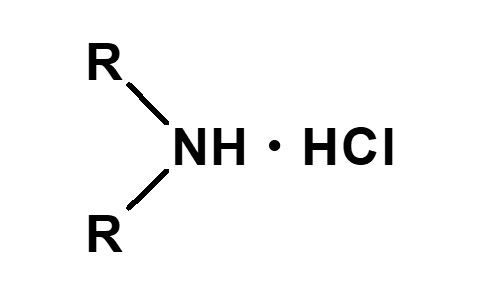


</description>
<dc:creator></dc:creator>
<dc:subject></dc:subject>
<dc:date>2024-04-04T20:40:00+09:00</dc:date>
<content:encoded><![CDATA[
<div class="cms-content-parts-sin171179606762468800 sanyo-pageLink" id="cms-editor-minieditor-sin171179606762471900" data-original="cms-content-parts-sin171179606762473300" data-custom="sanyo-pageLink"><!-- .parts_text_type01 -->
<ul>
    <li><a href="#intro">What is a surfactant</a></li>
    <li><a href="#video">Surfactant functions introduction video</a></li>
    <li><a href="#dispersant">What is a dispersant</a></li>
    <li><a href="#paints">Paints and Dispersants</a></li>
    <li><a href="#printing">Printing Inks and Dispersants</a></li>
    <li><a href="#paper">Paper and Dispersants</a></li>
    <li><a href="#cosmetics">Cosmetics and Dispersants</a></li>
    <li><a href="#cement">Cement and dispersants</a></li>
    <li><a href="#pesticides">Pesticides and dispersants</a></li>
    <li><a href="#dyeing">Dyeing and Dispersion</a></li>
    <li><a href="#plastic">Plastic coloring and dispersion</a></li>
    <li><a href="#info">Related Information</a></li>
</ul>
<!-- // .parts_text_type01 --></div>
<h2 class="cms-content-parts-sin171179608038418400" id="cms-editor-textarea-sin171179608038426200"><br />
<a name="intro"></a>What is a surfactant?</h2>
<div class="cms-content-parts-sin171179610700973200 cparts-id119 lay-margin-b--3 box" data-selectable="cparts-animate cparts-animate--slideInUp:上へスライド,cparts-animate cparts-animate--slideInDown:下へスライド,cparts-animate cparts-animate--slideInLeft:左へスライド,cparts-animate cparts-animate--slideInRight:右へスライド">
<div class="lay-row">
<div class="lay-col12-xs-12 lay-col12-md-12 lay-col12-lg-12">
<div id="cms-editor-minieditor-sin171179610700977000" class="cparts-txt-block lay-reset-child">
<p><font face="Noto Sans JP">First, an interface is a boundary surface that exists between two substances with different properties, and interfaces exist between liquids and solids, liquids and liquids, and liquids and gases.</font></p>
<p><font face="Noto Sans JP">Surfactants enhance performance by performing functions such as washing, emulsifying, dispersing, wetting, and penetrating at this interface.<br />
<br />
<span style="font-weight: 700;">Interface = a boundary surface that exists between two substances with different properties</span><br />
</font><font face="Noto Sans JP">Liquid and solid: cup and coffee, machine and lubricant&#160;</font><br />
<font face="Noto Sans JP">Liquid and liquid: water and oil&#160;</font><br />
<font face="Noto Sans JP">Liquid and gas: seawater and air, soap bubbles</font><br />
<span style="font-weight: 700;"><font face="Noto Sans JP"><br />
Examples of roles of surfactants</font></span><br />
<font face="Noto Sans JP">Cleaning ・・・ Removing dirt&#160;</font><br />
<font face="Noto Sans JP">Emulsification ・・・ Dispersion ・・ Making unmixable things easier to mix</font><br />
<font face="Noto Sans JP">Wetting / Penetration ・・・ Makes wetting and soaking easier</font></p>
</div>
</div>
</div>
</div>
<h3 class="cms-content-parts-sin171179612127819800" id="cms-editor-textarea-sin171179612127823500">Basic structure of a surfactant</h3>
<div class="cms-content-parts-sin171179623930333000 cparts-id119 lay-margin-b--3 box" data-selectable="cparts-animate cparts-animate--slideInUp:上へスライド,cparts-animate cparts-animate--slideInDown:下へスライド,cparts-animate cparts-animate--slideInLeft:左へスライド,cparts-animate cparts-animate--slideInRight:右へスライド">
<div class="lay-row">
<div class="lay-col12-xs-12 lay-col12-md-12 lay-col12-lg-12">
<div id="cms-editor-minieditor-sin171179623930308600" class="cparts-txt-block lay-reset-child">
<p>-Surfactants have different structures in their molecules with different properties: lipophilic groups (oil-fitting parts) and hydrophilic groups (water-fitting parts).<br />
<br />
-Surfactants are broadly classified into four types according to the structure of the hydrophilic group: nonionic, anionic, cationic, and amphoteric (having both anionic and cationic groups).</p>
<p><img src="https://sanyo-chemical-solutions.com/images/technology/surfactant/img_surfactantbasics_types.jpg" width="800" height="211" alt="" /></p>
</div>
</div>
</div>
</div>
<div class="cms-content-parts-sin172255486761803200 cparts-id96--01 box lay-margin-b--3" data-selectable="cparts-animate cparts-animate--slideInUp:上へスライド,cparts-animate cparts-animate--slideInDown:下へスライド,cparts-animate cparts-animate--slideInLeft:左へスライド,cparts-animate cparts-animate--slideInRight:右へスライド">
<div class="lay-row">
<div class="lay-col12-xs-12 lay-col12-md-12 lay-col12-lg-12">
<div class="cparts-table-block lay-reset-child" id="cms-editor-minieditor-sin172255486761808200">
<table>
    <caption class="lay-margin-t--1">&#160; &#160; &#160;</caption>
    <tbody>
        <tr>
            <th>Type of surfactant</th>
            <th><span style="text-align: center;">Feature</span></th>
            <th><span style="text-align: center;">Main application</span></th>
            <th><span style="text-align: center;">Composition example</span></th>
        </tr>
        <tr>
            <td>Nonionic surfactant<br />
            <img src="https://sanyo-chemical-solutions.com/images/technology/surfactant/img_surfactantbasics_nonion.jpg" width="150" height="47" alt="" /></td>
            <td>-Hydrophilic and hydrophobic balance<br />
            can be easily adjusted<br />
            -Excellent emulsification and solubilization<br />
            -Low lather<br style="margin-bottom: 0px;" />
            -Susceptible to temperature but not to pH</td>
            <td>-Clothing detergent<br />
            -Emulsifiers and solubilizers<br />
            -Dispersant<br style="margin-bottom: 0px;" />
            -Metalworking oil</td>
            <td>-Polyoxyethylene alkyl ether<br style="margin-bottom: 0px;" />
            etc.</td>
        </tr>
        <tr>
            <td>Anionic surfactant<br />
            <img src="https://sanyo-chemical-solutions.com/images/technology/surfactant/img_surfactantbasics_anion.jpg" width="150" height="49" alt="" style="margin-bottom: 0px;" /></td>
            <td>-Excellent emulsification and dispersibility<br />
            -Good lather<br style="margin-bottom: 0px;" />
            -Temperature insensitive</td>
            <td>-Clothing Detergent<br />
            -Shampoo<br style="margin-bottom: 0px;" />
            -Body soap</td>
            <td>-Alkyl benzene sulfonate<br />
            -Alkyl ether sulfates<br style="margin-bottom: 0px;" />
            etc.</td>
        </tr>
        <tr>
            <td>Cationic surfactant<br />
            <img src="https://sanyo-chemical-solutions.com/images/technology/surfactant/img_surfactantbasics_cation.jpg" width="150" height="49" alt="" /></td>
            <td>-Adsorption to fibers<br />
            -Antistatic effect<br style="margin-bottom: 0px;" />
            -Bactericidal</td>
            <td>-Hair rinse<br />
            -Fabric softener for clothes<br style="margin-bottom: 0px;" />
            -Disinfectant</td>
            <td>-Didecyldimethylammonium methyl sulfate</td>
        </tr>
        <tr>
            <td>Amphoteric surfactant<br />
            <img src="https://sanyo-chemical-solutions.com/images/technology/surfactant/img_surfactantbasics_ryosei.jpg" width="150" height="47" alt="" /></td>
            <td>-Mild on skin<br />
            -Excellent solubility in water<br style="margin-bottom: 0px;" />
            -Synergistic with other active components</td>
            <td>-Shampoo<br />
            -Body soap<br style="margin-bottom: 0px;" />
            -Kitchen detergent</td>
            <td>-Alkyl di-aminoethyl hydrochloride glycine<br />
            -Sodium lauryl aminopropionic acid<br />
            -Dimethylstearyl betaine<br style="margin-bottom: 0px;" />
            -Coconut oil fatty acid amidopropyl betaine</td>
        </tr>
    </tbody>
</table>
</div>
</div>
</div>
</div>
<h2 class="cms-content-parts-sin171179614288982300" id="cms-editor-textarea-sin171179614288986900">Surfactant functions introduction video</h2>
<div class="cms-content-parts-sin172255494112067000">[[CMSmodule.parts::ad#param=309]]</div>
<h2 class="cms-content-parts-sin172255487531053000" id="cms-editor-textarea-sin172255487531061000"><a name="dispersant"></a>What is a dispersant?</h2>
<h3 class="cms-content-parts-sin171179641528149500" id="cms-editor-textarea-sin171179641528156400">How dispersants work</h3>
<div class="cms-content-parts-sin171179623311713300 cparts-id119 lay-margin-b--3 box" data-selectable="cparts-animate cparts-animate--slideInUp:上へスライド,cparts-animate cparts-animate--slideInDown:下へスライド,cparts-animate cparts-animate--slideInLeft:左へスライド,cparts-animate cparts-animate--slideInRight:右へスライド">
<div class="lay-row">
<div class="lay-col12-xs-12 lay-col12-md-12 lay-col12-lg-12">
<div id="cms-editor-minieditor-sin171179623311720100" class="cparts-txt-block lay-reset-child">
<p>Agents that perform dispersing functions are called dispersing agents. For example, they break up solid particles one by one and disperse them uniformly in a dispersing medium, and they also prevent the dispersed particles from re-agglomerating and maintaining a stable dispersed state.</p>
<p></p>
<p style="text-align: center; "><b><img src="https://sanyo-chemical-solutions.com/images/technology/dispersant/img_dispersion_dispersingagent_en.jpg" width="800" height="562" alt="" /><br />
Fig. How dispersants work</b></p>
</div>
</div>
</div>
</div>
<div class="cms-content-parts-sin171465298027862300 cparts-id119 lay-margin-b--3 box" data-selectable="cparts-animate cparts-animate--slideInUp:上へスライド,cparts-animate cparts-animate--slideInDown:下へスライド,cparts-animate cparts-animate--slideInLeft:左へスライド,cparts-animate cparts-animate--slideInRight:右へスライド">
<div class="lay-row">
<div class="lay-col12-xs-12 lay-col12-md-12 lay-col12-lg-12">
<div id="cms-editor-minieditor-sin171465298027842100" class="cparts-txt-block lay-reset-child">
<h6 style="">Adsorption and dispersion stabilizing action of dispersants on particles</h6>
<p><font face="Noto Sans JP">Dispersants have a chemical structure that has an affinity for both solid particles and liquids, and have functional groups that adsorb to the particle surfaces.</font></p>
<p><font face="Noto Sans JP">This adsorption results in the particle surfaces being covered with an adsorbed layer of charged dispersant, increasing the electrostatic repulsive force between particles and stabilizing their dispersion.</font></p>
<p><font face="Noto Sans JP">&#160;For example, as shown in the figure below, when a surfactant with an ionic group of opposite sign to the charge of a particle (A) dispersed in water is added, the particle becomes hydrophobic (lipophilic) because the hydrophilic part faces the particle and the opposite side becomes lipophilic, forming an adsorption layer as shown in (B). When various surfactants are added, adsorption occurs with the lipophilic part on the adsorption layer and the hydrophilic group on the outside, as shown in (C), (D), and (E), and the entire particle becomes hydrophilic, making it easier to wet in water and at the same time increasing electrostatic repulsion and stabilizing dispersion.</font></p>
<p><font face="Noto Sans JP">In the case of polymer-type dispersants, in addition to this electrostatic repulsion, the repulsive force due to steric hindrance of the polymer chain is added, which further improves dispersibility.</font></p>
<div></div>
<div><span style="font-family: &#34;Noto Sans JP&#34;;"><br />
<br type="_moz" />
</span></div>
<div style="text-align: center; "><b><img src="https://sanyo-chemical-solutions.com/images/technology/dispersant/img_dispersion_ion_en.jpg" width="1000" height="570" alt="" /><br />
Fig. Adsorption of surfactant on charged particles</b></div>
</div>
</div>
</div>
</div>
<h3 class="cms-content-parts-sin171465300950002100" id="cms-editor-textarea-sin171465300950010100">Dispersant Classification</h3>
<div class="cms-content-parts-sin171465303757384800 cparts-id119 lay-margin-b--3 box" data-selectable="cparts-animate cparts-animate--slideInUp:上へスライド,cparts-animate cparts-animate--slideInDown:下へスライド,cparts-animate cparts-animate--slideInLeft:左へスライド,cparts-animate cparts-animate--slideInRight:右へスライド">
<div class="lay-row">
<div class="lay-col12-xs-12 lay-col12-md-12 lay-col12-lg-12">
<div id="cms-editor-minieditor-sin171465303757358000" class="cparts-txt-block lay-reset-child">
<p>Dispersants can be divided into three types: (1) polymer-type dispersants, (2) surfactant-type dispersants, and (3) inorganic-type dispersants (such as polyphosphoric acid).</p>
<p>&#160;The characteristics of each dispersant are summarized in the table below.</p>
<div></div>
</div>
</div>
</div>
</div>
<h5 class="cms-content-parts-sin171465415769891100" id="cms-editor-textarea-sin171465415769894800">Dispersant Types and Characteristics</h5>
<div class="cms-content-parts-sin171465418945758600 cparts-id96--01 box lay-margin-b--3" data-selectable="cparts-animate cparts-animate--slideInUp:上へスライド,cparts-animate cparts-animate--slideInDown:下へスライド,cparts-animate cparts-animate--slideInLeft:左へスライド,cparts-animate cparts-animate--slideInRight:右へスライド">
<div class="lay-row">
<div class="lay-col12-xs-12 lay-col12-md-12 lay-col12-lg-12">
<div class="cparts-table-block lay-reset-child" id="cms-editor-minieditor-sin171465418945763500">
<table>
    <caption class="lay-margin-t--1">&#160; &#160; &#160;</caption>
    <tbody>
        <tr>
            <th>Dispersant type</th>
            <th>feature</th>
        </tr>
        <tr>
            <td>Polymer-type dispersants&#160;&#160;<br />
            (e.g., polycarboxylic acid polymers)</td>
            <td>In addition to electrostatic repulsive force, there is a repulsive effect due to steric hindrance of polymer chains (protective colloid action).<br />
            Dispersions with good long-term stability can be obtained.</td>
        </tr>
        <tr>
            <td>Surfactant-type dispersants<br />
            &#160;(nonionic, anionic surfactants, etc.)</td>
            <td>Adsorbs on the pigment surface and lowers the interfacial energy, making the particle surface more wettable in water and organic solvents.<br />
            Excellent wetting effect.<br />
            Although electrostatic repulsion has a dispersing effect, it is weak, so other dispersing agents are often used in combination.</td>
        </tr>
        <tr>
            <td>Inorganic dispersants<br />
            (e.g. polyphosphate)</td>
            <td>Excellent dispersion in aqueous systems.<br />
            Dispersibility deteriorates over time due to susceptibility to hydrolysis.</td>
        </tr>
    </tbody>
</table>
</div>
</div>
</div>
</div>
<div class="cms-content-parts-sin171465308152342600 cparts-id119 lay-margin-b--3 box" data-selectable="cparts-animate cparts-animate--slideInUp:上へスライド,cparts-animate cparts-animate--slideInDown:下へスライド,cparts-animate cparts-animate--slideInLeft:左へスライド,cparts-animate cparts-animate--slideInRight:右へスライド">
<div class="lay-row">
<div class="lay-col12-xs-12 lay-col12-md-12 lay-col12-lg-12">
<div id="cms-editor-minieditor-sin171465308152318200" class="cparts-txt-block lay-reset-child">
<p style="text-align: center; "><b><img src="https://sanyo-chemical-solutions.com/images/technology/dispersant/img_dispersion_surfactant-type_en.jpg" width="1718" height="968" alt="" /><br />
Fig. Dispersant Action Mechanism Model</b></p>
</div>
</div>
</div>
</div>
<h5 class="cms-content-parts-sin171465423290729900" id="cms-editor-textarea-sin171465423290737800">Points to consider when selecting an aqueous dispersant</h5>
<div class="cms-content-parts-sin171465308658098100 cparts-id119 lay-margin-b--3 box" data-selectable="cparts-animate cparts-animate--slideInUp:上へスライド,cparts-animate cparts-animate--slideInDown:下へスライド,cparts-animate cparts-animate--slideInLeft:左へスライド,cparts-animate cparts-animate--slideInRight:右へスライド">
<div class="lay-row">
<div class="lay-col12-xs-12 lay-col12-md-12 lay-col12-lg-12">
<div id="cms-editor-minieditor-sin171465308658072800" class="cparts-txt-block lay-reset-child">
<p>A wide variety of dispersants are used in various fields, depending on the nature of the particles to be dispersed (hydrophilic or hydrophobic surface) and the type of dispersant (dispersed in water or oil).</p>
<h6 style="">Important point when water is the dispersant</h6>
<p>-Select a dispersant that is soluble in water and easily adsorbed on the particles to be dispersed.<br />
<br />
-The finer the particle diameter, the more cohesive and difficult dispersion becomes, so it is better to use a wetting surfactant that reduces interfacial energy.<br />
<br />
-When the particle concentration is high, a high molecular weight type is effective as it is expected to have repulsive force due to steric hindrance.</p>
<div></div>
</div>
</div>
</div>
</div>
<h3 class="cms-content-parts-sin171465309007653600" id="cms-editor-textarea-sin171465309007661800">Sedimentation phenomena and particle settling velocity (Stokes' equation)</h3>
<div class="cms-content-parts-sin171465310382172900 cparts-id119 lay-margin-b--3 box" data-selectable="cparts-animate cparts-animate--slideInUp:上へスライド,cparts-animate cparts-animate--slideInDown:下へスライド,cparts-animate cparts-animate--slideInLeft:左へスライド,cparts-animate cparts-animate--slideInRight:右へスライド">
<div class="lay-row">
<div class="lay-col12-xs-12 lay-col12-md-12 lay-col12-lg-12">
<div id="cms-editor-minieditor-sin171465310382149400" class="cparts-txt-block lay-reset-child">
<p>Sedimentation is a phenomenon that plays a major role in the stability of solid-liquid dispersion systems. The sedimentation velocity of particles, v, is discussed by the following equation called &#34;Stokes' law. The following equation shows that the sedimentation velocity of particles decreases with decreasing particle size, decreasing density difference between particles and dispersant, and increasing viscosity of dispersant.<br />
<br />
<span style="font-size: larger;"><span style="font-weight: 700;">v＝2r</span></span><span style="font-weight: 700;"><span style="font-size: smaller;"><span class="sanyoc-super">2</span></span><span style="font-size: larger;">&#160;(&#961;ー&#961;</span><span style="font-size: x-small;">p</span><span style="font-size: larger;">)g</span></span><span style="font-size: larger;"><span style="font-weight: 700;">／9&#951;</span></span><br />
<br />
<span style="font-size: 19.2px;">r: radius of particle, <br />
&#961;: density of particle, <br />
&#961;<span style="font-size: smaller;">p</span>: density of dispersant, <br />
&#951;: viscosity of dispersant, <br />
g: gravitational constant</span></p>
</div>
</div>
</div>
</div>
<h5 class="cms-content-parts-sin171465428233414400" id="cms-editor-textarea-sin171465428233424200">Forces acting on dispersed particles (electrostatic repulsive forces, van der Waals forces)</h5>
<div class="cms-content-parts-sin171465311225241500 cparts-id119 lay-margin-b--3 box" data-selectable="cparts-animate cparts-animate--slideInUp:上へスライド,cparts-animate cparts-animate--slideInDown:下へスライド,cparts-animate cparts-animate--slideInLeft:左へスライド,cparts-animate cparts-animate--slideInRight:右へスライド">
<div class="lay-row">
<div class="lay-col12-xs-12 lay-col12-md-12 lay-col12-lg-12">
<div id="cms-editor-minieditor-sin171465311225212300" class="cparts-txt-block lay-reset-child">
<p>Two forces generally act on particles dispersed in a liquid.</p>
<p><b>-Electrostatic repulsive force based on the charge on the particle surface</b><br />
<b>-Van der Waals force&#160; (cohesive force)</b><br />
<br />
Whether particles disperse or agglomerate depends on the combination of these two forces. If the surface charge is high and the repulsive force is high, the dispersion is stable. On the other hand, if the cohesive force is high, the particles agglomerate, and the difference in specific gravity between the particles and the dispersant causes them to settle and separate.</p>
</div>
</div>
</div>
</div>
<h3 class="cms-content-parts-sin171465311798078100" id="cms-editor-textarea-sin171465311798087800">Electric double layer (electrostatic repulsive force) and DLVO theory</h3>
<div class="cms-content-parts-sin171465434467697800 box cparts-id416--02 lay-margin-b--3" data-selectable="cparts-animate cparts-animate--slideInUp:上へスライド,cparts-animate cparts-animate--slideInDown:下へスライド,cparts-animate cparts-animate--slideInLeft:左へスライド,cparts-animate cparts-animate--slideInRight:右へスライド">
<div class="lay-row">
<div class="cparts-img-block lay-img-width--max lay-margin-b--3 lay-col12-xs-12 lay-col12-md-3 lay-col12-lg-3"><img alt="" id="cms-editor-image-sin171465434467732100" src="https://sanyo-chemical-solutions.com/images/technology/dispersant/img_dispersion_doubleelectriclayer3_en.jpg" width="215" /><br />
<strong>Fig. Conceptual diagram of electric double layer</strong></div>
<div class="lay-margin-b--3 lay-col12-xs-12 lay-col12-md-9 lay-col12-lg-9">
<div class="cparts-table-block lay-reset-child" id="cms-editor-minieditor-sin171465434467732600">
<div>
<p class="MsoNormal" style="margin-top:0mm;margin-right:-11.25pt;margin-bottom:&#10;0mm;margin-left:-11.25pt;margin-bottom:.0001pt;background:white;mso-background-themecolor:&#10;background1"><span lang="EN-US" style="font-size: 12pt;">Stability due to electrostatic repulsive forces is explained by the following electric double layer.</span><span lang="EN-US" style="color:black;mso-color-alt:windowtext"><br />
<!--[if !supportLineBreakNewLine]--><br />
<!--[endif]--></span><span lang="EN-US" style="font-size: 12pt;"><o:p></o:p></span></p>
<p class="MsoNormal" style="margin-top:0mm;margin-right:-11.25pt;margin-bottom:&#10;0mm;margin-left:-11.25pt;margin-bottom:.0001pt;background:white;mso-background-themecolor:&#10;background1"><span lang="EN-US" style="font-size: 12pt;">For example, when clay particles are suspended in water, as shown in the left figure, there is an electrical charge on the surface of the particle, which surrounds it and adsorbs ions of opposite charge on the outside. These ions are distributed in a certain spread from the particle surface in water, forming a diffuse electric double layer composed of negative and positive charges.</span><span lang="EN-US" style="color:black;mso-color-alt:windowtext"><br />
</span><span lang="EN-US" style="font-size: 12pt;">&#160;</span><span lang="EN-US"><o:p></o:p></span></p>
<p class="MsoNormal" style="margin-top:0mm;margin-right:-11.25pt;margin-bottom:&#10;0mm;margin-left:-11.25pt;margin-bottom:.0001pt;background:white;mso-background-themecolor:&#10;background1"><span lang="EN-US" style="font-size: 12pt;">In a liquid, when particles approach each other, they first collide with their outer counterions, causing electrical repulsion. Many rivers are muddy because clay particles have a negative charge and form an electric double layer in the water, which prevents agglomeration between particles and keeps them stable without sinking.</span><span lang="EN-US"><o:p></o:p></span></p>
</div>
</div>
</div>
</div>
</div>
<div class="cms-content-parts-sin171465438832822900 box cparts-id409--01 lay-margin-b--3" col-flex="1-2" data-selectable="cparts-animate cparts-animate--slideInUp:上へスライド,cparts-animate cparts-animate--slideInDown:下へスライド,cparts-animate cparts-animate--slideInLeft:左へスライド,cparts-animate cparts-animate--slideInRight:右へスライド">
<div class="lay-row">
<div class="lay-col12-xs-12 lay-col12-md-6 lay-col12-lg-6">
<div class="cparts-img-block lay-img-width--max lay-margin-b--1"><img alt="" class="cms-easy-edit" id="cms-editor-image-sin171465438832827600" src="https://sanyo-chemical-solutions.com/images/technology/dispersant/img_dispersion_doublelayer_en.jpg" width="330" /></div>
<div class="cparts-caption-block lay-reset-child lay-font-size--s cms-easy-edit" id="cms-editor-minieditor-sin171465438832828000">
<p style="text-align: center;"><b>Fig. Schematic diagram of forces acting on particles</b></p>
</div>
</div>
<div class="lay-col12-xs-12 lay-col12-md-6 lay-col12-lg-6">
<div id="cms-editor-minieditor-sin171465438832828300" class="cparts-txt-block lay-reset-child">
<p>As shown in the left figure, when the electric double layer is thick, even if particles with the same type of double layer approach each other, the repulsive force between charges of the same sign in the double layer acts more than van der Waals forces, and agglomeration becomes difficult.</p>
<p></p>
<p>&#160;However, as the electric double layer becomes thinner, the van der Waals forces capture the approaching particles and they agglomerate.</p>
<div></div>
</div>
</div>
</div>
</div>
<div class="cms-content-parts-sin171465440273976700 box cparts-id409--01 lay-margin-b--3" col-flex="1-2" data-selectable="cparts-animate cparts-animate--slideInUp:上へスライド,cparts-animate cparts-animate--slideInDown:下へスライド,cparts-animate cparts-animate--slideInLeft:左へスライド,cparts-animate cparts-animate--slideInRight:右へスライド">
<div class="lay-row">
<div class="lay-col12-xs-12 lay-col12-md-6 lay-col12-lg-6">
<div class="cparts-img-block lay-img-width--max lay-margin-b--1"><img alt="" class="cms-easy-edit" id="cms-editor-image-sin171465440273930000" src="https://sanyo-chemical-solutions.com/images/technology/dispersant/img_dispersion_potentialenergy_en.jpg" width="330" /></div>
<div class="cparts-caption-block lay-reset-child lay-font-size--s cms-easy-edit" id="cms-editor-minieditor-sin171465440273937900">
<p style="text-align: center;"><b>Fig. DLVO Theory</b></p>
</div>
</div>
<div class="lay-col12-xs-12 lay-col12-md-6 lay-col12-lg-6">
<div id="cms-editor-minieditor-sin171465440273944700" class="cparts-txt-block lay-reset-child">
<h6 style="font-family: &#34;Helvetica Neue&#34;, Helvetica, Arial, sans-serif; color: rgb(51, 51, 51);">DLVO Theory</h6>
<p>Whether a dispersive system is stable or not depends on how the combined repulsive and attractive forces vary with the distance between particles.</p>
<p>This is summarized in the &#34;Theory of DLVO&#34; (named after the initials of Derjaguin, Landau, Verwey, and Overbeek). The repulsive and attractive forces and their sums plotted against the distance between particles are shown in the figure on the left.</p>
<p>In this case, the higher the potential barrier (Vmax) formed by the sum of the repulsive and attractive force curves, the more stable the dispersive system is. v represents the total potential consisting of the electrostatic repulsive potential and the van der Waals attraction potential.</p>
<div></div>
</div>
</div>
</div>
</div>
<h3 class="cms-content-parts-sin171465314690834100" id="cms-editor-textarea-sin171465314690842900">HLB of surfactant type dispersant</h3>
<div class="cms-content-parts-sin171465315821759500 cparts-id119 lay-margin-b--3 box" data-selectable="cparts-animate cparts-animate--slideInUp:上へスライド,cparts-animate cparts-animate--slideInDown:下へスライド,cparts-animate cparts-animate--slideInLeft:左へスライド,cparts-animate cparts-animate--slideInRight:右へスライド">
<div class="lay-row">
<div class="lay-col12-xs-12 lay-col12-md-12 lay-col12-lg-12">
<div id="cms-editor-minieditor-sin171465315821727500" class="cparts-txt-block lay-reset-child">
<p>HLB (Hydrophile-Lipophile Balance) is a useful method for selecting dispersants.<br />
<br />
This is a numerical value that expresses the degree of hydrophilicity/lipophilicity of a surfactant, and the affinity between the dispersant and the dispersed material is viewed from the balance of hydrophilicity and lipophilicity (hydrophobicity). In other words, if a dispersant is used that is close to the HLB of the dispersed material, dispersibility will be better in many cases.</p>
<p>An example of HLB is shown in the table below: the lower the HLB, the more lipophilic (hydrophobic) the dispersant is, and the higher the HLB, the more hydrophilic the dispersant is.</p>
</div>
</div>
</div>
</div>
<h5 class="cms-content-parts-sin171465453050385500" id="cms-editor-textarea-sin171465453050389300">An example of HLB of surfactants</h5>
<div class="cms-content-parts-sin171465448546816000 cparts-id96--01 box lay-margin-b--3" data-selectable="cparts-animate cparts-animate--slideInUp:上へスライド,cparts-animate cparts-animate--slideInDown:下へスライド,cparts-animate cparts-animate--slideInLeft:左へスライド,cparts-animate cparts-animate--slideInRight:右へスライド">
<div class="lay-row">
<div class="lay-col12-xs-12 lay-col12-md-12 lay-col12-lg-12">
<div class="cparts-table-block lay-reset-child" id="cms-editor-minieditor-sin171465448546791400">
<table>
    <caption class="lay-margin-t--1">&#160;EO: Indicates ethylene oxide.</caption>
    <tbody>
        <tr>
            <th style="text-align: center;">Classification</th>
            <th style="text-align: center;">surfactant</th>
            <th style="text-align: center;">HLB</th>
        </tr>
        <tr>
            <td style="text-align: center;" rowspan="6">Higher alcohol EO adduct</td>
            <td style="text-align: center;">Lauryl alcohol EO 5 mol adduct</td>
            <td style="text-align: center;">10.8</td>
        </tr>
        <tr>
            <td style="text-align: center;">Lauryl alcohol EO 10 mol adduct</td>
            <td style="text-align: center;">14.1</td>
        </tr>
        <tr>
            <td style="text-align: center;">Lauryl alcohol EO 23 mol adduct</td>
            <td style="text-align: center;">16.9</td>
        </tr>
        <tr>
            <td style="text-align: center;">Oleyl alcohol EO 2 mol adduct</td>
            <td style="text-align: center;">4.9</td>
        </tr>
        <tr>
            <td style="text-align: center;">Oleyl alcohol EO 10 mol adduct</td>
            <td style="text-align: center;">12.4</td>
        </tr>
        <tr>
            <td style="text-align: center;">Oleyl alcohol EO 20 mol adduct</td>
            <td style="text-align: center;">15.3</td>
        </tr>
        <tr>
            <td style="text-align: center;" rowspan="6">Polyalcohol ester</td>
            <td style="text-align: center;">Monoglycerides (industrial use)</td>
            <td style="text-align: center;">2.8-3.5</td>
        </tr>
        <tr>
            <td style="text-align: center;">Sorbitan laurate monoester</td>
            <td style="text-align: center;">8.5</td>
        </tr>
        <tr>
            <td style="text-align: center;">Sorbitan palmitate monoester</td>
            <td style="text-align: center;">6.7</td>
        </tr>
        <tr>
            <td style="text-align: center;">Sorbitan stearic acid monoester</td>
            <td style="text-align: center;">4.7</td>
        </tr>
        <tr>
            <td style="text-align: center;">Sorbitan oleic acid monoester</td>
            <td style="text-align: center;">4.3</td>
        </tr>
        <tr>
            <td style="text-align: center;">Sorbitan oleate triester</td>
            <td style="text-align: center;">1.8</td>
        </tr>
    </tbody>
</table>
</div>
</div>
</div>
</div>
<h3 class="cms-content-parts-sin171465316983138700" id="cms-editor-textarea-sin171465316983147000">About Polymer Type Dispersants</h3>
<div class="cms-content-parts-sin171465318859807000 cparts-id119 lay-margin-b--3 box" data-selectable="cparts-animate cparts-animate--slideInUp:上へスライド,cparts-animate cparts-animate--slideInDown:下へスライド,cparts-animate cparts-animate--slideInLeft:左へスライド,cparts-animate cparts-animate--slideInRight:右へスライド">
<div class="lay-row">
<div class="lay-col12-xs-12 lay-col12-md-12 lay-col12-lg-12">
<div id="cms-editor-minieditor-sin171465318859783400" class="cparts-txt-block lay-reset-child">
<p>Polymer-type dispersants are able to stably disperse pigments and other substances by the protective colloidal effect and electric charge of polymers adsorbed on the surface of pigment particles.<br />
<br />
When selecting a polymeric dispersant, attention should be paid to its molecular weight in addition to its chemical structure.If the molecular weight exceeds several hundred thousand, agglomeration is likely to occur. Molecular weight distribution is also known to affect the dispersion effect.</p>
<div></div>
</div>
</div>
</div>
</div>
<h5 class="cms-content-parts-sin171465459760425600" id="cms-editor-textarea-sin171465459760433600">Typical polymeric pigment dispersants</h5>
<div class="cms-content-parts-sin171465461785332800 cparts-id96--01 box lay-margin-b--3" data-selectable="cparts-animate cparts-animate--slideInUp:上へスライド,cparts-animate cparts-animate--slideInDown:下へスライド,cparts-animate cparts-animate--slideInLeft:左へスライド,cparts-animate cparts-animate--slideInRight:右へスライド">
<div class="lay-row">
<div class="lay-col12-xs-12 lay-col12-md-12 lay-col12-lg-12">
<div class="cparts-table-block lay-reset-child" id="cms-editor-minieditor-sin171465461785293200">
<table>
    <caption class="lay-margin-t--1">&#160; &#160; &#160;</caption>
    <tbody>
        <tr>
            <th width="150">Type</th>
            <th width="200">Compound name</th>
            <th width="350">Example of chemical structure</th>
            <th>Feature / Other</th>
        </tr>
        <tr>
            <td>Aqueous dispersants</td>
            <td>Naphthalene sulfonate</td>
            <td><img src="https://sanyo-chemical-solutions.com/images/technology/dispersant/img_dispersion_naphtalene_en.jpg" width="200" height="137" alt="" /></td>
            <td>-Organic and inorganic pigments, etc.<br />
            -Effective for a wide range of pigment dispersion<br />
            -Not affected by water hardness or pH</td>
        </tr>
        <tr>
            <td>Aqueous dispersants</td>
            <td>Polystyrene&#160;sulfonate</td>
            <td><img src="https://sanyo-chemical-solutions.com/images/technology/dispersant/img_dispersion_pss.jpg" width="175" height="119" alt="" /></td>
            <td>-Effective for dispersion of hydrophobic pigments<br />
            -Not affected by water hardness or pH</td>
        </tr>
        <tr>
            <td>Aqueous dispersants</td>
            <td>Polyacrylate</td>
            <td>
            <p><img src="https://sanyo-chemical-solutions.com/images/technology/dispersant/img_dispersion_paa_en.jpg" width="175" height="78" alt="" /></p>
            </td>
            <td>-Effective for dispersion of hydrophilic inorganic pigments</td>
        </tr>
        <tr>
            <td>Aqueous dispersants</td>
            <td>Vinyl Compounds and&#160;Carboxylic acid monomer&#160;Salts of copolymers of</td>
            <td><img src="https://sanyo-chemical-solutions.com/images/technology/dispersant/img_dispersion_vinylcompound2_en.jpg" width="350" height="117" alt="" /></td>
            <td>-Effective for dispersion of hydrophilic inorganic pigments<br />
            <br />
            -When R is a lipophilic group,<br />
            Effective for organic pigments<br />
            <br />
            -Relatively high foaming</td>
        </tr>
        <tr>
            <td>Aqueous dispersants</td>
            <td>Carboxymethyl&#160;cellulose salt</td>
            <td><img src="https://sanyo-chemical-solutions.com/images/technology/dispersant/img_dispersion_cmc.jpg" width="350" height="193" alt="" /></td>
            <td>-Effective for dispersion of organic pigments</td>
        </tr>
        <tr>
            <td>Aqueous dispersants</td>
            <td>Polyvinyl alcohol</td>
            <td><img src="https://sanyo-chemical-solutions.com/images/technology/dispersant/img_dispersion_pva.jpg" width="130" height="59" alt="" /></td>
            <td>-Organic and inorganic pigments, etc.<br />
            Effective for a wide range of pigment dispersion</td>
        </tr>
        <tr>
            <td>Non-moisture dispersant</td>
            <td>Partial alkyl esters</td>
            <td><img src="https://sanyo-chemical-solutions.com/images/technology/dispersant/img_dispersion_polyacrylate_en.jpg" width="350" height="126" alt="" /></td>
            <td>-Effective for&#160;dispersion of&#160;inorganic pigments</td>
        </tr>
        <tr>
            <td>Non-moisture dispersant</td>
            <td>Polyalkylene<br />
            Polyamine</td>
            <td><img src="https://sanyo-chemical-solutions.com/images/technology/dispersant/img_dispersion_polyalkylenepolyamine_en.jpg" width="350" height="97" alt="" /></td>
            <td>-Effective for dispersion of inorganic pigments</td>
        </tr>
    </tbody>
</table>
<p></p>
</div>
</div>
</div>
</div>
<h2 class="cms-content-parts-sin171179625026888800" id="cms-editor-textarea-sin171179625026895900"><a name="paints"></a>Paints and Dispersants</h2>
<div class="cms-content-parts-sin171465467458437600 box cparts-id416--02 lay-margin-b--3" data-selectable="cparts-animate cparts-animate--slideInUp:上へスライド,cparts-animate cparts-animate--slideInDown:下へスライド,cparts-animate cparts-animate--slideInLeft:左へスライド,cparts-animate cparts-animate--slideInRight:右へスライド">
<div class="lay-row">
<div class="cparts-img-block lay-img-width--max lay-margin-b--3 lay-col12-xs-12 lay-col12-md-3 lay-col12-lg-3"><img alt="" id="cms-editor-image-sin171465467458396300" src="https://sanyo-chemical-solutions.com/images/products/carrybon/img_carrybon_paint.jpg" width="215" /></div>
<div class="lay-margin-b--3 lay-col12-xs-12 lay-col12-md-9 lay-col12-lg-9">
<div class="cparts-table-block lay-reset-child" id="cms-editor-minieditor-sin171465467458404300">
<div>
<div>
<div>Paint is used to coat objects in order to protect them or give them an aesthetic appearance.</div>
<div></div>
<div>In recent years, due to the increase in added value and diversification of needs, there has been a trend toward higher functionality, such as conductivity, insulation, heat resistance, and other special functions, as well as water resistance, chemical resistance, weather resistance, and other properties in coating film performance.</div>
<div></div>
<div></div>
<div><br />
<br />
&#160;For this reason, various types of pigments are used together with resins, which are the main components of coating film formation, and various dispersants are used to stably disperse these pigments.</div>
</div>
<div></div>
</div>
</div>
</div>
</div>
</div>
<div class="cms-content-parts-sin171465321312132800 cparts-id119 lay-margin-b--3 box" data-selectable="cparts-animate cparts-animate--slideInUp:上へスライド,cparts-animate cparts-animate--slideInDown:下へスライド,cparts-animate cparts-animate--slideInLeft:左へスライド,cparts-animate cparts-animate--slideInRight:右へスライド">
<div class="lay-row">
<div class="lay-col12-xs-12 lay-col12-md-12 lay-col12-lg-12">
<div id="cms-editor-minieditor-sin171465321312104500" class="cparts-txt-block lay-reset-child">
<h6 style="">Paint Classification</h6>
<p>Paints can be broadly classified into aqueous paints (water-based paints) and non-aqueous paints, which can be classified into inorganic pigmented and organic pigmented types, respectively.</p>
<p>&#160;Non-waterborne paints are generally used for automobiles, construction, ships, machinery, woodworking, etc. Non-waterborne paints are generally used in fields where water resistance and gloss are required.</p>
<p>&#160;Waterborne paints are composed mainly of resin emulsions and inorganic pigments. In the dispersion process, dispersing agents, thickeners to help the dispersing agents work, anti-sagging agents, and antifoaming agents are added, and in the formulation process, additives such as antiseptic agents and antifoaming agents are added. Inorganic pigments consist of an agglomerate (secondary particles) of several to several dozen fine particles ranging from 0.01 to several microns in diameter.</p>
<p>&#160;In the dispersion process, the inorganic pigment agglomerates are dispersed into fine particles (primary particles), which are then mixed to produce the paint. The vivid colors of paints are due to the dispersion of pigment particles as microparticles.</p>
</div>
</div>
</div>
</div>
<div class="cms-content-parts-sin171465470600170900 cparts-id119 lay-margin-b--3 box" data-selectable="cparts-animate cparts-animate--slideInUp:上へスライド,cparts-animate cparts-animate--slideInDown:下へスライド,cparts-animate cparts-animate--slideInLeft:左へスライド,cparts-animate cparts-animate--slideInRight:右へスライド">
<div class="lay-row">
<div class="lay-col12-xs-12 lay-col12-md-12 lay-col12-lg-12">
<div id="cms-editor-minieditor-sin171465470600148000" class="cparts-txt-block lay-reset-child">
<h6 style="font-family: &#34;Helvetica Neue&#34;, Helvetica, Arial, sans-serif; color: rgb(51, 51, 51);">What would happen if dispersants were not added in the paint manufacturing process?</h6>
<p>First, the dispersion of pigments by the machine becomes less efficient, requiring a longer time for dispersion and placing a greater load on the machine.<br />
<br />
Second, the color of the paint becomes dull because the dispersed particles re-agglomerate. Also, due to the precipitation of agglomerated particles, the paint can separate.<br />
<br />
To prevent these problems, paint dispersants are used.</p>
</div>
</div>
</div>
</div>
<h3 class="cms-content-parts-sin171465322723247600" id="cms-editor-textarea-sin171465322723254800">Inorganic pigment dispersants for waterborne paints</h3>
<div class="cms-content-parts-sin171465324167478900 cparts-id119 lay-margin-b--3 box" data-selectable="cparts-animate cparts-animate--slideInUp:上へスライド,cparts-animate cparts-animate--slideInDown:下へスライド,cparts-animate cparts-animate--slideInLeft:左へスライド,cparts-animate cparts-animate--slideInRight:右へスライド">
<div class="lay-row">
<div class="lay-col12-xs-12 lay-col12-md-12 lay-col12-lg-12">
<div id="cms-editor-minieditor-sin171465324167457300" class="cparts-txt-block lay-reset-child">
<p>Inorganic pigments with high hydrophilic properties, such as calcium carbonate, titanium dioxide, and clay, are used in waterborne paints. To disperse these pigments in water, dispersants with a structure that easily blends with hydrophilic surfaces, especially polymer-type dispersants, are effective.</p>
<h6 style="">Typical examples of inorganic dispersants for waterborne coatings</h6>
<p>-Sodium polyacrylate (low foaming and excellent dispersibility of many pigments)<br />
-Copolymer of diisobutylene and maleic acid (good compatibility with resin emulsions and excellent anti-sagging property of paints)<br />
-Condensed naphthalene sulfonic acid</p>
<p>These dispersants are sometimes used in combination with low-foaming nonionic surfactants that have excellent wetting properties. <br />
For pigments with surfaces that are relatively difficult to wet, such as talc, poly(styrenesulfonic acid)-type polymers, which have both low polarity and water-soluble portions in their molecular chains, provide good dispersing effects.</p>
</div>
</div>
</div>
</div>
<h3 class="cms-content-parts-sin171465325148369100" id="cms-editor-textarea-sin171465325148377000">Organic pigment dispersants for waterborne paints</h3>
<div class="cms-content-parts-sin171465477179848300 cparts-id119--02 box lay-margin-b--3" col-flex="1-2" data-selectable="cparts-animate cparts-animate--slideInUp:上へスライド,cparts-animate cparts-animate--slideInDown:下へスライド,cparts-animate cparts-animate--slideInLeft:左へスライド,cparts-animate cparts-animate--slideInRight:右へスライド">
<div class="lay-row">
<div class="lay-col12-xs-12 lay-col12-md-6 lay-col12-lg-6">
<div id="cms-editor-minieditor-sin171465477179859800" class="cparts-txt-block lay-reset-child">
<table width="200" border="1" cellpadding="1" cellspacing="1" dir="ltr" style="width: 345px;">
    <thead>
        <tr>
            <th scope="col" style="text-align: center;">Pigment</th>
            <th scope="col" style="text-align: center;">Optimal HLB</th>
        </tr>
    </thead>
    <tbody>
        <tr>
            <td>Bon Red Dark</td>
            <td style="text-align: center;">6～8</td>
        </tr>
        <tr>
            <td>Toluisin red medium</td>
            <td style="text-align: center;">8～10</td>
        </tr>
        <tr>
            <td>Toluidine yellow</td>
            <td style="text-align: center;">9～11</td>
        </tr>
        <tr>
            <td>Phthalocyanine Green (yellowish)</td>
            <td style="text-align: center;">12～14</td>
        </tr>
        <tr>
            <td>Phthalocyanine&#160;Green (blue flavor)</td>
            <td style="text-align: center;">10～12</td>
        </tr>
        <tr>
            <td>Phthalocyanine Green (reddish)</td>
            <td style="text-align: center;">11～13</td>
        </tr>
        <tr>
            <td>Phthalocyanine Green <br />
            (between red and green tones)</td>
            <td style="text-align: center;">14～16</td>
        </tr>
        <tr>
            <td>Phthalocyanine Green <br />
            (between red and green tones)</td>
            <td style="text-align: center;">14～16</td>
        </tr>
        <tr>
            <td>Green gold</td>
            <td style="text-align: center;">11～13</td>
        </tr>
        <tr>
            <td>Quinacridone violet</td>
            <td style="text-align: center;">11～13</td>
        </tr>
        <tr>
            <td>Quinacridone red</td>
            <td style="text-align: center;">12～14</td>
        </tr>
        <tr>
            <td>Highly pigmented azo yellow</td>
            <td style="text-align: center;">13～15</td>
        </tr>
    </tbody>
</table>
<p>Reference: Zenzo Seki, &#34;Printing Guide,&#34; p10, Seibundo Shinkosha (1971)</p>
</div>
</div>
<div class="lay-col12-xs-12 lay-col12-md-6 lay-col12-lg-6">
<div id="cms-editor-minieditor-sin171465477179860200" class="cparts-txt-block lay-reset-child">
<h5 style="">Organic pigments and optimal HLB</h5>
<p>In this case, dispersants with polycyclic structures such as benzene and naphthalene rings in their molecules, which have high affinity with organic pigments, are used.</p>
<p>For example, EOA (ethylene oxide adduct) of styrenated phenol is used. Nonionic surfactants with ester bonds are widely used to improve dispersibility by increasing the wettability of pigments.</p>
<p>These dispersants are selected and adjusted to achieve the optimum HLB for the organic pigment to be dispersed (left table). Anionic surfactants may also be used in combination to enhance dispersion stability through electrostatic repulsion.</p>
<p>In general, paint manufacturers use their own proprietary methods to combine several dispersants with different HLBs to produce coatings with improved color consistency.</p>
<div></div>
</div>
</div>
</div>
</div>
<h3 class="cms-content-parts-sin171465327505029200" id="cms-editor-textarea-sin171465327505039200">Pigment dispersants for non-aqueous paints</h3>
<div class="cms-content-parts-sin171465328417242100 cparts-id119 lay-margin-b--3 box" data-selectable="cparts-animate cparts-animate--slideInUp:上へスライド,cparts-animate cparts-animate--slideInDown:下へスライド,cparts-animate cparts-animate--slideInLeft:左へスライド,cparts-animate cparts-animate--slideInRight:右へスライド">
<div class="lay-row">
<div class="lay-col12-xs-12 lay-col12-md-12 lay-col12-lg-12">
<div id="cms-editor-minieditor-sin171465328417216300" class="cparts-txt-block lay-reset-child">
<p>In the case of non-aqueous paints, dispersants are less frequently used because the resin component of the paint acts as a dispersing agent, or because the pigments are modified on the surface to facilitate dispersion.<br />
<br />
However, since paint itself is a complex system consisting of many components, alkylene polyamine surfactants and metal soaps are used as a type of dispersant to achieve other functions, such as thickening, anti-sagging, color separation, and leveling.</p>
<p>It is difficult to describe the relationship between the composition of dispersants and their effects in a few words, but basically, the adsorption of dispersants on the surface of pigment particles determines the performance of various paints. The table below summarizes the effects of pigment dispersants by process.</p>
<div></div>
</div>
</div>
</div>
</div>
<h5 class="cms-content-parts-sin171465483501022000" id="cms-editor-textarea-sin171465483501025600">Effects of non-aqueous pigment dispersants</h5>
<div class="cms-content-parts-sin171465484236470600 cparts-id96--01 box lay-margin-b--3" data-selectable="cparts-animate cparts-animate--slideInUp:上へスライド,cparts-animate cparts-animate--slideInDown:下へスライド,cparts-animate cparts-animate--slideInLeft:左へスライド,cparts-animate cparts-animate--slideInRight:右へスライド">
<div class="lay-row">
<div class="lay-col12-xs-12 lay-col12-md-12 lay-col12-lg-12">
<div class="cparts-table-block lay-reset-child" id="cms-editor-minieditor-sin171465484236432200">
<table>
    <caption class="lay-margin-t--1">&#160; &#160; &#160;</caption>
    <tbody>
        <tr>
            <th style="text-align: center;">Manufacturing process</th>
            <th style="text-align: center;">Effect</th>
            <th style="text-align: center;">Specific examples of dispersants</th>
        </tr>
        <tr>
            <td>At the time of paint&#160;production</td>
            <td>-Improvement of pigment wetting and dispersibility<br />
            -Reduction of viscosity of dispersion system<br />
            -Reduction of dispersion time<br />
            -Vivid colors</td>
            <td>-Metal soap<br />
            -Polyhydric alcohol fatty acid&#160;esters</td>
        </tr>
        <tr>
            <td>When storing paint</td>
            <td>-Improved pigment dispersion stability<br />
            -No pigment agglomeration<br />
            -No discoloration of paint</td>
            <td>-Metal soap<br />
            -Sulfosuccinate anions</td>
        </tr>
        <tr>
            <td>During the formation of the coating film</td>
            <td>-Improvement of pigment redispersibility<br />
            -Improvement of color mixing of paint film<br />
            -No color lift</td>
            <td>-Metal soap<br />
            -Fatty acid esters</td>
        </tr>
    </tbody>
</table>
</div>
</div>
</div>
</div>
<h2 class="cms-content-parts-sin171179630782058300" id="cms-editor-textarea-sin171179630782066900"><a name="printing"></a>Printing Inks and Dispersants</h2>
<div class="cms-content-parts-sin171465330176410700 cparts-id119 lay-margin-b--3 box" data-selectable="cparts-animate cparts-animate--slideInUp:上へスライド,cparts-animate cparts-animate--slideInDown:下へスライド,cparts-animate cparts-animate--slideInLeft:左へスライド,cparts-animate cparts-animate--slideInRight:右へスライド">
<div class="lay-row">
<div class="lay-col12-xs-12 lay-col12-md-12 lay-col12-lg-12">
<div id="cms-editor-minieditor-sin171465330176385400" class="cparts-txt-block lay-reset-child">
<p>Printed matter covers a wide range of materials, including paper, metals, textiles, ceramics, and plastics. Each of these is printed in a wide variety of ways, using printing inks and printing methods that suit the purpose and application of the printed material.</p>
</div>
</div>
</div>
</div>
<h3 class="cms-content-parts-sin171465331282728200" id="cms-editor-textarea-sin171465331282735800">Types of printing inks</h3>
<div class="cms-content-parts-sin171465332946847300 cparts-id119 lay-margin-b--3 box" data-selectable="cparts-animate cparts-animate--slideInUp:上へスライド,cparts-animate cparts-animate--slideInDown:下へスライド,cparts-animate cparts-animate--slideInLeft:左へスライド,cparts-animate cparts-animate--slideInRight:右へスライド">
<div class="lay-row">
<div class="lay-col12-xs-12 lay-col12-md-12 lay-col12-lg-12">
<div id="cms-editor-minieditor-sin171465332946820600" class="cparts-txt-block lay-reset-child">
<p>Printing methods can be broadly classified into four types according to plate type: letterpress, intaglio, planographic, and digital duplicating (see figure below). The table below shows the main types of printing methods.</p>
</div>
</div>
</div>
</div>
<div class="cms-content-parts-sin171465335281008200 cparts-id119 lay-margin-b--3 box" data-selectable="cparts-animate cparts-animate--slideInUp:上へスライド,cparts-animate cparts-animate--slideInDown:下へスライド,cparts-animate cparts-animate--slideInLeft:左へスライド,cparts-animate cparts-animate--slideInRight:右へスライド">
<div class="lay-row">
<div class="lay-col12-xs-12 lay-col12-md-12 lay-col12-lg-12">
<div id="cms-editor-minieditor-sin171465335280971100" class="cparts-txt-block lay-reset-child">
<p style="text-align: center; "><img src="https://sanyo-chemical-solutions.com/images/technology/dispersant/img_dispersion_printing_en.jpg" width="1573" height="556" alt="" style="text-align: start;" /><b><br />
Fig. Types of illustrations (Reference: Zenzo Seki, &#34;Printing Guide,&#34; p. 9, Seibundo Shinkosha (1971))</b></p>
</div>
</div>
</div>
</div>
<h5 class="cms-content-parts-sin171465501179068300" id="cms-editor-textarea-sin171465501179076200">Printing type</h5>
<div class="cms-content-parts-sin171465502680242600 cparts-id96--01 box lay-margin-b--3" data-selectable="cparts-animate cparts-animate--slideInUp:上へスライド,cparts-animate cparts-animate--slideInDown:下へスライド,cparts-animate cparts-animate--slideInLeft:左へスライド,cparts-animate cparts-animate--slideInRight:右へスライド">
<div class="lay-row">
<div class="lay-col12-xs-12 lay-col12-md-12 lay-col12-lg-12">
<div class="cparts-table-block lay-reset-child" id="cms-editor-minieditor-sin171465502680206700">
<table>
    <caption class="lay-margin-t--1">&#160; &#160; &#160;</caption>
    <tbody>
        <tr>
            <th>Type</th>
            <th>Printing method</th>
            <th>Typical printed materials</th>
        </tr>
        <tr>
            <td rowspan="2">Letterpress</td>
            <td>Printing</td>
            <td>Business cards, book text</td>
        </tr>
        <tr>
            <td>Stereotype</td>
            <td>Newspaper and book text</td>
        </tr>
        <tr>
            <td>Lithography</td>
            <td>Offset</td>
            <td>Magazine covers, catalogs, posters, photo books, albums</td>
        </tr>
        <tr>
            <td rowspan="3">Intaglio (printing)</td>
            <td>Gravure</td>
            <td>Magazine frontispieces, etc.</td>
        </tr>
        <tr>
            <td>Special Rotogravure</td>
            <td>Plastic film and metal foil packaging materials</td>
        </tr>
        <tr>
            <td>Engraving intaglio</td>
            <td>Banknotes and securities</td>
        </tr>
        <tr>
            <td rowspan="2">Mimeograph</td>
            <td>Silk screen</td>
            <td>Posters, standing signs, pottery painting</td>
        </tr>
        <tr>
            <td>Stencil</td>
            <td>Teaching material print</td>
        </tr>
    </tbody>
</table>
</div>
</div>
</div>
</div>
<h4 class="cms-content-parts-sin171465507903384300" id="cms-editor-textarea-sin171465507903386000">Basic composition of printing inks</h4>
<div class="cms-content-parts-sin171465500492747700 cparts-id119 lay-margin-b--3 box" data-selectable="cparts-animate cparts-animate--slideInUp:上へスライド,cparts-animate cparts-animate--slideInDown:下へスライド,cparts-animate cparts-animate--slideInLeft:左へスライド,cparts-animate cparts-animate--slideInRight:右へスライド">
<div class="lay-row">
<div class="lay-col12-xs-12 lay-col12-md-12 lay-col12-lg-12">
<div id="cms-editor-minieditor-sin171465500492722500" class="cparts-txt-block lay-reset-child">
<p>The basic composition of printing inks consists of (1) pigments, (2) carriers that transfer and adhere the pigments to the substrate, and (3) auxiliaries that assist the functions of the carriers, of which dispersants are one type. The table below shows the raw materials that make up printing inks.</p>
</div>
</div>
</div>
</div>
<h5 class="cms-content-parts-sin171465510289007600" id="cms-editor-textarea-sin171465510289015700">Raw materials that make up printing inks</h5>
<div class="cms-content-parts-sin171465511371165900 cparts-id96--01 box lay-margin-b--3" data-selectable="cparts-animate cparts-animate--slideInUp:上へスライド,cparts-animate cparts-animate--slideInDown:下へスライド,cparts-animate cparts-animate--slideInLeft:左へスライド,cparts-animate cparts-animate--slideInRight:右へスライド">
<div class="lay-row">
<div class="lay-col12-xs-12 lay-col12-md-12 lay-col12-lg-12">
<div class="cparts-table-block lay-reset-child" id="cms-editor-minieditor-sin171465511371127600">
<table>
    <caption class="lay-margin-t--1">&#160;Reference: Zenzo Seki, Printing Guide, p212, Seibundo Shinkosha (1971)</caption>
    <tbody>
        <tr>
            <td rowspan="5">Colorants</td>
            <td rowspan="2">Pigment</td>
            <td>Inorganic pigments</td>
        </tr>
        <tr>
            <td>Organic pigments</td>
        </tr>
        <tr>
            <td rowspan="3">Dyes</td>
            <td>Oil-based dyes</td>
        </tr>
        <tr>
            <td>Disperse dyes</td>
        </tr>
        <tr>
            <td>Other dyes</td>
        </tr>
        <tr>
            <td rowspan="13">Carrier</td>
            <td rowspan="3">Oil</td>
            <td>Vegetable oil (dry, semi-dry, non-dry)</td>
        </tr>
        <tr>
            <td>Processing oil</td>
        </tr>
        <tr>
            <td>Mineral oil</td>
        </tr>
        <tr>
            <td rowspan="3">Binder</td>
            <td>Natural resin</td>
        </tr>
        <tr>
            <td>Natural product derivative</td>
        </tr>
        <tr>
            <td>Synthetic resins</td>
        </tr>
        <tr>
            <td rowspan="6">Solvent</td>
            <td>Hydrocarbon</td>
        </tr>
        <tr>
            <td>Alcohol</td>
        </tr>
        <tr>
            <td>Glycol and its derivatives</td>
        </tr>
        <tr>
            <td>Ester</td>
        </tr>
        <tr>
            <td>Ketone</td>
        </tr>
        <tr>
            <td>Other solvents</td>
        </tr>
        <tr>
            <td colspan="2">Plasticizer</td>
        </tr>
        <tr>
            <td rowspan="4">Aids<br />
            (additives)</td>
            <td rowspan="2">Wax</td>
            <td>Natural wax</td>
        </tr>
        <tr>
            <td>synthetic wax</td>
        </tr>
        <tr>
            <td colspan="2">Dryer</td>
        </tr>
        <tr>
            <td>Other</td>
            <td>(Dispersants, lubricants, cross-linking agents, gelling agents, thickening agents, anti-peeling agents, stabilizers,&#160;matting agents, antifoaming agents, color separation inhibitors, photoinitiators, antifungal agents, etc.)</td>
        </tr>
    </tbody>
</table>
</div>
</div>
</div>
</div>
<div class="cms-content-parts-sin171465509834643500 cparts-id119 lay-margin-b--3 box" data-selectable="cparts-animate cparts-animate--slideInUp:上へスライド,cparts-animate cparts-animate--slideInDown:下へスライド,cparts-animate cparts-animate--slideInLeft:左へスライド,cparts-animate cparts-animate--slideInRight:右へスライド">
<div class="lay-row">
<div class="lay-col12-xs-12 lay-col12-md-12 lay-col12-lg-12">
<div id="cms-editor-minieditor-sin171465509834610000" class="cparts-txt-block lay-reset-child">
<h6 style="">Required viscosity of printing inks</h6>
<p>Printing inks require pigments to be dispersed to a low viscosity to facilitate printing. The required viscosity varies depending on the printing method.</p>
<p>-In the case of gravure ink: A low viscosity liquid of 1 Pa･s or less is required to make it easier for the ink to penetrate into the screen cells of the plate.<br />
<br />
-In the case of flat plate ink: A slightly higher viscosity liquid of 1 Pa･s to 100 Pa･s is required because the ink is transferred between many rollers.</p>
<p></p>
<p></p>
<p>&#160;In addition, printing suitability is affected by differences due to post-processing methods and printing machines, and must be optimized under these conditions. Therefore, it is necessary to select and formulate pigments, carriers, and auxiliaries to adjust and optimize their viscosity and wettability according to each printing method.</p>
<div></div>
</div>
</div>
</div>
</div>
<h3 class="cms-content-parts-sin171465335995893700" id="cms-editor-textarea-sin171465335995901500">Offset ink</h3>
<div class="cms-content-parts-sin171465337446533200 cparts-id119 lay-margin-b--3 box" data-selectable="cparts-animate cparts-animate--slideInUp:上へスライド,cparts-animate cparts-animate--slideInDown:下へスライド,cparts-animate cparts-animate--slideInLeft:左へスライド,cparts-animate cparts-animate--slideInRight:右へスライド">
<div class="lay-row">
<div class="lay-col12-xs-12 lay-col12-md-12 lay-col12-lg-12">
<div id="cms-editor-minieditor-sin171465337446507900" class="cparts-txt-block lay-reset-child">
<p>In recent years, offset printing has been improving image reproducibility and increasing speed, and has also come to be able to produce low-cost, high-quality printed materials in a short time with simple operations. Offset inks are printed with the thinnest film thickness of all inks, so the inks must be able to use pigments with strong coloring power in high concentration.</p>
<h6 style="">Principle of Offset Printing</h6>
<p>Offset printing uses a flat printing plate with no irregularities and is composed of a hydrophilic drawing area and a hydrophilic non-printing area.</p>
<p>&#160;First, a fountain solution is supplied to the plate surface, covering the hydrophilic non-graphic areas with a film of fountain solution. Next, oil-based ink is supplied.</p>
<p>&#160;At this time, the ink is repelled by the fountain solution film on the non-graphic area, and ink does not adhere to the non-graphic area, but only to the lipophilic area, thus reproducing the image</p>
<div></div>
<h6 style="font-family: &#34;Helvetica Neue&#34;, Helvetica, Arial, sans-serif; color: rgb(51, 51, 51);">Offset Ink Requirements</h6>
<p>In offset printing, optimization of ink and fountain solution is an important point to ensure that the thickness of the fountain solution is appropriate, that there is no adhesion of the fountain solution to the ink surface, and that the ink does not leach into the fountain solution.</p>
<p>&#160;In offset inks, dispersants are rarely used. In many cases, resin components (binders) are used as dispersants or pigments are surface-treated to improve dispersion. In offset printing, pigment dispersion is achieved by wetting the pigment with the appropriate polarity of the resin, blending it in large quantities, and stabilizing the dispersion through the steric hindrance of polymers.</p>
<h6 style="font-family: &#34;Helvetica Neue&#34;, Helvetica, Arial, sans-serif; color: rgb(51, 51, 51);">Main resins used for binders</h6>
<p>-Modified alkyd resin (high polarity)<br />
-Rosin-modified phenolic resin (excellent drying and emulsification properties)</p>
<div></div>
</div>
</div>
</div>
</div>
<h3 class="cms-content-parts-sin171465338428221000" id="cms-editor-textarea-sin171465338428228900">Gravure ink</h3>
<div class="cms-content-parts-sin171465339653961200 cparts-id119 lay-margin-b--3 box" data-selectable="cparts-animate cparts-animate--slideInUp:上へスライド,cparts-animate cparts-animate--slideInDown:下へスライド,cparts-animate cparts-animate--slideInLeft:左へスライド,cparts-animate cparts-animate--slideInRight:右へスライド">
<div class="lay-row">
<div class="lay-col12-xs-12 lay-col12-md-12 lay-col12-lg-12">
<div id="cms-editor-minieditor-sin171465339653941300" class="cparts-txt-block lay-reset-child">
<p>Gravure printing is one type of intaglio printing, used for publications such as magazines and posters, food packaging, and construction materials such as wallpaper and decorative laminates, and produces crisp colors and heavy printed materials. Since low-boiling-point solvents are used in the ink, it is characterized by its quick-drying properties, and is used not only for paper, but also in a wide range of fields, including plastics, metals, and composite sheets.</p>
<h6 style="font-family: &#34;Helvetica Neue&#34;, Helvetica, Arial, sans-serif; color: rgb(51, 51, 51);">Principles of Gravure Printing</h6>
<p>(1) A plate cylinder made by burning, corroding, or engraving a photograph or other image on a copper-plated cylinder is rotated while immersed in an ink pan.<br />
(2) When the ink is pumped out and scraped off with a doctor blade, ink remains in the indentations of the strokes.<br />
(3)This ink is transferred to the substrate with the help of the pressure cylinder to reproduce the image.</p>
<h6 style="font-family: &#34;Helvetica Neue&#34;, Helvetica, Arial, sans-serif; color: rgb(51, 51, 51);">Gravure Ink Requirements</h6>
<p>In gravure printing, ink is not transferred to the substrate by printing pressure alone, as in offset printing, but is strongly absorbed by the capillary action between the plate cylinder and the substrate. Therefore, the degree of adhesion to the plate cylinder and the smoothness and flexibility of the substrate are key points for ink transfer.</p>
<p>&#160;In this case, surfactants are often used as auxiliaries to improve pigment dispersion. In other words, surfactants adsorb onto the pigment surface and lower the interfacial energy, making the pigment surface easier to wet with organic solvents. In particular, since many organic pigments are not wettable, it is better to use a surfactant rich in wettability in combination with a surfactant to obtain good dispersion.</p>
<h6 style="font-family: &#34;Helvetica Neue&#34;, Helvetica, Arial, sans-serif; color: rgb(51, 51, 51);">Surfactants suitable for gravure inks</h6>
<p>-Fatty acid esters of polyhydric alcohols<br />
-Polyoxyethylene-polyoxypropylene block polymers, etc.</p>
<div></div>
</div>
</div>
</div>
</div>
<h2 class="cms-content-parts-sin171179633415981400" id="cms-editor-textarea-sin171179633415992300"><a name="paper"></a>Paper and Dispersants</h2>
<div class="cms-content-parts-sin171465340631393700 cparts-id119 lay-margin-b--3 box" data-selectable="cparts-animate cparts-animate--slideInUp:上へスライド,cparts-animate cparts-animate--slideInDown:下へスライド,cparts-animate cparts-animate--slideInLeft:左へスライド,cparts-animate cparts-animate--slideInRight:右へスライド">
<div class="lay-row">
<div class="lay-col12-xs-12 lay-col12-md-12 lay-col12-lg-12">
<div id="cms-editor-minieditor-sin171465340631371700" class="cparts-txt-block lay-reset-child">
<p>Paper is used for a wide variety of purposes, including newsprint, tissue paper, and copy paper, making it an indispensable part of daily life. This section focuses on coated paper, which is particularly familiar with dispersion.</p>
</div>
</div>
</div>
</div>
<h3 class="cms-content-parts-sin171465342170964800" id="cms-editor-textarea-sin171465342170973000">Coated paper</h3>
<div class="cms-content-parts-sin171465343070676300 cparts-id119 lay-margin-b--3 box" data-selectable="cparts-animate cparts-animate--slideInUp:上へスライド,cparts-animate cparts-animate--slideInDown:下へスライド,cparts-animate cparts-animate--slideInLeft:左へスライド,cparts-animate cparts-animate--slideInRight:右へスライド">
<div class="lay-row">
<div class="lay-col12-xs-12 lay-col12-md-12 lay-col12-lg-12">
<div id="cms-editor-minieditor-sin171465343070648900" class="cparts-txt-block lay-reset-child">
<p>When paper is viewed under a microscope, the fibers overlap to form an uneven surface. Coated paper, also called coated paper, is made by coating the surface of paper with paint. The surface is covered with the coating to give it a beautiful surface. Coated paper is used for color printed flyers, posters, book covers, and photo magazines.</p>
<p>Coated paper has developed rapidly in recent years along with the development of printing technology, and in order to obtain a more beautiful printed product, a paper with a smoother surface and better ink transferability is being sought.</p>
<p>Coated papers are classified according to the amount of coating applied to the paper as shown in the table below.</p>
</div>
</div>
</div>
</div>
<h5 class="cms-content-parts-sin171465520968566100" id="cms-editor-textarea-sin171465520968574000">Classification of coated paper</h5>
<div class="cms-content-parts-sin171465522784108200 cparts-id96--01 box lay-margin-b--3" data-selectable="cparts-animate cparts-animate--slideInUp:上へスライド,cparts-animate cparts-animate--slideInDown:下へスライド,cparts-animate cparts-animate--slideInLeft:左へスライド,cparts-animate cparts-animate--slideInRight:右へスライド">
<div class="lay-row">
<div class="lay-col12-xs-12 lay-col12-md-12 lay-col12-lg-12">
<div class="cparts-table-block lay-reset-child" id="cms-editor-minieditor-sin171465522784069700">
<table>
    <caption class="lay-margin-t--1">&#160; &#160; &#160;</caption>
    <tbody>
        <tr>
            <th>Type</th>
            <th>Coating amount</th>
            <th>Use</th>
        </tr>
        <tr>
            <td>coated paper</td>
            <td>One side 20g/m<span class="sanyoc-super"><span style="font-size: smaller;">2</span></span></td>
            <td>Fine art photography books, etc.</td>
        </tr>
        <tr>
            <td>coated paper</td>
            <td>One side 10g/m2</td>
            <td>Posters, calendars, etc.</td>
        </tr>
        <tr>
            <td>medium quality coated paper</td>
            <td>One side 20g/m<span class="sanyoc-super" style="margin-bottom: 0px;"><span style="font-size: smaller;">2</span></span></td>
            <td>Newspaper flyers, photo weeklies, etc.</td>
        </tr>
        <tr>
            <td>Lightweight coated paper</td>
            <td>One side 5g/m<span style="margin-bottom: 0px; font-size: smaller;"><span class="sanyoc-super">2</span></span></td>
            <td>Newspaper flyers, photo weeklies, etc.</td>
        </tr>
        <tr>
            <td>micro-coated paper</td>
            <td>Double-sided 5g/m2</td>
            <td>Newspaper flyers, photo weeklies, etc.</td>
        </tr>
    </tbody>
</table>
</div>
</div>
</div>
</div>
<h3 class="cms-content-parts-sin171465344592737400" id="cms-editor-textarea-sin171465344592748600">Coating solution</h3>
<div class="cms-content-parts-sin171465348194171000 cparts-id119 lay-margin-b--3 box" data-selectable="cparts-animate cparts-animate--slideInUp:上へスライド,cparts-animate cparts-animate--slideInDown:下へスライド,cparts-animate cparts-animate--slideInLeft:左へスライド,cparts-animate cparts-animate--slideInRight:右へスライド">
<div class="lay-row">
<div class="lay-col12-xs-12 lay-col12-md-12 lay-col12-lg-12">
<div id="cms-editor-minieditor-sin171465348194147800" class="cparts-txt-block lay-reset-child">
<p>Coated paper used as printing paper is made by applying a pigment dispersion called a coating color to the surface of the paper, and the pigment dispersion can be considered a kind of paint. Clay and calcium carbonate are mainly used as pigments, and titanium dioxide and satin white are also used.</p>
<h6 style="font-family: &#34;Helvetica Neue&#34;, Helvetica, Arial, sans-serif; color: rgb(51, 51, 51);">Coating solution manufacturing procedure</h6>
<p>(1) Add a predetermined amount of pigment to water in which an appropriate amount of dispersant has been dissolved in advance, while stirring with a dispersing machine.<br />
(2) Add a water-soluble binder such as starch and synthetic latex such as SB latex while continuing stirring.<br />
(3) Add a waterproofing agent, lubricant, antifoaming agent, preservative, etc.<br />
<br />
&#160;The resulting coating solution is filtered and sent to the coating station, where it is applied to the paper, the surface is smoothed, dried, and finished with a surface finishing machine called a super calender.</p>
<h6 style="font-family: &#34;Helvetica Neue&#34;, Helvetica, Arial, sans-serif; color: rgb(51, 51, 51);">Dispersants for coating liquids</h6>
<p>As dispersing agents, natural polymers such as casein and gum arabic, and complex phosphates such as sodium hexametaphosphate have been used in the past, although this is influenced by the type of pigment. Currently, polycarboxylic acid polymers (e.g., polyacrylates) are most commonly used for their dispersing effect.</p>
<p>&#160;These polymers are adaptable to various dispersant needs by changing the average molecular weight, type of neutralizing salt, and copolymerization ratio with other monomers. A recent trend is the shift to high-speed coating from the viewpoint of productivity improvement. In order to further increase the concentration of coating solution, there is a growing demand for dispersants that can reduce viscosity, and development of such dispersants is ongoing.</p>
<p>&#160;In many cases, pigments used in coating solution are fed into a pigment slurry with a dispersing agent in advance. In this case, as in the case of coating liquids, there is a growing demand for dispersants that can further increase the concentration of pigment slurry and reduce its viscosity in order to enable high speed coating.</p>
</div>
</div>
</div>
</div>
<h2 class="cms-content-parts-sin171179634252130500" id="cms-editor-textarea-sin171179634252139200"><a name="cosmetics"></a>Cosmetics and Dispersants</h2>
<h3 class="cms-content-parts-sin171465350074255500" id="cms-editor-textarea-sin171465350074263600">Types and composition of cosmetics</h3>
<div class="cms-content-parts-sin171465351793690300 cparts-id119 lay-margin-b--3 box" data-selectable="cparts-animate cparts-animate--slideInUp:上へスライド,cparts-animate cparts-animate--slideInDown:下へスライド,cparts-animate cparts-animate--slideInLeft:左へスライド,cparts-animate cparts-animate--slideInRight:右へスライド">
<div class="lay-row">
<div class="lay-col12-xs-12 lay-col12-md-12 lay-col12-lg-12">
<div id="cms-editor-minieditor-sin171465351793664800" class="cparts-txt-block lay-reset-child">
<p>The types of makeup cosmetics and their raw materials are shown in the table below.</p>
<p>&#160;First, the key to manufacturing cosmetics is to disperse these pigments finely into primary particles and uniformly disperse them in a dispersing medium. If agglomeration occurs, colors may become dull or uneven. Next, stability over time is important. Poor stability may cause color separation, pigment sedimentation, or gelation. For this reason, the following points should be considered</p>
<h6 style="font-family: &#34;Helvetica Neue&#34;, Helvetica, Arial, sans-serif; color: rgb(51, 51, 51);">Dispersion considerations for cosmetics manufacturing</h6>
<p>(1) Before or during the formulation of cosmetics, reduce the particle size of pigments and achieve a sharp particle size distribution.</p>
<p>(2)Select a dispersant that is close to the specific gravity of the pigment. (At this time, you can also add polymers or swollen viscosity substances to increase the viscosity of the dispersant.)&#160;<br />
<br />
(3) Use ionic surfactants to create an adsorption layer on the pigment surface to increase the surface potential and repulsion force.</p>
<p>(4) Use a surfactant that improves the wettability of pigments with dispersants in combination with an ionic surfactant.</p>
<p>(5) Adsorb polymers such as cellulose derivatives onto the pigment to create a protective colloidal layer.</p>
</div>
</div>
</div>
</div>
<h5 class="cms-content-parts-sin171465540102104800" id="cms-editor-textarea-sin171465540102113000">Ingredients&#160;used for foundation and foundation powder</h5>
<div class="cms-content-parts-sin171465560435698400 box cparts-id416--02 lay-margin-b--3" data-selectable="cparts-animate cparts-animate--slideInUp:上へスライド,cparts-animate cparts-animate--slideInDown:下へスライド,cparts-animate cparts-animate--slideInLeft:左へスライド,cparts-animate cparts-animate--slideInRight:右へスライド">
<div class="lay-row">
<div class="cparts-img-block lay-img-width--max lay-margin-b--3 lay-col12-xs-12 lay-col12-md-3 lay-col12-lg-3"><img alt="" id="cms-editor-image-sin171465560435702100" src="https://sanyo-chemical-solutions.com/images/technology/dispersant/img_dispersion_fundation_en.jpg" width="215" /></div>
<div class="lay-margin-b--3 lay-col12-xs-12 lay-col12-md-9 lay-col12-lg-9">
<div class="cparts-table-block lay-reset-child" id="cms-editor-minieditor-sin171465560435702500">
<table dir="ltr">
    <thead>
        <tr>
            <th scope="col" rowspan="2">Type</th>
            <th scope="col" colspan="2" style="text-align: center;">Raw materials</th>
        </tr>
        <tr>
            <th scope="col" style="text-align: center;">Base</th>
            <th scope="col" style="text-align: center;">Pigment</th>
        </tr>
    </thead>
    <tbody>
        <tr>
            <th>Fine powder</th>
            <td>Metallic soap, body pigment</td>
            <td>Organic and inorganic pigments</td>
        </tr>
        <tr>
            <th>Solid</th>
            <td>Fats, oils, waxes, fatty acid esters, hydrocarbons,&#160;surfactants,<br />
            Metallic soaps, polymer compounds, body pigments</td>
            <td>pigments,<br />
            Pearl pigments</td>
        </tr>
        <tr>
            <th>Emulsification type</th>
            <td>Fats, oils, waxes, fatty acids, higher alcohols, fatty acid esters,<br />
            hydrocarbons, surfactants, metallic soaps, polymer compounds,<br />
            inorganic thickeners, polyhydric alcohols, body pigments, purified water</td>
            <td>Organic and inorganic pigments</td>
        </tr>
        <tr>
            <th>Oil-based</th>
            <td>Fats, oils, waxes, fatty acid esters, hydrocarbons, surfactants,&#160;Polymer compounds, body pigments</td>
            <td>Organic and inorganic pigments</td>
        </tr>
    </tbody>
</table>
</div>
</div>
</div>
</div>
<h5 class="cms-content-parts-sin171465541828558900" id="cms-editor-textarea-sin171465541828566800">Ingredients used in lipstick</h5>
<div class="cms-content-parts-sin171465561595225800 cparts-id96--01 box lay-margin-b--3" data-selectable="cparts-animate cparts-animate--slideInUp:上へスライド,cparts-animate cparts-animate--slideInDown:下へスライド,cparts-animate cparts-animate--slideInLeft:左へスライド,cparts-animate cparts-animate--slideInRight:右へスライド">
<div class="lay-row">
<div class="lay-col12-xs-12 lay-col12-md-12 lay-col12-lg-12">
<div class="cparts-table-block lay-reset-child" id="cms-editor-minieditor-sin171465561595185800">
<table dir="ltr">
    <caption class="lay-margin-t--1">&#160; &#160; &#160;</caption>
    <thead>
        <tr>
            <th scope="row"></th>
            <th scope="col" colspan="2" style="text-align: center;">Raw materials</th>
        </tr>
        <tr>
            <th scope="row">Type</th>
            <th scope="col" style="text-align: center;">Base</th>
            <th scope="col" style="text-align: center;">Pigment</th>
        </tr>
    </thead>
    <tbody>
        <tr>
            <th scope="row">Stick</th>
            <td>Fats, oils, waxes, higher alcohols, fatty acid esters, hydrocarbons, surfactants, body pigments</td>
            <td>Organic pigments, inorganic pigments, pearl pigments</td>
        </tr>
        <tr>
            <th scope="row">Gloss</th>
            <td>Fats, oils, waxes, hydrocarbons, surfactants, body pigments</td>
            <td></td>
        </tr>
    </tbody>
</table>
</div>
</div>
</div>
</div>
<h5 class="cms-content-parts-sin171465542369860300" id="cms-editor-textarea-sin171465542369869100">Ingredients&#160;used for eyeliner</h5>
<div class="cms-content-parts-sin171465563248776500 cparts-id96--01 box lay-margin-b--3" data-selectable="cparts-animate cparts-animate--slideInUp:上へスライド,cparts-animate cparts-animate--slideInDown:下へスライド,cparts-animate cparts-animate--slideInLeft:左へスライド,cparts-animate cparts-animate--slideInRight:右へスライド">
<div class="lay-row">
<div class="lay-col12-xs-12 lay-col12-md-12 lay-col12-lg-12">
<div class="cparts-table-block lay-reset-child" id="cms-editor-minieditor-sin171465563248742900">
<table dir="ltr">
    <caption class="lay-margin-t--1">&#160; &#160; &#160;</caption>
    <thead>
        <tr>
            <th scope="row"></th>
            <th scope="col" colspan="2" style="text-align: center;">raw materials</th>
        </tr>
        <tr>
            <th scope="row">Type</th>
            <th scope="col">base</th>
            <th scope="col">pigment</th>
        </tr>
    </thead>
    <tbody>
        <tr>
            <th scope="row">Oil-based</th>
            <td>Fats, oils, waxes, fatty acid esters, hydrocarbons, surfactants, body pigments</td>
            <td>Inorganic pigments</td>
        </tr>
        <tr>
            <th scope="row">Volatile oil type</th>
            <td>Fats, oils, waxes, fatty acid esters, hydrocarbons, surfactants, polymer compounds, inorganic thickeners,<br />
            Volatile oils (solvents), body pigments</td>
            <td></td>
        </tr>
        <tr>
            <th scope="row">Emulsification type</th>
            <td>Fats, oils, waxes, fatty acids, higher alcohols, fatty acid esters, hydrocarbons, surfactants, metallic soaps,<br />
            Polymer compounds, inorganic thickeners, polyhydric alcohols, body pigments, purified water</td>
            <td></td>
        </tr>
        <tr>
            <th scope="row">Emulsion polymer type</th>
            <td>Surfactants, metallic soaps, polymer compounds, inorganic thickeners, polyhydric alcohols, body pigments, purified water</td>
            <td></td>
        </tr>
        <tr>
            <th scope="row">pencil shape</th>
            <td>Fats, oils, waxes, fatty acids, higher alcohols, fatty acid esters, hydrocarbons, body pigments</td>
            <td></td>
        </tr>
    </tbody>
</table>
</div>
</div>
</div>
</div>
<h3 class="cms-content-parts-sin171465352973943500" id="cms-editor-textarea-sin171465352973947300">Water-based cosmetics</h3>
<div class="cms-content-parts-sin171465354275564900 cparts-id119 lay-margin-b--3 box" data-selectable="cparts-animate cparts-animate--slideInUp:上へスライド,cparts-animate cparts-animate--slideInDown:下へスライド,cparts-animate cparts-animate--slideInLeft:左へスライド,cparts-animate cparts-animate--slideInRight:右へスライド">
<div class="lay-row">
<div class="lay-col12-xs-12 lay-col12-md-12 lay-col12-lg-12">
<div id="cms-editor-minieditor-sin171465354275543400" class="cparts-txt-block lay-reset-child">
<p>Typical cosmetics in which pigments are dispersed in aqueous systems include water oshiroi and eyeliner. Nonionic surfactants, especially ester surfactants, are effective dispersants.</p>
</div>
</div>
</div>
</div>
<div class="cms-content-parts-sin171465569194213300 cparts-id119--02 box lay-margin-b--3" col-flex="1-2" data-selectable="cparts-animate cparts-animate--slideInUp:上へスライド,cparts-animate cparts-animate--slideInDown:下へスライド,cparts-animate cparts-animate--slideInLeft:左へスライド,cparts-animate cparts-animate--slideInRight:右へスライド">
<div class="lay-row">
<div class="lay-col12-xs-12 lay-col12-md-6 lay-col12-lg-6">
<div id="cms-editor-minieditor-sin171465569194217600" class="cparts-txt-block lay-reset-child">
<table width="200" border="1" cellpadding="1" cellspacing="1" dir="ltr" style="width: 345px;">
    <thead>
        <tr>
            <th scope="col" style="text-align: center;">Ingredients</th>
            <th scope="col" style="text-align: center;">Amount (by mass)</th>
        </tr>
    </thead>
    <tbody>
        <tr>
            <td style="text-align: center;">pigment</td>
            <td style="text-align: center;">15</td>
        </tr>
        <tr>
            <td style="text-align: center;">deionized water</td>
            <td style="text-align: center;">129</td>
        </tr>
        <tr>
            <td style="text-align: center;">glycerin</td>
            <td style="text-align: center;">5</td>
        </tr>
        <tr>
            <td style="text-align: center;">thickener</td>
            <td style="text-align: center;">1</td>
        </tr>
        <tr>
            <td style="text-align: center;">total amount</td>
            <td style="text-align: center;">150</td>
        </tr>
    </tbody>
</table>
</div>
</div>
<div class="lay-col12-xs-12 lay-col12-md-6 lay-col12-lg-6">
<div id="cms-editor-minieditor-sin171465569194218000" class="cparts-txt-block lay-reset-child">
<h5 style="">Example of eyeliner formulation</h5>
<p></p>
<p>Low-viscosity pigment dispersion systems such as eyeliner require the use of water-soluble polymers or swollen viscosity substances in combination for thickening.</p>
<p></p>
<p>&#160;Excellent water-soluble polymers include cellulose derivatives such as carboxymethyl cellulose, synthetic polymers such as polyvinyl alcohol and polyvinyl acetate, and inorganic thickening agents such as Mg-Al silicate.</p>
<div></div>
</div>
</div>
</div>
</div>
<h3 class="cms-content-parts-sin171465356138330200" id="cms-editor-textarea-sin171465356138338100">Non-aqueous cosmetics</h3>
<div class="cms-content-parts-sin171465357422018500 cparts-id119 lay-margin-b--3 box" data-selectable="cparts-animate cparts-animate--slideInUp:上へスライド,cparts-animate cparts-animate--slideInDown:下へスライド,cparts-animate cparts-animate--slideInLeft:左へスライド,cparts-animate cparts-animate--slideInRight:右へスライド">
<div class="lay-row">
<div class="lay-col12-xs-12 lay-col12-md-12 lay-col12-lg-12">
<div id="cms-editor-minieditor-sin171465357421994600" class="cparts-txt-block lay-reset-child">
<p>Lipstick, oil-based foundations, eyebrow pencils, and nail enamel are examples of cosmetics in which pigments are dispersed in a non-aqueous system. Lipsticks, for example, are often dispersed in a molten state by applying heat, placed in a mold, and allowed to cool and harden. The key is to make the pigment surface hydrophobic and close to the polarity of the solvent. By using a surfactant of the opposite ion to the colloidal particles of the pigment as a dispersing agent, a monolayer is formed on the pigment surface, making the pigment lipophilic (hydrophobic).</p>
<p>Anionic surfactants and sulfosuccinate types are good dispersants. Other methods to stabilize dispersion include the use of natural waxes and surface treatment of pigments to change their hydrophilicity from hydrophilic to hydrophobic.</p>
<div></div>
</div>
</div>
</div>
</div>
<div class="cms-content-parts-sin171465578766426100 cparts-id119--02 box lay-margin-b--3" col-flex="1-2" data-selectable="cparts-animate cparts-animate--slideInUp:上へスライド,cparts-animate cparts-animate--slideInDown:下へスライド,cparts-animate cparts-animate--slideInLeft:左へスライド,cparts-animate cparts-animate--slideInRight:右へスライド">
<div class="lay-row">
<div class="lay-col12-xs-12 lay-col12-md-6 lay-col12-lg-6">
<div id="cms-editor-minieditor-sin171465578766431900" class="cparts-txt-block lay-reset-child">
<table width="200" border="1" cellpadding="1" cellspacing="1" dir="ltr" style="width: 345px;">
    <thead>
        <tr>
            <th scope="col" style="text-align: center;">Ingredients</th>
            <th scope="col" style="text-align: center;">Amount (by mass)</th>
        </tr>
    </thead>
    <tbody>
        <tr>
            <td style="text-align: center;">polyethylene wax</td>
            <td style="text-align: center;">8</td>
        </tr>
        <tr>
            <td style="text-align: center;">cecylene wax</td>
            <td style="text-align: center;">5</td>
        </tr>
        <tr>
            <td style="text-align: center;">candelilla wax</td>
            <td style="text-align: center;">2</td>
        </tr>
        <tr>
            <td style="text-align: center;">liquid paraffin</td>
            <td style="text-align: center;">40</td>
        </tr>
        <tr>
            <td style="text-align: center;">glycerin triisostearate</td>
            <td style="text-align: center;">40</td>
        </tr>
        <tr>
            <td style="text-align: center;">Red No. 202</td>
            <td style="text-align: center;">4</td>
        </tr>
        <tr>
            <td style="text-align: center;">iron oxide black</td>
            <td style="text-align: center;">0.5</td>
        </tr>
        <tr>
            <td style="text-align: center;">titanium dioxide</td>
            <td style="text-align: center;">0.5</td>
        </tr>
        <tr>
            <td style="text-align: center;">total amount</td>
            <td style="text-align: center;">100.0</td>
        </tr>
    </tbody>
</table>
</div>
</div>
<div class="lay-col12-xs-12 lay-col12-md-6 lay-col12-lg-6">
<div id="cms-editor-minieditor-sin171465578766432300" class="cparts-txt-block lay-reset-child">
<h5 style="">Example of lipstick formulation</h5>
<p>An example of a lipstick formulation is shown on the left.</p>
</div>
</div>
</div>
</div>
<h2 class="cms-content-parts-sin171179636935176300" id="cms-editor-textarea-sin171179636935194400"><a name="cement"></a>Cement and dispersants</h2>
<div class="cms-content-parts-sin171465358887551900 cparts-id119 lay-margin-b--3 box" data-selectable="cparts-animate cparts-animate--slideInUp:上へスライド,cparts-animate cparts-animate--slideInDown:下へスライド,cparts-animate cparts-animate--slideInLeft:左へスライド,cparts-animate cparts-animate--slideInRight:右へスライド">
<div class="lay-row">
<div class="lay-col12-xs-12 lay-col12-md-12 lay-col12-lg-12">
<div id="cms-editor-minieditor-sin171465358887525500" class="cparts-txt-block lay-reset-child">
<p>Concrete is a material consisting of fillers such as sand and gravel bound together by a type of inorganic adhesive called cement.</p>
<p>&#160;Cement, which plays an important role in the composition of concrete, is made by firing limestone, clay, or gypsum at approximately 1,500&#176;C. The resulting cement reacts with water and hardens. The resulting cement reacts with water and hardens, acting as an adhesive to hold together the sand and gravel that are mixed in at the same time to form concrete. The composition of a typical Portland cement and its reaction products with water are shown in the table below.</p>
<div></div>
</div>
</div>
</div>
</div>
<h5 class="cms-content-parts-sin171465544104666500" id="cms-editor-textarea-sin171465544104674700">Composition of Portland cement and reactants with water</h5>
<div class="cms-content-parts-sin171465584613149900 cparts-id96--01 box lay-margin-b--3" data-selectable="cparts-animate cparts-animate--slideInUp:上へスライド,cparts-animate cparts-animate--slideInDown:下へスライド,cparts-animate cparts-animate--slideInLeft:左へスライド,cparts-animate cparts-animate--slideInRight:右へスライド">
<div class="lay-row">
<div class="lay-col12-xs-12 lay-col12-md-12 lay-col12-lg-12">
<div class="cparts-table-block lay-reset-child" id="cms-editor-minieditor-sin171465584613109800">
<table>
    <caption class="lay-margin-t--1">&#160; &#160; &#160;</caption>
    <tbody>
        <tr>
            <th>Composition of Portland cement</th>
            <th></th>
            <th>Reaction products with water</th>
        </tr>
        <tr>
            <td>1) CaSO4･2H<span style="font-size: smaller;">2</span>O (gypsum)<br />
            2) 3CaO･Al<span style="font-size: smaller;">2</span>O<span style="font-size: smaller;">3</span> (Calcium aluminate trioxide)</td>
            <td style="text-align: center;">H<span style="font-size: smaller;">2</span>O<br />
            &#8594;</td>
            <td>3CaO･Al<span style="font-size: smaller;">2</span>O<span style="font-size: smaller;">3</span>･3CaSO<span style="font-size: smaller;">4</span>･32H<span style="font-size: smaller;">2</span>O<br />
            3CaO･Al<span style="font-size: smaller;">2</span>O<span style="font-size: smaller;">3</span>･6H<span style="font-size: smaller;">2</span>O</td>
        </tr>
        <tr>
            <td>3) 3CaO･SiO<span style="font-size: smaller;">3</span> (Calcium trioxide silicate)<br />
            4) 2CaO･SiO<span style="font-size: smaller;">2</span> (Calcium dioxide silicate)</td>
            <td style="text-align: center;">H<span style="font-size: smaller;">2</span>O<br style="margin-bottom: 0px;" />
            &#8594;</td>
            <td>3CaO･SiO<span style="font-size: smaller;">2</span>･3H<span style="font-size: smaller;">2</span>O<br />
            Ca(OH)<span style="font-size: smaller;">2</span></td>
        </tr>
        <tr>
            <td>5) CaO･Al<span style="font-size: smaller;">2</span>O<span style="font-size: smaller;">3</span>･Fe<span style="font-size: smaller;">2</span>O<span style="font-size: smaller;">3</span> (Calcium aluminoferrate trioxide)</td>
            <td style="text-align: center;"><span style="text-align: center;">H</span><span style="text-align: center; font-size: smaller;">2</span><span style="text-align: center;">O</span><br style="margin-bottom: 0px; text-align: center;" />
            <span style="text-align: center;">&#8594;</span></td>
            <td>3CaO･Al<span style="font-size: smaller;">2</span>O<span style="font-size: smaller;">3</span>･6H<span style="font-size: smaller;">2</span>O<br style="margin-bottom: 0px;" />
            3CaO･Fe<span style="font-size: smaller;">2</span>O<span style="font-size: smaller;">3</span>･6H<span style="font-size: smaller;">2</span>O</td>
        </tr>
    </tbody>
</table>
</div>
</div>
</div>
</div>
<div class="cms-content-parts-sin171465360176163600 cparts-id119 lay-margin-b--3 box" data-selectable="cparts-animate cparts-animate--slideInUp:上へスライド,cparts-animate cparts-animate--slideInDown:下へスライド,cparts-animate cparts-animate--slideInLeft:左へスライド,cparts-animate cparts-animate--slideInRight:右へスライド">
<div class="lay-row">
<div class="lay-col12-xs-12 lay-col12-md-12 lay-col12-lg-12">
<div id="cms-editor-minieditor-sin171465360176121900" class="cparts-txt-block lay-reset-child">
<h6 style="">Role of cement dispersant (water reducer)</h6>
<p>The strength of concrete tends to decrease as the amount of water is increased. However, as the amount of water is reduced, the fluidity of the concrete deteriorates and workability worsens. The theoretical amount of water required for cement to hydrate and solidify is usually 20-25% of the cement mass. On the other hand, to mix concrete to a workable level, 40-60% of water is required relative to the mass of the cement.</p>
<p>This is where dispersants (water-reducing agents) come in: they are added to cemento water-mixture systems to improve the dispersion of cemento particles in water, give fluidity even with small amounts of water, and contribute to improved workability and concrete strength.</p>
<p>&#160;In some cases, it takes several hours or more after the concrete mixture is mixed at the plant before it is used at the construction site. In such cases, the viscosity of the concrete slurry increases over time, making it difficult to handle and, in extreme cases, impossible to work with. This can be a major problem especially in cities with poor road conditions and heavy traffic congestion.</p>
<p>&#160;Again, a dispersing agent (fluidizing agent) that can maintain the initial fluidity is needed. The role of cement dispersants in the manufacture and use of ready-mixed concrete is shown in the table below.</p>
<div></div>
</div>
</div>
</div>
</div>
<h5 class="cms-content-parts-sin171465546550951300" id="cms-editor-textarea-sin171465546550961500">Role of cement dispersants in the manufacture and use of ready-mixed concrete</h5>
<div class="cms-content-parts-sin171465588894720500 cparts-id96--01 box lay-margin-b--3" data-selectable="cparts-animate cparts-animate--slideInUp:上へスライド,cparts-animate cparts-animate--slideInDown:下へスライド,cparts-animate cparts-animate--slideInLeft:左へスライド,cparts-animate cparts-animate--slideInRight:右へスライド">
<div class="lay-row">
<div class="lay-col12-xs-12 lay-col12-md-12 lay-col12-lg-12">
<div class="cparts-table-block lay-reset-child" id="cms-editor-minieditor-sin171465588894676900">
<table>
    <caption class="lay-margin-t--1">&#160; &#160; &#160;</caption>
    <tbody>
        <tr>
            <th>Kneading process</th>
            <th>Filling and transportation process</th>
            <th>construction</th>
        </tr>
        <tr>
            <td>Materials: cement, aggregate, water<br />
            <strong>Additive: Water reducer</strong></td>
            <td>Filling concrete mixer trucks and transporting to construction sites</td>
            <td>Constructed at construction site<br />
            <strong>Additive: Fluidizing agent</strong></td>
        </tr>
    </tbody>
</table>
</div>
</div>
</div>
</div>
<h3 class="cms-content-parts-sin171465361082857000" id="cms-editor-textarea-sin171465361082869700">Cement dispersant type</h3>
<div class="cms-content-parts-sin171465362423525800 cparts-id119 lay-margin-b--3 box" data-selectable="cparts-animate cparts-animate--slideInUp:上へスライド,cparts-animate cparts-animate--slideInDown:下へスライド,cparts-animate cparts-animate--slideInLeft:左へスライド,cparts-animate cparts-animate--slideInRight:右へスライド">
<div class="lay-row">
<div class="lay-col12-xs-12 lay-col12-md-12 lay-col12-lg-12">
<div id="cms-editor-minieditor-sin171465362423499000" class="cparts-txt-block lay-reset-child">
<p>Dispersing agents for cement can be classified into two categories according to their intended use: water reducers and fluidizing agents. In order to create strong concrete structures, the amount of water used for mixing must be reduced as much as possible. Therefore, water reducers, which are dispersants for cement, are used in ready-mixed concrete production plants and concrete product manufacturing plants.</p>
<h6 style="font-family: &#34;Helvetica Neue&#34;, Helvetica, Arial, sans-serif; color: rgb(51, 51, 51);">Superplasticizer</h6>
<p>Concrete products (poles, piles, hume pipes), concrete blocks for seawalls, and sleepers require even higher concrete strength than general-purpose concrete construction. When used in these applications, air bubbles must be removed to further increase the density or further reduce the amount of water. In this case, a dispersant that is more effective in reducing water and removing air bubbles must be used. This water reducer is specifically called a high-performance water reducer.</p>
<h6 style="font-family: &#34;Helvetica Neue&#34;, Helvetica, Arial, sans-serif; color: rgb(51, 51, 51);">AE water reducer</h6>
<p>AE (Air Entraining), also known as air entraining, is a property of ready-mixed concrete that allows air bubbles to be trapped within the concrete. When water left inside a concrete structure freezes and thaws during the winter and this process is repeated, the concrete cracks and its strength is significantly reduced. However, adding air bubbles to ready-mixed concrete has the effect of preventing this from happening.</p>
</div>
</div>
</div>
</div>
<h5 class="cms-content-parts-sin171465547684526900" id="cms-editor-textarea-sin171465547684534900">Typical cement dispersants</h5>
<div class="cms-content-parts-sin171179638453291500 cparts-id119 lay-margin-b--3 box" data-selectable="cparts-animate cparts-animate--slideInUp:上へスライド,cparts-animate cparts-animate--slideInDown:下へスライド,cparts-animate cparts-animate--slideInLeft:左へスライド,cparts-animate cparts-animate--slideInRight:右へスライド">
<div class="lay-row">
<div class="lay-col12-xs-12 lay-col12-md-12 lay-col12-lg-12">
<div id="cms-editor-minieditor-sin171179638453266000" class="cparts-txt-block lay-reset-child">
<h6 style="">Lignin sulfonic acid type</h6>
<p>The oldest dispersant in use, it is made by denaturing lignin sulfonic acid, which is generated in the sulfite pulp manufacturing process. Although it is not very effective in reducing the amount of water added, it is often used as an AE reducer in the construction of general concrete structures because it is inexpensive and has AE properties as well.&#160;</p>
<h6 style="">Naphthalene sulfonate, melamine sulfonate</h6>
<p>These water reducers are used as high performance water reducers because they have a greater water reduction effect than lignin sulfonate reducers. They are also used as fluidizing agents because they improve the fluidity of concrete when added in small quantities. Melamine sulfonate is used especially for structures where aesthetics are important, as it gives the finished product a beautiful surface.</p>
<h6 style="font-family: &#34;Helvetica Neue&#34;, Helvetica, Arial, sans-serif; color: rgb(51, 51, 51);">Polycarboxylic acid type</h6>
<p>Compared to the above water reducers, the effect of water reduction is not so great, but it is characterized by its ability to control the increase in concrete paste viscosity for a relatively long period of time. Therefore, it is best suited as a fluidizing agent, and is often used in combination with other water reducers or high-performance water reducers.</p>
</div>
</div>
</div>
</div>
<h5 class="cms-content-parts-sin171465548980218700" id="cms-editor-textarea-sin171465548980229100">Molecular weight of dispersants for cement</h5>
<div class="cms-content-parts-sin171465593293728800 cparts-id119 lay-margin-b--3 box" data-selectable="cparts-animate cparts-animate--slideInUp:上へスライド,cparts-animate cparts-animate--slideInDown:下へスライド,cparts-animate cparts-animate--slideInLeft:左へスライド,cparts-animate cparts-animate--slideInRight:右へスライド">
<div class="lay-row">
<div class="lay-col12-xs-12 lay-col12-md-12 lay-col12-lg-12">
<div id="cms-editor-minieditor-sin171465593293690800" class="cparts-txt-block lay-reset-child">
<p>In general, polymers are more advantageous as dispersants than low-molecular surfactants, but there is an optimum molecular weight; for example, naphthalenesulfonic acids have a molecular weight of 2,000 to 3,000, and polycarboxylic acids have a molecular weight of 5,000 to 10,000.</p>
<p>If the molecular weight becomes too large, the molecules adsorbed on the cement surface form long dangling chains, which entangle with each other, increasing the dispersion viscosity and deteriorating flowability. Also, when the molecular weight becomes extremely large, the agglomeration effect takes precedence over dispersion.</p>
<div></div>
</div>
</div>
</div>
</div>
<h3 class="cms-content-parts-sin171465363375451000" id="cms-editor-textarea-sin171465363375458900">How Cement Dispersants Work</h3>
<div class="cms-content-parts-sin171465601996789800 box cparts-id409--01 lay-margin-b--3" col-flex="1-2" data-selectable="cparts-animate cparts-animate--slideInUp:上へスライド,cparts-animate cparts-animate--slideInDown:下へスライド,cparts-animate cparts-animate--slideInLeft:左へスライド,cparts-animate cparts-animate--slideInRight:右へスライド">
<div class="lay-row">
<div class="lay-col12-xs-12 lay-col12-md-6 lay-col12-lg-6">
<div class="cparts-img-block lay-img-width--max lay-margin-b--1"><img alt="" class="cms-easy-edit" id="cms-editor-image-sin171465601996794600" src="https://sanyo-chemical-solutions.com/images/technology/dispersant/img_dispersion_cement_en.jpg" width="330" /></div>
<div class="cparts-caption-block lay-reset-child lay-font-size--s cms-easy-edit" id="cms-editor-minieditor-sin171465601996795000">
<p style="text-align: center;"><b>Fig. Adsorption of dispersant on cement surface</b></p>
</div>
</div>
<div class="lay-col12-xs-12 lay-col12-md-6 lay-col12-lg-6">
<div id="cms-editor-minieditor-sin171465601996795200" class="cparts-txt-block lay-reset-child">
<div style="">
<div style=""><span style="font-size: 16px;">Cement particles in water are cationized, or positively ionized, by calcium ions and other substances.</span></div>
<div style=""><span style="font-size: 16px;"><br />
</span></div>
<div style=""><span style="font-size: 16px;"><br />
</span></div>
<div style=""><span style="font-size: 16px;">&#160;Therefore, dispersants containing many anionic groups such as sulfonic acid and carboxylic acid groups are easily adsorbed on the cement surface. Although some of the anions are electrically neutralized, the excess anions result in a negative charge on the particle surface (left figure).</span></div>
<div style=""><span style="font-size: 16px;"><br />
</span></div>
<div style=""><span style="font-size: 16px;"><br />
</span></div>
<div style=""><span style="font-size: 16px;"><br />
</span></div>
<div style=""><span style="font-size: 16px;">The charged layer that forms on the surface of solid particles is called the electric double layer. The thicker the layer, the better dispersed the particles are and the lower their viscosity. To create a thick and stable electric double layer, a material with many ionic groups in one molecule is effective.</span></div>
<div style="font-size: 16px;"></div>
</div>
</div>
</div>
</div>
</div>
<h2 class="cms-content-parts-sin171179638216465900" id="cms-editor-textarea-sin171179638216474000"><a name="pesticides"></a>Pesticides and dispersants</h2>
<div class="cms-content-parts-sin171465606648328300 cparts-id119--02 box lay-margin-b--3" col-flex="1-2" data-selectable="cparts-animate cparts-animate--slideInUp:上へスライド,cparts-animate cparts-animate--slideInDown:下へスライド,cparts-animate cparts-animate--slideInLeft:左へスライド,cparts-animate cparts-animate--slideInRight:右へスライド">
<div class="lay-row">
<div class="lay-col12-xs-12 lay-col12-md-6 lay-col12-lg-6">
<div id="cms-editor-minieditor-sin171465606648332100" class="cparts-txt-block lay-reset-child">
<p>Pesticides are used for fungicidal, insecticidal, and herbicidal purposes. Most bulk agrochemicals are either insoluble or insoluble in water, and are available in solid and liquid forms.</p>
<p>In general, pesticides are used in the form of an active ingredient plus an auxiliary agent in order to achieve uniform application of a relatively small amount of the active ingredient over a large area. This API plus an auxiliary agent is called a formulation. Formulations are classified according to the form used, as shown in the table on the right.</p>
<p>Among these, those that are dispersant-related include hydration agents, flowables, and granules.</p>
<div></div>
<h6 style="">Hydrating agent</h6>
<p><span style="color: rgb(51, 51, 51); font-family: &#34;Helvetica Neue&#34;, Helvetica, Arial, sans-serif; letter-spacing: 0.1rem;">Hydrates are used as insecticides for paddy rice, vegetables, and fruit trees. They are formulated by adding talc, kaolin, and other ingredients to an agrochemical base of several micrometers in size, and then adding surfactants and water-soluble polymers.</span></p>
<p>&#160;The function of the dispersant is to make the product wettable in water, to disperse it stably, and to easily re-disperse by agitation any product that separates or settles after being left to stand.</p>
<p>&#160;</p>
<h6 style="font-family: &#34;Helvetica Neue&#34;, Helvetica, Arial, sans-serif; color: rgb(51, 51, 51);">Flowables</h6>
<p>Used in insecticides for paddy rice, vegetables, and fruit trees, this formulation is made by microparticulating the agrochemical agent and dispersing it in a dispersant such as water using a surfactant. In order to maintain the dispersion for as long as possible, water-soluble high molecular weight or inorganic thickening agents are often added.</p>
<p><b>Advantages of&#160;flowables</b><br />
&#160;The advantages are that it can be made into a liquid formulation of the original substance, which cannot be emulsified due to lack of suitable organic solvents, and because it does not use organic solvents, there is no risk of chemical damage or flammability caused by organic solvents.</p>
<p><b>Disadvantages of&#160;</b><span style="font-weight: 700;">flowables</span><br />
&#160;They are usually only able to produce low-concentration dispersion systems of 50% or less, which leads to low productivity and high transportation costs. The wet milling method of production also leads to higher costs.&#160;</p>
<h6 style="font-family: &#34;Helvetica Neue&#34;, Helvetica, Arial, sans-serif; color: rgb(51, 51, 51);">granule</h6>
<p>Agrochemical granules are made by mixing an agrochemical API with an inorganic carrier such as bentonite, a binder, and a dispersant such as a water-soluble polymer, and then granulating them (0.5 to 1.5 mm in diameter and 3 to 10 mm in length) in a granulator. An example of agrochemical granule production is shown in the figure below.&#160;</p>
<p></p>
<p><b>Features of Granule Formulations</b><br />
&#160;Unlike powders and emulsions, granules do not form fine powder or droplets when sprayed, making them highly safe. The spraying method is also easy.</p>
</div>
</div>
<div class="lay-col12-xs-12 lay-col12-md-6 lay-col12-lg-6">
<div id="cms-editor-minieditor-sin171465606648332500" class="cparts-txt-block lay-reset-child">
<h5 style="font-family: &#34;Helvetica Neue&#34;, Helvetica, Arial, sans-serif; color: rgb(51, 51, 51);">Types of agricultural formulations</h5>
<table width="200" border="1" cellpadding="1" cellspacing="1" dir="ltr" style="width: 555px;">
    <thead>
        <tr>
            <th scope="col" style="text-align: center;">Formulation properties</th>
            <th scope="col" colspan="2" style="text-align: center;">Formulation name</th>
            <th scope="col" style="text-align: center;">Usage</th>
        </tr>
    </thead>
    <tbody>
        <tr>
            <td rowspan="11" style="text-align: center;">Solid-state</td>
            <td rowspan="3">Powder</td>
            <td>Regular powder</td>
            <td rowspan="7">Spray as is</td>
        </tr>
        <tr>
            <td>DL Powder</td>
        </tr>
        <tr>
            <td>Flow dust</td>
        </tr>
        <tr>
            <td>Granule</td>
            <td>1 kg granule</td>
        </tr>
        <tr>
            <td rowspan="3">Powdered granule</td>
            <td>Fine granule</td>
        </tr>
        <tr>
            <td>Fine granule F</td>
        </tr>
        <tr>
            <td>Micro granule F</td>
        </tr>
        <tr>
            <td colspan="2">Hydrating agent</td>
            <td rowspan="4">Dilute with water<br />
            Spray</td>
        </tr>
        <tr>
            <td colspan="2">Granule hydrating agent (WDG, WG,dry flowables)</td>
        </tr>
        <tr>
            <td>Aqueous solution</td>
            <td></td>
        </tr>
        <tr>
            <td>Other</td>
            <td>Tablets and powders</td>
        </tr>
        <tr>
            <td rowspan="8" style="text-align: center;">Liquid</td>
            <td colspan="2">Emulsion</td>
            <td rowspan="2">Spray as is<br />
            Diluted with water<br />
            Spray</td>
        </tr>
        <tr>
            <td colspan="2">Liquid</td>
        </tr>
        <tr>
            <td>Oil-based agent</td>
            <td>Surfing agent</td>
            <td>Spray as is</td>
        </tr>
        <tr>
            <td colspan="2">Flowable (SC, FL)</td>
            <td>Spray as is</td>
        </tr>
        <tr>
            <td colspan="2">Emulsion (EW)</td>
            <td rowspan="4">Diluted with water<br />
            Spray</td>
        </tr>
        <tr>
            <td colspan="2">Microemulsion (ME)</td>
        </tr>
        <tr>
            <td colspan="2">Saspo emulsion (SE)</td>
        </tr>
        <tr>
            <td colspan="2">Microcapsules (MC, CS)</td>
        </tr>
        <tr>
            <td style="text-align: center;">Other</td>
            <td colspan="2">Aerosol, paste agent,<br />
            Smoking agent, WSBs (throw-in agents),<br />
            Fumigant, Coating agent</td>
            <td>ー</td>
        </tr>
    </tbody>
</table>
<p></p>
<p></p>
</div>
</div>
</div>
</div>
<div class="cms-content-parts-sin171465615522016400 box cparts-id409--02 lay-margin-b--3" col-flex="1-2" data-selectable="cparts-animate cparts-animate--slideInUp:上へスライド,cparts-animate cparts-animate--slideInDown:下へスライド,cparts-animate cparts-animate--slideInLeft:左へスライド,cparts-animate cparts-animate--slideInRight:右へスライド">
<div class="lay-row">
<div class="lay-col12-xs-12 lay-col12-md-6 lay-col12-lg-6">
<div id="cms-editor-minieditor-sin171465615522023500" class="cparts-txt-block lay-reset-child">
<h6 style="font-family: &#34;Helvetica Neue&#34;, Helvetica, Arial, sans-serif; color: rgb(51, 51, 51);">Granule requirements</h6>
<p>When granules are applied to a paddy field, for example, they must be able to disintegrate quickly and spread quickly in the water (disintegrative spreadability).</p>
<p>&#160;Pesticides suitable for granular formulations must have properties that allow the active ingredients to dissolve in water to some extent and to penetrate into the plant body. From this point of view, insecticides and herbicides are often used in granular formulations, and granular herbicides account for 80% of all herbicides.</p>
<p>In recent years, the development and formulation of systemic fungicides has also progressed. Here we focus on granular formulations, which have been steadily increasing in production in recent years and are also produced in large quantities.</p>
<p></p>
</div>
</div>
<div class="lay-col12-xs-12 lay-col12-md-6 lay-col12-lg-6">
<div class="cparts-img-block lay-img-width--max lay-margin-b--1"><img alt="" class="cms-easy-edit" id="cms-editor-image-sin171465615522024000" src="https://sanyo-chemical-solutions.com/images/technology/dispersant/img_dispersant_process2.jpg" width="330" /></div>
<div class="cparts-caption-block lay-reset-child lay-font-size--s cms-easy-edit" id="cms-editor-minieditor-sin171465615522024300">
<p style="text-align: center; "><b>Fig. Production flow of agrochemical granulation by extrusion granulation method</b></p>
</div>
</div>
</div>
</div>
<h3 class="cms-content-parts-sin171465366526672900" id="cms-editor-textarea-sin171465366526682100">Granule type</h3>
<h5 class="cms-content-parts-sin171465549891230200" id="cms-editor-textarea-sin171465549891239900">Example of standard formulation of agrochemical granules</h5>
<div class="cms-content-parts-sin171465623026290700 cparts-id119--02 box lay-margin-b--3" col-flex="1-2" data-selectable="cparts-animate cparts-animate--slideInUp:上へスライド,cparts-animate cparts-animate--slideInDown:下へスライド,cparts-animate cparts-animate--slideInLeft:左へスライド,cparts-animate cparts-animate--slideInRight:右へスライド">
<div class="lay-row">
<div class="lay-col12-xs-12 lay-col12-md-6 lay-col12-lg-6">
<div id="cms-editor-minieditor-sin171465623026295200" class="cparts-txt-block lay-reset-child">
<p>Examples of standard formulations of agrochemical granules are shown in the table to the right.</p>
<p><b>Inorganic carriers</b><br />
Bentonite, talc, clay, kaolin, calcium carbonate, etc.<br />
<br />
<b>Binders</b><br />
Polyvinyl alcohol, sodium carboxymethyl cellulose, gelatin, etc.<br />
<br />
<b>Dispersants</b><br />
The following polymers are generally used.<br />
-Sodium polyacrylate<br />
-Sodium lignin sulfonate<br />
-Formalin condensate of sodium naphthalene sulfonate</p>
<div></div>
</div>
</div>
<div class="lay-col12-xs-12 lay-col12-md-6 lay-col12-lg-6">
<div id="cms-editor-minieditor-sin171465623026295500" class="cparts-txt-block lay-reset-child">
<table width="200" border="1" cellpadding="1" cellspacing="1" dir="ltr" style="width: 555px;">
    <thead>
        <tr>
            <th scope="col" style="text-align: center;">Ingredients</th>
            <th scope="col" style="text-align: center;">Amount (%)<br />
            active ingredient</th>
        </tr>
    </thead>
    <tbody>
        <tr>
            <td style="text-align: center;">prime field</td>
            <td style="text-align: center;">3～10</td>
        </tr>
        <tr>
            <td style="text-align: center;">Inorganic carrier</td>
            <td style="text-align: center;">95.5～85</td>
        </tr>
        <tr>
            <td style="text-align: center;">binder</td>
            <td style="text-align: center;">0.5～2</td>
        </tr>
        <tr>
            <td style="text-align: center;">dispersant</td>
            <td style="text-align: center;">1～3</td>
        </tr>
    </tbody>
</table>
</div>
</div>
</div>
</div>
<div class="cms-content-parts-sin171465626326246500 cparts-id119 lay-margin-b--3 box" data-selectable="cparts-animate cparts-animate--slideInUp:上へスライド,cparts-animate cparts-animate--slideInDown:下へスライド,cparts-animate cparts-animate--slideInLeft:左へスライド,cparts-animate cparts-animate--slideInRight:右へスライド">
<div class="lay-row">
<div class="lay-col12-xs-12 lay-col12-md-12 lay-col12-lg-12">
<div id="cms-editor-minieditor-sin171465626326250300" class="cparts-txt-block lay-reset-child">
<h6 style="">Dispersant for agrochemical granules</h6>
<p>Although the amount of dispersant used is as small as 1-3%, it plays an important role in the disintegration and spreading of the granules.<br />
<br />
-Polyacrylic acid type polymers such as sodium polyacrylate have the best dispersing performance among them. <br />
-Sodium lignin sulfonate is inexpensive and is often used when dispersibility is not so important.<br />
-Formalin condensates of sodium naphthalenesulfonate have the advantage of not being affected by the hardness or pH of the water.</p>
<p>Granular agents manufactured in this way are generally applied at a rate of several kilograms per 1,000 meters2 of paddy field. Recently, 1 kg granules, which contain about three times as much active ingredient as the 3 kg granules and have a slightly larger particle diameter, are becoming the mainstream.</p>
</div>
</div>
</div>
</div>
<h5 class="cms-content-parts-sin171465550880397600" id="cms-editor-textarea-sin171465550880405800">Example of Herbicide Butachlor Granule Formulation</h5>
<div class="cms-content-parts-sin171465624215275500 cparts-id119--02 box lay-margin-b--3" col-flex="1-2" data-selectable="cparts-animate cparts-animate--slideInUp:上へスライド,cparts-animate cparts-animate--slideInDown:下へスライド,cparts-animate cparts-animate--slideInLeft:左へスライド,cparts-animate cparts-animate--slideInRight:右へスライド">
<div class="lay-row">
<div class="lay-col12-xs-12 lay-col12-md-6 lay-col12-lg-6">
<div id="cms-editor-minieditor-sin171465624215214500" class="cparts-txt-block lay-reset-child">
<p>Examples of Butachlor granule formulations used as herbicides are shown in the table to the right.</p>
<p>Granule production methods include extrusion granulation, adsorption, and spraying, all of which are designed to disintegrate in water.</p>
<div></div>
</div>
</div>
<div class="lay-col12-xs-12 lay-col12-md-6 lay-col12-lg-6">
<div id="cms-editor-minieditor-sin171465624215226000" class="cparts-txt-block lay-reset-child">
<table width="200" border="1" cellpadding="1" cellspacing="1" dir="ltr" style="width: 555px;">
    <thead>
        <tr>
            <th scope="col" style="text-align: center;">Ingredients</th>
            <th scope="col" style="text-align: center;">Amount (%)<br style="margin-bottom: 0px;" />
            active ingredient</th>
        </tr>
    </thead>
    <tbody>
        <tr>
            <td>Butachlor (herbicide active ingredient)</td>
            <td style="text-align: center;">2.5</td>
        </tr>
        <tr>
            <td>Bentonite (inorganic carrier)</td>
            <td style="text-align: center;">30.0</td>
        </tr>
        <tr>
            <td>Clay or talc (inorganic carrier)</td>
            <td style="text-align: center;">66.0</td>
        </tr>
        <tr>
            <td>Polyvinyl alcohol (binder)</td>
            <td style="text-align: center;">0.5</td>
        </tr>
        <tr>
            <td>Sodium polyacrylate (dispersant)</td>
            <td style="text-align: center;">1.0</td>
        </tr>
        <tr>
            <td>total amount</td>
            <td style="text-align: center;">100.0</td>
        </tr>
    </tbody>
</table>
</div>
</div>
</div>
</div>
<h3 class="cms-content-parts-sin171465368128066400" id="cms-editor-textarea-sin171465368128074900">Function of dispersants for agrochemical granules</h3>
<div class="cms-content-parts-sin171465369220494000 cparts-id119 lay-margin-b--3 box" data-selectable="cparts-animate cparts-animate--slideInUp:上へスライド,cparts-animate cparts-animate--slideInDown:下へスライド,cparts-animate cparts-animate--slideInLeft:左へスライド,cparts-animate cparts-animate--slideInRight:右へスライド">
<div class="lay-row">
<div class="lay-col12-xs-12 lay-col12-md-12 lay-col12-lg-12">
<div id="cms-editor-minieditor-sin171465369220463600" class="cparts-txt-block lay-reset-child">
<p>The role of dispersants for agrochemical granules is mainly to disperse the inorganic carrier with the agrochemical API adsorbed in water. In the past, low molecular weight anionic surfactants such as sodium alkylbenzenesulfonate were used as dispersants, but in recent years, water-soluble polymers such as sodium polyacrylate have become the mainstream. The reason for this is said to be that they bind strongly to the carrier and form a stable protective colloid, thereby improving dispersibility.</p>
<p>The figure below shows the dispersion of granules made with water-soluble polymers in water.</p>
</div>
</div>
</div>
</div>
<div class="cms-content-parts-sin171465636621384800 cparts-id119 lay-margin-b--3 box" data-selectable="cparts-animate cparts-animate--slideInUp:上へスライド,cparts-animate cparts-animate--slideInDown:下へスライド,cparts-animate cparts-animate--slideInLeft:左へスライド,cparts-animate cparts-animate--slideInRight:右へスライド">
<div class="lay-row">
<div class="lay-col12-xs-12 lay-col12-md-12 lay-col12-lg-12">
<div id="cms-editor-minieditor-sin171465636621350700" class="cparts-txt-block lay-reset-child">
<p style="text-align: center; "><b><img src="https://sanyo-chemical-solutions.com/images/technology/dispersant/img_dispersion_agridispersing_en.jpg" width="1000" height="292" alt="" /><br />
Fig. State of pesticide granules in water</b></p>
</div>
</div>
</div>
</div>
<h2 class="cms-content-parts-sin171465370807099900" id="cms-editor-textarea-sin171465370807107900"><a name="dyeing"></a>Dyeing and Dispersion</h2>
<div class="cms-content-parts-sin171465375154264800 cparts-id119 lay-margin-b--3 box" data-selectable="cparts-animate cparts-animate--slideInUp:上へスライド,cparts-animate cparts-animate--slideInDown:下へスライド,cparts-animate cparts-animate--slideInLeft:左へスライド,cparts-animate cparts-animate--slideInRight:右へスライド">
<div class="lay-row">
<div class="lay-col12-xs-12 lay-col12-md-12 lay-col12-lg-12">
<div id="cms-editor-minieditor-sin171465375154236300" class="cparts-txt-block lay-reset-child">
<p>The difference between dyeing with pigments and dyeing with dyes is that pigments are adhered to the fiber surface with binders in the form of primary or secondary particles to produce color, whereas dyes diffuse at the molecular level into the amorphous part of the high molecular chain that constitutes the fiber and react with or fix to the fiber to produce color.</p>
</div>
</div>
</div>
</div>
<div class="cms-content-parts-sin171465641610536300 box cparts-id409--01 lay-margin-b--3" col-flex="1-2" data-selectable="cparts-animate cparts-animate--slideInUp:上へスライド,cparts-animate cparts-animate--slideInDown:下へスライド,cparts-animate cparts-animate--slideInLeft:左へスライド,cparts-animate cparts-animate--slideInRight:右へスライド">
<div class="lay-row">
<div class="lay-col12-xs-12 lay-col12-md-6 lay-col12-lg-6">
<div class="cparts-img-block lay-img-width--max lay-margin-b--1"><img alt="" class="cms-easy-edit" id="cms-editor-image-sin171465641610587600" src="https://sanyo-chemical-solutions.com/images/technology/dispersant/img_dispersion_dye_en.jpg" width="330" /></div>
<div class="cparts-caption-block lay-reset-child lay-font-size--s cms-easy-edit" id="cms-editor-minieditor-sin171465641610588200">
<p style="text-align: center;"><b>Fig. Schematic diagram of dye deposition</b></p>
</div>
</div>
<div class="lay-col12-xs-12 lay-col12-md-6 lay-col12-lg-6">
<div id="cms-editor-minieditor-sin171465641610588400" class="cparts-txt-block lay-reset-child">
<p>The left figure shows how dyes are dyed. The mechanism of coloration is the same for water-insoluble disperse dyes.</p>
<p>&#160;General dyes are water-soluble, so there is no dispersion problem; however, for water-insoluble disperse dyes, uniform dispersion of the dye in water is indispensable for beautiful dyeing.</p>
<p>&#160;This section describes disperse dyes.</p>
<div></div>
</div>
</div>
</div>
</div>
<h3 class="cms-content-parts-sin171465299859235100" id="cms-editor-textarea-sin171465299859243200">Need for dispersant for disperse dye</h3>
<div class="cms-content-parts-sin171465373479070600 cparts-id119 lay-margin-b--3 box" data-selectable="cparts-animate cparts-animate--slideInUp:上へスライド,cparts-animate cparts-animate--slideInDown:下へスライド,cparts-animate cparts-animate--slideInLeft:左へスライド,cparts-animate cparts-animate--slideInRight:右へスライド">
<div class="lay-row">
<div class="lay-col12-xs-12 lay-col12-md-12 lay-col12-lg-12">
<div id="cms-editor-minieditor-sin171465373479038800" class="cparts-txt-block lay-reset-child">
<p>Fibers composed of cellulose such as cotton and rayon have hydroxyl groups, while nylon and wool have amino groups and other functional groups that are hydrophilic and easy to react with, and can be dyed with water-soluble dyes that react with these functional groups. However, for fibers that are strongly lipophilic (hydrophobic) and do not have functional groups, such as polyester fibers, dyeing is performed using disperse dyes that are insoluble in water. Therefore, a dispersing agent is required to disperse the dye uniformly in water.</p>
<p>&#160;Commercially available disperse dyes contain about half of ionic dispersants in addition to dyes. When polyester fibers are dyed by the dip-dyeing method (a method of dyeing a single color with a water-dispersion system of dyes), a disperse dye dispersion solution is often circulated. At this time, dye particles must be stably dispersed in a temperature range from room temperature to 120~130&#176;C. If the dispersion stability is poor, uneven dyeing or dull colors may occur, and therefore, the choice of dispersing agent is important.</p>
<div></div>
<h6 style="font-family: &#34;Helvetica Neue&#34;, Helvetica, Arial, sans-serif; color: rgb(51, 51, 51);">On the combination of dispersants</h6>
<p>In general, there are few dispersants that exhibit good dispersibility from room temperature to the high temperature (120-130&#176;C) range, and they are often used in combination.</p>
<p>&#160;For example, formalin condensate of sodium naphthalenesulfonate (NSF) shows excellent dispersibility near room temperature, but tends to decrease dispersibility at temperatures above 50&#176;C. NSF has no functional group in its molecule that interacts with dyes and simply provides dispersibility by physical adsorption. and dispersibility decreases above 50&#176;C. On the other hand, metacresol sulfone has a tendency to decrease dispersibility above 50&#176;C.</p>
<p>&#160;On the other hand, CSF, a formalin condensed product of sodium metacresol sulfonate, has a phenolic hydroxyl group and thus adsorbs functional groups such as -NH2 (amino group), &#62;C=O (ketone), and -COOH (carboxyl group) on the dye surface through ionic interaction and shows excellent dispersibility at high temperature. Therefore, the combined system of NSF and CSF provides stable dispersibility from low to high temperatures.</p>
<p>However, dispersion of dyes is often insufficient with these dispersants alone, and surfactants are often used in combination.<br />
-Function of non-ionic surfactant: Eliminates unevenness of dyeing color and makes dyeing uniform.<br />
-Function of anionic surfactant: To improve dye dispersion</p>
<h6 style="font-family: &#34;Helvetica Neue&#34;, Helvetica, Arial, sans-serif; color: rgb(51, 51, 51);">Dispersing and equalizing agent for polyester dyeing</h6>
<p>In practice, dispersion equalizing agents for polyester dyeing, which are a well-balanced combination of these various surfactants, are generally used. In recent years, liquid flow dyeing machines, in which dyeing solution is sprayed from a jet nozzle and moves through the dyed cloth in contact with the cloth, have become widely used for dyeing polyester fibers. In addition to improving the dispersibility of disperse dye, foaming is often a problem, requiring a dispersing agent with low foaming characteristics.</p>
<h5 style="font-family: &#34;Helvetica Neue&#34;, Helvetica, Arial, sans-serif; color: rgb(51, 51, 51);">Dyeing method for polyester</h5>
<p>There are three industrial dyeing methods for polyester fibers: <br />
(1) high-temperature, high-pressure dyeing, (2) carrier dyeing, and (3) thermosol dyeing.<br />
<br />
In all cases, as shown in the figure below, polyester is dyed by loosening the molecular chains of the polyester (making the crystal structure loose).&#160;</p>
<h6 style="font-family: &#34;Helvetica Neue&#34;, Helvetica, Arial, sans-serif; color: rgb(51, 51, 51);">(1) High-temperature, high-pressure staining method</h6>
<p>This method is based on the fact that molecular motion becomes more active as temperature is raised. The dyeing temperature is set to 120-130&#176;C to loosen the crystalline structure of the fiber and increase the gap between the fibers, allowing dye molecules to enter the fiber.</p>
<h6 style="font-family: &#34;Helvetica Neue&#34;, Helvetica, Arial, sans-serif; color: rgb(51, 51, 51);">(2) Carrier staining method</h6>
<p>This method uses a chemical called &#34;carrier&#34; to expand the gaps in the amorphous region of the fiber, even at dyeing temperatures of 100&#176;C, to make it easier for the dye to penetrate.&#160;</p>
<h6 style="font-family: &#34;Helvetica Neue&#34;, Helvetica, Arial, sans-serif; color: rgb(51, 51, 51);">(3)Thermosol staining method</h6>
<p>After being padded with a dye dispersion mixed with a small amount of glue, the dye is dried and placed evenly on the surface of the fabric, which is then heated to 180 to 200&#176;C for 30 to 60 seconds to instantaneously sublimate the dye and feed it into the fabric.</p>
</div>
</div>
</div>
</div>
<div class="cms-content-parts-sin171465377069965300 cparts-id119 lay-margin-b--3 box" data-selectable="cparts-animate cparts-animate--slideInUp:上へスライド,cparts-animate cparts-animate--slideInDown:下へスライド,cparts-animate cparts-animate--slideInLeft:左へスライド,cparts-animate cparts-animate--slideInRight:右へスライド">
<div class="lay-row">
<div class="lay-col12-xs-12 lay-col12-md-12 lay-col12-lg-12">
<div id="cms-editor-minieditor-sin171465377069940000" class="cparts-txt-block lay-reset-child">
<p style="text-align: center;"><b><img src="https://sanyo-chemical-solutions.com/images/technology/dispersant/img_dispersant_dye2.jpg" width="1000" height="297" alt="" /><br />
Fig. Dyeing model for polyester fiber</b></p>
</div>
</div>
</div>
</div>
<h3 class="cms-content-parts-sin171465377505920600" id="cms-editor-textarea-sin171465377505928700">Function of dispersants for dispersed dyes</h3>
<div class="cms-content-parts-sin171465378864942300 cparts-id119 lay-margin-b--3 box" data-selectable="cparts-animate cparts-animate--slideInUp:上へスライド,cparts-animate cparts-animate--slideInDown:下へスライド,cparts-animate cparts-animate--slideInLeft:左へスライド,cparts-animate cparts-animate--slideInRight:右へスライド">
<div class="lay-row">
<div class="lay-col12-xs-12 lay-col12-md-12 lay-col12-lg-12">
<div id="cms-editor-minieditor-sin171465378864913700" class="cparts-txt-block lay-reset-child">
<p>The dyeing process of disperse dyes is shown in the figure below. When a disperse dye is combined with a surfactant, the state of the disperse dye in aqueous solution changes as shown in the figure below.</p>
<p>&#160;When the temperature is raised in this state, the slightly dissolved dye enters the amorphous region of the polyester fiber, the gap of which is widened by the water, and the dyebath is devoid of the dissolved dye. At this stage, there is only a trace of color on the fiber.</p>
<p>&#160;Next, the dye equivalent to the solubility in the bath solution (about 5 to 10 mg per 1 L) dissolves out of the dispersed dye area as shown in the figure below. The dissolved dye then re-enters the amorphous part and is dyed. This process is repeated, and dyeing of the disperse dye proceeds.</p>
<div></div>
</div>
</div>
</div>
</div>
<div class="cms-content-parts-sin171465379965819600 cparts-id119 lay-margin-b--3 box" data-selectable="cparts-animate cparts-animate--slideInUp:上へスライド,cparts-animate cparts-animate--slideInDown:下へスライド,cparts-animate cparts-animate--slideInLeft:左へスライド,cparts-animate cparts-animate--slideInRight:右へスライド">
<div class="lay-row">
<div class="lay-col12-xs-12 lay-col12-md-12 lay-col12-lg-12">
<div id="cms-editor-minieditor-sin171465379965794300" class="cparts-txt-block lay-reset-child">
<p style="text-align: center;"><b><img src="https://sanyo-chemical-solutions.com/images/technology/dispersant/img_dispersant_dyeinwater2.jpg" width="800" height="404" alt="" /><br />
Fig. Schematic diagram with dispersed dye</b></p>
</div>
</div>
</div>
</div>
<h2 class="cms-content-parts-sin171465380427335800" id="cms-editor-textarea-sin171465380427348100"><a name="plastic"></a>Plastic coloring and dispersion</h2>
<div class="cms-content-parts-sin171465382618308000 cparts-id119 lay-margin-b--3 box" data-selectable="cparts-animate cparts-animate--slideInUp:上へスライド,cparts-animate cparts-animate--slideInDown:下へスライド,cparts-animate cparts-animate--slideInLeft:左へスライド,cparts-animate cparts-animate--slideInRight:右へスライド">
<div class="lay-row">
<div class="lay-col12-xs-12 lay-col12-md-12 lay-col12-lg-12">
<div id="cms-editor-minieditor-sin171465382618280400" class="cparts-txt-block lay-reset-child">
<p>Internal coloring: Dye or pigment is kneaded into the plastic at the raw material or molding stage to achieve uniform coloring all the way to the inside.<br />
<br />
Surface coloring: Coloring the surface by painting, printing, etc.</p>
<p>In general, the term &#34;plastic coloring&#34; often refers to internal coloring.</p>
</div>
</div>
</div>
</div>
<h3 class="cms-content-parts-sin171465383574335200" id="cms-editor-textarea-sin171465383574343100">Plastic coloring aids and coloring methods</h3>
<div class="cms-content-parts-sin171465384975309400 cparts-id119 lay-margin-b--3 box" data-selectable="cparts-animate cparts-animate--slideInUp:上へスライド,cparts-animate cparts-animate--slideInDown:下へスライド,cparts-animate cparts-animate--slideInLeft:左へスライド,cparts-animate cparts-animate--slideInRight:右へスライド">
<div class="lay-row">
<div class="lay-col12-xs-12 lay-col12-md-12 lay-col12-lg-12">
<div id="cms-editor-minieditor-sin171465384975278400" class="cparts-txt-block lay-reset-child">
<p>Pigments do not melt when heated, nor do they dissolve in common organic solvents. In addition, they are often incompatible with the properties and composition of plastics because they are very different. Therefore, it is difficult to mix pigments into plastics without re-agglomerating them as they are. Dispersants called plastic coloring aids solve this problem.</p>
<p>&#160;The following methods are available for coloring plastics</p>
<div></div>
<h6 style="font-family: &#34;Helvetica Neue&#34;, Helvetica, Arial, sans-serif; color: rgb(51, 51, 51);">Dry-color process</h6>
<p>This method adds pigments to resins as a fine powder whose surface is treated with plastic coloring aids such as surfactants or metallic soap to make it easily blend with the mating resin. Although it is used for most thermoplastic resins, it has disadvantages such as severe scattering contamination due to its dry powder nature and different coloring properties depending on the blending conditions with the raw resin.</p>
<h6 style="font-family: &#34;Helvetica Neue&#34;, Helvetica, Arial, sans-serif; color: rgb(51, 51, 51);">Liquid color, paste color</h6>
<p>In this method, pigments are dispersed finely and concentrated in plasticizers and solvents in advance, together with plastic coloring aids, and added to the resin as a dispersion. The coloring state is unstable, and the pigments may agglomerate or settle due to volatilization of the plasticizer or solvent after long-term storage.</p>
<h6 style="font-family: &#34;Helvetica Neue&#34;, Helvetica, Arial, sans-serif; color: rgb(51, 51, 51);">Master batch</h6>
<p>In this method, a master batch is made by using a resin to be pigmented or a resin that is compatible with the pigment and dispersing the pigment in high concentration together with plastic coloring aids, which are then added to the resin. This method has become popular in recent years and has no adverse effects on physical properties or contamination, and the pigments are well dispersed. On the other hand, it requires a resin for the dispersant that can blend well with the other resin.</p>
<p>A typical flow sheet using plastic colorants is shown in the figure below.</p>
</div>
</div>
</div>
</div>
<div class="cms-content-parts-sin171465655866983200 cparts-id119 lay-margin-b--3 box" data-selectable="cparts-animate cparts-animate--slideInUp:上へスライド,cparts-animate cparts-animate--slideInDown:下へスライド,cparts-animate cparts-animate--slideInLeft:左へスライド,cparts-animate cparts-animate--slideInRight:右へスライド">
<div class="lay-row">
<div class="lay-col12-xs-12 lay-col12-md-12 lay-col12-lg-12">
<div id="cms-editor-minieditor-sin171465655866949700" class="cparts-txt-block lay-reset-child">
<p style="text-align: center; "><b><img src="https://sanyo-chemical-solutions.com/images/technology/dispersant/img_dispersion_masterbatch_en.jpg" width="1656" height="490" alt="" /><br />
Fig. Typical production flow using plastic colorants</b></p>
</div>
</div>
</div>
</div>
<div class="cms-content-parts-sin171465656261790100 cparts-id119 lay-margin-b--3 box" data-selectable="cparts-animate cparts-animate--slideInUp:上へスライド,cparts-animate cparts-animate--slideInDown:下へスライド,cparts-animate cparts-animate--slideInLeft:左へスライド,cparts-animate cparts-animate--slideInRight:右へスライド">
<div class="lay-row">
<div class="lay-col12-xs-12 lay-col12-md-12 lay-col12-lg-12">
<div id="cms-editor-minieditor-sin171465656261756000" class="cparts-txt-block lay-reset-child">
<p>As mentioned above, masterbatches are colorants in which pigments are dispersed in resin at high concentration, and are available in pellet, plate, and flake forms. Pigment content is typically 30-70%.</p>
<p>&#160;The amount of pigment required in a final plastic product, for example polyolefin, is generally around 0.5% by mass (vs. resin). Therefore, the master batch should be mixed with 60 to 140 times as much resin. Since the same type of resin as that to be used for coloring is generally used, there are no problems in terms of physical properties, and the dispersion is excellent.</p>
<p>&#160;In particular, if the dilution ratio of the masterbatch to the natural resin (original resin to be colored) is too large (small amount added), uneven coloration is likely to occur.</p>
</div>
</div>
</div>
</div>
<div class="cms-content-parts-sin171465662487792900 cparts-id119 lay-margin-b--3 box" data-selectable="cparts-animate cparts-animate--slideInUp:上へスライド,cparts-animate cparts-animate--slideInDown:下へスライド,cparts-animate cparts-animate--slideInLeft:左へスライド,cparts-animate cparts-animate--slideInRight:右へスライド">
<div class="lay-row">
<div class="lay-col12-xs-12 lay-col12-md-12 lay-col12-lg-12">
<div id="cms-editor-minieditor-sin171465662487756100" class="cparts-txt-block lay-reset-child">
<h6 style="">Synthetic wax-based plastic coloring aids<span style="color: rgb(51, 51, 51); font-family: &#34;Helvetica Neue&#34;, Helvetica, Arial, sans-serif; font-size: 16px; letter-spacing: 0.1rem;">&#160;&#160;</span></h6>
<p>For a long time, rolaffin wax, obtained by refining petroleum, has been used as a typical plastic coloring aid, but in recent years there has been a shift to synthetic wax systems, which offer superior pigment dispersibility.<br />
<br />
<b>-Synthetic waxes such as polyethylene wax and polypropylene wax</b><br />
Used to color polyolefins such as polyethylene and polypropylene, and polyvinyl chloride<br />
<br />
<b>-Low molecular weight polystyrene</b><br />
Used for coloring styrene-based resins such as polystyrene and ABS resins<br />
<br />
<b>-Modified olefin oligomer</b><br />
Used to color polyethylene and polypropylene.&#160;</p>
</div>
</div>
</div>
</div>
<div class="cms-content-parts-sin171465657869980100 cparts-id119--02 box lay-margin-b--3" col-flex="1-2" data-selectable="cparts-animate cparts-animate--slideInUp:上へスライド,cparts-animate cparts-animate--slideInDown:下へスライド,cparts-animate cparts-animate--slideInLeft:左へスライド,cparts-animate cparts-animate--slideInRight:右へスライド">
<div class="lay-row">
<div class="lay-col12-xs-12 lay-col12-md-6 lay-col12-lg-6">
<div id="cms-editor-minieditor-sin171465657869984600" class="cparts-txt-block lay-reset-child">
<table width="200" border="1" cellpadding="1" cellspacing="1" dir="ltr" style="width: 345px;">
    <thead>
        <tr>
            <th scope="col">Ingredients</th>
            <th scope="col" style="text-align: center;">Amount (%)</th>
        </tr>
    </thead>
    <tbody>
        <tr>
            <td>Titanium dioxide (pigment)</td>
            <td style="text-align: center;">40</td>
        </tr>
        <tr>
            <td>Polyethylene wax (plastic coloring agent)</td>
            <td style="text-align: center;">30</td>
        </tr>
        <tr>
            <td>High-density polyethylene (natural resin)</td>
            <td style="text-align: center;">30</td>
        </tr>
        <tr>
            <td>total amount</td>
            <td style="text-align: center;">100</td>
        </tr>
    </tbody>
</table>
</div>
</div>
<div class="lay-col12-xs-12 lay-col12-md-6 lay-col12-lg-6">
<div id="cms-editor-minieditor-sin171465657869985000" class="cparts-txt-block lay-reset-child">
<h5 style="font-family: &#34;Helvetica Neue&#34;, Helvetica, Arial, sans-serif; color: rgb(51, 51, 51);">Example of Master Batch Composition</h5>
<p>The table on the left shows an example of a masterbatch composition when polyethylene wax is used as a plastic coloring aid.</p>
</div>
</div>
</div>
</div>
<h3 class="cms-content-parts-sin171465386764373800" id="cms-editor-textarea-sin171465386764381700">How Plastic Color Auxiliaries Work</h3>
<div class="cms-content-parts-sin171465388036990400 cparts-id119 lay-margin-b--3 box" data-selectable="cparts-animate cparts-animate--slideInUp:上へスライド,cparts-animate cparts-animate--slideInDown:下へスライド,cparts-animate cparts-animate--slideInLeft:左へスライド,cparts-animate cparts-animate--slideInRight:右へスライド">
<div class="lay-row">
<div class="lay-col12-xs-12 lay-col12-md-12 lay-col12-lg-12">
<div id="cms-editor-minieditor-sin171465388036962300" class="cparts-txt-block lay-reset-child">
<p>The primary particles of pigments are several microns in size, but when they are actually used, they are sometimes agglomerated to several tens of microns due to static electricity and other factors. When a master batch is made from these pigments, the pigments are again primary particles or in a state similar to this.</p>
<p>&#160;When this is mixed with a natural resin, the pigments that have become fine particles are transferred into the mating resin along with plastic coloring aids, resulting in a uniform dispersion. The figure below shows how a masterbatch is used to color a resin.</p>
<p>Plastic coloring aids have lower melt viscosity and higher affinity for pigments, which is the reason why pigments are dispersed more uniformly in plastic coloring aids than in natural resins.</p>
</div>
</div>
</div>
</div>
<div class="cms-content-parts-sin171179639276150100 cparts-id119 lay-margin-b--3 box" data-selectable="cparts-animate cparts-animate--slideInUp:上へスライド,cparts-animate cparts-animate--slideInDown:下へスライド,cparts-animate cparts-animate--slideInLeft:左へスライド,cparts-animate cparts-animate--slideInRight:右へスライド">
<div class="lay-row">
<div class="lay-col12-xs-12 lay-col12-md-12 lay-col12-lg-12">
<div id="cms-editor-minieditor-sin171179639276124000" class="cparts-txt-block lay-reset-child">
<p style="text-align: center; "><b><img src="https://sanyo-chemical-solutions.com/images/technology/dispersant/img_dispersant_pigment2.jpg" width="800" height="451" alt="" /><br />
Fig. Coloring of resins using masterbatches with plastic coloring aids</b></p>
</div>
</div>
</div>
</div>
<h2 class="cms-content-parts-sin171465389100585500" id="cms-editor-textarea-sin171465389100593500"><a name="info"></a>Related Information</h2>
<h3 class="cms-content-parts-sin171465375458104600" id="cms-editor-textarea-sin171465375458112500"><br />
Related products</h3>
<div class="cms-content-parts-sin172283334274819000 box cparts-var03-type05 cparts-col3-block cparts-inline-block" data-reload="yes" data-selectable="cparts-animate cparts-animate--slideInUp:上へスライド,cparts-animate cparts-animate--slideInDown:下へスライド,cparts-animate cparts-animate--slideInLeft:左へスライド,cparts-animate cparts-animate--slideInRight:右へスライド">
<div class="cparts-img-block"><img alt="" class="cms-easy-edit" id="cms-editor-image-sin172283334274822000" src="https://sanyo-chemical-solutions.com/images/top/img_ep300_top.jpg" /></div>
<div class="cparts-body-block cparts-col3-height">
<div class="cparts-notes-block cms-easy-edit" id="cms-editor-minieditor-sin172283334274823400">
<ul>
    <li>surfactant</li>
</ul>
</div>
<h4 class="cparts-ttl-block cms-easy-edit" id="cms-editor-textbox-sin172283334274825700">Surfactant, antimicrobial agent, dispersant</h4>
<div class="cparts-txt-block cms-easy-edit" id="cms-editor-minieditor-sin172283334274827100">
<p style="text-align: center;"><a href="/products_info/surfactant/" class="dec-btn--primary">MORE</a></p>
</div>
</div>
</div>
<div class="cms-content-parts-sin172283340577026600 box cparts-var03-type05 cparts-col3-block cparts-inline-block" data-reload="yes" data-selectable="cparts-animate cparts-animate--slideInUp:上へスライド,cparts-animate cparts-animate--slideInDown:下へスライド,cparts-animate cparts-animate--slideInLeft:左へスライド,cparts-animate cparts-animate--slideInRight:右へスライド">
<div class="cparts-img-block"><img alt="" class="cms-easy-edit" id="cms-editor-image-sin172283340576956800" src="https://sanyo-chemical-solutions.com/images/top/img_ionicliquid.jpg" /></div>
<div class="cparts-body-block cparts-col3-height">
<div class="cparts-notes-block cms-easy-edit" id="cms-editor-minieditor-sin172283340576966000">
<ul>
    <li>Nonionic surfactant</li>
</ul>
</div>
<h4 class="cparts-ttl-block cms-easy-edit" id="cms-editor-textbox-sin172283340576973400">Nonionic Surfactants Catalog</h4>
<div class="cparts-txt-block cms-easy-edit" id="cms-editor-minieditor-sin172283340576980000">
<p style="text-align: center;"><a href="/products/nonionic_surfactants/" class="dec-btn--primary">MORE</a></p>
</div>
</div>
</div>
<div class="cms-content-parts-sin172283382699837100 box cparts-var03-type05 cparts-col3-block cparts-inline-block" data-reload="yes" data-selectable="cparts-animate cparts-animate--slideInUp:上へスライド,cparts-animate cparts-animate--slideInDown:下へスライド,cparts-animate cparts-animate--slideInLeft:左へスライド,cparts-animate cparts-animate--slideInRight:右へスライド">
<div class="cparts-img-block"><img alt="" class="cms-easy-edit" id="cms-editor-image-sin172283382699772300" src="https://sanyo-chemical-solutions.com/images/top/img_carrybon_painting.jpg" /></div>
<div class="cparts-body-block cparts-col3-height">
<div class="cparts-notes-block cms-easy-edit" id="cms-editor-minieditor-sin172283382699781300">
<ul>
    <li>Dispersant</li>
</ul>
</div>
<h4 class="cparts-ttl-block cms-easy-edit" id="cms-editor-textbox-sin172283382699788200">Polycarboxylic acid type pigment dispersant &#34;CARRYBON L-400&#34;</h4>
<div class="cparts-txt-block cms-easy-edit" id="cms-editor-minieditor-sin172283382699797000">
<p style="text-align: center;"><a href="/products/carrybon/" class="dec-btn--primary">MORE</a></p>
</div>
</div>
</div>
<div class="cms-content-parts-sin172283390502014400 box cparts-var03-type05 cparts-col3-block cparts-inline-block" data-reload="yes" data-selectable="cparts-animate cparts-animate--slideInUp:上へスライド,cparts-animate cparts-animate--slideInDown:下へスライド,cparts-animate cparts-animate--slideInLeft:左へスライド,cparts-animate cparts-animate--slideInRight:右へスライド">
<div class="cparts-img-block"><img alt="" class="cms-easy-edit" id="cms-editor-image-sin172283390501951100" src="https://sanyo-chemical-solutions.com/images/top/img_umex.jpg" /></div>
<div class="cparts-body-block cparts-col3-height">
<div class="cparts-notes-block cms-easy-edit" id="cms-editor-minieditor-sin172283390501959000">
<ul>
    <li>Dispersant</li>
    <li>Plastic additives</li>
</ul>
</div>
<h4 class="cparts-ttl-block cms-easy-edit" id="cms-editor-textbox-sin172283390501965900">Filler Dispersant for Resin(Acid-modified PP) &#34;UMEX&#34;&#160;</h4>
<div class="cparts-txt-block cms-easy-edit" id="cms-editor-minieditor-sin172283390501972500">
<p style="text-align: center;"><a href="/products/umex/" class="dec-btn--primary">MORE</a></p>
</div>
</div>
</div>
<h3 class="cms-content-parts-sin171179649998711300" id="cms-editor-textarea-sin171179649998719900">Topics</h3>
<div class="cms-content-parts-sin171179656185152000 cparts-id96--01 box lay-margin-b--3" data-selectable="cparts-animate cparts-animate--slideInUp:上へスライド,cparts-animate cparts-animate--slideInDown:下へスライド,cparts-animate cparts-animate--slideInLeft:左へスライド,cparts-animate cparts-animate--slideInRight:右へスライド">
<div class="lay-row">
<div class="lay-col12-xs-12 lay-col12-md-12 lay-col12-lg-12">
<div class="cparts-table-block lay-reset-child" id="cms-editor-minieditor-sin171179656185155800">
<table>
    <caption class="lay-margin-t--1">&#160; &#160; &#160;</caption>
    <tbody>
        <tr>
            <th>Links to Sanyo Chemical's corprate website</th>
        </tr>
        <tr>
            <td><a href="https://www.sanyo-chemical.co.jp/products/en/385/" target="_blank" style="background-color: rgb(241, 248, 255);">UMEX 1001</a>,&#160; &#160;<a href="https://www.sanyo-chemical.co.jp/products/en/386/" target="_blank" style="background-color: rgb(241, 248, 255);">UMEX 100TS</a>,&#160; &#160;<a href="https://www.sanyo-chemical.co.jp/products/en/384/" target="_blank" style="background-color: rgb(241, 248, 255);">UMEX 1010</a>,&#160; &#160;&#160;<a href="https://www.sanyo-chemical.co.jp/products/en/382/" style="background-color: rgb(241, 248, 255);">UMEX 110TS<br />
            </a><br />
            <p><a href="https://www.sanyo-chemical.co.jp/products/en/" target="_blank" style="letter-spacing: 0.1rem;">Products search</a></p>
            </td>
        </tr>
    </tbody>
</table>
</div>
</div>
</div>
</div>
<div class="cms-content-parts-sin171465400063118100 box cparts-var03-type05 cparts-col3-block cparts-inline-block" data-reload="yes" data-selectable="cparts-animate cparts-animate--slideInUp:上へスライド,cparts-animate cparts-animate--slideInDown:下へスライド,cparts-animate cparts-animate--slideInLeft:左へスライド,cparts-animate cparts-animate--slideInRight:右へスライド">
<div class="cparts-img-block"><img alt="" class="cms-easy-edit" id="cms-editor-image-sin171465400063122000" src="https://sanyo-chemical-solutions.com/images/top/shutterstock_606272000s.jpg" /></div>
<div class="cparts-body-block cparts-col3-height">
<div class="cparts-notes-block cms-easy-edit" id="cms-editor-minieditor-sin171465400063123600">
<ul>
    <li>Surfactant</li>
    <li>Basics</li>
</ul>
</div>
<h4 class="cparts-ttl-block cms-easy-edit" id="cms-editor-textbox-sin171465400063124900">Surfactant Basics 1 (Detergents)</h4>
<div class="cparts-txt-block cms-easy-edit" id="cms-editor-minieditor-sin171465400063126000">
<p style="text-align: center;"><a href="https://sanyo-chemical-solutions.com/technology/2024/04/102492/" class="dec-btn--primary">MORE</a></p>
</div>
</div>
</div>
<div class="cms-content-parts-sin172283370532097800 box cparts-var03-type05 cparts-col3-block cparts-inline-block" data-reload="yes" data-selectable="cparts-animate cparts-animate--slideInUp:上へスライド,cparts-animate cparts-animate--slideInDown:下へスライド,cparts-animate cparts-animate--slideInLeft:左へスライド,cparts-animate cparts-animate--slideInRight:右へスライド">
<div class="cparts-img-block"><img alt="" class="cms-easy-edit" id="cms-editor-image-sin172283370532035800" src="https://sanyo-chemical-solutions.com/images/top/img_surfactantbasics_emulsions.jpg" /></div>
<div class="cparts-body-block cparts-col3-height">
<div class="cparts-notes-block cms-easy-edit" id="cms-editor-minieditor-sin172283370532044000">
<ul>
    <li>Surfactant</li>
    <li>Basics</li>
</ul>
</div>
<h4 class="cparts-ttl-block cms-easy-edit" id="cms-editor-textbox-sin172283370532045900">Surfactant Basics 2 (Emulsion, Emulsifiers)</h4>
<div class="cparts-txt-block cms-easy-edit" id="cms-editor-minieditor-sin172283370532052600">
<p style="text-align: center;"><a href="https://sanyo-chemical-solutions.com/technology/2024/04/102493/" class="dec-btn--primary" target="_blank">MORE</a></p>
</div>
</div>
</div>
<div class="cms-content-parts-sin172283370820925400 box cparts-var03-type05 cparts-col3-block cparts-inline-block" data-reload="yes" data-selectable="cparts-animate cparts-animate--slideInUp:上へスライド,cparts-animate cparts-animate--slideInDown:下へスライド,cparts-animate cparts-animate--slideInLeft:左へスライド,cparts-animate cparts-animate--slideInRight:右へスライド">
<div class="cparts-img-block"><img alt="" class="cms-easy-edit" id="cms-editor-image-sin172283370820837200" src="https://sanyo-chemical-solutions.com/images/products/peg/img_peg3.jpg" /></div>
<div class="cparts-body-block cparts-col3-height">
<div class="cparts-notes-block cms-easy-edit" id="cms-editor-minieditor-sin172283370820854100">
<ul>
    <li>Surfactant</li>
    <li>Basics</li>
</ul>
</div>
<h4 class="cparts-ttl-block cms-easy-edit" id="cms-editor-textbox-sin172283370820864900">Surfactant Basics 3 (Penetrants, Wetting Agents, Fabric Additives)</h4>
<div class="cparts-txt-block cms-easy-edit" id="cms-editor-minieditor-sin172283370820871800">
<p style="text-align: center;"><a href="https://sanyo-chemical-solutions.com/technology/2024/04/102495/" class="dec-btn--primary">MORE</a></p>
</div>
</div>
</div>
<div class="cms-content-parts-sin172283471695161700 sanyo-pageLink" id="cms-editor-minieditor-sin172283471695169600" data-original="cms-content-parts-sin172283471695176400" data-custom="sanyo-pageLink"><!-- .parts_text_type01 -->
<ul>
    <li><a href="#intro">What is a surfactant</a></li>
    <li><a href="#video">Surfactant functions introduction video</a></li>
    <li><a href="#dispersant">What is a dispersant</a></li>
    <li><a href="#paints">Paints and Dispersants</a></li>
    <li><a href="#printing">Printing Inks and Dispersants</a></li>
    <li><a href="#paper">Paper and Dispersants</a></li>
    <li><a href="#cosmetics">Cosmetics and Dispersants</a></li>
    <li><a href="#cement">Cement and dispersants</a></li>
    <li><a href="#pesticides">Pesticides and dispersants</a></li>
    <li><a href="#dyeing">Dyeing and Dispersion</a></li>
    <li><a href="#plastic">Plastic coloring and dispersion</a></li>
    <li><a href="#info">Related Information</a></li>
</ul>
<!-- // .parts_text_type01 --></div>
<div class="cms-content-parts-sin172283482473488000 cparts-id119 lay-margin-b--3 box" data-selectable="cparts-animate cparts-animate--slideInUp:上へスライド,cparts-animate cparts-animate--slideInDown:下へスライド,cparts-animate cparts-animate--slideInLeft:左へスライド,cparts-animate cparts-animate--slideInRight:右へスライド">
<div class="lay-row">
<div class="lay-col12-xs-12 lay-col12-md-12 lay-col12-lg-12">
<div class="cparts-txt-block lay-reset-child" id="cms-editor-minieditor-sin172283482473492700">
<p><br />
This page has been prepared solely for information purposes.<br />
Sanyo Chemical Industries, Ltd. extends no warranties and makes no representations as to the accuracy or completeness of the information contained herein, and assumes no responsibility regarding the suitability of this information for any intended purposes or for any consequences of using this information.<br />
<br />
Any product information in this brochure is without obligation and commitment, and is subject to change at any time without prior notice.<br />
<br />
Consequently anyone acting on information contained in this brochure does so entirely at his/her own risk.In particular, final determination of suitability of any material described in this brochure, including patent liability for intended applications, is the sole responsibility of the user. Such materials may present unknown health hazards and should be used with caution. Although certain hazards may be described in this brochure, Sanyo Chemical Industries, Ltd. cannot guarantee that these are the only hazards that exist.</p>
</div>
</div>
</div>
</div>
]]></content:encoded>
</item>

<item rdf:about="https://sanyo-chemical-solutions.com/technology/2024/04/102495/">
<title>Surfactant Basics 3 (Penetrants, Wetting Agents, Fabric Additives)</title>
<link>https://sanyo-chemical-solutions.com/technology/2024/04/102495/</link>
<description> What is a surfactant? Surfactant functions introduction video What are wetting agents and penetrants? Wetting agents and penetrants applications Textile industry Toiletries Agriculture Plastics and Inks Sanyo Chemical&#039;s surfactants Related Information 

What is a surfactant?


First, an interface is a boundary surface that exists between two substances with different properties, and interfaces exist between liquids and solids, liquids and liquids, and liquids and gases.
Surfactants enhance performance by performing functions such as washing, emulsifying, dispersing, wetting, and penetrating at this interface.

Interface = a boundary surface that exists between two substances with different properties
Liquid and solid: cup and coffee, machine and lubricant&#160;
Liquid and liquid: water and oil&#160;
Liquid and gas: seawater and air, soap bubbles

Examples of roles of surfactants
Cleaning ・・・ Removing dirt&#160;
Emulsification ・・・ Dispersion ・・ Making unmixable things easier to mix
Wetting / Penetration ・・・ Makes wetting and soaking easier


Basic structure of a surfactant


-Surfactants have different structures in their molecules with different properties: lipophilic groups (oil-fitting parts) and hydrophilic groups (water-fitting parts).

-Surfactants are broadly classified into four types according to the structure of the hydrophilic group: nonionic, anionic, cationic, and amphoteric (having both anionic and cationic groups).


 &#160; &#160; Type of surfactant Feature Main application Composition example Nonionic surfactant -Hydrophilic and hydrophobic balance can be easily adjusted -Excellent emulsification and solubilization -Low lather -Susceptible to temperature but not to pH -Clothing detergent -Emulsifiers and solubilizers -Dispersant -Metalworking oil -Polyoxyethylene alkyl ether etc. Anionic surfactant -Excellent emulsification and dispersibility -Good lather -Temperature insensitive -Clothing Detergent -Shampoo -Body soap -Alkyl benzene sulfonate -Alkyl ether sulfates etc. Cationic surfactant -Adsorption to fibers -Antistatic effect -Bactericidal -Hair rinse -Fabric softener for clothes -Disinfectant -Didecyldimethylammonium methyl sulfate Amphoteric surfactant -Mild on skin -Excellent solubility in water -Synergistic with other active components -Shampoo -Body soap -Kitchen detergent -Alkyl di-aminoethyl hydrochloride glycine -Sodium lauryl aminopropionic acid -Dimethylstearyl betaine -Coconut oil fatty acid amidopropyl betaine 


Surfactant functions introduction video
[[CMSmodule.parts::ad#param=309]]


It consists of seven short movies for each function.&#160;
0:00　Introduction of surfactants functions　
0:16　Part1　Washability
1:00　Part2　Permeability
2:10　Part3　Dispersion
2:55　Part4　Foaming properties
3:25　Part5　Defoaming properties
3:39　Part6　Smoothness
4:20　Part7　Antibacterial properties


What are wetting agents and penetrants?


Wetting agents and penetrants are used to wet or soak up water. Wetting and penetrating are similar, and wettability is important. Surfactants with almost the same composition are used for wetting and penetrating agents.
Wetting: Replacing the interface between a solid and a gas with the interface between a solid and a liquid (water) &#8594; Wettability

Penetration: Liquid (water) enters the gap between solids &#8594; soaking in


Wetting Classification


Usually, wetting can be classified into three categories.


 &#160; &#160; Summary Rough sketch Example Spreading wetting Droplets cover the entire surface of the solid surface ・Rain wetting the asphalt surface. ・Spreading over surface during coating Adhesional wetting Wet to place droplets on solid surfaces ・Water droplets sticking to a leaf ・Steam fogging on glass surfaces ・Adhesive or ink application Immersional wetting Immersing solids in large volumes of water ・Flour mixed with water ・Wetting of fibers ・Dispersion of pigments and powders 


Wettability index is related to contact angle


The shape of a water droplet is used to quantitatively express wettability. The shape of a water droplet can be expressed by the contact angle &#952; as shown in the figure below.
&#160;The closer the contact angle is to 0 degrees, the easier it is to wet, and the closer it is to 180 degrees, the harder it is to wet


Fig. State of wetting of solid surface


When there is no surfactant
A droplet of water tries to become spherical with the smallest surface area due to the surface tension of the water (to minimize the surface energy of the droplet).
Also, the glass surface is stabilized by lowering its energy by adsorbing gas molecules on the surface.
&#8658;When a water droplet comes in contact with glass, the droplet becomes spherical on the glass (i.e., not wet)

When there is a surfactant
Surfactant collects at the contact point where solid and liquid repel each other, and water droplets spread easily.
&#8658;The contact angle of water droplets on the glass surface becomes smaller.


Relationship between contact angle and surface tension


Fig. Solid surface wet with water droplets


The wetting of a solid surface by a water droplet is represented by three forces (liquid surface tension &#947;ℓ, solid surface tension &#947;s, and liquid-solid interface tension &#947;sℓ) and the contact angle &#952;, as shown in the left figure.
&#160;If these three forces are summed up and a water molecule is pulled further to the left at contact point x, the water droplet will spread more and more, wetting the solid surface and reducing the contact angle &#952;. If the water droplet is pulled to the right, it will spread more and more, wetting the solid surface. If it is pulled to the right, the opposite is true.
Force pulling to the left: &#947;s
Force to pull to the right: &#947;ℓ-cos&#952; + &#947;sℓ
By comparing the magnitude of these forces, we can express wettability.


If &#947;s &#62; &#947;ℓ&#8901;cos&#952; + &#947;sℓ: water droplets tend to spread out
If &#947;s &#60; &#947;ℓ&#8901;cos&#952; + &#947;sℓ: water droplets try to approach a spherical shape
If &#947;s = &#947;ℓ&#8901;cos&#952; + &#947;sℓ: the water droplet is stationary and &#952; at this time is the contact angle.

Further transforming this equation, the contact angle can be expressed in terms of surface tension and interfacial tension as follows.


Mechanism of action of wetting and penetrating agents


Behavior of surfactant dissolved in a drop of water
Surface tension of solid &#947;s: Constant for different types of solids (does not change with surfactant)
Surface tension of water &#947;ℓ: Decreases with the addition of surfactant
Surface tension between water and solid &#947;sℓ: Decreases with addition of surfactant


When a surfactant is added, the right-hand side of the above equation becomes a large number, and the contact angle &#952; on the left-hand side must become smaller to balance it. Thus, the surfactant&#039;s action of lowering the interfacial tension decreases the contact angle &#952;, which in turn increases the wetting and penetrating actions. This is the mechanism of action of wetting and penetrating agents.


Surfactants as wetting and penetrating agents
Penetration power of typical surfactants


 Surfactant
 Penetration time　s


 Nonylphenol EO 10 mol adduct
 4.0
 
 
 sodium dodecyl benzene sulfonate
 3.0
 
 
 sodium alkylnaphthalene sulfonate
 4.5
 
 
 Sodium dioctyl sulfosuccinate
 1.0
 
 
 water only
 &#62;100


Measurement method: Canvas method (0.5% aqueous surfactant solution at 15&#176;C)
EO 10 mol adduct in the table means ethylene oxide 10 mol adduct.
In plain water without a permeating agent, the floating canvas does not settle forever, but when a permeating agent is added, it settles in just a few seconds.
Among these, aqueous solutions to which sodium dioctyl sulfosuccinate is added exhibit particularly excellent permeability.


Penetrating power of various nonionic surfactants


 Measuring method: Draves method
 In the table, EO means ethylene oxide.


 Non-ionic surfactant
 Lipophilic group structure
 Cloud point ℃
 Penetration time s
 
 
 0.2% aq.&#160;
 0.05 aq.


 Paraffin oxidized alcohol EO adduct
 With OH near the middle of the molecule
 C12-14 secondary alcohols
 64
 4
 28
 
 
 Oxo alcohol EO adduct
 Branched C12-13 primary alcohols
 65
 16
 53
 
 
 Cheeghler alcohol EO adduct
 Linear C12-16 primary alcohols
 64
 60
 203
 
 
 Nonylphenol EO adduct
 Alkylphenol with branched side chains
 63
 4
 24
 
 
 Linear alkylphenol EO adduct
 Linear alkyl phenol
 56
 5
 27


In terms of wetting and penetration effects, surfactants with a hydrophilic group in the middle of the lipophilic group have the greatest penetration power. Surfactants with a linear lipophilic group and a hydrophilic group at the end have the least penetrating power.


Fig. Comparison of Penetration Power of Higher Alcohol EO Adducts


This rule of thumb is well known to be generally valid not only for nonionic surfactants but also for anionic surfactants. However, it is based on the precondition that the surfactant is in a suitable range for wetting and penetration.


Wetting agents and penetrants applications
Textile industry


With the advancement of textile processing technology, penetrants and wetting agents have become indispensable agents in a variety of situations. They are used under a wide range of conditions, from highly acidic to highly alkaline, and in situations where large amounts of salt are present.

Fibers vary in wettability depending on their chemical structure. The table below lists fibers that are easily wettable and fibers that are not easily wettable.

In reality, fibers often contain oils or natural waxes, which may differ from this classification.


Classification of fiber wettability


 &#160; &#160; Very Wettable Fibers Nonfat cotton, rayon, vinylon, acrylic Relatively Wettable Fibers Acetate, nylon Slightly wet fibers Polyester Hardly wettable fibers Polypropylene, wool 


Properties of treatment solutions containing wetting and penetrating agents


In the manufacturing process leading up to the production of cloth, the conditions under which the fibers are treated may be acidic or alkaline, or may contain large amounts of inorganic salts. These factors can also greatly affect the penetrating power of penetrants.

Examples of factors that reduce penetrating power
-In general, non-ionic penetrants often lose their penetrating power in alkaline conditions.
-Anionic penetrants often lose their penetrating power in acidic conditions.
-Penetrants with ester bonds in their molecules may decompose at high temperatures in strongly acidic or strongly alkaline environments, resulting in reduced penetrating power.
-Sulfate-type anionic penetrant ester salt penetrant may decompose in acidic solutions, resulting in a decrease in penetrating power during use.


Effect of acids, alkalis and salts on penetration time


 &#160; &#160;


 Penetration time [s]


 water
 3%NaOH
 5%H2SO4
 10% NaCl


 C8~10 alcohol EO6 mol adduct
 3.5
 10.3
 10.1
 2.5
 
 
 Nonylphenol EO 10 mol adduct
 4.0
 37.0
 3.0
 57.4
 
 
 Sodium alkylnaphthalene sulfonate
 4.5
 &#62;60
 insoluble
 insoluble
 
 
 Sodium dioctyl sulfosuccinate
 1.0
 3.0
 3.5
 insoluble


Conditions of use and an example of a suitable penetrant


 &#160; &#160;
 
 
 Conditions of use
 Penetrant used


 Strongly alkaline
 Alkaline penetrants, mainly low&#160;molecular weight anionic penetrants
 
 
 Weak alkalinity
 Anionic penetrant such as sulfate ester salt type, non-ionic penetrants, etc.
 
 
 Slight acidity
 Sulfonate-type anionic penetrant, non-ionic penetrant
 
 
 Strong acidity
 non-ionic penetrants
 
 
 Solution with high concentration of strong oxidizing agents or inorganic salts
 Special sulfonate-type penetrants
 Example Din sodium alkyl diphenyl ether disulfonate


Wetting and penetrating agents in the synthetic fiber manufacturing process


Synthetic Fiber Manufacturing Process Flow
Polymer production &#8658; Spinning &#8658; Drawing &#8658; Post-treatment process

Role of fiber oil
Fiber oil mainly refers to a spinning oil agent that facilitates yarn pulling in the prevention process. Penetrating and wetting agents are added to help the agent work effectively.


Effects of Wetting and Penetrating Agents on Polypropylene Fibers


The following is an example of a fiber oil treatment process for polypropylene fiber, which is the most difficult to wet with water.
When treating polypropylene fibers with oil, the oil is emulsified or dispersed in water.

Polypropylene fibers are not easily wetted by water, which can cause problems such as &#34;oil does not adhere easily&#34; and &#34;oil does not penetrate into the fiber bundle.To solve this problem, non-ionic or anionic wetting/penetrating agents are usually added to the oil to provide wetting/penetrating action.

Higher alcohol EO adducts and sulfosuccinic acid type surfactants, which have a low contact angle and excellent penetrating power, are added to make it easier for the oil to penetrate into the polypropylene fiber bundles.


Effects of Wetting and Penetrating Agents on Polypropylene Fibers


 &#160; &#160;
 
 
 Wetting and penetrating agents
 Contact angle [&#176;]
 0.5% solution
 Penetration time [s]
 1.0% solution


 None (water)
 78
 not settle
 
 
 Higher alcohol EO adduct
 28
 2
 
 
 Sulfosuccinic acid type
 30
 6
 
 
 Oil A (no wetting/penetrating agent added)
 68
 Approx. 200
 
 
 Oil A + 10% of the above higher alcohol EO adduct added to the oil
 63
 13


Wetting and penetrating agents for refining processes


Before dyeing, natural and synthetic fibers alike are coated with oil and glue during the spinning and weaving processes, as well as with dust and machine oil. These deposits can cause a variety of problems during textile processing.（For example, they prevent dye penetration and cause uneven dyeing.)

In order to prevent these problems from occurring, the dyeing process involves a process called refining, which completely removes these adhering substances before dyeing.


Major impurities present in the fabric before the fiber is dyed


 &#160; &#160;


 Type of stain


 For natural fibers
 Solids, fats, oils, proteins, pectic substances, mineral oils, saponification products of fats and oils, pigmented substances
 
 
 Process-derived impurities
 Spinning oil, glue, machine oil, dirt such as iron rust, cotton waste, etc.


Examples of penetrants&#160;used in cotton refining
Cotton is very resistant to alkali, so it is often refined using a combination of strong alkali such as sodium hydroxide or sodium carbonate and anionic or nonionic penetrants. Cotton is also resistant to heat, and is refined at high temperatures to achieve the refining effect in a short time.


Effect of Penetrant on Cotton Cloth Refining


 Scouring method: Open scouring (bath ratio 1:25, 98&#176;C, 120 min)
 * Penetrant
 ** Value obtained by setting the reflectance of magnesium oxide at 450 nm wavelength as 100%. The higher the value, the whiter.


 Refining bath composition
 
 
 A
 B
 C
 D


 NaOH(38&#176; Boehme)
 10
 10
 10
 10
 
 
 Oleyl alcohol sulfate sodium salt*
 ー
 1
 ー
 1
 
 
 Oleyl alcohol EO18 mol adduct
 ー
 ー
 0.2
 ー
 
 
 highly sulfated oil
 ー
 ー
 ー
 1
 
 
 water
 90
 89
 89.8
 88
 
 
 Whiteness of refined cloth** (%)
 70.5
 72.7
 75.3
 74.2


Wetting and penetrating agent for gluing process


In the weaving process, glue is applied to the warp threads.

Starch and gelatin used to be used as glue, but sodium alginate, carboxymethyl cellulose (CMC), polyvinyl alcohol (PVA), and other synthetic glues are now being used.

The greater the amount of glue adhered to the warp, the more efficient the gluing process. Penetrants are used to increase the penetration of the glue, allowing more glue to adhere to the fibers in a shorter period of time.


Relationship between glue penetration time and adhesion amount


 Penetration time of glue [sec] Amount of glue adhered to warp yarn % 600 or more 2.7 310 3.0 8 3.2 


The table on the left shows the relationship between glue penetration time and glue adhesion. The shorter the glue penetration time, the greater the amount of glue adhered.
-Warp yarn type: Cupra fiber
-Glue solution composition: PVA 3%, weaving oil (containing a non-ionic penetrant) 0.3%, and water 96.7%,
-Gluing method: Small roller sizing machine
-Measurement method: Canvas method (20&#176;C)


Wetting and penetrating agent for bleaching process


Penetratants are used to enhance the effectiveness of bleaching agents in whitening cloth.


Bleaching Method Classification


 &#160; &#160;


 Fluorescent bleaching&#160;method
 A method to improve whiteness by having fibers absorb a fluorescent substance that absorbs ultraviolet rays and emits short-wavelength light rays in the visible.
 
 This method is easy to use and has an excellent bleaching effect, but the&#160;degree of whiteness appears to change markedly depending on the light source,&#160;however, the degree of whiteness appears to change markedly depending on the light source, and the degree of sunlight hardness is poor.
 
 
 Chemical bleaching
 A method to decompose pigment substances contained in fibers by oxidative or reducing action to produce pure white.


As bleaching methods become more mechanized, becoming a continuous process and faster in speed, it is necessary to ensure uniform penetration of the bleaching solution in a short time.

Therefore, the superiority of the penetrant becomes the deciding factor. In addition to this, low foaming is also important in continuous production, in addition to permeability.

Bleaching of cotton and rayon fabrics is often done with sodium chlorite in a weak acidic solution.
Nonionic penetrants are suitable or blends with anionic activators are used.


Wetting and penetrating agents in the dyeing process


Wetting and penetrating agents are added to the dyeing solution in order to make the dye penetrate quickly into the fiber bundles and to dye them evenly.

Classification of Dyeing Methods
Dip-dyeing: Dyeing is performed by immersing the fiber in a dye bath (Jigger dyeing machines, Winth dyeing machines, liquid flow dyeing machines).
Textile dyeing: A dyeing method in which dye is added to a glue agent, a printed pattern is stamped on the cloth to create a multi-colored pattern, and then heated with steam to dye the dye onto the fibers.


In the case of natural fibers such as cotton and hemp, and recycled fibers such as viscose rayon, ionic groups do not exist on the surface of these fibers as adsorption sites, so direct dyes, naphthol dyes, sulfide dyes, building dyes, and reactive dyes are used as dyes to be used. 

The first stage of dyeing is the penetration of dye solution into fibers, and how well it penetrates at this stage greatly affects the uniformity of dyeing.&#160;For this reason, emphasis is placed on the penetration function of the dyeing auxiliaries used.

The following are examples of penetrating agents used in dyeing.
Sodium dioctyl sulfosuccinate
Sodium alkylbenzenesulfonate
Sodium alkyl sulfates
Higher alcohol EO adduct


Wetting and penetrating agent for mercerization process


Mercerization
When cotton fibers are immersed in a 20-30% dark sodium hydroxide solution near room temperature, the cotton fibers swell and thicken due to the alkali and at the same time begin to shrink rapidly in length. At this time, if the fibers are pulled to prevent shrinkage, they become lustrous and easily dyeable cotton fibers.

Cotton golf shirts and blouses with a silk-like luster are made using this method.

Uniform and rapid penetration of the alkali solution into the cotton fabric is also important in the mercerization process, but a special penetrant is required because ordinary penetrants do not dissolve in such a thick alkali solution at all.
Alkali Penetrant
As shown in the table below, surfactants with small hydrophobic groups are suitable as alkali penetrating agents. Small hydrophobic groups are too soluble in ordinary water to show much surfactant activity, but in concentrated alkaline solutions, their solubility decreases to an appropriate level, resulting in excellent penetrating power.


Comparison of alkaline penetrant and ordinary penetrant


 &#160; &#160; Alkali penetrant Normal penetrant small hydrophobic group large hydrophobic group Soluble in concentrated alkalis, but has low permeability in neutral water Insoluble in concentrated alkalis 


Nowadays, anionic penetrants such as sulfonates and sulfates with lower alkyl groups of about 5 to 10 carbons are used in combination with solvents such as butyl cellosolve.

R(C5-C10)-SO3Na
R(C5-C10)-OSO3Na
C4H9OCH2CH2OH (butyl cellosolve)


Toiletries
Clothing detergents, kitchen detergents and shampoos


Soap, detergent, and shampoo, all everyday household products, have surfactants as their main ingredient, and their purpose is the same: to remove dirt and stains. Cleaning is achieved when the various functions of surfactants, such as wetting, penetration, emulsification, and dispersion, are combined.


Example of washing process of clothes
1) Process of penetration of detergent solution into the crevices of fibers
2a) The process of separating stains from the surface of fibers
2b) The process of dispersing and protecting the stain
3) The process of removing stain from the cleaning system

Of these three processes, process (1) is to wet the fibers and allow the detergent solution to penetrate into the gaps between the fibers and make contact with the stains in order to remove the stains, which is almost unnecessary when cleaning smooth solid surfaces such as tableware and metals.
Next, the penetrating cleaning solution pulls the stain away from the fibers in the process of 2a).
In process (2b), the detached dirt particles are dispersed into smaller particles, and the emulsifying, dispersing, and anti-re-agglomeration action of the detergent is responsible for protecting the dirt particles from re-agglomeration once they are dispersed.
&#947;ow：Interfacial tension between cleaning solution and oil stain, 
&#947;ws：Interfacial tension between cleaning solution and fiber, 
&#947;os：Interfacial tension between fiber and oil stain, 
&#952;：Contact angle


Fig. Concept of washing mechanism


Surfactants used in laundry and kitchen detergents and shampoos


 &#160; &#160;
 
 
 Type
 Typical surfactants used


 Clothing Detergent
 Anionic surfactants such as sodium dodecylbenzenesulfonate
 
 
 Kitchen detergent
 Anionic surfactants such as EO adducts of higher alcohols, sodium alkyl ether sulfates
 
 
 Shampoo
 Anionic surfactants such as sodium alkyl ether sulfates


For more information on cleaning, please also see the following pages.
Surfactants Basics 1 (Detergent)


Mold Remover Detergent


Mold remover detergent is often used in bathrooms during general cleaning and the rainy season.

&#160;Mold on tile joints and ceilings is not easily removed by simply washing with a mild detergent or scrubbing with a cleanser.
&#160;For this reason, the most commonly used method is to use an oxidizing agent such as sodium hypochlorite or hydrogen peroxide, which uses its oxidizing power to kill the mold and decompose and bleach the mold pigment to make it colorless.


Although it is possible to dissolve and use surfactants such as penetrating agents and detergents when using an oxidant, the problem of oxidative degradation of surfactants during storage arises when an oxidant and surfactant are used together. Therefore, it is necessary to select a surfactant that does not have easily oxidizable bonds.

When using hydrogen peroxide
Nonionic surfactants such as higher alcohol EO adducts can be stably blended.

When using sodium hypochlorite
Alkalinity is required to keep sodium hypochlorite stable.
&#8658; Must be stable in oxidative stability and alkalinity.
Since higher alcohol EO adducts are oxidatively degraded, sulfonic acid type anionic surfactants are usually used.


Surfactants used in mold remediation detergents


 &#160; &#160;
 
 
 Surfactants used
 structural formula


 Sodium alkyl diphenyl ether disulfonate


 Sodium polyoxyethylene alkyl phenyl ether sulfate


 Sodium alkane sulfonate
 RSO3Na
 
 
 Saturated fatty acid soap
 RCOONa


Agriculture
Agricultural Spreading Agents


Direct wetting of plants and insects is important for pesticides to be effective even in small amounts. Surfactants are also used in pesticides to provide this wetting property.

Main forms of pesticides used
(1) Emulsion: Liquid form, diluted with water and sprayed in the form of an emulsion.
(2) Hydrate: In a fine powder form, it is dispersed in water before use and sprayed.
(3) Powder: Sprayed as it is in fine powder form.


Surfactants used as Spreading Agents for Agriculture
Among the above, surfactants are mainly used as wetting agents in emulsions and hydrates, as shown in the table below.&#160;Surfactants derived from silicones have superior surface tension lowering ability compared to hydrocarbon-based surfactants.

Usually, the use of 0.01~0.1% of wetting agent as a spreading agent for agriculture, above the critical micelle concentration (c.m.c.), is sufficient in cases such as tridecyl alcohol EO adduct, but in many cases, plants are targeted, and sufficient attention should be paid to chemical damage to plants.


Surfactants used as agricultural spreaders


 &#160; &#160;
 
 
 Surfactants used
 structural formula


 Isotridecyl alcohol EO adduct
 iso-C13H27O(EO)nH
 
 
 Sodium dodecyl benzene sulfonate


 Sodium dioctyl sulfosuccinate


 Polyether-Modified Silicone


Golf course turf dry spot preventer


Dry spot is the term for turf dieback that occurs on golf courses during hot weather. Anaerobic bacteria present in the roots of the turf produce a waxy substance through metabolism, which creates an impermeable layer near the soil surface, making it difficult for rainwater or sprinkled water to penetrate into the soil, which is then heated by the sun, resulting in a waterlogged condition.
The surfactant used in this process acts as an infiltrating agent that facilitates water penetration and emulsifies a waxy substance to prevent the formation of an impermeable layer. Therefore, as with agricultural spreading agents, the required functions of dry spot inhibitors are excellent surface lowering ability and low chemical damage.

As with spreading agents, the amount of surfactant used as a dry spot inhibitor should be sufficient as long as the concentration is above the critical micelle concentration, and the amount and frequency of application should also be carefully considered to prevent chemical damage.


Surfactants used as dry spot inhibitors


 &#160; &#160;
 
 
 Surfactants used
 structural formula


 Higher alcohol EO adduct
 RO(EO)nH
 
 
 Higher fatty acid sorbitan esters


 Polyether-modified silicone


Plastics &#38; Inks


Various pigments (inorganic and organic) are used in paints, inks, and plastics for coloring and other purposes. If these pigments clump together or are not uniformly dispersed, vivid colors will not be produced. To solve this problem, agents called dispersants are used.

Wetting and osmosis play an important role in the function of these dispersants. For solid particles to disperse well in a liquid, one of the prerequisites is that the surface of the particles be well wetted by the liquid.

For example, pigments such as carbon black are not wettable in water, so they float on the surface of water and are difficult to disperse in water. Thus, wetting is a factor that has a great influence on the dispersion system.


Water-based emulsion paint


Aqueous emulsion paints consist mainly of resin emulsions and inorganic pigments, to which are added dispersants and other additives.

Inorganic pigments are made up of agglomerates (secondary particles) consisting of several to several dozen fine particles (primary particles) ranging from 0.01 to several &#956;m in diameter.

The dispersion solution in which the pigments have been dispersed shows vivid colors because the pigments are dispersed as fine particles. The paint is then made by adding a resin emulsion and a small amount of additives.
If no dispersant is added at all...?
(1) Dispersion efficiency by machine is reduced (dispersion takes a long time or requires strong physical dispersion force). If the dispersant alone is difficult to wet, a penetrant may be added separately.
(2) The color of the paint becomes dull due to reagglomeration of dispersed fine particles. Also, since agglomerated particles tend to settle, problems such as separation of the paint are more likely to occur.

Aqueous dispersants
Higher alcohol EO adduct
Sorbitan fatty acid esters
Sodium dioctyl sulfosuccinate
Formalin condensate of sodium naphthalene sulfonate
Sodium polystyrene sulfonate
Sodium polyacrylate
Carboxymethyl cellulose
Nonaqueous dispersants
Polyacrylic acid partial alkyl esters
Polyalkylene polyamine


Sanyo Chemical&#039;s surfactants suitable for wetting and imparting permeability
SANMORIN OT-70 (an anionic surfactant with excellent wetting and penetrating power)


 Anionic surfactant


Sulfosuccinate-type anionic surfactant (sodium dioctyl sulfosuccinate) &#34;SANMORIN OT-70&#34;

MORE


NAROACTY ID products (linear alcohol surfactant with improved penetration)


In general, linear alcohol surfactants have excellent emulsifying and dispersing power, but poor penetrating power.&#160;

Our proprietary ethylene oxide addition technology enables us to narrow the molar distribution of addition and synthesize surfactants with the targeted balance of hydrophilic and lipophilic properties, thereby increasing the penetration power of linear alcohol type surfactants.


For the Narrowacty ID series product introduction page (link to corporate website)&#160;
&#160;NAROACTY ID-40
&#160;NAROACTY ID-60
&#160;NAROACTY ID-70


Related Information
Surfactants &#38; Textiles Product Introduction Page&#160;


 surfactant
 fiber


Fiber Related Products

MORE


 surfactant


Surfactant, antimicrobial agent, dispersant

MORE


 &#160; &#160; &#160; Link to product information on Sanyo Chemical&#039;s corporate website&#160; Sodium Dioctyl Sulfosuccinate &#34;SANMORIN OT-70&#34; Non-ionic penetrant that provides wetting and penetrating properties in aqueous solutions of acids, alkalis, and salts &#34;SANMORIN 11&#34; &#34;SANNONIC SS&#34; products of polyoxyethylene (12-14) alkyl ethers with strong wetting and penetrating power SANNONIC SS-30, SANNONIC SS-50, SANNONIC SS-70, SANNONIC SS-90, SANNONIC SS-120 Sorbitan fatty acid esters with strong wetting and penetrating power &#34;Ionet S&#34; products IONET S-20, IONET S-60V, IONET S-80, IONET S-80S, IONET S-85 Polyoxyethylene sorbitan fatty acid esters with strong wetting and penetrating power &#34;Ionet T&#34; products IONET T-20C, IONET T-60V, IONET T-80V 


Topics


 Surfactant


Surfactant Basics 1 (Detergents)

MORE


 Surfactant


Surfactant Basics 2 (Emulsion, Emulsifiers)

MORE


References


Performance Chemicals Function Series No.2 Wetting and Soaking: Wetting and Osmosis Functions


 What is a surfactant? Surfactant functions introduction video What are wetting agents and penetrants? Wetting agents and penetrants applications Textile industry Toiletries Agriculture Plastics and Inks Sanyo Chemical&#039;s surfactants Related Information 


This page has been prepared solely for information purposes.
Sanyo Chemical Industries, Ltd. extends no warranties and makes no representations as to the accuracy or completeness of the information contained herein, and assumes no responsibility regarding the suitability of this information for any intended purposes or for any consequences of using this information.

Any product information in this brochure is without obligation and commitment, and is subject to change at any time without prior notice.

Consequently anyone acting on information contained in this brochure does so entirely at his/her own risk.In particular, final determination of suitability of any material described in this brochure, including patent liability for intended applications, is the sole responsibility of the user. Such materials may present unknown health hazards and should be used with caution. Although certain hazards may be described in this brochure, Sanyo Chemical Industries, Ltd. cannot guarantee that these are the only hazards that exist.
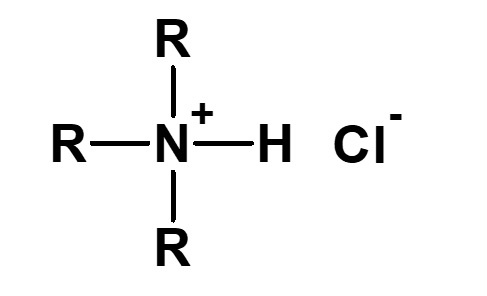


</description>
<dc:creator></dc:creator>
<dc:subject></dc:subject>
<dc:date>2024-04-03T20:40:00+09:00</dc:date>
<content:encoded><![CDATA[
<div class="cms-content-parts-sin171179606762468800 sanyo-pageLink" id="cms-editor-minieditor-sin171179606762471900" data-original="cms-content-parts-sin171179606762473300" data-custom="sanyo-pageLink"><!-- .parts_text_type01 --> <ul>     <li><a href="#intro">What is a surfactant?</a></li>     <li><a href="#video">Surfactant functions introduction video</a></li>     <li><a href="#wetting">What are wetting agents and penetrants?</a></li>     <li><a href="#applications">Wetting agents and penetrants applications</a></li>     <li><a href="#textile">Textile industry</a></li>     <li><a href="#toiletries">Toiletries</a></li>     <li><a href="#agri">Agriculture</a></li>     <li><a href="#plastics">Plastics and Inks</a></li>     <li><a href="#sanyo_s">Sanyo Chemical's surfactants</a></li>     <li><a href="#info">Related Information</a></li> </ul> <!-- // .parts_text_type01 --></div>
<h2 class="cms-content-parts-sin171179608038418400" id="cms-editor-textarea-sin171179608038426200"><br />
<a name="intro"></a>What is a surfactant?</h2>
<div class="cms-content-parts-sin171179610700973200 cparts-id119 lay-margin-b--3 box" data-selectable="cparts-animate cparts-animate--slideInUp:上へスライド,cparts-animate cparts-animate--slideInDown:下へスライド,cparts-animate cparts-animate--slideInLeft:左へスライド,cparts-animate cparts-animate--slideInRight:右へスライド">
<div class="lay-row">
<div class="lay-col12-xs-12 lay-col12-md-12 lay-col12-lg-12">
<div id="cms-editor-minieditor-sin171179610700977000" class="cparts-txt-block lay-reset-child">
<p><font face="Noto Sans JP">First, an interface is a boundary surface that exists between two substances with different properties, and interfaces exist between liquids and solids, liquids and liquids, and liquids and gases.</font></p>
<p><font face="Noto Sans JP">Surfactants enhance performance by performing functions such as washing, emulsifying, dispersing, wetting, and penetrating at this interface.<br />
<br />
<span style="font-weight: 700;">Interface = a boundary surface that exists between two substances with different properties</span><br />
</font><font face="Noto Sans JP">Liquid and solid: cup and coffee, machine and lubricant&#160;</font><br />
<font face="Noto Sans JP">Liquid and liquid: water and oil&#160;</font><br />
<font face="Noto Sans JP">Liquid and gas: seawater and air, soap bubbles</font><br />
<span style="font-weight: 700;"><font face="Noto Sans JP"><br />
Examples of roles of surfactants</font></span><br />
<font face="Noto Sans JP">Cleaning ・・・ Removing dirt&#160;</font><br />
<font face="Noto Sans JP">Emulsification ・・・ Dispersion ・・ Making unmixable things easier to mix</font><br />
<font face="Noto Sans JP">Wetting / Penetration ・・・ Makes wetting and soaking easier</font></p>
</div>
</div>
</div>
</div>
<h3 class="cms-content-parts-sin171179612127819800" id="cms-editor-textarea-sin171179612127823500">Basic structure of a surfactant</h3>
<div class="cms-content-parts-sin171179623930333000 cparts-id119 lay-margin-b--3 box" data-selectable="cparts-animate cparts-animate--slideInUp:上へスライド,cparts-animate cparts-animate--slideInDown:下へスライド,cparts-animate cparts-animate--slideInLeft:左へスライド,cparts-animate cparts-animate--slideInRight:右へスライド">
<div class="lay-row">
<div class="lay-col12-xs-12 lay-col12-md-12 lay-col12-lg-12">
<div id="cms-editor-minieditor-sin171179623930308600" class="cparts-txt-block lay-reset-child">
<p>-Surfactants have different structures in their molecules with different properties: lipophilic groups (oil-fitting parts) and hydrophilic groups (water-fitting parts).<br />
<br />
-Surfactants are broadly classified into four types according to the structure of the hydrophilic group: nonionic, anionic, cationic, and amphoteric (having both anionic and cationic groups).</p>
<p><img src="https://sanyo-chemical-solutions.com/images/technology/surfactant/img_surfactantbasics_types.jpg" width="800" height="211" alt="" /></p>
</div>
</div>
</div>
</div>
<div class="cms-content-parts-sin172109923031076100 cparts-id96--01 box lay-margin-b--3" data-selectable="cparts-animate cparts-animate--slideInUp:上へスライド,cparts-animate cparts-animate--slideInDown:下へスライド,cparts-animate cparts-animate--slideInLeft:左へスライド,cparts-animate cparts-animate--slideInRight:右へスライド">
<div class="lay-row">
<div class="lay-col12-xs-12 lay-col12-md-12 lay-col12-lg-12">
<div class="cparts-table-block lay-reset-child" id="cms-editor-minieditor-sin172109923031096000"><table>     <caption class="lay-margin-t--1">&#160; &#160;</caption>     <tbody>         <tr>             <th>Type of surfactant</th>             <th style="text-align: center;"><span style="white-space: normal;">Feature</span></th>             <th style="text-align: center;">Main application</th>             <th style="text-align: center;">Composition example</th>         </tr>         <tr>             <td>Nonionic surfactant<br />             <img src="https://sanyo-chemical-solutions.com/images/technology/surfactant/img_surfactantbasics_nonion.jpg" width="150" height="47" alt="" /></td>             <td>-Hydrophilic and hydrophobic balance<br />             can be easily adjusted<br />             -Excellent emulsification and solubilization<br />             -Low lather<br style="margin-bottom: 0px;" />             -Susceptible to temperature but not to pH</td>             <td>-Clothing detergent<br />             -Emulsifiers and solubilizers<br />             -Dispersant<br style="margin-bottom: 0px;" />             -Metalworking oil</td>             <td>-Polyoxyethylene alkyl ether<br style="margin-bottom: 0px;" />             etc.</td>         </tr>         <tr>             <td>Anionic surfactant<br />             <img src="https://sanyo-chemical-solutions.com/images/technology/surfactant/img_surfactantbasics_anion.jpg" width="150" height="49" alt="" /></td>             <td>-Excellent emulsification and dispersibility<br />             -Good lather<br style="margin-bottom: 0px;" />             -Temperature insensitive</td>             <td>-Clothing Detergent<br />             -Shampoo<br style="margin-bottom: 0px;" />             -Body soap</td>             <td>-Alkyl benzene sulfonate<br />             -Alkyl ether sulfates<br style="margin-bottom: 0px;" />             etc.</td>         </tr>         <tr>             <td>Cationic surfactant<br />             <img src="https://sanyo-chemical-solutions.com/images/technology/surfactant/img_surfactantbasics_cation.jpg" width="150" height="49" alt="" /></td>             <td>-Adsorption to fibers<br />             -Antistatic effect<br style="margin-bottom: 0px;" />             -Bactericidal</td>             <td>-Hair rinse<br />             -Fabric softener for clothes<br style="margin-bottom: 0px;" />             -Disinfectant</td>             <td>-Didecyldimethylammonium methyl sulfate</td>         </tr>         <tr>             <td>Amphoteric surfactant<br />             <img src="https://sanyo-chemical-solutions.com/images/technology/surfactant/img_surfactantbasics_ryosei.jpg" width="150" height="47" alt="" /></td>             <td>-Mild on skin<br />             -Excellent solubility in water<br style="margin-bottom: 0px;" />             -Synergistic with other active components</td>             <td>-Shampoo<br />             -Body soap<br style="margin-bottom: 0px;" />             -Kitchen detergent</td>             <td>-Alkyl di-aminoethyl hydrochloride glycine<br />             -Sodium lauryl aminopropionic acid<br />             -Dimethylstearyl betaine<br style="margin-bottom: 0px;" />             -Coconut oil fatty acid amidopropyl betaine</td>         </tr>     </tbody> </table></div>
</div>
</div>
</div>
<h2 class="cms-content-parts-sin171179614288982300" id="cms-editor-textarea-sin171179614288986900"><a name="video"></a>Surfactant functions introduction video</h2>
<div class="cms-content-parts-sin172109914939658600">[[CMSmodule.parts::ad#param=309]]</div>
<div class="cms-content-parts-sin172109916225098300 cparts-id119 lay-margin-b--3 box" data-selectable="cparts-animate cparts-animate--slideInUp:上へスライド,cparts-animate cparts-animate--slideInDown:下へスライド,cparts-animate cparts-animate--slideInLeft:左へスライド,cparts-animate cparts-animate--slideInRight:右へスライド">
<div class="lay-row">
<div class="lay-col12-xs-12 lay-col12-md-12 lay-col12-lg-12">
<div class="cparts-txt-block lay-reset-child" id="cms-editor-minieditor-sin172109916225103100">
<p>It consists of seven short movies for each function.&#160;<br />
0:00　Introduction of surfactants functions　<br />
0:16　Part1　Washability<br />
1:00　Part2　Permeability<br />
2:10　Part3　Dispersion<br />
2:55　Part4　Foaming properties<br />
3:25　Part5　Defoaming properties<br />
3:39　Part6　Smoothness<br />
4:20　Part7　Antibacterial properties</p>
</div>
</div>
</div>
</div>
<h2 class="cms-content-parts-sin172109911769850600" id="cms-editor-textarea-sin172109911769858800"><a name="wetting"></a>What are wetting agents and penetrants?</h2>
<div class="cms-content-parts-sin171179623311713300 cparts-id119 lay-margin-b--3 box" data-selectable="cparts-animate cparts-animate--slideInUp:上へスライド,cparts-animate cparts-animate--slideInDown:下へスライド,cparts-animate cparts-animate--slideInLeft:左へスライド,cparts-animate cparts-animate--slideInRight:右へスライド">
<div class="lay-row">
<div class="lay-col12-xs-12 lay-col12-md-12 lay-col12-lg-12">
<div id="cms-editor-minieditor-sin171179623311720100" class="cparts-txt-block lay-reset-child">
<p>Wetting agents and penetrants are used to wet or soak up water. Wetting and penetrating are similar, and wettability is important. Surfactants with almost the same composition are used for wetting and penetrating agents.</p>
<p><b>Wetting: Replacing the interface between a solid and a gas with the interface between a solid and a liquid (water) &#8594; Wettability</b><br />
<b><br />
Penetration: Liquid (water) enters the gap between solids &#8594; soaking in</b></p>
<div></div>
</div>
</div>
</div>
</div>
<h3 class="cms-content-parts-sin171438098891578900" id="cms-editor-textarea-sin171438098891587100">Wetting Classification</h3>
<div class="cms-content-parts-sin171438100593455800 cparts-id119 lay-margin-b--3 box" data-selectable="cparts-animate cparts-animate--slideInUp:上へスライド,cparts-animate cparts-animate--slideInDown:下へスライド,cparts-animate cparts-animate--slideInLeft:左へスライド,cparts-animate cparts-animate--slideInRight:右へスライド">
<div class="lay-row">
<div class="lay-col12-xs-12 lay-col12-md-12 lay-col12-lg-12">
<div id="cms-editor-minieditor-sin171438100593422600" class="cparts-txt-block lay-reset-child">
<p>Usually, wetting can be classified into three categories.</p>
</div>
</div>
</div>
</div>
<div class="cms-content-parts-sin171439492639520200 cparts-id96--01 box lay-margin-b--3" data-selectable="cparts-animate cparts-animate--slideInUp:上へスライド,cparts-animate cparts-animate--slideInDown:下へスライド,cparts-animate cparts-animate--slideInLeft:左へスライド,cparts-animate cparts-animate--slideInRight:右へスライド">
<div class="lay-row">
<div class="lay-col12-xs-12 lay-col12-md-12 lay-col12-lg-12">
<div class="cparts-table-block lay-reset-child" id="cms-editor-minieditor-sin171439492639523200"><table dir="ltr">     <caption class="lay-margin-t--1">&#160; &#160;</caption>     <thead>         <tr>             <th scope="row"></th>             <th scope="col" style="text-align: center;">Summary</th>             <th scope="col" style="text-align: center;">Rough sketch</th>             <th scope="col" style="text-align: center;">Example</th>         </tr>     </thead>     <tbody>         <tr>             <th scope="row">Spreading wetting</th>             <td>Droplets cover the entire surface of the solid surface</td>             <td><img src="https://sanyo-chemical-solutions.com/images/technology/shinto/img_shinto_liquid-solid1_en.jpg" width="400" height="136" alt="" /></td>             <td>・Rain wetting the asphalt surface.<br />             ・Spreading over surface during coating</td>         </tr>         <tr>             <th scope="row">Adhesional wetting</th>             <td>Wet to place droplets on solid surfaces</td>             <td><img src="https://sanyo-chemical-solutions.com/images/technology/shinto/img_shinto_liquid-solid2_en.jpg" width="400" height="136" alt="" /></td>             <td>・Water droplets sticking to a leaf<br />             ・Steam fogging on glass surfaces<br />             ・Adhesive or ink application</td>         </tr>         <tr>             <th scope="row">Immersional wetting</th>             <td>Immersing solids in large volumes of water</td>             <td><img src="https://sanyo-chemical-solutions.com/images/technology/shinto/img_shinto_liquid-solid3_en.jpg" width="400" height="186" alt="" /></td>             <td>・Flour mixed with water<br />             ・Wetting of fibers<br />             ・Dispersion of pigments and powders</td>         </tr>     </tbody> </table></div>
</div>
</div>
</div>
<h3 class="cms-content-parts-sin171438102612132300" id="cms-editor-textarea-sin171438102612139900"><br>Wettability index is related to contact angle</h3>
<div class="cms-content-parts-sin171438102883183000 cparts-id119 lay-margin-b--3 box" data-selectable="cparts-animate cparts-animate--slideInUp:上へスライド,cparts-animate cparts-animate--slideInDown:下へスライド,cparts-animate cparts-animate--slideInLeft:左へスライド,cparts-animate cparts-animate--slideInRight:右へスライド">
<div class="lay-row">
<div class="lay-col12-xs-12 lay-col12-md-12 lay-col12-lg-12">
<div id="cms-editor-minieditor-sin171438102883160300" class="cparts-txt-block lay-reset-child">
<p>The shape of a water droplet is used to quantitatively express wettability. The shape of a water droplet can be expressed by the contact angle &#952; as shown in the figure below.</p>
<p>&#160;The closer the contact angle is to 0 degrees, the easier it is to wet, and the closer it is to 180 degrees, the harder it is to wet</p>
<div></div>
</div>
</div>
</div>
</div>
<div class="cms-content-parts-sin171438104180148500 cparts-id119 lay-margin-b--3 box" data-selectable="cparts-animate cparts-animate--slideInUp:上へスライド,cparts-animate cparts-animate--slideInDown:下へスライド,cparts-animate cparts-animate--slideInLeft:左へスライド,cparts-animate cparts-animate--slideInRight:右へスライド">
<div class="lay-row">
<div class="lay-col12-xs-12 lay-col12-md-12 lay-col12-lg-12">
<div id="cms-editor-minieditor-sin171438104180121600" class="cparts-txt-block lay-reset-child">
<p style="text-align: center; "><b><img src="https://sanyo-chemical-solutions.com/images/technology/shinto/img_shinto_wetting_en.jpg" width="1000" height="239" alt="" /><br />
Fig. State of wetting of solid surface</b></p>
</div>
</div>
</div>
</div>
<div class="cms-content-parts-sin171438104623663300 cparts-id119 lay-margin-b--3 box" data-selectable="cparts-animate cparts-animate--slideInUp:上へスライド,cparts-animate cparts-animate--slideInDown:下へスライド,cparts-animate cparts-animate--slideInLeft:左へスライド,cparts-animate cparts-animate--slideInRight:右へスライド">
<div class="lay-row">
<div class="lay-col12-xs-12 lay-col12-md-12 lay-col12-lg-12">
<div id="cms-editor-minieditor-sin171438104623639200" class="cparts-txt-block lay-reset-child">
<p><b>When there is no surfactant<br />
</b>A droplet of water tries to become spherical with the smallest surface area due to the surface tension of the water (to minimize the surface energy of the droplet).<br />
Also, the glass surface is stabilized by lowering its energy by adsorbing gas molecules on the surface.<br />
&#8658;When a water droplet comes in contact with glass, the droplet becomes spherical on the glass (i.e., not wet)<br />
<br />
<b>When there is a surfactant<br />
</b>Surfactant collects at the contact point where solid and liquid repel each other, and water droplets spread easily.<br />
&#8658;The contact angle of water droplets on the glass surface becomes smaller.</p>
</div>
</div>
</div>
</div>
<h3 class="cms-content-parts-sin171438105227409300" id="cms-editor-textarea-sin171438105227417300">Relationship between contact angle and surface tension</h3>
<div class="cms-content-parts-sin172110540135512300 box cparts-id409--01 lay-margin-b--3" col-flex="1-2" data-selectable="cparts-animate cparts-animate--slideInUp:上へスライド,cparts-animate cparts-animate--slideInDown:下へスライド,cparts-animate cparts-animate--slideInLeft:左へスライド,cparts-animate cparts-animate--slideInRight:右へスライド">
<div class="lay-row">
<div class="lay-col12-xs-12 lay-col12-md-6 lay-col12-lg-6">
<div class="cparts-img-block lay-img-width--max lay-margin-b--1"><img alt="" class="cms-easy-edit" id="cms-editor-image-sin172110540135528000" src="https://sanyo-chemical-solutions.com/images/technology/shinto/img_shinto_balanceofforces_en.jpg" width="330" /></div>
<div class="cparts-caption-block lay-reset-child lay-font-size--s cms-easy-edit" id="cms-editor-minieditor-sin172110540135528400">
<p style="text-align: center;"><strong>Fig. Solid surface wet with water droplets</strong></p>
</div>
</div>
<div class="lay-col12-xs-12 lay-col12-md-6 lay-col12-lg-6">
<div class="cparts-txt-block lay-reset-child" id="cms-editor-minieditor-sin172110540135528700">
<p>The wetting of a solid surface by a water droplet is represented by three forces (liquid surface tension &#947;ℓ, solid surface tension &#947;s, and liquid-solid interface tension &#947;sℓ) and the contact angle &#952;, as shown in the left figure.</p>
<p>&#160;If these three forces are summed up and a water molecule is pulled further to the left at contact point x, the water droplet will spread more and more, wetting the solid surface and reducing the contact angle &#952;. If the water droplet is pulled to the right, it will spread more and more, wetting the solid surface. If it is pulled to the right, the opposite is true.</p>
<p>Force pulling to the left: &#947;s<br />
Force to pull to the right: &#947;ℓ-cos&#952; + &#947;sℓ</p>
<p>By comparing the magnitude of these forces, we can express wettability.</p>
</div>
</div>
</div>
</div>
<div class="cms-content-parts-sin171438106200702500 cparts-id119 lay-margin-b--3 box" data-selectable="cparts-animate cparts-animate--slideInUp:上へスライド,cparts-animate cparts-animate--slideInDown:下へスライド,cparts-animate cparts-animate--slideInLeft:左へスライド,cparts-animate cparts-animate--slideInRight:右へスライド">
<div class="lay-row">
<div class="lay-col12-xs-12 lay-col12-md-12 lay-col12-lg-12">
<div id="cms-editor-minieditor-sin171438106200670700" class="cparts-txt-block lay-reset-child">
<p>If &#947;<span style="font-size: smaller;">s</span> &#62; &#947;<span style="font-size: smaller;">ℓ</span>&#8901;cos&#952; + &#947;<span style="font-size: smaller;">sℓ</span>: water droplets tend to spread out<br />
If &#947;<span style="font-size: smaller;">s</span> &#60; &#947;<span style="font-size: smaller;">ℓ</span>&#8901;cos&#952; + &#947;<span style="font-size: smaller;">sℓ</span>: water droplets try to approach a spherical shape<br />
If &#947;<span style="font-size: smaller;">s</span> = &#947;<span style="font-size: smaller;">ℓ</span>&#8901;cos&#952; + &#947;<span style="font-size: smaller;">sℓ</span>: the water droplet is stationary and &#952; at this time is the contact angle.<br />
<br />
Further transforming this equation, the contact angle can be expressed in terms of surface tension and interfacial tension as follows.<br />
<img src="https://sanyo-chemical-solutions.com/images/technology/shinto/img_shinto_contactangle_en.jpg" width="200" height="62" alt="" /></p>
</div>
</div>
</div>
</div>
<div class="cms-content-parts-sin171438107147478300 cparts-id119 lay-margin-b--3 box" data-selectable="cparts-animate cparts-animate--slideInUp:上へスライド,cparts-animate cparts-animate--slideInDown:下へスライド,cparts-animate cparts-animate--slideInLeft:左へスライド,cparts-animate cparts-animate--slideInRight:右へスライド">
<div class="lay-row">
<div class="lay-col12-xs-12 lay-col12-md-12 lay-col12-lg-12">
<div id="cms-editor-minieditor-sin171438107147455700" class="cparts-txt-block lay-reset-child">
<h4>Mechanism of action of wetting and penetrating agents</h4>
</div>
</div>
</div>
</div>
<div class="cms-content-parts-sin171438110743453000 cparts-id119 lay-margin-b--3 box" data-selectable="cparts-animate cparts-animate--slideInUp:上へスライド,cparts-animate cparts-animate--slideInDown:下へスライド,cparts-animate cparts-animate--slideInLeft:左へスライド,cparts-animate cparts-animate--slideInRight:右へスライド">
<div class="lay-row">
<div class="lay-col12-xs-12 lay-col12-md-12 lay-col12-lg-12">
<div id="cms-editor-minieditor-sin171438110743408500" class="cparts-txt-block lay-reset-child">
<p><b>Behavior of surfactant dissolved in a drop of water<br />
</b>Surface tension of solid &#947;<span style="font-size: smaller;">s</span>: Constant for different types of solids (does not change with surfactant)<br />
Surface tension of water &#947;<span style="font-size: smaller;">ℓ</span>: Decreases with the addition of surfactant<br />
Surface tension between water and solid &#947;sℓ: Decreases with addition of surfactant<br />
<br />
<img src="https://sanyo-chemical-solutions.com/images/technology/shinto/img_shinto_surfactant-addition_en.jpg" width="600" height="147" alt="" /><br />
<br />
<br />
<br />
When a surfactant is added, the right-hand side of the above equation becomes a large number, and the contact angle &#952; on the left-hand side must become smaller to balance it. Thus, the surfactant's action of lowering the interfacial tension decreases the contact angle &#952;, which in turn increases the wetting and penetrating actions. This is the mechanism of action of wetting and penetrating agents.</p>
</div>
</div>
</div>
</div>
<h3 class="cms-content-parts-sin171438108368601300" id="cms-editor-textarea-sin171438108368611100">Surfactants as wetting and penetrating agents</h3>
<h5 class="cms-content-parts-sin171439745764950000" id="cms-editor-textarea-sin171439745764952000">Penetration power of typical surfactants</h5>
<div class="cms-content-parts-sin171439502006184500 cparts-id119--02 box lay-margin-b--3" col-flex="1-2" data-selectable="cparts-animate cparts-animate--slideInUp:上へスライド,cparts-animate cparts-animate--slideInDown:下へスライド,cparts-animate cparts-animate--slideInLeft:左へスライド,cparts-animate cparts-animate--slideInRight:右へスライド">
<div class="lay-row">
<div class="lay-col12-xs-12 lay-col12-md-6 lay-col12-lg-6">
<div id="cms-editor-minieditor-sin171439502006188300" class="cparts-txt-block lay-reset-child">
<table width="200" border="1" cellpadding="1" cellspacing="1" dir="ltr" style="width: 345px;">
    <thead>
        <tr>
            <th scope="col" style="text-align: center;">Surfactant</th>
            <th scope="col" style="text-align: center;">Penetration time　s</th>
        </tr>
    </thead>
    <tbody>
        <tr>
            <td>Nonylphenol EO 10 mol adduct</td>
            <td style="text-align: center;">4.0</td>
        </tr>
        <tr>
            <td>sodium dodecyl benzene sulfonate</td>
            <td style="text-align: center;">3.0</td>
        </tr>
        <tr>
            <td>sodium alkylnaphthalene sulfonate</td>
            <td style="text-align: center;">4.5</td>
        </tr>
        <tr>
            <td>Sodium dioctyl sulfosuccinate</td>
            <td style="text-align: center;">1.0</td>
        </tr>
        <tr>
            <td>water only</td>
            <td style="text-align: center;">&#62;100</td>
        </tr>
    </tbody>
</table>
</div>
</div>
<div class="lay-col12-xs-12 lay-col12-md-6 lay-col12-lg-6">
<div id="cms-editor-minieditor-sin171439502006188600" class="cparts-txt-block lay-reset-child">
<p>Measurement method: Canvas method (0.5% aqueous surfactant solution at 15&#176;C)<br />
EO 10 mol adduct in the table means ethylene oxide 10 mol adduct.</p>
<p>In plain water without a permeating agent, the floating canvas does not settle forever, but when a permeating agent is added, it settles in just a few seconds.</p>
<p>Among these, aqueous solutions to which sodium dioctyl sulfosuccinate is added exhibit particularly excellent permeability.</p>
</div>
</div>
</div>
</div>
<h5 class="cms-content-parts-sin171439750090012000" id="cms-editor-textarea-sin171439750090020100">Penetrating power of various nonionic surfactants</h5>
<div class="cms-content-parts-sin171439497105250500 cparts-id96--01 box lay-margin-b--3" data-selectable="cparts-animate cparts-animate--slideInUp:上へスライド,cparts-animate cparts-animate--slideInDown:下へスライド,cparts-animate cparts-animate--slideInLeft:左へスライド,cparts-animate cparts-animate--slideInRight:右へスライド">
<div class="lay-row">
<div class="lay-col12-xs-12 lay-col12-md-12 lay-col12-lg-12">
<div class="cparts-table-block lay-reset-child" id="cms-editor-minieditor-sin171439497105217100">
<table dir="ltr">
    <caption class="lay-margin-t--1">Measuring method: Draves method<br />
    In the table, EO means ethylene oxide.<br type="_moz" />
    </caption>
    <thead>
        <tr>
            <th scope="row" rowspan="2">Non-ionic surfactant</th>
            <th scope="row" rowspan="2">Lipophilic group structure</th>
            <th scope="col" rowspan="2">Cloud point ℃</th>
            <th scope="col" colspan="2">Penetration time s</th>
        </tr>
        <tr>
            <th scope="col">0.2% aq.&#160;</th>
            <th scope="col">0.05 aq.</th>
        </tr>
    </thead>
    <tbody>
        <tr>
            <td>Paraffin oxidized alcohol EO adduct</td>
            <td>With OH near the middle of the molecule<br />
            C12-14 secondary alcohols</td>
            <td>64</td>
            <td>4</td>
            <td>28</td>
        </tr>
        <tr>
            <td>Oxo alcohol EO adduct</td>
            <td>Branched C12-13 primary alcohols</td>
            <td>65</td>
            <td>16</td>
            <td>53</td>
        </tr>
        <tr>
            <td>Cheeghler alcohol EO adduct</td>
            <td>Linear C12-16 primary alcohols</td>
            <td>64</td>
            <td>60</td>
            <td>203</td>
        </tr>
        <tr>
            <td>Nonylphenol EO adduct</td>
            <td>Alkylphenol with branched side chains</td>
            <td>63</td>
            <td>4</td>
            <td>24</td>
        </tr>
        <tr>
            <td>Linear alkylphenol EO adduct</td>
            <td>Linear alkyl phenol</td>
            <td>56</td>
            <td>5</td>
            <td>27</td>
        </tr>
    </tbody>
</table>
</div>
</div>
</div>
</div>
<div class="cms-content-parts-sin171438107465399300 cparts-id119 lay-margin-b--3 box" data-selectable="cparts-animate cparts-animate--slideInUp:上へスライド,cparts-animate cparts-animate--slideInDown:下へスライド,cparts-animate cparts-animate--slideInLeft:左へスライド,cparts-animate cparts-animate--slideInRight:右へスライド">
<div class="lay-row">
<div class="lay-col12-xs-12 lay-col12-md-12 lay-col12-lg-12">
<div id="cms-editor-minieditor-sin171438107465373300" class="cparts-txt-block lay-reset-child">
<p>In terms of wetting and penetration effects, surfactants with a hydrophilic group in the middle of the lipophilic group have the greatest penetration power. Surfactants with a linear lipophilic group and a hydrophilic group at the end have the least penetrating power.</p>
</div>
</div>
</div>
</div>
<div class="cms-content-parts-sin171438244850193000 cparts-id119 lay-margin-b--3 box" data-selectable="cparts-animate cparts-animate--slideInUp:上へスライド,cparts-animate cparts-animate--slideInDown:下へスライド,cparts-animate cparts-animate--slideInLeft:左へスライド,cparts-animate cparts-animate--slideInRight:右へスライド">
<div class="lay-row">
<div class="lay-col12-xs-12 lay-col12-md-12 lay-col12-lg-12">
<div id="cms-editor-minieditor-sin171438244850167100" class="cparts-txt-block lay-reset-child">
<p style="text-align: center; "><b><img src="https://sanyo-chemical-solutions.com/images/technology/shinto/img_shinto_structure_en.jpg" width="800" height="296" alt="" /><br />
Fig. Comparison of Penetration Power of Higher Alcohol EO Adducts</b></p>
</div>
</div>
</div>
</div>
<div class="cms-content-parts-sin171438245654181400 cparts-id119 lay-margin-b--3 box" data-selectable="cparts-animate cparts-animate--slideInUp:上へスライド,cparts-animate cparts-animate--slideInDown:下へスライド,cparts-animate cparts-animate--slideInLeft:左へスライド,cparts-animate cparts-animate--slideInRight:右へスライド">
<div class="lay-row">
<div class="lay-col12-xs-12 lay-col12-md-12 lay-col12-lg-12">
<div id="cms-editor-minieditor-sin171438245654157900" class="cparts-txt-block lay-reset-child">
<p>This rule of thumb is well known to be generally valid not only for nonionic surfactants but also for anionic surfactants. However, it is based on the precondition that the surfactant is in a suitable range for wetting and penetration.</p>
</div>
</div>
</div>
</div>
<h2 class="cms-content-parts-sin171179625026888800" id="cms-editor-textarea-sin171179625026895900"><a name="applications"></a>Wetting agents and penetrants applications</h2>
<h3 class="cms-content-parts-sin171438112494375100" id="cms-editor-textarea-sin171438112494383300"><a name="textile"></a>Textile industry</h3>
<div class="cms-content-parts-sin171438279880890500 box cparts-id416--02 lay-margin-b--3" data-selectable="cparts-animate cparts-animate--slideInUp:上へスライド,cparts-animate cparts-animate--slideInDown:下へスライド,cparts-animate cparts-animate--slideInLeft:左へスライド,cparts-animate cparts-animate--slideInRight:右へスライド">
<div class="lay-row">
<div class="cparts-img-block lay-img-width--max lay-margin-b--3 lay-col12-xs-12 lay-col12-md-3 lay-col12-lg-3"><img alt="" id="cms-editor-image-sin171438279880894900" src="https://sanyo-chemical-solutions.com/images/products/newpollb/img_newpollb12.jpg" width="215" /></div>
<div class="lay-margin-b--3 lay-col12-xs-12 lay-col12-md-9 lay-col12-lg-9">
<div class="cparts-table-block lay-reset-child" id="cms-editor-minieditor-sin171438279880895300">
<p>With the advancement of textile processing technology, penetrants and wetting agents have become indispensable agents in a variety of situations. They are used under a wide range of conditions, from highly acidic to highly alkaline, and in situations where large amounts of salt are present.<br />
<br />
Fibers vary in wettability depending on their chemical structure. The table below lists fibers that are easily wettable and fibers that are not easily wettable.<br />
<br />
In reality, fibers often contain oils or natural waxes, which may differ from this classification.</p>
<div></div>
</div>
</div>
</div>
</div>
<h5 class="cms-content-parts-sin171439750795959300" id="cms-editor-textarea-sin171439750795973200">Classification of fiber wettability</h5>
<div class="cms-content-parts-sin171439510256329600 cparts-id96--01 box lay-margin-b--3" data-selectable="cparts-animate cparts-animate--slideInUp:上へスライド,cparts-animate cparts-animate--slideInDown:下へスライド,cparts-animate cparts-animate--slideInLeft:左へスライド,cparts-animate cparts-animate--slideInRight:右へスライド">
<div class="lay-row">
<div class="lay-col12-xs-12 lay-col12-md-12 lay-col12-lg-12">
<div class="cparts-table-block lay-reset-child" id="cms-editor-minieditor-sin171439510256297000"><table dir="ltr">     <caption class="lay-margin-t--1">&#160; &#160;</caption>     <tbody>         <tr>             <th scope="row" style="text-align: center;">Very Wettable Fibers</th>             <td>Nonfat cotton, rayon, vinylon, acrylic</td>         </tr>         <tr>             <th scope="row" style="text-align: center;">Relatively Wettable Fibers</th>             <td>Acetate, nylon</td>         </tr>         <tr>             <th scope="row" style="text-align: center;">Slightly wet fibers</th>             <td>Polyester</td>         </tr>         <tr>             <th scope="row" style="text-align: center;">Hardly wettable fibers</th>             <td>Polypropylene, wool</td>         </tr>     </tbody> </table></div>
</div>
</div>
</div>
<div class="cms-content-parts-sin171438120964500700 cparts-id119 lay-margin-b--3 box" data-selectable="cparts-animate cparts-animate--slideInUp:上へスライド,cparts-animate cparts-animate--slideInDown:下へスライド,cparts-animate cparts-animate--slideInLeft:左へスライド,cparts-animate cparts-animate--slideInRight:右へスライド">
<div class="lay-row">
<div class="lay-col12-xs-12 lay-col12-md-12 lay-col12-lg-12">
<div id="cms-editor-minieditor-sin171438120964476700" class="cparts-txt-block lay-reset-child">
<h4>Properties of treatment solutions containing wetting and penetrating agents</h4>
</div>
</div>
</div>
</div>
<div class="cms-content-parts-sin171438123229559600 cparts-id119 lay-margin-b--3 box" data-selectable="cparts-animate cparts-animate--slideInUp:上へスライド,cparts-animate cparts-animate--slideInDown:下へスライド,cparts-animate cparts-animate--slideInLeft:左へスライド,cparts-animate cparts-animate--slideInRight:右へスライド">
<div class="lay-row">
<div class="lay-col12-xs-12 lay-col12-md-12 lay-col12-lg-12">
<div id="cms-editor-minieditor-sin171438123229541800" class="cparts-txt-block lay-reset-child">
<p>In the manufacturing process leading up to the production of cloth, the conditions under which the fibers are treated may be acidic or alkaline, or may contain large amounts of inorganic salts. These factors can also greatly affect the penetrating power of penetrants.<br />
<br />
<b>Examples of factors that reduce penetrating power</b><br />
-In general, non-ionic penetrants often lose their penetrating power in alkaline conditions.<br />
-Anionic penetrants often lose their penetrating power in acidic conditions.<br />
-Penetrants with ester bonds in their molecules may decompose at high temperatures in strongly acidic or strongly alkaline environments, resulting in reduced penetrating power.<br />
-Sulfate-type anionic penetrant ester salt penetrant may decompose in acidic solutions, resulting in a decrease in penetrating power during use.</p>
</div>
</div>
</div>
</div>
<h5 class="cms-content-parts-sin171439752165813400" id="cms-editor-textarea-sin171439752165824100">Effect of acids, alkalis and salts on penetration time</h5>
<div class="cms-content-parts-sin171439508004321300 cparts-id96--01 box lay-margin-b--3" data-selectable="cparts-animate cparts-animate--slideInUp:上へスライド,cparts-animate cparts-animate--slideInDown:下へスライド,cparts-animate cparts-animate--slideInLeft:左へスライド,cparts-animate cparts-animate--slideInRight:右へスライド">
<div class="lay-row">
<div class="lay-col12-xs-12 lay-col12-md-12 lay-col12-lg-12">
<div class="cparts-table-block lay-reset-child" id="cms-editor-minieditor-sin171439508004292800">
<table dir="ltr">
    <caption class="lay-margin-t--1">&#160; &#160;</caption>
    <thead>
        <tr>
            <th scope="row"></th>
            <th scope="col" style="text-align: center;" colspan="4">Penetration time [s]</th>
        </tr>
        <tr>
            <th scope="row" style="text-align: center;"></th>
            <th scope="col" style="text-align: center;">water</th>
            <th scope="col" style="text-align: center;">3%NaOH</th>
            <th scope="col" style="text-align: center;">5%H<span style="font-size: smaller;">2</span>SO<span style="font-size: smaller;">4</span></th>
            <th scope="col" style="text-align: center;">10% NaCl</th>
        </tr>
    </thead>
    <tbody>
        <tr>
            <th scope="row" style="text-align: center;">C8~10 alcohol EO6 mol adduct</th>
            <td style="text-align: center;">3.5</td>
            <td style="text-align: center;">10.3</td>
            <td style="text-align: center;">10.1</td>
            <td style="text-align: center;">2.5</td>
        </tr>
        <tr>
            <th scope="row" style="text-align: center;">Nonylphenol EO 10 mol adduct</th>
            <td style="text-align: center;">4.0</td>
            <td style="text-align: center;">37.0</td>
            <td style="text-align: center;">3.0</td>
            <td style="text-align: center;">57.4</td>
        </tr>
        <tr>
            <th scope="row" style="text-align: center;">Sodium alkylnaphthalene sulfonate</th>
            <td style="text-align: center;">4.5</td>
            <td style="text-align: center;">&#62;60</td>
            <td style="text-align: center;">insoluble</td>
            <td style="text-align: center;">insoluble</td>
        </tr>
        <tr>
            <th scope="row" style="text-align: center;">Sodium dioctyl sulfosuccinate</th>
            <td style="text-align: center;">1.0</td>
            <td style="text-align: center;">3.0</td>
            <td style="text-align: center;">3.5</td>
            <td style="text-align: center;">insoluble</td>
        </tr>
    </tbody>
</table>
<p></p>
</div>
</div>
</div>
</div>
<h5 class="cms-content-parts-sin171439752988276700" id="cms-editor-textarea-sin171439752988284600">Conditions of use and an example of a suitable penetrant</h5>
<div class="cms-content-parts-sin171439511451509800 cparts-id96--01 box lay-margin-b--3" data-selectable="cparts-animate cparts-animate--slideInUp:上へスライド,cparts-animate cparts-animate--slideInDown:下へスライド,cparts-animate cparts-animate--slideInLeft:左へスライド,cparts-animate cparts-animate--slideInRight:右へスライド">
<div class="lay-row">
<div class="lay-col12-xs-12 lay-col12-md-12 lay-col12-lg-12">
<div class="cparts-table-block lay-reset-child" id="cms-editor-minieditor-sin171439511451469400">
<table dir="ltr">
    <caption class="lay-margin-t--1">&#160; &#160;</caption>
    <thead>
        <tr>
            <th scope="col">Conditions of use</th>
            <th scope="col">Penetrant used</th>
        </tr>
    </thead>
    <tbody>
        <tr>
            <td>Strongly alkaline</td>
            <td>Alkaline penetrants, mainly low&#160;molecular weight anionic penetrants</td>
        </tr>
        <tr>
            <td>Weak alkalinity</td>
            <td>Anionic penetrant such as sulfate ester salt type, non-ionic penetrants, etc.</td>
        </tr>
        <tr>
            <td>Slight acidity</td>
            <td>Sulfonate-type anionic penetrant, non-ionic penetrant</td>
        </tr>
        <tr>
            <td>Strong acidity</td>
            <td>non-ionic penetrants</td>
        </tr>
        <tr>
            <td>Solution with high concentration of strong oxidizing agents or inorganic salts</td>
            <td>Special sulfonate-type penetrants<br />
            Example Din sodium alkyl diphenyl ether disulfonate</td>
        </tr>
    </tbody>
</table>
</div>
</div>
</div>
</div>
<div class="cms-content-parts-sin171438126243225100 cparts-id119 lay-margin-b--3 box" data-selectable="cparts-animate cparts-animate--slideInUp:上へスライド,cparts-animate cparts-animate--slideInDown:下へスライド,cparts-animate cparts-animate--slideInLeft:左へスライド,cparts-animate cparts-animate--slideInRight:右へスライド">
<div class="lay-row">
<div class="lay-col12-xs-12 lay-col12-md-12 lay-col12-lg-12">
<div id="cms-editor-minieditor-sin171438126243203100" class="cparts-txt-block lay-reset-child">
<h4>Wetting and penetrating agents in the synthetic fiber manufacturing process</h4>
<div></div>
</div>
</div>
</div>
</div>
<div class="cms-content-parts-sin171438127297025500 cparts-id119 lay-margin-b--3 box" data-selectable="cparts-animate cparts-animate--slideInUp:上へスライド,cparts-animate cparts-animate--slideInDown:下へスライド,cparts-animate cparts-animate--slideInLeft:左へスライド,cparts-animate cparts-animate--slideInRight:右へスライド">
<div class="lay-row">
<div class="lay-col12-xs-12 lay-col12-md-12 lay-col12-lg-12">
<div id="cms-editor-minieditor-sin171438127297003400" class="cparts-txt-block lay-reset-child">
<p><b>Synthetic Fiber Manufacturing Process Flow</b><br />
Polymer production &#8658; Spinning &#8658; Drawing &#8658; Post-treatment process<br />
<b><br />
Role of fiber oil</b><br />
Fiber oil mainly refers to a spinning oil agent that facilitates yarn pulling in the prevention process. Penetrating and wetting agents are added to help the agent work effectively.</p>
<div></div>
</div>
</div>
</div>
</div>
<h4 class="cms-content-parts-sin171439794423757400" id="cms-editor-textarea-sin171439794423761000"><br />
Effects of Wetting and Penetrating Agents on Polypropylene Fibers</h4>
<div class="cms-content-parts-sin171438129769982400 cparts-id119 lay-margin-b--3 box" data-selectable="cparts-animate cparts-animate--slideInUp:上へスライド,cparts-animate cparts-animate--slideInDown:下へスライド,cparts-animate cparts-animate--slideInLeft:左へスライド,cparts-animate cparts-animate--slideInRight:右へスライド">
<div class="lay-row">
<div class="lay-col12-xs-12 lay-col12-md-12 lay-col12-lg-12">
<div id="cms-editor-minieditor-sin171438129769959900" class="cparts-txt-block lay-reset-child">
<p>The following is an example of a fiber oil treatment process for polypropylene fiber, which is the most difficult to wet with water.<br />
When treating polypropylene fibers with oil, the oil is emulsified or dispersed in water.<br />
<br />
Polypropylene fibers are not easily wetted by water, which can cause problems such as &#34;oil does not adhere easily&#34; and &#34;oil does not penetrate into the fiber bundle.To solve this problem, non-ionic or anionic wetting/penetrating agents are usually added to the oil to provide wetting/penetrating action.<br />
<br />
Higher alcohol EO adducts and sulfosuccinic acid type surfactants, which have a low contact angle and excellent penetrating power, are added to make it easier for the oil to penetrate into the polypropylene fiber bundles.</p>
</div>
</div>
</div>
</div>
<h5 class="cms-content-parts-sin171439746194838500" id="cms-editor-textarea-sin171439746194861400">Effects of Wetting and Penetrating Agents on Polypropylene Fibers</h5>
<div class="cms-content-parts-sin171439514489607300 cparts-id96--01 box lay-margin-b--3" data-selectable="cparts-animate cparts-animate--slideInUp:上へスライド,cparts-animate cparts-animate--slideInDown:下へスライド,cparts-animate cparts-animate--slideInLeft:左へスライド,cparts-animate cparts-animate--slideInRight:右へスライド">
<div class="lay-row">
<div class="lay-col12-xs-12 lay-col12-md-12 lay-col12-lg-12">
<div class="cparts-table-block lay-reset-child" id="cms-editor-minieditor-sin171439514489574300">
<table dir="ltr">
    <caption class="lay-margin-t--1">&#160; &#160;</caption>
    <thead>
        <tr>
            <th scope="col">Wetting and penetrating agents</th>
            <th scope="col">Contact angle [&#176;]<br />
            0.5% solution</th>
            <th scope="col">Penetration time [s]<br />
            1.0% solution</th>
        </tr>
    </thead>
    <tbody>
        <tr>
            <td>None (water)</td>
            <td style="text-align: center;">78</td>
            <td style="text-align: center;">not settle</td>
        </tr>
        <tr>
            <td>Higher alcohol EO adduct</td>
            <td style="text-align: center;">28</td>
            <td style="text-align: center;">2</td>
        </tr>
        <tr>
            <td>Sulfosuccinic acid type</td>
            <td style="text-align: center;">30</td>
            <td style="text-align: center;">6</td>
        </tr>
        <tr>
            <td>Oil A (no wetting/penetrating agent added)</td>
            <td style="text-align: center;">68</td>
            <td style="text-align: center;">Approx. 200</td>
        </tr>
        <tr>
            <td>Oil A + 10% of the above higher alcohol EO adduct added to the oil</td>
            <td style="text-align: center;">63</td>
            <td style="text-align: center;">13</td>
        </tr>
    </tbody>
</table>
<p></p>
</div>
</div>
</div>
</div>
<div class="cms-content-parts-sin171438132143081900 cparts-id119 lay-margin-b--3 box" data-selectable="cparts-animate cparts-animate--slideInUp:上へスライド,cparts-animate cparts-animate--slideInDown:下へスライド,cparts-animate cparts-animate--slideInLeft:左へスライド,cparts-animate cparts-animate--slideInRight:右へスライド">
<div class="lay-row">
<div class="lay-col12-xs-12 lay-col12-md-12 lay-col12-lg-12">
<div id="cms-editor-minieditor-sin171438132143052800" class="cparts-txt-block lay-reset-child">
<h4>Wetting and penetrating agents for refining processes</h4>
<div></div>
</div>
</div>
</div>
</div>
<div class="cms-content-parts-sin171438133186240300 cparts-id119 lay-margin-b--3 box" data-selectable="cparts-animate cparts-animate--slideInUp:上へスライド,cparts-animate cparts-animate--slideInDown:下へスライド,cparts-animate cparts-animate--slideInLeft:左へスライド,cparts-animate cparts-animate--slideInRight:右へスライド">
<div class="lay-row">
<div class="lay-col12-xs-12 lay-col12-md-12 lay-col12-lg-12">
<div id="cms-editor-minieditor-sin171438133186215800" class="cparts-txt-block lay-reset-child">
<p>Before dyeing, natural and synthetic fibers alike are coated with oil and glue during the spinning and weaving processes, as well as with dust and machine oil. These deposits can cause a variety of problems during textile processing.（For example, they prevent dye penetration and cause uneven dyeing.)<br />
<br />
In order to prevent these problems from occurring, the dyeing process involves a process called refining, which completely removes these adhering substances before dyeing.</p>
</div>
</div>
</div>
</div>
<h5 class="cms-content-parts-sin171439754051803900" id="cms-editor-textarea-sin171439754051812000">Major impurities present in the fabric before the fiber is dyed</h5>
<div class="cms-content-parts-sin171439515964957700 cparts-id96--01 box lay-margin-b--3" data-selectable="cparts-animate cparts-animate--slideInUp:上へスライド,cparts-animate cparts-animate--slideInDown:下へスライド,cparts-animate cparts-animate--slideInLeft:左へスライド,cparts-animate cparts-animate--slideInRight:右へスライド">
<div class="lay-row">
<div class="lay-col12-xs-12 lay-col12-md-12 lay-col12-lg-12">
<div class="cparts-table-block lay-reset-child" id="cms-editor-minieditor-sin171439515964919100">
<table dir="ltr">
    <caption class="lay-margin-t--1">&#160; &#160;</caption>
    <thead>
        <tr>
            <th scope="col"></th>
            <th scope="col">Type of stain</th>
        </tr>
    </thead>
    <tbody>
        <tr>
            <td>For natural fibers</td>
            <td>Solids, fats, oils, proteins, pectic substances, mineral oils, saponification products of fats and oils, pigmented substances</td>
        </tr>
        <tr>
            <td>Process-derived impurities</td>
            <td>Spinning oil, glue, machine oil, dirt such as iron rust, cotton waste, etc.</td>
        </tr>
    </tbody>
</table>
</div>
</div>
</div>
</div>
<div class="cms-content-parts-sin171438139697761700 cparts-id119 lay-margin-b--3 box" data-selectable="cparts-animate cparts-animate--slideInUp:上へスライド,cparts-animate cparts-animate--slideInDown:下へスライド,cparts-animate cparts-animate--slideInLeft:左へスライド,cparts-animate cparts-animate--slideInRight:右へスライド">
<div class="lay-row">
<div class="lay-col12-xs-12 lay-col12-md-12 lay-col12-lg-12">
<div id="cms-editor-minieditor-sin171438139697732600" class="cparts-txt-block lay-reset-child">
<p><b>Examples of penetrants&#160;used in cotton refining</b><br />
Cotton is very resistant to alkali, so it is often refined using a combination of strong alkali such as sodium hydroxide or sodium carbonate and anionic or nonionic penetrants. Cotton is also resistant to heat, and is refined at high temperatures to achieve the refining effect in a short time.</p>
</div>
</div>
</div>
</div>
<h5 class="cms-content-parts-sin171439755512741100" id="cms-editor-textarea-sin171439755512747300">Effect of Penetrant on Cotton Cloth Refining</h5>
<div class="cms-content-parts-sin171439517501140800 cparts-id96--01 box lay-margin-b--3" data-selectable="cparts-animate cparts-animate--slideInUp:上へスライド,cparts-animate cparts-animate--slideInDown:下へスライド,cparts-animate cparts-animate--slideInLeft:左へスライド,cparts-animate cparts-animate--slideInRight:右へスライド">
<div class="lay-row">
<div class="lay-col12-xs-12 lay-col12-md-12 lay-col12-lg-12">
<div class="cparts-table-block lay-reset-child" id="cms-editor-minieditor-sin171439517501104800">
<table dir="ltr">
    <caption class="lay-margin-t--1">
    <p style="text-align: left;">Scouring method: Open scouring (bath ratio 1:25, 98&#176;C, 120 min)<br />
    * Penetrant<br />
    ** Value obtained by setting the reflectance of magnesium oxide at 450 nm wavelength as 100%. The higher the value, the whiter.</p>
    </caption>
    <thead>
        <tr>
            <th scope="row" rowspan="2"></th>
            <th scope="col" colspan="4" style="text-align: center;">Refining bath composition</th>
        </tr>
        <tr>
            <th scope="col" style="text-align: center;">A</th>
            <th scope="col" style="text-align: center;">B</th>
            <th scope="col" style="text-align: center;">C</th>
            <th scope="col" style="text-align: center;">D</th>
        </tr>
    </thead>
    <tbody>
        <tr>
            <th scope="row" style="text-align: center;">NaOH(38&#176; Boehme)</th>
            <td style="text-align: center;">10</td>
            <td style="text-align: center;">10</td>
            <td style="text-align: center;">10</td>
            <td style="text-align: center;">10</td>
        </tr>
        <tr>
            <th scope="row" style="text-align: center;">Oleyl alcohol sulfate sodium salt*</th>
            <td style="text-align: center;">ー</td>
            <td style="text-align: center;">1</td>
            <td style="text-align: center;">ー</td>
            <td style="text-align: center;">1</td>
        </tr>
        <tr>
            <th scope="row" style="text-align: center;">Oleyl alcohol EO18 mol adduct</th>
            <td style="text-align: center;">ー</td>
            <td style="text-align: center;">ー</td>
            <td style="text-align: center;">0.2</td>
            <td style="text-align: center;">ー</td>
        </tr>
        <tr>
            <th scope="row" style="text-align: center;">highly sulfated oil</th>
            <td style="text-align: center;">ー</td>
            <td style="text-align: center;">ー</td>
            <td style="text-align: center;">ー</td>
            <td style="text-align: center;">1</td>
        </tr>
        <tr>
            <th scope="row" style="text-align: center;">water</th>
            <td style="text-align: center;">90</td>
            <td style="text-align: center;">89</td>
            <td style="text-align: center;">89.8</td>
            <td style="text-align: center;">88</td>
        </tr>
        <tr>
            <th scope="row" style="text-align: center;">Whiteness of refined cloth** (%)</th>
            <td style="text-align: center;">70.5</td>
            <td style="text-align: center;">72.7</td>
            <td style="text-align: center;">75.3</td>
            <td style="text-align: center;">74.2</td>
        </tr>
    </tbody>
</table>
</div>
</div>
</div>
</div>
<div class="cms-content-parts-sin171438144526238500 cparts-id119 lay-margin-b--3 box" data-selectable="cparts-animate cparts-animate--slideInUp:上へスライド,cparts-animate cparts-animate--slideInDown:下へスライド,cparts-animate cparts-animate--slideInLeft:左へスライド,cparts-animate cparts-animate--slideInRight:右へスライド">
<div class="lay-row">
<div class="lay-col12-xs-12 lay-col12-md-12 lay-col12-lg-12">
<div id="cms-editor-minieditor-sin171438144526214400" class="cparts-txt-block lay-reset-child">
<h4>Wetting and penetrating agent for gluing process</h4>
<div></div>
</div>
</div>
</div>
</div>
<div class="cms-content-parts-sin171438269914848100 cparts-id119 lay-margin-b--3 box" data-selectable="cparts-animate cparts-animate--slideInUp:上へスライド,cparts-animate cparts-animate--slideInDown:下へスライド,cparts-animate cparts-animate--slideInLeft:左へスライド,cparts-animate cparts-animate--slideInRight:右へスライド">
<div class="lay-row">
<div class="lay-col12-xs-12 lay-col12-md-12 lay-col12-lg-12">
<div id="cms-editor-minieditor-sin171438269914812400" class="cparts-txt-block lay-reset-child">
<p>In the weaving process, glue is applied to the warp threads.<br />
<br />
Starch and gelatin used to be used as glue, but sodium alginate, carboxymethyl cellulose (CMC), polyvinyl alcohol (PVA), and other synthetic glues are now being used.<br />
<br />
The greater the amount of glue adhered to the warp, the more efficient the gluing process. Penetrants are used to increase the penetration of the glue, allowing more glue to adhere to the fibers in a shorter period of time.</p>
<div></div>
</div>
</div>
</div>
</div>
<h5 class="cms-content-parts-sin171439756366271000" id="cms-editor-textarea-sin171439756366279300">Relationship between glue penetration time and adhesion amount</h5>
<div class="cms-content-parts-sin171439525957389000 cparts-id119--02 box lay-margin-b--3" col-flex="1-2" data-selectable="cparts-animate cparts-animate--slideInUp:上へスライド,cparts-animate cparts-animate--slideInDown:下へスライド,cparts-animate cparts-animate--slideInLeft:左へスライド,cparts-animate cparts-animate--slideInRight:右へスライド">
<div class="lay-row">
<div class="lay-col12-xs-12 lay-col12-md-6 lay-col12-lg-6">
<div id="cms-editor-minieditor-sin171439525957394700" class="cparts-txt-block lay-reset-child"><table width="200" border="1" cellpadding="1" cellspacing="1" dir="ltr" style="width: 345px;">     <thead>         <tr>             <th scope="col" style="text-align: center;">Penetration time of glue [sec]</th>             <th scope="col" style="text-align: center;">Amount of glue adhered to warp yarn %</th>         </tr>     </thead>     <tbody>         <tr>             <td style="text-align: center;">600 or more</td>             <td style="text-align: center;">2.7</td>         </tr>         <tr>             <td style="text-align: center;">310</td>             <td style="text-align: center;">3.0</td>         </tr>         <tr>             <td style="text-align: center;">8</td>             <td style="text-align: center;">3.2</td>         </tr>     </tbody> </table></div>
</div>
<div class="lay-col12-xs-12 lay-col12-md-6 lay-col12-lg-6">
<div id="cms-editor-minieditor-sin171439525957395100" class="cparts-txt-block lay-reset-child">
<p>The table on the left shows the relationship between glue penetration time and glue adhesion. The shorter the glue penetration time, the greater the amount of glue adhered.</p>
<p>-Warp yarn type: Cupra fiber<br />
-Glue solution composition: PVA 3%, weaving oil (containing a non-ionic penetrant) 0.3%, and water 96.7%,<br />
-Gluing method: Small roller sizing machine<br />
-Measurement method: Canvas method (20&#176;C)</p>
</div>
</div>
</div>
</div>
<div class="cms-content-parts-sin171438266400986700 cparts-id119 lay-margin-b--3 box" data-selectable="cparts-animate cparts-animate--slideInUp:上へスライド,cparts-animate cparts-animate--slideInDown:下へスライド,cparts-animate cparts-animate--slideInLeft:左へスライド,cparts-animate cparts-animate--slideInRight:右へスライド">
<div class="lay-row">
<div class="lay-col12-xs-12 lay-col12-md-12 lay-col12-lg-12">
<div id="cms-editor-minieditor-sin171438266400961400" class="cparts-txt-block lay-reset-child">
<h4><br />
Wetting and penetrating agent for bleaching process</h4>
<div></div>
</div>
</div>
</div>
</div>
<div class="cms-content-parts-sin171438143492990800 cparts-id119 lay-margin-b--3 box" data-selectable="cparts-animate cparts-animate--slideInUp:上へスライド,cparts-animate cparts-animate--slideInDown:下へスライド,cparts-animate cparts-animate--slideInLeft:左へスライド,cparts-animate cparts-animate--slideInRight:右へスライド">
<div class="lay-row">
<div class="lay-col12-xs-12 lay-col12-md-12 lay-col12-lg-12">
<div id="cms-editor-minieditor-sin171438143492970100" class="cparts-txt-block lay-reset-child">
<p>Penetratants are used to enhance the effectiveness of bleaching agents in whitening cloth.</p>
</div>
</div>
</div>
</div>
<h5 class="cms-content-parts-sin171439757453623600" id="cms-editor-textarea-sin171439757453631600">Bleaching Method Classification</h5>
<div class="cms-content-parts-sin171439521392198700 cparts-id96--01 box lay-margin-b--3" data-selectable="cparts-animate cparts-animate--slideInUp:上へスライド,cparts-animate cparts-animate--slideInDown:下へスライド,cparts-animate cparts-animate--slideInLeft:左へスライド,cparts-animate cparts-animate--slideInRight:右へスライド">
<div class="lay-row">
<div class="lay-col12-xs-12 lay-col12-md-12 lay-col12-lg-12">
<div class="cparts-table-block lay-reset-child" id="cms-editor-minieditor-sin171439521392153500">
<table dir="ltr">
    <caption class="lay-margin-t--1">&#160; &#160;</caption>
    <thead>
    </thead>
    <tbody>
        <tr>
            <th scope="row">Fluorescent bleaching&#160;method</th>
            <td>A method to improve whiteness by having fibers absorb a fluorescent substance that absorbs ultraviolet rays and emits short-wavelength light rays in the visible.<br />
            <br />
            This method is easy to use and has an excellent bleaching effect, but the&#160;degree of whiteness appears to change markedly depending on the light source,&#160;however, the degree of whiteness appears to change markedly depending on the light source, and the degree of sunlight hardness is poor.</td>
        </tr>
        <tr>
            <th scope="row">Chemical bleaching</th>
            <td>A method to decompose pigment substances contained in fibers by oxidative or reducing action to produce pure white.</td>
        </tr>
    </tbody>
</table>
</div>
</div>
</div>
</div>
<div class="cms-content-parts-sin171438149070253900 cparts-id119 lay-margin-b--3 box" data-selectable="cparts-animate cparts-animate--slideInUp:上へスライド,cparts-animate cparts-animate--slideInDown:下へスライド,cparts-animate cparts-animate--slideInLeft:左へスライド,cparts-animate cparts-animate--slideInRight:右へスライド">
<div class="lay-row">
<div class="lay-col12-xs-12 lay-col12-md-12 lay-col12-lg-12">
<div id="cms-editor-minieditor-sin171438149070230700" class="cparts-txt-block lay-reset-child">
<p>As bleaching methods become more mechanized, becoming a continuous process and faster in speed, it is necessary to ensure uniform penetration of the bleaching solution in a short time.<br />
<br />
Therefore, the superiority of the penetrant becomes the deciding factor. In addition to this, low foaming is also important in continuous production, in addition to permeability.<br />
<br />
Bleaching of cotton and rayon fabrics is often done with sodium chlorite in a weak acidic solution.<br />
Nonionic penetrants are suitable or blends with anionic activators are used.</p>
</div>
</div>
</div>
</div>
<div class="cms-content-parts-sin171438151080426100 cparts-id119 lay-margin-b--3 box" data-selectable="cparts-animate cparts-animate--slideInUp:上へスライド,cparts-animate cparts-animate--slideInDown:下へスライド,cparts-animate cparts-animate--slideInLeft:左へスライド,cparts-animate cparts-animate--slideInRight:右へスライド">
<div class="lay-row">
<div class="lay-col12-xs-12 lay-col12-md-12 lay-col12-lg-12">
<div id="cms-editor-minieditor-sin171438151080401100" class="cparts-txt-block lay-reset-child">
<h4><br />
Wetting and penetrating agents in the dyeing process</h4>
<div></div>
</div>
</div>
</div>
</div>
<div class="cms-content-parts-sin172111901946070000 box cparts-id416--02 lay-margin-b--3" data-selectable="cparts-animate cparts-animate--slideInUp:上へスライド,cparts-animate cparts-animate--slideInDown:下へスライド,cparts-animate cparts-animate--slideInLeft:左へスライド,cparts-animate cparts-animate--slideInRight:右へスライド">
<div class="lay-row">
<div class="cparts-img-block lay-img-width--max lay-margin-b--3 lay-col12-xs-12 lay-col12-md-3 lay-col12-lg-3"><img alt="" id="cms-editor-image-sin172111901946009500" src="https://sanyo-chemical-solutions.com/images/products/peg/img_peg3.jpg" width="215" /></div>
<div class="lay-margin-b--3 lay-col12-xs-12 lay-col12-md-9 lay-col12-lg-9">
<div class="cparts-table-block lay-reset-child" id="cms-editor-minieditor-sin172111901946020000">
<p>Wetting and penetrating agents are added to the dyeing solution in order to make the dye penetrate quickly into the fiber bundles and to dye them evenly.<br />
<br />
<strong>Classification of Dyeing Methods</strong><br />
<strong>Dip-dyeing</strong>: Dyeing is performed by immersing the fiber in a dye bath (Jigger dyeing machines, Winth dyeing machines, liquid flow dyeing machines).<br />
<strong>Textile dyeing:</strong> A dyeing method in which dye is added to a glue agent, a printed pattern is stamped on the cloth to create a multi-colored pattern, and then heated with steam to dye the dye onto the fibers.</p>
<div></div>
</div>
</div>
</div>
</div>
<div class="cms-content-parts-sin171438154875273900 cparts-id119 lay-margin-b--3 box" data-selectable="cparts-animate cparts-animate--slideInUp:上へスライド,cparts-animate cparts-animate--slideInDown:下へスライド,cparts-animate cparts-animate--slideInLeft:左へスライド,cparts-animate cparts-animate--slideInRight:右へスライド">
<div class="lay-row">
<div class="lay-col12-xs-12 lay-col12-md-12 lay-col12-lg-12">
<div id="cms-editor-minieditor-sin171438154875251500" class="cparts-txt-block lay-reset-child">
<p>In the case of natural fibers such as cotton and hemp, and recycled fibers such as viscose rayon, ionic groups do not exist on the surface of these fibers as adsorption sites, so direct dyes, naphthol dyes, sulfide dyes, building dyes, and reactive dyes are used as dyes to be used. <br />
<br />
The first stage of dyeing is the penetration of dye solution into fibers, and how well it penetrates at this stage greatly affects the uniformity of dyeing.&#160;For this reason, emphasis is placed on the penetration function of the dyeing auxiliaries used.<br />
<br />
The following are examples of penetrating agents used in dyeing.<br />
<strong>Sodium dioctyl sulfosuccinate<br />
Sodium alkylbenzenesulfonate<br />
Sodium alkyl sulfates<br />
Higher alcohol EO adduct</strong></p>
</div>
</div>
</div>
</div>
<div class="cms-content-parts-sin171438156325042400 cparts-id119 lay-margin-b--3 box" data-selectable="cparts-animate cparts-animate--slideInUp:上へスライド,cparts-animate cparts-animate--slideInDown:下へスライド,cparts-animate cparts-animate--slideInLeft:左へスライド,cparts-animate cparts-animate--slideInRight:右へスライド">
<div class="lay-row">
<div class="lay-col12-xs-12 lay-col12-md-12 lay-col12-lg-12">
<div id="cms-editor-minieditor-sin171438156325012700" class="cparts-txt-block lay-reset-child">
<h4><br />
Wetting and penetrating agent for mercerization process</h4>
<div></div>
</div>
</div>
</div>
</div>
<div class="cms-content-parts-sin171438157458141300 cparts-id119 lay-margin-b--3 box" data-selectable="cparts-animate cparts-animate--slideInUp:上へスライド,cparts-animate cparts-animate--slideInDown:下へスライド,cparts-animate cparts-animate--slideInLeft:左へスライド,cparts-animate cparts-animate--slideInRight:右へスライド">
<div class="lay-row">
<div class="lay-col12-xs-12 lay-col12-md-12 lay-col12-lg-12">
<div id="cms-editor-minieditor-sin171438157458117800" class="cparts-txt-block lay-reset-child">
<p><b>Mercerization</b><br />
When cotton fibers are immersed in a 20-30% dark sodium hydroxide solution near room temperature, the cotton fibers swell and thicken due to the alkali and at the same time begin to shrink rapidly in length. At this time, if the fibers are pulled to prevent shrinkage, they become lustrous and easily dyeable cotton fibers.<br />
<br />
Cotton golf shirts and blouses with a silk-like luster are made using this method.<br />
<br />
Uniform and rapid penetration of the alkali solution into the cotton fabric is also important in the mercerization process, but a special penetrant is required because ordinary penetrants do not dissolve in such a thick alkali solution at all.</p>
<p><b>Alkali Penetrant</b><br />
As shown in the table below, surfactants with small hydrophobic groups are suitable as alkali penetrating agents. Small hydrophobic groups are too soluble in ordinary water to show much surfactant activity, but in concentrated alkaline solutions, their solubility decreases to an appropriate level, resulting in excellent penetrating power.</p>
</div>
</div>
</div>
</div>
<h5 class="cms-content-parts-sin171439760502153700" id="cms-editor-textarea-sin171439760502161700">Comparison of alkaline penetrant and ordinary penetrant</h5>
<div class="cms-content-parts-sin171439530262191200 cparts-id96--01 box lay-margin-b--3" data-selectable="cparts-animate cparts-animate--slideInUp:上へスライド,cparts-animate cparts-animate--slideInDown:下へスライド,cparts-animate cparts-animate--slideInLeft:左へスライド,cparts-animate cparts-animate--slideInRight:右へスライド">
<div class="lay-row">
<div class="lay-col12-xs-12 lay-col12-md-12 lay-col12-lg-12">
<div class="cparts-table-block lay-reset-child" id="cms-editor-minieditor-sin171439530262157300"><table dir="ltr">     <caption class="lay-margin-t--1">&#160; &#160;</caption>     <thead>         <tr>             <th scope="col" style="text-align: center;">Alkali penetrant</th>             <th scope="col" style="text-align: center;">Normal penetrant</th>         </tr>     </thead>     <tbody>         <tr>             <td style="text-align: center;">small hydrophobic group<br />             <img src="https://sanyo-chemical-solutions.com/images/technology/shinto/img_shinto_surfactantforalkali_en.jpg" width="220" height="122" alt="" /></td>             <td style="text-align: center;">large hydrophobic group<br />             <img src="https://sanyo-chemical-solutions.com/images/technology/shinto/img_shinto_normalpenetrant_en.jpg" width="600" height="217" alt="" /></td>         </tr>         <tr>             <td>Soluble in concentrated alkalis, but has low permeability in neutral water</td>             <td>Insoluble in concentrated alkalis</td>         </tr>     </tbody> </table></div>
</div>
</div>
</div>
<div class="cms-content-parts-sin172111498054896700 cparts-id119 lay-margin-b--3 box" data-selectable="cparts-animate cparts-animate--slideInUp:上へスライド,cparts-animate cparts-animate--slideInDown:下へスライド,cparts-animate cparts-animate--slideInLeft:左へスライド,cparts-animate cparts-animate--slideInRight:右へスライド">
<div class="lay-row">
<div class="lay-col12-xs-12 lay-col12-md-12 lay-col12-lg-12">
<div class="cparts-txt-block lay-reset-child" id="cms-editor-minieditor-sin172111498054933200">
<p>Nowadays, anionic penetrants such as sulfonates and sulfates with lower alkyl groups of about 5 to 10 carbons are used in combination with solvents such as butyl cellosolve.<br />
<br />
<strong>R(C5-C10)-SO<span style="font-size: smaller;">3</span>Na<br />
R(C5-C10)-OSO<span style="font-size: smaller;">3</span>Na<br />
C<span style="font-size: smaller;">4</span>H<span style="font-size: smaller;">9</span>OCH<span style="font-size: smaller;">2</span>CH<span style="font-size: smaller;">2</span>OH (butyl cellosolve)</strong></p>
<div></div>
</div>
</div>
</div>
</div>
<h3 class="cms-content-parts-sin171438113056192500" id="cms-editor-textarea-sin171438113056201300"><a name="toiletries"></a>Toiletries</h3>
<h4 class="cms-content-parts-sin171439536579231900" id="cms-editor-textarea-sin171439536579235500">Clothing detergents, kitchen detergents and shampoos</h4>
<div class="cms-content-parts-sin171438283960067300 box cparts-id416--02 lay-margin-b--3" data-selectable="cparts-animate cparts-animate--slideInUp:上へスライド,cparts-animate cparts-animate--slideInDown:下へスライド,cparts-animate cparts-animate--slideInLeft:左へスライド,cparts-animate cparts-animate--slideInRight:右へスライド">
<div class="lay-row">
<div class="cparts-img-block lay-img-width--max lay-margin-b--3 lay-col12-xs-12 lay-col12-md-3 lay-col12-lg-3"><img alt="" id="cms-editor-image-sin171438283960022100" src="https://sanyo-chemical-solutions.com/images/top/img_miceland_top_en.jpg" width="215" /></div>
<div class="lay-margin-b--3 lay-col12-xs-12 lay-col12-md-9 lay-col12-lg-9">
<div class="cparts-table-block lay-reset-child" id="cms-editor-minieditor-sin171438283960030000"><p>Soap, detergent, and shampoo, all everyday household products, have surfactants as their main ingredient, and their purpose is the same: to remove dirt and stains.</p> <p>Cleaning is achieved when the various functions of surfactants, such as wetting, penetration, emulsification, and dispersion, are combined.</p></div>
</div>
</div>
</div>
<div class="cms-content-parts-sin171438163459747200 cparts-id119 lay-margin-b--3 box" data-selectable="cparts-animate cparts-animate--slideInUp:上へスライド,cparts-animate cparts-animate--slideInDown:下へスライド,cparts-animate cparts-animate--slideInLeft:左へスライド,cparts-animate cparts-animate--slideInRight:右へスライド">
<div class="lay-row">
<div class="lay-col12-xs-12 lay-col12-md-12 lay-col12-lg-12">
<div id="cms-editor-minieditor-sin171438163459724000" class="cparts-txt-block lay-reset-child">
<p><b>Example of washing process of clothes</b><br />
1) Process of penetration of detergent solution into the crevices of fibers<br />
2a) The process of separating stains from the surface of fibers<br />
2b) The process of dispersing and protecting the stain<br />
3) The process of removing stain from the cleaning system<br />
<b><br />
</b>Of these three processes, process (1) is to wet the fibers and allow the detergent solution to penetrate into the gaps between the fibers and make contact with the stains in order to remove the stains, which is almost unnecessary when cleaning smooth solid surfaces such as tableware and metals.</p>
<p>Next, the penetrating cleaning solution pulls the stain away from the fibers in the process of 2a).<br />
In process (2b), the detached dirt particles are dispersed into smaller particles, and the emulsifying, dispersing, and anti-re-agglomeration action of the detergent is responsible for protecting the dirt particles from re-agglomeration once they are dispersed.</p>
<p>&#947;<span style="font-size: smaller;">ow</span>：Interfacial tension between cleaning solution and oil stain, <br />
&#947;<span style="font-size: smaller;">ws</span>：Interfacial tension between cleaning solution and fiber, <br />
&#947;<span style="font-size: smaller;">os</span>：Interfacial tension between fiber and oil stain, <br />
&#952;：Contact angle</p>
<div></div>
</div>
</div>
</div>
</div>
<div class="cms-content-parts-sin171439568197987400 cparts-id119 lay-margin-b--3 box" data-selectable="cparts-animate cparts-animate--slideInUp:上へスライド,cparts-animate cparts-animate--slideInDown:下へスライド,cparts-animate cparts-animate--slideInLeft:左へスライド,cparts-animate cparts-animate--slideInRight:右へスライド">
<div class="lay-row">
<div class="lay-col12-xs-12 lay-col12-md-12 lay-col12-lg-12">
<div id="cms-editor-minieditor-sin171439568197995200" class="cparts-txt-block lay-reset-child">
<p style="text-align: center; "><b><img src="https://sanyo-chemical-solutions.com/images/technology/shinto/img_shinto_cleaning_en.jpg" width="1000" height="302" alt="" /><br />
Fig. Concept of washing mechanism</b></p>
</div>
</div>
</div>
</div>
<h5 class="cms-content-parts-sin171439761329390600" id="cms-editor-textarea-sin171439761329400600">Surfactants used in laundry and kitchen detergents and shampoos</h5>
<div class="cms-content-parts-sin171439531847361600 cparts-id96--01 box lay-margin-b--3" data-selectable="cparts-animate cparts-animate--slideInUp:上へスライド,cparts-animate cparts-animate--slideInDown:下へスライド,cparts-animate cparts-animate--slideInLeft:左へスライド,cparts-animate cparts-animate--slideInRight:右へスライド">
<div class="lay-row">
<div class="lay-col12-xs-12 lay-col12-md-12 lay-col12-lg-12">
<div class="cparts-table-block lay-reset-child" id="cms-editor-minieditor-sin171439531847323600">
<table dir="ltr">
    <caption class="lay-margin-t--1">&#160; &#160;</caption>
    <thead>
        <tr>
            <th scope="col">Type</th>
            <th scope="col">Typical surfactants used</th>
        </tr>
    </thead>
    <tbody>
        <tr>
            <td>Clothing Detergent</td>
            <td>Anionic surfactants such as sodium dodecylbenzenesulfonate</td>
        </tr>
        <tr>
            <td>Kitchen detergent</td>
            <td>Anionic surfactants such as EO adducts of higher alcohols, sodium alkyl ether sulfates</td>
        </tr>
        <tr>
            <td>Shampoo</td>
            <td>Anionic surfactants such as sodium alkyl ether sulfates</td>
        </tr>
    </tbody>
</table>
</div>
</div>
</div>
</div>
<div class="cms-content-parts-sin171439564569591900 cparts-id119 lay-margin-b--3 box" data-selectable="cparts-animate cparts-animate--slideInUp:上へスライド,cparts-animate cparts-animate--slideInDown:下へスライド,cparts-animate cparts-animate--slideInLeft:左へスライド,cparts-animate cparts-animate--slideInRight:右へスライド">
<div class="lay-row">
<div class="lay-col12-xs-12 lay-col12-md-12 lay-col12-lg-12">
<div id="cms-editor-minieditor-sin171439564569561700" class="cparts-txt-block lay-reset-child">
<p>For more information on cleaning, please also see the following pages.<br />
<a href="https://sanyo-chemical-solutions.com/technology/2024/04/102492/">Surfactants Basics 1 (Detergent)</a></p>
</div>
</div>
</div>
</div>
<h4 class="cms-content-parts-sin171439540285367700" id="cms-editor-textarea-sin171439540285375000">Mold Remover Detergent</h4>
<div class="cms-content-parts-sin171439547497111000 box cparts-id416--02 lay-margin-b--3" data-selectable="cparts-animate cparts-animate--slideInUp:上へスライド,cparts-animate cparts-animate--slideInDown:下へスライド,cparts-animate cparts-animate--slideInLeft:左へスライド,cparts-animate cparts-animate--slideInRight:右へスライド">
<div class="lay-row">
<div class="cparts-img-block lay-img-width--max lay-margin-b--3 lay-col12-xs-12 lay-col12-md-3 lay-col12-lg-3"><img alt="" id="cms-editor-image-sin171439547497060500" src="https://sanyo-chemical-solutions.com/images/technology/shinto/img_shinto_bath_en.jpg" width="215" /></div>
<div class="lay-margin-b--3 lay-col12-xs-12 lay-col12-md-9 lay-col12-lg-9">
<div class="cparts-table-block lay-reset-child" id="cms-editor-minieditor-sin171439547497068300">
<p>Mold remover detergent is often used in bathrooms during general cleaning and the rainy season.<br />
<br />
&#160;Mold on tile joints and ceilings is not easily removed by simply washing with a mild detergent or scrubbing with a cleanser.</p>
<p>&#160;For this reason, the most commonly used method is to use an oxidizing agent such as sodium hypochlorite or hydrogen peroxide, which uses its oxidizing power to kill the mold and decompose and bleach the mold pigment to make it colorless.</p>
</div>
</div>
</div>
</div>
<div class="cms-content-parts-sin171439573461962000 cparts-id119 lay-margin-b--3 box" data-selectable="cparts-animate cparts-animate--slideInUp:上へスライド,cparts-animate cparts-animate--slideInDown:下へスライド,cparts-animate cparts-animate--slideInLeft:左へスライド,cparts-animate cparts-animate--slideInRight:右へスライド">
<div class="lay-row">
<div class="lay-col12-xs-12 lay-col12-md-12 lay-col12-lg-12">
<div id="cms-editor-minieditor-sin171439573461929300" class="cparts-txt-block lay-reset-child">
<p>Although it is possible to dissolve and use surfactants such as penetrating agents and detergents when using an oxidant, the problem of oxidative degradation of surfactants during storage arises when an oxidant and surfactant are used together. Therefore, it is necessary to select a surfactant that does not have easily oxidizable bonds.<br />
<br />
<strong>When using hydrogen peroxide</strong><br />
Nonionic surfactants such as higher alcohol EO adducts can be stably blended.<br />
<br />
<strong>When using sodium hypochlorite</strong><br />
Alkalinity is required to keep sodium hypochlorite stable.<br />
&#8658; Must be stable in oxidative stability and alkalinity.<br />
Since higher alcohol EO adducts are oxidatively degraded, sulfonic acid type anionic surfactants are usually used.</p>
<div></div>
</div>
</div>
</div>
</div>
<h5 class="cms-content-parts-sin171439762224539700" id="cms-editor-textarea-sin171439762224549700">Surfactants used in mold remediation detergents</h5>
<div class="cms-content-parts-sin171439579084562300 cparts-id96--01 box lay-margin-b--3" data-selectable="cparts-animate cparts-animate--slideInUp:上へスライド,cparts-animate cparts-animate--slideInDown:下へスライド,cparts-animate cparts-animate--slideInLeft:左へスライド,cparts-animate cparts-animate--slideInRight:右へスライド">
<div class="lay-row">
<div class="lay-col12-xs-12 lay-col12-md-12 lay-col12-lg-12">
<div class="cparts-table-block lay-reset-child" id="cms-editor-minieditor-sin171439579084539900">
<table dir="ltr">
    <caption class="lay-margin-t--1">&#160; &#160;</caption>
    <thead>
        <tr>
            <th scope="col" style="text-align: center;">Surfactants used</th>
            <th scope="col" style="text-align: center;">structural formula</th>
        </tr>
    </thead>
    <tbody>
        <tr>
            <td>Sodium alkyl diphenyl ether disulfonate</td>
            <td><img src="https://sanyo-chemical-solutions.com/images/technology/shinto/img_shinto_diphenyl_en.jpg" width="300" height="115" alt="" /></td>
        </tr>
        <tr>
            <td>Sodium polyoxyethylene alkyl phenyl ether sulfate</td>
            <td><img src="https://sanyo-chemical-solutions.com/images/technology/shinto/img_shinto_RPhOEOSO3Na_v2_en.jpg" width="300" height="83" alt="" /></td>
        </tr>
        <tr>
            <td>Sodium alkane sulfonate</td>
            <td>RSO<span style="font-size: smaller;">3</span>Na</td>
        </tr>
        <tr>
            <td>Saturated fatty acid soap</td>
            <td>RCOONa</td>
        </tr>
    </tbody>
</table>
</div>
</div>
</div>
</div>
<h3 class="cms-content-parts-sin171438167105460600" id="cms-editor-textarea-sin171438167105468800"><a name="agri"></a>Agriculture</h3>
<h4 class="cms-content-parts-sin171439549044106000" id="cms-editor-textarea-sin171439549044114000">Agricultural Spreading Agents</h4>
<div class="cms-content-parts-sin171438290023065700 box cparts-id416--02 lay-margin-b--3" data-selectable="cparts-animate cparts-animate--slideInUp:上へスライド,cparts-animate cparts-animate--slideInDown:下へスライド,cparts-animate cparts-animate--slideInLeft:左へスライド,cparts-animate cparts-animate--slideInRight:右へスライド">
<div class="lay-row">
<div class="cparts-img-block lay-img-width--max lay-margin-b--3 lay-col12-xs-12 lay-col12-md-3 lay-col12-lg-3"><img alt="" id="cms-editor-image-sin171438290023029700" src="https://sanyo-chemical-solutions.com/images/products/exebiol/img_exebiol_noki.jpg" width="215" /></div>
<div class="lay-margin-b--3 lay-col12-xs-12 lay-col12-md-9 lay-col12-lg-9">
<div class="cparts-table-block lay-reset-child" id="cms-editor-minieditor-sin171438290023037700">
<p>Direct wetting of plants and insects is important for pesticides to be effective even in small amounts. Surfactants are also used in pesticides to provide this wetting property.<br />
<br />
<b>Main forms of pesticides used</b><br />
(1) Emulsion: Liquid form, diluted with water and sprayed in the form of an emulsion.<br />
(2) Hydrate: In a fine powder form, it is dispersed in water before use and sprayed.<br />
(3) Powder: Sprayed as it is in fine powder form.</p>
<div></div>
</div>
</div>
</div>
</div>
<div class="cms-content-parts-sin171438179864114500 cparts-id119 lay-margin-b--3 box" data-selectable="cparts-animate cparts-animate--slideInUp:上へスライド,cparts-animate cparts-animate--slideInDown:下へスライド,cparts-animate cparts-animate--slideInLeft:左へスライド,cparts-animate cparts-animate--slideInRight:右へスライド">
<div class="lay-row">
<div class="lay-col12-xs-12 lay-col12-md-12 lay-col12-lg-12">
<div id="cms-editor-minieditor-sin171438179864086300" class="cparts-txt-block lay-reset-child">
<p><b>Surfactants used as Spreading Agents for Agriculture</b><br />
Among the above, surfactants are mainly used as wetting agents in emulsions and hydrates, as shown in the table below.&#160;Surfactants derived from silicones have superior surface tension lowering ability compared to hydrocarbon-based surfactants.<br />
<br />
Usually, the use of 0.01~0.1% of wetting agent as a spreading agent for agriculture, above the critical micelle concentration (c.m.c.), is sufficient in cases such as tridecyl alcohol EO adduct, but in many cases, plants are targeted, and sufficient attention should be paid to chemical damage to plants.</p>
</div>
</div>
</div>
</div>
<h5 class="cms-content-parts-sin171439553944563900" id="cms-editor-textarea-sin171439553944568000">Surfactants used as agricultural spreaders</h5>
<div class="cms-content-parts-sin171439545743891900 cparts-id96--01 box lay-margin-b--3" data-selectable="cparts-animate cparts-animate--slideInUp:上へスライド,cparts-animate cparts-animate--slideInDown:下へスライド,cparts-animate cparts-animate--slideInLeft:左へスライド,cparts-animate cparts-animate--slideInRight:右へスライド">
<div class="lay-row">
<div class="lay-col12-xs-12 lay-col12-md-12 lay-col12-lg-12">
<div class="cparts-table-block lay-reset-child" id="cms-editor-minieditor-sin171439545743857600">
<table dir="ltr">
    <caption class="lay-margin-t--1">&#160; &#160;</caption>
    <thead>
        <tr>
            <th scope="col">Surfactants used</th>
            <th scope="col">structural formula</th>
        </tr>
    </thead>
    <tbody>
        <tr>
            <td>Isotridecyl alcohol EO adduct</td>
            <td><strong>iso-C<span style="font-size: smaller;">13</span>H<span style="font-size: smaller;">27</span>O(EO)<span style="font-size: smaller;">n</span>H</strong></td>
        </tr>
        <tr>
            <td>Sodium dodecyl benzene sulfonate</td>
            <td><img src="https://sanyo-chemical-solutions.com/images/technology/shinto/img_shinto_RPhSO3Na_en.jpg" width="200" height="60" alt="" /></td>
        </tr>
        <tr>
            <td>Sodium dioctyl sulfosuccinate</td>
            <td><img src="https://sanyo-chemical-solutions.com/images/technology/shinto/img_shinto_succinate_en.jpg" width="200" height="71" alt="" /></td>
        </tr>
        <tr>
            <td>Polyether-Modified Silicone</td>
            <td><img src="https://sanyo-chemical-solutions.com/images/technology/shinto/img_shinto_silicon_en.jpg" width="400" height="147" alt="" /></td>
        </tr>
    </tbody>
</table>
</div>
</div>
</div>
</div>
<h4 class="cms-content-parts-sin171439550443646700" id="cms-editor-textarea-sin171439550443655500"><br />
Golf course turf dry spot preventer</h4>
<div class="cms-content-parts-sin171439593478646800 cparts-id119 lay-margin-b--3 box" data-selectable="cparts-animate cparts-animate--slideInUp:上へスライド,cparts-animate cparts-animate--slideInDown:下へスライド,cparts-animate cparts-animate--slideInLeft:左へスライド,cparts-animate cparts-animate--slideInRight:右へスライド">
<div class="lay-row">
<div class="lay-col12-xs-12 lay-col12-md-12 lay-col12-lg-12">
<div id="cms-editor-minieditor-sin171439593478610700" class="cparts-txt-block lay-reset-child">
<p>Dry spot is the term for turf dieback that occurs on golf courses during hot weather. Anaerobic bacteria present in the roots of the turf produce a waxy substance through metabolism, which creates an impermeable layer near the soil surface, making it difficult for rainwater or sprinkled water to penetrate into the soil, which is then heated by the sun, resulting in a waterlogged condition.</p>
<p>The surfactant used in this process acts as an infiltrating agent that facilitates water penetration and emulsifies a waxy substance to prevent the formation of an impermeable layer. Therefore, as with agricultural spreading agents, the required functions of dry spot inhibitors are excellent surface lowering ability and low chemical damage.<br />
<br />
As with spreading agents, the amount of surfactant used as a dry spot inhibitor should be sufficient as long as the concentration is above the critical micelle concentration, and the amount and frequency of application should also be carefully considered to prevent chemical damage.</p>
</div>
</div>
</div>
</div>
<h5 class="cms-content-parts-sin171439586625921500" id="cms-editor-textarea-sin171439586625930000">Surfactants used as dry spot inhibitors</h5>
<div class="cms-content-parts-sin171439587544975700 cparts-id96--01 box lay-margin-b--3" data-selectable="cparts-animate cparts-animate--slideInUp:上へスライド,cparts-animate cparts-animate--slideInDown:下へスライド,cparts-animate cparts-animate--slideInLeft:左へスライド,cparts-animate cparts-animate--slideInRight:右へスライド">
<div class="lay-row">
<div class="lay-col12-xs-12 lay-col12-md-12 lay-col12-lg-12">
<div class="cparts-table-block lay-reset-child" id="cms-editor-minieditor-sin171439587544943500">
<table dir="ltr">
    <caption class="lay-margin-t--1">&#160; &#160;</caption>
    <thead>
        <tr>
            <th scope="col">Surfactants used</th>
            <th scope="col">structural formula</th>
        </tr>
    </thead>
    <tbody>
        <tr>
            <td>Higher alcohol EO adduct</td>
            <td><strong>RO(EO)<span style="font-size: smaller;">n</span>H</strong></td>
        </tr>
        <tr>
            <td>Higher fatty acid sorbitan esters</td>
            <td><img src="https://sanyo-chemical-solutions.com/images/technology/shinto/img_shinto_sorbitan_en.jpg" width="300" height="115" alt="" /></td>
        </tr>
        <tr>
            <td>Polyether-modified silicone</td>
            <td><img src="https://sanyo-chemical-solutions.com/images/technology/shinto/img_shinto_silicon_en.jpg" width="400" height="147" alt="" /></td>
        </tr>
    </tbody>
</table>
</div>
</div>
</div>
</div>
<h3 class="cms-content-parts-sin171438191088646200" id="cms-editor-textarea-sin171438191088654400"><br />
<a name="plastics"></a>Plastics &#38; Inks</h3>
<div class="cms-content-parts-sin171438289340477500 box cparts-id416--02 lay-margin-b--3" data-selectable="cparts-animate cparts-animate--slideInUp:上へスライド,cparts-animate cparts-animate--slideInDown:下へスライド,cparts-animate cparts-animate--slideInLeft:左へスライド,cparts-animate cparts-animate--slideInRight:右へスライド">
<div class="lay-row">
<div class="cparts-img-block lay-img-width--max lay-margin-b--3 lay-col12-xs-12 lay-col12-md-3 lay-col12-lg-3"><img alt="" id="cms-editor-image-sin171438289340437000" src="https://sanyo-chemical-solutions.com/images/technology/shinto/img_toryo_1.jpg" width="215" /></div>
<div class="lay-margin-b--3 lay-col12-xs-12 lay-col12-md-9 lay-col12-lg-9">
<div class="cparts-table-block lay-reset-child" id="cms-editor-minieditor-sin171438289340444800">
<p>Various pigments (inorganic and organic) are used in paints, inks, and plastics for coloring and other purposes. If these pigments clump together or are not uniformly dispersed, vivid colors will not be produced. To solve this problem, agents called dispersants are used.<br />
<br />
Wetting and osmosis play an important role in the function of these dispersants. For solid particles to disperse well in a liquid, one of the prerequisites is that the surface of the particles be well wetted by the liquid.<br />
<br />
For example, pigments such as carbon black are not wettable in water, so they float on the surface of water and are difficult to disperse in water. Thus, wetting is a factor that has a great influence on the dispersion system.</p>
<div></div>
</div>
</div>
</div>
</div>
<h4 class="cms-content-parts-sin171439555999446800" id="cms-editor-textarea-sin171439555999458400">Water-based emulsion paint</h4>
<div class="cms-content-parts-sin171438194004894800 cparts-id119 lay-margin-b--3 box" data-selectable="cparts-animate cparts-animate--slideInUp:上へスライド,cparts-animate cparts-animate--slideInDown:下へスライド,cparts-animate cparts-animate--slideInLeft:左へスライド,cparts-animate cparts-animate--slideInRight:右へスライド">
<div class="lay-row">
<div class="lay-col12-xs-12 lay-col12-md-12 lay-col12-lg-12">
<div id="cms-editor-minieditor-sin171438194004871300" class="cparts-txt-block lay-reset-child">
<p>Aqueous emulsion paints consist mainly of resin emulsions and inorganic pigments, to which are added dispersants and other additives.<br />
<br />
Inorganic pigments are made up of agglomerates (secondary particles) consisting of several to several dozen fine particles (primary particles) ranging from 0.01 to several &#956;m in diameter.</p>
<p><img src="https://sanyo-chemical-solutions.com/images/technology/shinto/img_shinto_paint_en.jpg" width="1628" height="425" alt="" /></p>
<p>The dispersion solution in which the pigments have been dispersed shows vivid colors because the pigments are dispersed as fine particles. The paint is then made by adding a resin emulsion and a small amount of additives.</p>
<p><strong>If no dispersant is added at all...?</strong><br />
(1) Dispersion efficiency by machine is reduced (dispersion takes a long time or requires strong physical dispersion force). If the dispersant alone is difficult to wet, a penetrant may be added separately.</p>
<p>(2) The color of the paint becomes dull due to reagglomeration of dispersed fine particles. Also, since agglomerated particles tend to settle, problems such as separation of the paint are more likely to occur.<br />
<br />
<strong>Aqueous dispersants</strong><br />
Higher alcohol EO adduct<br />
Sorbitan fatty acid esters<br />
Sodium dioctyl sulfosuccinate<br />
Formalin condensate of sodium naphthalene sulfonate<br />
Sodium polystyrene sulfonate<br />
Sodium polyacrylate<br />
Carboxymethyl cellulose</p>
<p><strong>Nonaqueous dispersants</strong><br />
Polyacrylic acid partial alkyl esters<br />
Polyalkylene polyamine</p>
</div>
</div>
</div>
</div>
<h2 class="cms-content-parts-sin171179630782058300" id="cms-editor-textarea-sin171179630782066900"><a name="sanyo_s"></a>Sanyo Chemical's surfactants suitable for wetting and imparting permeability</h2>
<h4 class="cms-content-parts-sin172111736059862400" id="cms-editor-textarea-sin172111736059866300">SANMORIN OT-70 (an anionic surfactant with excellent wetting and penetrating power)</h4>
<div class="cms-content-parts-sin172111743123508500 box cparts-var03-type05 cparts-col3-block cparts-inline-block" data-reload="yes" data-selectable="cparts-animate cparts-animate--slideInUp:上へスライド,cparts-animate cparts-animate--slideInDown:下へスライド,cparts-animate cparts-animate--slideInLeft:左へスライド,cparts-animate cparts-animate--slideInRight:右へスライド">
<div class="cparts-img-block"><img alt="" class="cms-easy-edit" id="cms-editor-image-sin172111743123514800" src="https://sanyo-chemical-solutions.com/images/products/sanmorin/img_sanmorin_cleaner.jpg" /></div>
<div class="cparts-body-block cparts-col3-height">
<div class="cparts-notes-block cms-easy-edit" id="cms-editor-minieditor-sin172111743123516400">
<ul>
    <li>Anionic surfactant</li>
</ul>
</div>
<h4 class="cparts-ttl-block cms-easy-edit" id="cms-editor-textbox-sin172111743123518000">Sulfosuccinate-type anionic surfactant (sodium dioctyl sulfosuccinate) &#34;SANMORIN OT-70&#34;</h4>
<div class="cparts-txt-block cms-easy-edit" id="cms-editor-minieditor-sin172111743123519100">
<p style="text-align: center;"><a href="/products/sanmorin/" class="dec-btn--primary">MORE</a></p>
</div>
</div>
</div>
<h4 class="cms-content-parts-sin172111738190416400" id="cms-editor-textarea-sin172111738190424400">NAROACTY ID products (linear alcohol surfactant with improved penetration)</h4>
<div class="cms-content-parts-sin171179632365252500 cparts-id119 lay-margin-b--3 box" data-selectable="cparts-animate cparts-animate--slideInUp:上へスライド,cparts-animate cparts-animate--slideInDown:下へスライド,cparts-animate cparts-animate--slideInLeft:左へスライド,cparts-animate cparts-animate--slideInRight:右へスライド">
<div class="lay-row">
<div class="lay-col12-xs-12 lay-col12-md-12 lay-col12-lg-12">
<div id="cms-editor-minieditor-sin171179632365307200" class="cparts-txt-block lay-reset-child">
<p>In general, linear alcohol surfactants have excellent emulsifying and dispersing power, but poor penetrating power.&#160;<br />
<br />
Our proprietary ethylene oxide addition technology enables us to narrow the molar distribution of addition and synthesize surfactants with the targeted balance of hydrophilic and lipophilic properties, thereby increasing the penetration power of linear alcohol type surfactants.</p>
</div>
</div>
</div>
</div>
<div class="cms-content-parts-sin171179635307732700 cparts-id119 lay-margin-b--3 box" data-selectable="cparts-animate cparts-animate--slideInUp:上へスライド,cparts-animate cparts-animate--slideInDown:下へスライド,cparts-animate cparts-animate--slideInLeft:左へスライド,cparts-animate cparts-animate--slideInRight:右へスライド">
<div class="lay-row">
<div class="lay-col12-xs-12 lay-col12-md-12 lay-col12-lg-12">
<div id="cms-editor-minieditor-sin171179635307702900" class="cparts-txt-block lay-reset-child">
<p>For the Narrowacty ID series product introduction page (link to corporate website)&#160;<br />
&#160;<a href="https://www.sanyo-chemical.co.jp/products/en/221/" target="_blank">NAROACTY ID-40</a><br />
&#160;<a href="https://www.sanyo-chemical.co.jp/products/en/223/" target="_blank">NAROACTY ID-60</a><br />
&#160;<a href="https://www.sanyo-chemical.co.jp/products/en/222/" target="_blank">NAROACTY ID-70</a></p>
</div>
</div>
</div>
</div>
<h2 class="cms-content-parts-sin171439636052068400" id="cms-editor-textarea-sin171439636052070400"><a name="info"></a>Related Information</h2>
<h3 class="cms-content-parts-sin171179649998711300" id="cms-editor-textarea-sin171179649998719900">Surfactants &#38; Textiles Product Introduction Page&#160;</h3>
<div class="cms-content-parts-sin171439644020442400 box cparts-var03-type05 cparts-col3-block cparts-inline-block" data-reload="yes" data-selectable="cparts-animate cparts-animate--slideInUp:上へスライド,cparts-animate cparts-animate--slideInDown:下へスライド,cparts-animate cparts-animate--slideInLeft:左へスライド,cparts-animate cparts-animate--slideInRight:右へスライド">
<div class="cparts-img-block"><img alt="" class="cms-easy-edit" id="cms-editor-image-sin171439644020448300" src="https://sanyo-chemical-solutions.com/images/top/img_chemitylen_sizeadjusted.jpg" /></div>
<div class="cparts-body-block cparts-col3-height">
<div class="cparts-notes-block cms-easy-edit" id="cms-editor-minieditor-sin171439644020450300">
<ul>
    <li>surfactant</li>
    <li>fiber</li>
</ul>
</div>
<h4 class="cparts-ttl-block cms-easy-edit" id="cms-editor-textbox-sin171439644020451600">Fiber Related Products</h4>
<div class="cparts-txt-block cms-easy-edit" id="cms-editor-minieditor-sin171439644020452900">
<p style="text-align: center;"><a href="/products_info/fiber_related/" class="dec-btn--primary">MORE</a></p>
</div>
</div>
</div>
<div class="cms-content-parts-sin172126138743190200 box cparts-var03-type05 cparts-col3-block cparts-inline-block" data-reload="yes" data-selectable="cparts-animate cparts-animate--slideInUp:上へスライド,cparts-animate cparts-animate--slideInDown:下へスライド,cparts-animate cparts-animate--slideInLeft:左へスライド,cparts-animate cparts-animate--slideInRight:右へスライド">
<div class="cparts-img-block"><img alt="" class="cms-easy-edit" id="cms-editor-image-sin172126138743133200" src="https://sanyo-chemical-solutions.com/images/top/img_ep300_top.jpg" /></div>
<div class="cparts-body-block cparts-col3-height">
<div class="cparts-notes-block cms-easy-edit" id="cms-editor-minieditor-sin172126138743141300">
<ul>
    <li>surfactant</li>
</ul>
</div>
<h4 class="cparts-ttl-block cms-easy-edit" id="cms-editor-textbox-sin172126138743146900">Surfactant, antimicrobial agent, dispersant</h4>
<div class="cparts-txt-block cms-easy-edit" id="cms-editor-minieditor-sin172126138743153700">
<p style="text-align: center;"><a href="/products_info/surfactant/" class="dec-btn--primary">MORE</a></p>
</div>
</div>
</div>
<div class="cms-content-parts-sin171179656185152000 cparts-id96--01 box lay-margin-b--3" data-selectable="cparts-animate cparts-animate--slideInUp:上へスライド,cparts-animate cparts-animate--slideInDown:下へスライド,cparts-animate cparts-animate--slideInLeft:左へスライド,cparts-animate cparts-animate--slideInRight:右へスライド">
<div class="lay-row">
<div class="lay-col12-xs-12 lay-col12-md-12 lay-col12-lg-12">
<div class="cparts-table-block lay-reset-child" id="cms-editor-minieditor-sin171179656185155800"><table dir="ltr">     <caption class="lay-margin-t--1">&#160; &#160; &#160;</caption>     <thead>         <tr>             <th scope="col">Link to product information on Sanyo Chemical's corporate website&#160;</th>         </tr>     </thead>     <tbody>         <tr>             <td><strong>Sodium Dioctyl Sulfosuccinate</strong> &#34;<a href="https://www.sanyo-chemical.co.jp/products/en/145/" target="_blank">SANMORIN OT-70</a>&#34;<br />             <br />             <strong>Non-ionic penetrant that provides wetting and penetrating properties in aqueous solutions of acids, alkalis, and salts<br /></strong> &#34;<a href="https://www.sanyo-chemical.co.jp/products/en/144/" target="_blank">SANMORIN 11</a>&#34;<br />             <br />             <strong>&#34;SANNONIC SS&#34; products of polyoxyethylene (12-14) alkyl ethers with strong wetting and penetrating power</strong><br />             <a href="https://www.sanyo-chemical.co.jp/products/en/305/" target="_blank">             SANNONIC SS-30</a>, <a href="https://www.sanyo-chemical.co.jp/products/en/303/" target="_blank">SANNONIC SS-50</a>, <a href="https://www.sanyo-chemical.co.jp/products/en/306/" target="_blank">SANNONIC SS-70</a>, <a href="https://www.sanyo-chemical.co.jp/products/en/304/" target="_blank">SANNONIC SS-90</a>, <a href="https://www.sanyo-chemical.co.jp/products/en/305/" target="_blank">SANNONIC SS-120</a><br />             <br />             <strong>Sorbitan fatty acid esters with strong wetting and penetrating power &#34;Ionet S&#34; products</strong><br />             <a href="https://www.sanyo-chemical.co.jp/products/en/27/" target="_blank">             IONET S-20</a>, <a href="https://www.sanyo-chemical.co.jp/products/en/14/" target="_blank">IONET S-60V</a>, <a href="https://www.sanyo-chemical.co.jp/products/en/24/" target="_blank">IONET S-80</a>, <a href="https://www.sanyo-chemical.co.jp/products/en/2/" target="_blank">IONET S-80S</a>, <a href="https://www.sanyo-chemical.co.jp/products/en/25/" target="_blank">IONET S-85</a><br />             <br />             <strong>Polyoxyethylene sorbitan fatty acid esters with strong wetting and penetrating power &#34;Ionet T&#34; products</strong><br />             <a href="https://www.sanyo-chemical.co.jp/products/en/15/" target="_blank">             IONET T-20C</a>, <a href="https://www.sanyo-chemical.co.jp/products/en/11/" target="_blank">IONET T-60V</a>, <a href="https://www.sanyo-chemical.co.jp/products/en/13/" target="_blank">IONET T-80V</a></td>         </tr>     </tbody> </table> <p></p></div>
</div>
</div>
</div>
<h3 class="cms-content-parts-sin171439657183996200" id="cms-editor-textarea-sin171439657184001900">Topics</h3>
<div class="cms-content-parts-sin171439648599758500 box cparts-var03-type05 cparts-col3-block cparts-inline-block" data-reload="yes" data-selectable="cparts-animate cparts-animate--slideInUp:上へスライド,cparts-animate cparts-animate--slideInDown:下へスライド,cparts-animate cparts-animate--slideInLeft:左へスライド,cparts-animate cparts-animate--slideInRight:右へスライド">
<div class="cparts-img-block"><img alt="" class="cms-easy-edit" id="cms-editor-image-sin171439648599806200" src="https://sanyo-chemical-solutions.com/images/top/img_ep300_top.jpg" /></div>
<div class="cparts-body-block cparts-col3-height">
<div class="cparts-notes-block cms-easy-edit" id="cms-editor-minieditor-sin171439648599808600">
<ul>
    <li>Surfactant</li>
</ul>
</div>
<h4 class="cparts-ttl-block cms-easy-edit" id="cms-editor-textbox-sin171439648599813600">Surfactant Basics 1 (Detergents)</h4>
<div class="cparts-txt-block cms-easy-edit" id="cms-editor-minieditor-sin171439648599815000">
<p style="text-align: center;"><a href="https://sanyo-chemical-solutions.com/technology/2024/04/102492/" class="dec-btn--primary">MORE</a></p>
</div>
</div>
</div>
<div class="cms-content-parts-sin172126274261383800 box cparts-var03-type05 cparts-col3-block cparts-inline-block" data-reload="yes" data-selectable="cparts-animate cparts-animate--slideInUp:上へスライド,cparts-animate cparts-animate--slideInDown:下へスライド,cparts-animate cparts-animate--slideInLeft:左へスライド,cparts-animate cparts-animate--slideInRight:右へスライド">
<div class="cparts-img-block"><img alt="" class="cms-easy-edit" id="cms-editor-image-sin172126274261295600" src="https://sanyo-chemical-solutions.com/images/top/img_surfactantbasics_emulsions.jpg" /></div>
<div class="cparts-body-block cparts-col3-height">
<div class="cparts-notes-block cms-easy-edit" id="cms-editor-minieditor-sin172126274261306500">
<ul>
    <li>Surfactant</li>
</ul>
</div>
<h4 class="cparts-ttl-block cms-easy-edit" id="cms-editor-textbox-sin172126274261316400">Surfactant Basics 2 (Emulsion, Emulsifiers)</h4>
<div class="cparts-txt-block cms-easy-edit" id="cms-editor-minieditor-sin172126274261326300">
<p style="text-align: center;"><a href="https://sanyo-chemical-solutions.com/technology/2024/04/102493/" class="dec-btn--primary">MORE</a></p>
</div>
</div>
</div>
<h5 class="cms-content-parts-sin172111829548142300" id="cms-editor-textarea-sin172111829548150200">References</h5>
<div class="cms-content-parts-sin172111832019674500 box parts_text_type02 cparts-id120--01 lay-margin-b--3 lay-padding--2" data-selectable="cparts-animate cparts-animate--slideInUp:上へスライド,cparts-animate cparts-animate--slideInDown:下へスライド,cparts-animate cparts-animate--slideInLeft:左へスライド,cparts-animate cparts-animate--slideInRight:右へスライド">
<div class="lay-row lay-no-gutters">
<div class="lay-col12-12">
<div class="cparts-txt-block lay-reset-child" id="cms-editor-minieditor-sin172111832019684200">
<p>Performance Chemicals Function Series No.2 Wetting and Soaking: Wetting and Osmosis Functions</p>
</div>
</div>
</div>
</div>
<div class="cms-content-parts-sin172126262552344000 sanyo-pageLink" id="cms-editor-minieditor-sin172126262552357400" data-original="cms-content-parts-sin172126262552364900" data-custom="sanyo-pageLink"><!-- .parts_text_type01 --> <ul>     <li><a href="#intro">What is a surfactant?</a></li>     <li><a href="#video">Surfactant functions introduction video</a></li>     <li><a href="#wetting">What are wetting agents and penetrants?</a></li>     <li><a href="#applications">Wetting agents and penetrants applications</a></li>     <li><a href="#textile">Textile industry</a></li>     <li><a href="#toiletries">Toiletries</a></li>     <li><a href="#agri">Agriculture</a></li>     <li><a href="#plastics">Plastics and Inks</a></li>     <li><a href="#sanyo_s">Sanyo Chemical's surfactants</a></li>     <li><a href="#info">Related Information</a></li> </ul> <!-- // .parts_text_type01 --></div>
<div class="cms-content-parts-sin171179639276150100 cparts-id119 lay-margin-b--3 box" data-selectable="cparts-animate cparts-animate--slideInUp:上へスライド,cparts-animate cparts-animate--slideInDown:下へスライド,cparts-animate cparts-animate--slideInLeft:左へスライド,cparts-animate cparts-animate--slideInRight:右へスライド">
<div class="lay-row">
<div class="lay-col12-xs-12 lay-col12-md-12 lay-col12-lg-12">
<div id="cms-editor-minieditor-sin171179639276124000" class="cparts-txt-block lay-reset-child">
<p><br />
This page has been prepared solely for information purposes.<br />
Sanyo Chemical Industries, Ltd. extends no warranties and makes no representations as to the accuracy or completeness of the information contained herein, and assumes no responsibility regarding the suitability of this information for any intended purposes or for any consequences of using this information.<br />
<br />
Any product information in this brochure is without obligation and commitment, and is subject to change at any time without prior notice.<br />
<br />
Consequently anyone acting on information contained in this brochure does so entirely at his/her own risk.In particular, final determination of suitability of any material described in this brochure, including patent liability for intended applications, is the sole responsibility of the user. Such materials may present unknown health hazards and should be used with caution. Although certain hazards may be described in this brochure, Sanyo Chemical Industries, Ltd. cannot guarantee that these are the only hazards that exist.</p>
</div>
</div>
</div>
</div>
]]></content:encoded>
</item>

<item rdf:about="https://sanyo-chemical-solutions.com/technology/2024/04/102493/">
<title>Surfactant Basics 2 (Emulsion, Emulsifiers)</title>
<link>https://sanyo-chemical-solutions.com/technology/2024/04/102493/</link>
<description>

 What is a Surfactant
 Surfactant Functions Introduction Video
 About Emulsions
 Emulsification and Solubilization Mechanism
 Indicators for Selecting Emulsifiers (surfactants)
 Emulsifier Application
 Related products and Topics


What is a Surfactant?


First, an interface is a boundary surface that exists between two substances with different properties, and interfaces exist between liquids and solids, liquids and liquids, and liquids and gases.
Surfactants enhance performance by performing functions such as washing, emulsifying, dispersing, wetting, and penetrating at this interface.

Interface = a boundary surface that exists between two substances with different properties
Liquid and solid: cup and coffee, machine and lubricant&#160;
Liquid and liquid: water and oil&#160;
Liquid and gas: seawater and air, soap bubbles

Examples of roles of surfactants
Cleaning ・・・ Removing dirt&#160;
Emulsification ・・・ Dispersion ・・ Making unmixable things easier to mix
Wetting / Penetration ・・・ Makes wetting and soaking easier


Basic structure of a surfactant


-Surfactants have different structures in their molecules with different properties: lipophilic groups (oil-fitting parts) and hydrophilic groups (water-fitting parts).

-Surfactants are broadly classified into four types according to the structure of the hydrophilic group: nonionic, anionic, cationic, and amphoteric (having both anionic and cationic groups).


 Type of surfactant
 Feature
 Main application
 Composition example
 
 
 Nonionic surfactant
 
 -Hydrophilic and hydrophobic balance
 can be easily adjusted
 -Excellent emulsification and solubilization
 -Low lather
 -Susceptible to temperature but not to pH
 -Clothing detergent
 -Emulsifiers and solubilizers
 -Dispersant
 -Metalworking oil
 -Polyoxyethylene alkyl ether
 etc.
 
 
 Anionic surfactant
 
 -Excellent emulsification and dispersibility
 -Good lather
 -Temperature insensitive
 -Clothing Detergent
 -Shampoo
 -Body soap
 -Alkyl benzene sulfonate
 -Alkyl ether sulfates
 etc.
 
 
 Cationic surfactant
 
 -Adsorption to fibers
 -Antistatic effect
 -Bactericidal
 -Hair rinse
 -Fabric softener for clothes
 -Disinfectant
 -Didecyldimethylammonium methyl sulfate
 
 
 Amphoteric surfactant
 
 -Mild on skin
 -Excellent solubility in water
 -Synergistic with other active components
 -Shampoo
 -Body soap
 -Kitchen detergent
 -Alkyl di-aminoethyl hydrochloride glycine
 -Sodium lauryl aminopropionic acid
 -Dimethylstearyl betaine
 -Coconut oil fatty acid amidopropyl betaine


Surfactant Functions Introduction Video
[[CMSmodule.parts::ad#param=309]]


It consists of seven short movies for each function.&#160;
0:00　Introduction of surfactants functions　
0:16　Part1　Washability
1:00　Part2　Permeability
2:10　Part3　Dispersion
2:55　Part4　Foaming porperties
3:25　Part5　Defoaming properties
3:39　Part6　Smoothness
4:20　Part7　Antibacterial properties


About Emulsions
What is Emulsification?


Mixing water and oil is called emulsifying, and the resulting emulsion is called an &#34;emulsion&#34; or &#34;emulsion.
&#160;Water and oil do not mix and separate, but by adding a surfactant, the surfactant adheres to the oil or water and forms particles. Emulsification occurs when micelle particles are stabilized in water. Among emulsification, the phenomenon in which oil becomes transparent and mixes with water is called &#34;solubilization. (In the solubilized state, the micelle particles appear transparent because their diameter is shorter than the wavelength of light.)


Distinction between emulsification and dispersion


A liquid (water) in which other liquids exist as fine particles is called an emulsion, and a solid in which solids exist as fine particles is called a dispersion (or suspension).　In addition, emulsions and dispersions are usually distinguished according to whether they are in a liquid or solid state when mixed with water.
For example, when a liquid monomer is polymerized into fine particles in water to form solid polymer particles, this is also considered an emulsion (emulsion polymerization).


Types of emulsions (emulsions)


Fig. Conceptual diagram of w/o emulsion and o/w emulsion


Oil emulsified in water: o/w emulsion (oil in water emulsion)
Examples of natural products: milk, rubber tree sap

Water emulsified in oil: w/o emulsion (water-in-oil emulsion)
Example of natural product: crude oil

Examples of man-made emulsions
Cosmetic emulsion, cosmetic cream, herbicide, insecticide, car wax, floor wax, emulsion-type bath additive, water-based paint, water-based ink, water-based adhesive, textile oil, textile processing binder, textile finishing agent, paper processing binder, etc.


Emulsification and Solubilization Mechanisms
Why don&#039;t water and oil mix?


Water and oil are difficult to mix because they have different properties from each other.


 Water
 The molecule is polarized and electrically has a slightly positive charge and a&#160;slightly negative charge.
 
 
 Oil
 The molecules are not polarized and have little or no polarity.


Thus, water and oil do not mix because of their different properties. In addition, water and oil repel each other on the surface they are in contact with, and they act to reduce the contact area of each other as much as possible.

&#160;When water and oil are stirred to emulsify oil as small particles in water, the contact area of water and oil becomes large, and since this state is very unstable, when the stirring is stopped, the water and oil immediately try to return to their original state of small contact area and separate into two layers.


Surfactants work to mix water and oil
(1) Act to suppress repulsion at the interface between water and oil (lower surface tension)


When a surfactant is added to water and oil that do not mix as they are, the surfactant comes to the contact surfaces where the water and oil repel each other, orientating hydrophilic groups in the water and lipophilic groups in the oil and preventing the water and oil from repelling (lowering surface tension).
When a drop of water drips slowly, it tries to form a sphere after falling for a while.This is because the surface of the water has a contracting force called surface tension, which causes the droplet to take the smallest surface area shape.The table below shows examples of surface tension of liquids.


Example of surface tension of a liquid


 Liquid
 Gas in contact with liquid
 Temperature
 ℃
 Surface tention
 mN/m
 
 
 water
 air
 20
 72.8
 
 
 octane
 octane vapor
 20
 21.7
 
 
 benzene
 air
 20
 28.9
 
 
 Surfactant aqueous solution
 (sodium lauryl sulfate sodium salt 0.1vol%)
 air
 25
 33.4


Compared to water, hydrocarbons such as octane and benzene have a lower surface tension.
&#160;Since the lipophilic groups of surfactants are mainly hydrocarbon groups, the presence of surfactants explains the decrease in surface tension at the water/air&#160;and water/oil interfaces, as shown in the figure below.


Fig. Conceptual diagram showing why surfactants reduce interfacial tension


In particular, in Figure (a) on the left, the surfactant eliminates the large repulsion between water and oil, and the interfacial tension (the tension when a liquid is in contact with another liquid or solid) drops to almost 0 mN/m.

(Oil and water, or air and water, do not need to be in direct contact due to the presence of surfactants.)


About critical micelle concentration (c.m.c.)


Fig. Relationship between concentration and surface tension of surfactant solutions


In relation to surface tension, an important property to know about surfactants is the critical micelle concentration (c.m.c.).
&#160;In aqueous solution, surfactants orient at the interface with air, which is dependent on the concentration. When the surface tension of an aqueous surfactant solution is measured while gradually increasing its concentration, the surface tension drops steeply at first and then becomes constant, as shown in the left figure, regardless of the type of surfactant.
&#160;A schematic drawing of this situation is shown in the figure below.


Fig. Relationship between surfactant behavior and changes in surfactant concentration


As the concentration of surfactant increases, it forms a monolayer tightly lined up on the surface of the aqueous solution, completely blocking direct contact between air and water (state (c)). This state corresponds to the point in the above figure where the curve of surface tension has dropped and is about to become horizontal, and from this concentration, at a slightly higher concentration, surfactant molecules gather in the aqueous solution by tens to hundreds, forming an aggregate (micelle) with their lipophilic groups facing inward and their hydrophilic groups facing outward. This surfactant micelle is called a &#34;surfactant micelle. The lowest concentration at which these surfactant micelles form is called the critical micelle concentration (c.m.c.).


Relationship between critical micelle concentration (c.m.c.) and surfactants and their various effects


Fig. Relationship between critical micelle concentration and various surfactant actions


In aqueous solutions of surfactants, many physical properties such as electrical conductivity, osmotic pressure, freezing point depression, vapor pressure, viscosity, density, solubilizing capacity, and detergency change drastically around the critical micelle concentration (c.m.c.).
&#160;The relationship between critical micelle concentration (c.m.c.) and surfactant properties is shown in the figure on the left, which clearly shows how important it is to use surfactants at concentrations above the critical micelle concentration (c.m.c.).


(2) Electrical repulsive force (formation of electrical double layer)


Fig. Conceptual diagram of electric double layer


When an emulsifier is used to emulsify oil in water, the emulsifier adsorbs on the surface of the oil with its hydrophilic groups facing the water phase. If the emulsifier used is an ionic surfactant in particular, counterions with opposite charges to the emulsifier&#039;s hydrophilic groups will collect near the emulsifier adsorbed on the oil.
&#160;These counterions are subject to Coulomb force, which is pulled by the charge on the surface of the particle, and thermal motion, which tries to cancel it out. The area where the Coulomb force is strong and the counterions are fixed to the particle surface is called the fixed layer, and the area where the thermal motion is strong and the counterions are not fixed is called the diffuse layer, which together is called the electric double layer.
&#160;The potential at the boundary between these two layers is called the zeta potential, and the larger this potential is, the stronger the repulsive force becomes, which prevents particles from colliding with each other and agglomerating.


(3) Three-dimensional repulsion (three-dimensional protective action)


Fig. Schematic of stereoprotection action of polymer-type surfactants


In particular, the polymer type surfactant is characterized by steric repulsion due to its steric protective action.
The more strongly the surfactant is adsorbed on the oil particle surface or the thicker the adsorbed hydration layer, the stronger the steric repulsive action between particles and the less likely the oil particles are to aggregate. This steric protective action is greater the higher the molecular weight of the surfactant and the stronger the interaction of the surfactant&#039;s lipophilic groups with the oil particles.


Indicators for selecting emulsifiers (surfactants)
HLB（Hydrophile-Lipophile Balance）


In order to stably emulsify oils of different properties, such as vegetable oils and agricultural oils, into water, it is necessary to select an appropriate surfactant for each application.

This selection is strongly related to the balance between hydrophilic and lipophilic properties of surfactants, and HLB (Hydrophile-Lipophile Balance) has been proposed as an indicator to show this balance. The method of calculating HLB using the organic and inorganic properties of the surfactant as indices is convenient.

In this formula, the organic and inorganic properties of an organic compound are calculated from the values shown in the table below.
　HLB ≒ 10&#215;&#160;inorganicity/organicity


Organic and inorganic values


 Inorganic groups
 Inorganic values


 Light metals (salt)
 More than 500
 
 
 Heavy metals (salts), amines and NH, salts
 More than&#160;400
 
 
 ーAsO3H2、　＞ASO2H
 300
 
 
 ーSO2－NHーCOー、ーN＝NーNH2
 260
 
 
 ーSO3H、ーNHーSO2ーNHー
 250
 
 
 ーCOーNHーCOーNHーCOー
 250
 
 
 ーCOーNHーCOーNHー
 240
 
 
 ーSO2ーNHー
 240


 ーCSーNHー、ーCOーNHーCOー
 
 230
 
 
 =NーOH、ーNHーCOーNHー
 220
 
 
 =NーNHー
 210
 
 
 ーCOーNHー
 200
 
 
 ーCOOH
 150
 
 
 lactone ring
 120
 
 
 ーCOーOーCOー
 110
 
 
 Anthracene ring, phenanthrene nucleus
 105
 
 
 ーOH
 100
 
 
 &#62; Hg (covalent bond)
 95
 
 
 ーNHーNHー、ーOーCOーOー
 80


 ーN＜　(ーNH2、ーNHR、ーNR2) aminic
 
 70
 
 
 ＞CO
 65
 
 
 ーCOOR,naphthalene nucleus(85),
 quinoline nucleus
 60
 
 
 ＞C＝NH
 50
 
 
 ーN＝Nー
 30
 
 
 ーOー
 20
 
 
 Benzene ring (general aromatic ring)
 15
 
 
 Ring (general aromatic monocycles)
 10
 
 
 Triple bond
 3
 
 
 Double bond
 2


 Organic and Inorganic groups
 Organic values
 Inorganic values


 R4BiーOH
 80
 250
 
 
 R4SbーOH
 60
 250
 
 
 R4AsーOH
 40
 250
 
 
 R4PーOH
 20
 250
 
 
 ＞SO2
 40
 110
 
 
 ーCSSH
 100
 80
 
 
 ーSCN
 90(70)
 80
 
 
 ーCSOH、ーCOSH
 80
 80
 
 
 ーNCS
 90(70)
 75
 
 
 ーBi＜
 80
 70
 
 
 ーNO2
 70
 70
 
 
 ーSb＜
 60
 70
 
 
 ーAs＜、　ーCN
 40
 70
 
 
 ーP＜
 20
 70(20)
 
 
 ーCSSR
 130
 50
 
 
 ーCSOR、　ーCOSR
 80
 50
 
 
 ーNO
 50
 50
 
 
 ーOーNO2
 60
 40
 
 
 ーNC
 40
 40
 
 
 ーSb＝Sbー
 90
 30
 
 
 ーAs＝Asー
 60
 30
 
 
 ーP＝Pー、ーNCO
 30
 30
 
 
 ーOーNO、ーSH、ーSー
 40
 20
 
 
 ーI
 80(60)
 10(20)
 
 
 ーBr
 60(40)
 10(20)
 
 
 ＝S
 50
 10
 
 
 ーCl
 40(20)
 10(20)
 
 
 ーF
 5
 5
 
 
 ーiso branching
 -10
 0
 
 
 tert branching　ー＞ー
 -20
 0


Organic values: determined as 20 per carbon atom
Inorganic value: According to the value in the table above. However

(1) When used in the calculation of HLB, oxyethylene (-CH2CH2O-) is treated specially and given an inorganic value of 75 and an organic value of 40.
(2) The organic property should be added separately for carbon atoms in the inorganic group.
(3) Carbon atoms in both organic and inorganic groups are added to the organic value.
(4) Although two literature values exist, the value in parentheses () is more appropriate for emulsification in many cases.


Solubility Parameter：SP value


Next, let us consider in detail why water and oil do not dissolve. The solubility parameter (SP value) is an important factor in determining whether water and oil dissolve into each other or are separated without dissolving.

This SP value is expressed as the square root of the aggregation energy density of the functional groups that make up the compound. Low molecular weight compounds can be compatible with each other even if these SP values are quite far apart, but high molecular weight compounds will not be compatible with each other if the SP values are usually about 1 or more apart.

Example:
Compound with high SP value: Water (SP value = 23.4)
Compound with low SP value: Toluene (SP value = 8.9)
Water and toluene do not dissolve each other.


Ionicity of emulsions and precautions when mixing


Compounds such as water and toluene, which do not dissolve into each other, can be mixed in an emulsion because each compound is emulsified in water.

Note that not all emulsions can mix with each other, so a little caution is required.The ionic properties of emulsion particles are an important controlling factor in whether emulsions can mix.Ionicity of emulsion particles refers to the electrical properties of the particles, which can be divided into anionic, cationic, and nonionic properties.


 Anionic emulsions
 Surfactants with anionic groups (sulfonates, phosphates, carboxylates) bonded to lipophilic groups
 
 
 Cationic emulsions
 Surfactants with cationic groups (amine salts, quaternary ammonium salts) bonded to lipophilic groups
 
 
 Nonionic emulsions
 Surfactants with hydroxyl groups or polyethylene glycol chains bonded to lipophilic groups


When these emulsions, anionic and cationic emulsions, are mixed, the particles stick to each other and agglomerate, destroying the emulsion (if they are the same ion or a combination of nonionic emulsions, the emulsion can usually be mixed without destroying the emulsion). (If the same ions are mixed with each other or non-ionic emulsions are combined, the emulsion is usually not destroyed.)


Fig. Change of state when emulsions with different ionic properties are mixed


Emulsifier Applications
Role of Emulsification in Coatings and Adhesives


In the field of paints and adhesives, solvent-based and emulsion-based systems are used separately, depending on durability and the nature of the adherend.


Fig. Drying process of emulsion paint


Emulsion-based paints and adhesives are fine emulsions of water-insoluble resins, but once they dry and harden, they do not emulsify again even when wet.
&#160;As shown in the figure on the left, this is due to the fact that the finely emulsified resin in the emulsion state increases in density as the water evaporates, causing the resin particles to fuse with each other and form a uniform film.


Role of emulsifiers for emulsion polymerization


Water-based paints and water-based adhesives are mainly composed of synthetic resin emulsions, and most of these synthetic resin emulsions are synthesized by a method called emulsion polymerization.

Emulsion polymerization is a method in which monomers with unsaturated double bonds are polymerized in micelles of an emulsifier to achieve high molecular weight. The molecular weight of the resulting resin usually exceeds 100,000, making it a very efficient method for obtaining high molecular weight resins while emulsifying them in water.


About Reactive Emulsifiers


Emulsions with reactive emulsifiers, which combine unsaturated double bonds and emulsification in a single molecule, have also been developed. In emulsions using non-reactive emulsifiers, the emulsifier tends to be released from the resin when it dries to form a film, causing a decrease in adhesion to the adherend. On the other hand, this reactive emulsifier chemically bonds with the resin and is incorporated into the resin, so it is not released from the resin when the emulsion dries to form a film, resulting in excellent adhesive performance.


Textile oils


Clothing is made from natural fibers such as cotton, wool, and silk, and synthetic fibers such as polyester and nylon. These synthetic fibers are manufactured by synthesizing polymers through a polymerization reaction of monomers, which are then stretched into thin strips with diameters ranging from 1 to 100 &#956;m.　Synthetic fibers are strong and can be freely modified in terms of thickness and shape to provide a variety of functions, and today their production volume exceeds that of natural fibers.

The following is a list of textile oils used in the production of synthetic fibers.


Fig. Synthetic fiber manufacturing process and oils for textiles


As shown in the figure below, polyester and nylon fibers are manufactured by extracting the polymer in a molten state, obtained by reaction at high temperatures, through narrow holes and stretching it at high speed.

In this yarn-making stage, fiber oils (e.g., ester or polyether synthetic lubricants, phosphate ester or aliphatic alkanolamide antistatic blends) with the following functions 1) to 3) are used.

&#160;(1) Improvement of smoothness
&#160;(Slides well when the yarn comes in contact with metal rolls, etc.)
&#160;(2) Antistatic properties
&#160;(When fibers rub against each other, they do not become charged with static electricity.)
&#160;(3) Focusing property
(Keeps yarns made by collecting single fibers together for easy handling in the processing process from falling apart.)


None of these functions are necessary in the final product, and since such oils sticking to the yarn cause uneven dyeing when coloring the cloth, the textile oils are usually removed in the refining process prior to dyeing.　Therefore, although the textile oil does not remain in the final product, it plays an extremely important role in the efficient production of synthetic fibers.

Now, this oil for textile is often given to yarns in the form of oil emulsified in water, or oil-in-water emulsion, mainly because of the following reasons.

(1) Components with excellent smoothness are strongly hydrophobic and usually do not dissolve in water, so in order to uniformly adhere the minimum amount required, they are made into an emulsion so that they can be freely diluted with water.
(2) Water as a dispersant has a large heat capacity and latent heat of evaporation, making it excellent for cooling yarns. In addition, water as a diluent is optimal because it is inexpensive and free from fire and other hazards.


Textile Finishing Agents


Chemicals that impart various functions to synthetic fibers after dyeing are called textile finishing agents, which are also used in the form of emulsions.

&#160;Examples of functions required for fibers include flexibility, texture such as resilience and elasticity, water and oil repellency, water absorbency, sewability, antistatic properties, antibacterial properties, wind resistance, anti-pilling properties, and various others.


Fig. How textile products are made


As mentioned above, textile finishing agents are agents that provide a great many functions, and no single agent alone can meet these requirements. Therefore, several types of agents must be mixed together, and this is where the emulsification function plays a major role.
In order to make a homogeneous solution, whether it is an aqueous solution or an organic solvent solution, the solute (what is dissolved in the solvent) must be dissolved in the solvent; it is easy to dissolve one solute in one solvent, but often impossible to dissolve several solutes with different properties in the same solvent.


 Solute
 Polyvinyl alcohol
 Wax
 Polyvinyl alcohol
 +wax


 When mixed with water
 soluble
 insoluble
 melting residue
 
 
 When mixed with toluene
 insoluble
 soluble
 melting residue


The table above shows examples of wax and polyvinyl alcohol as solutes and their dissolution in solvents.
Wax has low polarity, so it dissolves in toluene, a non-polar solvent, but not in water, a polar solvent. On the other hand, polyvinyl alcohol has high polarity and is soluble in water but not in toluene. Thus, the properties of the solvent and the solute, i.e., the SP values, must be close to each other to ensure uniform dissolution.

&#160;Therefore, these solutes with different properties (in this case, various finishing agents) are converted into one liquid by emulsification.


 Functional Classification
 Main composition
 SP value
 
 
 Fabric softener
 higher alkyl quaternary ammonium salts
 9
 
 
 Water and oil repellents
 silicone resin
 8
 
 
 fluoropolymer
 6
 
 
 Water absorbent
 special polyether type surfactant
 10
 
 
 Sewability improver
 polyethylene wax
 9
 
 
 Antistatic agent
 phosphate esters, etc.
 ≧10
 
 
 Texture modifier&#160;(resilience)
 polyurethane resin
 10~11
 
 
 Texture conditioner (hard finishing agent)
 polyvinyl alcohol
 19


Agrochemical Field


Some pesticides are called emulsions. This is a liquid form of pesticide to which an emulsifier or other agent has been added, and is designed so that the pesticide can be easily emulsified into water by pouring the emulsion into the water. While most emulsions are produced by mechanically applying shear force, pesticides are designed to be naturally emulsified (emulsified by simply adding oil to water) because they are used by farmers who do not have such machinery and by ordinary households.

Contribution of emulsifiers
(1) Lowering the interfacial tension between water and oil
(2) Giving an electric charge to the particle surface and repulsion between particles
(3) Forming an adsorption film on oil particles to protect the particle surface

As an emulsifier, a surfactant having both lipophilic and hydrophilic groups in a single molecule is usually used, so it has the action of (1). In addition, by using ionic surfactants (in combination), the action (2) can be added. In selecting the best emulsifier to emulsify a certain oil, the most difficult part is usually the optimization of the effect of (3). In order to efficiently achieve the action of (3), it is important that the emulsifier has strong interaction with oil particles and good affinity with water (balance of lipophilic and hydrophilic groups).


Cosmetics


Cosmetics are broadly classified into skin care cosmetics, skin cleansing cosmetics, and finishing (makeup) cosmetics, This page introduces skin care cosmetics, especially cosmetic emulsions and creams, which are closely related to the emulsifying function.

The role of cosmetic emulsions and creams is to moisturize and soften the skin, especially the stratum corneum, the outermost layer of the skin, by replenishing moisture and oil.Emulsions, which emulsify oil in water, are therefore convenient because they provide moisture and oil to the skin at once and in relatively flexible proportions. This is where the emulsifying function plays an important role.


Related Prodcts and Topics(Surfactants, Emulsifiers)


As a surfactant manufacturer, we offer a lineup of numerous emulsification and solubilization-related products.


Sanyo Chemical&#039;s emulsifiers for emulsion polymerization


The structure and features of our emulsifiers are shown in the table below. Nonionic and anionic emulsifiers are available, and each has its own characteristics in terms of emulsification, dispersion stability, particle size, etc. They are selected according to the purpose, and are often used in combination.


 Reactivity
 Ionicity
 Product name
 Structure
 Feature


 Non-reactive
 Nonionic
 EMULMIN products
 polyoxyethylene alkyl ether
 Good biodegradability
 
 
 NAROACTY CL products
 polyoxyalkylene alkyl ether
 Equivalent performance to alkyl phenyl ether systems
 
 
 Anionic
 ELEMINOL 
 CLS-20
 Polyoxyalkylene alkyl ether sulfate ammonium
 Equivalent performance to alkyl phenyl ether systems
 
 
 SANDET 
 ONA
 Sodium 2-ethylhexyl sulfate
 Suitable for emulsion polymerization of emulsions with large particle size
 
 
 SANMORIN 
 OT-70
 Sodium dioctyl sulfosuccinate
 Provides penetration and leveling properties
 
 
 Reactive
 Anionic
 ELEMINOL 
 JS-20
 
 Excellent copolymerization with acrylic monomers.
 Emulsions with excellent mechanical and chemical stability can be obtained.


Related products (surfactants, emulsifiers and solubilizers)


 Nonionic surfactant


Nonionic Surfactants Catalog

Sanyo Chemical&#039;s main lineup of nonionic surfactants
MORE


 Nonionic surfactant


Polyoxyethylene - Polyoxypropylene Block Copolymer &#8221;NEWPOL PE&#8221;

Lineup of products with distinctive features and a wide variety of functions can be added
MORE


 Nonionic surfactant


Polyoxyalkylene lauryl ether-type nonionic surfactant&#34;EMULMIN FL, HL&#34;

&#34;EMULMIN FL and HL&#34; products are non-ionic surfactants (polyoxyalkylene lauryl ether) made from natural lauryl alcohol.&#160;
MORE


 Polyethylene glycol


Polyethylene glycol&#34;PEG&#34;

PEG is highly water soluble and is not hydrolyzed, so it is widely used as a water soluble base for viscosity adjustment and other applications.&#160;
MORE


 Anionic surfactant


Sulfosuccinate-type anionic surfactant &#8221;SANMORIN OT-70&#8221;

Approximately a 70 mass% solution of a sodium dioctyl sulfosuccinate that has particularly excellent penetrating power and surface tension lowering ability among surfactants.&#160;
MORE


 &#160; &#160; &#160;
 
 
 Links to Sanyo Chemical&#039;s corprate website


 Natural alcohol-based nonionic surfactants (C12-C14)&#160;
 EMULMIN LS-80,&#160;&#160;EMULMIN LS-90
 EMULMIN HL-100,&#160;EMULMIN FL-80&#160;,&#160;EMULMIN FL-100
 EMULMIN NL-70,&#160;EMULMIN NL-80,&#160;EMULMIN NL-90,&#160;EMULMIN NL-100,&#160;EMULMIN NL-110
 EMULMIN CS-100W,&#160;EMULMIN AF-101&#160;
 Natural alcohol-based nonionic surfactants (C16-C18)
 EMULMIN 40,&#160;&#160;&#160;EMULMIN 70,&#160;&#160;&#160;&#160;EMULMIN 180,&#160;&#160;EMULMIN 240
 Emulsion-Polymerization Copolymerizable Emulsifier &#34;ELEMINOL&#34;
 ELEMINOL 200L,&#160;ELEMINOL CLS-20,&#160;ELEMINOL HB-29,&#160;ELEMINOL JS-20,&#160;ELEMINOL NS-5S
 Anionic Surfactants &#34;SANDET&#34; &#34;SANMORIN OT-70&#34;
 SANDET ONA,&#160;SANDET EN,&#160;SANDET END,&#160;SANMORIN OT-70
 Synthetic alcohol-based nonionic surfactant (primary alcohol)
 NAROACTY CL-20,&#160;NAROACTY CL-40,&#160;&#160;NAROACTY CL-50,&#160;&#160;NAROACTY CL-70,&#160;&#160;NAROACTY CL-85,&#160;&#160;NAROACTY CL-95,
 NAROACTY CL-100,&#160;&#160;NAROACTY CL-120,&#160;&#160;NAROACTY CL-140,&#160;&#160;NAROACTY CL-160,&#160;&#160;NAROACTY CL-200,&#160;&#160;NAROACTY CL-400
 NAROACTY ID-40,&#160;&#160;NAROACTY ID-60,&#160;&#160;NAROACTY ID-70
 
 SANNONIC FN-80,&#160;&#160;SANNONIC FN-100,&#160;&#160;SANNONIC FN-140
 Synthetic alcohol-based nonionic surfactant (secondary alcohol)
 SANNONIC SS-30,&#160; &#160;SANNONIC SS-50,&#160;&#160;SANNONIC SS-70,&#160;&#160;SANNONIC SS-90,&#160;&#160;SANNONIC SS-120
 Pluronic type nonionic surfactant &#34;NEWPOL PE&#34;
 NEWPOL PE-34,&#160;&#160;NEWPOL PE-61,&#160;&#160;NEWPOL PE-62,&#160;&#160;NEWPOL PE-64,&#160;&#160;NEWPOL PE-68,&#160;&#160;NEWPOL PE-71,&#160;&#160;NEWPOL PE-74,&#160;&#160;
 NEWPOL PE-75,&#160;&#160;NEWPOL PE-78,&#160;&#160;NEWPOL PE-108,&#160;&#160;NEWPOL PE-108P,&#160;&#160;NEWPOL PE-128
 
 Fatty acid ester nonionic surfactant (PEG ester type) &#34;IONET D, M&#34;
 IONET MO-200,&#160;&#160;IONET MO-400,&#160;&#160;IONET MO-600,&#160;&#160;IONET DO-400,&#160;&#160;IONET DO-600,&#160;&#160;IONET DO-1000
 IONET MS-400,&#160;&#160;IONET MS-1000
 IONET DL-200,&#160;IONET DS-400
 
 Fatty acid ester nonionic surfactant (sorbitan-based) &#34;IONET S, T&#34;
 IONET S-20,&#160;IONET S-60V,&#160;IONET S-80,&#160;IONET S-80S,&#160;IONET S-85&#160; &#160;
 IONET T-20C,&#160;IONET T-60V,&#160;&#160;IONET T-80V


Related topics


 Surfactant
 Basics


Surfactant Basics 1 (Detergents)

MORE


 Surfactant
 Basics


Surfactant Basics 3 (Penetrants, Wetting Agents, Fabric Additives)
MORE


 What is a Surfactant
 Surfactant Functions Introduction Video
 About Emulsions
 Emulsification and Solubilization Mechanism
 Indicators for Selecting Emulsifiers (surfactants)
 Emulsifier Application
 Related products and Topics


This page has been prepared solely for information purposes.
Sanyo Chemical Industries, Ltd. extends no warranties and makes no representations as to the accuracy or completeness of the information contained herein, and assumes no responsibility regarding the suitability of this information for any intended purposes or for any consequences of using this information.

Any product information in this brochure is without obligation and commitment, and is subject to change at any time without prior notice.

Consequently anyone acting on information contained in this brochure does so entirely at his/her own risk.In particular, final determination of suitability of any material described in this brochure, including patent liability for intended applications, is the sole responsibility of the user. Such materials may present unknown health hazards and should be used with caution. Although certain hazards may be described in this brochure, Sanyo Chemical Industries, Ltd. cannot guarantee that these are the only hazards that exist.
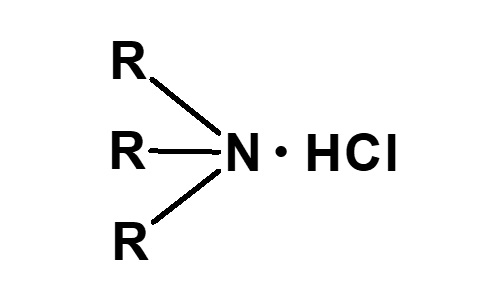


</description>
<dc:creator></dc:creator>
<dc:subject></dc:subject>
<dc:date>2024-04-02T20:05:00+09:00</dc:date>
<content:encoded><![CDATA[
<div class="cms-content-parts-sin171179606762468800 sanyo-pageLink" id="cms-editor-minieditor-sin171179606762471900" data-original="cms-content-parts-sin171179606762473300" data-custom="sanyo-pageLink"><!-- .parts_text_type01 -->
<ul>
    <li><a href="#intro">What is a Surfactant</a></li>
    <li><a href="#movie">Surfactant Functions Introduction Video</a></li>
    <li><a href="#about">About Emulsions</a></li>
    <li><a href="#mechanism">Emulsification and Solubilization Mechanism</a></li>
    <li><a href="#indicators">Indicators for Selecting Emulsifiers (surfactants)</a></li>
    <li><a href="#applications">Emulsifier Application</a></li>
    <li><a href="#info">Related products and Topics</a></li>
</ul>
<!-- // .parts_text_type01 --></div>
<h2 class="cms-content-parts-sin171179608038418400" id="cms-editor-textarea-sin171179608038426200"><a name="intro"></a>What is a Surfactant?</h2>
<div class="cms-content-parts-sin171179610700973200 cparts-id119 lay-margin-b--3 box" data-selectable="cparts-animate cparts-animate--slideInUp:上へスライド,cparts-animate cparts-animate--slideInDown:下へスライド,cparts-animate cparts-animate--slideInLeft:左へスライド,cparts-animate cparts-animate--slideInRight:右へスライド">
<div class="lay-row">
<div class="lay-col12-xs-12 lay-col12-md-12 lay-col12-lg-12">
<div id="cms-editor-minieditor-sin171179610700977000" class="cparts-txt-block lay-reset-child">
<p><font face="Noto Sans JP">First, an interface is a boundary surface that exists between two substances with different properties, and interfaces exist between liquids and solids, liquids and liquids, and liquids and gases.</font></p>
<p><font face="Noto Sans JP">Surfactants enhance performance by performing functions such as washing, emulsifying, dispersing, wetting, and penetrating at this interface.<br />
<br />
<span style="font-weight: 700;">Interface = a boundary surface that exists between two substances with different properties</span><br />
</font><font face="Noto Sans JP">Liquid and solid: cup and coffee, machine and lubricant&#160;</font><br />
<font face="Noto Sans JP">Liquid and liquid: water and oil&#160;</font><br />
<font face="Noto Sans JP">Liquid and gas: seawater and air, soap bubbles</font><br />
<span style="font-weight: 700;"><font face="Noto Sans JP"><br />
Examples of roles of surfactants</font></span><br />
<font face="Noto Sans JP">Cleaning ・・・ Removing dirt&#160;</font><br />
<font face="Noto Sans JP">Emulsification ・・・ Dispersion ・・ Making unmixable things easier to mix</font><br />
<font face="Noto Sans JP">Wetting / Penetration ・・・ Makes wetting and soaking easier</font></p>
</div>
</div>
</div>
</div>
<h3 class="cms-content-parts-sin171179612127819800" id="cms-editor-textarea-sin171179612127823500">Basic structure of a surfactant</h3>
<div class="cms-content-parts-sin171179623930333000 cparts-id119 lay-margin-b--3 box" data-selectable="cparts-animate cparts-animate--slideInUp:上へスライド,cparts-animate cparts-animate--slideInDown:下へスライド,cparts-animate cparts-animate--slideInLeft:左へスライド,cparts-animate cparts-animate--slideInRight:右へスライド">
<div class="lay-row">
<div class="lay-col12-xs-12 lay-col12-md-12 lay-col12-lg-12">
<div id="cms-editor-minieditor-sin171179623930308600" class="cparts-txt-block lay-reset-child">
<p>-Surfactants have different structures in their molecules with different properties: lipophilic groups (oil-fitting parts) and hydrophilic groups (water-fitting parts).<br />
<br />
-Surfactants are broadly classified into four types according to the structure of the hydrophilic group: nonionic, anionic, cationic, and amphoteric (having both anionic and cationic groups).</p>
<p><img src="https://sanyo-chemical-solutions.com/images/technology/surfactant/img_surfactantbasics_types.jpg" width="800" height="211" alt="" /></p>
</div>
</div>
</div>
</div>
<div class="cms-content-parts-sin171184297571486800 cparts-id96--01 box lay-margin-b--3" data-selectable="cparts-animate cparts-animate--slideInUp:上へスライド,cparts-animate cparts-animate--slideInDown:下へスライド,cparts-animate cparts-animate--slideInLeft:左へスライド,cparts-animate cparts-animate--slideInRight:右へスライド">
<div class="lay-row">
<div class="lay-col12-xs-12 lay-col12-md-12 lay-col12-lg-12">
<div class="cparts-table-block lay-reset-child" id="cms-editor-minieditor-sin171184297571492900">
<table>
    <caption class="lay-margin-t--1">　　　</caption>
    <tbody>
        <tr>
            <th style="text-align: center;">Type of surfactant</th>
            <th style="text-align: center;">Feature</th>
            <th style="text-align: center;">Main application</th>
            <th style="text-align: center;">Composition example</th>
        </tr>
        <tr>
            <td>Nonionic surfactant<br />
            <img src="https://sanyo-chemical-solutions.com/images/technology/surfactant/img_surfactantbasics_nonion.jpg" width="150" height="47" alt="" /></td>
            <td>-Hydrophilic and hydrophobic balance<br />
            can be easily adjusted<br />
            -Excellent emulsification and solubilization<br />
            -Low lather<br style="margin-bottom: 0px;" />
            -Susceptible to temperature but not to pH</td>
            <td>-Clothing detergent<br />
            -Emulsifiers and solubilizers<br />
            -Dispersant<br style="margin-bottom: 0px;" />
            -Metalworking oil</td>
            <td>-Polyoxyethylene alkyl ether<br style="margin-bottom: 0px;" />
            etc.</td>
        </tr>
        <tr>
            <td>Anionic surfactant<br />
            <img src="https://sanyo-chemical-solutions.com/images/technology/surfactant/img_surfactantbasics_anion.jpg" width="150" height="49" alt="" /></td>
            <td>-Excellent emulsification and dispersibility<br />
            -Good lather<br style="margin-bottom: 0px;" />
            -Temperature insensitive</td>
            <td>-Clothing Detergent<br />
            -Shampoo<br style="margin-bottom: 0px;" />
            -Body soap</td>
            <td>-Alkyl benzene sulfonate<br />
            -Alkyl ether sulfates<br style="margin-bottom: 0px;" />
            etc.</td>
        </tr>
        <tr>
            <td>Cationic surfactant<br />
            <img src="https://sanyo-chemical-solutions.com/images/technology/surfactant/img_surfactantbasics_cation.jpg" width="150" height="49" alt="" /></td>
            <td>-Adsorption to fibers<br />
            -Antistatic effect<br style="margin-bottom: 0px;" />
            -Bactericidal</td>
            <td>-Hair rinse<br />
            -Fabric softener for clothes<br style="margin-bottom: 0px;" />
            -Disinfectant</td>
            <td>-Didecyldimethylammonium methyl sulfate</td>
        </tr>
        <tr>
            <td>Amphoteric surfactant<br />
            <img src="https://sanyo-chemical-solutions.com/images/technology/surfactant/img_surfactantbasics_ryosei.jpg" width="150" height="47" alt="" /></td>
            <td>-Mild on skin<br />
            -Excellent solubility in water<br style="margin-bottom: 0px;" />
            -Synergistic with other active components</td>
            <td>-Shampoo<br />
            -Body soap<br style="margin-bottom: 0px;" />
            -Kitchen detergent</td>
            <td>-Alkyl di-aminoethyl hydrochloride glycine<br />
            -Sodium lauryl aminopropionic acid<br />
            -Dimethylstearyl betaine<br style="margin-bottom: 0px;" />
            -Coconut oil fatty acid amidopropyl betaine</td>
        </tr>
    </tbody>
</table>
<p></p>
</div>
</div>
</div>
</div>
<h2 class="cms-content-parts-sin171179614288982300" id="cms-editor-textarea-sin171179614288986900"><a name="movie"></a>Surfactant Functions Introduction Video</h2>
<div class="cms-content-parts-sin171714373499279700">[[CMSmodule.parts::ad#param=309]]</div>
<div class="cms-content-parts-sin171714374680069400 cparts-id119 lay-margin-b--3 box" data-selectable="cparts-animate cparts-animate--slideInUp:上へスライド,cparts-animate cparts-animate--slideInDown:下へスライド,cparts-animate cparts-animate--slideInLeft:左へスライド,cparts-animate cparts-animate--slideInRight:右へスライド">
<div class="lay-row">
<div class="lay-col12-xs-12 lay-col12-md-12 lay-col12-lg-12">
<div class="cparts-txt-block lay-reset-child" id="cms-editor-minieditor-sin171714374680075700">
<p>It consists of seven short movies for each function.&#160;<br />
0:00　Introduction of surfactants functions　<br />
0:16　Part1　Washability<br />
1:00　Part2　Permeability<br />
2:10　Part3　Dispersion<br />
2:55　Part4　Foaming porperties<br />
3:25　Part5　Defoaming properties<br />
3:39　Part6　Smoothness<br />
4:20　Part7　Antibacterial properties</p>
</div>
</div>
</div>
</div>
<h2 class="cms-content-parts-sin171714370830083000" id="cms-editor-textarea-sin171714370830090700"><a name="about"></a>About Emulsions</h2>
<h3 class="cms-content-parts-sin171184305882586500" id="cms-editor-textarea-sin171184305882590700">What is Emulsification?</h3>
<div class="cms-content-parts-sin171179623311713300 cparts-id119 lay-margin-b--3 box" data-selectable="cparts-animate cparts-animate--slideInUp:上へスライド,cparts-animate cparts-animate--slideInDown:下へスライド,cparts-animate cparts-animate--slideInLeft:左へスライド,cparts-animate cparts-animate--slideInRight:右へスライド">
<div class="lay-row">
<div class="lay-col12-xs-12 lay-col12-md-12 lay-col12-lg-12">
<div id="cms-editor-minieditor-sin171179623311720100" class="cparts-txt-block lay-reset-child">
<p>Mixing water and oil is called emulsifying, and the resulting emulsion is called an &#34;emulsion&#34; or &#34;emulsion.</p>
<p>&#160;Water and oil do not mix and separate, but by adding a surfactant, the surfactant adheres to the oil or water and forms particles. Emulsification occurs when micelle particles are stabilized in water. Among emulsification, the phenomenon in which oil becomes transparent and mixes with water is called &#34;solubilization. (In the solubilized state, the micelle particles appear transparent because their diameter is shorter than the wavelength of light.)</p>
<p style="text-align: center;"><img src="https://sanyo-chemical-solutions.com/images/technology/emulsion/img_emulsion_oil_water_sep.jpg" width="1000" height="489" alt="" /></p>
</div>
</div>
</div>
</div>
<h3 class="cms-content-parts-sin171184308713833300" id="cms-editor-textarea-sin171184308713841800">Distinction between emulsification and dispersion</h3>
<div class="cms-content-parts-sin171184307978021900 cparts-id119 lay-margin-b--3 box" data-selectable="cparts-animate cparts-animate--slideInUp:上へスライド,cparts-animate cparts-animate--slideInDown:下へスライド,cparts-animate cparts-animate--slideInLeft:左へスライド,cparts-animate cparts-animate--slideInRight:右へスライド">
<div class="lay-row">
<div class="lay-col12-xs-12 lay-col12-md-12 lay-col12-lg-12">
<div id="cms-editor-minieditor-sin171184307978001200" class="cparts-txt-block lay-reset-child">
<p>A liquid (water) in which other liquids exist as fine particles is called an emulsion, and a solid in which solids exist as fine particles is called a dispersion (or suspension).　In addition, emulsions and dispersions are usually distinguished according to whether they are in a liquid or solid state when mixed with water.</p>
<p>For example, when a liquid monomer is polymerized into fine particles in water to form solid polymer particles, this is also considered an emulsion (emulsion polymerization).</p>
</div>
</div>
</div>
</div>
<h3 class="cms-content-parts-sin171184310662042100" id="cms-editor-textarea-sin171184310662048600">Types of emulsions (emulsions)</h3>
<div class="cms-content-parts-sin171184314265499500 box cparts-id409--01 lay-margin-b--3" col-flex="1-2" data-selectable="cparts-animate cparts-animate--slideInUp:上へスライド,cparts-animate cparts-animate--slideInDown:下へスライド,cparts-animate cparts-animate--slideInLeft:左へスライド,cparts-animate cparts-animate--slideInRight:右へスライド">
<div class="lay-row">
<div class="lay-col12-xs-12 lay-col12-md-6 lay-col12-lg-6">
<div class="cparts-img-block lay-img-width--max lay-margin-b--1"><img alt="" class="cms-easy-edit" id="cms-editor-image-sin171184314265534800" src="https://sanyo-chemical-solutions.com/images/technology/emulsion/img_emulsion_ow_wo_emulsion.jpg" width="330" /></div>
<div class="cparts-caption-block lay-reset-child lay-font-size--s cms-easy-edit" id="cms-editor-minieditor-sin171184314265535300">
<p style="text-align: center;"><strong>Fig. Conceptual diagram of w/o emulsion and o/w emulsion</strong></p>
</div>
</div>
<div class="lay-col12-xs-12 lay-col12-md-6 lay-col12-lg-6">
<div id="cms-editor-minieditor-sin171184314265535600" class="cparts-txt-block lay-reset-child">
<p><strong>Oil emulsified in water: o/w emulsion (oil in water emulsion)</strong><br />
Examples of natural products: milk, rubber tree sap<br />
<br />
<strong>Water emulsified in oil: w/o emulsion (water-in-oil emulsion)</strong><br />
Example of natural product: crude oil<br />
<br />
<strong>Examples of man-made emulsions</strong><br />
Cosmetic emulsion, cosmetic cream, herbicide, insecticide, car wax, floor wax, emulsion-type bath additive, water-based paint, water-based ink, water-based adhesive, textile oil, textile processing binder, textile finishing agent, paper processing binder, etc.</p>
<div></div>
</div>
</div>
</div>
</div>
<h2 class="cms-content-parts-sin171179625026888800" id="cms-editor-textarea-sin171179625026895900"><a name="mechanism"></a>Emulsification and Solubilization Mechanisms</h2>
<h3 class="cms-content-parts-sin171184316972608200" id="cms-editor-textarea-sin171184316972610200">Why don't water and oil mix?</h3>
<div class="cms-content-parts-sin171179626437234900 cparts-id119 lay-margin-b--3 box" data-selectable="cparts-animate cparts-animate--slideInUp:上へスライド,cparts-animate cparts-animate--slideInDown:下へスライド,cparts-animate cparts-animate--slideInLeft:左へスライド,cparts-animate cparts-animate--slideInRight:右へスライド">
<div class="lay-row">
<div class="lay-col12-xs-12 lay-col12-md-12 lay-col12-lg-12">
<div id="cms-editor-minieditor-sin171179626437210100" class="cparts-txt-block lay-reset-child">
<div>Water and oil are difficult to mix because they have different properties from each other.</div>
<table width="200" border="1" cellpadding="1" cellspacing="1" dir="ltr" style="width: 720px;">
    <thead>
    </thead>
    <tbody>
        <tr>
            <th scope="row">Water</th>
            <td>The molecule is polarized and electrically has a slightly positive charge and a&#160;slightly negative charge.</td>
        </tr>
        <tr>
            <th scope="row">Oil</th>
            <td>The molecules are not polarized and have little or no polarity.</td>
        </tr>
    </tbody>
</table>
<div><br />
<div>Thus, water and oil do not mix because of their different properties. In addition, water and oil repel each other on the surface they are in contact with, and they act to reduce the contact area of each other as much as possible.</div>
<div></div>
<div>&#160;When water and oil are stirred to emulsify oil as small particles in water, the contact area of water and oil becomes large, and since this state is very unstable, when the stirring is stopped, the water and oil immediately try to return to their original state of small contact area and separate into two layers.</div>
</div>
<div></div>
</div>
</div>
</div>
</div>
<h3 class="cms-content-parts-sin171184317866943200" id="cms-editor-textarea-sin171184317866947800"><br />
Surfactants work to mix water and oil</h3>
<h4 class="cms-content-parts-sin171184320656178600" id="cms-editor-textarea-sin171184320656181000">(1) Act to suppress repulsion at the interface between water and oil (lower surface tension)</h4>
<div class="cms-content-parts-sin171184308393728900 cparts-id119 lay-margin-b--3 box" data-selectable="cparts-animate cparts-animate--slideInUp:上へスライド,cparts-animate cparts-animate--slideInDown:下へスライド,cparts-animate cparts-animate--slideInLeft:左へスライド,cparts-animate cparts-animate--slideInRight:右へスライド">
<div class="lay-row">
<div class="lay-col12-xs-12 lay-col12-md-12 lay-col12-lg-12">
<div id="cms-editor-minieditor-sin171184308393709500" class="cparts-txt-block lay-reset-child">
<p>When a surfactant is added to water and oil that do not mix as they are, the surfactant comes to the contact surfaces where the water and oil repel each other, orientating hydrophilic groups in the water and lipophilic groups in the oil and preventing the water and oil from repelling (lowering surface tension).</p>
<p>When a drop of water drips slowly, it tries to form a sphere after falling for a while.This is because the surface of the water has a contracting force called surface tension, which causes the droplet to take the smallest surface area shape.The table below shows examples of surface tension of liquids.</p>
</div>
</div>
</div>
</div>
<h5 class="cms-content-parts-sin171184322810160100" id="cms-editor-textarea-sin171184322810165400">Example of surface tension of a liquid</h5>
<div class="cms-content-parts-sin171184324225228700 cparts-id96--01 box lay-margin-b--3" data-selectable="cparts-animate cparts-animate--slideInUp:上へスライド,cparts-animate cparts-animate--slideInDown:下へスライド,cparts-animate cparts-animate--slideInLeft:左へスライド,cparts-animate cparts-animate--slideInRight:右へスライド">
<div class="lay-row">
<div class="lay-col12-xs-12 lay-col12-md-12 lay-col12-lg-12">
<div class="cparts-table-block lay-reset-child" id="cms-editor-minieditor-sin171184324225233100">
<table>
    <caption class="lay-margin-t--1">　　　　　</caption>
    <tbody>
        <tr>
            <th style="text-align: center;">Liquid</th>
            <th style="text-align: center;">Gas in contact with liquid</th>
            <th style="text-align: center;">Temperature<br />
            ℃</th>
            <th style="text-align: center;">Surface tention<br />
            mN/m</th>
        </tr>
        <tr>
            <td style="text-align: center;">water</td>
            <td style="text-align: center;">air</td>
            <td style="text-align: center;"><span style="text-align: center;">20</span></td>
            <td style="text-align: center;"><span style="text-align: center;">72.8</span></td>
        </tr>
        <tr>
            <td style="text-align: center;">octane</td>
            <td style="text-align: center;">octane vapor</td>
            <td style="text-align: center;"><span style="text-align: center;">20</span></td>
            <td style="text-align: center;"><span style="text-align: center;">21.7</span></td>
        </tr>
        <tr>
            <td style="text-align: center;">benzene</td>
            <td style="text-align: center;">air</td>
            <td style="text-align: center;"><span style="text-align: center;">20</span></td>
            <td style="text-align: center;"><span style="text-align: center;">28.9</span></td>
        </tr>
        <tr>
            <td style="text-align: center;">Surfactant aqueous solution<br />
            (sodium lauryl sulfate sodium salt 0.1vol%)</td>
            <td style="text-align: center;">air</td>
            <td style="text-align: center;">25</td>
            <td style="text-align: center;"><span style="text-align: center;">33.4</span></td>
        </tr>
    </tbody>
</table>
</div>
</div>
</div>
</div>
<div class="cms-content-parts-sin171184328592177600 cparts-id119 lay-margin-b--3 box" data-selectable="cparts-animate cparts-animate--slideInUp:上へスライド,cparts-animate cparts-animate--slideInDown:下へスライド,cparts-animate cparts-animate--slideInLeft:左へスライド,cparts-animate cparts-animate--slideInRight:右へスライド">
<div class="lay-row">
<div class="lay-col12-xs-12 lay-col12-md-12 lay-col12-lg-12">
<div id="cms-editor-minieditor-sin171184328592149200" class="cparts-txt-block lay-reset-child">
<p>Compared to water, hydrocarbons such as octane and benzene have a lower surface tension.</p>
<p>&#160;Since the lipophilic groups of surfactants are mainly hydrocarbon groups, the presence of surfactants explains the decrease in surface tension at the water/air&#160;and water/oil interfaces, as shown in the figure below.</p>
</div>
</div>
</div>
</div>
<div class="cms-content-parts-sin171184330607225100 box cparts-id409--01 lay-margin-b--3" col-flex="1-2" data-selectable="cparts-animate cparts-animate--slideInUp:上へスライド,cparts-animate cparts-animate--slideInDown:下へスライド,cparts-animate cparts-animate--slideInLeft:左へスライド,cparts-animate cparts-animate--slideInRight:右へスライド">
<div class="lay-row">
<div class="lay-col12-xs-12 lay-col12-md-6 lay-col12-lg-6">
<div class="cparts-img-block lay-img-width--max lay-margin-b--1"><img alt="" class="cms-easy-edit" id="cms-editor-image-sin171184330607228700" src="https://sanyo-chemical-solutions.com/images/technology/emulsion/img_emulsion_interfacial_tension.jpg" width="330" /></div>
<div class="cparts-caption-block lay-reset-child lay-font-size--s cms-easy-edit" id="cms-editor-minieditor-sin171184330607229100">
<p style="text-align: center; "><b>Fig. Conceptual diagram showing why surfactants reduce interfacial tension</b></p>
</div>
</div>
<div class="lay-col12-xs-12 lay-col12-md-6 lay-col12-lg-6">
<div id="cms-editor-minieditor-sin171184330607229300" class="cparts-txt-block lay-reset-child">
<p><span style="font-size: 16px;">In particular, in Figure (a) on the left, the surfactant eliminates the large repulsion between water and oil, and the interfacial tension (the tension when a liquid is in contact with another liquid or solid) drops to almost 0 mN/m.</span><br />
<span style="font-size: 16px;"><br />
(Oil and water, or air and water, do not need to be in direct contact due to the presence of surfactants.)</span></p>
<div></div>
</div>
</div>
</div>
</div>
<h5 class="cms-content-parts-sin171184331410526000" id="cms-editor-textarea-sin171184331410534600">About critical micelle concentration (c.m.c.)</h5>
<div class="cms-content-parts-sin171184332598431400 box cparts-id409--01 lay-margin-b--3" col-flex="1-2" data-selectable="cparts-animate cparts-animate--slideInUp:上へスライド,cparts-animate cparts-animate--slideInDown:下へスライド,cparts-animate cparts-animate--slideInLeft:左へスライド,cparts-animate cparts-animate--slideInRight:右へスライド">
<div class="lay-row">
<div class="lay-col12-xs-12 lay-col12-md-6 lay-col12-lg-6">
<div class="cparts-img-block lay-img-width--max lay-margin-b--1"><img alt="" class="cms-easy-edit" id="cms-editor-image-sin171184332598379700" src="https://sanyo-chemical-solutions.com/images/technology/emulsion/img_emulsion_conc_tension.jpg" width="330" /></div>
<div class="cparts-caption-block lay-reset-child lay-font-size--s cms-easy-edit" id="cms-editor-minieditor-sin171184332598387600">
<p style="text-align: center; "><b>Fig. Relationship between concentration and surface tension of surfactant solutions</b></p>
</div>
</div>
<div class="lay-col12-xs-12 lay-col12-md-6 lay-col12-lg-6">
<div id="cms-editor-minieditor-sin171184332598394100" class="cparts-txt-block lay-reset-child">
<p><span style="font-size: 16px;">In relation to surface tension, an important property to know about surfactants is the critical micelle concentration (c.m.c.).</span></p>
<p><span style="font-size: 16px;">&#160;In aqueous solution, surfactants orient at the interface with air, which is dependent on the concentration. When the surface tension of an aqueous surfactant solution is measured while gradually increasing its concentration, the surface tension drops steeply at first and then becomes constant, as shown in the left figure, regardless of the type of surfactant.</span></p>
<p><span style="font-size: 16px;">&#160;A schematic drawing of this situation is shown in the figure below.</span></p>
<div></div>
</div>
</div>
</div>
</div>
<div class="cms-content-parts-sin171184333656834300 cparts-id119 lay-margin-b--3 box" data-selectable="cparts-animate cparts-animate--slideInUp:上へスライド,cparts-animate cparts-animate--slideInDown:下へスライド,cparts-animate cparts-animate--slideInLeft:左へスライド,cparts-animate cparts-animate--slideInRight:右へスライド">
<div class="lay-row">
<div class="lay-col12-xs-12 lay-col12-md-12 lay-col12-lg-12">
<div id="cms-editor-minieditor-sin171184333656809800" class="cparts-txt-block lay-reset-child">
<p style="text-align: center;"><b><img src="https://sanyo-chemical-solutions.com/images/technology/emulsion/img_emulsion_cmc.jpg" width="1716" height="532" alt="" /><br />
Fig. Relationship between surfactant behavior and changes in surfactant concentration</b></p>
</div>
</div>
</div>
</div>
<div class="cms-content-parts-sin171184334611006600 cparts-id119 lay-margin-b--3 box" data-selectable="cparts-animate cparts-animate--slideInUp:上へスライド,cparts-animate cparts-animate--slideInDown:下へスライド,cparts-animate cparts-animate--slideInLeft:左へスライド,cparts-animate cparts-animate--slideInRight:右へスライド">
<div class="lay-row">
<div class="lay-col12-xs-12 lay-col12-md-12 lay-col12-lg-12">
<div id="cms-editor-minieditor-sin171184334610980200" class="cparts-txt-block lay-reset-child">
<p>As the concentration of surfactant increases, it forms a monolayer tightly lined up on the surface of the aqueous solution, completely blocking direct contact between air and water (state (c)). This state corresponds to the point in the above figure where the curve of surface tension has dropped and is about to become horizontal, and from this concentration, at a slightly higher concentration, surfactant molecules gather in the aqueous solution by tens to hundreds, forming an aggregate (micelle) with their lipophilic groups facing inward and their hydrophilic groups facing outward. This surfactant micelle is called a &#34;surfactant micelle. The lowest concentration at which these surfactant micelles form is called the critical micelle concentration (c.m.c.).</p>
</div>
</div>
</div>
</div>
<h5 class="cms-content-parts-sin171184335001654700" id="cms-editor-textarea-sin171184335001662900">Relationship between critical micelle concentration (c.m.c.) and surfactants and their various effects</h5>
<div class="cms-content-parts-sin171184336611836500 box cparts-id409--01 lay-margin-b--3" col-flex="1-2" data-selectable="cparts-animate cparts-animate--slideInUp:上へスライド,cparts-animate cparts-animate--slideInDown:下へスライド,cparts-animate cparts-animate--slideInLeft:左へスライド,cparts-animate cparts-animate--slideInRight:右へスライド">
<div class="lay-row">
<div class="lay-col12-xs-12 lay-col12-md-6 lay-col12-lg-6">
<div class="cparts-img-block lay-img-width--max lay-margin-b--1"><img alt="" class="cms-easy-edit" id="cms-editor-image-sin171184336611788500" src="https://sanyo-chemical-solutions.com/images/technology/emulsion/img_emulsion_cmc_activity.jpg" width="330" /></div>
<div class="cparts-caption-block lay-reset-child lay-font-size--s cms-easy-edit" id="cms-editor-minieditor-sin171184336611796400">
<p style="text-align: center; "><b>Fig. Relationship between critical micelle concentration and various surfactant actions</b></p>
</div>
</div>
<div class="lay-col12-xs-12 lay-col12-md-6 lay-col12-lg-6">
<div id="cms-editor-minieditor-sin171184336611803400" class="cparts-txt-block lay-reset-child">
<p>In aqueous solutions of surfactants, many physical properties such as electrical conductivity, osmotic pressure, freezing point depression, vapor pressure, viscosity, density, solubilizing capacity, and detergency change drastically around the critical micelle concentration (c.m.c.).</p>
<p>&#160;The relationship between critical micelle concentration (c.m.c.) and surfactant properties is shown in the figure on the left, which clearly shows how important it is to use surfactants at concentrations above the critical micelle concentration (c.m.c.).</p>
<div></div>
</div>
</div>
</div>
</div>
<h4 class="cms-content-parts-sin171184338865828000" id="cms-editor-textarea-sin171184338865834900">(2) Electrical repulsive force (formation of electrical double layer)</h4>
<div class="cms-content-parts-sin171184339324006400 box cparts-id409--01 lay-margin-b--3" col-flex="1-2" data-selectable="cparts-animate cparts-animate--slideInUp:上へスライド,cparts-animate cparts-animate--slideInDown:下へスライド,cparts-animate cparts-animate--slideInLeft:左へスライド,cparts-animate cparts-animate--slideInRight:右へスライド">
<div class="lay-row">
<div class="lay-col12-xs-12 lay-col12-md-6 lay-col12-lg-6">
<div class="cparts-img-block lay-img-width--max lay-margin-b--1"><img alt="" class="cms-easy-edit" id="cms-editor-image-sin171184339323953700" src="https://sanyo-chemical-solutions.com/images/technology/emulsion/img_surfactantbasics_seidenhanpatsu.jpg" width="330" /></div>
<div class="cparts-caption-block lay-reset-child lay-font-size--s cms-easy-edit" id="cms-editor-minieditor-sin171184339323961800">
<p style="text-align: center; "><b>Fig. Conceptual diagram of electric double layer</b></p>
</div>
</div>
<div class="lay-col12-xs-12 lay-col12-md-6 lay-col12-lg-6">
<div id="cms-editor-minieditor-sin171184339323968700" class="cparts-txt-block lay-reset-child">
<p><span style="font-size: 16px;">When an emulsifier is used to emulsify oil in water, the emulsifier adsorbs on the surface of the oil with its hydrophilic groups facing the water phase. If the emulsifier used is an ionic surfactant in particular, counterions with opposite charges to the emulsifier's hydrophilic groups will collect near the emulsifier adsorbed on the oil.</span></p>
<p><span style="font-size: 16px;">&#160;These counterions are subject to Coulomb force, which is pulled by the charge on the surface of the particle, and thermal motion, which tries to cancel it out. The area where the Coulomb force is strong and the counterions are fixed to the particle surface is called the fixed layer, and the area where the thermal motion is strong and the counterions are not fixed is called the diffuse layer, which together is called the electric double layer.</span></p>
<p><span style="font-size: 16px;">&#160;The potential at the boundary between these two layers is called the zeta potential, and the larger this potential is, the stronger the repulsive force becomes, which prevents particles from colliding with each other and agglomerating.</span></p>
<div></div>
</div>
</div>
</div>
</div>
<h4 class="cms-content-parts-sin171184341044465000" id="cms-editor-textarea-sin171184341044472300">(3) Three-dimensional repulsion (three-dimensional protective action)</h4>
<div class="cms-content-parts-sin171184342091866400 box cparts-id409--01 lay-margin-b--3" col-flex="1-2" data-selectable="cparts-animate cparts-animate--slideInUp:上へスライド,cparts-animate cparts-animate--slideInDown:下へスライド,cparts-animate cparts-animate--slideInLeft:左へスライド,cparts-animate cparts-animate--slideInRight:右へスライド">
<div class="lay-row">
<div class="lay-col12-xs-12 lay-col12-md-6 lay-col12-lg-6">
<div class="cparts-img-block lay-img-width--max lay-margin-b--1"><img alt="" class="cms-easy-edit" id="cms-editor-image-sin171184342091811200" src="https://sanyo-chemical-solutions.com/images/technology/emulsion/img_surfactantbasics_rittaisyogai.jpg" width="330" /></div>
<div class="cparts-caption-block lay-reset-child lay-font-size--s cms-easy-edit" id="cms-editor-minieditor-sin171184342091819200">
<p style="text-align: center; "><b>Fig. Schematic of stereoprotection action of polymer-type surfactants</b></p>
</div>
</div>
<div class="lay-col12-xs-12 lay-col12-md-6 lay-col12-lg-6">
<div id="cms-editor-minieditor-sin171184342091826100" class="cparts-txt-block lay-reset-child">
<p><span style="font-size: 16px;">In particular, the polymer type surfactant is characterized by steric repulsion due to its steric protective action.</span></p>
<p><span style="font-size: 16px;">The more strongly the surfactant is adsorbed on the oil particle surface or the thicker the adsorbed hydration layer, the stronger the steric repulsive action between particles and the less likely the oil particles are to aggregate. This steric protective action is greater the higher the molecular weight of the surfactant and the stronger the interaction of the surfactant's lipophilic groups with the oil particles.</span></p>
<div></div>
</div>
</div>
</div>
</div>
<h2 class="cms-content-parts-sin171179630782058300" id="cms-editor-textarea-sin171179630782066900"><a name="indicators"></a>Indicators for selecting emulsifiers (surfactants)</h2>
<h3 class="cms-content-parts-sin171184346737169700" id="cms-editor-textarea-sin171184346737182200">HLB（Hydrophile-Lipophile Balance）</h3>
<div class="cms-content-parts-sin171179632365252500 cparts-id119 lay-margin-b--3 box" data-selectable="cparts-animate cparts-animate--slideInUp:上へスライド,cparts-animate cparts-animate--slideInDown:下へスライド,cparts-animate cparts-animate--slideInLeft:左へスライド,cparts-animate cparts-animate--slideInRight:右へスライド">
<div class="lay-row">
<div class="lay-col12-xs-12 lay-col12-md-12 lay-col12-lg-12">
<div id="cms-editor-minieditor-sin171179632365307200" class="cparts-txt-block lay-reset-child">
<p>In order to stably emulsify oils of different properties, such as vegetable oils and agricultural oils, into water, it is necessary to select an appropriate surfactant for each application.<br />
<br />
This selection is strongly related to the balance between hydrophilic and lipophilic properties of surfactants, and HLB (Hydrophile-Lipophile Balance) has been proposed as an indicator to show this balance. The method of calculating HLB using the organic and inorganic properties of the surfactant as indices is convenient.<br />
<br />
In this formula, the organic and inorganic properties of an organic compound are calculated from the values shown in the table below.</p>
<div><span style="font-weight: 700;">　HLB ≒ 10&#215;&#160;</span><b>inorganicity/organicity</b></div>
</div>
</div>
</div>
</div>
<h5 class="cms-content-parts-sin171184349841514500" id="cms-editor-textarea-sin171184349841518000">Organic and inorganic values</h5>
<div class="cms-content-parts-sin171184350969767500 cparts-id119--02 box lay-margin-b--3" col-flex="1-2" data-selectable="cparts-animate cparts-animate--slideInUp:上へスライド,cparts-animate cparts-animate--slideInDown:下へスライド,cparts-animate cparts-animate--slideInLeft:左へスライド,cparts-animate cparts-animate--slideInRight:右へスライド">
<div class="lay-row">
<div class="lay-col12-xs-12 lay-col12-md-6 lay-col12-lg-6">
<div id="cms-editor-minieditor-sin171184350969771600" class="cparts-txt-block lay-reset-child">
<table width="200" border="1" cellpadding="1" cellspacing="1" dir="ltr" style="width: 345px;">
    <thead>
        <tr>
            <th scope="col">Inorganic groups</th>
            <th scope="col">Inorganic values</th>
        </tr>
    </thead>
    <tbody>
        <tr>
            <td>Light metals (salt)</td>
            <td>More than 500</td>
        </tr>
        <tr>
            <td>Heavy metals (salts), amines and NH, salts</td>
            <td>More than&#160;400</td>
        </tr>
        <tr>
            <td>ーAsO<span style="font-size: smaller;">3</span>H<span style="font-size: 11.6667px;">2</span>、　＞ASO<span style="font-size: 11.6667px;">2</span>H</td>
            <td>300</td>
        </tr>
        <tr>
            <td>ーSO<span style="font-size: 11.6667px;">2</span>－NHーCOー、ーN＝NーNH2</td>
            <td>260</td>
        </tr>
        <tr>
            <td>ーSO<span style="font-size: smaller;">3</span>H、ーNHーSO<span style="font-size: 11.6667px;">2</span>ーNHー</td>
            <td>250</td>
        </tr>
        <tr>
            <td>ーCOーNHーCOーNHーCOー</td>
            <td>250</td>
        </tr>
        <tr>
            <td>ーCOーNHーCOーNHー</td>
            <td>240</td>
        </tr>
        <tr>
            <td>ーSO<span style="font-size: 11.6667px;">2</span>ーNHー</td>
            <td>240</td>
        </tr>
        <tr>
            <td>
            <p>ーCSーNHー、ーCOーNHーCOー</p>
            </td>
            <td>230</td>
        </tr>
        <tr>
            <td>=NーOH、ーNHーCOーNHー</td>
            <td>220</td>
        </tr>
        <tr>
            <td>=NーNHー</td>
            <td>210</td>
        </tr>
        <tr>
            <td>ーCOーNHー</td>
            <td>200</td>
        </tr>
        <tr>
            <td>ーCOOH</td>
            <td>150</td>
        </tr>
        <tr>
            <td>lactone ring</td>
            <td>120</td>
        </tr>
        <tr>
            <td>ーCOーOーCOー</td>
            <td>110</td>
        </tr>
        <tr>
            <td>Anthracene ring, phenanthrene nucleus</td>
            <td>105</td>
        </tr>
        <tr>
            <td>ーOH</td>
            <td>100</td>
        </tr>
        <tr>
            <td>&#62; Hg (covalent bond)</td>
            <td>95</td>
        </tr>
        <tr>
            <td>ーNHーNHー、ーOーCOーOー</td>
            <td>80</td>
        </tr>
        <tr>
            <td>
            <p>ーN＜　(ーNH<span style="font-size: 11.6667px;">2</span>、ーNHR、ーNR<span style="font-size: 11.6667px;">2</span>) aminic</p>
            </td>
            <td>70</td>
        </tr>
        <tr>
            <td>＞CO</td>
            <td>65</td>
        </tr>
        <tr>
            <td>ーCOOR,naphthalene nucleus(85),<br />
            quinoline nucleus</td>
            <td>60</td>
        </tr>
        <tr>
            <td>＞C＝NH</td>
            <td>50</td>
        </tr>
        <tr>
            <td>ーN＝Nー</td>
            <td>30</td>
        </tr>
        <tr>
            <td>ーOー</td>
            <td>20</td>
        </tr>
        <tr>
            <td>Benzene ring (general aromatic ring)</td>
            <td>15</td>
        </tr>
        <tr>
            <td>Ring (general aromatic monocycles)</td>
            <td>10</td>
        </tr>
        <tr>
            <td>Triple bond</td>
            <td>3</td>
        </tr>
        <tr>
            <td>Double bond</td>
            <td>2</td>
        </tr>
    </tbody>
</table>
</div>
</div>
<div class="lay-col12-xs-12 lay-col12-md-6 lay-col12-lg-6">
<div id="cms-editor-minieditor-sin171184350969772000" class="cparts-txt-block lay-reset-child">
<table width="200" border="1" cellpadding="1" cellspacing="1" dir="ltr" style="width: 345px;">
    <thead>
        <tr>
            <th scope="col">Organic and Inorganic groups</th>
            <th scope="col">Organic values</th>
            <th scope="col">Inorganic values</th>
        </tr>
    </thead>
    <tbody>
        <tr>
            <td>R<span style="font-size: smaller;">4</span>BiーOH</td>
            <td>80</td>
            <td>250</td>
        </tr>
        <tr>
            <td>R<span style="font-size: 11.6667px;">4</span>SbーOH</td>
            <td>60</td>
            <td>250</td>
        </tr>
        <tr>
            <td>R<span style="font-size: 11.6667px;">4</span>AsーOH</td>
            <td>40</td>
            <td>250</td>
        </tr>
        <tr>
            <td>R<span style="font-size: 11.6667px;">4</span>PーOH</td>
            <td>20</td>
            <td>250</td>
        </tr>
        <tr>
            <td>＞SO<span style="font-size: smaller;">2</span></td>
            <td>40</td>
            <td>110</td>
        </tr>
        <tr>
            <td>ーCSSH</td>
            <td>100</td>
            <td>80</td>
        </tr>
        <tr>
            <td>ーSCN</td>
            <td>90(70)</td>
            <td>80</td>
        </tr>
        <tr>
            <td>ーCSOH、ーCOSH</td>
            <td>80</td>
            <td>80</td>
        </tr>
        <tr>
            <td>ーNCS</td>
            <td>90(70)</td>
            <td>75</td>
        </tr>
        <tr>
            <td>ーBi＜</td>
            <td>80</td>
            <td>70</td>
        </tr>
        <tr>
            <td>ーNO<span style="font-size: smaller;">2</span></td>
            <td>70</td>
            <td>70</td>
        </tr>
        <tr>
            <td>ーSb＜</td>
            <td>60</td>
            <td>70</td>
        </tr>
        <tr>
            <td>ーAs＜、　ーCN</td>
            <td>40</td>
            <td>70</td>
        </tr>
        <tr>
            <td>ーP＜</td>
            <td>20</td>
            <td>70(20)</td>
        </tr>
        <tr>
            <td>ーCSSR</td>
            <td>130</td>
            <td>50</td>
        </tr>
        <tr>
            <td>ーCSOR、　ーCOSR</td>
            <td>80</td>
            <td>50</td>
        </tr>
        <tr>
            <td>ーNO</td>
            <td>50</td>
            <td>50</td>
        </tr>
        <tr>
            <td>ーOーNO<span style="font-size: smaller;">2</span></td>
            <td>60</td>
            <td>40</td>
        </tr>
        <tr>
            <td>ーNC</td>
            <td>40</td>
            <td>40</td>
        </tr>
        <tr>
            <td>ーSb＝Sbー</td>
            <td>90</td>
            <td>30</td>
        </tr>
        <tr>
            <td>ーAs＝Asー</td>
            <td>60</td>
            <td>30</td>
        </tr>
        <tr>
            <td>ーP＝Pー、ーNCO</td>
            <td>30</td>
            <td>30</td>
        </tr>
        <tr>
            <td>ーOーNO、ーSH、ーSー</td>
            <td>40</td>
            <td>20</td>
        </tr>
        <tr>
            <td>ーI</td>
            <td>80(60)</td>
            <td>10(20)</td>
        </tr>
        <tr>
            <td>ーBr</td>
            <td>60(40)</td>
            <td>10(20)</td>
        </tr>
        <tr>
            <td>＝S</td>
            <td>50</td>
            <td>10</td>
        </tr>
        <tr>
            <td>ーCl</td>
            <td>40(20)</td>
            <td>10(20)</td>
        </tr>
        <tr>
            <td>ーF</td>
            <td>5</td>
            <td>5</td>
        </tr>
        <tr>
            <td>ーiso branching</td>
            <td>-10</td>
            <td>0</td>
        </tr>
        <tr>
            <td>tert branching　ー＞ー</td>
            <td>-20</td>
            <td>0</td>
        </tr>
    </tbody>
</table>
</div>
</div>
</div>
</div>
<div class="cms-content-parts-sin171184351653042600 cparts-id119 lay-margin-b--3 box" data-selectable="cparts-animate cparts-animate--slideInUp:上へスライド,cparts-animate cparts-animate--slideInDown:下へスライド,cparts-animate cparts-animate--slideInLeft:左へスライド,cparts-animate cparts-animate--slideInRight:右へスライド">
<div class="lay-row">
<div class="lay-col12-xs-12 lay-col12-md-12 lay-col12-lg-12">
<div id="cms-editor-minieditor-sin171184351653018000" class="cparts-txt-block lay-reset-child">
<p>Organic values: determined as 20 per carbon atom<br />
Inorganic value: According to the value in the table above. However<br />
<br />
(1) When used in the calculation of HLB, oxyethylene (-CH<span style="font-size: smaller;">2</span>CH<span style="font-size: smaller;">2</span>O-) is treated specially and given an inorganic value of 75 and an organic value of 40.<br />
(2) The organic property should be added separately for carbon atoms in the inorganic group.<br />
(3) Carbon atoms in both organic and inorganic groups are added to the organic value.<br />
(4) Although two literature values exist, the value in parentheses () is more appropriate for emulsification in many cases.</p>
</div>
</div>
</div>
</div>
<h3 class="cms-content-parts-sin171184352728552400" id="cms-editor-textarea-sin171184352728563100">Solubility Parameter：SP value</h3>
<div class="cms-content-parts-sin171184353920988500 cparts-id119 lay-margin-b--3 box" data-selectable="cparts-animate cparts-animate--slideInUp:上へスライド,cparts-animate cparts-animate--slideInDown:下へスライド,cparts-animate cparts-animate--slideInLeft:左へスライド,cparts-animate cparts-animate--slideInRight:右へスライド">
<div class="lay-row">
<div class="lay-col12-xs-12 lay-col12-md-12 lay-col12-lg-12">
<div id="cms-editor-minieditor-sin171184353920958900" class="cparts-txt-block lay-reset-child">
<p>Next, let us consider in detail why water and oil do not dissolve. The solubility parameter (SP value) is an important factor in determining whether water and oil dissolve into each other or are separated without dissolving.<br />
<br />
This SP value is expressed as the square root of the aggregation energy density of the functional groups that make up the compound. Low molecular weight compounds can be compatible with each other even if these SP values are quite far apart, but high molecular weight compounds will not be compatible with each other if the SP values are usually about 1 or more apart.<br />
<br />
<strong>Example:</strong><br />
Compound with high SP value: Water (SP value = 23.4)<br />
Compound with low SP value: Toluene (SP value = 8.9)<br />
Water and toluene do not dissolve each other.</p>
</div>
</div>
</div>
</div>
<h5 class="cms-content-parts-sin171184355652108500" id="cms-editor-textarea-sin171184355652113300">Ionicity of emulsions and precautions when mixing</h5>
<div class="cms-content-parts-sin171184356311983300 cparts-id119 lay-margin-b--3 box" data-selectable="cparts-animate cparts-animate--slideInUp:上へスライド,cparts-animate cparts-animate--slideInDown:下へスライド,cparts-animate cparts-animate--slideInLeft:左へスライド,cparts-animate cparts-animate--slideInRight:右へスライド">
<div class="lay-row">
<div class="lay-col12-xs-12 lay-col12-md-12 lay-col12-lg-12">
<div id="cms-editor-minieditor-sin171184356311954800" class="cparts-txt-block lay-reset-child">
<p>Compounds such as water and toluene, which do not dissolve into each other, can be mixed in an emulsion because each compound is emulsified in water.<br />
<br />
Note that not all emulsions can mix with each other, so a little caution is required.The ionic properties of emulsion particles are an important controlling factor in whether emulsions can mix.Ionicity of emulsion particles refers to the electrical properties of the particles, which can be divided into anionic, cationic, and nonionic properties.</p>
<div></div>
<table width="200" border="1" cellpadding="1" cellspacing="1" dir="ltr" style="width: 720px;">
    <tbody>
        <tr>
            <th scope="row">Anionic emulsions</th>
            <td>Surfactants with anionic groups (sulfonates, phosphates, carboxylates) bonded to lipophilic groups</td>
        </tr>
        <tr>
            <th scope="row">Cationic emulsions</th>
            <td>Surfactants with cationic groups (amine salts, quaternary ammonium salts) bonded to lipophilic groups</td>
        </tr>
        <tr>
            <th scope="row">Nonionic emulsions</th>
            <td>Surfactants with hydroxyl groups or polyethylene glycol chains bonded to lipophilic groups</td>
        </tr>
    </tbody>
</table>
<p>When these emulsions, anionic and cationic emulsions, are mixed, the particles stick to each other and agglomerate, destroying the emulsion (if they are the same ion or a combination of nonionic emulsions, the emulsion can usually be mixed without destroying the emulsion). (If the same ions are mixed with each other or non-ionic emulsions are combined, the emulsion is usually not destroyed.)</p>
</div>
</div>
</div>
</div>
<div class="cms-content-parts-sin171184357267284800 cparts-id119 lay-margin-b--3 box" data-selectable="cparts-animate cparts-animate--slideInUp:上へスライド,cparts-animate cparts-animate--slideInDown:下へスライド,cparts-animate cparts-animate--slideInLeft:左へスライド,cparts-animate cparts-animate--slideInRight:右へスライド">
<div class="lay-row">
<div class="lay-col12-xs-12 lay-col12-md-12 lay-col12-lg-12">
<div id="cms-editor-minieditor-sin171184357267249200" class="cparts-txt-block lay-reset-child">
<p style="text-align: center; "><img src="https://sanyo-chemical-solutions.com/images/technology/emulsion/img_emulsion_emulsion_ionic2.jpg" width="1000" height="671" alt="" /><br />
<b>Fig. Change of state when emulsions with different ionic properties are mixed</b></p>
</div>
</div>
</div>
</div>
<h2 class="cms-content-parts-sin171179633415981400" id="cms-editor-textarea-sin171179633415992300"><a name="applications"></a>Emulsifier Applications</h2>
<h3 class="cms-content-parts-sin171184358784662900" id="cms-editor-textarea-sin171184358784670900">Role of Emulsification in Coatings and Adhesives</h3>
<div class="cms-content-parts-sin171179635307732700 cparts-id119 lay-margin-b--3 box" data-selectable="cparts-animate cparts-animate--slideInUp:上へスライド,cparts-animate cparts-animate--slideInDown:下へスライド,cparts-animate cparts-animate--slideInLeft:左へスライド,cparts-animate cparts-animate--slideInRight:右へスライド">
<div class="lay-row">
<div class="lay-col12-xs-12 lay-col12-md-12 lay-col12-lg-12">
<div id="cms-editor-minieditor-sin171179635307702900" class="cparts-txt-block lay-reset-child">
<p>In the field of paints and adhesives, solvent-based and emulsion-based systems are used separately, depending on durability and the nature of the adherend.</p>
</div>
</div>
</div>
</div>
<div class="cms-content-parts-sin171184362306771700 box cparts-id409--01 lay-margin-b--3" col-flex="1-2" data-selectable="cparts-animate cparts-animate--slideInUp:上へスライド,cparts-animate cparts-animate--slideInDown:下へスライド,cparts-animate cparts-animate--slideInLeft:左へスライド,cparts-animate cparts-animate--slideInRight:右へスライド">
<div class="lay-row">
<div class="lay-col12-xs-12 lay-col12-md-6 lay-col12-lg-6">
<div class="cparts-img-block lay-img-width--max lay-margin-b--1"><img alt="" class="cms-easy-edit" id="cms-editor-image-sin171184362306773900" src="https://sanyo-chemical-solutions.com/images/technology/emulsion/img_emulsion_paint.jpg" width="330" /></div>
<div class="cparts-caption-block lay-reset-child lay-font-size--s cms-easy-edit" id="cms-editor-minieditor-sin171184362306774200">
<p style="text-align: center; "><b>Fig. Drying process of emulsion paint</b></p>
</div>
</div>
<div class="lay-col12-xs-12 lay-col12-md-6 lay-col12-lg-6">
<div id="cms-editor-minieditor-sin171184362306774500" class="cparts-txt-block lay-reset-child">
<p><span style="font-size: 16px;">Emulsion-based paints and adhesives are fine emulsions of water-insoluble resins, but once they dry and harden, they do not emulsify again even when wet.</span></p>
<p><span style="font-size: 16px;">&#160;As shown in the figure on the left, this is due to the fact that the finely emulsified resin in the emulsion state increases in density as the water evaporates, causing the resin particles to fuse with each other and form a uniform film.</span></p>
</div>
</div>
</div>
</div>
<h5 class="cms-content-parts-sin171184363431268000" id="cms-editor-textarea-sin171184363431270500">Role of emulsifiers for emulsion polymerization</h5>
<div class="cms-content-parts-sin171184363928695700 cparts-id119 lay-margin-b--3 box" data-selectable="cparts-animate cparts-animate--slideInUp:上へスライド,cparts-animate cparts-animate--slideInDown:下へスライド,cparts-animate cparts-animate--slideInLeft:左へスライド,cparts-animate cparts-animate--slideInRight:右へスライド">
<div class="lay-row">
<div class="lay-col12-xs-12 lay-col12-md-12 lay-col12-lg-12">
<div id="cms-editor-minieditor-sin171184363928669100" class="cparts-txt-block lay-reset-child">
<p>Water-based paints and water-based adhesives are mainly composed of synthetic resin emulsions, and most of these synthetic resin emulsions are synthesized by a method called emulsion polymerization.<br />
<br />
Emulsion polymerization is a method in which monomers with unsaturated double bonds are polymerized in micelles of an emulsifier to achieve high molecular weight. The molecular weight of the resulting resin usually exceeds 100,000, making it a very efficient method for obtaining high molecular weight resins while emulsifying them in water.</p>
</div>
</div>
</div>
</div>
<h5 class="cms-content-parts-sin171184365018352100" id="cms-editor-textarea-sin171184365018360100">About Reactive Emulsifiers</h5>
<div class="cms-content-parts-sin171184364519886400 cparts-id119 lay-margin-b--3 box" data-selectable="cparts-animate cparts-animate--slideInUp:上へスライド,cparts-animate cparts-animate--slideInDown:下へスライド,cparts-animate cparts-animate--slideInLeft:左へスライド,cparts-animate cparts-animate--slideInRight:右へスライド">
<div class="lay-row">
<div class="lay-col12-xs-12 lay-col12-md-12 lay-col12-lg-12">
<div id="cms-editor-minieditor-sin171184364519861000" class="cparts-txt-block lay-reset-child">
<p>Emulsions with reactive emulsifiers, which combine unsaturated double bonds and emulsification in a single molecule, have also been developed. In emulsions using non-reactive emulsifiers, the emulsifier tends to be released from the resin when it dries to form a film, causing a decrease in adhesion to the adherend. On the other hand, this reactive emulsifier chemically bonds with the resin and is incorporated into the resin, so it is not released from the resin when the emulsion dries to form a film, resulting in excellent adhesive performance.</p>
</div>
</div>
</div>
</div>
<h3 class="cms-content-parts-sin171184366707557800" id="cms-editor-textarea-sin171184366707560800">Textile oils</h3>
<div class="cms-content-parts-sin171184367498636700 cparts-id119 lay-margin-b--3 box" data-selectable="cparts-animate cparts-animate--slideInUp:上へスライド,cparts-animate cparts-animate--slideInDown:下へスライド,cparts-animate cparts-animate--slideInLeft:左へスライド,cparts-animate cparts-animate--slideInRight:右へスライド">
<div class="lay-row">
<div class="lay-col12-xs-12 lay-col12-md-12 lay-col12-lg-12">
<div id="cms-editor-minieditor-sin171184367498578100" class="cparts-txt-block lay-reset-child">
<p>Clothing is made from natural fibers such as cotton, wool, and silk, and synthetic fibers such as polyester and nylon. These synthetic fibers are manufactured by synthesizing polymers through a polymerization reaction of monomers, which are then stretched into thin strips with diameters ranging from 1 to 100 &#956;m.　Synthetic fibers are strong and can be freely modified in terms of thickness and shape to provide a variety of functions, and today their production volume exceeds that of natural fibers.<br />
<br />
The following is a list of textile oils used in the production of synthetic fibers.</p>
</div>
</div>
</div>
</div>
<div class="cms-content-parts-sin171184368821472100 box cparts-id409--01 lay-margin-b--3" col-flex="1-2" data-selectable="cparts-animate cparts-animate--slideInUp:上へスライド,cparts-animate cparts-animate--slideInDown:下へスライド,cparts-animate cparts-animate--slideInLeft:左へスライド,cparts-animate cparts-animate--slideInRight:右へスライド">
<div class="lay-row">
<div class="lay-col12-xs-12 lay-col12-md-6 lay-col12-lg-6">
<div class="cparts-img-block lay-img-width--max lay-margin-b--1"><img alt="" class="cms-easy-edit" id="cms-editor-image-sin171184368821475700" src="https://sanyo-chemical-solutions.com/images/technology/emulsion/img_emulsion_fiber2.jpg" width="330" /></div>
<div class="cparts-caption-block lay-reset-child lay-font-size--s cms-easy-edit" id="cms-editor-minieditor-sin171184368821476100">
<p style="text-align: center;"><b>Fig. Synthetic fiber manufacturing process and oils for textiles</b></p>
</div>
</div>
<div class="lay-col12-xs-12 lay-col12-md-6 lay-col12-lg-6">
<div id="cms-editor-minieditor-sin171184368821476400" class="cparts-txt-block lay-reset-child">
<p><span style="font-size: 16px;">As shown in the figure below, polyester and nylon fibers are manufactured by extracting the polymer in a molten state, obtained by reaction at high temperatures, through narrow holes and stretching it at high speed.</span><br style="font-size: 16px;" />
<br style="font-size: 16px;" />
<span style="font-size: 16px;">In this yarn-making stage, fiber oils (e.g., ester or polyether synthetic lubricants, phosphate ester or aliphatic alkanolamide antistatic blends) with the following functions 1) to 3) are used.</span><br style="font-size: 16px;" />
<br />
<span style="font-size: 16px;"><b>&#160;(1) Improvement of smoothness</b></span><br />
<span style="font-size: 16px;">&#160;(Slides well when the yarn comes in contact with metal rolls, etc.)</span></p>
<p><span style="font-size: 16px;"><b>&#160;(2) Antistatic properties</b></span><br />
<span style="font-size: 16px;">&#160;(When fibers rub against each other, they do not become charged with static electricity.)</span></p>
<p><span style="font-size: 16px;"><b>&#160;(3) Focusing property</b></span><br />
<span style="font-size: 16px;">(Keeps yarns made by collecting single fibers together for easy handling in the processing process from falling apart.)</span></p>
<div></div>
</div>
</div>
</div>
</div>
<div class="cms-content-parts-sin171184369304976400 cparts-id119 lay-margin-b--3 box" data-selectable="cparts-animate cparts-animate--slideInUp:上へスライド,cparts-animate cparts-animate--slideInDown:下へスライド,cparts-animate cparts-animate--slideInLeft:左へスライド,cparts-animate cparts-animate--slideInRight:右へスライド">
<div class="lay-row">
<div class="lay-col12-xs-12 lay-col12-md-12 lay-col12-lg-12">
<div id="cms-editor-minieditor-sin171184369304948600" class="cparts-txt-block lay-reset-child">
<p>None of these functions are necessary in the final product, and since such oils sticking to the yarn cause uneven dyeing when coloring the cloth, the textile oils are usually removed in the refining process prior to dyeing.　Therefore, although the textile oil does not remain in the final product, it plays an extremely important role in the efficient production of synthetic fibers.<br />
<br />
Now, this oil for textile is often given to yarns in the form of oil emulsified in water, or oil-in-water emulsion, mainly because of the following reasons.<br />
<br />
(1) Components with excellent smoothness are strongly hydrophobic and usually do not dissolve in water, so in order to uniformly adhere the minimum amount required, they are made into an emulsion so that they can be freely diluted with water.</p>
<p>(2) Water as a dispersant has a large heat capacity and latent heat of evaporation, making it excellent for cooling yarns. In addition, water as a diluent is optimal because it is inexpensive and free from fire and other hazards.</p>
</div>
</div>
</div>
</div>
<h3 class="cms-content-parts-sin171184370866758000" id="cms-editor-textarea-sin171184370866765900">Textile Finishing Agents</h3>
<div class="cms-content-parts-sin171184372366827100 cparts-id119 lay-margin-b--3 box" data-selectable="cparts-animate cparts-animate--slideInUp:上へスライド,cparts-animate cparts-animate--slideInDown:下へスライド,cparts-animate cparts-animate--slideInLeft:左へスライド,cparts-animate cparts-animate--slideInRight:右へスライド">
<div class="lay-row">
<div class="lay-col12-xs-12 lay-col12-md-12 lay-col12-lg-12">
<div id="cms-editor-minieditor-sin171184372366797300" class="cparts-txt-block lay-reset-child">
<p>Chemicals that impart various functions to synthetic fibers after dyeing are called textile finishing agents, which are also used in the form of emulsions.<br />
<br />
&#160;Examples of functions required for fibers include flexibility, texture such as resilience and elasticity, water and oil repellency, water absorbency, sewability, antistatic properties, antibacterial properties, wind resistance, anti-pilling properties, and various others.</p>
<div></div>
</div>
</div>
</div>
</div>
<div class="cms-content-parts-sin171184372811348600 cparts-id119 lay-margin-b--3 box" data-selectable="cparts-animate cparts-animate--slideInUp:上へスライド,cparts-animate cparts-animate--slideInDown:下へスライド,cparts-animate cparts-animate--slideInLeft:左へスライド,cparts-animate cparts-animate--slideInRight:右へスライド">
<div class="lay-row">
<div class="lay-col12-xs-12 lay-col12-md-12 lay-col12-lg-12">
<div id="cms-editor-minieditor-sin171184372811321600" class="cparts-txt-block lay-reset-child">
<p style="text-align: center; "><b><img src="https://sanyo-chemical-solutions.com/images/technology/emulsion/img_emulsion_textile2.jpg" width="1599" height="249" alt="" /><br />
Fig. How textile products are made</b></p>
</div>
</div>
</div>
</div>
<div class="cms-content-parts-sin171184373161542700 cparts-id119 lay-margin-b--3 box" data-selectable="cparts-animate cparts-animate--slideInUp:上へスライド,cparts-animate cparts-animate--slideInDown:下へスライド,cparts-animate cparts-animate--slideInLeft:左へスライド,cparts-animate cparts-animate--slideInRight:右へスライド">
<div class="lay-row">
<div class="lay-col12-xs-12 lay-col12-md-12 lay-col12-lg-12">
<div id="cms-editor-minieditor-sin171184373161507800" class="cparts-txt-block lay-reset-child">
<p>As mentioned above, textile finishing agents are agents that provide a great many functions, and no single agent alone can meet these requirements. Therefore, several types of agents must be mixed together, and this is where the emulsification function plays a major role.</p>
<p>In order to make a homogeneous solution, whether it is an aqueous solution or an organic solvent solution, the solute (what is dissolved in the solvent) must be dissolved in the solvent; it is easy to dissolve one solute in one solvent, but often impossible to dissolve several solutes with different properties in the same solvent.</p>
<div></div>
<table width="200" border="1" cellpadding="1" cellspacing="1" dir="ltr" style="width: 720px;">
    <thead>
        <tr>
            <th scope="col" style="text-align: center;">Solute</th>
            <th scope="col" style="text-align: center;">Polyvinyl alcohol</th>
            <th scope="col" style="text-align: center;">Wax</th>
            <th scope="col" style="text-align: center;">Polyvinyl alcohol<br />
            +wax</th>
        </tr>
    </thead>
    <tbody>
        <tr>
            <th scope="row" style="text-align: center;">When mixed with water</th>
            <td style="text-align: center;">soluble</td>
            <td style="text-align: center;">insoluble</td>
            <td style="text-align: center;">melting residue</td>
        </tr>
        <tr>
            <th scope="row" style="text-align: center;">When mixed with toluene</th>
            <td style="text-align: center;">insoluble</td>
            <td style="text-align: center;">soluble</td>
            <td style="text-align: center;">melting residue</td>
        </tr>
    </tbody>
</table>
<p>The table above shows examples of wax and polyvinyl alcohol as solutes and their dissolution in solvents.</p>
<p>Wax has low polarity, so it dissolves in toluene, a non-polar solvent, but not in water, a polar solvent. On the other hand, polyvinyl alcohol has high polarity and is soluble in water but not in toluene. Thus, the properties of the solvent and the solute, i.e., the SP values, must be close to each other to ensure uniform dissolution.</p>
<p></p>
<p>&#160;Therefore, these solutes with different properties (in this case, various finishing agents) are converted into one liquid by emulsification.</p>
<div></div>
</div>
</div>
</div>
</div>
<div class="cms-content-parts-sin171184378090786900 cparts-id96--01 box lay-margin-b--3" data-selectable="cparts-animate cparts-animate--slideInUp:上へスライド,cparts-animate cparts-animate--slideInDown:下へスライド,cparts-animate cparts-animate--slideInLeft:左へスライド,cparts-animate cparts-animate--slideInRight:右へスライド">
<div class="lay-row">
<div class="lay-col12-xs-12 lay-col12-md-12 lay-col12-lg-12">
<div class="cparts-table-block lay-reset-child" id="cms-editor-minieditor-sin171184378090820800">
<table>
    <caption class="lay-margin-t--1">　　　</caption>
    <tbody>
        <tr>
            <th style="text-align: center;">Functional Classification</th>
            <th style="text-align: center;">Main composition</th>
            <th style="text-align: center;">SP value</th>
        </tr>
        <tr>
            <td style="text-align: center;">Fabric softener</td>
            <td style="text-align: center;">higher alkyl quaternary ammonium salts</td>
            <td style="text-align: center;">9</td>
        </tr>
        <tr>
            <td style="text-align: center;" rowspan="2">Water and oil repellents</td>
            <td style="text-align: center;">silicone resin</td>
            <td style="text-align: center;">8</td>
        </tr>
        <tr>
            <td style="text-align: center;">fluoropolymer</td>
            <td style="text-align: center;">6</td>
        </tr>
        <tr>
            <td style="text-align: center;">Water absorbent</td>
            <td style="text-align: center;">special polyether type surfactant</td>
            <td style="text-align: center;">10</td>
        </tr>
        <tr>
            <td style="text-align: center;">Sewability improver</td>
            <td style="text-align: center;">polyethylene wax</td>
            <td style="text-align: center;">9</td>
        </tr>
        <tr>
            <td style="text-align: center;">Antistatic agent</td>
            <td style="text-align: center;">phosphate esters, etc.</td>
            <td style="text-align: center;">≧10</td>
        </tr>
        <tr>
            <td style="text-align: center;">Texture modifier&#160;(resilience)</td>
            <td style="text-align: center;">polyurethane resin</td>
            <td style="text-align: center;">10~11</td>
        </tr>
        <tr>
            <td style="text-align: center;">Texture conditioner (hard finishing agent)</td>
            <td style="text-align: center;">polyvinyl alcohol</td>
            <td style="text-align: center;">19</td>
        </tr>
    </tbody>
</table>
</div>
</div>
</div>
</div>
<h3 class="cms-content-parts-sin171184374206894300" id="cms-editor-textarea-sin171184374206905600"><br />
Agrochemical Field</h3>
<div class="cms-content-parts-sin171179635647105400 cparts-id119 lay-margin-b--3 box" data-selectable="cparts-animate cparts-animate--slideInUp:上へスライド,cparts-animate cparts-animate--slideInDown:下へスライド,cparts-animate cparts-animate--slideInLeft:左へスライド,cparts-animate cparts-animate--slideInRight:右へスライド">
<div class="lay-row">
<div class="lay-col12-xs-12 lay-col12-md-12 lay-col12-lg-12">
<div id="cms-editor-minieditor-sin171179635647080000" class="cparts-txt-block lay-reset-child">
<p>Some pesticides are called emulsions. This is a liquid form of pesticide to which an emulsifier or other agent has been added, and is designed so that the pesticide can be easily emulsified into water by pouring the emulsion into the water. While most emulsions are produced by mechanically applying shear force, pesticides are designed to be naturally emulsified (emulsified by simply adding oil to water) because they are used by farmers who do not have such machinery and by ordinary households.<br />
<br />
<b>Contribution of emulsifiers<br />
</b>(1) Lowering the interfacial tension between water and oil<br />
(2) Giving an electric charge to the particle surface and repulsion between particles<br />
(3) Forming an adsorption film on oil particles to protect the particle surface<br />
<br />
As an emulsifier, a surfactant having both lipophilic and hydrophilic groups in a single molecule is usually used, so it has the action of (1). In addition, by using ionic surfactants (in combination), the action (2) can be added. In selecting the best emulsifier to emulsify a certain oil, the most difficult part is usually the optimization of the effect of (3). In order to efficiently achieve the action of (3), it is important that the emulsifier has strong interaction with oil particles and good affinity with water (balance of lipophilic and hydrophilic groups).</p>
</div>
</div>
</div>
</div>
<h3 class="cms-content-parts-sin171437935239249400" id="cms-editor-textarea-sin171437935239257400">Cosmetics</h3>
<div class="cms-content-parts-sin171437936940090900 cparts-id119 lay-margin-b--3 box" data-selectable="cparts-animate cparts-animate--slideInUp:上へスライド,cparts-animate cparts-animate--slideInDown:下へスライド,cparts-animate cparts-animate--slideInLeft:左へスライド,cparts-animate cparts-animate--slideInRight:右へスライド">
<div class="lay-row">
<div class="lay-col12-xs-12 lay-col12-md-12 lay-col12-lg-12">
<div id="cms-editor-minieditor-sin171437936940065300" class="cparts-txt-block lay-reset-child">
<p>Cosmetics are broadly classified into skin care cosmetics, skin cleansing cosmetics, and finishing (makeup) cosmetics, This page introduces skin care cosmetics, especially cosmetic emulsions and creams, which are closely related to the emulsifying function.<br />
<br />
The role of cosmetic emulsions and creams is to moisturize and soften the skin, especially the stratum corneum, the outermost layer of the skin, by replenishing moisture and oil.Emulsions, which emulsify oil in water, are therefore convenient because they provide moisture and oil to the skin at once and in relatively flexible proportions. This is where the emulsifying function plays an important role.</p>
</div>
</div>
</div>
</div>
<h2 class="cms-content-parts-sin171179634252130500" id="cms-editor-textarea-sin171179634252139200"><br />
Related Prodcts and Topics(Surfactants, Emulsifiers)</h2>
<div class="cms-content-parts-sin171437941558828700 cparts-id119 lay-margin-b--3 box" data-selectable="cparts-animate cparts-animate--slideInUp:上へスライド,cparts-animate cparts-animate--slideInDown:下へスライド,cparts-animate cparts-animate--slideInLeft:左へスライド,cparts-animate cparts-animate--slideInRight:右へスライド">
<div class="lay-row">
<div class="lay-col12-xs-12 lay-col12-md-12 lay-col12-lg-12">
<div id="cms-editor-minieditor-sin171437941558798300" class="cparts-txt-block lay-reset-child">
<p>As a surfactant manufacturer, we offer a lineup of numerous emulsification and solubilization-related products.</p>
</div>
</div>
</div>
</div>
<h3 class="cms-content-parts-sin171437939845832000" id="cms-editor-textarea-sin171437939845840000">Sanyo Chemical's emulsifiers for emulsion polymerization</h3>
<div class="cms-content-parts-sin171437944099780500 cparts-id119 lay-margin-b--3 box" data-selectable="cparts-animate cparts-animate--slideInUp:上へスライド,cparts-animate cparts-animate--slideInDown:下へスライド,cparts-animate cparts-animate--slideInLeft:左へスライド,cparts-animate cparts-animate--slideInRight:右へスライド">
<div class="lay-row">
<div class="lay-col12-xs-12 lay-col12-md-12 lay-col12-lg-12">
<div id="cms-editor-minieditor-sin171437944099753100" class="cparts-txt-block lay-reset-child">
<p>The structure and features of our emulsifiers are shown in the table below. Nonionic and anionic emulsifiers are available, and each has its own characteristics in terms of emulsification, dispersion stability, particle size, etc. They are selected according to the purpose, and are often used in combination.</p>
</div>
</div>
</div>
</div>
<div class="cms-content-parts-sin171437947298116700 cparts-id96--01 box lay-margin-b--3" data-selectable="cparts-animate cparts-animate--slideInUp:上へスライド,cparts-animate cparts-animate--slideInDown:下へスライド,cparts-animate cparts-animate--slideInLeft:左へスライド,cparts-animate cparts-animate--slideInRight:右へスライド">
<div class="lay-row">
<div class="lay-col12-xs-12 lay-col12-md-12 lay-col12-lg-12">
<div class="cparts-table-block lay-reset-child" id="cms-editor-minieditor-sin171437947298059300">
<table dir="ltr">
    <caption class="lay-margin-t--1">　　　</caption>
    <thead>
        <tr>
            <th scope="row" style="text-align: center;">Reactivity</th>
            <th scope="row" style="text-align: center;">Ionicity</th>
            <th scope="col" style="text-align: center;">Product name</th>
            <th scope="col" style="text-align: center;">Structure</th>
            <th style="text-align: center;" scope="col">Feature</th>
        </tr>
    </thead>
    <tbody>
        <tr>
            <th style="text-align: center;" scope="row" rowspan="5">Non-reactive</th>
            <th style="text-align: center;" scope="row" rowspan="2">Nonionic</th>
            <td style="text-align: center;">EMULMIN products</td>
            <td style="text-align: left;">polyoxyethylene alkyl ether</td>
            <td style="text-align: center;">Good biodegradability</td>
        </tr>
        <tr>
            <td style="text-align: center;">NAROACTY CL products</td>
            <td style="text-align: left;">polyoxyalkylene alkyl ether</td>
            <td style="text-align: start;">Equivalent performance to alkyl phenyl ether systems</td>
        </tr>
        <tr>
            <th style="text-align: center;" scope="row" rowspan="3">Anionic</th>
            <td style="text-align: center;">ELEMINOL <br />
            CLS-20</td>
            <td style="text-align: start;">Polyoxyalkylene alkyl ether sulfate ammonium</td>
            <td style="text-align: start;">Equivalent performance to alkyl phenyl ether systems</td>
        </tr>
        <tr>
            <td style="text-align: center;">SANDET <br />
            ONA</td>
            <td style="text-align: start;">Sodium 2-ethylhexyl sulfate</td>
            <td style="text-align: start;">Suitable for emulsion polymerization of emulsions with large particle size</td>
        </tr>
        <tr>
            <td style="text-align: center;">SANMORIN <br />
            OT-70</td>
            <td style="text-align: start;">Sodium dioctyl sulfosuccinate</td>
            <td style="text-align: start;">Provides penetration and leveling properties</td>
        </tr>
        <tr>
            <th style="text-align: center;" scope="row">Reactive</th>
            <th style="text-align: center;" scope="row">Anionic</th>
            <td style="text-align: center;">ELEMINOL <br />
            JS-20</td>
            <td style="text-align: center;"><img src="https://sanyo-chemical-solutions.com/images/technology/emulsion/img_emulsion_eleminoljs20.jpg" width="500" height="87" alt="" /></td>
            <td style="text-align: start;">Excellent copolymerization with acrylic monomers.<br />
            Emulsions with excellent mechanical and chemical stability can be obtained.</td>
        </tr>
    </tbody>
</table>
</div>
</div>
</div>
</div>
<h3 class="cms-content-parts-sin171179641528149500" id="cms-editor-textarea-sin171179641528156400"><br />
<a name="info"></a>Related products (surfactants, emulsifiers and solubilizers)</h3>
<div class="cms-content-parts-sin171893770468692300 box cparts-var03-type05 cparts-col3-block cparts-inline-block" data-reload="yes" data-selectable="cparts-animate cparts-animate--slideInUp:上へスライド,cparts-animate cparts-animate--slideInDown:下へスライド,cparts-animate cparts-animate--slideInLeft:左へスライド,cparts-animate cparts-animate--slideInRight:右へスライド">
<div class="cparts-img-block"><img alt="" class="cms-easy-edit" id="cms-editor-image-sin171893770468698900" src="https://sanyo-chemical-solutions.com/images/top/img_ionicliquid.jpg" /></div>
<div class="cparts-body-block cparts-col3-height">
<div class="cparts-notes-block cms-easy-edit" id="cms-editor-minieditor-sin171893770468700600">
<ul>
    <li>Nonionic surfactant</li>
</ul>
</div>
<h4 class="cparts-ttl-block cms-easy-edit" id="cms-editor-textbox-sin171893770468702000">Nonionic Surfactants Catalog</h4>
<div class="cparts-txt-block cms-easy-edit" id="cms-editor-minieditor-sin171893770468703200">
<p style="text-align: center;">Sanyo Chemical's main lineup of nonionic surfactants</p>
<p style="text-align: center;"><a href="/products/nonionic_surfactants/" class="dec-btn--primary">MORE</a></p>
</div>
</div>
</div>
<div class="cms-content-parts-sin171893895847749200 box cparts-var03-type05 cparts-col3-block cparts-inline-block" data-reload="yes" data-selectable="cparts-animate cparts-animate--slideInUp:上へスライド,cparts-animate cparts-animate--slideInDown:下へスライド,cparts-animate cparts-animate--slideInLeft:左へスライド,cparts-animate cparts-animate--slideInRight:右へスライド">
<div class="cparts-img-block"><img alt="img_newpolpe_wash (1)" class="cms-easy-edit" id="cms-editor-image-sin171893895847686600" src="https://sanyo-chemical-solutions.com/images/top/images2023092622144255.jpg" /></div>
<div class="cparts-body-block cparts-col3-height">
<div class="cparts-notes-block cms-easy-edit" id="cms-editor-minieditor-sin171893895847695300">
<ul>
    <li>Nonionic surfactant</li>
</ul>
</div>
<h4 class="cparts-ttl-block cms-easy-edit" id="cms-editor-textbox-sin171893895847702300">Polyoxyethylene - Polyoxypropylene Block Copolymer &#8221;NEWPOL PE&#8221;</h4>
<div class="cparts-txt-block cms-easy-edit" id="cms-editor-minieditor-sin171893895847709000">
<p style="text-align: center;">Lineup of products with distinctive features and a wide variety of functions can be added</p>
<p style="text-align: center;"><a href="/products/newpolpe/" class="dec-btn--primary">MORE</a></p>
</div>
</div>
</div>
<div class="cms-content-parts-sin171893896097785600 box cparts-var03-type05 cparts-col3-block cparts-inline-block" data-reload="yes" data-selectable="cparts-animate cparts-animate--slideInUp:上へスライド,cparts-animate cparts-animate--slideInDown:下へスライド,cparts-animate cparts-animate--slideInLeft:左へスライド,cparts-animate cparts-animate--slideInRight:右へスライド">
<div class="cparts-img-block"><img alt="" class="cms-easy-edit" id="cms-editor-image-sin171893896097715000" src="https://sanyo-chemical-solutions.com/images/top/img_emulmin_yashi_top.jpg" /></div>
<div class="cparts-body-block cparts-col3-height">
<div class="cparts-notes-block cms-easy-edit" id="cms-editor-minieditor-sin171893896097725100">
<ul>
    <li>Nonionic surfactant</li>
</ul>
</div>
<h4 class="cparts-ttl-block cms-easy-edit" id="cms-editor-textbox-sin171893896097732500">Polyoxyalkylene lauryl ether-type nonionic surfactant&#34;EMULMIN FL, HL&#34;</h4>
<div class="cparts-txt-block cms-easy-edit" id="cms-editor-minieditor-sin171893896097744200">
<p style="text-align: center;">&#34;EMULMIN FL and HL&#34; products are non-ionic surfactants (polyoxyalkylene lauryl ether) made from natural lauryl alcohol.&#160;</p>
<p style="text-align: center;"><a href="/products/emulminflhl/" class="dec-btn--primary">MORE</a></p>
</div>
</div>
</div>
<div class="cms-content-parts-sin171893897503201500 box cparts-var03-type05 cparts-col3-block cparts-inline-block" data-reload="yes" data-selectable="cparts-animate cparts-animate--slideInUp:上へスライド,cparts-animate cparts-animate--slideInDown:下へスライド,cparts-animate cparts-animate--slideInLeft:左へスライド,cparts-animate cparts-animate--slideInRight:右へスライド">
<div class="cparts-img-block"><img alt="" class="cms-easy-edit" id="cms-editor-image-sin171893897503141100" src="https://sanyo-chemical-solutions.com/images/top/img_peg_top.jpg" /></div>
<div class="cparts-body-block cparts-col3-height">
<div class="cparts-notes-block cms-easy-edit" id="cms-editor-minieditor-sin171893897503147700">
<ul>
    <li>Polyethylene glycol</li>
</ul>
</div>
<h4 class="cparts-ttl-block cms-easy-edit" id="cms-editor-textbox-sin171893897503154800">Polyethylene glycol&#34;PEG&#34;</h4>
<div class="cparts-txt-block cms-easy-edit" id="cms-editor-minieditor-sin171893897503161400">
<p style="text-align: center;">PEG is highly water soluble and is not hydrolyzed, so it is widely used as a water soluble base for viscosity adjustment and other applications.&#160;</p>
<p style="text-align: center;"><a href="/products/peg/" class="dec-btn--primary">MORE</a></p>
</div>
</div>
</div>

<div class="cms-content-parts-sin171893897837914700 box cparts-var03-type05 cparts-col3-block cparts-inline-block" data-reload="yes" data-selectable="cparts-animate cparts-animate--slideInUp:上へスライド,cparts-animate cparts-animate--slideInDown:下へスライド,cparts-animate cparts-animate--slideInLeft:左へスライド,cparts-animate cparts-animate--slideInRight:右へスライド">
<div class="cparts-img-block"><img alt="" class="cms-easy-edit" id="cms-editor-image-sin171893897837855100" src="https://sanyo-chemical-solutions.com/images/products/sanmorin/img_sanmorin_cleaner.jpg" /></div>
<div class="cparts-body-block cparts-col3-height">
<div class="cparts-notes-block cms-easy-edit" id="cms-editor-minieditor-sin171893897837863200">
<ul>
    <li>Anionic surfactant</li>
</ul>
</div>
<h4 class="cparts-ttl-block cms-easy-edit" id="cms-editor-textbox-sin171893897837870100">Sulfosuccinate-type anionic surfactant &#8221;SANMORIN OT-70&#8221;</h4>
<div class="cparts-txt-block cms-easy-edit" id="cms-editor-minieditor-sin171893897837876700">
<p style="text-align: center;">Approximately a 70 mass% solution of a sodium dioctyl sulfosuccinate that has particularly excellent penetrating power and surface tension lowering ability among surfactants.&#160;</p>
<p style="text-align: center;"><a href="/products/sanmorin/" class="dec-btn--primary">MORE</a></p>
</div>
</div>
</div>
<div class="cms-content-parts-sin171179656185152000 cparts-id96--01 box lay-margin-b--3" data-selectable="cparts-animate cparts-animate--slideInUp:上へスライド,cparts-animate cparts-animate--slideInDown:下へスライド,cparts-animate cparts-animate--slideInLeft:左へスライド,cparts-animate cparts-animate--slideInRight:右へスライド">
<div class="lay-row">
<div class="lay-col12-xs-12 lay-col12-md-12 lay-col12-lg-12">
<div class="cparts-table-block lay-reset-child" id="cms-editor-minieditor-sin171179656185155800">
<table dir="ltr">
    <caption class="lay-margin-t--1">&#160; &#160; &#160;</caption>
    <thead>
        <tr>
            <th scope="col">Links to Sanyo Chemical's corprate website</th>
        </tr>
    </thead>
    <tbody>
        <tr>
            <td bgcolor="#F1F8FF">
            <h6 style="font-family: &#34;Helvetica Neue&#34;, Helvetica, Arial, sans-serif; color: rgb(51, 51, 51);">Natural alcohol-based nonionic surfactants (C12-C14)&#160;</h6>
            <p><a href="https://www.sanyo-chemical.co.jp/products/en/33/" target="_blank" style="background-color: rgb(241, 248, 255); transition-property: all;">EMULMIN LS-80</a>,&#160;&#160;<a href="https://www.sanyo-chemical.co.jp/products/en/32/" target="_blank" style="background-color: rgb(241, 248, 255); transition-property: all;">EMULMIN LS-90</a><br />
            <a href="https://www.sanyo-chemical.co.jp/products/en/60/" target="_blank" style="background-color: rgb(241, 248, 255); transition-property: all;">EMULMIN HL-100</a>,&#160;<a href="https://www.sanyo-chemical.co.jp/products/en/58/" target="_blank" style="background-color: rgb(241, 248, 255); transition-property: all;">EMULMIN FL-80</a>&#160;<span style="letter-spacing: 0.1rem; background-color: transparent;">,&#160;<a href="https://www.sanyo-chemical.co.jp/products/en/60/" target="_blank" style="transition-property: all;">EMULMIN FL-100</a><br />
            <a href="https://www.sanyo-chemical.co.jp/products/en/53/" target="_blank" style="transition-property: all;">EMULMIN NL-70</a>,&#160;</span><span style="background-color: transparent;"><a href="https://www.sanyo-chemical.co.jp/products/en/50/" target="_blank" style="transition-property: all;">EMULMIN NL-80</a>,&#160;</span><span style="background-color: transparent;"><a href="https://www.sanyo-chemical.co.jp/products/en/49/" target="_blank" style="color: rgb(0, 150, 83); transition-property: all; outline: 0px;">EMULMIN NL-90</a>,&#160;</span><span style="background-color: transparent;"><a href="https://www.sanyo-chemical.co.jp/products/en/51/" target="_blank" style="transition-property: all;">EMULMIN NL-100</a>,&#160;</span><span style="letter-spacing: 0.1rem; background-color: transparent;"><a href="https://www.sanyo-chemical.co.jp/products/en/52/" target="_blank" style="transition-property: all;">EMULMIN NL-110</a><br />
            </span><a href="https://www.sanyo-chemical.co.jp/products/en/66/" target="_blank" style="background-color: rgb(241, 248, 255); transition-property: all;">EMULMIN CS-100W</a>,&#160;<span style="letter-spacing: 0.1rem; background-color: transparent;"><a href="https://www.sanyo-chemical.co.jp/products/en/295/" target="_blank" style="transition-property: all;">EMULMIN AF-101</a>&#160;</span></p>
            <h6>Natural alcohol-based nonionic surfactants (C16-C18)</h6>
            <p><a href="https://www.sanyo-chemical.co.jp/products/en/43/" target="_blank" style="background-color: rgb(241, 248, 255); transition-property: all;">EMULMIN 40</a>,&#160;&#160;<span style="letter-spacing: 0.1rem; background-color: transparent;">&#160;</span><span style="background-color: transparent;"><a href="https://www.sanyo-chemical.co.jp/products/en/185/" target="_blank" style="transition-property: all;">EMULMIN 70</a>,&#160;&#160;</span><span style="letter-spacing: 0.1rem; background-color: transparent;">&#160;&#160;</span><span style="background-color: transparent;"><a href="https://www.sanyo-chemical.co.jp/products/en/46/" target="_blank" style="transition-property: all;">EMULMIN 180</a>,&#160;&#160;</span><span style="background-color: transparent;"><a href="https://www.sanyo-chemical.co.jp/products/en/47/" target="_blank" style="transition-property: all;">EMULMIN 240</a></span></p>
            <h6>Emulsion-Polymerization Copolymerizable Emulsifier &#34;ELEMINOL&#34;</h6>
            <p><a href="https://www.sanyo-chemical.co.jp/products/en/34/" target="_blank">ELEMINOL 200L</a>,&#160;<a href="https://www.sanyo-chemical.co.jp/products/en/31/" target="_blank">ELEMINOL CLS-20</a>,&#160;<a href="https://www.sanyo-chemical.co.jp/products/en/56/" target="_blank">ELEMINOL HB-29</a>,&#160;<a href="https://www.sanyo-chemical.co.jp/products/en/30/" target="_blank">ELEMINOL JS-20</a>,&#160;<a href="https://www.sanyo-chemical.co.jp/products/en/332/" target="_blank">ELEMINOL NS-5S</a></p>
            <h6>Anionic Surfactants &#34;SANDET&#34; &#34;SANMORIN OT-70&#34;</h6>
            <p><a href="https://www.sanyo-chemical.co.jp/products/en/98/" target="_blank">SANDET ONA</a>,&#160;<a href="https://www.sanyo-chemical.co.jp/products/en/96/" target="_blank">SANDET EN</a>,&#160;<a href="https://www.sanyo-chemical.co.jp/products/en/97/" target="_blank">SANDET END</a>,&#160;<a href="https://www.sanyo-chemical.co.jp/products/en/145/" target="_blank">SANMORIN OT-70</a></p>
            <h6>Synthetic alcohol-based nonionic surfactant (primary alcohol)</h6>
            <p><a href="https://www.sanyo-chemical.co.jp/products/en/225/" target="_blank" style="background-color: rgb(241, 248, 255); transition-property: all;">NAROACTY CL-20</a>,&#160;<a href="https://www.sanyo-chemical.co.jp/products/en/224/" target="_blank" style="background-color: rgb(241, 248, 255); transition-property: all;">NAROACTY CL-40</a>,&#160;&#160;<a href="https://www.sanyo-chemical.co.jp/products/en/226/" target="_blank" style="background-color: rgb(241, 248, 255); transition-property: all;">NAROACTY CL-50</a>,&#160;&#160;<a href="https://www.sanyo-chemical.co.jp/products/en/227/" target="_blank" style="background-color: rgb(241, 248, 255); transition-property: all;">NAROACTY CL-70</a>,&#160;&#160;<a href="https://www.sanyo-chemical.co.jp/products/en/228/" target="_blank" style="background-color: rgb(241, 248, 255); transition-property: all;">NAROACTY CL-85</a>,&#160;&#160;<a href="https://www.sanyo-chemical.co.jp/products/en/229/" target="_blank" style="background-color: rgb(241, 248, 255); transition-property: all;">NAROACTY CL-95</a>,<br />
            <a href="https://www.sanyo-chemical.co.jp/products/en/230/" target="_blank" style="background-color: rgb(241, 248, 255); transition-property: all;">NAROACTY CL-100</a>,&#160;&#160;<a href="https://www.sanyo-chemical.co.jp/products/en/231/" target="_blank" style="background-color: rgb(241, 248, 255); transition-property: all;">NAROACTY CL-120</a>,&#160;&#160;<a href="https://www.sanyo-chemical.co.jp/products/en/232/" target="_blank" style="background-color: rgb(241, 248, 255); transition-property: all;">NAROACTY CL-140</a>,&#160;&#160;<a href="https://www.sanyo-chemical.co.jp/products/en/233/" target="_blank" style="background-color: rgb(241, 248, 255); transition-property: all;">NAROACTY CL-160</a>,&#160;<a href="https://www.sanyo-chemical.co.jp/products/en/234/" target="_blank" style="background-color: rgb(241, 248, 255); transition-property: all;">&#160;NAROACTY CL-200</a>,&#160;&#160;<a href="https://www.sanyo-chemical.co.jp/products/en/235/" target="_blank" style="background-color: rgb(241, 248, 255); transition-property: all;">NAROACTY CL-400</a><br />
            <a href="https://www.sanyo-chemical.co.jp/products/en/221/" target="_blank" style="background-color: rgb(241, 248, 255); transition-property: all;">NAROACTY ID-40</a>,&#160;&#160;<a href="https://www.sanyo-chemical.co.jp/products/en/223/" target="_blank" style="background-color: rgb(241, 248, 255); transition-property: all;">NAROACTY ID-60</a>,&#160;&#160;<a href="https://www.sanyo-chemical.co.jp/products/en/222/" target="_blank" style="background-color: rgb(241, 248, 255); transition-property: all;">NAROACTY ID-70</a><br />
            <br />
            <a href="https://www.sanyo-chemical.co.jp/products/en/191/" target="_blank" style="background-color: rgb(241, 248, 255); transition-property: all;">SANNONIC FN-80</a>,&#160;&#160;<a href="https://www.sanyo-chemical.co.jp/products/en/192/" target="_blank" style="background-color: rgb(241, 248, 255); transition-property: all;">SANNONIC FN-100</a>,&#160;&#160;<a href="https://www.sanyo-chemical.co.jp/products/en/193/" target="_blank" style="background-color: rgb(241, 248, 255); transition-property: all;">SANNONIC FN-140</a></p>
            <h6 style="font-family: &#34;Helvetica Neue&#34;, Helvetica, Arial, sans-serif; color: rgb(51, 51, 51);">Synthetic alcohol-based nonionic surfactant (secondary alcohol)</h6>
            <p><a href="https://www.sanyo-chemical.co.jp/products/en/302/" target="_blank" style="transition-property: all;">SANNONIC SS-30</a>,&#160; &#160;<a href="https://www.sanyo-chemical.co.jp/products/en/303/" target="_blank" style="transition-property: all;">SANNONIC SS-50</a>,&#160;&#160;<a href="https://www.sanyo-chemical.co.jp/products/en/306/" target="_blank" style="transition-property: all;">SANNONIC SS-70</a>,&#160;&#160;<a href="https://www.sanyo-chemical.co.jp/products/en/304/" target="_blank" style="transition-property: all;">SANNONIC SS-90</a>,&#160;&#160;<a href="https://www.sanyo-chemical.co.jp/products/en/305/" target="_blank" style="transition-property: all;">SANNONIC SS-120</a></p>
            <h6>Pluronic type nonionic surfactant &#34;NEWPOL PE&#34;</h6>
            <p><a href="https://www.sanyo-chemical.co.jp/products/en/244/" target="_blank" style="background-color: rgb(241, 248, 255); transition-property: all;">NEWPOL PE-34</a>,&#160;&#160;<a href="https://www.sanyo-chemical.co.jp/products/en/273/" target="_blank" style="background-color: rgb(241, 248, 255); transition-property: all;">NEWPOL PE-61</a>,&#160;&#160;<a href="https://www.sanyo-chemical.co.jp/products/en/274/" target="_blank" style="background-color: rgb(241, 248, 255); transition-property: all;">NEWPOL PE-62</a>,&#160;&#160;<a href="https://www.sanyo-chemical.co.jp/products/en/275/" target="_blank" style="background-color: rgb(241, 248, 255); transition-property: all;">NEWPOL PE-64</a>,&#160;&#160;<a href="https://www.sanyo-chemical.co.jp/products/en/276/" target="_blank" style="background-color: rgb(241, 248, 255); transition-property: all;">NEWPOL PE-68</a>,&#160;&#160;<a href="https://www.sanyo-chemical.co.jp/products/en/281/" target="_blank" style="background-color: rgb(241, 248, 255); transition-property: all;">NEWPOL PE-71</a>,&#160;&#160;<a href="https://www.sanyo-chemical.co.jp/products/en/277/" target="_blank" style="background-color: rgb(241, 248, 255); transition-property: all;">NEWPOL PE-74</a>,&#160;&#160;<br />
            <a href="https://www.sanyo-chemical.co.jp/products/en/278/" target="_blank" style="background-color: rgb(241, 248, 255); transition-property: all;">NEWPOL PE-75</a>,&#160;&#160;<a href="https://www.sanyo-chemical.co.jp/products/en/279/" target="_blank" style="background-color: rgb(241, 248, 255); transition-property: all;">NEWPOL PE-78</a>,&#160;&#160;<a href="https://www.sanyo-chemical.co.jp/products/en/280/" target="_blank" style="background-color: rgb(241, 248, 255); transition-property: all;">NEWPOL PE-108</a>,&#160;&#160;<a href="https://www.sanyo-chemical.co.jp/products/en/236/" target="_blank" style="background-color: rgb(241, 248, 255); transition-property: all;">NEWPOL PE-108P</a>,&#160;&#160;<a href="https://www.sanyo-chemical.co.jp/products/en/253/" target="_blank" style="background-color: rgb(241, 248, 255); transition-property: all;">NEWPOL PE-128</a></p>
            <p></p>
            <h6>Fatty acid ester nonionic surfactant (PEG ester type) &#34;IONET D, M&#34;</h6>
            <p><a href="https://www.sanyo-chemical.co.jp/products/en/20/" target="_blank" style="background-color: rgb(241, 248, 255); transition-property: all;">IONET MO-200</a>,&#160;&#160;<span style="letter-spacing: 0.1rem; background-color: transparent;"><a href="https://www.sanyo-chemical.co.jp/products/en/21/" target="_blank" style="transition-property: all;">IONET MO-400</a>,&#160;&#160;</span><span style="letter-spacing: 0.1rem; background-color: transparent;"><a href="https://www.sanyo-chemical.co.jp/products/en/22/" target="_blank" style="transition-property: all;">IONET MO-600</a>,&#160;&#160;</span><span style="letter-spacing: 0.1rem; background-color: transparent;"><a href="https://www.sanyo-chemical.co.jp/products/en/12/" target="_blank" style="transition-property: all;">IONET DO-400</a>,&#160;&#160;</span><span style="letter-spacing: 0.1rem; background-color: transparent;"><a href="https://www.sanyo-chemical.co.jp/products/en/10/" target="_blank" style="transition-property: all;">IONET DO-600</a>,&#160;&#160;</span><span style="letter-spacing: 0.1rem; background-color: transparent;"><a href="https://www.sanyo-chemical.co.jp/products/en/17/" target="_blank" style="transition-property: all;">IONET DO-1000</a></span><br />
            <a href="https://www.sanyo-chemical.co.jp/products/en/23/" target="_blank" style="background-color: rgb(241, 248, 255); transition-property: all;">IONET MS-400</a>,&#160;&#160;<a href="https://www.sanyo-chemical.co.jp/products/en/26/" target="_blank" style="background-color: rgb(241, 248, 255); transition-property: all;">IONET MS-1000</a><a href="https://www.sanyo-chemical.co.jp/products/en/16/" target="_blank" style="background-color: rgb(241, 248, 255); transition-property: all;"><br />
            IONET DL-200</a>,&#160;<a href="https://www.sanyo-chemical.co.jp/products/en/19/" target="_blank" style="background-color: rgb(241, 248, 255); transition-property: all;">IONET DS-400</a></p>
            <p></p>
            <h6>Fatty acid ester nonionic surfactant (sorbitan-based) &#34;IONET S, T&#34;</h6>
            <p><a href="https://www.sanyo-chemical.co.jp/products/en/27/" target="_blank" style="background-color: rgb(241, 248, 255); transition-property: all;">IONET S-20</a>,&#160;<a href="https://www.sanyo-chemical.co.jp/products/en/14/" target="_blank" style="background-color: rgb(241, 248, 255); transition-property: all;">IONET S-60V</a>,&#160;<a href="https://www.sanyo-chemical.co.jp/products/en/24/" target="_blank" style="background-color: rgb(241, 248, 255); transition-property: all;">IONET S-80</a>,&#160;<a href="https://www.sanyo-chemical.co.jp/products/en/2/" target="_blank" style="background-color: rgb(241, 248, 255); transition-property: all;">IONET S-80S</a>,&#160;<a href="https://www.sanyo-chemical.co.jp/products/en/25/" target="_blank" style="background-color: rgb(241, 248, 255); transition-property: all;">IONET S-85</a>&#160; &#160;<br />
            <a href="https://www.sanyo-chemical.co.jp/products/en/15/" target="_blank" style="background-color: rgb(241, 248, 255); transition-property: all;">IONET T-20C</a>,&#160;<a href="https://www.sanyo-chemical.co.jp/products/en/11/" target="_blank" style="background-color: rgb(241, 248, 255); transition-property: all;">IONET T-60V</a>,&#160;<a href="https://www.sanyo-chemical.co.jp/products/en/13/" target="_blank" style="background-color: rgb(241, 248, 255); transition-property: all;">&#160;IONET T-80V</a></p>
            <p></p>
            </td>
        </tr>
    </tbody>
</table>
</div>
</div>
</div>
</div>
<h3 class="cms-content-parts-sin171179649998711300" id="cms-editor-textarea-sin171179649998719900">Related topics</h3>
<div class="cms-content-parts-sin171893949211366500 box cparts-var03-type05 cparts-col3-block cparts-inline-block" data-reload="yes" data-selectable="cparts-animate cparts-animate--slideInUp:上へスライド,cparts-animate cparts-animate--slideInDown:下へスライド,cparts-animate cparts-animate--slideInLeft:左へスライド,cparts-animate cparts-animate--slideInRight:右へスライド">
<div class="cparts-img-block"><img alt="" class="cms-easy-edit" id="cms-editor-image-sin171893949211369700" src="https://sanyo-chemical-solutions.com/images/top/img_ep300_top.jpg" /></div>
<div class="cparts-body-block cparts-col3-height">
<div class="cparts-notes-block cms-easy-edit" id="cms-editor-minieditor-sin171893949211371100">
<ul>
    <li>Surfactant</li>
    <li>Basics</li>
</ul>
</div>
<h4 class="cparts-ttl-block cms-easy-edit" id="cms-editor-textbox-sin171893949211372300">Surfactant Basics 1 (Detergents)</h4>
<div class="cparts-txt-block cms-easy-edit" id="cms-editor-minieditor-sin171893949211376600">
<p style="text-align: center;"><a href="https://sanyo-chemical-solutions.com/technology/2024/04/102492/" class="dec-btn--primary">MORE</a></p>
</div>
</div>
</div><div class="cms-content-parts-sin172258107733109900 box cparts-var03-type05 cparts-col3-block cparts-inline-block" data-reload="yes" data-selectable="cparts-animate cparts-animate--slideInUp:上へスライド,cparts-animate cparts-animate--slideInDown:下へスライド,cparts-animate cparts-animate--slideInLeft:左へスライド,cparts-animate cparts-animate--slideInRight:右へスライド">
<div class="cparts-img-block"><img alt="" class="cms-easy-edit" id="cms-editor-image-sin172258107733048400" src="https://sanyo-chemical-solutions.com/images/products/peg/img_peg3.jpg" /></div>
<div class="cparts-body-block cparts-col3-height">
<div class="cparts-notes-block cms-easy-edit" id="cms-editor-minieditor-sin172258107733056400">
<ul>
    <li>Surfactant</li>
    <li>Basics</li>
</ul>
</div>
<h4 class="cparts-ttl-block cms-easy-edit" id="cms-editor-textbox-sin172258107733063300">Surfactant Basics 3 (Penetrants, Wetting Agents, Fabric Additives)</h4>
<div class="cparts-txt-block cms-easy-edit" id="cms-editor-minieditor-sin172258107733069900"><p style="text-align: center;"><a href="https://sanyo-chemical-solutions.com/technology/2024/04/102495/" class="dec-btn--primary">MORE</a></p></div>
</div>
</div>
<div class="cms-content-parts-sin171894930569485400 sanyo-pageLink" id="cms-editor-minieditor-sin171894930569493600" data-original="cms-content-parts-sin171894930569500500" data-custom="sanyo-pageLink"><!-- .parts_text_type01 -->
<ul>
    <li><a href="#intro">What is a Surfactant</a></li>
    <li><a href="#movie">Surfactant Functions Introduction Video</a></li>
    <li><a href="#about">About Emulsions</a></li>
    <li><a href="#mechanism">Emulsification and Solubilization Mechanism</a></li>
    <li><a href="#indicators">Indicators for Selecting Emulsifiers (surfactants)</a></li>
    <li><a href="#applications">Emulsifier Application</a></li>
    <li><a href="#info">Related products and Topics</a></li>
</ul>
<!-- // .parts_text_type01 --></div><div class="cms-content-parts-sin171179639276150100 cparts-id119 lay-margin-b--3 box" data-selectable="cparts-animate cparts-animate--slideInUp:上へスライド,cparts-animate cparts-animate--slideInDown:下へスライド,cparts-animate cparts-animate--slideInLeft:左へスライド,cparts-animate cparts-animate--slideInRight:右へスライド">
<div class="lay-row">
<div class="lay-col12-xs-12 lay-col12-md-12 lay-col12-lg-12">
<div id="cms-editor-minieditor-sin171179639276124000" class="cparts-txt-block lay-reset-child">
<p>This page has been prepared solely for information purposes.<br />
Sanyo Chemical Industries, Ltd. extends no warranties and makes no representations as to the accuracy or completeness of the information contained herein, and assumes no responsibility regarding the suitability of this information for any intended purposes or for any consequences of using this information.<br />
<br />
Any product information in this brochure is without obligation and commitment, and is subject to change at any time without prior notice.<br />
<br />
Consequently anyone acting on information contained in this brochure does so entirely at his/her own risk.In particular, final determination of suitability of any material described in this brochure, including patent liability for intended applications, is the sole responsibility of the user. Such materials may present unknown health hazards and should be used with caution. Although certain hazards may be described in this brochure, Sanyo Chemical Industries, Ltd. cannot guarantee that these are the only hazards that exist.</p>
</div>
</div>
</div>
</div>
]]></content:encoded>
</item>

<item rdf:about="https://sanyo-chemical-solutions.com/technology/2024/04/102492/">
<title>Surfactant Basics 1 (Detergents)</title>
<link>https://sanyo-chemical-solutions.com/technology/2024/04/102492/</link>
<description>

 What is a surfactant?
 Surfactant functions introduction video
 Surfactant&#039;s cleaning function
 Surfactant&#039;s ability to lower interfacial tension
 Cleaning and dirt potential energy
 Use of surfactants in laundry detergents
 Examples of surfactant use in kitchen detergents
 Examples of surfactant use in housing detergents
 Example of surfactant use in shampoo
 Example of surfactant use in cleaning agents for precision parts
 Related products(surfactants, detergent-related products)


What is a surfactant?


First, an interface is a boundary surface that exists between two substances with different properties, and interfaces exist between liquids and solids, liquids and liquids, and liquids and gases.
Surfactants enhance performance by performing functions such as washing, emulsifying, dispersing, wetting, and penetrating at this interface.

Interface = a boundary surface that exists between two substances with different properties
Liquid and solid: cup and coffee, machine and lubricant&#160;
Liquid and liquid: water and oil&#160;
Liquid and gas: seawater and air, soap bubbles

Examples of roles of surfactants
Cleaning ・・・ Removing dirt&#160;
Emulsification ・・・ Dispersion ・・ Making unmixable things easier to mix
Wetting / Penetration ・・・ Makes wetting and soaking easier


Basic structure of a surfactant


-Surfactants have different structures in their molecules with different properties: lipophilic groups (oil-fitting parts) and hydrophilic groups (water-fitting parts).

-Surfactants are broadly classified into four types according to the structure of the hydrophilic group: nonionic, anionic, cationic, and amphoteric (having both anionic and cationic groups).


 &#160; &#160;
 
 
 Type of surfactant
 Feature
 Main application
 Composition example
 
 
 Nonionic surfactant
 
 -Hydrophilic and hydrophobic balance
 can be easily adjusted
 -Excellent emulsification and solubilization
 -Low lather
 -Susceptible to temperature but not to pH
 -Clothing detergent
 -Emulsifiers and solubilizers
 -Dispersant
 -Metalworking oil
 -Polyoxyethylene alkyl ether
 etc.
 
 
 Anionic surfactant
 
 -Excellent emulsification and dispersibility
 -Good lather
 -Temperature insensitive
 -Clothing Detergent
 -Shampoo
 -Body soap
 -Alkyl benzene sulfonate
 -Alkyl ether sulfates
 etc.
 
 
 Cationic surfactant
 
 -Adsorption to fibers
 -Antistatic effect
 -Bactericidal
 -Hair rinse
 -Fabric softener for clothes
 -Disinfectant
 -Didecyldimethylammonium methyl sulfate
 
 
 Amphoteric surfactant
 
 -Mild on skin
 -Excellent solubility in water
 -Synergistic with other active components
 -Shampoo
 -Body soap
 -Kitchen detergent
 -Alkyl di-aminoethyl hydrochloride glycine
 -Sodium lauryl aminopropionic acid
 -Dimethylstearyl betaine
 -Coconut oil fatty acid amidopropyl betaine


Surfactant functions introduction video
[[CMSmodule.parts::ad#param=309]]


It consists of seven short movies for each function.&#160;
0:00　Introduction of surfactants functions　
0:16　Part1　Washability
1:00　Part2　Permeability
2:10　Part3　Dispersion
2:55　Part4　Foaming properties
3:25　Part5　Defoaming properties
3:39　Part6　Smoothness
4:20　Part7　Antibacterial properties


Surfactant&#039;s cleaning function


This page describes one of the typical functions of surfactants, the washing function.
The function of surfactants in washing is first to adsorb dirt. Next, it penetrates between the dirt and the clothes.

Then, it removes the stain from the garment and stabilizes it by dispersing and emulsifying the stain into small particles, thereby preventing re-contamination of the garment.


1&#160;Adsorption


Initially, surfactant molecules adsorb onto the oily stain, making it easier to get wet.
The alkyl groups of the surfactant stick to the oily dirt and the hydrophilic groups.


2Osmosis


The surfactant&#039;s penetrating action allows the surfactant to penetrate between dirt, fibers and other objects to be washed.


3Mechanical action


The surfactant, by penetrating between the dirt and the object being washed, helps the dirt to separate from the object when mechanical action is applied.


4Dispersion and emulsification


Surfactants can lower the interfacial tension between water and oil, and prevent re-contamination of clothes by dispersing and emulsifying dirt that has left the object to be washed into a smaller size in water and stabilizing it (Prevention of re-contamination&#160;).


5Foaming action


The surfactant&#039;s foaming action captures dirt on the surface of the foam generated and pulls it away from the surface of the fiber.
&#160;(Although foam has no direct relationship to cleaning power, it reduces friction during washing, catches dirt, and lifts it off the surface.)


Surfactant&#039;s ability to lower interfacial tension


Figure: Forces acting on dirt


When an oil-stained fiber is in water, it looks like the figure when viewed from the side. At the point where the oil stain, water, and fiber come into contact, the three interfacial tensions are in balance, so the following equation can be used to express the balance of forces.

&#947;ws&#160;=&#947;os&#160;+ &#947;wo&#160;cos&#952;
Next, when a surfactant is added to the water, the balance of the three forces changes as the surfactant adsorbs at the interface between water and oil stains and between water and fibers, reducing the interfacial tension (&#947;ws, &#947;wo) of these surfaces.


When the surfactant addition reduces the interfacial tension between water and oil stain, and between water and fiber, and changes the balance of forces, the contact angle &#952; of the oil stain increases, and with it, the oil stain becomes rounder and finally migrates into the water. This process of transformation of oil stains is called rolling up and is one of the most important phenomena for cleaning.


Figure: Rolling Up


Cleaning and dirt potential energy


Figure:&#160;Potential energy of contamination (image)


Between dirt particles and fibers, there are forces of attraction (van der Waals force) and repulsion (electrical repulsion: both dirt particles and fibers are generally negatively charged in water), and the potential energy of dirt particles is the sum of these two types of energy.
Ease of cleaning (point A =&#62; point B =&#62; point C)
&#160;Point A is the state where dirt fibers adhere to the fiber, and in order for the dirt particles to leave the fiber, they must go beyond point B. The smaller this value is, the easier it is to clean. The difference in potential energy between points A and B (Vmax + Vmin) determines how easy it is to clean. The smaller this value is, the easier it is to clean dirt, and the larger this value is, the harder it is to clean.

Recontamination (Point C =&#62; Point B =&#62; Point A)
&#160;Point C indicates the state where dirt particles have completely left the fiber. If the difference in potential energy between points B and C is small, particles that went to point C will easily return to point A through point B (re-contamination).


Role of surfactants


Surfactants in detergents work by increasing the height of the potential energy peaks and bringing them closer to the fiber surface, making it easier to remove dirt and harder to recontaminate.　Anionic surfactants are the most commonly used type of surfactant. This is because anionic surfactants work by adsorbing on the dirt and fibers to further increase the negative charge and repulsive energy (electrical repulsion).


Use of surfactants in laundry detergents


In the course of daily life, a variety of stains adhere to clothing. Dirt comes from the body (sebum, sweat, etc.) and dirt from the outside (dust, mud, etc.), and can be broadly divided into hydrophilic dirt such as sweat, blood, and fruit juice, and lipophilic dirt such as sebum, dirt, cosmetics, and cooking oil.
Clothing materials used for washing range from natural fibers such as cotton, linen, and wool to recycled fibers such as rayon, semi-synthetic fibers such as acetate, and synthetic fibers such as nylon, polyester, and acrylic. Various types of clothing detergents need to be used at home to remove the various stains on them.

Five elements of laundry that effectively remove stains
Clothing, dirt, detergent, water, and mechanical action


Examples of Ingredients for Clothing Detergent


 Surfactant
 Contributes to cleaning by wetting, lowering interfacial tension, emulsifying and dispersing, and preventing recontamination.
 
 
 Alkali builder
 Make the cleaning solution alkaline to increase the surface potential of the fibers and dirt to increase their resilience.
 
 
 Metal ion supplements
 Surfactants and alkali builders bind to Ca and Mg ions in water,&#160;their function is reduced, so these ions are supplemented.
 
 
 Anti-recontamination agent
 Prevents reattachment of dirt once it has left the fiber.
 
 
 Enzymes
 Protein stains and grease stains are decomposed and washed off easily.
 
 
 Other
 Bleach, anti-caking agent, etc. as needed.


Typical examples of surfactants used in clothing detergents


The actives used in laundry detergents are mainly anionic or nonionic surfactants. In actual use, these are rarely used alone, but rather in combination.


 Type
 Component
 Structure
 
 
 Anionic surfactant
 Sodium fatty acid (soap)
 R-COO-Na+
 
 
 Anionic surfactant
 Sodium linear alkylbenzenesulfonate (LAS)
 R-C6H4SO3-Na+
 
 
 Anionic surfactant
 Sodium alkylbenzenesulfonate (AS)
 R-O-SO3-Na+
 
 
 Anionic surfactant
 Sodium alkyl ether sulfate (AES)
 R-O(CH2CH2O)SO3-Na+
 
 
 Anionic surfactant
 Sodium alpha-olefin sulfonate (AOS)
 R-CH=CHCH2SO3-Na+
 
 
 Nonionic surfactant
 Polyoxyethylene alkyl ether (AE)
 R-O(CH2CH2O)H


Examples of surfactant use in kitchen detergents
Location of residence and type of stains


 Where to wash, what to wash
 Type of stain
 
 
 Kitchen
 tableware, vegetables
 around the range
 hood
 ventilation fan
 -animal and vegetable fats and oils, proteins, starches, mud, pesticide residues
 -modified fats and oils (fats and oils oxidized or polymerized by heat or light and turned into resin)
 -stains from scorching (stains such as fats, oils, and grease that have been carbonized by high heat)
 
 
 Living room
 floor (wood, carpet)
 walls, furniture
 windows, screens
 dust, mud, spills, grease, handprints, cigarette stains
 
 
 Bathroom
 bathtubs, floors, drains
 
 walls and ceilings
 soap scum (Ca salts of fatty acids, etc.), complex stains consisting of body-derived proteins and lipids
 
 
 Toilet
 toilet bowl, floor
 combination of phosphoric acid, uric acid, and other bacterial metabolites with polyvalent metals in tap water.


The main detergents used in the kitchen area include liquid kitchen detergent, cleansers, bleach, automatic dishwasher detergent, and range hood/exhaust fan detergent.


Examples of Ingredients for Kitchen Cleaning Agents


 Surfactant
 Alkyl ether sulfates are commonly used because of their superior cleaning power, foaming ability, and solubility, and are generally used because they cause less hand irritation.
 
 
 Foam stabilizer/thickeners
 Diethanolamide of fatty acids obtained from coconut oil or palm kernel oil,&#160;are often used because of their foam stabilizing effect and thickening effect in blended systems.
 
 
 Anti-Hand Roughness Agent
 Amine oxide and amide betaine-type amphoteric surfactants are known to prevent rough hands.
 
 
 Solubilizer
 It is added so that kitchen detergents do not harden or become cloudy in winter.


Examples of surfactant use in housing detergents
Detergent for living room


The majority of dirt in living rooms is dirt applied by mud, textile dust, and limbs. Most interior materials used in homes are surface-treated with synthetic resins. These materials are lipophilic, which means that they are prone to oily stains, and they are generally electrostatic, which means that dust and cigarette smoke can easily stick to the surface.

&#160;Most of the dirt and dust can be removed with an electric vacuum cleaner, but for the dirt that cannot be removed, detergents are required. Typical detergents used for living room stain removal include wood floors, general-purpose detergents for furniture, carpet detergents, and window cleaner.


Detergent for wood floors, walls, and furniture


In addition to wood, the target is stains on floors, walls, and furniture tatami mats made of new construction materials. The stains are usually composed of dirt from hands and feet, dirt and dust, tobacco tar, etc., and can be removed relatively easily by the action of surfactants.
Therefore, detergents that mainly use surfactants are effective, including concentrated types that are diluted with water and low-concentration types that can be used as is and do not require wiping twice. However, all of them require a trial wipe once before use to make sure that they will not damage the surface of white wood or painted surfaces.


Examples of detergent formulations for wood floors, walls, and furniture


 Surfactants (e.g., polyoxyethylene alkyl ethers)
 0.5 to 1%
 
 
 Water and water-soluble organic solvents (e.g., isopropyl alcohol)
 remaining quantity
 
 
 Total amount
 100


Carpet cleaner


There are two types of carpet cleaning: whole washing and partial washing. In the case of whole washing, detergents similar to those used for washing clothes can be used. Stains that can be partially washed are mainly stains such as food spills. Carpets require a long drying time if water is used, so a washing method in which the stain is powdered with detergent and sucked up with an electric vacuum cleaner is suitable.

Aerosol and powder detergents are available, which are generally composed of surfactants, alkalis, solvents, and adsorbent powders.
-Aerosol type detergents are made up of an aqueous solution of surfactant, water-soluble organic solvent, alkali, and adsorbent powder, so they absorb dirt and dry.
-The powder type is a combination of an adsorbent powder such as urea resin, a surfactant, and a solvent, which is sprayed on the stain and brushed to absorb the stain.


Example of carpet cleaner (powder type) formulation


 Adsorbent powder (e.g., urea resin powder)
 Approx. 60
 
 
 Surfactants (e.g., polyoxyethylene alkyl ethers)
 Approx. 5
 
 
 Water and water-soluble organic solvents (e.g., isopropyl alcohol)
 remaining quantity
 
 
 Total amount
 100


Detergent for window glass


Window stains are usually composed of a complex of water-soluble and non-water-soluble components.Therefore, water alone does not easily remove stains, requiring the action of surfactants, alkalis, and water-soluble organic solvents.

Window cleaning is often performed on poor footholds, and it is desirable to wipe windows less frequently by hand. Therefore, the mainstream window cleaner is an aerosol or spray cleaner that can be sprayed on and then wiped off in a single pass. Also, since window glass is almost always a vertical surface, it is necessary for the detergent solution to remain on the glass surface for a while. For this reason, the detergent is sprayed in the form of bubbles to prevent streaks.

Surfactants commonly used in window glass detergents include linear alkyl benzene sulfonate amine salts, alkyl ether sulfate amine salts, and polyoxyethylene alkyl ethers. Note that the concentration of surfactants is high, which tends to leave streaks on glass surfaces, so the ratio of surfactants is kept low.


Example of window cleaner formulation


 Surfactants (e.g., linear dodecylbenzene sulfonate amine salts)
 0.1%
 
 
 triethanolamine
 small quantity
 
 
 Water and water-soluble organic solvents (e.g., isopropyl alcohol)
 remaining quantity
 
 
 Total amount
 100


Bathroom Detergent


The areas and stains to be cleaned in the bathroom are (1) hot water stains in the bathtub and (2) mildew on the soot and walls. Below are examples of detergents used to remove each of these stains, their functions, and formulations.


Detergent for removing bathtub stains


Soap scum is a complex of soap scum and proteins and fats from the human body that adhere to the bathtub and the pipes connecting the bathtub and tub.
&#160;Soap dregs are called water-insoluble metallic soap, which is formed when alkali metal salts of fatty acids (such as Na), the main ingredient of soap, react with polyvalent metal ions such as Ca and Mg in the water.

&#160;The following detergents are used for cleaning bathrooms, depending on the degree of soiling and the material of the bathtub.


(1) Weak alkaline type


These products are designed to remove stains with the power of weak alkali and surfactants, and are intended for light stain removal.

Surfactants are required to have good penetration and cleaning power, as well as good resistance to hard water. Sodium alkyl ether sulfates, sodium linear alkyl benzene sulfonate, and polyoxyethylene alkyl ethers are used. As an alkali. Mild ones such as alkanolamine are used in the formulation.


Example of bathtub scum remover (mildly alkaline type) formulation


 Surfactants (e.g., polyoxyethylene alkyl ethers)
 10%
 
 
 triethanolamine
 small quantity
 
 
 Water and water-soluble organic solvents (e.g., isopropyl alcohol)
 remaining quantity
 
 
 Total amount
 100%


(2) Weak acidic type


This type of detergent targets stains mainly composed of soap scum, which is acidic, easily decomposed, and soluble in organic solvents. This type of detergent contains organic acids such as citric acid and malic acid that are acidic enough not to damage bathtub materials, water-soluble organic solvents such as propylene glycol and butylcarbitol, and a surfactant to improve cleaning power.

The function required of surfactants here is good foaming, detergency, and rinsability, even when used in combination with organic acids. Polyoxyethylene alkyl ethers and sodium linear alkylbenzenesulfonate are used alone or in combination.


Example of bathtub scum remover (mild acidic type) formulation


 Surfactants (e.g., polyoxyethylene alkyl ethers)
 10%
 
 
 Organic acids (e.g., malic acid)
 small quantity
 
 
 Water and water-soluble organic solvents (e.g., isopropyl alcohol)
 remaining&#160;quantity
 
 
 Total amount
 100%


(3) Cleanser type


It is used to polish and remove stains from bathtubs. Depending on the material of the bathtub, it may be scratched and lose its luster, so care should be taken. The same type of cleanser is used as that used in the kitchen.


Mold Remover Detergent


Bathrooms are high in both temperature and humidity, making them a prime breeding ground for mold and mildew. Red mold and black mold are especially fond of growing on the joints of tiles and slats used for floors and walls.

Mold can hardly be removed by washing with detergent or scrubbing with cleanser. For this reason, specialized mold remover detergents have been developed.

The main ingredient in mainstream mold removers is sodium hypochlorite, which kills mold by its oxidizing power and also decomposes and bleaches mold pigments, making them colorless. Sodium hypochlorite alone is unstable and decomposes during storage, causing it to lose its efficacy, so sodium hydroxide is added as a stabilizing agent.

Since mold remover detergent may cause damage to the human body if it gets into the eyes, gets on the skin, or is inhaled, the nozzle of the container is designed so that it does not spray out as a mist. Surfactants are added to form a moderately sticky foam and to provide cleaning power.

Surfactants must be stable under strong alkaline conditions and not impair the stability of sodium hypochlorite, and fatty acid soaps, sodium alkyl diphenyl ether disulfonates, sodium alkyl phenyl ether sulfates, and amine oxides are used alone or in combination. Amine oxide, etc. are used alone or in combination.


Example of mold remover detergent formulation


 Sodium hypochlorite
 Approx. 5%
 
 
 Sodium hydroxide
 Approx. 2%
 
 
 Surfactants (e.g., sodium alkyl diphenyl ether disulfonate)
 1 to 2 %
 
 
 Water
 remaining quantity
 
 
 Total amount
 100%


Toilet Detergent


Toilet stains are mainly a combination of phosphoric acid, uric acid, and other substances derived from excreta, bacterial metabolites, and Ca and iron in tap water.

Various detergents have been developed for different purposes as follows. For the purpose of actively removing stains, there are acidic types and alkaline types (chlorine-based).The acidic type has the function of dissolving stains with acid, with hydrochloric acid as the main ingredient and a cationic surfactant as a supplementary surfactant.

Alkaline types, on the other hand, are similar to bathroom mildew removers in that they decompose stains through oxidation. Since this type of detergent generates chlorine gas that is harmful to the human body when mixed with acidic substances, the &#34;Household Goods Quality Labeling Law&#34; requires the labeling of &#34;Do not mix&#34; for each type of detergent.


Example of toilet detergent (acidic type) formulation


 hydrochloric acid
 9%
 
 
 Surfactants (e.g., lauryl dimethyl benzyl ammonium chloride)
 1%
 
 
 water
 remaining quantity
 
 
 total amount
 100%


In order to prevent toilet bowl stains and provide a pleasant smell, a type of toilet bowl stain prevention detergent has been developed that is dissolved in the flushing water to clean and add fragrance the toilet bowl each time it is flushed.
&#160;While the aforementioned toilet detergents are used when cleaning the toilet, these detergents are used constantly when using the toilet. There are two types: an in-tank type that is thrown into the water tank of the flushing toilet, and an on-tank type that is placed on top of the tank where the supply water is applied.
&#160;In both cases, the key point is that they dissolve gradually in water, and special polyalkylene glycol is mainly used as the base agent.


Example of detergent formulation for toilet bowl stain&#160;prevention


 Slow-dissolving base with detergent properties (e.g., special polyalkylene glycols)
 Approx. 60%
 
 
 Inorganic salt (e.g., sodium sulfate)
 5 to 30%
 
 
 dyes
 4 to 5%
 
 
 fragrance
 small quantity
 
 
 total amount
 100%


Example of surfactant use in shampoo


Shampoo is classified as a cosmetic, and is defined as a hair-washing cosmetic used to cleanse the scalp and hair, control dandruff and itching, and keep the scalp and hair clean and beautiful. The product must have adequate cleansing power to remove dirt but not too much sebum necessary for the scalp and hair, and must be safe for the scalp, hair, and eyes.
In addition, since the product is discharged as wastewater, biodegradability is also an important factor, as it is easily decomposed by activated sludge treatment and microorganisms in the natural world.


Typical example of surfactants used in shampoo


 Classification
 Component
 Summary
 
 
 Anionic surfactant
 Alkyl sulfates (AS)
 Alkyl ether sulfates (AES)
 General purpose anionic surfactant.
 Often used in combination with hypoallergenic surfactants.
 
 
 Anionic surfactant
 Acylmethyl taurate (AMT)
 With a structure similar to taurocholic acid, a biological surfactant, it has excellent safety.
 
 
 Anionic surfactant
 Alkyl ether carboxylates (ECA)
 Low skin irritancy and similar structure to soap, 
 it is also biodegradable.
 
 
 Anionic surfactant
 Alkyl ether sulfosuccinate (SS)
 Low skin irritation and good foaming.
 Easily hydrolyzed due to the presence of intramolecular ester bonds.
 It should be handled in the neutral to slightly acidic pH range.
 
 
 Anionic surfactant
 N-Acylglutamate (AG)
 Amino acid surfactant produced&#160;from amino acids.
 Lighter foam quality than AS and AES.
 Low irritation to skin and eyes.
 
 
 Amphoteric&#160;&#160;surfactant
 Alkyl betaine (AB)
 Alkylamidopropyl betaine (APB)
 General-purpose amphoteric surfactant
 
 
 Amphoteric&#160; surfactant
 Alkyl imidazolinium betaine (AIB)
 Low irritation, especially to the eyes
 
 
 Amphoteric&#160;&#160;surfactant
 Alkyl aminopropionates (APL)
 Amino acid type amphoteric surfactant.
 Easily thickened in combination with anionic surfactants.


Example of surfactant use in cleaning agents for precision parts


In the industrial field, there are a multitude of different cleaning targets. For example, in the automotive industry, there are a vast number of parts, each of which has a different shape, size, material, and contamination composition. Furthermore, the level of cleanliness required after cleaning differs depending on the application of the parts. The same can be said for cleaning in the electrical, electronics, precision machinery, heat treatment, and plating industries.


Examples of cleaning in various industrial fields


 Industrial Fields
 object to be cleaned
 Cleaning purpose
 
 
 Automotive industry
 Metal fabricated parts, automobile bodies
 Degreasing, removal of buffing compound, pre-paint treatment
 
 
 Electrical and electronics industry
 Printed circuit boards, semiconductor materials, electric motor materials, metalworking parts
 Flux removal, degreasing, pre-paint treatment
 
 
 Precision machinery industry
 Watches, photographic machine parts, bearings
 Degreasing, particulate removal
 
 
 Heat Treatment Industry
 Metalworking parts, powder metallurgy parts
 Removal of fat
 
 
 Plating industry
 Metalworking parts, resin processing parts
 Degreasing, removal of buffing compound


Type of stain


 Organic material
 Heat treatment oil, grease, drawing oil, cutting oil, press oil, rust inhibiting oil, and various other lubricants
 
 
 Inorganic material
 Machining scraps, burrs, abrasives, dust, rust
 
 
 Other
 Inks, fluxes, waxes, adhesives, etc.


Type of cleaning agents


Cleaners that do not contain halogens are classified as aqueous, quasi-aqueous, or non-aqueous cleaners, as shown in the table below.


Water-based cleaning agents


Water-based cleaning agents are further classified as alkaline, neutral, and acidic.
Alkaline cleaning agents, which are typical water-based cleaning agents, consist of surfactants, builders, antifoam agents, chelating agents, and rust inhibitors. Surfactants contribute to cleaning by wetting, lowering interfacial tension, emulsifying, dispersing, and solubilizing.


Semi-aqueous cleaning agents


The components of quasi-aqueous detergents are often solvents plus water, and they are effective in cleaning oil-based stains for which water-based detergents do not have sufficient cleaning power. Solvents used as quasi-aqueous cleaning agents are glycol ethers and terpenes, and these components plus water and surfactants are used as cleaning agents. Solvents such as glycol ethers have a relatively high flash point, which can be eliminated by adding 5-20% water, and are often classified as non-hazardous under the Fire Service Law.


Non-aqueous cleaning agents


Nonaqueous cleaners are classified as hydrocarbon-based, alcohol-based, and silicone-based.

Hydrocarbon-based Cleaning Agents
Hydrocarbon-based cleaners are effective against oil-based stains. The main ingredients are normal paraffin, isoparaffin, and naphthenic hydrocarbons.
Hydrocarbon-based cleaning agents are less corrosive to metals and can be recycled by distillation, making them economical. However, since they are flammable, the cleaning equipment must be explosion-proof.

Alcohol-based Cleaning Agents
Isopropyl alcohol and ethyl alcohol are representative alcohol-based cleaning agents. Although they do not have high solubility in oil, they exhibit excellent cleaning power against water-soluble stains. They dry well and can be used as draining agents, but they have a low flash point and require adequate explosion-proof construction for cleaning equipment.


Classification Table of Cleaning Agents


 Broad category
 Middle class
 Subclass
 
 
 Water system
 Water
 Pure water, deoxygenated water, tap water
 
 
 Alkaline
 Neutral&#160;system
 Acidic system
 Surfactants, Alkali Builders and Water
 Surfactants and Water
 Surfactants, Acids and Water
 
 
 Quasi-aqueous system
 Quasi-aqueous system
 Glycol ethers and water
 Terpenes, surfactants and water
 Silicones and Surfactants
 
 
 Non-aqueous
 Hydrocarbon-based
 Alcohol-based
 Silicone-based
 Naphthene, isoparaffin
 Isopropyl alcohol, ethyl alcohol
 Low molecular weight polydimethylsiloxane


Cleaning Method


In industrial cleaning, the shapes and sizes of the objects to be cleaned are varied, and various methods are devised depending on the purpose and cleanliness, not to mention the selection of the most suitable cleaning agent. In general, the following physical methods are incorporated, followed by rinsing and drying processes as necessary to complete the cleaning process.

Cleaning in each industry must achieve the target level of cleanliness or quality problems will occur, so cleaning experiments, including cleaning equipment, are conducted repeatedly in advance.


 Ultrasonic cleaning
 A method of removing dirt from the surface of objects to be cleaned by the cavitation and micro-vibration effects produced by ultrasonic waves.
 
 
 Shower cleaning
 A cleaning method in which liquid jetted from a nozzle under pressure is applied to the object to be cleaned.
 This cleaning method is more efficient than the soaking method or the ejection method.
 However, this cleaning method tends to foam easily, and it is necessary to select a low-foaming cleaning agent.
 
 
 Sweep and wash
 Method to remove dirt by immersing the object to be cleaned in the liquid and rocking it up and down, left and right.
 
 
 Soak washing
 A cleaning method in which the object to be cleaned is soaked in a cleaning agent to remove stains.
 A method that uses the dissolving and penetrating power of the cleaning solution to remove stains.
 
 
 Jet cleaning
 A method of removing dirt by a stream of cleaning agent sprayed from above, below, right and left onto the object to be cleaned immersed in the liquid.


Related products(surfactants, detergent-related products)


As a surfactant manufacturer, we offer a lineup of numerous surfactants and detergent-related products.


Surfactants for laundry detergents and kitchen detergents


 Nonionic surfactant


Polyoxyalkylene alkylamine-based surfactant &#34;PUREMEEL EP-300S&#34;

Base detergent for clothes with excellent cleaning power against grease and oil stains
MORE


 Nonionic surfactant


Low-foaming nonionic surfactant for machine and metal cleaning &#34;SEDORAN FF&#34;

Low foaming and good foam breakability make it suitable for machine and metal cleaning by spraying or jet washing.
MORE


 Nonionic surfactant


Surfactant, antimicrobial agent, dispersant: categoly page


MORE


 Nonionic surfactant


Polyoxyethylene - Polyoxypropylene Block Copolymer &#8221;NEWPOL PE&#8221;

Lineup of products with distinctive features and a wide variety of functions can be added
MORE


 Nonionic surfactant


Nonionic Surfactants Catalog

A list of properties of Sanyo Chemical&#039;s representative nonionic surfactants.

MORE


Surfactants for cosmetics


 Cosmetic raw materials
 Anionic surfactant


Anionic Surfactant for Cosmetics with Excellent Foaming Properties&#34;BEAULIGHT&#174; SHAA&#34;

&#34;BEAULIGHT&#174; SHAA&#34; has a high foaming speed and forms a fine lather. As a hypoallergenic ingredient, it is suitable as a base material for shampoos, body soaps, etc.
MORE


 Cosmetic raw materials
 Anionic surfactant


Biodegradable Ether Carboxylic Acid-based Hypoallergenic Detergent Base&#34;BEAULIGHT&#174; LCA-25N&#34;

As a hypoallergenic detergent, &#34;BEAULIGHT&#174; LCA-25N&#34; is suitable for sulfate-free shampoos, body soaps, etc.
MORE


 Cosmetic raw materials
 Amphoteric surfactant


Amino Acid Type Highly Functional Amphoteric Surfactant for Shampoo &#34;PIUSERIA&#174; AMC&#34;

&#34;PIUSERIA&#174; AMC&#34; prevents itching and dandruff by reducing the amount of surfactant residue on the skin during shampooing.
MORE


 &#160; &#160; &#160; Links to Sanyo Chemical&#039;s corporate siteSynthetic alcohol-based nonionic surfactant (low foaming) SEDORAN FF-180,&#160;&#160;SEDORAN FF-200,&#160;&#160;SEDORAN FF-210,&#160;&#160;SEDORAN FF-220,&#160;&#160;SEDORAN SF-506,&#160;&#160;SEDORAN SNP-112 Synthetic alcohol-based nonionic surfactant (primary alcohol) NAROACTY CL-20,&#160;NAROACTY CL-40,&#160;&#160;NAROACTY CL-50,&#160;&#160;NAROACTY CL-70,&#160;&#160;NAROACTY CL-85,&#160;&#160;NAROACTY CL-95, NAROACTY CL-100,&#160;&#160;NAROACTY CL-120,&#160;&#160;NAROACTY CL-140,&#160;&#160;NAROACTY CL-160,&#160;&#160;NAROACTY CL-200,&#160;&#160;NAROACTY CL-400 NAROACTY ID-40,&#160;&#160;NAROACTY ID-60,&#160;&#160;NAROACTY ID-70 SANNONIC FN-80,&#160;&#160;SANNONIC FN-100,&#160;&#160;SANNONIC FN-140 Synthetic alcohol-based nonionic surfactant (secondary alcohol) SANNONIC SS-30,&#160; &#160;SANNONIC SS-50,&#160;&#160;SANNONIC SS-70,&#160;&#160;SANNONIC SS-90,&#160;&#160;SANNONIC SS-120 Natural alcohol-based nonionic surfactants (C12-C14) EMULMIN LS-80,&#160;&#160;EMULMIN LS-90 EMULMIN HL-100,&#160;EMULMIN FL-80&#160;,&#160;EMULMIN FL-100 EMULMIN NL-70,&#160;EMULMIN NL-80,&#160;EMULMIN NL-90,&#160;EMULMIN NL-100,&#160;EMULMIN NL-110 EMULMIN CS-100W,&#160;EMULMIN AF-101&#160; Natural alcohol-based nonionic surfactants (C16-C18) EMULMIN 40,&#160;&#160;&#160;EMULMIN 70,&#160;&#160;&#160;&#160;EMULMIN 180,&#160;&#160;EMULMIN 240 Natural alkylamine nonionic surfactant PUREMEEL EP-300S,&#160;&#160;PUREMEEL EP-360,&#160;&#160;&#160;PUREMEEL&#160;CCS-80,&#160;&#160;PUREMEEL CF-60,&#160;&#160;PUREMEEL PPE-103&#160; Fatty acid ester nonionic surfactant (PEG ester type) IONET MO-200,&#160;&#160;IONET MO-400,&#160;&#160;IONET MO-600,&#160;&#160;IONET DO-400,&#160;&#160;IONET DO-600,&#160;&#160;IONET DO-1000 IONET MS-400,&#160;&#160;IONET MS-1000 IONET DL-200,&#160;IONET DS-400 Fatty acid ester nonionic surfactant (sorbitan-based) IONET S-20,&#160;IONET S-60V,&#160;IONET S-80,&#160;IONET S-80S,&#160;IONET S-85&#160; &#160; IONET T-20C,&#160;IONET T-60V,&#160;&#160;IONET T-80V Pluronic type nonionic surfactant NEWPOL PE-34,&#160;&#160;NEWPOL PE-61,&#160;&#160;NEWPOL PE-62,&#160;&#160;NEWPOL PE-64,&#160;&#160;NEWPOL PE-68,&#160;&#160;NEWPOL PE-71,&#160;&#160;NEWPOL PE-74,&#160;&#160; NEWPOL PE-75,&#160;&#160;NEWPOL PE-78,&#160;&#160;NEWPOL PE-108,&#160;&#160;NEWPOL PE-108P,&#160;&#160;NEWPOL PE-128 


Related topics


 SurfactantBasics 
Surfactant Basics 2 (Emulsion, Emulsifiers)
MORE


 SurfactantBasics 
Surfactant Basics 3 (Penetrants, Wetting Agents, Fabric Additives)
MORE


 What is a surfactant?
 Surfactant functions introduction video
 Surfactant&#039;s cleaning function
 Surfactant&#039;s ability to lower interfacial tension
 Cleaning and dirt potential energy
 Use of surfactants in laundry detergents
 Examples of surfactant use in kitchen detergents
 Examples of surfactant use in housing detergents
 Example of surfactant use in shampoo
 Example of surfactant use in cleaning agents for precision parts
 Related products(surfactants, detergent-related products)


This page has been prepared solely for information purposes.
Sanyo Chemical Industries, Ltd. extends no warranties and makes no representations as to the accuracy or completeness of the information contained herein, and assumes no responsibility regarding the suitability of this information for any intended purposes or for any consequences of using this information.

Any product information in this brochure is without obligation and commitment, and is subject to change at any time without prior notice.

Consequently anyone acting on information contained in this brochure does so entirely at his/her own risk.In particular, final determination of suitability of any material described in this brochure, including patent liability for intended applications, is the sole responsibility of the user. Such materials may present unknown health hazards and should be used with caution. Although certain hazards may be described in this brochure, Sanyo Chemical Industries, Ltd. cannot guarantee that these are the only hazards that exist.
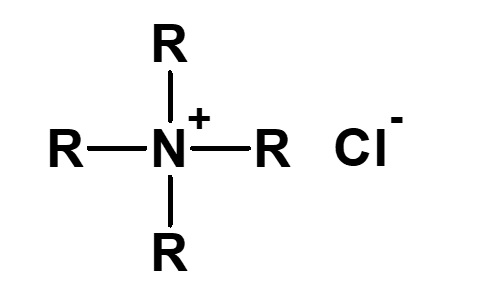


</description>
<dc:creator></dc:creator>
<dc:subject></dc:subject>
<dc:date>2024-04-01T19:35:00+09:00</dc:date>
<content:encoded><![CDATA[
<div class="cms-content-parts-sin171179606762468800 sanyo-pageLink" id="cms-editor-minieditor-sin171179606762471900" data-original="cms-content-parts-sin171179606762473300" data-custom="sanyo-pageLink"><!-- .parts_text_type01 -->
<ul>
    <li><a href="#intro">What is a surfactant?</a></li>
    <li><a href="#video">Surfactant functions introduction video</a></li>
    <li><a href="#cleaning_function">Surfactant's cleaning function</a></li>
    <li><a href="#interfacial_tension">Surfactant's ability to lower interfacial tension</a></li>
    <li><a href="#potential_energy">Cleaning and dirt potential energy</a></li>
    <li><a href="#laundry">Use of surfactants in laundry detergents</a></li>
    <li><a href="#kitchen">Examples of surfactant use in kitchen detergents</a></li>
    <li><a href="#housing">Examples of surfactant use in housing detergents</a></li>
    <li><a href="#shampoo">Example of surfactant use in shampoo</a></li>
    <li><a href="#precision_patts">Example of surfactant use in cleaning agents for precision parts</a></li>
    <li><a href="#precision_patts">Related products(surfactants, detergent-related products)</a></li>
    <br />
    <br />
    <br />
    <br />
</ul>
<!-- // .parts_text_type01 --></div>
<h2 class="cms-content-parts-sin171179608038418400" id="cms-editor-textarea-sin171179608038426200"><a name="intro"></a>What is a surfactant?</h2>
<div class="cms-content-parts-sin171593080102139100 cparts-id119 lay-margin-b--3 box" data-selectable="cparts-animate cparts-animate--slideInUp:上へスライド,cparts-animate cparts-animate--slideInDown:下へスライド,cparts-animate cparts-animate--slideInLeft:左へスライド,cparts-animate cparts-animate--slideInRight:右へスライド">
<div class="lay-row">
<div class="lay-col12-xs-12 lay-col12-md-12 lay-col12-lg-12">
<div id="cms-editor-minieditor-sin171593080102142900" class="cparts-txt-block lay-reset-child">
<p><font face="Noto Sans JP">First, an interface is a boundary surface that exists between two substances with different properties, and interfaces exist between liquids and solids, liquids and liquids, and liquids and gases.</font></p>
<p><font face="Noto Sans JP">Surfactants enhance performance by performing functions such as washing, emulsifying, dispersing, wetting, and penetrating at this interface.<br />
<br />
<span style="font-weight: 700;">Interface = a boundary surface that exists between two substances with different properties</span><br />
</font><font face="Noto Sans JP">Liquid and solid: cup and coffee, machine and lubricant&#160;</font><br />
<font face="Noto Sans JP">Liquid and liquid: water and oil&#160;</font><br />
<font face="Noto Sans JP">Liquid and gas: seawater and air, soap bubbles</font><br />
<span style="font-weight: 700;"><font face="Noto Sans JP"><br />
Examples of roles of surfactants</font></span><br />
<font face="Noto Sans JP">Cleaning ・・・ Removing dirt&#160;</font><br />
<font face="Noto Sans JP">Emulsification ・・・ Dispersion ・・ Making unmixable things easier to mix</font><br />
<font face="Noto Sans JP">Wetting / Penetration ・・・ Makes wetting and soaking easier</font></p>
</div>
</div>
</div>
</div>
<h3 class="cms-content-parts-sin171179612127819800" id="cms-editor-textarea-sin171179612127823500">Basic structure of a surfactant</h3>
<div class="cms-content-parts-sin171179623930333000 cparts-id119 lay-margin-b--3 box" data-selectable="cparts-animate cparts-animate--slideInUp:上へスライド,cparts-animate cparts-animate--slideInDown:下へスライド,cparts-animate cparts-animate--slideInLeft:左へスライド,cparts-animate cparts-animate--slideInRight:右へスライド">
<div class="lay-row">
<div class="lay-col12-xs-12 lay-col12-md-12 lay-col12-lg-12">
<div id="cms-editor-minieditor-sin171179623930308600" class="cparts-txt-block lay-reset-child">
<p>-Surfactants have different structures in their molecules with different properties: lipophilic groups (oil-fitting parts) and hydrophilic groups (water-fitting parts).<br />
<br />
-Surfactants are broadly classified into four types according to the structure of the hydrophilic group: nonionic, anionic, cationic, and amphoteric (having both anionic and cationic groups).</p>
<p><img src="https://sanyo-chemical-solutions.com/images/technology/surfactant/img_surfactantbasics_types.jpg" width="800" height="211" alt="" /></p>
</div>
</div>
</div>
</div>
<div class="cms-content-parts-sin171180113782029500 cparts-id96--01 box lay-margin-b--3" data-selectable="cparts-animate cparts-animate--slideInUp:上へスライド,cparts-animate cparts-animate--slideInDown:下へスライド,cparts-animate cparts-animate--slideInLeft:左へスライド,cparts-animate cparts-animate--slideInRight:右へスライド">
<div class="lay-row">
<div class="lay-col12-xs-12 lay-col12-md-12 lay-col12-lg-12">
<div class="cparts-table-block lay-reset-child" id="cms-editor-minieditor-sin171180113782040000">
<table>
    <caption class="lay-margin-t--1">&#160; &#160;</caption>
    <tbody>
        <tr>
            <th>Type of surfactant</th>
            <th>Feature</th>
            <th>Main application</th>
            <th>Composition example</th>
        </tr>
        <tr>
            <td>Nonionic surfactant<br />
            <img src="https://sanyo-chemical-solutions.com/images/technology/surfactant/img_surfactantbasics_nonion.jpg" width="150" height="47" alt="" /></td>
            <td>-Hydrophilic and hydrophobic balance<br />
            can be easily adjusted<br />
            -Excellent emulsification and solubilization<br />
            -Low lather<br style="margin-bottom: 0px;" />
            -Susceptible to temperature but not to pH</td>
            <td>-Clothing detergent<br />
            -Emulsifiers and solubilizers<br />
            -Dispersant<br style="margin-bottom: 0px;" />
            -Metalworking oil</td>
            <td>-Polyoxyethylene alkyl ether<br style="margin-bottom: 0px;" />
            etc.</td>
        </tr>
        <tr>
            <td>Anionic surfactant<br />
            <img src="https://sanyo-chemical-solutions.com/images/technology/surfactant/img_surfactantbasics_anion.jpg" width="150" height="49" alt="" /></td>
            <td>-Excellent emulsification and dispersibility<br />
            -Good lather<br style="margin-bottom: 0px;" />
            -Temperature insensitive</td>
            <td>-Clothing Detergent<br />
            -Shampoo<br style="margin-bottom: 0px;" />
            -Body soap</td>
            <td>-Alkyl benzene sulfonate<br />
            -Alkyl ether sulfates<br style="margin-bottom: 0px;" />
            etc.</td>
        </tr>
        <tr>
            <td>Cationic surfactant<br />
            <img src="https://sanyo-chemical-solutions.com/images/technology/surfactant/img_surfactantbasics_cation.jpg" width="150" height="49" alt="" /></td>
            <td>-Adsorption to fibers<br />
            -Antistatic effect<br style="margin-bottom: 0px;" />
            -Bactericidal</td>
            <td>-Hair rinse<br />
            -Fabric softener for clothes<br style="margin-bottom: 0px;" />
            -Disinfectant</td>
            <td>-Didecyldimethylammonium methyl sulfate</td>
        </tr>
        <tr>
            <td>Amphoteric surfactant<br />
            <img src="https://sanyo-chemical-solutions.com/images/technology/surfactant/img_surfactantbasics_ryosei.jpg" width="150" height="47" alt="" /></td>
            <td>-Mild on skin<br />
            -Excellent solubility in water<br style="margin-bottom: 0px;" />
            -Synergistic with other active components</td>
            <td>-Shampoo<br />
            -Body soap<br style="margin-bottom: 0px;" />
            -Kitchen detergent</td>
            <td>-Alkyl di-aminoethyl hydrochloride glycine<br />
            -Sodium lauryl aminopropionic acid<br />
            -Dimethylstearyl betaine<br style="margin-bottom: 0px;" />
            -Coconut oil fatty acid amidopropyl betaine</td>
        </tr>
    </tbody>
</table>
</div>
</div>
</div>
</div>
<h2 class="cms-content-parts-sin171179614288982300" id="cms-editor-textarea-sin171179614288986900"><a name="video"></a>Surfactant functions introduction video</h2>
<div class="cms-content-parts-sin171713637353802700">[[CMSmodule.parts::ad#param=309]]</div>
<div class="cms-content-parts-sin171713651388027900 cparts-id119 lay-margin-b--3 box" data-selectable="cparts-animate cparts-animate--slideInUp:上へスライド,cparts-animate cparts-animate--slideInDown:下へスライド,cparts-animate cparts-animate--slideInLeft:左へスライド,cparts-animate cparts-animate--slideInRight:右へスライド">
<div class="lay-row">
<div class="lay-col12-xs-12 lay-col12-md-12 lay-col12-lg-12">
<div class="cparts-txt-block lay-reset-child" id="cms-editor-minieditor-sin171713651388031800">
<p>It consists of seven short movies for each function.&#160;<br />
0:00　Introduction of surfactants functions　<br />
0:16　Part1　Washability<br />
1:00　Part2　Permeability<br />
2:10　Part3　Dispersion<br />
2:55　Part4　Foaming properties<br />
3:25　Part5　Defoaming properties<br />
3:39　Part6　Smoothness<br />
4:20　Part7　Antibacterial properties</p>
</div>
</div>
</div>
</div>
<h2 class="cms-content-parts-sin171713608643122800" id="cms-editor-textarea-sin171713608643131300"><a name="cleaning_function"></a>Surfactant's cleaning function</h2>
<div class="cms-content-parts-sin171179623311713300 cparts-id119 lay-margin-b--3 box" data-selectable="cparts-animate cparts-animate--slideInUp:上へスライド,cparts-animate cparts-animate--slideInDown:下へスライド,cparts-animate cparts-animate--slideInLeft:左へスライド,cparts-animate cparts-animate--slideInRight:右へスライド">
<div class="lay-row">
<div class="lay-col12-xs-12 lay-col12-md-12 lay-col12-lg-12">
<div id="cms-editor-minieditor-sin171179623311720100" class="cparts-txt-block lay-reset-child">
<p>This page describes one of the typical functions of surfactants, the washing function.<br />
The function of surfactants in washing is first to adsorb dirt. Next, it penetrates between the dirt and the clothes.<br />
<br />
Then, it removes the stain from the garment and stabilizes it by dispersing and emulsifying the stain into small particles, thereby preventing re-contamination of the garment.</p>
<div></div>
</div>
</div>
</div>
</div>
<div class="cms-content-parts-sin171180143360678200 cparts-id131--01 lay-margin-b--3 dec-line--primary dec-bg--contents dec-line--radius-sm box" data-selectable="cparts-animate cparts-animate--slideInUp:上へスライド,cparts-animate cparts-animate--slideInDown:下へスライド,cparts-animate cparts-animate--slideInLeft:左へスライド,cparts-animate cparts-animate--slideInRight:右へスライド">
<div class="lay-row lay-no-gutters">
<div class="cparts-head-block lay-col12-xs-12 lay-col12-md-3 lay-col12-lg-3 dec-bg--primary">
<h3><span id="cms-editor-textbox-sin171180143360682100" class="cparts-no-block lay-margin-b--1">1</span><span id="cms-editor-textbox-sin171180143360682400" class="cparts-id131--01__ttl">&#160;Adsorption</span></h3>
</div>
<div class="cparts-body-block lay-col12-xs-12 lay-col12-md-9 lay-col12-lg-9">
<div id="cms-editor-minieditor-sin171180143360682600" class="cparts-txt-block lay-reset-child">
<p>Initially, surfactant molecules adsorb onto the oily stain, making it easier to get wet.<br />
The alkyl groups of the surfactant stick to the oily dirt and the hydrophilic groups.<br />
<br />
<img src="https://sanyo-chemical-solutions.com/images/technology/surfactant/img_surfactantbasics_dirt.jpg" width="250" height="136" alt="" /></p>
</div>
</div>
</div>
</div>
<div class="cms-content-parts-sin171180145409571300 cparts-id131--01 lay-margin-b--3 dec-line--primary dec-bg--contents dec-line--radius-sm box" data-selectable="cparts-animate cparts-animate--slideInUp:上へスライド,cparts-animate cparts-animate--slideInDown:下へスライド,cparts-animate cparts-animate--slideInLeft:左へスライド,cparts-animate cparts-animate--slideInRight:右へスライド">
<div class="lay-row lay-no-gutters">
<div class="cparts-head-block lay-col12-xs-12 lay-col12-md-3 lay-col12-lg-3 dec-bg--primary">
<h3><span id="cms-editor-textbox-sin171180145409530100" class="cparts-no-block lay-margin-b--1">2</span><span id="cms-editor-textbox-sin171180145409538200" class="cparts-id131--01__ttl">Osmosis</span></h3>
</div>
<div class="cparts-body-block lay-col12-xs-12 lay-col12-md-9 lay-col12-lg-9">
<div id="cms-editor-minieditor-sin171180145409544500" class="cparts-txt-block lay-reset-child">
<p>The surfactant's penetrating action allows the surfactant to penetrate between dirt, fibers and other objects to be washed.<br />
<br />
<img src="https://sanyo-chemical-solutions.com/images/technology/surfactant/img_surfactamt_mechanism2.jpg" width="200" height="119" alt="" /></p>
</div>
</div>
</div>
</div>
<div class="cms-content-parts-sin171180145838303800 cparts-id131--01 lay-margin-b--3 dec-line--primary dec-bg--contents dec-line--radius-sm box" data-selectable="cparts-animate cparts-animate--slideInUp:上へスライド,cparts-animate cparts-animate--slideInDown:下へスライド,cparts-animate cparts-animate--slideInLeft:左へスライド,cparts-animate cparts-animate--slideInRight:右へスライド">
<div class="lay-row lay-no-gutters">
<div class="cparts-head-block lay-col12-xs-12 lay-col12-md-3 lay-col12-lg-3 dec-bg--primary">
<h3><span id="cms-editor-textbox-sin171180145838251300" class="cparts-no-block lay-margin-b--1">3</span><span id="cms-editor-textbox-sin171180145838260400" class="cparts-id131--01__ttl">Mechanical action</span></h3>
</div>
<div class="cparts-body-block lay-col12-xs-12 lay-col12-md-9 lay-col12-lg-9">
<div id="cms-editor-minieditor-sin171180145838269200" class="cparts-txt-block lay-reset-child">
<p>The surfactant, by penetrating between the dirt and the object being washed, helps the dirt to separate from the object when mechanical action is applied.<br />
<br />
<img src="https://sanyo-chemical-solutions.com/images/technology/surfactant/img_surfactamt_mechanism3.jpg" width="200" height="132" alt="" /></p>
</div>
</div>
</div>
</div>
<div class="cms-content-parts-sin171180146530675400 cparts-id131--01 lay-margin-b--3 dec-line--primary dec-bg--contents dec-line--radius-sm box" data-selectable="cparts-animate cparts-animate--slideInUp:上へスライド,cparts-animate cparts-animate--slideInDown:下へスライド,cparts-animate cparts-animate--slideInLeft:左へスライド,cparts-animate cparts-animate--slideInRight:右へスライド">
<div class="lay-row lay-no-gutters">
<div class="cparts-head-block lay-col12-xs-12 lay-col12-md-3 lay-col12-lg-3 dec-bg--primary">
<h3><span id="cms-editor-textbox-sin171180146530622500" class="cparts-no-block lay-margin-b--1">4</span><span id="cms-editor-textbox-sin171180146530630600" class="cparts-id131--01__ttl">Dispersion and emulsification</span></h3>
</div>
<div class="cparts-body-block lay-col12-xs-12 lay-col12-md-9 lay-col12-lg-9">
<div id="cms-editor-minieditor-sin171180146530637500" class="cparts-txt-block lay-reset-child">
<p>Surfactants can lower the interfacial tension between water and oil, and prevent re-contamination of clothes by dispersing and emulsifying dirt that has left the object to be washed into a smaller size in water and stabilizing it (Prevention of re-contamination&#160;).<br />
<br />
<img src="https://sanyo-chemical-solutions.com/images/technology/surfactant/img_surfactamt_mechanism4.jpg" width="200" height="120" alt="" /></p>
</div>
</div>
</div>
</div>
<div class="cms-content-parts-sin171180222506681100 cparts-id131--01 lay-margin-b--3 dec-line--primary dec-bg--contents dec-line--radius-sm box" data-selectable="cparts-animate cparts-animate--slideInUp:上へスライド,cparts-animate cparts-animate--slideInDown:下へスライド,cparts-animate cparts-animate--slideInLeft:左へスライド,cparts-animate cparts-animate--slideInRight:右へスライド">
<div class="lay-row lay-no-gutters">
<div class="cparts-head-block lay-col12-xs-12 lay-col12-md-3 lay-col12-lg-3 dec-bg--primary">
<h3><span id="cms-editor-textbox-sin171180222506632400" class="cparts-no-block lay-margin-b--1">5</span><span id="cms-editor-textbox-sin171180222506639500" class="cparts-id131--01__ttl">Foaming action</span></h3>
</div>
<div class="cparts-body-block lay-col12-xs-12 lay-col12-md-9 lay-col12-lg-9">
<div id="cms-editor-minieditor-sin171180222506646800" class="cparts-txt-block lay-reset-child">
<p>The surfactant's foaming action captures dirt on the surface of the foam generated and pulls it away from the surface of the fiber.</p>
<p>&#160;(Although foam has no direct relationship to cleaning power, it reduces friction during washing, catches dirt, and lifts it off the surface.)<br />
<img src="https://sanyo-chemical-solutions.com/images/technology/surfactant/img_surfactantbasics_foam.jpg" width="300" height="156" alt="" /></p>
<div></div>
</div>
</div>
</div>
</div>
<h2 class="cms-content-parts-sin171179625026888800" id="cms-editor-textarea-sin171179625026895900"><a name="interfacial_tension"></a>Surfactant's ability to lower interfacial tension</h2>
<div class="cms-content-parts-sin171180229850019500 box cparts-id409--01 lay-margin-b--3" col-flex="1-2" data-selectable="cparts-animate cparts-animate--slideInUp:上へスライド,cparts-animate cparts-animate--slideInDown:下へスライド,cparts-animate cparts-animate--slideInLeft:左へスライド,cparts-animate cparts-animate--slideInRight:右へスライド">
<div class="lay-row">
<div class="lay-col12-xs-12 lay-col12-md-6 lay-col12-lg-6">
<div class="cparts-img-block lay-img-width--max lay-margin-b--1"><img alt="" class="cms-easy-edit" id="cms-editor-image-sin171180229850023500" src="https://sanyo-chemical-solutions.com/images/technology/surfactant/img_surfactant_balanceofforces_en.jpg" width="330" /></div>
<div class="cparts-caption-block lay-reset-child lay-font-size--s cms-easy-edit" id="cms-editor-minieditor-sin171180229850023900">
<p style="text-align: center;"><b>Figure: Forces acting on dirt</b></p>
</div>
</div>
<div class="lay-col12-xs-12 lay-col12-md-6 lay-col12-lg-6">
<div id="cms-editor-minieditor-sin171180229850024200" class="cparts-txt-block lay-reset-child">
<p>When an oil-stained fiber is in water, it looks like the figure when viewed from the side. At the point where the oil stain, water, and fiber come into contact, the three interfacial tensions are in balance, so the following equation can be used to express the balance of forces.<br />
<br />
<strong>&#947;<span style="font-size: x-small;">ws</span>&#160;=&#947;<span style="font-size: x-small;">os</span>&#160;+ &#947;<span style="font-size: x-small;">wo</span>&#160;cos&#952;</strong></p>
<p>Next, when a surfactant is added to the water, the balance of the three forces changes as the surfactant adsorbs at the interface between water and oil stains and between water and fibers, reducing the interfacial tension (&#947;<span style="font-size: smaller;">ws</span>, &#947;<span style="font-size: smaller;">wo</span>) of these surfaces.</p>
</div>
</div>
</div>
</div>
<div class="cms-content-parts-sin171180231793393600 cparts-id119 lay-margin-b--3 box" data-selectable="cparts-animate cparts-animate--slideInUp:上へスライド,cparts-animate cparts-animate--slideInDown:下へスライド,cparts-animate cparts-animate--slideInLeft:左へスライド,cparts-animate cparts-animate--slideInRight:右へスライド">
<div class="lay-row">
<div class="lay-col12-xs-12 lay-col12-md-12 lay-col12-lg-12">
<div id="cms-editor-minieditor-sin171180231793365200" class="cparts-txt-block lay-reset-child">
<p>When the surfactant addition reduces the interfacial tension between water and oil stain, and between water and fiber, and changes the balance of forces, the contact angle &#952; of the oil stain increases, and with it, the oil stain becomes rounder and finally migrates into the water. This process of transformation of oil stains is called rolling up and is one of the most important phenomena for cleaning.</p>
</div>
</div>
</div>
</div>
<div class="cms-content-parts-sin171593049485816100 cparts-id119 lay-margin-b--3 box" data-selectable="cparts-animate cparts-animate--slideInUp:上へスライド,cparts-animate cparts-animate--slideInDown:下へスライド,cparts-animate cparts-animate--slideInLeft:左へスライド,cparts-animate cparts-animate--slideInRight:右へスライド">
<div class="lay-row">
<div class="lay-col12-xs-12 lay-col12-md-12 lay-col12-lg-12">
<div id="cms-editor-minieditor-sin171593049485790700" class="cparts-txt-block lay-reset-child">
<p style="text-align: center;"><b><img src="https://sanyo-chemical-solutions.com/images/technology/surfactant/img_surfactantbasics_rollingup.jpg" width="1530" height="355" alt="" /></b><br />
<b>Figure: Rolling Up</b></p>
</div>
</div>
</div>
</div>
<h2 class="cms-content-parts-sin171179630782058300" id="cms-editor-textarea-sin171179630782066900"><a name="potential_energy"></a>Cleaning and dirt potential energy</h2>
<div class="cms-content-parts-sin171180243685631900 box cparts-id409--01 lay-margin-b--3" col-flex="1-2" data-selectable="cparts-animate cparts-animate--slideInUp:上へスライド,cparts-animate cparts-animate--slideInDown:下へスライド,cparts-animate cparts-animate--slideInLeft:左へスライド,cparts-animate cparts-animate--slideInRight:右へスライド">
<div class="lay-row">
<div class="lay-col12-xs-12 lay-col12-md-6 lay-col12-lg-6">
<div class="cparts-img-block lay-img-width--max lay-margin-b--1"><img alt="" class="cms-easy-edit" id="cms-editor-image-sin171180243685666100" src="https://sanyo-chemical-solutions.com/images/technology/surfactant/img_surfactamt_potential_en.jpg" width="330" /></div>
<div class="cparts-caption-block lay-reset-child lay-font-size--s cms-easy-edit" id="cms-editor-minieditor-sin171180243685666700">
<p style="text-align: center;"><b>Figure:&#160;</b><strong>Potential energy of contamination (image)</strong></p>
</div>
</div>
<div class="lay-col12-xs-12 lay-col12-md-6 lay-col12-lg-6">
<div id="cms-editor-minieditor-sin171180243685666900" class="cparts-txt-block lay-reset-child">
<p>Between dirt particles and fibers, there are forces of attraction (van der Waals force) and repulsion (electrical repulsion: both dirt particles and fibers are generally negatively charged in water), and the potential energy of dirt particles is the sum of these two types of energy.</p>
<p><strong>Ease of cleaning (point A =&#62; point B =&#62; point C)</strong><br />
&#160;Point A is the state where dirt fibers adhere to the fiber, and in order for the dirt particles to leave the fiber, they must go beyond point B. The smaller this value is, the easier it is to clean. The difference in potential energy between points A and B (Vmax + Vmin) determines how easy it is to clean. The smaller this value is, the easier it is to clean dirt, and the larger this value is, the harder it is to clean.<br />
<br />
<strong>Recontamination (Point C =&#62; Point B =&#62; Point A)</strong><br />
&#160;Point C indicates the state where dirt particles have completely left the fiber. If the difference in potential energy between points B and C is small, particles that went to point C will easily return to point A through point B (re-contamination).</p>
<div></div>
</div>
</div>
</div>
</div>
<h4 class="cms-content-parts-sin171180245700049800" id="cms-editor-textarea-sin171180245700051800">Role of surfactants</h4>
<div class="cms-content-parts-sin171593071087340000 cparts-id119 lay-margin-b--3 box" data-selectable="cparts-animate cparts-animate--slideInUp:上へスライド,cparts-animate cparts-animate--slideInDown:下へスライド,cparts-animate cparts-animate--slideInLeft:左へスライド,cparts-animate cparts-animate--slideInRight:右へスライド">
<div class="lay-row">
<div class="lay-col12-xs-12 lay-col12-md-12 lay-col12-lg-12">
<div id="cms-editor-minieditor-sin171593071087344300" class="cparts-txt-block lay-reset-child">
<p>Surfactants in detergents work by increasing the height of the potential energy peaks and bringing them closer to the fiber surface, making it easier to remove dirt and harder to recontaminate.　Anionic surfactants are the most commonly used type of surfactant. This is because anionic surfactants work by adsorbing on the dirt and fibers to further increase the negative charge and repulsive energy (electrical repulsion).</p>
</div>
</div>
</div>
</div>
<h2 class="cms-content-parts-sin171179633415981400" id="cms-editor-textarea-sin171179633415992300"><a name="laundry"></a>Use of surfactants in laundry detergents</h2>
<div class="cms-content-parts-sin171593074438112200 cparts-id119 lay-margin-b--3 box" data-selectable="cparts-animate cparts-animate--slideInUp:上へスライド,cparts-animate cparts-animate--slideInDown:下へスライド,cparts-animate cparts-animate--slideInLeft:左へスライド,cparts-animate cparts-animate--slideInRight:右へスライド">
<div class="lay-row">
<div class="lay-col12-xs-12 lay-col12-md-12 lay-col12-lg-12">
<div id="cms-editor-minieditor-sin171593074438117500" class="cparts-txt-block lay-reset-child">
<p>In the course of daily life, a variety of stains adhere to clothing. Dirt comes from the body (sebum, sweat, etc.) and dirt from the outside (dust, mud, etc.), and can be broadly divided into hydrophilic dirt such as sweat, blood, and fruit juice, and lipophilic dirt such as sebum, dirt, cosmetics, and cooking oil.</p>
<p>Clothing materials used for washing range from natural fibers such as cotton, linen, and wool to recycled fibers such as rayon, semi-synthetic fibers such as acetate, and synthetic fibers such as nylon, polyester, and acrylic. Various types of clothing detergents need to be used at home to remove the various stains on them.<br />
<strong><br />
Five elements of laundry that effectively remove stains</strong><br />
Clothing, dirt, detergent, water, and mechanical action</p>
<div></div>
</div>
</div>
</div>
</div>
<h5 class="cms-content-parts-sin171180251728203900" id="cms-editor-textarea-sin171180251728207000">Examples of Ingredients for Clothing Detergent</h5>
<div class="cms-content-parts-sin171180253995099700 box cparts-id416--02 lay-margin-b--3" data-selectable="cparts-animate cparts-animate--slideInUp:上へスライド,cparts-animate cparts-animate--slideInDown:下へスライド,cparts-animate cparts-animate--slideInLeft:左へスライド,cparts-animate cparts-animate--slideInRight:右へスライド">
<div class="lay-row">
<div class="cparts-img-block lay-img-width--max lay-margin-b--3 lay-col12-xs-12 lay-col12-md-3 lay-col12-lg-3"><img alt="" id="cms-editor-image-sin171180253995102700" src="https://sanyo-chemical-solutions.com/images/top/img_ep300_top.jpg" width="215" /></div>
<div class="lay-margin-b--3 lay-col12-xs-12 lay-col12-md-9 lay-col12-lg-9">
<div class="cparts-table-block lay-reset-child" id="cms-editor-minieditor-sin171180253995103100">
<table>
    <tbody>
        <tr>
            <th>Surfactant</th>
            <td>Contributes to cleaning by wetting, lowering interfacial tension, emulsifying and dispersing, and preventing recontamination.</td>
        </tr>
        <tr>
            <th>Alkali builder</th>
            <td>Make the cleaning solution alkaline to increase the surface potential of the fibers and dirt to increase their resilience.</td>
        </tr>
        <tr>
            <th>Metal ion supplements</th>
            <td>Surfactants and alkali builders bind to Ca and Mg ions in water,&#160;their function is reduced, so these ions are supplemented.</td>
        </tr>
        <tr>
            <th>Anti-recontamination agent</th>
            <td>Prevents reattachment of dirt once it has left the fiber.</td>
        </tr>
        <tr>
            <th>Enzymes</th>
            <td>Protein stains and grease stains are decomposed and washed off easily.</td>
        </tr>
        <tr>
            <th>Other</th>
            <td>Bleach, anti-caking agent, etc. as needed.</td>
        </tr>
    </tbody>
</table>
</div>
</div>
</div>
</div>
<h5 class="cms-content-parts-sin171180258811318600" id="cms-editor-textarea-sin171180258811327400">Typical examples of surfactants used in clothing detergents</h5>
<div class="cms-content-parts-sin171593113292843200 cparts-id119 lay-margin-b--3 box" data-selectable="cparts-animate cparts-animate--slideInUp:上へスライド,cparts-animate cparts-animate--slideInDown:下へスライド,cparts-animate cparts-animate--slideInLeft:左へスライド,cparts-animate cparts-animate--slideInRight:右へスライド">
<div class="lay-row">
<div class="lay-col12-xs-12 lay-col12-md-12 lay-col12-lg-12">
<div id="cms-editor-minieditor-sin171593113292848700" class="cparts-txt-block lay-reset-child">
<p>The actives used in laundry detergents are mainly anionic or nonionic surfactants. In actual use, these are rarely used alone, but rather in combination.</p>
</div>
</div>
</div>
</div>
<div class="cms-content-parts-sin171180269661541000 cparts-id96--01 box lay-margin-b--3" data-selectable="cparts-animate cparts-animate--slideInUp:上へスライド,cparts-animate cparts-animate--slideInDown:下へスライド,cparts-animate cparts-animate--slideInLeft:左へスライド,cparts-animate cparts-animate--slideInRight:右へスライド">
<div class="lay-row">
<div class="lay-col12-xs-12 lay-col12-md-12 lay-col12-lg-12">
<div class="cparts-table-block lay-reset-child" id="cms-editor-minieditor-sin171180269661585500">
<table>
    <caption class="lay-margin-t--1">　　　</caption>
    <tbody>
        <tr>
            <th>Type</th>
            <th>Component</th>
            <th>Structure</th>
        </tr>
        <tr>
            <td>Anionic surfactant</td>
            <td>Sodium fatty acid (soap)</td>
            <td>R-COO<span class="sanyoc-super">-</span>Na<span class="sanyoc-super">+</span></td>
        </tr>
        <tr>
            <td>Anionic surfactant</td>
            <td>Sodium linear alkylbenzenesulfonate (LAS)</td>
            <td>R-C<span style="font-size: small;">6</span>H<span style="font-size: small;">4</span>SO<span style="font-size: small;">3</span><span class="sanyoc-super">-</span>Na<span class="sanyoc-super">+</span></td>
        </tr>
        <tr>
            <td>Anionic surfactant</td>
            <td>Sodium alkylbenzenesulfonate (AS)</td>
            <td>R-O-SO<span style="font-size: small;">3</span><span class="sanyoc-super">-</span>Na<span class="sanyoc-super">+</span></td>
        </tr>
        <tr>
            <td>Anionic surfactant</td>
            <td>Sodium alkyl ether sulfate (AES)</td>
            <td>R-O(CH<span style="font-size: small;">2</span>CH<span style="font-size: small;">2</span>O)SO<span style="font-size: small;">3</span><span class="sanyoc-super">-</span>Na<span class="sanyoc-super">+</span></td>
        </tr>
        <tr>
            <td>Anionic surfactant</td>
            <td>Sodium alpha-olefin sulfonate (AOS)</td>
            <td>R-CH=CHCH<span style="font-size: small;">2</span>SO<span style="font-size: small;">3</span><span class="sanyoc-super">-</span>Na<span class="sanyoc-super">+</span></td>
        </tr>
        <tr>
            <td>Nonionic surfactant</td>
            <td>Polyoxyethylene alkyl ether (AE)</td>
            <td>R-O(CH<span style="font-size: small;">2</span>CH<span style="margin-bottom: 0px; font-size: small;">2</span>O)H</td>
        </tr>
    </tbody>
</table>
</div>
</div>
</div>
</div>
<h2 class="cms-content-parts-sin171179634252130500" id="cms-editor-textarea-sin171179634252139200"><a name="kitchen"></a>Examples of surfactant use in kitchen detergents</h2>
<h5 class="cms-content-parts-sin171180277578037700" id="cms-editor-textarea-sin171180277578073400">Location of residence and type of stains</h5>
<div class="cms-content-parts-sin171180279080165900 cparts-id96--01 box lay-margin-b--3" data-selectable="cparts-animate cparts-animate--slideInUp:上へスライド,cparts-animate cparts-animate--slideInDown:下へスライド,cparts-animate cparts-animate--slideInLeft:左へスライド,cparts-animate cparts-animate--slideInRight:右へスライド">
<div class="lay-row">
<div class="lay-col12-xs-12 lay-col12-md-12 lay-col12-lg-12">
<div class="cparts-table-block lay-reset-child" id="cms-editor-minieditor-sin171180279080137700">
<table>
    <caption class="lay-margin-t--1">　　　</caption>
    <tbody>
        <tr>
            <th colspan="2">Where to wash, what to wash</th>
            <th>Type of stain</th>
        </tr>
        <tr>
            <td>Kitchen</td>
            <td>tableware, vegetables<br />
            around the range<br />
            hood<br />
            ventilation fan</td>
            <td>-animal and vegetable fats and oils, proteins, starches, mud, pesticide residues<br />
            -modified fats and oils (fats and oils oxidized or polymerized by heat or light and turned into resin)<br />
            -stains from scorching (stains such as fats, oils, and grease that have been carbonized by high heat)</td>
        </tr>
        <tr>
            <td>Living room</td>
            <td>floor (wood, carpet)<br />
            walls, furniture<br />
            windows, screens</td>
            <td>dust, mud, spills, grease, handprints, cigarette stains</td>
        </tr>
        <tr>
            <td>Bathroom</td>
            <td>bathtubs, floors, drains<br />
            <br />
            walls and ceilings</td>
            <td>soap scum (Ca salts of fatty acids, etc.), complex stains consisting of body-derived proteins and lipids</td>
        </tr>
        <tr>
            <td>Toilet</td>
            <td>toilet bowl, floor</td>
            <td>combination of phosphoric acid, uric acid, and other bacterial metabolites with polyvalent metals in tap water.</td>
        </tr>
    </tbody>
</table>
<p></p>
</div>
</div>
</div>
</div>
<div class="cms-content-parts-sin171180260169934600 cparts-id119 lay-margin-b--3 box" data-selectable="cparts-animate cparts-animate--slideInUp:上へスライド,cparts-animate cparts-animate--slideInDown:下へスライド,cparts-animate cparts-animate--slideInLeft:左へスライド,cparts-animate cparts-animate--slideInRight:右へスライド">
<div class="lay-row">
<div class="lay-col12-xs-12 lay-col12-md-12 lay-col12-lg-12">
<div id="cms-editor-minieditor-sin171180260169904800" class="cparts-txt-block lay-reset-child">
<p>The main detergents used in the kitchen area include liquid kitchen detergent, cleansers, bleach, automatic dishwasher detergent, and range hood/exhaust fan detergent.</p>
</div>
</div>
</div>
</div>
<h5 class="cms-content-parts-sin171180283964591900" id="cms-editor-textarea-sin171180283964603300">Examples of Ingredients for Kitchen Cleaning Agents</h5>
<div class="cms-content-parts-sin171180288829276600 box cparts-id416--02 lay-margin-b--3" data-selectable="cparts-animate cparts-animate--slideInUp:上へスライド,cparts-animate cparts-animate--slideInDown:下へスライド,cparts-animate cparts-animate--slideInLeft:左へスライド,cparts-animate cparts-animate--slideInRight:右へスライド">
<div class="lay-row">
<div class="cparts-img-block lay-img-width--max lay-margin-b--3 lay-col12-xs-12 lay-col12-md-3 lay-col12-lg-3"><img alt="" id="cms-editor-image-sin171180288829222500" src="https://sanyo-chemical-solutions.com/images/top/img_naroacty_top.jpg" width="215" /></div>
<div class="lay-margin-b--3 lay-col12-xs-12 lay-col12-md-9 lay-col12-lg-9">
<div class="cparts-table-block lay-reset-child" id="cms-editor-minieditor-sin171180288829230700">
<table>
    <tbody>
        <tr>
            <th>Surfactant</th>
            <td>Alkyl ether sulfates are commonly used because of their superior cleaning power, foaming ability, and solubility, and are generally used because they cause less hand irritation.</td>
        </tr>
        <tr>
            <th>Foam stabilizer/thickeners</th>
            <td>Diethanolamide of fatty acids obtained from coconut oil or palm kernel oil,&#160;are often used because of their foam stabilizing effect and thickening effect in blended systems.</td>
        </tr>
        <tr>
            <th>Anti-Hand Roughness Agent</th>
            <td>Amine oxide and amide betaine-type amphoteric surfactants are known to prevent rough hands.</td>
        </tr>
        <tr>
            <th>Solubilizer</th>
            <td>It is added so that kitchen detergents do not harden or become cloudy in winter.</td>
        </tr>
    </tbody>
</table>
</div>
</div>
</div>
</div>
<h2 class="cms-content-parts-sin171179636935176300" id="cms-editor-textarea-sin171179636935194400"><a name="housing"></a>Examples of surfactant use in housing detergents</h2>
<h4 class="cms-content-parts-sin171180293815610600" id="cms-editor-textarea-sin171180293815635400">Detergent for living room</h4>
<div class="cms-content-parts-sin171593153258613800 cparts-id119 lay-margin-b--3 box" data-selectable="cparts-animate cparts-animate--slideInUp:上へスライド,cparts-animate cparts-animate--slideInDown:下へスライド,cparts-animate cparts-animate--slideInLeft:左へスライド,cparts-animate cparts-animate--slideInRight:右へスライド">
<div class="lay-row">
<div class="lay-col12-xs-12 lay-col12-md-12 lay-col12-lg-12">
<div id="cms-editor-minieditor-sin171593153258617400" class="cparts-txt-block lay-reset-child">
<p>The majority of dirt in living rooms is dirt applied by mud, textile dust, and limbs. Most interior materials used in homes are surface-treated with synthetic resins. These materials are lipophilic, which means that they are prone to oily stains, and they are generally electrostatic, which means that dust and cigarette smoke can easily stick to the surface.<br />
<br />
&#160;Most of the dirt and dust can be removed with an electric vacuum cleaner, but for the dirt that cannot be removed, detergents are required. Typical detergents used for living room stain removal include wood floors, general-purpose detergents for furniture, carpet detergents, and window cleaner.</p>
<div></div>
</div>
</div>
</div>
</div>
<h5 class="cms-content-parts-sin171180296075416000" id="cms-editor-textarea-sin171180296075421300">Detergent for wood floors, walls, and furniture</h5>
<div class="cms-content-parts-sin171593153777331600 cparts-id119 lay-margin-b--3 box" data-selectable="cparts-animate cparts-animate--slideInUp:上へスライド,cparts-animate cparts-animate--slideInDown:下へスライド,cparts-animate cparts-animate--slideInLeft:左へスライド,cparts-animate cparts-animate--slideInRight:右へスライド">
<div class="lay-row">
<div class="lay-col12-xs-12 lay-col12-md-12 lay-col12-lg-12">
<div id="cms-editor-minieditor-sin171593153777305300" class="cparts-txt-block lay-reset-child">
<p>In addition to wood, the target is stains on floors, walls, and furniture tatami mats made of new construction materials. The stains are usually composed of dirt from hands and feet, dirt and dust, tobacco tar, etc., and can be removed relatively easily by the action of surfactants.</p>
<p>Therefore, detergents that mainly use surfactants are effective, including concentrated types that are diluted with water and low-concentration types that can be used as is and do not require wiping twice. However, all of them require a trial wipe once before use to make sure that they will not damage the surface of white wood or painted surfaces.</p>
</div>
</div>
</div>
</div>
<h6 class="cms-content-parts-sin171180299567962500" id="cms-editor-textarea-sin171180299567967100"><br />
Examples of detergent formulations for wood floors, walls, and furniture</h6>
<div class="cms-content-parts-sin171180302959339100 cparts-id96--01 box lay-margin-b--3" data-selectable="cparts-animate cparts-animate--slideInUp:上へスライド,cparts-animate cparts-animate--slideInDown:下へスライド,cparts-animate cparts-animate--slideInLeft:左へスライド,cparts-animate cparts-animate--slideInRight:右へスライド">
<div class="lay-row">
<div class="lay-col12-xs-12 lay-col12-md-12 lay-col12-lg-12">
<div class="cparts-table-block lay-reset-child" id="cms-editor-minieditor-sin171180302959345700">
<table>
    <caption class="lay-margin-t--1">　　　　</caption>
    <tbody>
        <tr>
            <td>Surfactants (e.g., polyoxyethylene alkyl ethers)</td>
            <td>0.5 to 1%</td>
        </tr>
        <tr>
            <td>Water and water-soluble organic solvents (e.g., isopropyl alcohol)</td>
            <td>remaining quantity</td>
        </tr>
        <tr>
            <td>Total amount</td>
            <td>100</td>
        </tr>
    </tbody>
</table>
</div>
</div>
</div>
</div>
<h5 class="cms-content-parts-sin171180300317279600" id="cms-editor-textarea-sin171180300317292500">Carpet cleaner</h5>
<div class="cms-content-parts-sin171593154687165600 cparts-id119 lay-margin-b--3 box" data-selectable="cparts-animate cparts-animate--slideInUp:上へスライド,cparts-animate cparts-animate--slideInDown:下へスライド,cparts-animate cparts-animate--slideInLeft:左へスライド,cparts-animate cparts-animate--slideInRight:右へスライド">
<div class="lay-row">
<div class="lay-col12-xs-12 lay-col12-md-12 lay-col12-lg-12">
<div id="cms-editor-minieditor-sin171593154687144000" class="cparts-txt-block lay-reset-child">
<p>There are two types of carpet cleaning: whole washing and partial washing. In the case of whole washing, detergents similar to those used for washing clothes can be used. Stains that can be partially washed are mainly stains such as food spills. Carpets require a long drying time if water is used, so a washing method in which the stain is powdered with detergent and sucked up with an electric vacuum cleaner is suitable.<br />
<br />
Aerosol and powder detergents are available, which are generally composed of surfactants, alkalis, solvents, and adsorbent powders.<br />
-Aerosol type detergents are made up of an aqueous solution of surfactant, water-soluble organic solvent, alkali, and adsorbent powder, so they absorb dirt and dry.<br />
-The powder type is a combination of an adsorbent powder such as urea resin, a surfactant, and a solvent, which is sprayed on the stain and brushed to absorb the stain.</p>
<div></div>
</div>
</div>
</div>
</div>
<h6 class="cms-content-parts-sin171184104799951000" id="cms-editor-textarea-sin171184104799959600"><br />
Example of carpet cleaner (powder type) formulation</h6>
<div class="cms-content-parts-sin171184105785360900 cparts-id96--01 box lay-margin-b--3" data-selectable="cparts-animate cparts-animate--slideInUp:上へスライド,cparts-animate cparts-animate--slideInDown:下へスライド,cparts-animate cparts-animate--slideInLeft:左へスライド,cparts-animate cparts-animate--slideInRight:右へスライド">
<div class="lay-row">
<div class="lay-col12-xs-12 lay-col12-md-12 lay-col12-lg-12">
<div class="cparts-table-block lay-reset-child" id="cms-editor-minieditor-sin171184105785332800">
<table>
    <caption class="lay-margin-t--1">　　　　</caption>
    <tbody>
        <tr>
            <td>Adsorbent powder (e.g., urea resin powder)</td>
            <td>Approx. 60</td>
        </tr>
        <tr>
            <td>Surfactants (e.g., polyoxyethylene alkyl ethers)</td>
            <td>Approx. 5</td>
        </tr>
        <tr>
            <td>Water and water-soluble organic solvents (e.g., isopropyl alcohol)</td>
            <td>remaining quantity</td>
        </tr>
        <tr>
            <td>Total amount</td>
            <td>100</td>
        </tr>
    </tbody>
</table>
</div>
</div>
</div>
</div>
<h5 class="cms-content-parts-sin171184108595090200" id="cms-editor-textarea-sin171184108595098800">Detergent for window glass</h5>
<div class="cms-content-parts-sin171593155662766800 cparts-id119 lay-margin-b--3 box" data-selectable="cparts-animate cparts-animate--slideInUp:上へスライド,cparts-animate cparts-animate--slideInDown:下へスライド,cparts-animate cparts-animate--slideInLeft:左へスライド,cparts-animate cparts-animate--slideInRight:右へスライド">
<div class="lay-row">
<div class="lay-col12-xs-12 lay-col12-md-12 lay-col12-lg-12">
<div id="cms-editor-minieditor-sin171593155662738500" class="cparts-txt-block lay-reset-child">
<p>Window stains are usually composed of a complex of water-soluble and non-water-soluble components.Therefore, water alone does not easily remove stains, requiring the action of surfactants, alkalis, and water-soluble organic solvents.<br />
<br />
Window cleaning is often performed on poor footholds, and it is desirable to wipe windows less frequently by hand. Therefore, the mainstream window cleaner is an aerosol or spray cleaner that can be sprayed on and then wiped off in a single pass. Also, since window glass is almost always a vertical surface, it is necessary for the detergent solution to remain on the glass surface for a while. For this reason, the detergent is sprayed in the form of bubbles to prevent streaks.<br />
<br />
Surfactants commonly used in window glass detergents include linear alkyl benzene sulfonate amine salts, alkyl ether sulfate amine salts, and polyoxyethylene alkyl ethers. Note that the concentration of surfactants is high, which tends to leave streaks on glass surfaces, so the ratio of surfactants is kept low.</p>
</div>
</div>
</div>
</div>
<h6 class="cms-content-parts-sin171184112152523300" id="cms-editor-textarea-sin171184112152531100"><br />
Example of window cleaner formulation</h6>
<div class="cms-content-parts-sin171184114148865600 cparts-id96--01 box lay-margin-b--3" data-selectable="cparts-animate cparts-animate--slideInUp:上へスライド,cparts-animate cparts-animate--slideInDown:下へスライド,cparts-animate cparts-animate--slideInLeft:左へスライド,cparts-animate cparts-animate--slideInRight:右へスライド">
<div class="lay-row">
<div class="lay-col12-xs-12 lay-col12-md-12 lay-col12-lg-12">
<div class="cparts-table-block lay-reset-child" id="cms-editor-minieditor-sin171184114148834600">
<table>
    <caption class="lay-margin-t--1">　　　　</caption>
    <tbody>
        <tr>
            <td>Surfactants (e.g., linear dodecylbenzene sulfonate amine salts)</td>
            <td>0.1%</td>
        </tr>
        <tr>
            <td>triethanolamine</td>
            <td>small quantity</td>
        </tr>
        <tr>
            <td>Water and water-soluble organic solvents (e.g., isopropyl alcohol)</td>
            <td>remaining quantity</td>
        </tr>
        <tr>
            <td>Total amount</td>
            <td>100</td>
        </tr>
    </tbody>
</table>
</div>
</div>
</div>
</div>
<h4 class="cms-content-parts-sin171184118048141400" id="cms-editor-textarea-sin171184118048147100">Bathroom Detergent</h4>
<div class="cms-content-parts-sin171184120633896000 cparts-id119 lay-margin-b--3 box" data-selectable="cparts-animate cparts-animate--slideInUp:上へスライド,cparts-animate cparts-animate--slideInDown:下へスライド,cparts-animate cparts-animate--slideInLeft:左へスライド,cparts-animate cparts-animate--slideInRight:右へスライド">
<div class="lay-row">
<div class="lay-col12-xs-12 lay-col12-md-12 lay-col12-lg-12">
<div id="cms-editor-minieditor-sin171184120633932500" class="cparts-txt-block lay-reset-child">
<p>The areas and stains to be cleaned in the bathroom are (1) hot water stains in the bathtub and (2) mildew on the soot and walls. Below are examples of detergents used to remove each of these stains, their functions, and formulations.</p>
</div>
</div>
</div>
</div>
<h5 class="cms-content-parts-sin171184121990628400" id="cms-editor-textarea-sin171184121990631500">Detergent for removing bathtub stains</h5>
<div class="cms-content-parts-sin171593157204650300 cparts-id119 lay-margin-b--3 box" data-selectable="cparts-animate cparts-animate--slideInUp:上へスライド,cparts-animate cparts-animate--slideInDown:下へスライド,cparts-animate cparts-animate--slideInLeft:左へスライド,cparts-animate cparts-animate--slideInRight:右へスライド">
<div class="lay-row">
<div class="lay-col12-xs-12 lay-col12-md-12 lay-col12-lg-12">
<div id="cms-editor-minieditor-sin171593157204618800" class="cparts-txt-block lay-reset-child">
<p>Soap scum is a complex of soap scum and proteins and fats from the human body that adhere to the bathtub and the pipes connecting the bathtub and tub.</p>
<p>&#160;Soap dregs are called water-insoluble metallic soap, which is formed when alkali metal salts of fatty acids (such as Na), the main ingredient of soap, react with polyvalent metal ions such as Ca and Mg in the water.</p>
<p></p>
<p>&#160;The following detergents are used for cleaning bathrooms, depending on the degree of soiling and the material of the bathtub.</p>
<div></div>
</div>
</div>
</div>
</div>
<h6 class="cms-content-parts-sin171184124661991400" id="cms-editor-textarea-sin171184124661996600">(1) Weak alkaline type</h6>
<div class="cms-content-parts-sin171593158416713400 cparts-id119 lay-margin-b--3 box" data-selectable="cparts-animate cparts-animate--slideInUp:上へスライド,cparts-animate cparts-animate--slideInDown:下へスライド,cparts-animate cparts-animate--slideInLeft:左へスライド,cparts-animate cparts-animate--slideInRight:右へスライド">
<div class="lay-row">
<div class="lay-col12-xs-12 lay-col12-md-12 lay-col12-lg-12">
<div id="cms-editor-minieditor-sin171593158416682100" class="cparts-txt-block lay-reset-child">
<p>These products are designed to remove stains with the power of weak alkali and surfactants, and are intended for light stain removal.<br />
<br />
Surfactants are required to have good penetration and cleaning power, as well as good resistance to hard water. Sodium alkyl ether sulfates, sodium linear alkyl benzene sulfonate, and polyoxyethylene alkyl ethers are used. As an alkali. Mild ones such as alkanolamine are used in the formulation.</p>
<div></div>
</div>
</div>
</div>
</div>
<h6 class="cms-content-parts-sin171184126299568300" id="cms-editor-textarea-sin171184126299584000">Example of bathtub scum remover (mildly alkaline type) formulation</h6>
<div class="cms-content-parts-sin171184127150275700 cparts-id96--01 box lay-margin-b--3" data-selectable="cparts-animate cparts-animate--slideInUp:上へスライド,cparts-animate cparts-animate--slideInDown:下へスライド,cparts-animate cparts-animate--slideInLeft:左へスライド,cparts-animate cparts-animate--slideInRight:右へスライド">
<div class="lay-row">
<div class="lay-col12-xs-12 lay-col12-md-12 lay-col12-lg-12">
<div class="cparts-table-block lay-reset-child" id="cms-editor-minieditor-sin171184127150244800">
<table>
    <caption class="lay-margin-t--1">　　　　</caption>
    <tbody>
        <tr>
            <td>Surfactants (e.g., polyoxyethylene alkyl ethers)</td>
            <td>10%</td>
        </tr>
        <tr>
            <td>triethanolamine</td>
            <td>small quantity</td>
        </tr>
        <tr>
            <td>Water and water-soluble organic solvents (e.g., isopropyl alcohol)</td>
            <td>remaining quantity</td>
        </tr>
        <tr>
            <td>Total amount</td>
            <td>100%</td>
        </tr>
    </tbody>
</table>
</div>
</div>
</div>
</div>
<h6 class="cms-content-parts-sin171184129996544800" id="cms-editor-textarea-sin171184129996554600">(2) Weak acidic type</h6>
<div class="cms-content-parts-sin171593159598134500 cparts-id119 lay-margin-b--3 box" data-selectable="cparts-animate cparts-animate--slideInUp:上へスライド,cparts-animate cparts-animate--slideInDown:下へスライド,cparts-animate cparts-animate--slideInLeft:左へスライド,cparts-animate cparts-animate--slideInRight:右へスライド">
<div class="lay-row">
<div class="lay-col12-xs-12 lay-col12-md-12 lay-col12-lg-12">
<div id="cms-editor-minieditor-sin171593159598104100" class="cparts-txt-block lay-reset-child">
<p>This type of detergent targets stains mainly composed of soap scum, which is acidic, easily decomposed, and soluble in organic solvents. This type of detergent contains organic acids such as citric acid and malic acid that are acidic enough not to damage bathtub materials, water-soluble organic solvents such as propylene glycol and butylcarbitol, and a surfactant to improve cleaning power.<br />
<br />
The function required of surfactants here is good foaming, detergency, and rinsability, even when used in combination with organic acids. Polyoxyethylene alkyl ethers and sodium linear alkylbenzenesulfonate are used alone or in combination.</p>
</div>
</div>
</div>
</div>
<h6 class="cms-content-parts-sin171184131990212300" id="cms-editor-textarea-sin171184131990220800"><br />
Example of bathtub scum remover (mild acidic type) formulation</h6>
<div class="cms-content-parts-sin171184132844786000 cparts-id96--01 box lay-margin-b--3" data-selectable="cparts-animate cparts-animate--slideInUp:上へスライド,cparts-animate cparts-animate--slideInDown:下へスライド,cparts-animate cparts-animate--slideInLeft:左へスライド,cparts-animate cparts-animate--slideInRight:右へスライド">
<div class="lay-row">
<div class="lay-col12-xs-12 lay-col12-md-12 lay-col12-lg-12">
<div class="cparts-table-block lay-reset-child" id="cms-editor-minieditor-sin171184132844751800">
<table>
    <caption class="lay-margin-t--1">　　　　</caption>
    <tbody>
        <tr>
            <td>Surfactants (e.g., polyoxyethylene alkyl ethers)</td>
            <td>10%</td>
        </tr>
        <tr>
            <td>Organic acids (e.g., malic acid)</td>
            <td>small quantity</td>
        </tr>
        <tr>
            <td>Water and water-soluble organic solvents (e.g., isopropyl alcohol)</td>
            <td>remaining&#160;quantity</td>
        </tr>
        <tr>
            <td>Total amount</td>
            <td>100%</td>
        </tr>
    </tbody>
</table>
</div>
</div>
</div>
</div>
<h6 class="cms-content-parts-sin171184134551765800" id="cms-editor-textarea-sin171184134551773700">(3) Cleanser type</h6>
<div class="cms-content-parts-sin171184135868413600 cparts-id119 lay-margin-b--3 box" data-selectable="cparts-animate cparts-animate--slideInUp:上へスライド,cparts-animate cparts-animate--slideInDown:下へスライド,cparts-animate cparts-animate--slideInLeft:左へスライド,cparts-animate cparts-animate--slideInRight:右へスライド">
<div class="lay-row">
<div class="lay-col12-xs-12 lay-col12-md-12 lay-col12-lg-12">
<div id="cms-editor-minieditor-sin171184135868364200" class="cparts-txt-block lay-reset-child">
<p>It is used to polish and remove stains from bathtubs. Depending on the material of the bathtub, it may be scratched and lose its luster, so care should be taken. The same type of cleanser is used as that used in the kitchen.</p>
</div>
</div>
</div>
</div>
<h5 class="cms-content-parts-sin171184167046025200" id="cms-editor-textarea-sin171184167046028400">Mold Remover Detergent</h5>
<div class="cms-content-parts-sin171593160311835600 cparts-id119 lay-margin-b--3 box" data-selectable="cparts-animate cparts-animate--slideInUp:上へスライド,cparts-animate cparts-animate--slideInDown:下へスライド,cparts-animate cparts-animate--slideInLeft:左へスライド,cparts-animate cparts-animate--slideInRight:右へスライド">
<div class="lay-row">
<div class="lay-col12-xs-12 lay-col12-md-12 lay-col12-lg-12">
<div id="cms-editor-minieditor-sin171593160311804600" class="cparts-txt-block lay-reset-child">
<p>Bathrooms are high in both temperature and humidity, making them a prime breeding ground for mold and mildew. Red mold and black mold are especially fond of growing on the joints of tiles and slats used for floors and walls.<br />
<br />
Mold can hardly be removed by washing with detergent or scrubbing with cleanser. For this reason, specialized mold remover detergents have been developed.<br />
<br />
The main ingredient in mainstream mold removers is sodium hypochlorite, which kills mold by its oxidizing power and also decomposes and bleaches mold pigments, making them colorless. Sodium hypochlorite alone is unstable and decomposes during storage, causing it to lose its efficacy, so sodium hydroxide is added as a stabilizing agent.<br />
<br />
Since mold remover detergent may cause damage to the human body if it gets into the eyes, gets on the skin, or is inhaled, the nozzle of the container is designed so that it does not spray out as a mist. Surfactants are added to form a moderately sticky foam and to provide cleaning power.<br />
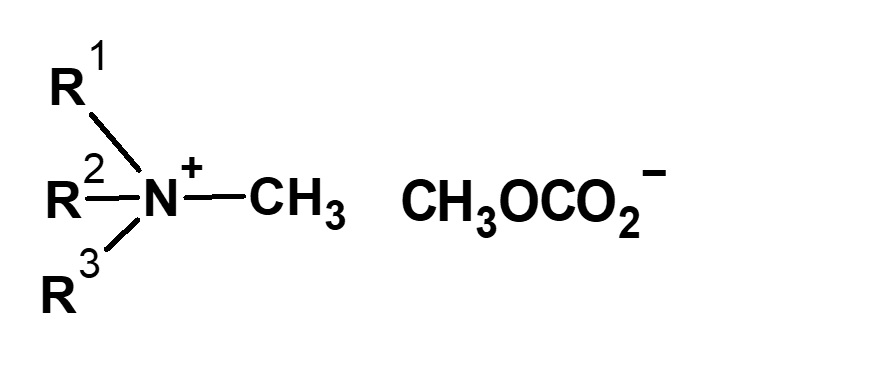
<br />
Surfactants must be stable under strong alkaline conditions and not impair the stability of sodium hypochlorite, and fatty acid soaps, sodium alkyl diphenyl ether disulfonates, sodium alkyl phenyl ether sulfates, and amine oxides are used alone or in combination. Amine oxide, etc. are used alone or in combination.</p>
</div>
</div>
</div>
</div>
<h6 class="cms-content-parts-sin171184169853362100" id="cms-editor-textarea-sin171184169853365500">Example of mold remover detergent formulation</h6>
<div class="cms-content-parts-sin171184170367410000 cparts-id96--01 box lay-margin-b--3" data-selectable="cparts-animate cparts-animate--slideInUp:上へスライド,cparts-animate cparts-animate--slideInDown:下へスライド,cparts-animate cparts-animate--slideInLeft:左へスライド,cparts-animate cparts-animate--slideInRight:右へスライド">
<div class="lay-row">
<div class="lay-col12-xs-12 lay-col12-md-12 lay-col12-lg-12">
<div class="cparts-table-block lay-reset-child" id="cms-editor-minieditor-sin171184170367378400">
<table>
    <caption class="lay-margin-t--1">　　　　</caption>
    <tbody>
        <tr>
            <td>Sodium hypochlorite</td>
            <td>Approx. 5%</td>
        </tr>
        <tr>
            <td>Sodium hydroxide</td>
            <td>Approx. 2%</td>
        </tr>
        <tr>
            <td>Surfactants (e.g., sodium alkyl diphenyl ether disulfonate)</td>
            <td>1 to 2 %</td>
        </tr>
        <tr>
            <td>Water</td>
            <td>remaining quantity</td>
        </tr>
        <tr>
            <td>Total amount</td>
            <td>100%</td>
        </tr>
    </tbody>
</table>
</div>
</div>
</div>
</div>
<h4 class="cms-content-parts-sin171184172206342100" id="cms-editor-textarea-sin171184172206348100">Toilet Detergent</h4>
<div class="cms-content-parts-sin171593161758296800 cparts-id119 lay-margin-b--3 box" data-selectable="cparts-animate cparts-animate--slideInUp:上へスライド,cparts-animate cparts-animate--slideInDown:下へスライド,cparts-animate cparts-animate--slideInLeft:左へスライド,cparts-animate cparts-animate--slideInRight:右へスライド">
<div class="lay-row">
<div class="lay-col12-xs-12 lay-col12-md-12 lay-col12-lg-12">
<div id="cms-editor-minieditor-sin171593161758264300" class="cparts-txt-block lay-reset-child">
<p>Toilet stains are mainly a combination of phosphoric acid, uric acid, and other substances derived from excreta, bacterial metabolites, and Ca and iron in tap water.<br />
<br />
Various detergents have been developed for different purposes as follows. For the purpose of actively removing stains, there are acidic types and alkaline types (chlorine-based).The acidic type has the function of dissolving stains with acid, with hydrochloric acid as the main ingredient and a cationic surfactant as a supplementary surfactant.<br />
<br />
Alkaline types, on the other hand, are similar to bathroom mildew removers in that they decompose stains through oxidation. Since this type of detergent generates chlorine gas that is harmful to the human body when mixed with acidic substances, the &#34;Household Goods Quality Labeling Law&#34; requires the labeling of &#34;Do not mix&#34; for each type of detergent.</p>
</div>
</div>
</div>
</div>
<h6 class="cms-content-parts-sin171184173479227400" id="cms-editor-textarea-sin171184173479235100">Example of toilet detergent (acidic type) formulation</h6>
<div class="cms-content-parts-sin171184173911484800 cparts-id96--01 box lay-margin-b--3" data-selectable="cparts-animate cparts-animate--slideInUp:上へスライド,cparts-animate cparts-animate--slideInDown:下へスライド,cparts-animate cparts-animate--slideInLeft:左へスライド,cparts-animate cparts-animate--slideInRight:右へスライド">
<div class="lay-row">
<div class="lay-col12-xs-12 lay-col12-md-12 lay-col12-lg-12">
<div class="cparts-table-block lay-reset-child" id="cms-editor-minieditor-sin171184173911452600">
<table>
    <caption class="lay-margin-t--1">　　　　</caption>
    <tbody>
        <tr>
            <td>hydrochloric acid</td>
            <td>9%</td>
        </tr>
        <tr>
            <td>Surfactants (e.g., lauryl dimethyl benzyl ammonium chloride)</td>
            <td>1%</td>
        </tr>
        <tr>
            <td>water</td>
            <td>remaining quantity</td>
        </tr>
        <tr>
            <td>total amount</td>
            <td>100%</td>
        </tr>
    </tbody>
</table>
</div>
</div>
</div>
</div>
<div class="cms-content-parts-sin171593162862846600 cparts-id119 lay-margin-b--3 box" data-selectable="cparts-animate cparts-animate--slideInUp:上へスライド,cparts-animate cparts-animate--slideInDown:下へスライド,cparts-animate cparts-animate--slideInLeft:左へスライド,cparts-animate cparts-animate--slideInRight:右へスライド">
<div class="lay-row">
<div class="lay-col12-xs-12 lay-col12-md-12 lay-col12-lg-12">
<div id="cms-editor-minieditor-sin171593162862814000" class="cparts-txt-block lay-reset-child">
<p>In order to prevent toilet bowl stains and provide a pleasant smell, a type of toilet bowl stain prevention detergent has been developed that is dissolved in the flushing water to clean and add fragrance the toilet bowl each time it is flushed.</p>
<p>&#160;While the aforementioned toilet detergents are used when cleaning the toilet, these detergents are used constantly when using the toilet. There are two types: an in-tank type that is thrown into the water tank of the flushing toilet, and an on-tank type that is placed on top of the tank where the supply water is applied.</p>
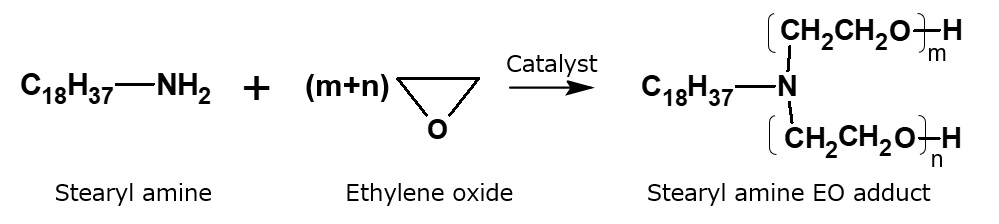
<p>&#160;In both cases, the key point is that they dissolve gradually in water, and special polyalkylene glycol is mainly used as the base agent.</p>
<div></div>
</div>
</div>
</div>
</div>
<h6 class="cms-content-parts-sin171184176443016700" id="cms-editor-textarea-sin171184176443024800">Example of detergent formulation for toilet bowl stain&#160;prevention</h6>
<div class="cms-content-parts-sin171184177254063100 cparts-id96--01 box lay-margin-b--3" data-selectable="cparts-animate cparts-animate--slideInUp:上へスライド,cparts-animate cparts-animate--slideInDown:下へスライド,cparts-animate cparts-animate--slideInLeft:左へスライド,cparts-animate cparts-animate--slideInRight:右へスライド">
<div class="lay-row">
<div class="lay-col12-xs-12 lay-col12-md-12 lay-col12-lg-12">
<div class="cparts-table-block lay-reset-child" id="cms-editor-minieditor-sin171184177254025600">
<table>
    <caption class="lay-margin-t--1">　　　　</caption>
    <tbody>
        <tr>
            <td>Slow-dissolving base with detergent properties (e.g., special polyalkylene glycols)</td>
            <td>Approx. 60%</td>

        </tr>
        <tr>
            <td>Inorganic salt (e.g., sodium sulfate)</td>
            <td>5 to 30%</td>
        </tr>
        <tr>
            <td>dyes</td>
            <td>4 to 5%</td>
        </tr>
        <tr>
            <td>fragrance</td>
            <td>small quantity</td>
        </tr>
        <tr>
            <td>total amount</td>
            <td>100%</td>
        </tr>
    </tbody>
</table>
</div>
</div>
</div>
</div>
<h2 class="cms-content-parts-sin171179638216465900" id="cms-editor-textarea-sin171179638216474000"><a name="shampoo"></a>Example of surfactant use in shampoo</h2>
<div class="cms-content-parts-sin171593163419709900 cparts-id119 lay-margin-b--3 box" data-selectable="cparts-animate cparts-animate--slideInUp:上へスライド,cparts-animate cparts-animate--slideInDown:下へスライド,cparts-animate cparts-animate--slideInLeft:左へスライド,cparts-animate cparts-animate--slideInRight:右へスライド">
<div class="lay-row">
<div class="lay-col12-xs-12 lay-col12-md-12 lay-col12-lg-12">
<div id="cms-editor-minieditor-sin171593163419675200" class="cparts-txt-block lay-reset-child">
<p>Shampoo is classified as a cosmetic, and is defined as a hair-washing cosmetic used to cleanse the scalp and hair, control dandruff and itching, and keep the scalp and hair clean and beautiful. The product must have adequate cleansing power to remove dirt but not too much sebum necessary for the scalp and hair, and must be safe for the scalp, hair, and eyes.</p>
<p>In addition, since the product is discharged as wastewater, biodegradability is also an important factor, as it is easily decomposed by activated sludge treatment and microorganisms in the natural world.</p>
</div>
</div>
</div>
</div>
<h5 class="cms-content-parts-sin171184196838831200" id="cms-editor-textarea-sin171184196838833000">Typical example of surfactants used in shampoo</h5>
<div class="cms-content-parts-sin171184201831380600 cparts-id96--01 box lay-margin-b--3" data-selectable="cparts-animate cparts-animate--slideInUp:上へスライド,cparts-animate cparts-animate--slideInDown:下へスライド,cparts-animate cparts-animate--slideInLeft:左へスライド,cparts-animate cparts-animate--slideInRight:右へスライド">
<div class="lay-row">
<div class="lay-col12-xs-12 lay-col12-md-12 lay-col12-lg-12">
<div class="cparts-table-block lay-reset-child" id="cms-editor-minieditor-sin171184201831423400">
<table>
    <caption class="lay-margin-t--1">　　　</caption>
    <tbody>
        <tr>
            <th style="text-align: center;">Classification</th>
            <th style="text-align: center;">Component</th>
            <th style="text-align: center;">Summary</th>
        </tr>
        <tr>
            <td>Anionic surfactant</td>
            <td>Alkyl sulfates (AS)<br />
            Alkyl ether sulfates (AES)</td>
            <td>General purpose anionic surfactant.<br />
            Often used in combination with hypoallergenic surfactants.</td>
        </tr>
        <tr>
            <td>Anionic surfactant</td>
            <td>Acylmethyl taurate (AMT)</td>
            <td>With a structure similar to taurocholic acid, a biological surfactant, it has excellent safety.</td>
        </tr>
        <tr>
            <td>Anionic surfactant</td>
            <td>Alkyl ether carboxylates (ECA)</td>
            <td>Low skin irritancy and similar structure to soap, <br />
            it is also biodegradable.</td>
        </tr>
        <tr>
            <td>Anionic surfactant</td>
            <td>Alkyl ether sulfosuccinate (SS)</td>
            <td>Low skin irritation and good foaming.<br />
            Easily hydrolyzed due to the presence of intramolecular ester bonds.<br />
            It should be handled in the neutral to slightly acidic pH range.</td>
        </tr>
        <tr>
            <td>Anionic surfactant</td>
            <td>N-Acylglutamate (AG)</td>
            <td>Amino acid surfactant produced&#160;from amino acids.<br />
            Lighter foam quality than AS and AES.<br />
            Low irritation to skin and eyes.</td>
        </tr>
        <tr>
            <td>Amphoteric&#160;&#160;surfactant</td>
            <td>Alkyl betaine (AB)<br />
            Alkylamidopropyl betaine (APB)</td>
            <td>General-purpose amphoteric surfactant</td>
        </tr>
        <tr>
            <td>Amphoteric&#160; surfactant</td>
            <td>Alkyl imidazolinium betaine (AIB)</td>
            <td>Low irritation, especially to the eyes</td>
        </tr>
        <tr>
            <td>Amphoteric&#160;&#160;surfactant</td>
            <td>Alkyl aminopropionates (APL)</td>
            <td>Amino acid type amphoteric surfactant.<br />
            Easily thickened in combination with anionic surfactants.</td>
        </tr>
    </tbody>
</table>
</div>
</div>
</div>
</div>
<h2 class="cms-content-parts-sin171184178467740600" id="cms-editor-textarea-sin171184178467748200"><a name="precision_patts"></a>Example of surfactant use in cleaning agents for precision parts</h2>
<div class="cms-content-parts-sin171593164453493200 cparts-id119 lay-margin-b--3 box" data-selectable="cparts-animate cparts-animate--slideInUp:上へスライド,cparts-animate cparts-animate--slideInDown:下へスライド,cparts-animate cparts-animate--slideInLeft:左へスライド,cparts-animate cparts-animate--slideInRight:右へスライド">
<div class="lay-row">
<div class="lay-col12-xs-12 lay-col12-md-12 lay-col12-lg-12">
<div id="cms-editor-minieditor-sin171593164453449600" class="cparts-txt-block lay-reset-child">
<p>In the industrial field, there are a multitude of different cleaning targets. For example, in the automotive industry, there are a vast number of parts, each of which has a different shape, size, material, and contamination composition. Furthermore, the level of cleanliness required after cleaning differs depending on the application of the parts. The same can be said for cleaning in the electrical, electronics, precision machinery, heat treatment, and plating industries.</p>
</div>
</div>
</div>
</div>
<h5 class="cms-content-parts-sin171184215262230100" id="cms-editor-textarea-sin171184215262237200">Examples of cleaning in various industrial fields</h5>
<div class="cms-content-parts-sin171184212367548700 cparts-id96--01 box lay-margin-b--3" data-selectable="cparts-animate cparts-animate--slideInUp:上へスライド,cparts-animate cparts-animate--slideInDown:下へスライド,cparts-animate cparts-animate--slideInLeft:左へスライド,cparts-animate cparts-animate--slideInRight:右へスライド">
<div class="lay-row">
<div class="lay-col12-xs-12 lay-col12-md-12 lay-col12-lg-12">
<div class="cparts-table-block lay-reset-child" id="cms-editor-minieditor-sin171184212367506700">
<table>
    <caption class="lay-margin-t--1">　　　</caption>
    <tbody>
        <tr>
            <th>Industrial Fields</th>
            <th>object to be cleaned</th>
            <th>Cleaning purpose</th>
        </tr>
        <tr>
            <td>Automotive industry</td>
            <td>Metal fabricated parts, automobile bodies</td>
            <td>Degreasing, removal of buffing compound, pre-paint treatment</td>
        </tr>
        <tr>
            <td>Electrical and electronics industry</td>
            <td>Printed circuit boards, semiconductor materials, electric motor materials, metalworking parts</td>
            <td>Flux removal, degreasing, pre-paint treatment</td>
        </tr>
        <tr>
            <td>Precision machinery industry</td>
            <td>Watches, photographic machine parts, bearings</td>
            <td>Degreasing, particulate removal</td>
        </tr>
        <tr>
            <td>Heat Treatment Industry</td>
            <td>Metalworking parts, powder metallurgy parts</td>
            <td>Removal of fat</td>
        </tr>
        <tr>
            <td>Plating industry</td>
            <td>Metalworking parts, resin processing parts</td>
            <td>Degreasing, removal of buffing compound</td>
        </tr>
    </tbody>
</table>
</div>
</div>
</div>
</div>
<h5 class="cms-content-parts-sin171184217070327800" id="cms-editor-textarea-sin171184217070336400">Type of stain</h5>
<div class="cms-content-parts-sin171184218238424400 cparts-id96--01 box lay-margin-b--3" data-selectable="cparts-animate cparts-animate--slideInUp:上へスライド,cparts-animate cparts-animate--slideInDown:下へスライド,cparts-animate cparts-animate--slideInLeft:左へスライド,cparts-animate cparts-animate--slideInRight:右へスライド">
<div class="lay-row">
<div class="lay-col12-xs-12 lay-col12-md-12 lay-col12-lg-12">
<div class="cparts-table-block lay-reset-child" id="cms-editor-minieditor-sin171184218238381600">
<table>
    <caption class="lay-margin-t--1">　　　</caption>
    <tbody>
        <tr>
            <td>Organic material</td>
            <td>Heat treatment oil, grease, drawing oil, cutting oil, press oil, rust inhibiting oil, and various other lubricants</td>
        </tr>
        <tr>
            <td>Inorganic material</td>
            <td>Machining scraps, burrs, abrasives, dust, rust</td>
        </tr>
        <tr>
            <td>Other</td>
            <td>Inks, fluxes, waxes, adhesives, etc.</td>
        </tr>
    </tbody>
</table>
</div>
</div>
</div>
</div>
<h3 class="cms-content-parts-sin171184222702876500" id="cms-editor-textarea-sin171184222702880400">Type of cleaning agents</h3>
<div class="cms-content-parts-sin171593165771427800 cparts-id119 lay-margin-b--3 box" data-selectable="cparts-animate cparts-animate--slideInUp:上へスライド,cparts-animate cparts-animate--slideInDown:下へスライド,cparts-animate cparts-animate--slideInLeft:左へスライド,cparts-animate cparts-animate--slideInRight:右へスライド">
<div class="lay-row">
<div class="lay-col12-xs-12 lay-col12-md-12 lay-col12-lg-12">
<div id="cms-editor-minieditor-sin171593165771396900" class="cparts-txt-block lay-reset-child">
<p>Cleaners that do not contain halogens are classified as aqueous, quasi-aqueous, or non-aqueous cleaners, as shown in the table below.</p>
</div>
</div>
</div>
</div>
<h6 class="cms-content-parts-sin171184248177586000" id="cms-editor-textarea-sin171184248177590000">Water-based cleaning agents</h6>
<div class="cms-content-parts-sin171593167100001300 cparts-id119 lay-margin-b--3 box" data-selectable="cparts-animate cparts-animate--slideInUp:上へスライド,cparts-animate cparts-animate--slideInDown:下へスライド,cparts-animate cparts-animate--slideInLeft:左へスライド,cparts-animate cparts-animate--slideInRight:右へスライド">
<div class="lay-row">
<div class="lay-col12-xs-12 lay-col12-md-12 lay-col12-lg-12">
<div id="cms-editor-minieditor-sin171593167099950100" class="cparts-txt-block lay-reset-child">
<p>Water-based cleaning agents are further classified as alkaline, neutral, and acidic.<br />
Alkaline cleaning agents, which are typical water-based cleaning agents, consist of surfactants, builders, antifoam agents, chelating agents, and rust inhibitors. Surfactants contribute to cleaning by wetting, lowering interfacial tension, emulsifying, dispersing, and solubilizing.</p>
</div>
</div>
</div>
</div>
<h6 class="cms-content-parts-sin171184248588301100" id="cms-editor-textarea-sin171184248588309800">Semi-aqueous cleaning agents</h6>
<div class="cms-content-parts-sin171593167822241600 cparts-id119 lay-margin-b--3 box" data-selectable="cparts-animate cparts-animate--slideInUp:上へスライド,cparts-animate cparts-animate--slideInDown:下へスライド,cparts-animate cparts-animate--slideInLeft:左へスライド,cparts-animate cparts-animate--slideInRight:右へスライド">
<div class="lay-row">
<div class="lay-col12-xs-12 lay-col12-md-12 lay-col12-lg-12">
<div id="cms-editor-minieditor-sin171593167822205400" class="cparts-txt-block lay-reset-child">
<p>The components of quasi-aqueous detergents are often solvents plus water, and they are effective in cleaning oil-based stains for which water-based detergents do not have sufficient cleaning power. Solvents used as quasi-aqueous cleaning agents are glycol ethers and terpenes, and these components plus water and surfactants are used as cleaning agents. Solvents such as glycol ethers have a relatively high flash point, which can be eliminated by adding 5-20% water, and are often classified as non-hazardous under the Fire Service Law.</p>
</div>
</div>
</div>
</div>
<h6 class="cms-content-parts-sin171184249540097200" id="cms-editor-textarea-sin171184249540105300">Non-aqueous cleaning agents</h6>
<div class="cms-content-parts-sin171593168556383300 cparts-id119 lay-margin-b--3 box" data-selectable="cparts-animate cparts-animate--slideInUp:上へスライド,cparts-animate cparts-animate--slideInDown:下へスライド,cparts-animate cparts-animate--slideInLeft:左へスライド,cparts-animate cparts-animate--slideInRight:右へスライド">
<div class="lay-row">
<div class="lay-col12-xs-12 lay-col12-md-12 lay-col12-lg-12">
<div id="cms-editor-minieditor-sin171593168556352000" class="cparts-txt-block lay-reset-child">
<p>Nonaqueous cleaners are classified as hydrocarbon-based, alcohol-based, and silicone-based.<br />
<br />
<strong>Hydrocarbon-based Cleaning Agents</strong><br />
Hydrocarbon-based cleaners are effective against oil-based stains. The main ingredients are normal paraffin, isoparaffin, and naphthenic hydrocarbons.<br />
Hydrocarbon-based cleaning agents are less corrosive to metals and can be recycled by distillation, making them economical. However, since they are flammable, the cleaning equipment must be explosion-proof.<br />
<br />
<strong>Alcohol-based Cleaning Agents</strong><br />
Isopropyl alcohol and ethyl alcohol are representative alcohol-based cleaning agents. Although they do not have high solubility in oil, they exhibit excellent cleaning power against water-soluble stains. They dry well and can be used as draining agents, but they have a low flash point and require adequate explosion-proof construction for cleaning equipment.</p>
<div></div>
</div>
</div>
</div>
</div>
<h5 class="cms-content-parts-sin171184225597966900" id="cms-editor-textarea-sin171184225597972300">Classification Table of Cleaning Agents</h5>
<div class="cms-content-parts-sin171184225941121600 cparts-id96--01 box lay-margin-b--3" data-selectable="cparts-animate cparts-animate--slideInUp:上へスライド,cparts-animate cparts-animate--slideInDown:下へスライド,cparts-animate cparts-animate--slideInLeft:左へスライド,cparts-animate cparts-animate--slideInRight:右へスライド">
<div class="lay-row">
<div class="lay-col12-xs-12 lay-col12-md-12 lay-col12-lg-12">
<div class="cparts-table-block lay-reset-child" id="cms-editor-minieditor-sin171184225941084900">
<table>
    <caption class="lay-margin-t--1">　　　</caption>
    <tbody>
        <tr>
            <th>Broad category</th>
            <th>Middle class</th>
            <th>Subclass</th>
        </tr>
        <tr>
            <td rowspan="2">Water system</td>
            <td>Water</td>
            <td>Pure water, deoxygenated water, tap water</td>
        </tr>
        <tr>
            <td>Alkaline<br />
            Neutral&#160;system<br />
            Acidic system</td>
            <td>Surfactants, Alkali Builders and Water<br />
            Surfactants and Water<br />
            Surfactants, Acids and Water</td>
        </tr>
        <tr>
            <td>Quasi-aqueous system</td>
            <td>Quasi-aqueous system</td>
            <td>Glycol ethers and water<br />
            Terpenes, surfactants and water<br />
            Silicones and Surfactants</td>
        </tr>
        <tr>
            <td>Non-aqueous</td>
            <td>Hydrocarbon-based<br />
            Alcohol-based<br />
            Silicone-based</td>
            <td>Naphthene, isoparaffin<br />
            Isopropyl alcohol, ethyl alcohol<br />
            Low molecular weight polydimethylsiloxane</td>
        </tr>
    </tbody>
</table>
</div>
</div>
</div>
</div>
<h3 class="cms-content-parts-sin171184226812016200" id="cms-editor-textarea-sin171184226812024200">Cleaning Method</h3>
<div class="cms-content-parts-sin171593169156554500 cparts-id119 lay-margin-b--3 box" data-selectable="cparts-animate cparts-animate--slideInUp:上へスライド,cparts-animate cparts-animate--slideInDown:下へスライド,cparts-animate cparts-animate--slideInLeft:左へスライド,cparts-animate cparts-animate--slideInRight:右へスライド">
<div class="lay-row">
<div class="lay-col12-xs-12 lay-col12-md-12 lay-col12-lg-12">
<div id="cms-editor-minieditor-sin171593169156519000" class="cparts-txt-block lay-reset-child">
<p>In industrial cleaning, the shapes and sizes of the objects to be cleaned are varied, and various methods are devised depending on the purpose and cleanliness, not to mention the selection of the most suitable cleaning agent. In general, the following physical methods are incorporated, followed by rinsing and drying processes as necessary to complete the cleaning process.<br />
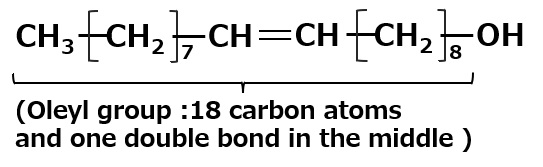
<br />
Cleaning in each industry must achieve the target level of cleanliness or quality problems will occur, so cleaning experiments, including cleaning equipment, are conducted repeatedly in advance.</p>
</div>
</div>
</div>
</div>
<div class="cms-content-parts-sin171184230148240400 cparts-id96--02 box lay-margin-b--3" data-selectable="cparts-animate cparts-animate--slideInUp:上へスライド,cparts-animate cparts-animate--slideInDown:下へスライド,cparts-animate cparts-animate--slideInLeft:左へスライド,cparts-animate cparts-animate--slideInRight:右へスライド">
<div class="lay-row">
<div id="cms-editor-minieditor-sin171184230148244800" class="cparts-table-block lay-col12-xs-12 lay-col12-md-12 lay-col12-lg-12 lay-reset-child">
<table>
    <caption class="lay-margin-t--1">　　　</caption>
    <tbody>
        <tr>
            <th>Ultrasonic cleaning</th>
            <td>A method of removing dirt from the surface of objects to be cleaned by the cavitation and micro-vibration effects produced by ultrasonic waves.</td>
        </tr>
        <tr>
            <th>Shower cleaning</th>
            <td>A cleaning method in which liquid jetted from a nozzle under pressure is applied to the object to be cleaned.<br />
            This cleaning method is more efficient than the soaking method or the ejection method.<br />
            However, this cleaning method tends to foam easily, and it is necessary to select a low-foaming cleaning agent.</td>
        </tr>
        <tr>
            <th>Sweep and wash</th>
            <td>Method to remove dirt by immersing the object to be cleaned in the liquid and rocking it up and down, left and right.</td>
        </tr>
        <tr>
            <th>Soak washing</th>
            <td>A cleaning method in which the object to be cleaned is soaked in a cleaning agent to remove stains.<br />
            A method that uses the dissolving and penetrating power of the cleaning solution to remove stains.</td>
        </tr>
        <tr>
            <th>Jet cleaning</th>
            <td>A method of removing dirt by a stream of cleaning agent sprayed from above, below, right and left onto the object to be cleaned immersed in the liquid.</td>
        </tr>
    </tbody>
</table>
</div>
</div>
</div>
<h2 class="cms-content-parts-sin171184207023181600" id="cms-editor-textarea-sin171184207023193200"><a name="related_products"></a>Related products(surfactants, detergent-related products)</h2>
<div class="cms-content-parts-sin171184228156167700 cparts-id119 lay-margin-b--3 box" data-selectable="cparts-animate cparts-animate--slideInUp:上へスライド,cparts-animate cparts-animate--slideInDown:下へスライド,cparts-animate cparts-animate--slideInLeft:左へスライド,cparts-animate cparts-animate--slideInRight:右へスライド">
<div class="lay-row">
<div class="lay-col12-xs-12 lay-col12-md-12 lay-col12-lg-12">
<div id="cms-editor-minieditor-sin171184228156136600" class="cparts-txt-block lay-reset-child">
<p>As a surfactant manufacturer, we offer a lineup of numerous surfactants and detergent-related products.</p>
</div>
</div>
</div>
</div>
<h3 class="cms-content-parts-sin171179641528149500" id="cms-editor-textarea-sin171179641528156400">Surfactants for laundry detergents and kitchen detergents</h3>
<div class="cms-content-parts-sin171713531007148500 box cparts-var03-type05 cparts-col3-block cparts-inline-block" data-reload="yes" data-selectable="cparts-animate cparts-animate--slideInUp:上へスライド,cparts-animate cparts-animate--slideInDown:下へスライド,cparts-animate cparts-animate--slideInLeft:左へスライド,cparts-animate cparts-animate--slideInRight:右へスライド">
<div class="cparts-img-block"><img alt="" class="cms-easy-edit" id="cms-editor-image-sin171713531007075200" src="https://sanyo-chemical-solutions.com/images/top/img_ep300_top.jpg" /></div>
<div class="cparts-body-block cparts-col3-height">
<div class="cparts-notes-block cms-easy-edit" id="cms-editor-minieditor-sin171713531007086500">
<ul>
    <li>Nonionic surfactant</li>
</ul>
</div>
<h4 class="cparts-ttl-block cms-easy-edit" id="cms-editor-textbox-sin171713531007094700">Polyoxyalkylene alkylamine-based surfactant &#34;PUREMEEL EP-300S&#34;</h4>
<div class="cparts-txt-block cms-easy-edit" id="cms-editor-minieditor-sin171713531007104500">
<p style="text-align: center;">Base detergent for clothes with excellent cleaning power against grease and oil stains</p>
<p style="text-align: center;"><a href="/products/ep300s/" class="dec-btn--primary">MORE</a></p>
</div>
</div>
</div>
<div class="cms-content-parts-sin171713530265159600 box cparts-var03-type05 cparts-col3-block cparts-inline-block" data-reload="yes" data-selectable="cparts-animate cparts-animate--slideInUp:上へスライド,cparts-animate cparts-animate--slideInDown:下へスライド,cparts-animate cparts-animate--slideInLeft:左へスライド,cparts-animate cparts-animate--slideInRight:右へスライド">
<div class="cparts-img-block"><img alt="" class="cms-easy-edit" id="cms-editor-image-sin171713530265093100" src="https://sanyo-chemical-solutions.com/images/top/img_sedoran_top.jpg" /></div>
<div class="cparts-body-block cparts-col3-height">
<div class="cparts-notes-block cms-easy-edit" id="cms-editor-minieditor-sin171713530265102600">
<ul>
    <li>Nonionic surfactant</li>
</ul>
</div>
<h4 class="cparts-ttl-block cms-easy-edit" id="cms-editor-textbox-sin171713530265109500">Low-foaming nonionic surfactant for machine and metal cleaning &#34;SEDORAN FF&#34;</h4>
<div class="cparts-txt-block cms-easy-edit" id="cms-editor-minieditor-sin171713530265116100">
<p style="text-align: center;">Low foaming and good foam breakability make it suitable for machine and metal cleaning by spraying or jet washing.</p>
<p style="text-align: center;"><a href="/products/sedoran/" class="dec-btn--primary">MORE</a></p>
</div>
</div>
</div>
<div class="cms-content-parts-sin171713735527739900 box cparts-var03-type05 cparts-col3-block cparts-inline-block" data-reload="yes" data-selectable="cparts-animate cparts-animate--slideInUp:上へスライド,cparts-animate cparts-animate--slideInDown:下へスライド,cparts-animate cparts-animate--slideInLeft:左へスライド,cparts-animate cparts-animate--slideInRight:右へスライド">
<div class="cparts-img-block"><img alt="" class="cms-easy-edit" id="cms-editor-image-sin171713735527679400" src="https://sanyo-chemical-solutions.com/images/top/img_ep300_top.jpg" /></div>
<div class="cparts-body-block cparts-col3-height">
<div class="cparts-notes-block cms-easy-edit" id="cms-editor-minieditor-sin171713735527687600">
<ul>
    <li>Nonionic surfactant</li>
</ul>
</div>
<h4 class="cparts-ttl-block cms-easy-edit" id="cms-editor-textbox-sin171713735527694600">Surfactant, antimicrobial agent, dispersant: categoly page</h4>
<div class="cparts-txt-block cms-easy-edit" id="cms-editor-minieditor-sin171713735527701200">
<p style="text-align: center;"></p>
<p style="text-align: center;"><a href="/products_info/surfactant/" class="dec-btn--primary">MORE</a></p>
</div>
</div>
</div>
<div class="cms-content-parts-sin171713530527508800 box cparts-var03-type05 cparts-col3-block cparts-inline-block" data-reload="yes" data-selectable="cparts-animate cparts-animate--slideInUp:上へスライド,cparts-animate cparts-animate--slideInDown:下へスライド,cparts-animate cparts-animate--slideInLeft:左へスライド,cparts-animate cparts-animate--slideInRight:右へスライド">
<div class="cparts-img-block"><img alt="img_newpolpe_wash (1)" class="cms-easy-edit" id="cms-editor-image-sin171713530527447100" src="https://sanyo-chemical-solutions.com/images/top/images2023092622144255.jpg" /></div>
<div class="cparts-body-block cparts-col3-height">
<div class="cparts-notes-block cms-easy-edit" id="cms-editor-minieditor-sin171713530527455100">
<ul>
    <li>Nonionic surfactant</li>
</ul>
</div>
<h4 class="cparts-ttl-block cms-easy-edit" id="cms-editor-textbox-sin171713530527462000">Polyoxyethylene - Polyoxypropylene Block Copolymer &#8221;NEWPOL PE&#8221;</h4>
<div class="cparts-txt-block cms-easy-edit" id="cms-editor-minieditor-sin171713530527468700">
<p style="text-align: center;">Lineup of products with distinctive features and a wide variety of functions can be added</p>
<p style="text-align: center;"><a href="/products/newpolpe/" class="dec-btn--primary">MORE</a></p>
</div>
</div>
</div>
<div class="cms-content-parts-sin171713510633885400 box cparts-var03-type05 cparts-col3-block cparts-inline-block" data-reload="yes" data-selectable="cparts-animate cparts-animate--slideInUp:上へスライド,cparts-animate cparts-animate--slideInDown:下へスライド,cparts-animate cparts-animate--slideInLeft:左へスライド,cparts-animate cparts-animate--slideInRight:右へスライド">
<div class="cparts-img-block"><img alt="" class="cms-easy-edit" id="cms-editor-image-sin171713510633889700" src="https://sanyo-chemical-solutions.com/images/top/img_ionicliquid.jpg" /></div>
<div class="cparts-body-block cparts-col3-height">
<div class="cparts-notes-block cms-easy-edit" id="cms-editor-minieditor-sin171713510633892200">
<ul>
    <li>Nonionic surfactant</li>
</ul>
</div>
<h4 class="cparts-ttl-block cms-easy-edit" id="cms-editor-textbox-sin171713510633893600">Nonionic Surfactants Catalog</h4>
<div class="cparts-txt-block cms-easy-edit" id="cms-editor-minieditor-sin171713510633894800">
<p style="text-align: center;">A list of properties of Sanyo Chemical's representative nonionic surfactants.</p>
<p style="text-align: center;"></p>
<p style="text-align: center;"><a href="/products/nonionic_surfactants/" class="dec-btn--primary">MORE</a></p>
</div>
</div>
</div>
<h3 class="cms-content-parts-sin171179649998711300" id="cms-editor-textarea-sin171179649998719900">Surfactants for cosmetics</h3>

<div class="cms-content-parts-sin171713574548598800 box cparts-var03-type05 cparts-col3-block cparts-inline-block" data-reload="yes" data-selectable="cparts-animate cparts-animate--slideInUp:上へスライド,cparts-animate cparts-animate--slideInDown:下へスライド,cparts-animate cparts-animate--slideInLeft:左へスライド,cparts-animate cparts-animate--slideInRight:右へスライド">
<div class="cparts-img-block"><img alt="" class="cms-easy-edit" id="cms-editor-image-sin171713574548602000" src="https://sanyo-chemical-solutions.com/images/top/img_beaulightshaa_top.jpg" /></div>
<div class="cparts-body-block cparts-col3-height">
<div class="cparts-notes-block cms-easy-edit" id="cms-editor-minieditor-sin171713574548603400">
<ul>
    <li>Cosmetic raw materials</li>
    <li>Anionic surfactant</li>
</ul>
</div>
<h4 class="cparts-ttl-block cms-easy-edit" id="cms-editor-textbox-sin171713574548604700">Anionic Surfactant for Cosmetics with Excellent Foaming Properties&#34;BEAULIGHT&#174; SHAA&#34;</h4>
<div class="cparts-txt-block cms-easy-edit" id="cms-editor-minieditor-sin171713574548606400">
<p style="text-align: center;">&#34;BEAULIGHT&#174; SHAA&#34; has a high foaming speed and forms a fine lather. As a hypoallergenic ingredient, it is suitable as a base material for shampoos, body soaps, etc.</p>
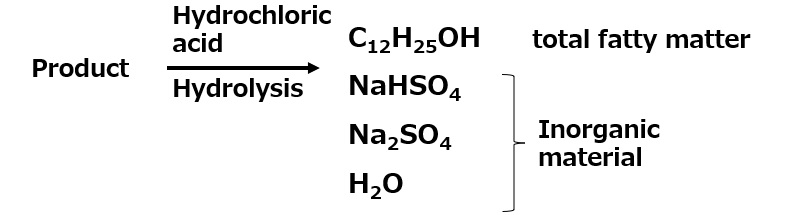
<p style="text-align: center;"><a href="/products/beaulightshaa/" class="dec-btn--primary">MORE</a></p>
</div>
</div>
</div>
<div class="cms-content-parts-sin171713718471552300 box cparts-var03-type05 cparts-col3-block cparts-inline-block" data-reload="yes" data-selectable="cparts-animate cparts-animate--slideInUp:上へスライド,cparts-animate cparts-animate--slideInDown:下へスライド,cparts-animate cparts-animate--slideInLeft:左へスライド,cparts-animate cparts-animate--slideInRight:右へスライド">
<div class="cparts-img-block"><img alt="img_beaulightlca-25n (1)" class="cms-easy-edit" id="cms-editor-image-sin171713718471478000" src="https://sanyo-chemical-solutions.com/images/top/images2023042621534935.jpg" /></div>
<div class="cparts-body-block cparts-col3-height">
<div class="cparts-notes-block cms-easy-edit" id="cms-editor-minieditor-sin171713718471486500">
<ul>
    <li>Cosmetic raw materials</li>
    <li>Anionic surfactant</li>
</ul>
</div>
<h4 class="cparts-ttl-block cms-easy-edit" id="cms-editor-textbox-sin171713718471496000">Biodegradable Ether Carboxylic Acid-based Hypoallergenic Detergent Base&#34;BEAULIGHT&#174; LCA-25N&#34;</h4>
<div class="cparts-txt-block cms-easy-edit" id="cms-editor-minieditor-sin171713718471503500">
<p style="text-align: center;">As a hypoallergenic detergent, &#34;BEAULIGHT&#174; LCA-25N&#34; is suitable for sulfate-free shampoos, body soaps, etc.</p>
<p style="text-align: center;"><a href="/products/excebiol/" class="dec-btn--primary">MORE</a></p>
</div>
</div>
</div>
<div class="cms-content-parts-sin171713577438716400 box cparts-var03-type05 cparts-col3-block cparts-inline-block" data-reload="yes" data-selectable="cparts-animate cparts-animate--slideInUp:上へスライド,cparts-animate cparts-animate--slideInDown:下へスライド,cparts-animate cparts-animate--slideInLeft:左へスライド,cparts-animate cparts-animate--slideInRight:右へスライド">
<div class="cparts-img-block"><img alt="" class="cms-easy-edit" id="cms-editor-image-sin171713577438649500" src="https://sanyo-chemical-solutions.com/images/top/img_piuseria_top.jpg" /></div>
<div class="cparts-body-block cparts-col3-height">
<div class="cparts-notes-block cms-easy-edit" id="cms-editor-minieditor-sin171713577438657600">
<ul>
    <li>Cosmetic raw materials</li>
    <li>Amphoteric surfactant</li>
</ul>
</div>
<h4 class="cparts-ttl-block cms-easy-edit" id="cms-editor-textbox-sin171713577438664500">Amino Acid Type Highly Functional Amphoteric Surfactant for Shampoo &#34;PIUSERIA&#174; AMC&#34;</h4>
<div class="cparts-txt-block cms-easy-edit" id="cms-editor-minieditor-sin171713577438671200">
<p style="text-align: center;">&#34;PIUSERIA&#174; AMC&#34; prevents itching and dandruff by reducing the amount of surfactant residue on the skin during shampooing.</p>
<p style="text-align: center;"><a href="/products/piuseriaamc/" class="dec-btn--primary">MORE</a></p>
</div>
</div>
</div>
<div class="cms-content-parts-sin171179656185152000 cparts-id96--01 box lay-margin-b--3" data-selectable="cparts-animate cparts-animate--slideInUp:上へスライド,cparts-animate cparts-animate--slideInDown:下へスライド,cparts-animate cparts-animate--slideInLeft:左へスライド,cparts-animate cparts-animate--slideInRight:右へスライド">
<div class="lay-row">
<div class="lay-col12-xs-12 lay-col12-md-12 lay-col12-lg-12">
<div class="cparts-table-block lay-reset-child" id="cms-editor-minieditor-sin171179656185155800"><table>     <caption class="lay-margin-t--1">&#160; &#160; &#160;</caption>     <tbody>         <tr>             <th>Links to Sanyo Chemical's corporate site</th></tr><tr><td><h6 style="font-family: &#34;Helvetica Neue&#34;, Helvetica, Arial, sans-serif; color: rgb(51, 51, 51);">Synthetic alcohol-based nonionic surfactant (low foaming)</h6>             <p><a href="https://www.sanyo-chemical.co.jp/products/en/199/" target="_blank" style="transition-property: all;">SEDORAN FF-180</a>,&#160;&#160;<a href="https://www.sanyo-chemical.co.jp/products/en/197/" target="_blank" style="transition-property: all;">SEDORAN FF-200</a>,&#160;&#160;<a href="https://www.sanyo-chemical.co.jp/products/en/196/" target="_blank" style="transition-property: all;">SEDORAN FF-210</a>,&#160;&#160;<a href="https://www.sanyo-chemical.co.jp/products/en/196/" target="_blank" style="transition-property: all;">SEDORAN FF-220</a>,&#160;&#160;<a href="https://www.sanyo-chemical.co.jp/products/en/200/" target="_blank" style="transition-property: all;">SEDORAN SF-506</a>,&#160;&#160;<a href="https://www.sanyo-chemical.co.jp/products/en/424/" target="_blank" style="transition-property: all;">SEDORAN SNP-112</a></p>             <h6 style="font-family: &#34;Helvetica Neue&#34;, Helvetica, Arial, sans-serif; color: rgb(51, 51, 51);">Synthetic alcohol-based nonionic surfactant (primary alcohol)</h6>             <p><a href="https://www.sanyo-chemical.co.jp/products/en/225/" target="_blank" style="transition-property: all;">NAROACTY CL-20</a>,&#160;<a href="https://www.sanyo-chemical.co.jp/products/en/224/" target="_blank" style="transition-property: all;">NAROACTY CL-40</a>,&#160;&#160;<a href="https://www.sanyo-chemical.co.jp/products/en/226/" target="_blank" style="transition-property: all;">NAROACTY CL-50</a>,&#160;&#160;<a href="https://www.sanyo-chemical.co.jp/products/en/227/" target="_blank" style="transition-property: all;">NAROACTY CL-70</a>,&#160;&#160;<a href="https://www.sanyo-chemical.co.jp/products/en/228/" target="_blank" style="transition-property: all;">NAROACTY CL-85</a>,&#160;&#160;<a href="https://www.sanyo-chemical.co.jp/products/en/229/" target="_blank" style="transition-property: all;">NAROACTY CL-95</a>,<br />             <a href="https://www.sanyo-chemical.co.jp/products/en/230/" target="_blank" style="transition-property: all;">NAROACTY CL-100</a>,&#160;&#160;<a href="https://www.sanyo-chemical.co.jp/products/en/231/" target="_blank" style="transition-property: all;">NAROACTY CL-120</a>,&#160;&#160;<a href="https://www.sanyo-chemical.co.jp/products/en/232/" target="_blank" style="transition-property: all;">NAROACTY CL-140</a>,&#160;&#160;<a href="https://www.sanyo-chemical.co.jp/products/en/233/" target="_blank" style="transition-property: all;">NAROACTY CL-160</a>,&#160;<a href="https://www.sanyo-chemical.co.jp/products/en/234/" target="_blank" style="transition-property: all;">&#160;NAROACTY CL-200</a>,&#160;&#160;<a href="https://www.sanyo-chemical.co.jp/products/en/235/" target="_blank" style="transition-property: all;">NAROACTY CL-400</a><br />             <a href="https://www.sanyo-chemical.co.jp/products/en/221/" target="_blank" style="transition-property: all;">NAROACTY ID-40</a>,&#160;&#160;<a href="https://www.sanyo-chemical.co.jp/products/en/223/" target="_blank" style="transition-property: all;">NAROACTY ID-60</a>,&#160;&#160;<a href="https://www.sanyo-chemical.co.jp/products/en/222/" target="_blank" style="transition-property: all;">NAROACTY ID-70</a><br />             <br />             <a href="https://www.sanyo-chemical.co.jp/products/en/191/" target="_blank" style="transition-property: all;">SANNONIC FN-80</a>,&#160;&#160;<a href="https://www.sanyo-chemical.co.jp/products/en/192/" target="_blank" style="transition-property: all;">SANNONIC FN-100</a>,&#160;&#160;<a href="https://www.sanyo-chemical.co.jp/products/en/193/" target="_blank" style="transition-property: all;">SANNONIC FN-140</a></p>             <h6 style="font-family: &#34;Helvetica Neue&#34;, Helvetica, Arial, sans-serif; color: rgb(51, 51, 51);">Synthetic alcohol-based nonionic surfactant (secondary alcohol)</h6>             <p><a href="https://www.sanyo-chemical.co.jp/products/en/302/" target="_blank" style="transition-property: all;">SANNONIC SS-30</a>,&#160; &#160;<a href="https://www.sanyo-chemical.co.jp/products/en/303/" target="_blank" style="transition-property: all;">SANNONIC SS-50</a>,&#160;&#160;<a href="https://www.sanyo-chemical.co.jp/products/en/306/" target="_blank" style="transition-property: all;">SANNONIC SS-70</a>,&#160;&#160;<a href="https://www.sanyo-chemical.co.jp/products/en/304/" target="_blank" style="transition-property: all;">SANNONIC SS-90</a>,&#160;&#160;<a href="https://www.sanyo-chemical.co.jp/products/en/305/" target="_blank" style="transition-property: all;">SANNONIC SS-120</a></p>             <h6 style="font-family: &#34;Helvetica Neue&#34;, Helvetica, Arial, sans-serif; color: rgb(51, 51, 51);">Natural alcohol-based nonionic surfactants (C12-C14)</h6>             <p><a href="https://www.sanyo-chemical.co.jp/products/en/33/" target="_blank" style="transition-property: all;">EMULMIN LS-80</a>,&#160;&#160;<a href="https://www.sanyo-chemical.co.jp/products/en/32/" target="_blank" style="transition-property: all;">EMULMIN LS-90</a><br />             <a href="https://www.sanyo-chemical.co.jp/products/en/60/" target="_blank" style="transition-property: all;">EMULMIN HL-100</a>,&#160;<a href="https://www.sanyo-chemical.co.jp/products/en/58/" target="_blank" style="transition-property: all;">EMULMIN FL-80</a>&#160;<span style="background-color: transparent; letter-spacing: 0.1rem;">,&#160;<a href="https://www.sanyo-chemical.co.jp/products/en/60/" target="_blank" style="transition-property: all;">EMULMIN FL-100</a><br />             <a href="https://www.sanyo-chemical.co.jp/products/en/53/" target="_blank" style="transition-property: all;">EMULMIN NL-70</a>,&#160;</span><span style="background-color: transparent;"><a href="https://www.sanyo-chemical.co.jp/products/en/50/" target="_blank" style="transition-property: all;">EMULMIN NL-80</a>,&#160;</span><span style="background-color: transparent;"><a href="https://www.sanyo-chemical.co.jp/products/en/49/" target="_blank" style="transition-property: all;">EMULMIN NL-90</a>,&#160;</span><span style="background-color: transparent;"><a href="https://www.sanyo-chemical.co.jp/products/en/51/" target="_blank" style="transition-property: all;">EMULMIN NL-100</a>,&#160;</span><span style="background-color: transparent; letter-spacing: 0.1rem;"><a href="https://www.sanyo-chemical.co.jp/products/en/52/" target="_blank" style="transition-property: all;">EMULMIN NL-110</a><br />             </span><a href="https://www.sanyo-chemical.co.jp/products/en/66/" target="_blank" style="transition-property: all;">EMULMIN CS-100W</a>,&#160;<span style="background-color: transparent; letter-spacing: 0.1rem;"><a href="https://www.sanyo-chemical.co.jp/products/en/295/" target="_blank" style="transition-property: all;">EMULMIN AF-101</a>&#160;</span><span style="background-color: transparent; letter-spacing: 0.1rem;"><br type="_moz" />             </span></p>             <h6 style="font-family: &#34;Helvetica Neue&#34;, Helvetica, Arial, sans-serif; color: rgb(51, 51, 51);">Natural alcohol-based nonionic surfactants (C16-C18)</h6>             <p><a href="https://www.sanyo-chemical.co.jp/products/en/43/" target="_blank" style="transition-property: all;">EMULMIN 40</a>,&#160;&#160;<span style="background-color: transparent; letter-spacing: 0.1rem;">&#160;</span><span style="background-color: transparent;"><a href="https://www.sanyo-chemical.co.jp/products/en/185/" target="_blank" style="transition-property: all;">EMULMIN 70</a>,&#160;&#160;</span><span style="background-color: transparent; letter-spacing: 0.1rem;">&#160;&#160;</span><span style="background-color: transparent;"><a href="https://www.sanyo-chemical.co.jp/products/en/46/" target="_blank" style="transition-property: all;">EMULMIN 180</a>,&#160;&#160;</span><span style="background-color: transparent;"><a href="https://www.sanyo-chemical.co.jp/products/en/47/" target="_blank" style="transition-property: all;">EMULMIN 240</a></span></p>             <h6 style="font-family: &#34;Helvetica Neue&#34;, Helvetica, Arial, sans-serif; color: rgb(51, 51, 51);">Natural alkylamine nonionic surfactant</h6>             <p><a href="https://www.sanyo-chemical.co.jp/products/en/72/" target="_blank" style="transition-property: all;">PUREMEEL EP-300S</a>,&#160;&#160;<a href="https://www.sanyo-chemical.co.jp/products/en/427/" target="_blank" style="transition-property: all;">PUREMEEL EP-360</a>,&#160;&#160;<a href="https://www.sanyo-chemical.co.jp/products/en/429/" target="_blank" style="transition-property: all;">&#160;<span style="background-color: transparent; letter-spacing: 0.1rem;">PUREMEEL</span></a><span style="background-color: transparent; letter-spacing: 0.1rem;"><a href="https://www.sanyo-chemical.co.jp/products/en/429/" style="transition-property: all;">&#160;CCS-80</a>,&#160;&#160;<a href="https://www.sanyo-chemical.co.jp/products/en/430/" target="_blank" style="transition-property: all;">PUREMEEL CF-60</a>,&#160;&#160;<a href="https://www.sanyo-chemical.co.jp/products/en/431/" target="_blank" style="transition-property: all;">PUREMEEL PPE-103</a>&#160;</span></p>             <h6 style="font-family: &#34;Helvetica Neue&#34;, Helvetica, Arial, sans-serif; color: rgb(51, 51, 51);">Fatty acid ester nonionic surfactant (PEG ester type)</h6>             <p><a href="https://www.sanyo-chemical.co.jp/products/en/20/" target="_blank" style="transition-property: all;">IONET MO-200</a>,&#160;&#160;<span style="background-color: transparent; letter-spacing: 0.1rem;"><a href="https://www.sanyo-chemical.co.jp/products/en/21/" target="_blank" style="transition-property: all;">IONET MO-400</a>,&#160;&#160;</span><span style="background-color: transparent; letter-spacing: 0.1rem;"><a href="https://www.sanyo-chemical.co.jp/products/en/22/" target="_blank" style="transition-property: all;">IONET MO-600</a>,&#160;&#160;</span><span style="background-color: transparent; letter-spacing: 0.1rem;"><a href="https://www.sanyo-chemical.co.jp/products/en/12/" target="_blank" style="transition-property: all;">IONET DO-400</a>,&#160;&#160;</span><span style="background-color: transparent; letter-spacing: 0.1rem;"><a href="https://www.sanyo-chemical.co.jp/products/en/10/" target="_blank" style="transition-property: all;">IONET DO-600</a>,&#160;&#160;</span><span style="background-color: transparent; letter-spacing: 0.1rem;"><a href="https://www.sanyo-chemical.co.jp/products/en/17/" target="_blank" style="transition-property: all;">IONET DO-1000</a></span><br />             <a href="https://www.sanyo-chemical.co.jp/products/en/23/" target="_blank" style="transition-property: all;">IONET MS-400</a>,&#160;&#160;<a href="https://www.sanyo-chemical.co.jp/products/en/26/" target="_blank" style="transition-property: all;">IONET MS-1000</a><a href="https://www.sanyo-chemical.co.jp/products/en/16/" target="_blank" style="transition-property: all;"><br />             IONET DL-200</a>,&#160;<a href="https://www.sanyo-chemical.co.jp/products/en/19/" target="_blank" style="transition-property: all;">IONET DS-400</a></p>             <h6 style="font-family: &#34;Helvetica Neue&#34;, Helvetica, Arial, sans-serif; color: rgb(51, 51, 51);">Fatty acid ester nonionic surfactant (sorbitan-based)</h6>             <p><a href="https://www.sanyo-chemical.co.jp/products/en/27/" target="_blank" style="transition-property: all;">IONET S-20</a>,&#160;<a href="https://www.sanyo-chemical.co.jp/products/en/14/" target="_blank" style="transition-property: all;">IONET S-60V</a>,&#160;<a href="https://www.sanyo-chemical.co.jp/products/en/24/" target="_blank" style="transition-property: all;">IONET S-80</a>,&#160;<a href="https://www.sanyo-chemical.co.jp/products/en/2/" target="_blank" style="transition-property: all;">IONET S-80S</a>,&#160;<a href="https://www.sanyo-chemical.co.jp/products/en/25/" target="_blank" style="transition-property: all;">IONET S-85</a>&#160; &#160;<br />             <a href="https://www.sanyo-chemical.co.jp/products/en/15/" target="_blank" style="transition-property: all;">IONET T-20C</a>,&#160;<a href="https://www.sanyo-chemical.co.jp/products/en/11/" target="_blank" style="transition-property: all;">IONET T-60V</a>,&#160;<a href="https://www.sanyo-chemical.co.jp/products/en/13/" target="_blank" style="transition-property: all;">&#160;IONET T-80V</a></p>             <h6 style="font-family: &#34;Helvetica Neue&#34;, Helvetica, Arial, sans-serif; color: rgb(51, 51, 51);">Pluronic type nonionic surfactant</h6>             <p style="margin-bottom: 45px;"><a href="https://www.sanyo-chemical.co.jp/products/en/244/" target="_blank" style="transition-property: all;">NEWPOL PE-34</a>,&#160;&#160;<a href="https://www.sanyo-chemical.co.jp/products/en/273/" target="_blank" style="transition-property: all;">NEWPOL PE-61</a>,&#160;&#160;<a href="https://www.sanyo-chemical.co.jp/products/en/274/" target="_blank" style="transition-property: all;">NEWPOL PE-62</a>,&#160;&#160;<a href="https://www.sanyo-chemical.co.jp/products/en/275/" target="_blank" style="transition-property: all;">NEWPOL PE-64</a>,&#160;&#160;<a href="https://www.sanyo-chemical.co.jp/products/en/276/" target="_blank" style="transition-property: all;">NEWPOL PE-68</a>,&#160;&#160;<a href="https://www.sanyo-chemical.co.jp/products/en/281/" target="_blank" style="transition-property: all;">NEWPOL PE-71</a>,&#160;&#160;<a href="https://www.sanyo-chemical.co.jp/products/en/277/" target="_blank" style="transition-property: all;">NEWPOL PE-74</a>,&#160;&#160;<br />             <a href="https://www.sanyo-chemical.co.jp/products/en/278/" target="_blank" style="transition-property: all;">NEWPOL PE-75</a>,&#160;&#160;<a href="https://www.sanyo-chemical.co.jp/products/en/279/" target="_blank" style="transition-property: all;">NEWPOL PE-78</a>,&#160;&#160;<a href="https://www.sanyo-chemical.co.jp/products/en/280/" target="_blank" style="transition-property: all;">NEWPOL PE-108</a>,&#160;&#160;<a href="https://www.sanyo-chemical.co.jp/products/en/236/" target="_blank" style="transition-property: all;">NEWPOL PE-108P</a>,&#160;&#160;<a href="https://www.sanyo-chemical.co.jp/products/en/253/" target="_blank" style="transition-property: all;">NEWPOL PE-128</a></p></td>         </tr>     </tbody> </table></div>
</div>
</div>
</div><h3 class="cms-content-parts-sin172013360632797000" id="cms-editor-textarea-sin172013360632814500">Related topics</h3><div class="cms-content-parts-sin172013362480135200 box cparts-var03-type05 cparts-col3-block cparts-inline-block" data-reload="yes" data-selectable="cparts-animate cparts-animate--slideInUp:上へスライド,cparts-animate cparts-animate--slideInDown:下へスライド,cparts-animate cparts-animate--slideInLeft:左へスライド,cparts-animate cparts-animate--slideInRight:右へスライド">
<div class="cparts-img-block"><img alt="" class="cms-easy-edit" id="cms-editor-image-sin172013362480168400" src="https://sanyo-chemical-solutions.com/images/top/img_surfactantbasics_emulsions.jpg" /></div>
<div class="cparts-body-block cparts-col3-height">
<div class="cparts-notes-block cms-easy-edit" id="cms-editor-minieditor-sin172013362480172900"><ul>     <li>Surfactant</li><li>Basics</li> </ul></div>
<h4 class="cparts-ttl-block cms-easy-edit" id="cms-editor-textbox-sin172013362480174500">Surfactant Basics 2 (Emulsion, Emulsifiers)</h4>
<div class="cparts-txt-block cms-easy-edit" id="cms-editor-minieditor-sin172013362480175700"><p style="text-align: center;"><a href="https://sanyo-chemical-solutions.com/technology/2024/04/102493/" class="dec-btn--primary">MORE</a></p></div>
</div>
</div><div class="cms-content-parts-sin172258101453022700 box cparts-var03-type05 cparts-col3-block cparts-inline-block" data-reload="yes" data-selectable="cparts-animate cparts-animate--slideInUp:上へスライド,cparts-animate cparts-animate--slideInDown:下へスライド,cparts-animate cparts-animate--slideInLeft:左へスライド,cparts-animate cparts-animate--slideInRight:右へスライド">
<div class="cparts-img-block"><img alt="" class="cms-easy-edit" id="cms-editor-image-sin172258101452960400" src="https://sanyo-chemical-solutions.com/images/products/peg/img_peg3.jpg" /></div>
<div class="cparts-body-block cparts-col3-height">
<div class="cparts-notes-block cms-easy-edit" id="cms-editor-minieditor-sin172258101452968400"><ul>     <li>Surfactant</li><li>Basics</li> </ul></div>
<h4 class="cparts-ttl-block cms-easy-edit" id="cms-editor-textbox-sin172258101452975200">Surfactant Basics 3 (Penetrants, Wetting Agents, Fabric Additives)</h4>
<div class="cparts-txt-block cms-easy-edit" id="cms-editor-minieditor-sin172258101452981800"><p style="text-align: center;"><a href="https://sanyo-chemical-solutions.com/technology/2024/04/102495/" class="dec-btn--primary">MORE</a></p></div>
</div>
</div>

<div class="cms-content-parts-sin171713863705410300 sanyo-pageLink" id="cms-editor-minieditor-sin171713863705432200" data-original="cms-content-parts-sin171713863705439600" data-custom="sanyo-pageLink"><!-- .parts_text_type01 -->
<ul>
    <li><a href="#intro">What is a surfactant?</a></li>
    <li><a href="#video">Surfactant functions introduction video</a></li>
    <li><a href="#cleaning_function">Surfactant's cleaning function</a></li>
    <li><a href="#interfacial_tension">Surfactant's ability to lower interfacial tension</a></li>
    <li><a href="#potential_energy">Cleaning and dirt potential energy</a></li>
    <li><a href="#laundry">Use of surfactants in laundry detergents</a></li>
    <li><a href="#kitchen">Examples of surfactant use in kitchen detergents</a></li>
    <li><a href="#housing">Examples of surfactant use in housing detergents</a></li>
    <li><a href="#shampoo">Example of surfactant use in shampoo</a></li>
    <li><a href="#precision_patts">Example of surfactant use in cleaning agents for precision parts</a></li>
    <li><a href="#precision_patts">Related products(surfactants, detergent-related products)</a></li>
    <br />
    <br />
    <br />
    <br />
</ul>
<!-- // .parts_text_type01 --></div><div class="cms-content-parts-sin171713587844772900 cparts-id119 lay-margin-b--3 box" data-selectable="cparts-animate cparts-animate--slideInUp:上へスライド,cparts-animate cparts-animate--slideInDown:下へスライド,cparts-animate cparts-animate--slideInLeft:左へスライド,cparts-animate cparts-animate--slideInRight:右へスライド">
<div class="lay-row">
<div class="lay-col12-xs-12 lay-col12-md-12 lay-col12-lg-12">
<div class="cparts-txt-block lay-reset-child" id="cms-editor-minieditor-sin171713587844777800">
<p><br />
This page has been prepared solely for information purposes.<br />
Sanyo Chemical Industries, Ltd. extends no warranties and makes no representations as to the accuracy or completeness of the information contained herein, and assumes no responsibility regarding the suitability of this information for any intended purposes or for any consequences of using this information.<br />
<br />
Any product information in this brochure is without obligation and commitment, and is subject to change at any time without prior notice.<br />
<br />
Consequently anyone acting on information contained in this brochure does so entirely at his/her own risk.In particular, final determination of suitability of any material described in this brochure, including patent liability for intended applications, is the sole responsibility of the user. Such materials may present unknown health hazards and should be used with caution. Although certain hazards may be described in this brochure, Sanyo Chemical Industries, Ltd. cannot guarantee that these are the only hazards that exist.</p>
</div>
</div>
</div>
</div>
]]></content:encoded>
</item>

<item rdf:about="https://sanyo-chemical-solutions.com/technology/2022/02/102491/">
<title>Antistatic Agents Basics</title>
<link>https://sanyo-chemical-solutions.com/technology/2022/02/102491/</link>
<description> Parmanent Antistic Agent Indtroduction Video Mechanism of Static Electrisity Generation Electrification of Plastics Why Do We Need Antistatic Agents Example of Plastic Products That Do Not Resist Static Electricity Antistatic What to Do Classification of Antistatic Agents Related Information 
[[CMSmodule.parts::ad#param=278]]
Permanent antistatic agent introduction video[[CMSmodule.parts::ad#param=311]]

[[CMSmodule.parts::ad#param=279]]
Mechanism of Static Electricity Generation&#160;


Charging refers to the phenomenon of an object becoming electrically charged, and electricity that is charged and remains motionless is called static electricity.The mechanism by which static electricity is generated is that when objects are rubbed against each other, electrons move between the objects, causing a positive and negative imbalance, and in the case of insulators such as plastic, the generated electricity cannot escape, resulting in the generation of a charge.
Positively charged and negatively charged
Some substances are positively charged and some are negatively charged.&#160;The order in which they are positively and negatively charged is called the charging sequence.When two materials are rubbed together, if they are close to each other in the charging sequence, such as human skin and cotton, static electricity will not be generated, but if they are far from each other in the charging sequence, such as polyvinyl chloride and hair, static electricity will easily be generated.Some of you may have rubbed a carpet pad against your head to generate static electricity when you were young. Many underlays are made of polyvinyl chloride, and the combination of the underlay and hair is extremely susceptible to static electricity.
Triboelectric series


[[CMSmodule.parts::ad#param=280]]
Why is Antistatic Needed?
There are three reasons why antistatic is necessary.&#160; Prevention of Dust AdhesionWhen you try to wipe off dirt, static electricity may cause dust to stick to the surface.Prevents electronic components from malfunctioning and short-circuitingElectrostatic disturbances occur in the manufacturing process of semiconductors and other products.&#160; Explosion-Proof ComplianceExplosion-proof compliance is mandatory for chemical plants, etc., and must be addressed. 


Plastic is an insulator, so it is easily electrically charged and dust adheres to the surface.


Antistatic Agent Addition Test to Prevent Dust Adhesion to Film
The figure below shows a comparison of films with and without antistatic agent added during film molding.&#160;The left image shows static electricity generation and dust adhesion, while the right film with added antistatic agent shows no dust adhesion.&#160;Dust and other contaminants are prevented from adhering to the film during production.&#160; 
[[CMSmodule.parts::ad#param=287]]
Examples of Plastic Products Where Static Electricity is Not Desirable (1)Prevention of Powder and Dust Adhesion
&#160;This shows applications where antistatic agents play an active role.&#160;&#160;They are used in films for electronic packaging materials, transparent dust boxes for cyclone vacuum cleaners, air conditioners, and medical applications such as powder aspirators and protective clothing.


Films&#160;(e.g., electronic packaging materials)&#160;


Inhaler (powder aspirator)&#160;


Transparent container (e.g., cyclone vacuum cleaner dust box)&#160;


Electrical appliances (e.g., air conditioners)&#160;


[[CMSmodule.parts::ad#param=288]]
Plastic Products Where Charging is Not Desirable (2)&#160;Explosion-Proof Compliance, Protection of Electronic Components
Other applications include explosion-proof helmets and flashlights, trays for electronic components, flexible containers for powders, and protective films.


Explosion-proof products (e.g., helmets)&#160;


Trays for electronic components (e.g. IC chip trays)&#160;


Flexible Container&#160;


Protective film (e.g. LCD protective film)


[[CMSmodule.parts::ad#param=290]]
Antistatic ・・・・ How can we help?
The reason static charge occurs is because friction occurs and static electricity does not escape.&#160;Plastics easily generate static electricity, so antistatic measures can be taken by allowing the generated electricity to escape.
Strategies to release electricity by preventing charging
Ionic Conduction Add an ionic substance and use moisture + ions to carry and release electricity. Electron Conduction Add a compound that conducts electricity well (conductor) to create a path for electricity to escape.&#160;
The purpose of antistatic of plastics and the target surface resistivity
The index of static charge is expressed in terms of surface resistivity. A high surface resistivity value causes charging.&#160;Since the targeted level of surface resistivity differs depending on the purpose, it is necessary to adjust the type and amount of antistatic agent added according to the purpose.&#160;The table below summarizes the antistatic phenomena, antistatic purposes, and applications for each surface resistivity value.&#160; Surface resistivity （&#937;/sq.） Electrification Antistatic purpose Application examples ＞1013 Static electricity builds up (Insulation) (Insulating material) 1012 〜 1013 Charged but slowly dissipates Preventions dust and dirt adhesion Vacuum cleaner dust box 1010 〜 1012 Charged but quickly dissipates Protection from sparks/explosions Explosion-proof helmet ＜&#160;1010 Non-charged Protection of electronic components and circuits Trays for electronic components 
[[CMSmodule.parts::ad#param=291]]
Classification of Antistatic Agents
Antistatic agents can be classified into those that conduct electricity on the surface of plastics and those that conduct electricity within the plastics themselves.&#160;Surfactants and conductive paints are applied, or conductive polymers or carbon black are kneaded into plastics.&#160;


1） Surfactant-type Antistatic Agent&#160;&#160;(Our Product &#34;CHEMISTAT&#34;, &#34;SANSTAT&#34;)&#160;
 Advantages Applicable Drawbacks Antistatic effect disappears over time or when washed in water 


2）Conductive Filler/Carbon Black (None of Our Products)
 Advantages Does not lose its effectiveness over time Drawbacks Lowered resin mechanical propertiesBecome a source of dustDifficult to control antistatic and conductive properties 


3）Conductive Polymers&#160;&#160;(Our Product: Permanent Antistatic Agent &#34;PELESTAT&#34;, &#34;PELECTRON&#34;)
 Advantages Does not lose its effectiveness over timeResin properties do not change Drawback Cannot be applied as a coating (Requires melting and mixing)&#160; 


If you are looking for an antistatic agent, give us a call!


Reference Data

 Performance Chemicals Functional Series No. 10 (Prevents Electrification) Sanyo Chemical News No.518 (Performance Chemicals) 


[[CMSmodule.parts::ad#param=292]]
Related Information and Topics
Related Products


 Permanent Antistatic Agents&#160;
 Permanent Antistatic Agents (Low Resistivity) &#34;PELECTRON&#34;Permanent Antistatic Agents (General Purpose) &#34;PELESTAT&#34;


 Surfactant-type Antistatic Agents&#160;
 Low Molecular Antistatic Agents &#34;CHEMISTAT&#34;


Technology Topics


 Additives for Resin 
Resin Molding Basics&#160;

MORE


 Parmanent Antistic Agent Indtroduction Video Mechanism of Static Electrisity Generation Electrification of Plastics Why Do We Need Antistatic Agents Example of Plastic Products That Do Not Resist Static Electricity Antistatic What to Do Classification of Antistatic Agents Related Information </description>
<dc:creator></dc:creator>
<dc:subject></dc:subject>
<dc:date>2022-02-17T13:30:00+09:00</dc:date>
<content:encoded><![CDATA[
<div class="cms-content-parts-sin164697598712054700 sanyo-pageLink" id="cms-editor-minieditor-sin164697598712059200" data-original="cms-content-parts-sin164697598712054700" data-custom="sanyo-pageLink"><ul>     <li><a href="#techinfo01">Parmanent Antistic Agent Indtroduction Video</a></li>     <li><a href="#techinfo02">Mechanism of Static Electrisity Generation</a></li>     <li><a href="#techinfo03">Electrification of Plastics</a></li>     <li><a href="#techinfo04">Why Do We Need Antistatic Agents</a></li>     <li><a href="#techinfo05">Example of Plastic Products That Do Not Resist Static Electricity</a></li>     <li><a href="#techinfo06">Antistatic What to Do</a></li>     <li><a href="#techinfo07">Classification of Antistatic Agents</a></li>     <li><a href="#techinfo08">Related Information</a></li> </ul></div>
<div class="cms-content-parts-sin164697664088470900">[[CMSmodule.parts::ad#param=278]]</div>
<h2 class="cms-content-parts-sin164758528715670000" id="cms-editor-textarea-sin164758528715672300">Permanent antistatic agent introduction video</h2><div class="cms-content-parts-sin172181160208231200">[[CMSmodule.parts::ad#param=311]]</div>

<div class="cms-content-parts-sin164697668446649200">[[CMSmodule.parts::ad#param=279]]</div>
<h2 class="cms-content-parts-sin164758534226500100" id="cms-editor-textarea-sin164758534226505700">Mechanism of Static Electricity Generation&#160;</h2>
<div class="cms-content-parts-sin164759623996816300"><!-- .parts_img_type19 -->
<div class="box parts_img_type19_box"><img alt="" class="cms-easy-edit" id="cms-editor-image-sin164759623996818900" src="https://sanyo-chemical-solutions.com/images/technology/antistatic/img_antistaic_electricitygeneration.jpg" width="675" /></div>
<!-- // .parts_img_type19 --></div>
<div class="cms-content-parts-sin164678810025317200" id="cms-editor-minieditor-sin164678810025321200"><p>Charging refers to the phenomenon of an object becoming electrically charged, and electricity that is charged and remains motionless is called static electricity.<br /><br />The mechanism by which static electricity is generated is that when objects are rubbed against each other, electrons move between the objects, causing a positive and negative imbalance, and in the case of insulators such as plastic, the generated electricity cannot escape, resulting in the generation of a charge.</p></div>
<h3 class="cms-content-parts-sin164759626532048500" id="cms-editor-textarea-sin164759626532051100">Positively charged and negatively charged</h3>
<div class="cms-content-parts-sin164759629558873200" id="cms-editor-minieditor-sin164759629558875900"><p>Some substances are positively charged and some are negatively charged.<br />&#160;The order in which they are positively and negatively charged is called the charging sequence.<br /><br />When two materials are rubbed together, if they are close to each other in the charging sequence, such as human skin and cotton, static electricity will not be generated, but if they are far from each other in the charging sequence, such as polyvinyl chloride and hair, static electricity will easily be generated.<br /><br />Some of you may have rubbed a carpet pad against your head to generate static electricity when you were young. Many underlays are made of polyvinyl chloride, and the combination of the underlay and hair is extremely susceptible to static electricity.</p></div>
<h3 class="cms-content-parts-sin164759632415525000" id="cms-editor-textarea-sin164759632415535000">Triboelectric series</h3>
<div class="cms-content-parts-sin164678811913174800"><!-- .parts_img_type19 -->
<div class="box parts_img_type19_box"><img alt="" class="cms-easy-edit" id="cms-editor-image-sin164678811913186500" src="https://sanyo-chemical-solutions.com/images/technology/antistatic/img_antistaic_triboelectricseries.jpg" width="675" /></div>
<!-- // .parts_img_type19 --></div>
<div class="cms-content-parts-sin164697671867039200">[[CMSmodule.parts::ad#param=280]]</div>
<h2 class="cms-content-parts-sin164758536250749800" id="cms-editor-textarea-sin164758536250753700">Why is Antistatic Needed?</h2>
<div class="cms-content-parts-sin164678820138613700" id="cms-editor-minieditor-sin164678820138621300"><p>There are three reasons why antistatic is necessary.&#160;</p> <ol>     <li><b>Prevention of Dust Adhesion</b><br />When you try to wipe off dirt, static electricity may cause dust to stick to the surface.<br /><br /></li><li><b>Prevents electronic components from malfunctioning and short-circuiting</b><br />Electrostatic disturbances occur in the manufacturing process of semiconductors and other products.<br /><b>&#160;</b></li>          <li><b>Explosion-Proof Compliance</b><br />Explosion-proof compliance is mandatory for chemical plants, etc., and must be addressed.</li> </ol></div>
<div class="cms-content-parts-sin164759644135653300 box cparts-id299--02 lay-row  lay-no-gutters lay-margin-b--3 dec-line--primary" data-reload="yes" data-selectable="cparts-animate cparts-animate--slideInUp:上へスライド,cparts-animate cparts-animate--slideInDown:下へスライド,cparts-animate cparts-animate--slideInLeft:左へスライド,cparts-animate cparts-animate--slideInRight:右へスライド">
<div class="lay-col12-12">
<div class="cparts-head-block">
<h3 class="cparts-id299--02__ttl dec-bg--contents cms-easy-edit" id="cms-editor-textbox-sin164759644135738600">Plastic is an insulator, so it is easily electrically charged and dust adheres to the surface.</h3>
</div>
<div class="cparts-body-block"><img alt="" class="cparts-img-block cms-easy-edit" id="cms-editor-image-sin164759644135740900" src="https://sanyo-chemical-solutions.com/images/technology/antistatic/img_antistaic_dust.jpg" width="215" /></div>
</div>
</div>
<h3 class="cms-content-parts-sin164759646171646900" id="cms-editor-textarea-sin164759646171649600">Antistatic Agent Addition Test to Prevent Dust Adhesion to Film</h3>
<div class="cms-content-parts-sin164759649088725200" id="cms-editor-minieditor-sin164759649088727300"><p>The figure below shows a comparison of films with and without antistatic agent added during film molding.&#160;<br />The left image shows static electricity generation and dust adhesion, while the right film with added antistatic agent shows no dust adhesion.&#160;<br />Dust and other contaminants are prevented from adhering to the film during production.&#160;</p> <p style="text-align: center;"><img src="https://sanyo-chemical-solutions.com/images/technology/antistatic/img_antistatic04.png" alt="" width="538" height="307" /></p></div>
<div class="cms-content-parts-sin164758381712154600">[[CMSmodule.parts::ad#param=287]]</div>
<h2 class="cms-content-parts-sin164758539023632300" id="cms-editor-textarea-sin164758539023635000">Examples of Plastic Products Where Static Electricity is Not Desirable (1)<br>Prevention of Powder and Dust Adhesion</h2>
<div class="cms-content-parts-sin164758370953024200" id="cms-editor-minieditor-sin164758370953031800"><p>&#160;This shows applications where antistatic agents play an active role.&#160;<br /><span style="letter-spacing: 0.1rem;">&#160;They are used in films for electronic packaging materials, transparent dust boxes for cyclone vacuum cleaners, air conditioners, and medical applications such as powder aspirators and protective clothing.</span></p></div>
<div class="cms-content-parts-sin164802328929031400 box cparts-var04-type08c lay-row" col-flex="1-4" data-selectable="cparts-animate cparts-animate--slideInUp:上へスライド,cparts-animate cparts-animate--slideInDown:下へスライド,cparts-animate cparts-animate--slideInLeft:左へスライド,cparts-animate cparts-animate--slideInRight:右へスライド">
<div class="cparts-body-block lay-col12-xs-12  lay-col12-md-3 lay-col12-lg-3">
<div class="cparts-img-block"><img alt="" class="cms-easy-edit" id="cms-editor-image-sin164802328928830900" src="https://sanyo-chemical-solutions.com/images/technology/antistatic/img_antistatic05.jpg" /></div>
<div class="cparts-txt-block" id="cms-editor-minieditor-sin164802328928882100"><p style="text-align: center;">Films&#160;<br />(e.g., electronic packaging materials)&#160;</p></div>
</div>
<div class="cparts-body-block lay-col12-xs-12  lay-col12-md-3 lay-col12-lg-3">
<div class="cparts-img-block"><img alt="" class="cms-easy-edit" id="cms-editor-image-sin164802328928897200" src="https://sanyo-chemical-solutions.com/images/technology/antistatic/img_antistatic06.jpg" /></div>
<div class="cparts-txt-block" id="cms-editor-minieditor-sin164802328928918300"><p style="text-align: center;">Inhaler <br />(powder aspirator)&#160;</p></div>
</div>
<div class="cparts-body-block lay-col12-xs-12  lay-col12-md-3 lay-col12-lg-3">
<div class="cparts-img-block"><img alt="" class="cms-easy-edit" id="cms-editor-image-sin164802328928931200" src="https://sanyo-chemical-solutions.com/images/technology/antistatic/img_antistatic07.jpg" /></div>
<div class="cparts-txt-block" id="cms-editor-minieditor-sin164802328928954400"><p style="text-align: center;">Transparent container <br />(e.g., cyclone vacuum cleaner dust box)&#160;</p></div>
</div>
<div class="cparts-body-block lay-col12-xs-12  lay-col12-md-3 lay-col12-lg-3">
<div class="cparts-img-block"><img alt="" class="cms-easy-edit" id="cms-editor-image-sin164802328928967500" src="https://sanyo-chemical-solutions.com/images/technology/antistatic/img_antistatic08.jpg" /></div>
<div class="cparts-txt-block" id="cms-editor-minieditor-sin164802328928987100"><p style="text-align: center;">Electrical appliances <br />(e.g., air conditioners)&#160;</p></div>
</div>
</div>
<div class="cms-content-parts-sin164758404518878100">[[CMSmodule.parts::ad#param=288]]</div>
<h2 class="cms-content-parts-sin164758541608294000" id="cms-editor-textarea-sin164758541608296600"><br>Plastic Products Where Charging is Not Desirable (2)&#160;<br>Explosion-Proof Compliance, Protection of Electronic Components</h2>
<div class="cms-content-parts-sin164759671836351600" id="cms-editor-minieditor-sin164759671836354300"><p>Other applications include explosion-proof helmets and flashlights, trays for electronic components, flexible containers for powders, and protective films.</p></div>
<div class="cms-content-parts-sin164802358517662700 box cparts-var04-type08c lay-row" col-flex="1-4" data-selectable="cparts-animate cparts-animate--slideInUp:上へスライド,cparts-animate cparts-animate--slideInDown:下へスライド,cparts-animate cparts-animate--slideInLeft:左へスライド,cparts-animate cparts-animate--slideInRight:右へスライド">
<div class="cparts-body-block lay-col12-xs-12  lay-col12-md-3 lay-col12-lg-3">
<div class="cparts-img-block"><img alt="" class="cms-easy-edit" id="cms-editor-image-sin164802358517499100" src="https://sanyo-chemical-solutions.com/images/technology/antistatic/img_antistatic09.jpg" /></div>
<div class="cparts-txt-block" id="cms-editor-minieditor-sin164802358517524100"><p style="text-align: center;">Explosion-proof products <br />(e.g., helmets)&#160;</p></div>
</div>
<div class="cparts-body-block lay-col12-xs-12  lay-col12-md-3 lay-col12-lg-3">
<div class="cparts-img-block"><img alt="" class="cms-easy-edit" id="cms-editor-image-sin164802358517537700" src="https://sanyo-chemical-solutions.com/images/technology/antistatic/img_antistatic10.jpg" /></div>
<div class="cparts-txt-block" id="cms-editor-minieditor-sin164802358517555800"><p style="text-align: center;">Trays for electronic components (e.g. IC chip trays)&#160;</p></div>
</div>
<div class="cparts-body-block lay-col12-xs-12  lay-col12-md-3 lay-col12-lg-3">
<div class="cparts-img-block"><img alt="" class="cms-easy-edit" id="cms-editor-image-sin164802358517568200" src="https://sanyo-chemical-solutions.com/images/technology/antistatic/img_antistatic11.jpg" /></div>
<div class="cparts-txt-block" id="cms-editor-minieditor-sin164802358517589600"><p style="text-align: center;">Flexible Container&#160;</p></div>
</div>
<div class="cparts-body-block lay-col12-xs-12  lay-col12-md-3 lay-col12-lg-3">
<div class="cparts-img-block"><img alt="" class="cms-easy-edit" id="cms-editor-image-sin164802358517601600" src="https://sanyo-chemical-solutions.com/images/technology/antistatic/img_antistatic12.jpg" /></div>
<div class="cparts-txt-block" id="cms-editor-minieditor-sin164802358517620500"><p style="text-align: center;">Protective film <br />(e.g. LCD protective film)</p></div>
</div>
</div>
<div class="cms-content-parts-sin164802058754555900">[[CMSmodule.parts::ad#param=290]]</div>
<h2 class="cms-content-parts-sin164759685778229300" id="cms-editor-textarea-sin164759685778231900">Antistatic ・・・・ How can we help?</h2>
<div class="cms-content-parts-sin164759688401354500" id="cms-editor-minieditor-sin164759688401356600"><p>The reason static charge occurs is because friction occurs and static electricity does not escape.&#160;<br />Plastics easily generate static electricity, so antistatic measures can be taken by allowing the generated electricity to escape.</p></div>
<h3 class="cms-content-parts-sin164759690526887900" id="cms-editor-textarea-sin164759690526891800">Strategies to release electricity by preventing charging</h3>
<div class="cms-content-parts-sin164759692041295100" id="cms-editor-minieditor-sin164759692041298900"><h4>Ionic Conduction</h4> <p>Add an ionic substance and use moisture + ions to carry and release electricity.</p> <h4>Electron Conduction</h4> <p>Add a compound that conducts electricity well (conductor) to create a path for electricity to escape.&#160;</p></div>
<h3 class="cms-content-parts-sin164759696085695000" id="cms-editor-textarea-sin164759696085697100">The purpose of antistatic of plastics and the target surface resistivity</h3>
<div class="cms-content-parts-sin164759697621745000" id="cms-editor-minieditor-sin164759697621747700"><p>The index of static charge is expressed in terms of surface resistivity. A high surface resistivity value causes charging.&#160;<br />Since the targeted level of surface resistivity differs depending on the purpose, it is necessary to adjust the type and amount of antistatic agent added according to the purpose.&#160;</p><p>The table below summarizes the antistatic phenomena, antistatic purposes, and applications for each surface resistivity value.&#160;</p> <table dir="ltr" cellspacing="0" cellpadding="0" border="0">     <tbody>         <tr>             <th style="text-align: center;" width="25%">Surface resistivity<br />             （&#937;/sq.）</th>             <th style="text-align: center;" width="25%">Electrification</th>             <th style="text-align: center;" width="25%">Antistatic purpose</th>             <th style="text-align: center;" width="25%">Application examples</th>         </tr>         <tr>             <td style="text-align: center;">＞10<span class="sanyoc-super"><span style="font-size: small;">13</span></span></td>             <td style="text-align: center;">Static electricity builds up</td>             <td style="text-align: center;">(Insulation)</td>             <td style="text-align: center;">(Insulating material)</td>         </tr>         <tr>             <td style="text-align: center;">10<span class="sanyoc-super"><span style="font-size: small;">12</span></span> 〜 10<span class="sanyoc-super"><span style="font-size: small;">13</span></span></td>             <td style="text-align: center;">Charged but slowly dissipates</td>             <td style="text-align: center;">Preventions dust and dirt adhesion</td>             <td style="text-align: center;">Vacuum cleaner dust box</td>         </tr>         <tr>             <td style="text-align: center;">10<span class="sanyoc-super"><span style="font-size: small;">10</span></span> 〜 10<span class="sanyoc-super"><span style="font-size: small;">12</span></span></td>             <td style="text-align: center;">Charged but quickly dissipates</td>             <td style="text-align: center;">Protection from sparks/explosions</td>             <td style="text-align: center;">Explosion-proof helmet</td>         </tr>         <tr>             <td style="text-align: center;">＜&#160;10<span class="sanyoc-super"><span style="font-size: small;">10</span></span></td>             <td style="text-align: center;">Non-charged</td>             <td style="text-align: center;">Protection of electronic components and circuits</td>             <td style="text-align: center;">Trays for electronic components</td>         </tr>     </tbody> </table> <p></p></div>
<div class="cms-content-parts-sin164802060097341700">[[CMSmodule.parts::ad#param=291]]</div>
<h2 class="cms-content-parts-sin164802042293321100" id="cms-editor-textarea-sin164802042293325100">Classification of Antistatic Agents</h2>
<div class="cms-content-parts-sin164802061741615000" id="cms-editor-minieditor-sin164802061741622800"><p>Antistatic agents can be classified into those that conduct electricity on the surface of plastics and those that conduct electricity within the plastics themselves.&#160;<br />Surfactants and conductive paints are applied, or conductive polymers or carbon black are kneaded into plastics.&#160;</p></div>
<div class="cms-content-parts-sin164802064158806900"><!-- .parts_img_type19 -->
<div class="box parts_img_type19_box"><img alt="" class="cms-easy-edit" id="cms-editor-image-sin164802064158811400" src="https://sanyo-chemical-solutions.com/images/technology/antistatic/img_antistaic_classification.jpg" width="675" /></div>
<!-- // .parts_img_type19 --></div>
<h3 class="cms-content-parts-sin164802065028089400" id="cms-editor-textarea-sin164802065028093200">1） Surfactant-type Antistatic Agent&#160;<br>&#160;(Our Product "CHEMISTAT", "SANSTAT")&#160;</h3>
<div class="cms-content-parts-sin164802075150698900" id="cms-editor-minieditor-sin164802075150708800"><!-- .parts_tabel_type02 --> <table>     <tbody>         <tr>             <th width="20%">Advantages</th>             <td><ul><li>Applicable</li></ul></td>         </tr>         <tr>             <th>Drawbacks</th>             <td><ul><li>Antistatic effect disappears over time or when washed in water</li></ul></td>         </tr>     </tbody> </table> <!-- // .parts_tabel_type02 --></div>
<div class="cms-content-parts-sin164802080846712900"><!-- .parts_img_type19 -->
<div class="box parts_img_type19_box"><img alt="" class="cms-easy-edit" id="cms-editor-image-sin164802080846719100" src="https://sanyo-chemical-solutions.com/images/technology/antistatic/img_antistaic_surfactant.jpg" width="675" /></div>
<!-- // .parts_img_type19 --></div>
<h3 class="cms-content-parts-sin164802081216007300" id="cms-editor-textarea-sin164802081216009800">2）Conductive Filler/Carbon Black (None of Our Products)</h3>
<div class="cms-content-parts-sin164802084728297000" id="cms-editor-minieditor-sin164802084728305200"><!-- .parts_tabel_type02 --> <table>     <tbody>         <tr>             <th width="20%">Advantages</th>             <td><ul><li>Does not lose its effectiveness over time</li></ul></td>         </tr>         <tr>             <th>Drawbacks</th>             <td><ul><li>Lowered resin mechanical properties</li><li>Become a source of dust</li><li>Difficult to control antistatic and conductive properties</li></ul></td>         </tr>     </tbody> </table> <!-- // .parts_tabel_type02 --></div>
<div class="cms-content-parts-sin164802083805874000"><!-- .parts_img_type19 -->
<div class="box parts_img_type19_box"><img alt="" class="cms-easy-edit" id="cms-editor-image-sin164802083805850900" src="https://sanyo-chemical-solutions.com/images/technology/antistatic/img_antistaic_carbonblack.jpg" width="675" /></div>
<!-- // .parts_img_type19 --></div>
<h3 class="cms-content-parts-sin164802092297896600" id="cms-editor-textarea-sin164802092297898800">3）Conductive Polymers&#160;<br>&#160;(Our Product: Permanent Antistatic Agent "PELESTAT", "PELECTRON")</h3>
<div class="cms-content-parts-sin164802086050356700" id="cms-editor-minieditor-sin164802086050364100"><!-- .parts_tabel_type02 --> <table>     <tbody>         <tr>             <th width="20%">Advantages</th>             <td><ul><li>Does not lose its effectiveness over time</li><li>Resin properties do not change</li></ul></td>         </tr>         <tr>             <th>Drawback</th>             <td><ul><li>Cannot be applied as a coating (Requires melting and mixing)&#160;</li></ul></td>         </tr>     </tbody> </table> <!-- // .parts_tabel_type02 --></div>
<div class="cms-content-parts-sin164802098461361400"><!-- .parts_img_type19 -->
<div class="box parts_img_type19_box"><img alt="" class="cms-easy-edit" id="cms-editor-image-sin164802098461365200" src="https://sanyo-chemical-solutions.com/images/technology/antistatic/img_antistaic_conductivepolymers.jpg" width="675" /></div>
<!-- // .parts_img_type19 --></div>
<div class="cms-content-parts-sin164802102426553000"><!-- .parts_img_type19 -->
<div class="box parts_img_type19_box"><img alt="" class="cms-easy-edit" id="cms-editor-image-sin164802102426555200" src="https://sanyo-chemical-solutions.com/images/technology/antistatic/img_antistaic_pele.jpg" width="675" /></div>
<!-- // .parts_img_type19 --></div>
<h5 class="cms-content-parts-sin164802103583346200" id="cms-editor-textarea-sin164802103583350000" style="text-align: center;">If you are looking for an antistatic agent, give us a call!</h5>
<div class="cms-content-parts-sin164802147309239300 box cparts-id299--01 lay-row lay-no-gutters lay-margin-b--3 dec-line--primary" data-reload="yes" data-selectable="cparts-animate cparts-animate--slideInUp:上へスライド,cparts-animate cparts-animate--slideInDown:下へスライド,cparts-animate cparts-animate--slideInLeft:左へスライド,cparts-animate cparts-animate--slideInRight:右へスライド">
<div class="lay-col12-12">
<div class="cparts-head-block">
<h3 class="cparts-id299--01__ttl dec-bg--contents cms-easy-edit" id="cms-editor-textbox-sin164802147309290400">Reference Data</h3>
</div>
<div class="cparts-body-block cms-easy-edit" id="cms-editor-minieditor-sin164802147309292700"><ul>     <li>Performance Chemicals Functional Series No. 10 (Prevents Electrification)</li>     <li>Sanyo Chemical News No.518 (Performance Chemicals)</li> </ul></div>
</div>
</div>
<div class="cms-content-parts-sin164802152995438500">[[CMSmodule.parts::ad#param=292]]</div>
<h2 class="cms-content-parts-sin164802154041600300" id="cms-editor-textarea-sin164802154041603600">Related Information and Topics</h2>
<h3 class="cms-content-parts-sin164802165210488100" id="cms-editor-textarea-sin164802165210492100">Related Products</h3>

<div class="cms-content-parts-sin164802157646586200" data-original="cms-content-parts-sin164802157646586200" style="margin-bottom:45px;"><!-- .parts_text_type09 -->
<div class="explanList">
<dl>
    <dt class="cms-easy-edit" id="cms-editor-minieditor-sin164802157646545200"><div>Permanent Antistatic Agents&#160;</div></dt>
    <dd class="cms-easy-edit" id="cms-editor-minieditor-sin164802157646554100"><ul><li><a href="/products/pelectron/">Permanent Antistatic Agents (Low Resistivity) &#34;PELECTRON&#34;</a></li><li><a href="/products/pelestat/">Permanent Antistatic Agents (General Purpose) &#34;PELESTAT&#34;</a></li></ul></dd>
</dl>
</div>
<!-- // .parts_text_type09 --></div><div class="cms-content-parts-sin167124317318834700" data-original="cms-content-parts-sin167124317318834700" style="margin-bottom:45px;"><!-- .parts_text_type09 -->
<div class="explanList">
<dl>
    <dt class="cms-easy-edit" id="cms-editor-minieditor-sin167124317318798100"><div>Surfactant-type Antistatic Agents&#160;</div></dt>
    <dd class="cms-easy-edit" id="cms-editor-minieditor-sin167124317318805700"><ul><li><a href="/products/chemistat/">Low Molecular Antistatic Agents &#34;CHEMISTAT&#34;</a></li></ul></dd>
</dl>
</div>
<!-- // .parts_text_type09 --></div>

<h3 class="cms-content-parts-sin164802166339812800" id="cms-editor-textarea-sin164802166339864100">Technology Topics</h3>
<div class="cms-content-parts-sin164758544802793700 box cparts-var03-type05 cparts-col3-block cparts-inline-block" data-reload="yes" data-selectable="cparts-animate cparts-animate--slideInUp:上へスライド,cparts-animate cparts-animate--slideInDown:下へスライド,cparts-animate cparts-animate--slideInLeft:左へスライド,cparts-animate cparts-animate--slideInRight:右へスライド">
<div class="cparts-img-block"><img alt="" class="cms-easy-edit" id="cms-editor-image-sin164758544802797700" src="https://sanyo-chemical-solutions.com/images/technology/resin/pho_resin.jpg" /></div>
<div class="cparts-body-block cparts-col3-height">
<div class="cparts-notes-block cms-easy-edit" id="cms-editor-minieditor-sin164758544802798000"><ul>     <li>Additives for Resin</li> </ul></div>
<h4 class="cparts-ttl-block cms-easy-edit" id="cms-editor-textbox-sin164758544802798200">Resin Molding Basics&#160;</h4>
<div class="cparts-txt-block cms-easy-edit" id="cms-editor-minieditor-sin164758544802798500">
<p style="text-align: center;"><a href="/technology/2022/02/102490/">MORE</a></p>
</div>
</div>
</div>
<div class="cms-content-parts-sin167124329774741200 sanyo-pageLink" id="cms-editor-minieditor-sin167124329774749700" data-original="cms-content-parts-sin167124329774741200" data-custom="sanyo-pageLink"><ul>     <li><a href="#techinfo01">Parmanent Antistic Agent Indtroduction Video</a></li>     <li><a href="#techinfo02">Mechanism of Static Electrisity Generation</a></li>     <li><a href="#techinfo03">Electrification of Plastics</a></li>     <li><a href="#techinfo04">Why Do We Need Antistatic Agents</a></li>     <li><a href="#techinfo05">Example of Plastic Products That Do Not Resist Static Electricity</a></li>     <li><a href="#techinfo06">Antistatic What to Do</a></li>     <li><a href="#techinfo07">Classification of Antistatic Agents</a></li>     <li><a href="#techinfo08">Related Information</a></li> </ul></div>
]]></content:encoded>
</item>

<item rdf:about="https://sanyo-chemical-solutions.com/technology/2022/02/102490/">
<title>Plastics Molding Basics</title>
<link>https://sanyo-chemical-solutions.com/technology/2022/02/102490/</link>
<description> Molding Method for Thermoplastic Resin What is a Lubricant Forming Process, Mold Release Issues Lubricant Effect Related Products, Topics 
[[CMSmodule.parts::ad#param=278]]
Thermoplastic Molding Methods
 Extrusion molding Injection molding Blow molding 
1.&#160;Extrusion molding In extrusion molding, molten resin is extruded through an extrusion port called a die or dies by a screw in an extruder cylinder and cooled in air or moisture as it solidifies. This method is suitable for continuously forming molded products with an unchanging cross-sectional shape.&#160;It is broadly classified into pipe molding, sheet molding, film molding, and filament molding, and film molding is further classified into T-die molding, inflation molding, laminate molding, and stretched film.Extrusion molding is similar to injection molding since the resin is extruded by a screw, but the difference is that in injection molding, the resin is injected into the mold and shaped, whereas in extrusion molding, the resin is shaped by the shape of the extrusion opening.


2.&#160;Injection molding This is a molding method in which molten resin is injected into a mold by a screw in an extruder cylinder. A molding method that produces three-dimensional shaped molded products such as buckets and bottles. Materials are heated to melt, fed into a mold, and then cooled to create a molded product. 


3.&#160;Blow Molding Blow molding is a molding process in which thermally melted resin is extruded into a pipe shape, compressed air is blown in while the resin is soft, and the resin is pressed against the mold to cool and solidify. Molding method for making hollow molded products with small openings, such as shampoo containers, even with three-dimensional shapes. 


[[CMSmodule.parts::ad#param=279]]
What is a lubricant?
Lubricants are agents added to thermoplastic resins during heat molding to improve their fluidity for easier processing and to make it easier to remove molded products from the mold.&#160;They are additives that play an active role in the melting, molding, and demolding processes.&#160;

Lubricants are agents added to thermoplastic resins during heat molding to improve their fluidity and facilitate processing and to make it easier to remove molded products from the mold (mold release). (Ref: Dictionary of Chemistry)


[[CMSmodule.parts::ad#param=280]]
Molding Process and Mold Release Issues
Major Causes of Poor Resin Flow During Molding Process Frictional resistance between the molten resin liquid and the inner wall of the molding machine is high. The resin melt itself is highly viscous and difficult to flow.At the beginning of melting, the frictional resistance between the resins becomes large and the viscosity increases rapidly. The Main Cause of Poor Mold Release... After processing, the resin adheres to the inner walls of the molding machine.
[[CMSmodule.parts::ad#param=287]]
Effect of Lubricant (Low Molecular Polyolefin)
 Improved flowability of resin melt.&#160; Prevent viscosity increase of resin pellets at the beginning stage of melting. Reduce the viscosity of polyolefin resin during molding. When molds are used, the adhesive force between the hardened resin and the mold is reduced. (Aacceleration of mold release) 


Reference Data

 My First Plastic Isao Sato Introduction to Polymeric Agents, supervised by Takehiko Fujimoto, Sanyo Chemical Co. Performance Chemicals Function Series No. 7 (Flexible and Plastic Functions) Performance Chemicals Function Series No. 8 (Thickening and Thinning Functions) 


[[CMSmodule.parts::ad#param=288]]
Related Products, Topics


 Lubricants &#34;Viscol&#34;, &#34;SANWAX&#34;
 Lubricants: Click here for the VISCOL and SANWAX product introduction page


 Antistatic agent 
Antistatic Agent Basics

MORE


 Molding Method for Thermoplastic Resin What is a Lubricant Forming Process, Mold Release Issues Lubricant Effect Related Products, Topics </description>
<dc:creator></dc:creator>
<dc:subject></dc:subject>
<dc:date>2022-02-10T13:30:00+09:00</dc:date>
<content:encoded><![CDATA[
<div class="cms-content-parts-sin164697598712054700 sanyo-pageLink" id="cms-editor-minieditor-sin164697598712059200" data-original="cms-content-parts-sin164697598712054700" data-custom="sanyo-pageLink"><ul>     <li><a href="#techinfo01">Molding Method for Thermoplastic Resin</a></li>     <li><a href="#techinfo02">What is a Lubricant</a></li>     <li><a href="#techinfo03">Forming Process, Mold Release Issues</a></li>     <li><a href="#techinfo04">Lubricant Effect</a></li>     <li><a href="#techinfo05">Related Products, Topics</a></li> </ul></div>
<div class="cms-content-parts-sin164697664088470900">[[CMSmodule.parts::ad#param=278]]</div>
<h2 class="cms-content-parts-sin164758528715670000" id="cms-editor-textarea-sin164758528715672300">Thermoplastic Molding Methods</h2>
<div class="cms-content-parts-sin164678801855965200" id="cms-editor-minieditor-sin164678801855971000"><ol>     <li>Extrusion molding</li>     <li>Injection molding</li>     <li>Blow molding</li> </ol></div>
<div class="cms-content-parts-sin164758323378322000" id="cms-editor-minieditor-sin164758323378326400"><h3>1.&#160;Extrusion molding</h3> <p>In extrusion molding, molten resin is extruded through an extrusion port called a die or dies by a screw in an extruder cylinder and cooled in air or moisture as it solidifies. This method is suitable for continuously forming molded products with an unchanging cross-sectional shape.&#160;It is broadly classified into pipe molding, sheet molding, film molding, and filament molding, and film molding is further classified into T-die molding, inflation molding, laminate molding, and stretched film.</p><p>Extrusion molding is similar to injection molding since the resin is extruded by a screw, but the difference is that in injection molding, the resin is injected into the mold and shaped, whereas in extrusion molding, the resin is shaped by the shape of the extrusion opening.</p></div>
<div class="cms-content-parts-sin164758327090625900" col-flex="1-2" data-selectable="cparts-animate cparts-animate--slideInUp:上へスライド,cparts-animate cparts-animate--slideInDown:下へスライド,cparts-animate cparts-animate--slideInLeft:左へスライド,cparts-animate cparts-animate--slideInRight:右へスライド">
<div class="box clearfix lay-row">
<div class="parts_img_type05_box lay-col12-xs-12  lay-col12-md-6 lay-col12-lg-6"><img alt="" class="cms-easy-edit" id="cms-editor-image-sin164758327090659800" src="https://sanyo-chemical-solutions.com/images/technology/resin/img_molding_extruder.jpg" width="330" /></div>
<div class="parts_img_type05_box lay-col12-xs-12  lay-col12-md-6 lay-col12-lg-6"><img alt="" class="cms-easy-edit" id="cms-editor-image-sin164758327090660400" src="https://sanyo-chemical-solutions.com/images/technology/resin/img_resin02.jpg" width="330" /></div>
</div>
</div>
<div class="cms-content-parts-sin164758327960693900" id="cms-editor-minieditor-sin164758327960701400"><h3>2.&#160;Injection molding</h3> <p>This is a molding method in which molten resin is injected into a mold by a screw in an extruder cylinder.</p> <ul>     <li>A molding method that produces three-dimensional shaped molded products such as buckets and bottles.</li>     <li>Materials are heated to melt, fed into a mold, and then cooled to create a molded product.</li> </ul></div>
<div class="cms-content-parts-sin164758335129888300" col-flex="1-2" data-selectable="cparts-animate cparts-animate--slideInUp:上へスライド,cparts-animate cparts-animate--slideInDown:下へスライド,cparts-animate cparts-animate--slideInLeft:左へスライド,cparts-animate cparts-animate--slideInRight:右へスライド">
<div class="box clearfix lay-row">
<div class="parts_img_type05_box lay-col12-xs-12  lay-col12-md-6 lay-col12-lg-6"><img alt="" class="cms-easy-edit" id="cms-editor-image-sin164758335129892500" src="https://sanyo-chemical-solutions.com/images/technology/resin/img_resin03.png" width="330" /></div>
<div class="parts_img_type05_box lay-col12-xs-12  lay-col12-md-6 lay-col12-lg-6"><img alt="" class="cms-easy-edit" id="cms-editor-image-sin164758335129892800" src="https://sanyo-chemical-solutions.com/images/technology/resin/img_resin04.jpg" width="330" /></div>
</div>
</div>
<div class="cms-content-parts-sin164758334744012000" id="cms-editor-minieditor-sin164758334744021200"><h3>3.&#160;Blow Molding</h3> <ul>     <li>Blow molding is a molding process in which thermally melted resin is extruded into a pipe shape, compressed air is blown in while the resin is soft, and the resin is pressed against the mold to cool and solidify.<br /></li>     <li>Molding method for making hollow molded products with small openings, such as shampoo containers, even with three-dimensional shapes.</li> </ul></div>
<div class="cms-content-parts-sin164758340084921200" col-flex="1-2" data-selectable="cparts-animate cparts-animate--slideInUp:上へスライド,cparts-animate cparts-animate--slideInDown:下へスライド,cparts-animate cparts-animate--slideInLeft:左へスライド,cparts-animate cparts-animate--slideInRight:右へスライド">
<div class="box clearfix lay-row">
<div class="parts_img_type05_box lay-col12-xs-12  lay-col12-md-6 lay-col12-lg-6"><img alt="" class="cms-easy-edit" id="cms-editor-image-sin164758340084954500" src="https://sanyo-chemical-solutions.com/images/technology/resin/img_molding_blow.jpg" width="330" /></div>
<div class="parts_img_type05_box lay-col12-xs-12  lay-col12-md-6 lay-col12-lg-6"><img alt="" class="cms-easy-edit" id="cms-editor-image-sin164758340084955100" src="https://sanyo-chemical-solutions.com/images/technology/resin/img_resin06.jpg" width="330" /></div>
</div>
</div>
<div class="cms-content-parts-sin164697668446649200">[[CMSmodule.parts::ad#param=279]]</div>
<h2 class="cms-content-parts-sin164758534226500100" id="cms-editor-textarea-sin164758534226505700">What is a lubricant?</h2>
<div class="cms-content-parts-sin164678810025317200" id="cms-editor-minieditor-sin164678810025321200"><p>Lubricants are agents added to thermoplastic resins during heat molding to improve their fluidity for easier processing and to make it easier to remove molded products from the mold.&#160;<br />They are additives that play an active role in the melting, molding, and demolding processes.&#160;</p></div>
<div class="cms-content-parts-sin164758358256837000"><!-- .parts_text_type02 -->
<div class="box parts_text_type02" id="cms-editor-minieditor-sin164758358256842200"><p>Lubricants are agents added to thermoplastic resins during heat molding to improve their fluidity and facilitate processing and to make it easier to remove molded products from the mold (mold release). (Ref: Dictionary of Chemistry)</p></div>
<!-- // .parts_text_type02 --></div>
<div class="cms-content-parts-sin164678811913174800"><!-- .parts_img_type19 -->
<div class="box parts_img_type19_box"><img alt="" class="cms-easy-edit" id="cms-editor-image-sin164678811913186500" src="https://sanyo-chemical-solutions.com/images/technology/resin/img_molding_lubricant.jpg" width="675" /></div>
<!-- // .parts_img_type19 --></div>
<div class="cms-content-parts-sin164697671867039200">[[CMSmodule.parts::ad#param=280]]</div>
<h2 class="cms-content-parts-sin164758536250749800" id="cms-editor-textarea-sin164758536250753700">Molding Process and Mold Release Issues</h2>
<div class="cms-content-parts-sin164678820138613700" id="cms-editor-minieditor-sin164678820138621300"><h3>Major Causes of Poor Resin Flow During Molding Process</h3> <ol>     <li>Frictional resistance between the molten resin liquid and the inner wall of the molding machine is high.</li>     <li>The resin melt itself is highly viscous and difficult to flow.</li><li>At the beginning of melting, the frictional resistance between the resins becomes large and the viscosity increases rapidly.</li>      </ol> <h3>The Main Cause of Poor Mold Release...</h3>      <p>After processing, the resin adheres to the inner walls of the molding machine.</p></div>
<div class="cms-content-parts-sin164758381712154600">[[CMSmodule.parts::ad#param=287]]</div>
<h2 class="cms-content-parts-sin164758539023632300" id="cms-editor-textarea-sin164758539023635000">Effect of Lubricant (Low Molecular Polyolefin)</h2>
<div class="cms-content-parts-sin164758370953024200" id="cms-editor-minieditor-sin164758370953031800"><ol>     <li>Improved flowability of resin melt.&#160;</li>     <li>Prevent viscosity increase of resin pellets at the beginning stage of melting. Reduce the viscosity of polyolefin resin during molding.</li>     <li>When molds are used, the adhesive force between the hardened resin and the mold is reduced. (Aacceleration of mold release)</li> </ol></div>
<div class="cms-content-parts-sin164758383345877100"><!-- .parts_img_type19 -->
<div class="box parts_img_type19_box"><img alt="" class="cms-easy-edit" id="cms-editor-image-sin164758383345883700" src="https://sanyo-chemical-solutions.com/images/technology/resin/img_molding_effect.jpg" width="675" /></div>
<!-- // .parts_img_type19 --></div>
<div class="cms-content-parts-sin164697679880275400 box cparts-id299--01 lay-row lay-no-gutters lay-margin-b--3 dec-line--primary" data-reload="yes" data-selectable="cparts-animate cparts-animate--slideInUp:上へスライド,cparts-animate cparts-animate--slideInDown:下へスライド,cparts-animate cparts-animate--slideInLeft:左へスライド,cparts-animate cparts-animate--slideInRight:右へスライド">
<div class="lay-col12-12">
<div class="cparts-head-block">
<h3 class="cparts-id299--01__ttl dec-bg--contents cms-easy-edit" id="cms-editor-textbox-sin164697679880343900">Reference Data</h3>
</div>
<div class="cparts-body-block cms-easy-edit" id="cms-editor-minieditor-sin164697679880348700"><ul>     <li>My First Plastic Isao Sato</li>     <li>Introduction to Polymeric Agents, supervised by Takehiko Fujimoto, Sanyo Chemical Co.</li>     <li>Performance Chemicals Function Series No. 7 (Flexible and Plastic Functions)</li>     <li>Performance Chemicals Function Series No. 8 (Thickening and Thinning Functions)</li> </ul></div>
</div>
</div>
<div class="cms-content-parts-sin164758404518878100">[[CMSmodule.parts::ad#param=288]]</div>
<h2 class="cms-content-parts-sin164758541608294000" id="cms-editor-textarea-sin164758541608296600">Related Products, Topics</h2>
<div class="cms-content-parts-sin164758513990420900" data-original="cms-content-parts-sin164758513990420900" style="margin-bottom:45px;"><!-- .parts_text_type09 -->
<div class="explanList">
<dl>
    <dt class="cms-easy-edit" id="cms-editor-minieditor-sin164758513990386200"><div><a href="/products/viscol/">Lubricants &#34;Viscol&#34;, &#34;SANWAX&#34;</a></div></dt>
    <dd class="cms-easy-edit" id="cms-editor-minieditor-sin164758513990394200"><p>Lubricants: Click here for the VISCOL and SANWAX product introduction page</p></dd>
</dl>
</div>
<!-- // .parts_text_type09 --></div>
<div class="cms-content-parts-sin164758544802793700 box cparts-var03-type05 cparts-col3-block cparts-inline-block" data-reload="yes" data-selectable="cparts-animate cparts-animate--slideInUp:上へスライド,cparts-animate cparts-animate--slideInDown:下へスライド,cparts-animate cparts-animate--slideInLeft:左へスライド,cparts-animate cparts-animate--slideInRight:右へスライド">
<div class="cparts-img-block"><img alt="" class="cms-easy-edit" id="cms-editor-image-sin164758544802797700" src="https://sanyo-chemical-solutions.com/images/technology/antistatic/pho_antistatic.jpg" /></div>
<div class="cparts-body-block cparts-col3-height">
<div class="cparts-notes-block cms-easy-edit" id="cms-editor-minieditor-sin164758544802798000"><ul>     <li>Antistatic agent</li> </ul></div>
<h4 class="cparts-ttl-block cms-easy-edit" id="cms-editor-textbox-sin164758544802798200">Antistatic Agent Basics</h4>
<div class="cparts-txt-block cms-easy-edit" id="cms-editor-minieditor-sin164758544802798500">
<p style="text-align: center;"><a href="/technology/2022/02/102491/">MORE</a></p>
</div>
</div>
</div>
<div class="cms-content-parts-sin167098279399222300 sanyo-pageLink" id="cms-editor-minieditor-sin167098279399230500" data-original="cms-content-parts-sin167098279399222300" data-custom="sanyo-pageLink"><ul>     <li><a href="#techinfo01">Molding Method for Thermoplastic Resin</a></li>     <li><a href="#techinfo02">What is a Lubricant</a></li>     <li><a href="#techinfo03">Forming Process, Mold Release Issues</a></li>     <li><a href="#techinfo04">Lubricant Effect</a></li>     <li><a href="#techinfo05">Related Products, Topics</a></li> </ul></div>
]]></content:encoded>
</item>

<item rdf:about="https://sanyo-chemical-solutions.com/technology/2022/02/102489/">
<title>Wax Basics</title>
<link>https://sanyo-chemical-solutions.com/technology/2022/02/102489/</link>
<description> Definition and Classfication of Wax Features and Classification of Synthetic Waxes Main Lineup 
[[CMSmodule.parts::ad#param=278]]
Definition and Classification of Wax
Wax is a generic term for a wax-like substance, which is defined as &#34;(1) solid or semi-solid at room temperature, with a melting point of 40&#176;C or higher, and (2) melting without decomposition when heated and of low viscosity. Waxes are composed of various raw materials and can be broadly classified into natural waxes, semi-synthetic waxes, and synthetic waxes.&#160;
[[CMSmodule.parts::ad#param=279]]
Features and Classification of Synthetic Waxes
Waxes have a wide range of applications and are used as raw materials or additives for many industrial products and daily necessities such as cosmetics, printing inks, tires, flooring, and adhesives. Synthetic waxes are widely used as industrial raw materials for paints, inks, adhesives, etc., because they are relatively easy to control in terms of composition, melt viscosity, and other properties, and can meet a wide variety of needs.&#160; Synthetic waxes can be classified into a polymerization type or&#160; pyrolysis type based on the manufacturing method. Polymerization type includes monopolymerization of ethylene monomers and modified low molecular weight polyethylene copolymerized with ethylene and other polar monomers. The pyrolysis type is a low molecular weight product made by radical decomposition of high molecular weight polyethylene resin or polypropylene resin.&#160;


Characteristics of Synthetic Waxes


Structural Characteristics of Polymerized and Pyrolytic Waxes

 Manufacturing method&#160; Pyrolysis type (our product) Polymerization type (high pressure) Polymerization type (low pressure)&#160; Molecular weight distribution Mw/Mn Broad Narrow Broad Spatial structure Contains long-chain branching Contains short-chain branching&#160;(usually methyl group) Contains long-chain branching 

[[CMSmodule.parts::ad#param=280]]
Our Main Lineup of Polyethylene and Polypropylene Waxes
&#160;We manufacture and sell the low molecular weight polyethylene &#34;SANWAX&#34; series, which was the first synthetic wax to be successfully industrialized in Japan, and the low molecular weight polypropylene &#34;VISCOL&#34; series, to which we applied this technology.


Features of the SANWAX and VISCOL&#160;

 High softening point and high crystallinity compared to natural waxes. Excellent compatibility with polyolefin resins. Wide molecular weight distribution due to the thermal decomposition process. Easily compatible with resins other than polyolefins. 


The industrial process of pyrolysis is also more suitable for small-lot production in comparison to&#160; polymerization-type industrial process, and can be finely tailored to various needs.
Main Lineup of Polyethylene Wax &#34;SANWAX&#34; Products

 SANWAX 161‐P SANWAX 131-P SANWAX 151-P SANWAX 171-P Features High molecular weight Medium to highmolecular weight Small to low molecular weight Low molecular weight Appearance White powder White powder White powder White powder APHA color 30 30 30 30 Melting point(℃) 103 102 101 100 Melt viscosity (mPa・s) 4300 1000 290 180 Molecular weigh (Mw) 27000 20000 13000 10000 Main applications Pigment dispersants, filler dispersants, flow improvers 
 Test MethodAPHA color : Hasen method, Melting point: DSC method, Melt viscosity: 140&#176;C, Molecular weight: High temperature GPC method 

Main Lineup of Polypropylene Wax &#34;VISCOL&#34; Products&#160;

 VISCOL 330‐P VISCOL 440-P VISCOL 550-P VISCOL 660-P VISCOL LM-500 (Development product) VISCOL LM-600(Development product) Features High molecular weight Medium to highmolecular weight Small to lowmolecular weight Lowmolecular weight High molecular weightLow melting point High molecular weightLow melting point Appearance White powder White powder White powder White powder Light yellow powder Light yellow powder APHA color 200 200 200 1 1 1 Melting point(℃) 145 144 139 136 125 119 Melt viscosity (mPa・s) 4000 1800 200 70 1400 100 Molecular weight (Mw) 40000 27000 13000 10000 30000 9000 Main application Pigment dispersants, filler dispersants, flow improvers 
 Test MethodColor number: Hazen method (*Gardner method), melting point: DSC method, melt viscosity: 160&#176;C (*140&#176;C), molecular weight: high temperature GPC method 
 Definition and Classfication of Wax Features and Classification of Synthetic Waxes Main Lineup </description>
<dc:creator></dc:creator>
<dc:subject></dc:subject>
<dc:date>2022-02-07T13:30:00+09:00</dc:date>
<content:encoded><![CDATA[
<div class="cms-content-parts-sin164697598712054700 sanyo-pageLink" id="cms-editor-minieditor-sin164697598712059200" data-original="cms-content-parts-sin164697598712054700" data-custom="sanyo-pageLink"><ul>     <li><a href="#techinfo01">Definition and Classfication of Wax</a></li>     <li><a href="#techinfo02">Features and Classification of Synthetic Waxes</a></li>     <li><a href="#techinfo03">Main Lineup</a></li> </ul></div>
<div class="cms-content-parts-sin164697664088470900">[[CMSmodule.parts::ad#param=278]]</div>
<h2 class="cms-content-parts-sin164759520301353900" id="cms-editor-textarea-sin164759520301390900">Definition and Classification of Wax</h2>
<div class="cms-content-parts-sin164678801855965200" id="cms-editor-minieditor-sin164678801855971000"><p>Wax is a generic term for a wax-like substance, which is defined as &#34;(1) solid or semi-solid at room temperature, with a melting point of 40&#176;C or higher, and (2) melting without decomposition when heated and of low viscosity.</p> <p>Waxes are composed of various raw materials and can be broadly classified into natural waxes, semi-synthetic waxes, and synthetic waxes.&#160;</p></div>
<div class="cms-content-parts-sin164697668446649200">[[CMSmodule.parts::ad#param=279]]</div>
<h2 class="cms-content-parts-sin164759521566247500" id="cms-editor-textarea-sin164759521566250300">Features and Classification of Synthetic Waxes</h2>
<div class="cms-content-parts-sin164678810025317200" id="cms-editor-minieditor-sin164678810025321200"><p>Waxes have a wide range of applications and are used as raw materials or additives for many industrial products and daily necessities such as cosmetics, printing inks, tires, flooring, and adhesives.</p> <p>Synthetic waxes are widely used as industrial raw materials for paints, inks, adhesives, etc., because they are relatively easy to control in terms of composition, melt viscosity, and other properties, and can meet a wide variety of needs.&#160;</p> <p>Synthetic waxes can be classified into a polymerization type or&#160; pyrolysis type based on the manufacturing method. Polymerization type includes monopolymerization of ethylene monomers and modified low molecular weight polyethylene copolymerized with ethylene and other polar monomers. The pyrolysis type is a low molecular weight product made by radical decomposition of high molecular weight polyethylene resin or polypropylene resin.&#160;</p></div>
<div class="cms-content-parts-sin164678811913174800"><!-- .parts_img_type19 -->
<div class="box parts_img_type19_box"><img alt="" class="cms-easy-edit" id="cms-editor-image-sin164678811913186500" src="https://sanyo-chemical-solutions.com/images/technology/wax/img_wax_classification.jpg" width="675" /></div>
<!-- // .parts_img_type19 --></div>
<h4 class="cms-content-parts-sin164678815027127800" id="cms-editor-textarea-sin164678815027130000">Characteristics of Synthetic Waxes</h4>
<div class="cms-content-parts-sin164678813982381100"><!-- .parts_img_type19 -->
<div class="box parts_img_type19_box"><img alt="" class="cms-easy-edit" id="cms-editor-image-sin164678813982387500" src="https://sanyo-chemical-solutions.com/images/technology/wax/img_wax_characteristics.jpg" width="675" /></div>
<!-- // .parts_img_type19 --></div>
<h4 class="cms-content-parts-sin164678816931655600" id="cms-editor-textarea-sin164678816931657800">Structural Characteristics of Polymerized and Pyrolytic Waxes</h4>
<div class="cms-content-parts-sin164678892984365700"><!-- .parts_tabel_type04 -->
<div class="parts_tabel_type04" id="cms-editor-minieditor-sin164678892984369100"><table dir="ltr">     <tbody>         <tr>             <th style="text-align: center;" width="25%">Manufacturing method&#160;</th>             <th style="text-align: center;" width="25%">Pyrolysis type<br /> (our product)</th>             <th style="text-align: center;" width="25%">Polymerization type <br />(high pressure)</th>             <th style="text-align: center;" width="25%">Polymerization type <br />(low pressure)&#160;</th>         </tr>         <tr>             <td style="text-align: center;">Molecular weight distribution<br />             Mw/Mn</td>             <td style="text-align: center;">Broad</td>             <td style="text-align: center;">Narrow</td>             <td style="text-align: center;">Broad</td>         </tr>         <tr>             <td style="text-align: center;">Spatial structure</td>             <td style="text-align: center;">Contains long-chain branching</td>             <td style="text-align: center;">Contains short-chain branching<br />&#160;(usually methyl group)</td>             <td style="text-align: center;">Contains long-chain branching</td>         </tr>     </tbody> </table></div>
<!-- // .parts_tabel_type04 --></div>
<div class="cms-content-parts-sin164697671867039200">[[CMSmodule.parts::ad#param=280]]</div>
<h2 class="cms-content-parts-sin164759522956263300" id="cms-editor-textarea-sin164759522956265900">Our Main Lineup of Polyethylene and Polypropylene Waxes</h2>
<div class="cms-content-parts-sin164678820138613700" id="cms-editor-minieditor-sin164678820138621300"><p>&#160;We manufacture and sell the low molecular weight polyethylene &#34;SANWAX&#34; series, which was the first synthetic wax to be successfully industrialized in Japan, and the low molecular weight polypropylene &#34;VISCOL&#34; series, to which we applied this technology.</p></div>
<div class="cms-content-parts-sin164697679880275400 box cparts-id299--01 lay-row lay-no-gutters lay-margin-b--3 dec-line--primary" data-reload="yes" data-selectable="cparts-animate cparts-animate--slideInUp:上へスライド,cparts-animate cparts-animate--slideInDown:下へスライド,cparts-animate cparts-animate--slideInLeft:左へスライド,cparts-animate cparts-animate--slideInRight:右へスライド">
<div class="lay-col12-12">
<div class="cparts-head-block">
<h3 class="cparts-id299--01__ttl dec-bg--contents cms-easy-edit" id="cms-editor-textbox-sin164697679880343900">Features of the SANWAX and VISCOL&#160;</h3>
</div>
<div class="cparts-body-block cms-easy-edit" id="cms-editor-minieditor-sin164697679880348700"><ol>     <li>High softening point and high crystallinity compared to natural waxes.</li>     <li>Excellent compatibility with polyolefin resins.</li>     <li>Wide molecular weight distribution due to the thermal decomposition process.</li>     <li>Easily compatible with resins other than polyolefins.</li> </ol></div>
</div>
</div>
<div class="cms-content-parts-sin164697680348953300" id="cms-editor-minieditor-sin164697680348962000"><p>The industrial process of pyrolysis is also more suitable for small-lot production in comparison to&#160; polymerization-type industrial process, and can be finely tailored to various needs.</p></div>
<h4 class="cms-content-parts-sin164697690415455900" id="cms-editor-textarea-sin164697690415468600">Main Lineup of Polyethylene Wax "SANWAX" Products</h4>
<div class="cms-content-parts-sin164678831022861400"><!-- .parts_tabel_type04 -->
<div class="parts_tabel_type04" id="cms-editor-minieditor-sin164678831022865900"><p></p><table>     <tbody>         <tr>             <th></th>             <th style="text-align: center;" width="21.2%">SANWAX<br />             161‐P</th>             <th style="text-align: center;" width="21.2%">SANWAX<br />             131-P</th>             <th style="text-align: center;" width="21.2%">SANWAX<br />             151-P</th>             <th style="text-align: center;" width="21.2%">SANWAX<br />             171-P</th>         </tr>         <tr>             <th>Features</th>             <td style="text-align: center;">High molecular weight</td>             <td style="text-align: center;">Medium to high<br />molecular weight</td>             <td style="text-align: center;">Small to low<br />             molecular weight</td>             <td style="text-align: center;">Low molecular weight</td>         </tr>         <tr>             <th>Appearance</th>             <td style="text-align: center;">White powder</td>             <td style="text-align: center;">White powder</td>             <td style="text-align: center;">White powder</td>             <td style="text-align: center;">White powder</td>         </tr>         <tr>             <th>APHA color</th>             <td style="text-align: center;">30</td>             <td style="text-align: center;">30</td>             <td style="text-align: center;">30</td>             <td style="text-align: center;">30</td>         </tr>         <tr>             <th>Melting point<br />(℃)</th>             <td style="text-align: center;">103</td>             <td style="text-align: center;">102</td>             <td style="text-align: center;">101</td>             <td style="text-align: center;">100</td>         </tr>         <tr>             <th>Melt viscosity<br />             (mPa・s)</th>             <td style="text-align: center;">4300</td>             <td style="text-align: center;">1000</td>             <td style="text-align: center;">290</td>             <td style="text-align: center;">180</td>         </tr>         <tr>             <th>Molecular weigh<br />             (Mw)</th>             <td style="text-align: center;">27000</td>             <td style="text-align: center;">20000</td>             <td style="text-align: center;">13000</td>             <td style="text-align: center;">10000</td>         </tr>         <tr>             <th>Main applications</th>             <td style="text-align: center;" colspan="4">Pigment dispersants, filler dispersants, flow improvers</td>         </tr>     </tbody> </table> <p></p></div>
<!-- // .parts_tabel_type04 --></div><div class="cms-content-parts-sin167098379755320600" id="cms-editor-minieditor-sin167098379755328500"><!-- .parts_text_type01 --> <p><strong>Test Method</strong><br />APHA color : Hasen method, Melting point: DSC method, Melt viscosity: 140&#176;C, Molecular weight: High temperature GPC method</p> <!-- // .parts_text_type01 --></div>

<h4 class="cms-content-parts-sin164697692490986700" id="cms-editor-textarea-sin164697692490990300">Main Lineup of Polypropylene Wax "VISCOL" Products&#160;</h4>
<div class="cms-content-parts-sin164678871362444500"><!-- .parts_tabel_type04 -->
<div class="parts_tabel_type04" id="cms-editor-minieditor-sin164678871362369000"><table>     <caption><br />     </caption>     <tbody>         <tr>             <th></th>             <th style="text-align: center;" width="14.1%">VISCOL<br />             330‐P</th>             <th style="text-align: center;" width="14.1%">VISCOL<br />             440-P</th>             <th style="text-align: center;" width="14.1%">VISCOL<br />             550-P</th>             <th style="text-align: center;" width="14.1%">VISCOL<br />             660-P</th>             <th style="text-align: center;" width="14.1%">VISCOL<br />             LM-500<br />             (Development product)</th>             <th style="text-align: center;" width="14.1%">VISCOL<br />             LM-600<br />(Development product)</th>         </tr>         <tr>             <th>Features</th>             <td style="text-align: center;">High molecular weight</td>             <td style="text-align: center;">Medium to high<br style="margin-bottom: 0px;" />molecular weight</td>             <td style="text-align: center;">Small to low<br style="margin-bottom: 0px;" />molecular weight</td>             <td style="text-align: center;">Low<br style="margin-bottom: 0px;" />molecular weight</td>             <td style="text-align: center;"><ul><li style="text-align: left;">High molecular weight</li><li style="text-align: left;">Low melting point</li></ul></td>             <td style="text-align: center;"><ul><li style="text-align: left;">High molecular weight</li><li style="text-align: left;">Low melting point</li></ul></td>         </tr>         <tr>             <th>Appearance</th>             <td style="text-align: center;">White powder</td>             <td style="text-align: center;">White powder</td>             <td style="text-align: center;">White powder</td>             <td style="text-align: center;">White powder</td>             <td style="text-align: center;">Light yellow powder</td>             <td style="text-align: center;">Light yellow powder</td>         </tr>         <tr>             <th>APHA color</th>             <td style="text-align: center;">200</td>             <td style="text-align: center;">200</td>             <td style="text-align: center;">200</td>             <td style="text-align: center;">1</td>             <td style="text-align: center;">1</td>             <td style="text-align: center;">1</td>         </tr>         <tr>             <th>Melting point(℃)</th>             <td style="text-align: center;">145</td>             <td style="text-align: center;">144</td>             <td style="text-align: center;">139</td>             <td style="text-align: center;">136</td>             <td style="text-align: center;">125</td>             <td style="text-align: center;">119</td>         </tr>         <tr>             <th>Melt viscosity<br />             (mPa・s)</th>             <td style="text-align: center;">4000</td>             <td style="text-align: center;">1800</td>             <td style="text-align: center;">200</td>             <td style="text-align: center;">70</td>             <td style="text-align: center;">1400</td>             <td style="text-align: center;">100</td>         </tr>         <tr>             <th>Molecular weight<br />             (Mw)</th>             <td style="text-align: center;">40000</td>             <td style="text-align: center;">27000</td>             <td style="text-align: center;">13000</td>             <td style="text-align: center;">10000</td>             <td style="text-align: center;">30000</td>             <td style="text-align: center;">9000</td>         </tr>         <tr>             <th>Main application</th>             <td colspan="6" style="text-align: center;">Pigment dispersants, filler dispersants, flow improvers</td>         </tr>     </tbody> </table><p></p></div>
<!-- // .parts_tabel_type04 --></div><div class="cms-content-parts-sin167098511152026100" id="cms-editor-minieditor-sin167098511152034500"><!-- .parts_text_type01 --> <p><strong>Test Method</strong><br />Color number: Hazen method (*Gardner method), melting point: DSC method, melt viscosity: 160&#176;C (*140&#176;C), molecular weight: high temperature GPC method</p> <!-- // .parts_text_type01 --></div>
<div class="cms-content-parts-sin167127417551828900 sanyo-pageLink" id="cms-editor-minieditor-sin167127417551838100" data-original="cms-content-parts-sin167127417551828900" data-custom="sanyo-pageLink"><ul>     <li><a href="#techinfo01">Definition and Classfication of Wax</a></li>     <li><a href="#techinfo02">Features and Classification of Synthetic Waxes</a></li>     <li><a href="#techinfo03">Main Lineup</a></li> </ul></div>
]]></content:encoded>
</item>

<item rdf:about="https://sanyo-chemical-solutions.com/technology/2022/02/102488/">
<title>Pressure Sensitive Adhesives Basics</title>
<link>https://sanyo-chemical-solutions.com/technology/2022/02/102488/</link>
<description>What is a Pressure Sensitive AdhesiveProperties Required for Pressure Sensitive AdhesivesTypes of Pressure Sensitive Adhesives and Their CharacteristicsRelated Information
[[CMSmodule.parts::ad#param=278]]
What is a Pressure Sensitive Adhesive?
Pressure sensitive adhesives are a type of bonding agent that can be quickly laminated and peeled off when needed. Because of their convenience, they are widely used in various applications and fields such as packaging, electronics, optics, automobiles, construction materials, and medicine. In the electronics, optical, and medical fields, there is a particular demand for highly functional adhesives. Among these, the ability to peel off flexibly with light force and the stability of adhesive properties are among the most important functions.&#160;
Similarities and Differences between Adhesives and Pressure Sensitive Adhesives&#160; Although both adhesives and and pressure sensitive adhesives have the same purpose (bonding surfaces together) , pressure sensitive adhesives &#34;do not change in state before and after contact with the adherend&#34; and &#34;can be peeled off after bonding&#8221;.

[[CMSmodule.parts::ad#param=279]]
Properties Required for Pressure Sensitive Adhesives
 Viscosity Force required to peel an object from an adhesive Wettability The ability to firmly contact (wet) the adherend (viscosity) Flowability after application Little or no flow (elasticity) Tack Sticky to the touch Holding power The ability to maintain adhesion and withstand shear Re-sealability The ability to peeled off&#160; without adhesive residue.The requirements are that the adhesion is by physical bonding and that the state of the adhesive does not change before and after contact. Small dependence on external factors Minimal change in adhesive bonding and peeling characteristics due to external factors such as time, temperature, and peeling speed.In the case of temperature, the hardness of the adhesive should be constant over a wide temperature range (index of hardness is the storage modulus (G&#039;)). 
Pressure Sensitive Adhesive Design Guidelines　
Guideline for Increasing Adhesive Strength and Retention To increase adhesive strength and retention, the higher the storage modulus (G&#039;) of the adhesive , the better.However, if the elastic modulus becomes too high, the adhesive becomes too hard as an adhesive and the contribution to viscosity is reduced, resulting in a lack of adhesion at the interface with the adherend, so there are peaks in the retention and elastic modulus.&#160; Guideline for improving removability To ensure that peeling occurs only at the interface between the adhesive and the adherend, and that there is no glue residue or damage to the adherend, the adhesive should have high cohesive strength, and its composition should be designed to provide adhesive characteristics suitable for the purpose.
[[CMSmodule.parts::ad#param=280]]
Types of Pressure Sensitive Adhesives and Their Characteristics
Adhesives are generally acrylic-based, rubber-based, silicone-based, and urethane-based. Acrylic-based and rubber-based adhesives The most widely used because they can be designed in a wide range from fine adhesion to strong adhesion and are relatively inexpensive.&#160;Highly dependent on external factors such as time, temperature, and peeling speed. Silicone-based Relatively small dependence on external factors such as time, temperature, and peeling speed, and stable adhesion in a wide range of environments.&#160;&#160;Expensive.&#160;&#160;There is concern that low-molecular-weight silicone components may migrate to the adherend and cause contamination. Urethane adhesive Small dependence on time, temperature, peeling speed, etc.&#160;Excellent oil resistance and abrasion resistance.&#160;Due to the high polarity of the urethane group, it excels in wettability and adhesion to the adherend, has high moisture permeability, and can easily develop antistatic properties.&#160;&#8658; Especially strong in micro-adhesive applications where removability is important.Temperature Dependence of Hardness in Urethane AdhesivesClassification of our adhesives by form and compositionThe table below shows the classification of our adhesives by properties, usage form and composition.&#160;We possess design and synthesis technologies for polyurethane resin and acrylic resin-based adhesives, and are specialized in both solventless hot-melt and solvent solution types, enabling us to respond to a variety of applications and needs.


References

 Sanyo Chemical News No. 440&#160;Sanyo Chemical News No. 509&#160;Sanyo Chemical News No. 511&#160;Our Performance Chemicals and Chemicals Function Series No. 3&#160; 

[[CMSmodule.parts::ad#param=286]]Related Information and TopicsRelated Products


 Acrylic Pressure Sensitive Adhesive Base Agent &#34;POLYTHICK&#34;
 Click here for the product introduction page for POLYTHICK acrylic adhesive base agent


 Urethane Pressure Sensitive Adhesive &#34;POLYTHICK UP&#34;
 Click here for the product introduction page for POLYTHICK UP urethane adhesive


What is an AdhesiveProperties Required for AdhesivesTypes of Adhesives and Their CharacteristicsRelated Information

</description>
<dc:creator></dc:creator>
<dc:subject></dc:subject>
<dc:date>2022-02-04T13:30:00+09:00</dc:date>
<content:encoded><![CDATA[
<div class="cms-content-parts-sin164697598712054700 sanyo-pageLink" id="cms-editor-minieditor-sin164697598712059200" data-original="cms-content-parts-sin164697598712054700" data-custom="sanyo-pageLink"><ul><li><a href="#techinfo01">What is a Pressure Sensitive Adhesive</a></li><li><a href="#techinfo02">Properties Required for Pressure Sensitive Adhesives</a></li><li><a href="#techinfo03">Types of Pressure Sensitive Adhesives and Their Characteristics</a></li><li><a href="#topics">Related Information</a></li></ul></div>
<div class="cms-content-parts-sin164697664088470900">[[CMSmodule.parts::ad#param=278]]</div>
<h2 class="cms-content-parts-sin164758528715670000" id="cms-editor-textarea-sin164758528715672300">What is a Pressure Sensitive Adhesive?</h2>
<div class="cms-content-parts-sin164678801855965200" id="cms-editor-minieditor-sin164678801855971000"><p>Pressure sensitive adhesives are a type of bonding agent that can be quickly laminated and peeled off when needed. Because of their convenience, they are widely used in various applications and fields such as packaging, electronics, optics, automobiles, construction materials, and medicine. In the electronics, optical, and medical fields, there is a particular demand for highly functional adhesives. Among these, the ability to peel off flexibly with light force and the stability of adhesive properties are among the most important functions.&#160;</p></div>
<div class="cms-content-parts-sin164758323378322000" id="cms-editor-minieditor-sin164758323378326400"><h3>Similarities and Differences between Adhesives and Pressure Sensitive Adhesives&#160;</h3><div></div> <p>Although both adhesives and and pressure sensitive adhesives have the same purpose (bonding surfaces together) , pressure sensitive adhesives &#34;do not change in state before and after contact with the adherend&#34; and &#34;can be peeled off after bonding&#8221;.</p><p><img src="https://sanyo-chemical-solutions.com/images/technology/adhesive/img_adhesion_similarities.jpg" width="700" height="357" alt="" /></p></div>

<div class="cms-content-parts-sin164697668446649200">[[CMSmodule.parts::ad#param=279]]</div>
<h2 class="cms-content-parts-sin164758534226500100" id="cms-editor-textarea-sin164758534226505700">Properties Required for Pressure Sensitive Adhesives</h2>
<div class="cms-content-parts-sin164678810025317200" id="cms-editor-minieditor-sin164678810025321200"><table dir="ltr" cellspacing="0" cellpadding="0" border="0">     <tbody>                  <tr>             <th scope="row">Viscosity</th>             <td>Force required to peel an object from an adhesive</td>         </tr><tr>             <th scope="row">Wettability</th>             <td>The ability to firmly contact (wet) the adherend (viscosity)</td>         </tr><tr>             <th scope="row">Flowability after application</th>             <td>Little or no flow (elasticity)</td>         </tr>         <tr>             <th scope="row">Tack</th>             <td>Sticky to the touch</td>         </tr><tr>             <th scope="row">Holding power</th>             <td>The ability to maintain adhesion and withstand shear</td>         </tr>         <tr>             <th scope="row">Re-sealability</th>             <td>The ability to peeled off&#160; without adhesive residue.<br />The requirements are that the adhesion is by physical bonding and that the state of the adhesive does not change before and after contact.</td>         </tr>                           <tr>             <th scope="row">Small dependence on external factors</th>             <td>Minimal change in adhesive bonding and peeling characteristics due to external factors such as time, temperature, and peeling speed.<br />In the case of temperature, the hardness of the adhesive should be constant over a wide temperature range (index of hardness is the storage modulus (G')).</td>         </tr>     </tbody> </table> <p></p></div>
<h3 class="cms-content-parts-sin164759135990240100" id="cms-editor-textarea-sin164759135990244500">Pressure Sensitive Adhesive Design Guidelines　</h3>
<div class="cms-content-parts-sin164759138978564800" id="cms-editor-minieditor-sin164759138978567600"><h4>Guideline for Increasing Adhesive Strength and Retention</h4> <p>To increase adhesive strength and retention, the higher the storage modulus (G') of the adhesive , the better.<br />However, if the elastic modulus becomes too high, the adhesive becomes too hard as an adhesive and the contribution to viscosity is reduced, resulting in a lack of adhesion at the interface with the adherend, so there are peaks in the retention and elastic modulus.&#160;</p><div></div> <h4>Guideline for improving removability</h4> <p>To ensure that peeling occurs only at the interface between the adhesive and the adherend, and that there is no glue residue or damage to the adherend, the adhesive should have high cohesive strength, and its composition should be designed to provide adhesive characteristics suitable for the purpose.</p></div>
<div class="cms-content-parts-sin164697671867039200">[[CMSmodule.parts::ad#param=280]]</div>
<h2 class="cms-content-parts-sin164758536250749800" id="cms-editor-textarea-sin164758536250753700">Types of Pressure Sensitive Adhesives and Their Characteristics</h2>
<div class="cms-content-parts-sin164678820138613700" id="cms-editor-minieditor-sin164678820138621300"><p>Adhesives are generally acrylic-based, rubber-based, silicone-based, and urethane-based.</p> <h3>Acrylic-based and rubber-based adhesives</h3> <ul><li>The most widely used because they can be designed in a wide range from fine adhesion to strong adhesion and are relatively inexpensive.&#160;</li><li>Highly dependent on external factors such as time, temperature, and peeling speed.</li></ul> <h3>Silicone-based</h3> <ul><li>Relatively small dependence on external factors such as time, temperature, and peeling speed, and stable adhesion in a wide range of environments.&#160;</li><li>&#160;Expensive.&#160;</li><li>&#160;There is concern that low-molecular-weight silicone components may migrate to the adherend and cause contamination.</li></ul> <h3>Urethane adhesive</h3> <ul><li>Small dependence on time, temperature, peeling speed, etc.&#160;</li><li>Excellent oil resistance and abrasion resistance.&#160;</li><li>Due to the high polarity of the urethane group, it excels in wettability and adhesion to the adherend, has high moisture permeability, and can easily develop antistatic properties.&#160;&#8658; Especially strong in micro-adhesive applications where removability is important.</li></ul><h4>Temperature Dependence of Hardness in Urethane Adhesives</h4><p><img src="https://sanyo-chemical-solutions.com/images/technology/adhesive/img_adhesion_temp.jpg" width="584" height="220" alt="" /></p><h3>Classification of our adhesives by form and composition</h3><p>The table below shows the classification of our adhesives by properties, usage form and composition.&#160;<br />We possess design and synthesis technologies for polyurethane resin and acrylic resin-based adhesives, and are specialized in both solventless hot-melt and solvent solution types, enabling us to respond to a variety of applications and needs.</p><p><img src="https://sanyo-chemical-solutions.com/images/technology/adhesive/img_adhesion_classification.jpg" width="640" height="163" alt="" /></p><p style="text-align: center;"></p></div>


<div class="cms-content-parts-sin164697679880275400 box cparts-id299--01 lay-row lay-no-gutters lay-margin-b--3 dec-line--primary" data-reload="yes" data-selectable="cparts-animate cparts-animate--slideInUp:上へスライド,cparts-animate cparts-animate--slideInDown:下へスライド,cparts-animate cparts-animate--slideInLeft:左へスライド,cparts-animate cparts-animate--slideInRight:右へスライド">
<div class="lay-col12-12">
<div class="cparts-head-block">
<h3 class="cparts-id299--01__ttl dec-bg--contents cms-easy-edit" id="cms-editor-textbox-sin164697679880343900">References</h3>
</div>
<div class="cparts-body-block cms-easy-edit" id="cms-editor-minieditor-sin164697679880348700"><ul>     <li>Sanyo Chemical News No. 440&#160;</li><li>Sanyo Chemical News No. 509&#160;</li><li>Sanyo Chemical News No. 511&#160;</li><li>Our Performance Chemicals and Chemicals Function Series No. 3&#160;</li> </ul></div>
</div>
</div><div class="cms-content-parts-sin164861620539203600">[[CMSmodule.parts::ad#param=286]]</div><h2 class="cms-content-parts-sin164861619170493300" id="cms-editor-textarea-sin164861619170497100">Related Information and Topics</h2><h3 class="cms-content-parts-sin164861621901198900" id="cms-editor-textarea-sin164861621901201700">Related Products</h3>

<div class="cms-content-parts-sin164758513990420900" data-original="cms-content-parts-sin164758513990420900"><!-- .parts_text_type09 -->
<div class="explanList">
<dl>
    <dt class="cms-easy-edit" id="cms-editor-minieditor-sin164758513990386200"><div><a href="/products/polythick/">Acrylic Pressure Sensitive Adhesive Base Agent &#34;POLYTHICK&#34;</a></div></dt>
    <dd class="cms-easy-edit" id="cms-editor-minieditor-sin164758513990394200"><p>Click here for the product introduction page for POLYTHICK acrylic adhesive base agent</p></dd>
</dl>
</div>
<!-- // .parts_text_type09 --></div>
<div class="cms-content-parts-sin164759175804419700" data-original="cms-content-parts-sin164759175804419700" style="margin-bottom:45px;"><!-- .parts_text_type09 -->
<div class="explanList">
<dl>
    <dt class="cms-easy-edit" id="cms-editor-minieditor-sin164759175804376600"><div><a href="/products/polythickup/">Urethane Pressure Sensitive Adhesive &#34;POLYTHICK UP&#34;</a></div></dt>
    <dd class="cms-easy-edit" id="cms-editor-minieditor-sin164759175804385500"><p>Click here for the product introduction page for POLYTHICK UP urethane adhesive</p></dd>
</dl>
</div>
<!-- // .parts_text_type09 --></div><div class="cms-content-parts-sin167098531357209300 sanyo-pageLink" id="cms-editor-minieditor-sin167098531357217700" data-original="cms-content-parts-sin167098531357209300" data-custom="sanyo-pageLink"><ul><li><a href="#techinfo01">What is an Adhesive</a></li><li><a href="#techinfo02">Properties Required for Adhesives</a></li><li><a href="#techinfo03">Types of Adhesives and Their Characteristics</a></li><li><a href="#topics">Related Information</a></li></ul></div>


]]></content:encoded>
</item>

</rdf:RDF>